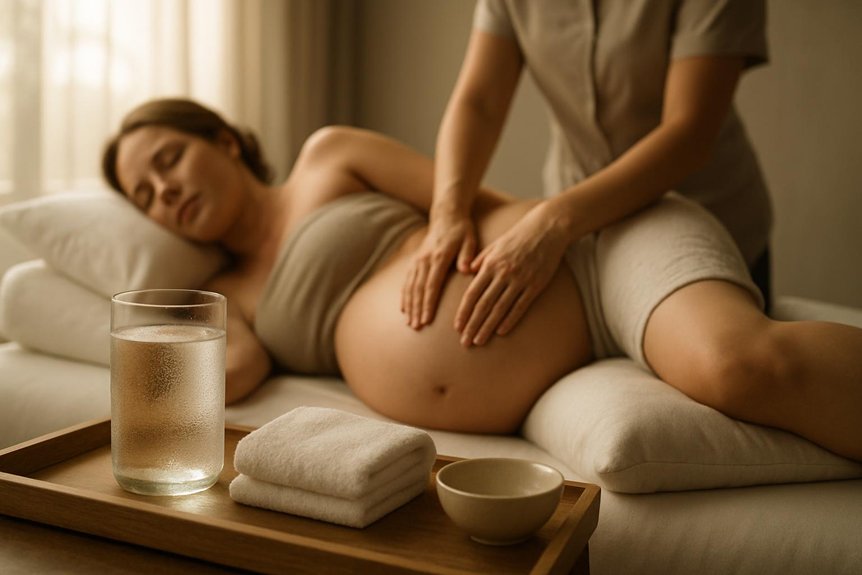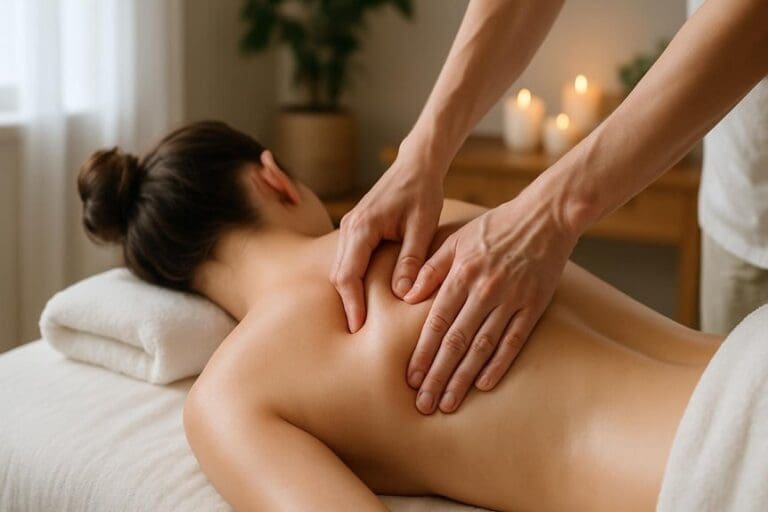
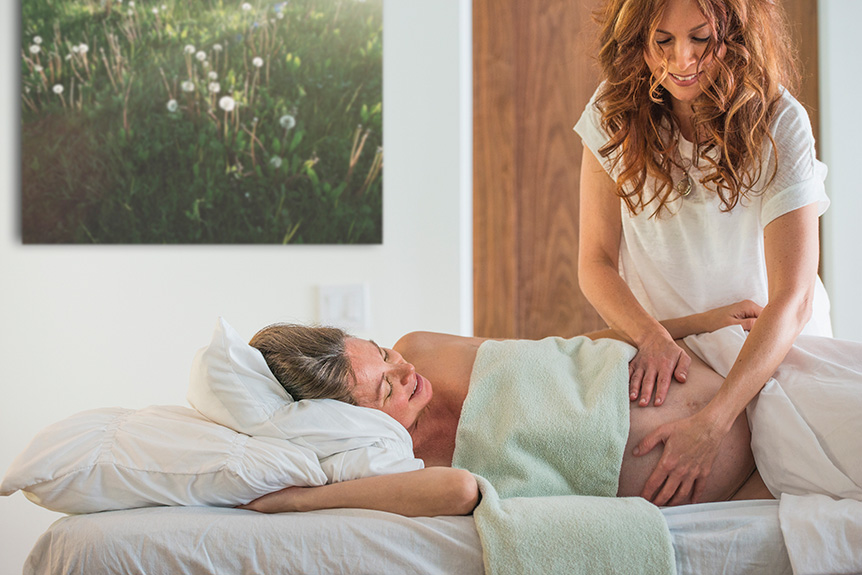
To massage the belly during pregnancy, use clean, warm hands and apply a hypoallergenic, fragrance-free oil. Employ gentle, circular, clockwise strokes with light pressure, always listening for any discomfort. Avoid deep or vigorous techniques and consult a healthcare provider before starting. Appropriate oils like sweet almond or coconut are recommended to maintain comfort and skin health. These steps help promote relaxation and well-being for both mother and baby. Additional techniques and aftercare advice can further enhance safety and comfort.
Understanding the Benefits of Belly Massage During Pregnancy
How can gentle touch support expectant mothers during pregnancy? Gentle, intentional belly massage may provide comfort and foster emotional connection between mother and baby.
At Spa & Massage, therapists recognize that this practice can ease feelings of abdominal tension and promote relaxation, potentially reducing stress hormones and encouraging restful sleep.
Massage may also improve local circulation, supporting the skin’s elasticity as the body adapts to pregnancy changes.
Soft, mindful touch nurtures a sense of safety and belonging, which many find grounding during this transformative period.
While the physical benefits are valued, many clients share that the greatest impact is the deepened sense of intimacy and calm.
Spa & Massage therapists offer tailored guidance to nurture both the body and the emotional well-being of expectant mothers.
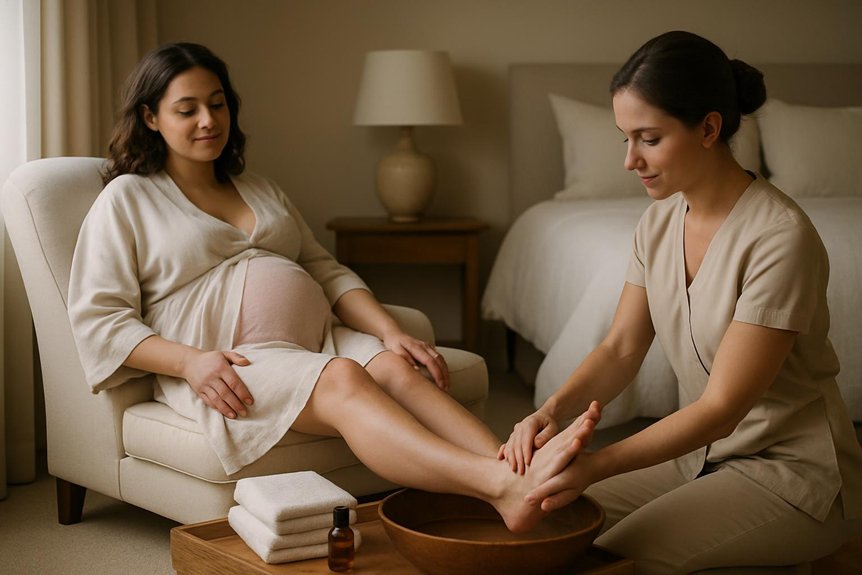
A healing technique known as reflexology can also be incorporated to further support relaxation and overall wellness during pregnancy.
Safety Precautions for Expectant Mothers
Although belly massage can offer meaningful comfort during pregnancy, it is vital to observe specific safety guidelines to protect both mother and baby.
At Spa & Massage, therapists are specially trained to provide gentle, appropriate touch, ensuring each session respects the changing needs of pregnancy.
It is recommended to avoid deep pressure or vigorous movements on the abdomen and to focus on light, soothing strokes.
Clients should always consult their healthcare provider before beginning any massage therapy, particularly if experiencing complications such as high-risk pregnancy, severe swelling, or unexplained pain.
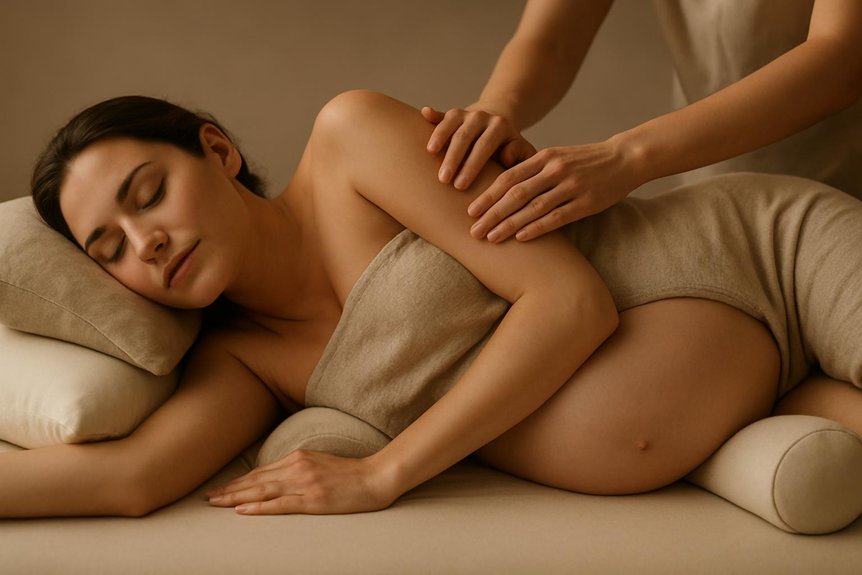
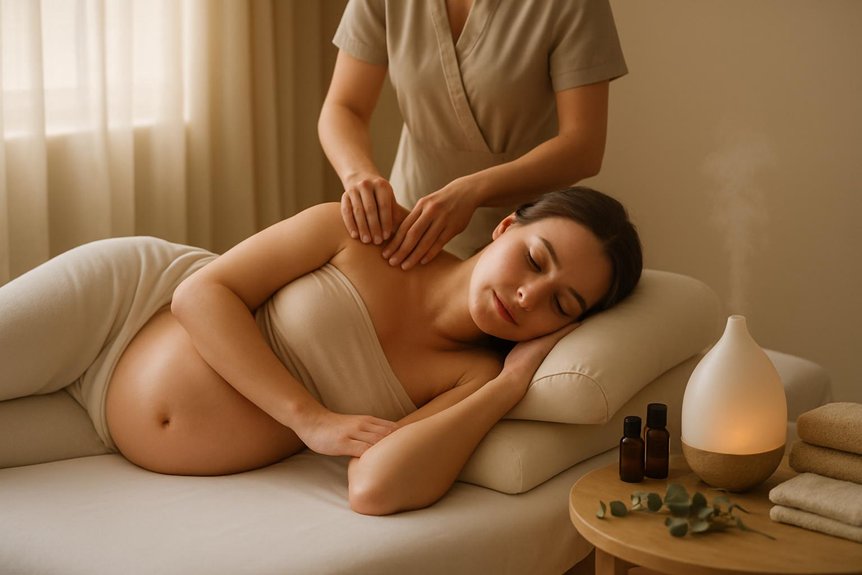
Positioning is essential; expectant mothers are typically supported with cushions to prevent strain.
Attentive communication between client and therapist further enhances safety, fostering a nurturing environment that prioritises wellbeing and reassurance throughout every stage.
Choosing the Right Massage Oils for Pregnancy
Selecting suitable massage oils during pregnancy is essential to guarantee both safety and comfort for expectant mothers.
At Spa & Massage, therapists recommend using hypoallergenic, fragrance-free oils or those specifically formulated for pregnancy, such as gentle coconut, grapeseed, or sweet almond oils. These options minimise the risk of skin irritation and avoid essential oils that may not be advised during pregnancy.
The texture and absorption of the oil should support a smooth, nurturing touch, enhancing both relaxation and connection.
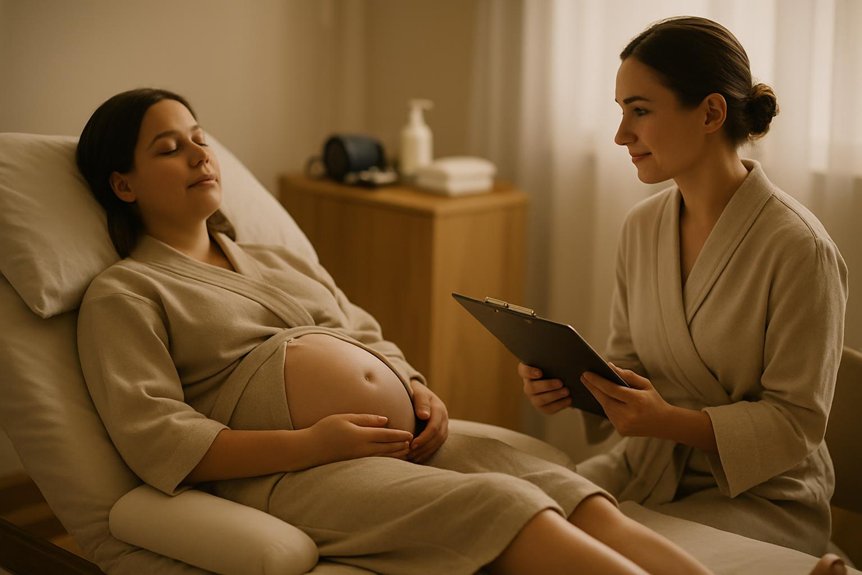
Spa & Massage therapists always conduct a thorough consultation to check for allergies or sensitivities before choosing any product. This careful approach ensures that every massage experience is both safe and deeply soothing, fostering a sense of trust and well-being for each client.
Step-by-Step Guide to Gentle Belly Massage
With the appropriate massage oil chosen, attention shifts to the careful application of gentle belly massage techniques.
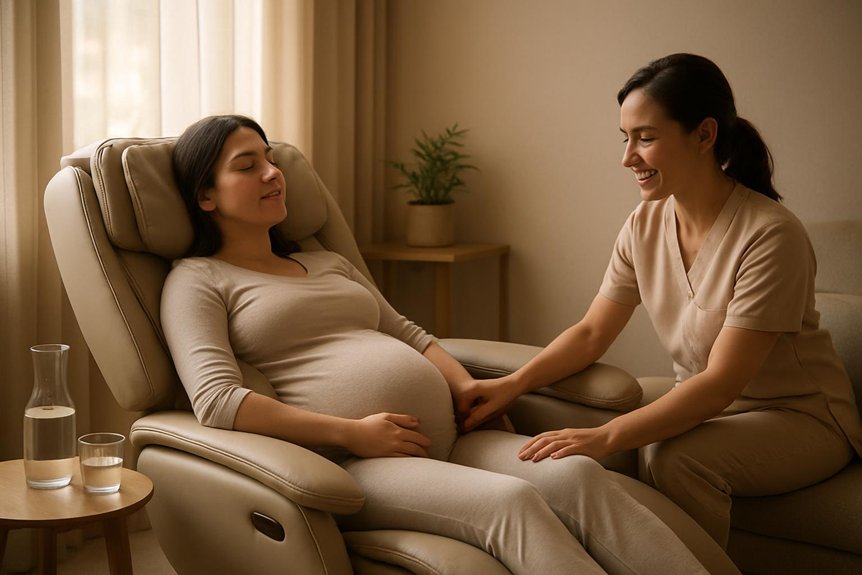
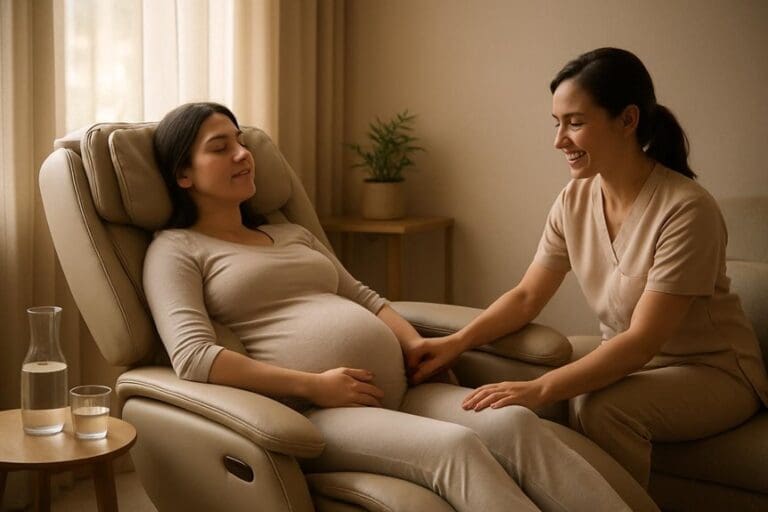
At Spa & Massage, the process begins with clean hands warmed by softly rubbing them together. The expectant person is positioned comfortably, often semi-reclined with support cushions.
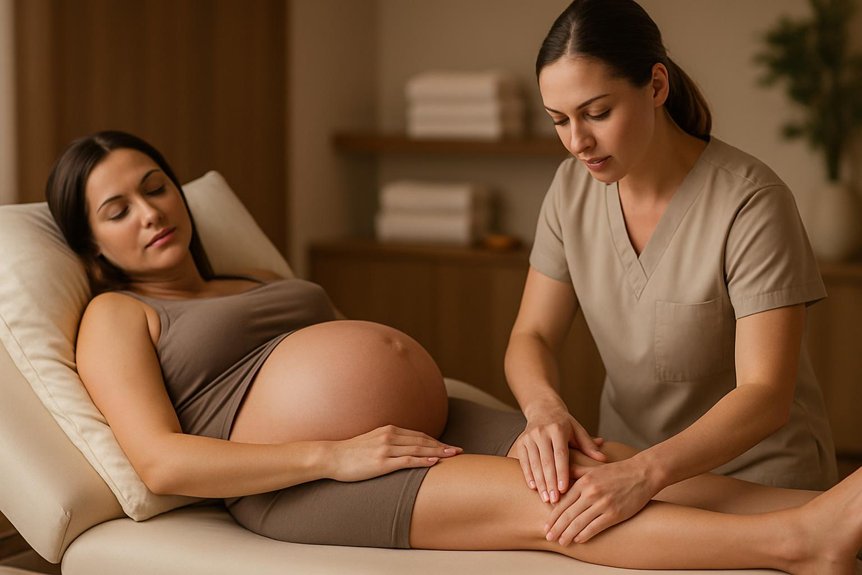
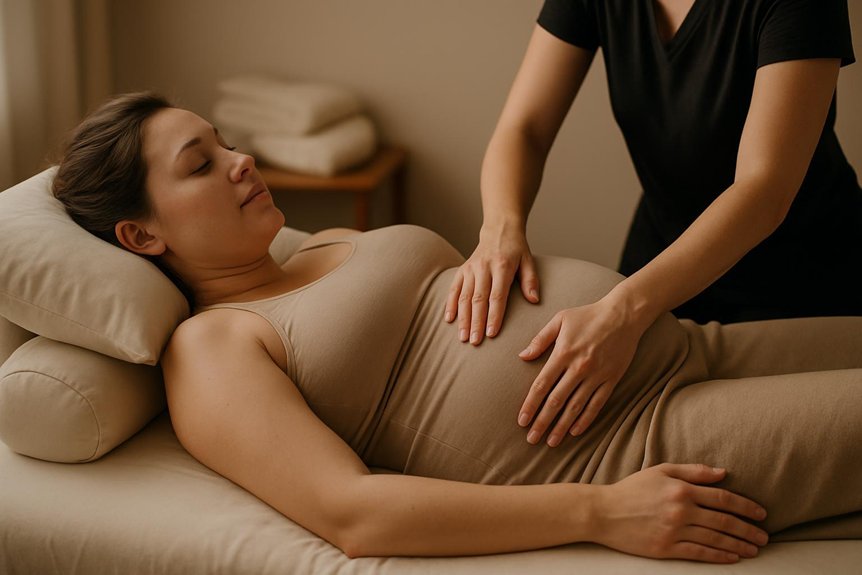
Using light, circular motions, oil is applied to the belly, avoiding firm pressure. Gentle strokes, always in a clockwise direction, help promote relaxation and support digestive comfort.
Movements are slow and mindful, attentive to the mother’s breath and any sensation of discomfort.
The massage concludes with subtle, comforting holds—hands resting lightly on the belly.
Throughout, communication and respect for boundaries are paramount, ensuring the experience remains soothing, intimate, and attuned to both emotional and physical wellbeing.
Techniques Recommended by Our Experienced Therapists
Guided by a commitment to safety and personalised care, Spa & Massage therapists employ specific techniques designed to nurture both mother and baby during pregnancy belly massage.
Gentle, circular strokes are applied with open palms, always using light pressure to avoid discomfort and guarantee the mother’s well-being.
Therapists focus on the lateral and lower abdominal areas, carefully avoiding excessive pressure on the uterus.
Use of hypoallergenic, nourishing oils helps maintain skin suppleness and reduce irritation, supporting relaxation and connection.
All movements are slow, rhythmic, and mindful, with continuous communication to ensure comfort and trust.
Each technique is adapted to the individual’s stage of pregnancy and personal sensitivities, allowing for a deeply supportive and intimate massage experience that prioritises both safety and emotional connection.
Aftercare Tips to Enhance Relaxation and Comfort
Following a pregnancy belly massage, Spa & Massage therapists recommend gentle hydration and moisturising to support skin health and elasticity.
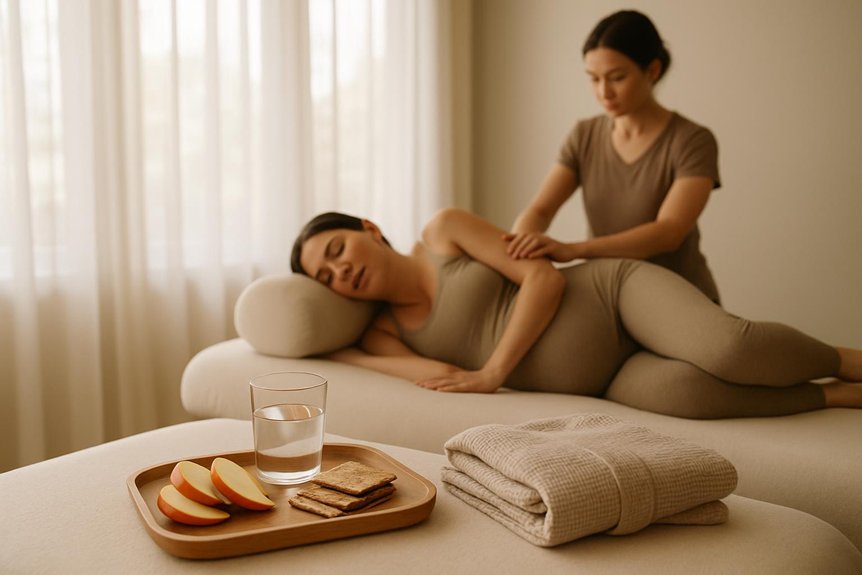
Restful post-massage positioning, such as lying on the left side with supportive pillows, can further enhance relaxation and comfort.
These aftercare measures are designed to promote well-being and optimise the benefits of the massage experience.
Gentle Hydration and Moisturising
A key component of post-massage care during pregnancy involves gentle hydration and effective moisturising to support the skin’s elasticity and comfort.
At Spa & Massage, therapists recommend drinking water after a belly massage to aid in tissue recovery and maintain overall wellbeing.
Applying a mild, fragrance-free moisturiser—such as those used in our clinics—can further nourish sensitive skin, reducing dryness and minimising the risk of stretch marks.
Light, circular motions help distribute the moisturiser evenly, adding a soothing touch while encouraging absorption.
Products containing natural oils, like sweet almond or grapeseed, are preferred for their hypoallergenic properties and calming effects.
This simple, attentive aftercare ritual not only protects the skin but also extends the feelings of comfort and closeness experienced during the massage.
Restful Post-Massage Positioning
Once a belly massage during pregnancy is complete, careful attention to post-massage positioning is essential to maximise relaxation and support maternal comfort.
At Spa & Massage, therapists recommend lying on the left side with a soft pillow supporting the belly and another between the knees. This side-lying position enhances blood flow, reduces pressure on major vessels, and encourages ideal comfort.
Clients are also encouraged to remain still for several minutes, allowing the body to fully absorb the benefits of the massage. Gentle, mindful breathing further deepens relaxation.
Should any discomfort arise, subtle adjustments with cushions or bolsters are advised. This approach, rooted in our commitment to safety and nurturing care, ensures that every client feels supported, cared for, and profoundly at ease following their pregnancy massage.
Conclusion
To sum up, gentle belly massage during pregnancy—when performed with care and professional guidance—can greatly enhance comfort and emotional wellbeing. For example, one mother-to-be at Spa & Massage reported feeling less anxious and more connected to her baby after regular, safe massages. By following recommended techniques and safety precautions, expectant mothers can nurture themselves with confidence, ensuring both their own health and their developing baby’s wellbeing throughout this transformative journey.