Prenatal massage is generally considered safest to start in the second trimester, around 12–13 weeks, after a quick check‑in with a midwife or GP to confirm there are no medical concerns. First‑trimester sessions are approached more cautiously and, if offered, should be very gentle, side‑lying, and avoid deep abdominal work. In the third trimester, therapists typically use supported side‑lying or semi‑reclined positioning with moderate, responsive pressure. Further guidance covers timing, techniques, and therapist selection.
When Can You Start Prenatal Massage Safely?
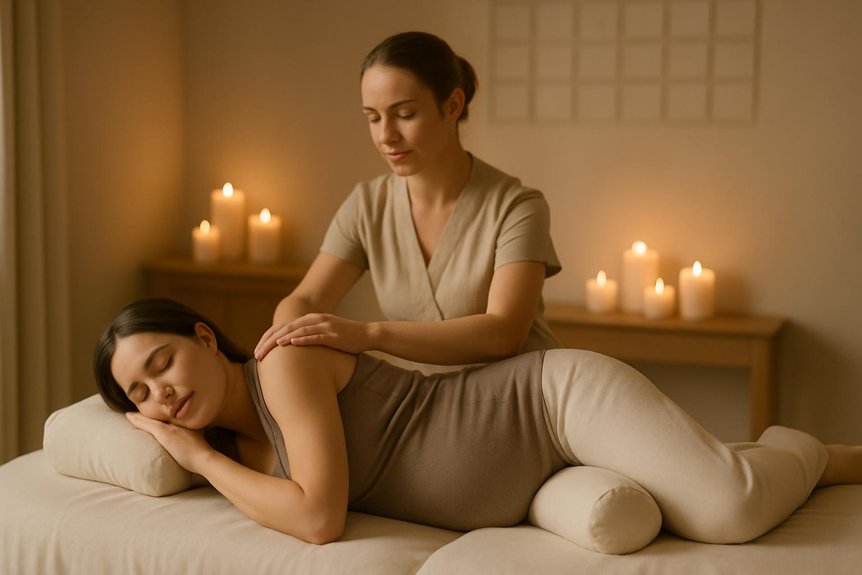
In most uncomplicated pregnancies, prenatal massage is generally considered safe to begin from the second trimester (around 12–13 weeks) onward, after the client has discussed massage with their midwife or GP—an approach Spa & Massage therapists follow to prioritise maternal and fetal safety. Sessions are then planned around comfort, circulation, and gentle nervous-system settling, with positioning that avoids strain and pressure that stays nurturing rather than intense.
At Spa & Massage clinics across London, therapists complete a detailed intake and adapt techniques to symptoms such as low-back tension, hip tightness, swelling, and sleep disruption. Unscented or pregnancy-appropriate oils are used when preferred, and clients are encouraged to share any tenderness, dizziness, or cramping immediately.
It can support relaxation and ease common discomforts, offering meaningful benefits of pregnancy massage for expecting mothers when applied appropriately. Ongoing care is timed to changing needs, typically every 2–4 weeks, and adjusted as pregnancy progresses.
Is Prenatal Massage Safe in the First Trimester?
Safety guidance often differs in early pregnancy compared with care from 12–13 weeks onward, and first‑trimester prenatal massage is typically approached more cautiously.
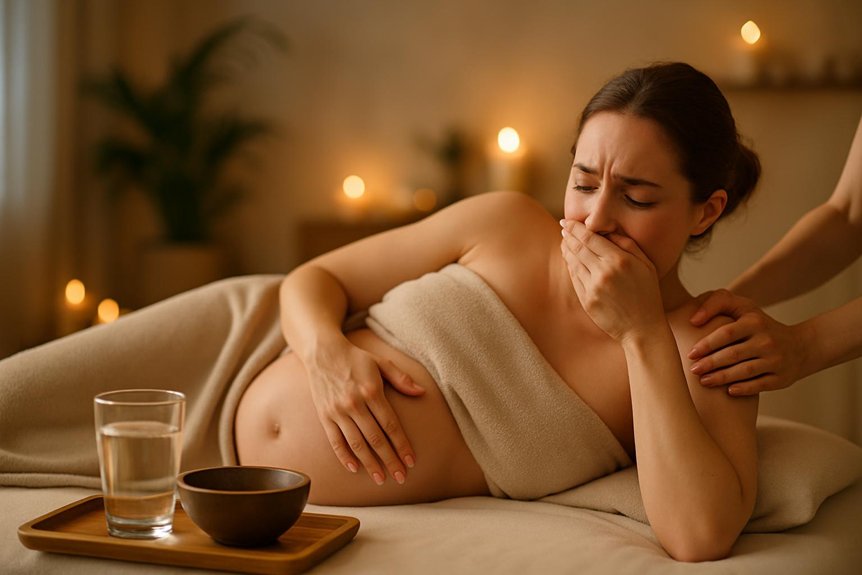
Most evidence suggests gentle massage is unlikely to cause miscarriage, yet many clinicians prefer to minimise variables while nausea, fatigue, and spotting are more common. At Spa & Massage, first‑trimester sessions are offered only with clear medical history and, where relevant, GP or midwife consent, especially after bleeding, prior loss, IVF, or high‑risk conditions.
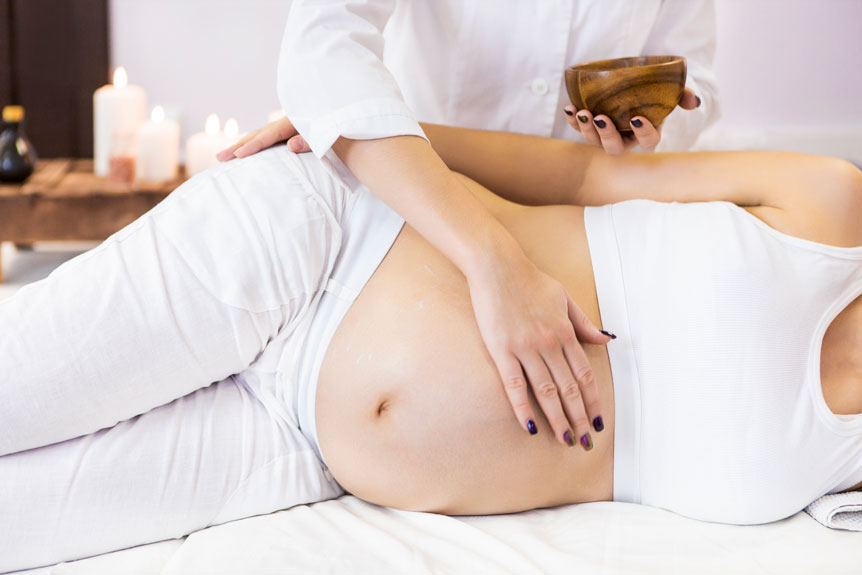
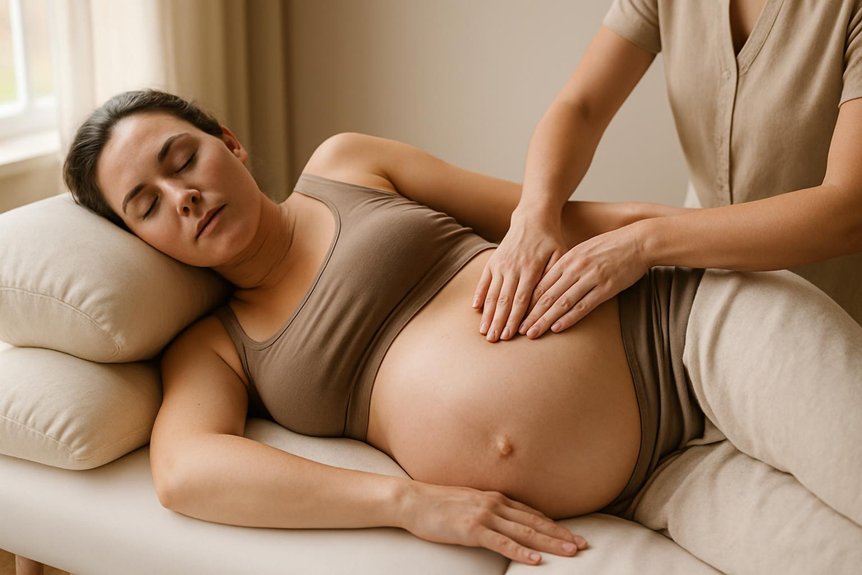
Treatment is kept light: side‑lying positioning, no deep abdominal work, and careful pressure over lower back and inner legs. Fragrance is limited; in our clinics, therapists use pregnancy‑appropriate, unscented oils when sensitivity is high. Clients are encouraged to stop immediately if discomfort, dizziness, or cramps occur.
Why the Second Trimester Is Ideal for Prenatal Massage
From around 13–14 weeks onwards, the second trimester is widely considered the most suitable time to begin or resume prenatal massage because early‑pregnancy symptoms often ease while the physical demands of a growing bump start to increase.
This timing allows therapists to focus on comfort without aggravating nausea, fatigue, or heightened sensitivity common earlier on. With medical stability typically improved, many clients can relax more fully, making sessions both safer and more nurturing.
At Spa & Massage clinics across London, therapists carry out thorough consultations, adapting touch to relieve back, hip, and shoulder tension, support circulation, and ease sleep disruption.
Unscented or pregnancy‑appropriate aromatherapy oils are chosen where suitable, and pressure is kept soothing and responsive. Clients are encouraged to seek GP or midwife advice when complications exist, ensuring care remains intimate, calm, and confidently guided.
Third Trimester Prenatal Massage: Safe Positions & Pressure
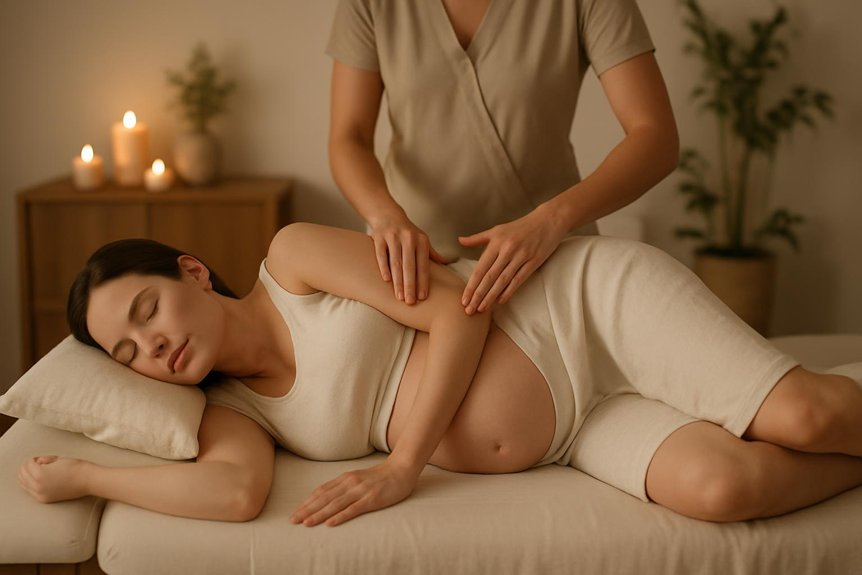
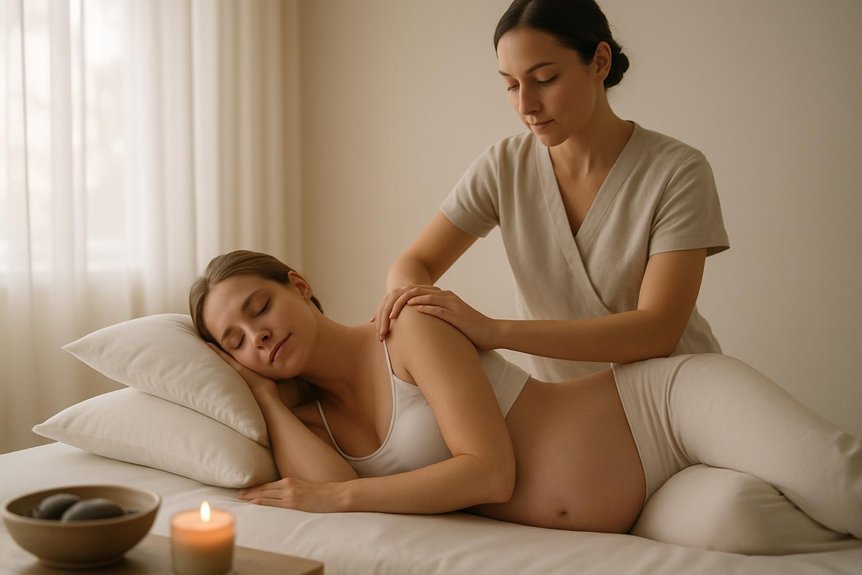
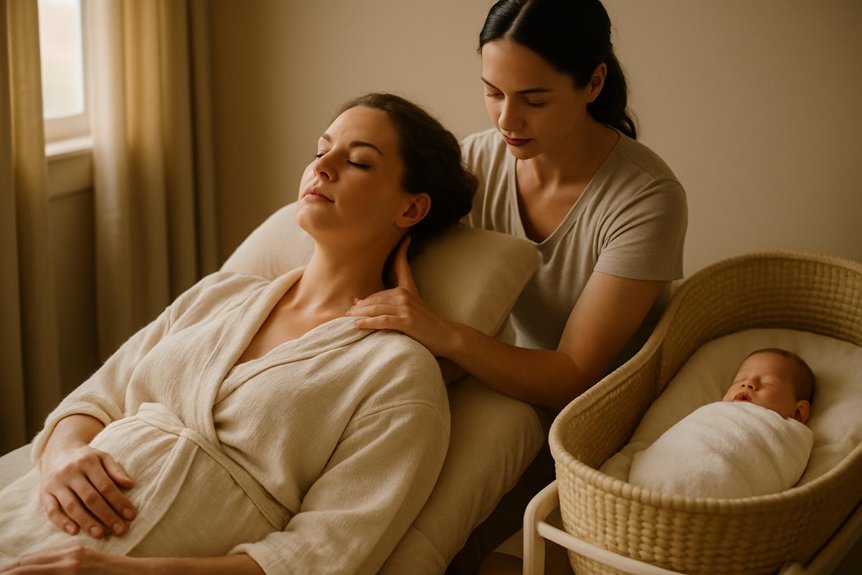
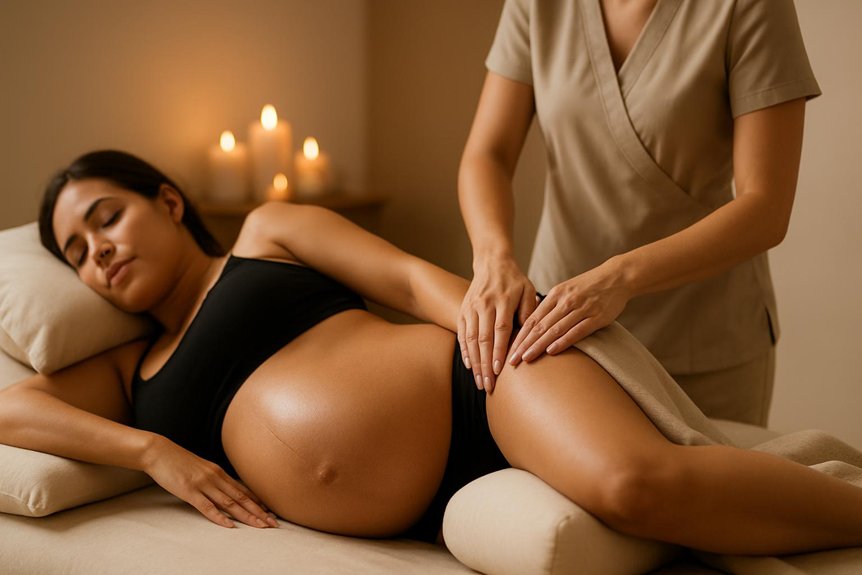
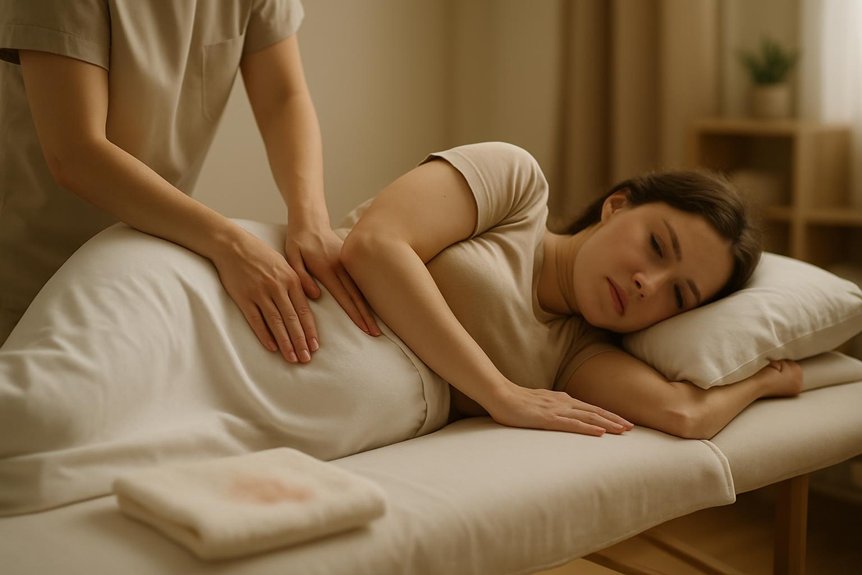
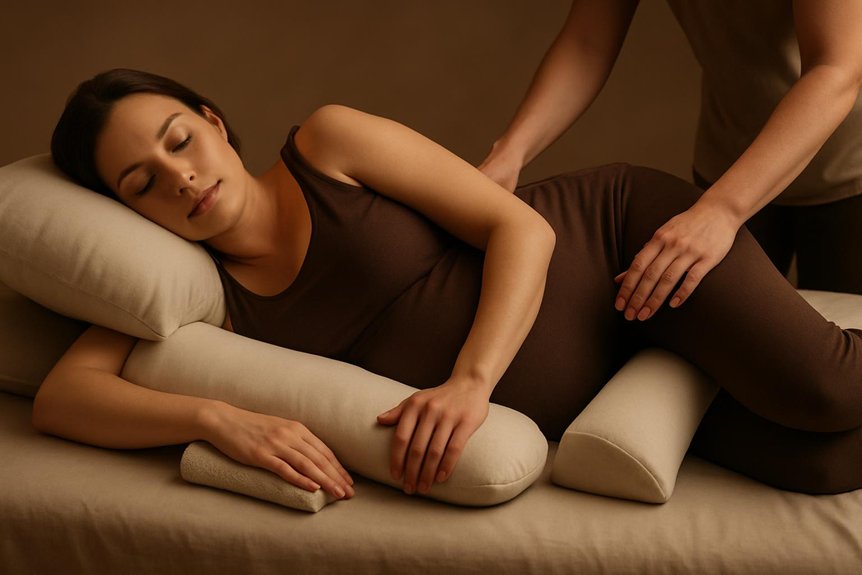
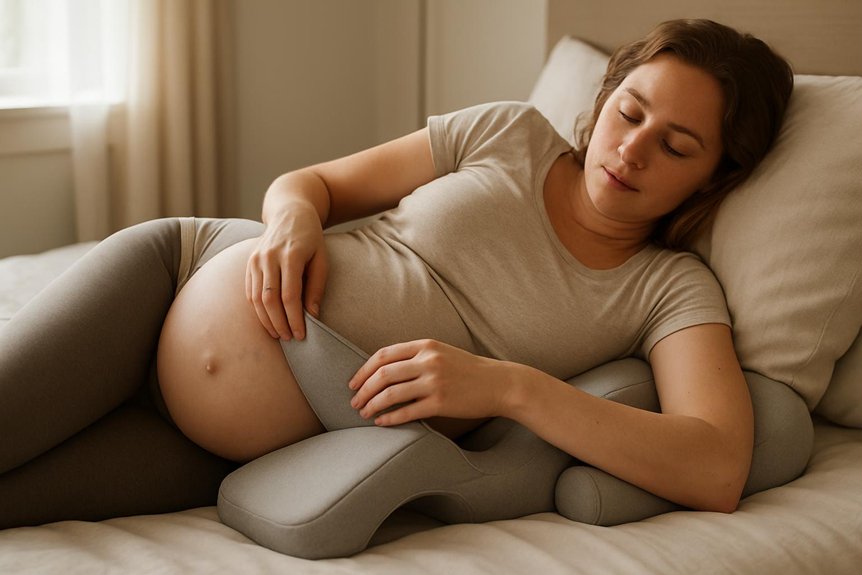
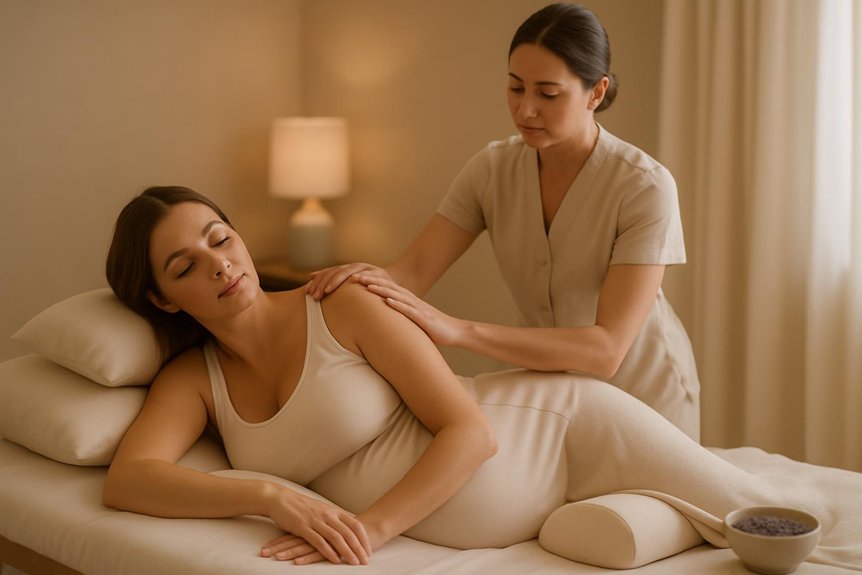
As the third trimester progresses and lying flat becomes less comfortable, prenatal massage is typically performed in side‑lying or supported semi‑reclined positions to minimise pressure on major blood vessels and reduce dizziness or breathlessness.
At Spa & Massage, bolsters support the belly, hips, and between the knees so the lower back can soften and the breath stays easy.
Pressure is generally moderate and responsive, prioritising circulation, lymphatic drainage, and easing common tension in the neck, shoulders, pelvis, and calves.
Deep, sustained work is avoided over the abdomen, and overly intense pressure on swollen ankles or along the inner leg is approached cautiously.
Slow pacing, frequent check‑ins, and warming touch help clients feel held, safe, and deeply cared for, without provoking soreness afterwards.
Choosing a Safe Prenatal Massage Therapist in London
In a city with wide variation in training and standards, choosing a prenatal massage therapist in London should start with verifiable pregnancy-specific qualifications, clear clinical screening, and an approach that adapts positioning and pressure to the client’s trimester, symptoms, and any obstetric guidance.
A safe therapist asks about medical history, swelling, blood pressure concerns, pelvic pain, and any contraindications, and will pause or refer when symptoms suggest further assessment.
Comfort-focused positioning (side-lying, supported bolsters) and gentle-to-moderate pressure help maintain circulation and ease tension without strain.
At Spa & Massage clinics across London, experienced therapists tailor prenatal massage, use skin-kind oils, and encourage clear consent and feedback throughout.
A calm, private setting, transparent hygiene standards, and aftercare advice complete a reassuring, intimate experience.
Conclusion
Prenatal massage can be safely introduced when symptoms, medical history, and practitioner expertise align, with many finding the second trimester the most practical starting point. First-trimester caution and third-trimester positioning require tailored techniques, appropriate pressure, and ongoing comfort checks. Like a steady hand guiding a boat along a shifting tide, a qualified prenatal therapist helps support circulation, reduce tension, and promote calm. When risk factors exist, timely advice from a midwife or doctor remains essential.