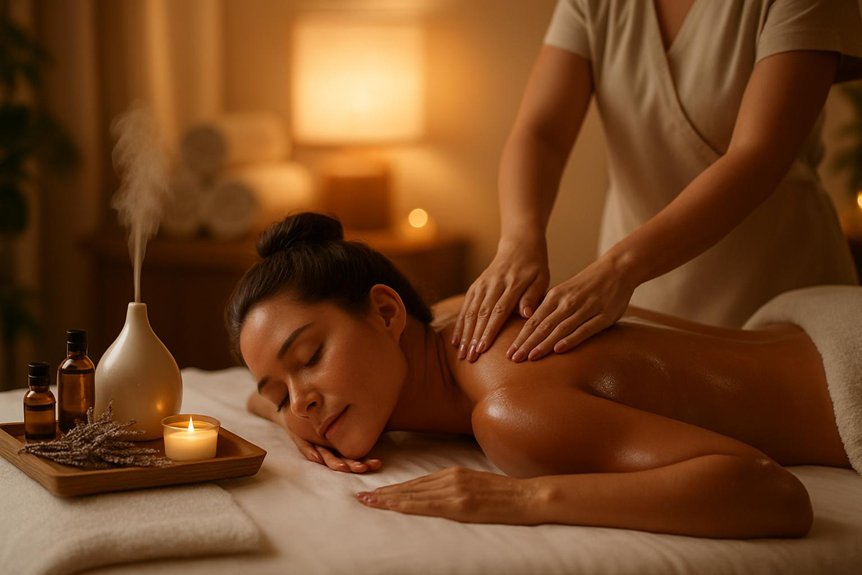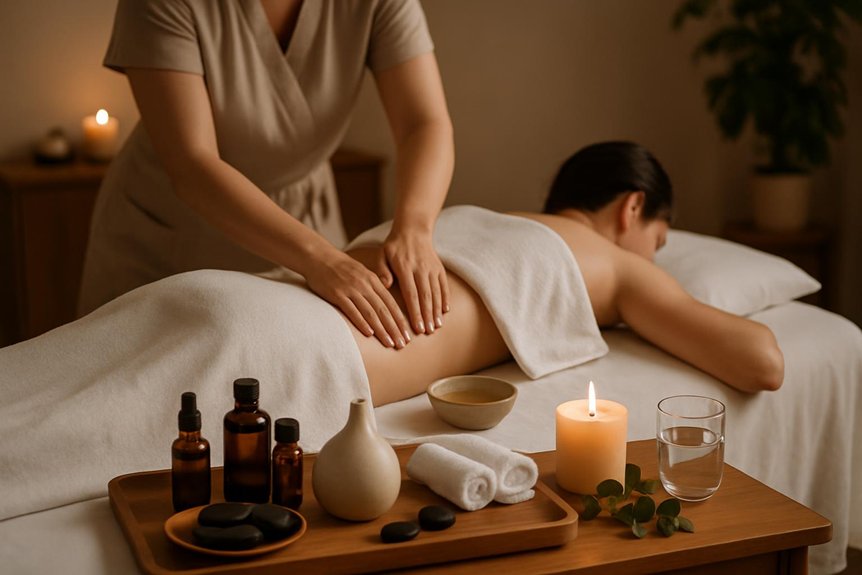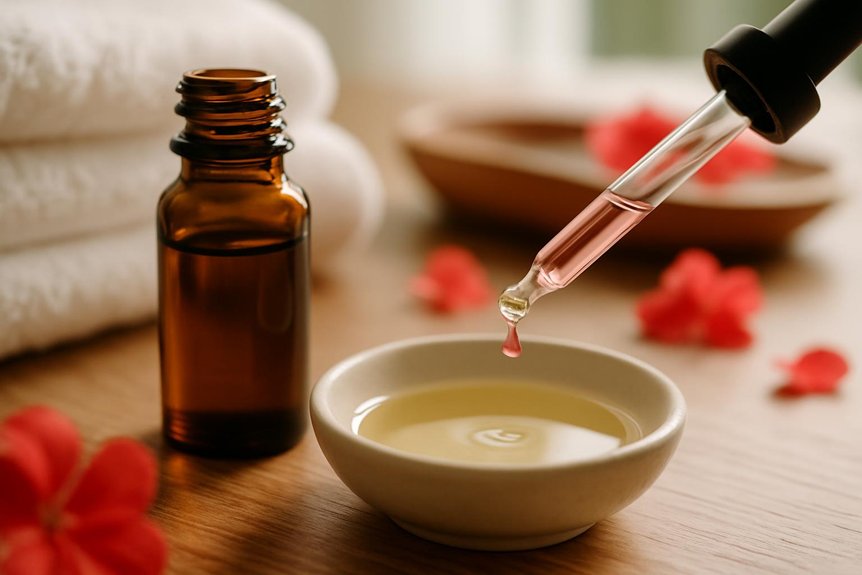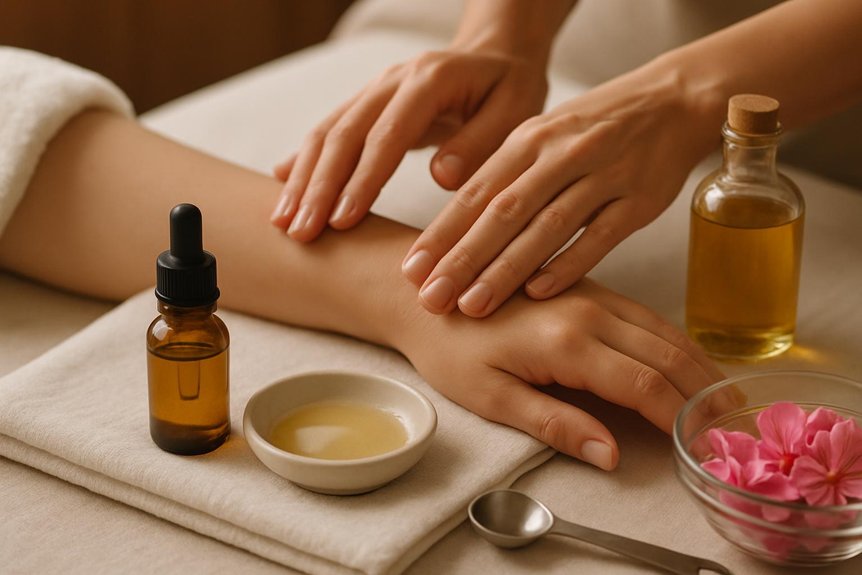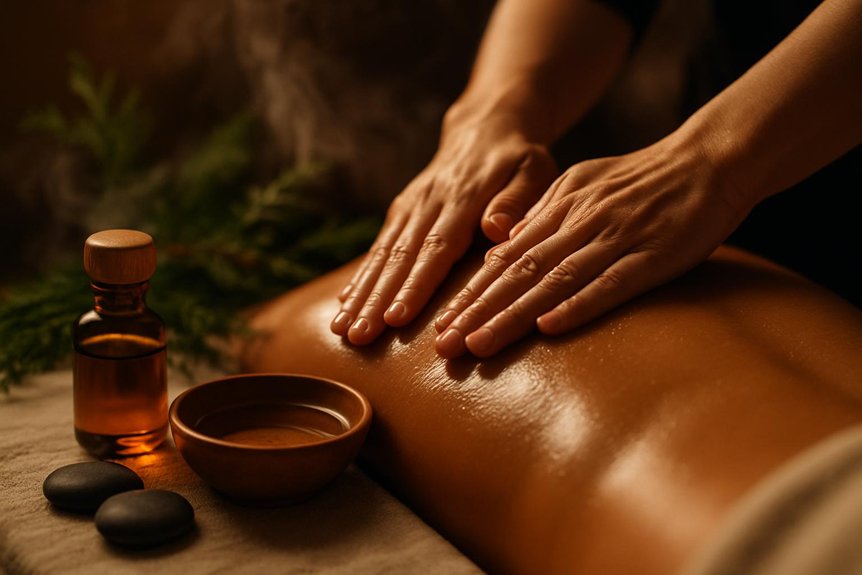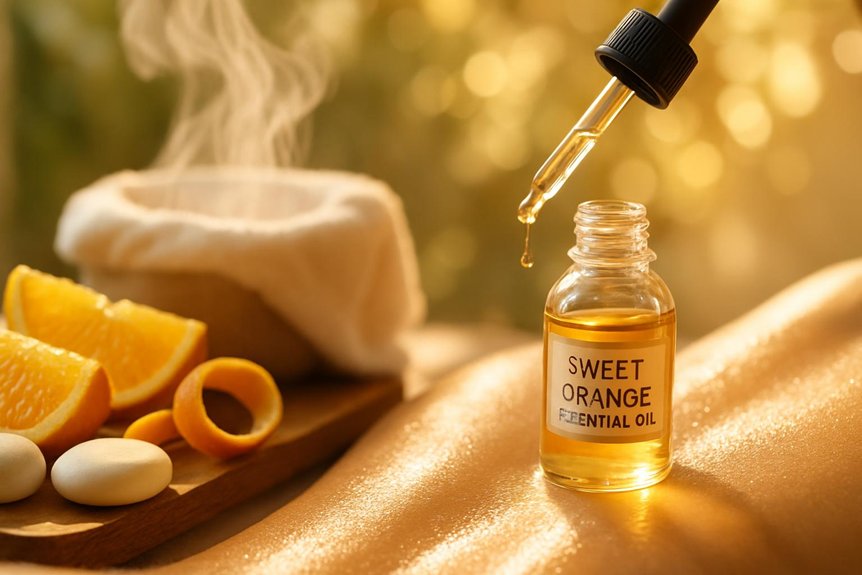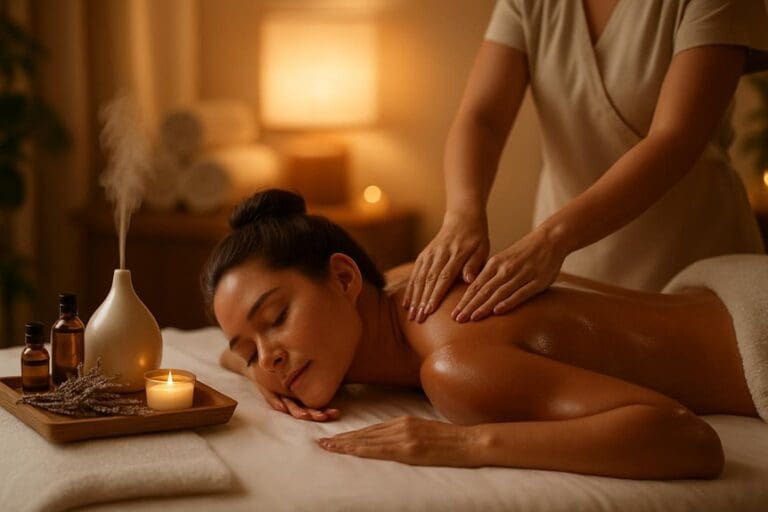
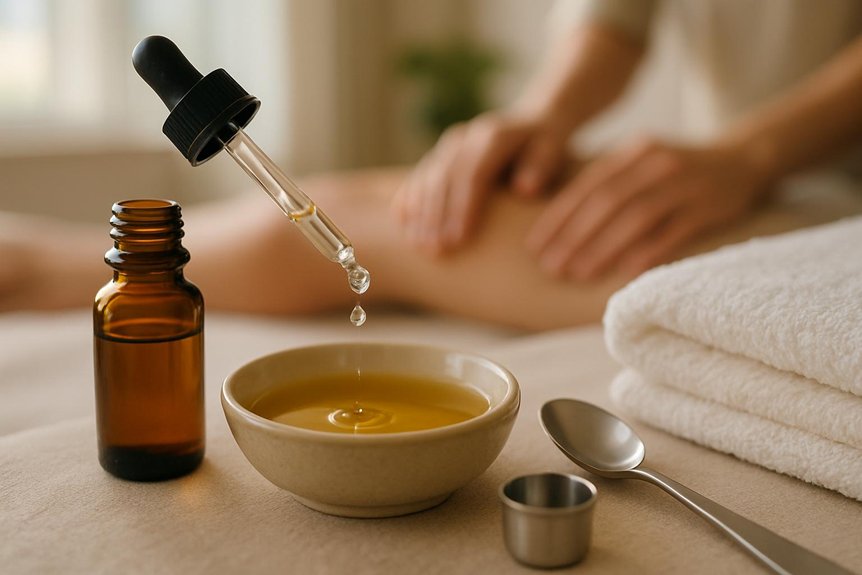
For aromatic massage, lavender essential oil is typically diluted in a fragrance-free carrier oil at 1%–2% for most healthy adults before skin contact. A practical guide is 1–2 drops per 5 ml, 2–4 drops per 10 ml, or 6–12 drops per 30 ml, then cap and roll the bottle to blend. A 24-hour patch test on the inner forearm helps screen sensitivity. Further guidance covers carrier choice, storage, and precautions.
Dilute Lavender Oil for Massage (Quick Steps)
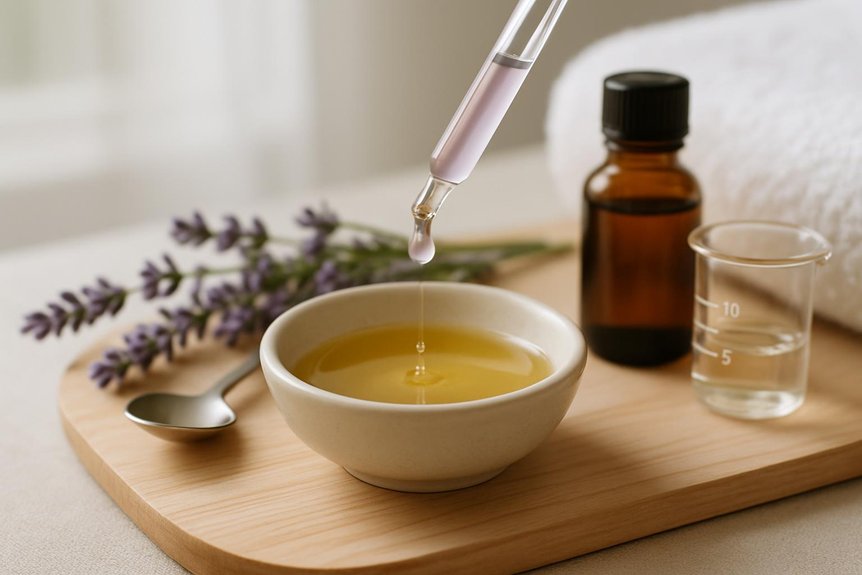
For a safe, skin-friendly aromatic massage, lavender essential oil should be diluted into a neutral carrier oil rather than applied neat. At Spa & Massage clinics, therapists follow simple, consistent steps designed to protect sensitive skin and support relaxation.
First, choose a fragrance-free carrier oil (such as sweet almond, grapeseed, or jojoba) and a clean glass bottle. Next, add the measured lavender drops, cap, and roll the bottle between the palms to blend without aerating. A small patch test on the inner forearm helps identify irritation before full-body use. The blend is then warmed in the hands and applied with slow, close-contact strokes, avoiding eyes, mucous membranes, and broken skin. Using proper dilution helps you relax and heal with aromatherapy massage techniques. Aftercare includes gentle hydration, rest, and discontinuing use if redness develops.
Lavender Massage Dilution Ratios (1%–3%)
Once the quick mixing steps are followed, the next decision is the dilution strength, since lavender oil concentration affects both comfort and skin tolerance.
For full-body aromatic massage, a 1% dilution is typically the gentlest starting point, especially for sensitive skin, first-time clients, or frequent sessions. A 2% dilution is commonly used for a more noticeable aroma and soothing effect while remaining conservative for most healthy adults. A 3% dilution is generally reserved for short, targeted areas and only when skin has previously tolerated lavender well.
In Spa & Massage clinics, therapists assess medical history, pregnancy status, allergies, and current skin condition before choosing strength, and they stop or reduce immediately if warmth, itching, or redness appears. Patch testing is advised.
How Many Lavender Drops per 5ml/10ml/30ml?
For practical mixing, therapists typically estimate essential oil at ~20 drops per 1 ml, then apply safe dilution ranges (often 1%–3%) to calculate drop counts for 5 ml, 10 ml, and 30 ml of carrier oil.
At Spa & Massage clinics, these amounts are adjusted to the client’s skin sensitivity, treatment area, and session goals, with lower dilutions preferred for first-time use, pregnancy, or reactive skin.
Because drop size varies by bottle and viscosity, measuring by volume where possible and performing a patch test supports safer, more consistent aromatic massage blends.
Drop Counts By Volume
In practice, lavender oil drop counts are best set by dilution percentage and the carrier volume, because drop size can vary slightly between bottles. As a working guide, many practitioners estimate about 20 drops per 1 ml of essential oil, then calculate the drops needed for the chosen blend.
Using that convention, 5 ml of carrier typically equals 0.1 ml (2 drops) at 2%, or 0.05 ml (1 drop) at 1%. For 10 ml, that becomes 0.2 ml (4 drops) at 2%, or 0.1 ml (2 drops) at 1%. For 30 ml, it is 0.6 ml (12 drops) at 2%, or 0.3 ml (6 drops) at 1%. At Spa & Massage, therapists tailor scent intensity to comfort and privacy.
Safe Dilution Ranges
Safe dilution ranges build on drop-count estimates by anchoring the blend to a percentage that supports comfort and skin safety.
For most adult full-body massage, Spa & Massage therapists generally keep lavender at 1–2% in a carrier: about 1–2 drops per 5 ml, 2–4 drops per 10 ml, and 6–12 drops per 30 ml.
For facial work, sensitive skin, or first-time clients, 0.5–1% is preferred: 1 drop per 10 ml or 2–6 drops per 30 ml.
For short, localised care on resilient skin, up to 3% may be used: 3 drops per 5 ml, 6 per 10 ml, 18 per 30 ml.
Patch testing remains essential.
Choose the Best Carrier Oil for Lavender Massage
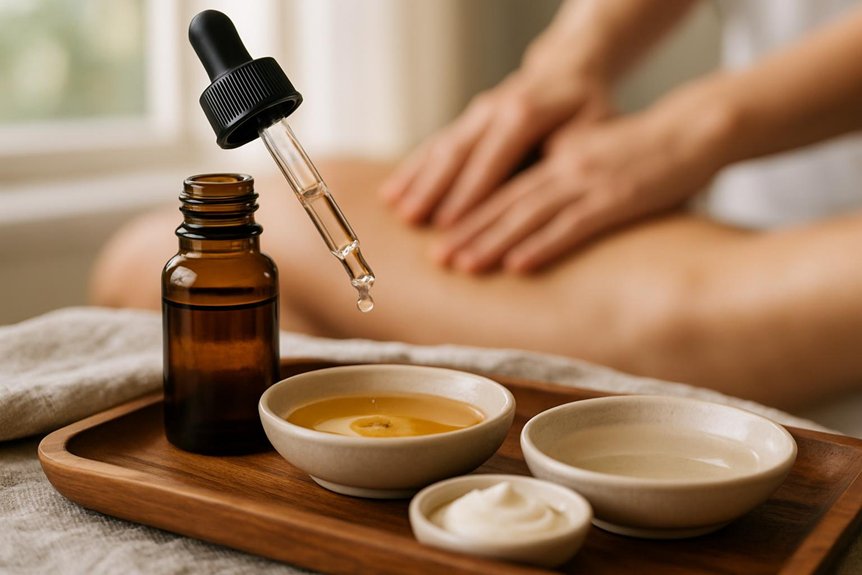
For lavender aromatic massage, the carrier oil should be chosen as carefully as the dilution, because absorption, glide, and irritation risk vary by oil type.
In Spa & Massage clinics, therapists compare carrier oils by texture, comedogenicity, and allergen potential, then match the option to the client’s skin type and goals (e.g., dry, sensitive, acne-prone, or mature).
A simple patch test and a review of relevant allergies or pregnancy status help guarantee the blend remains both effective and well tolerated.
Carrier Oils Compared
With lavender essential oil correctly diluted, the carrier oil becomes the main determinant of how smoothly the blend spreads, how quickly it absorbs, and how well it suits different skin types. In Spa & Massage clinics, therapists compare carriers by glide, finish, stability, and client comfort during close-contact treatment.
Sweet almond offers reliable slip for longer strokes and is widely liked, but nut allergy screening is essential. Grapeseed feels lighter and absorbs faster, supporting a clean finish, though it can oxidise sooner and benefits from fresh, well-stored stock. Jojoba is technically a wax ester, highly stable, and leaves balanced glide without feeling greasy. Fractionated coconut is very light, odourless, and stable, supporting consistent dilution. Patch testing and clear ingredient labels remain standard safety practice.
Matching Oil To Skin
Skin type is the deciding factor when selecting a carrier oil for a lavender massage blend, because it influences barrier tolerance, comedogenic risk, and the overall feel of the treatment.
For dry or sensitive skin, jojoba or sweet almond can support slip while feeling comforting; patch-test first, especially with nut allergies.
For oily or acne-prone skin, grapeseed or fractionated coconut tends to feel lighter and less occlusive, reducing the chance of blocked pores.
For mature skin, rosehip adds a richer finish, but it can be more reactive, so lower dilution and shorter contact time may suit some clients.
In Spa & Massage clinics across London, therapists match texture and absorption to the client’s comfort, keeping lavender at 1–2% and avoiding broken or freshly shaved skin.
Patch Test and Safety Tips for Lavender Massage Oil
Often, the safest way to introduce lavender massage oil is to patch test a properly diluted blend on a small area (such as the inner forearm) and wait 24 hours for any redness, itching, swelling, or stinging.
If a reaction appears, the blend should be rinsed off and discontinued; persistent symptoms warrant medical advice.
In Spa & Massage clinics, therapists also screen for asthma, eczema, fragrance sensitivity, and current topical prescriptions, as these can increase irritation risk.
Lavender oil should never be used undiluted, on broken skin, or near eyes and mucous membranes, and hands should be washed after application.
For more intimate massage, lighter pressure and lower dilution support comfort, while clear consent and feedback protect boundaries and wellbeing.
How to Store Your Lavender Massage Blend
For best stability and safety, a diluted lavender massage blend should be stored in a clean, airtight, dark glass bottle, kept in a cool, dry place away from direct sunlight and heat sources. Oxidation and contamination can increase the risk of irritation, so hands and dispensers should be clean, and oils should never be topped up in an unwashed bottle.
The blend should be labelled with ingredients, dilution percentage, and the date mixed; in Spa & Massage clinics, this supports consistent, client-centred care and safer intimate skin-to-skin work. Most blends are best used within 3–6 months, or sooner if the carrier oil is near expiry. Discard immediately if the scent turns sharp, the colour changes, or the blend feels tacky. Keep out of reach of children.
Conclusion
Diluting lavender essential oil correctly helps keep aromatic massage both effective and skin-safe. Most adults tolerate 1%–3% dilution when blended into a suitable carrier oil, measured carefully by drops per millilitre. A patch test, attention to age and sensitivity, and avoidance of undiluted application reduce irritation risk. Stored in a dark, cool place, a well-made blend stays stable longer. Used responsibly, the result can feel as calming as a quiet ocean.