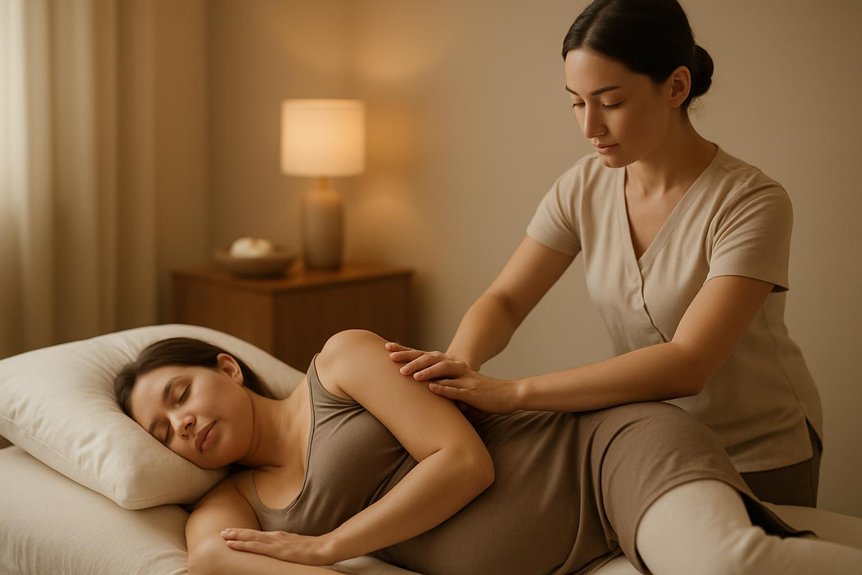
Third‑trimester prenatal massage is generally safe in uncomplicated pregnancies when provided by a trained prenatal therapist who uses side‑lying bolsters, avoids prolonged supine positioning, and modifies pressure based on comfort and symptoms. It typically targets low‑back, hip, and leg discomfort with slow, light‑to‑moderate techniques and conservative depth. Massage should be deferred without clinical clearance if there are red flags such as pre‑eclampsia symptoms, bleeding, reduced fetal movements, DVT signs, infection, or threatened preterm labour. Further guidance covers screening, positioning, and aftercare.
Is Third-Trimester Prenatal Massage Safe?
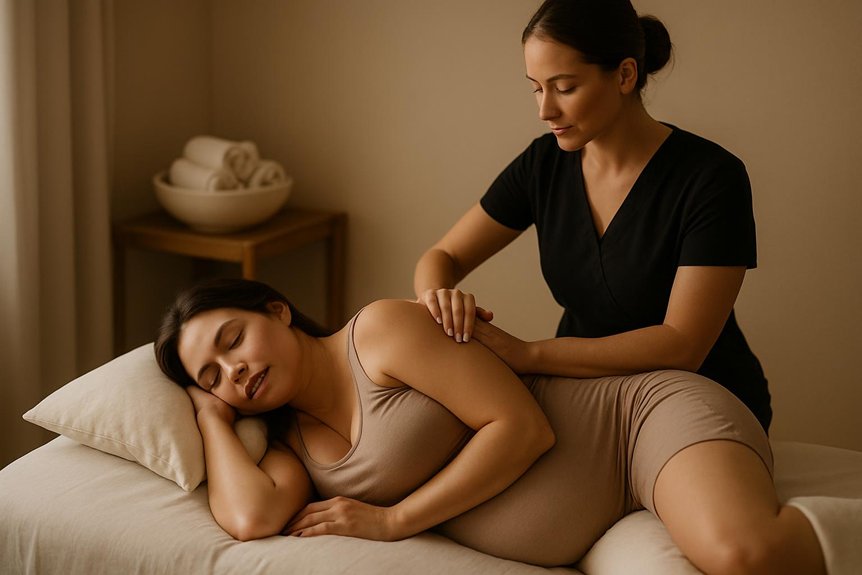
In most uncomplicated pregnancies, third-trimester prenatal massage is considered safe when it is delivered by a therapist trained in pregnancy-specific assessment, positioning, and pressure modification. Evidence-informed practice prioritises maternal comfort, circulation support, and symptom relief without excessive pressure or prolonged supine positioning.
At Spa & Massage clinics across London, therapists use side-lying bolsters, slow pacing, and conservative deep-tissue depth to address common late-pregnancy concerns such as low-back tension, hip discomfort, and leg heaviness. Pressure is titrated to client feedback, avoiding pain, breath-holding, or post-treatment soreness. Unscented or lightly fragranced oils are typically selected to reduce nausea sensitivity. Sessions are ended if dizziness, uterine tightening, or unusual pain occurs, and clients are encouraged to hydrate and rest afterwards. For many expecting mothers, prenatal massage can also support relaxation and ease stress through its benefits of pregnancy massage.
When Is Prenatal Massage Not Advised in Trimester Three?
Even when third-trimester prenatal massage is generally well tolerated in uncomplicated pregnancies, it is not advised where maternal or fetal risk factors make hands-on therapy inappropriate without medical clearance. Contraindications include suspected pre‑eclampsia (new headache, visual changes, upper‑abdominal pain, marked swelling), uncontrolled hypertension, significant vaginal bleeding, placenta praevia, threatened or preterm labour, ruptured membranes, reduced fetal movements, or unexplained abdominal pain.
It is also avoided with fever, contagious illness, active infection, DVT symptoms (one‑sided calf pain, warmth, swelling), severe anaemia, or unstable cardiac/respiratory disease. Following surgery, invasive procedures, or severe musculoskeletal injury, hands-on work is deferred. At Spa & Massage, therapists prioritise calm, nurturing touch only when safety screening indicates low risk.
Do You Need Midwife or GP Approval First?
Midwife or GP approval is advisable in third trimester when there are obstetric or medical risk factors (e.g., hypertension, pre-eclampsia symptoms, placenta praevia, threatened preterm labour, ruptured membranes, significant oedema, reduced fetal movements, or anticoagulant use).
If approval is sought, the clinician should be told the gestational age, relevant diagnoses and medications, current symptoms, and that Spa & Massage provides side-lying prenatal positioning with pressure modified to maternal comfort and clinical status.
Clear documentation of any restrictions (areas to avoid, maximum pressure, session duration, and monitoring advice) supports safer treatment planning.
When Approval Is Needed
When is clinical approval needed before booking a third‑trimester prenatal massage? Approval is advisable with high‑risk pregnancy, hypertension or pre‑eclampsia, gestational diabetes requiring medication, placenta praevia, cervical insufficiency, threatened preterm labour, vaginal bleeding, reduced fetal movements, ruptured membranes, infection/fever, uncontrolled asthma, clotting disorders, history of DVT/PE, significant oedema or sudden swelling, severe headache/visual symptoms, or severe abdominal pain.
It is also prudent after hospital admission, new symptoms, or medication changes.
Where pregnancy is uncomplicated and care is routine, most people can book without formal sign‑off, provided treatment is adapted: side‑lying positioning, gentle pressure, avoidance of deep abdominal work, and close comfort‑based feedback.
At Spa & Massage London clinics, therapists screen carefully and will defer treatment until clearance if any red flags are disclosed.
What To Tell Your Clinician
Clinical sign‑off is most relevant where red flags or complicating conditions are present; the next step is ensuring any clinician consulted is given enough detail to assess risk appropriately.
The client should tell their midwife or GP gestational age, current symptoms (bleeding, reduced fetal movements, contractions, dizziness), blood pressure history, and any diagnoses such as pre‑eclampsia, placenta praevia, DVT, gestational diabetes, or severe pelvic girdle pain.
They should also disclose medications, anticoagulants, recent hospital visits, and any infection or fever.
The clinician should be informed the massage will be prenatal‑specific, side‑lying with supportive bolsters, avoiding deep pressure to calves and abdomen, and using unscented or clinician‑approved oils.
At Spa & Massage, therapists request this information before booking and adapt touch accordingly.
Safest Massage Positions in the Third Trimester
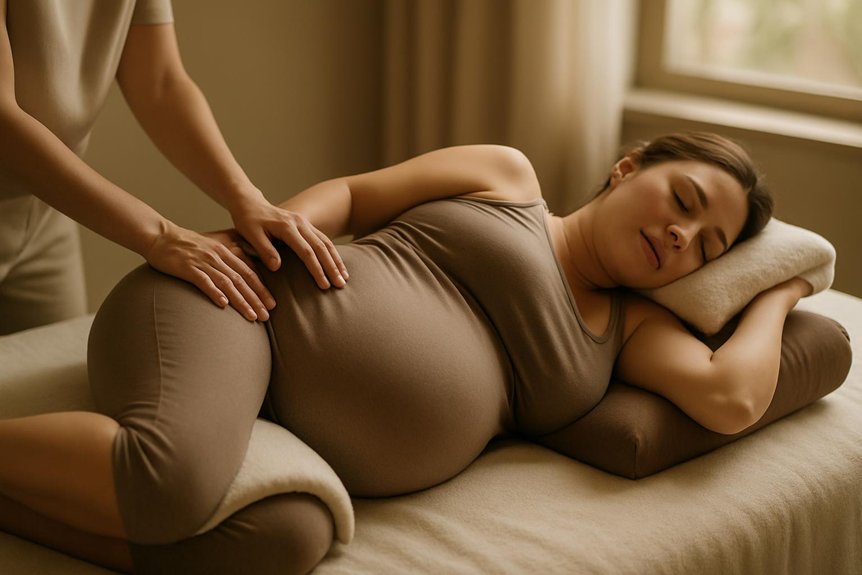
In the third trimester, the safest prenatal massage positions prioritise maternal haemodynamics and comfort by avoiding prolonged supine lying, which can exacerbate aortocaval compression and symptoms such as dizziness or nausea.
In Spa & Massage clinics, therapists typically use a side-lying support setup or a semi-reclined upper body position, selected to minimise pressure on the abdomen and maintain stable breathing and circulation.
Bolster use and precise alignment (head, abdomen, hips, and knees) are treated as core safety controls to reduce lumbar strain, pelvic discomfort, and nerve compression during treatment.
Side-Lying Support Setup
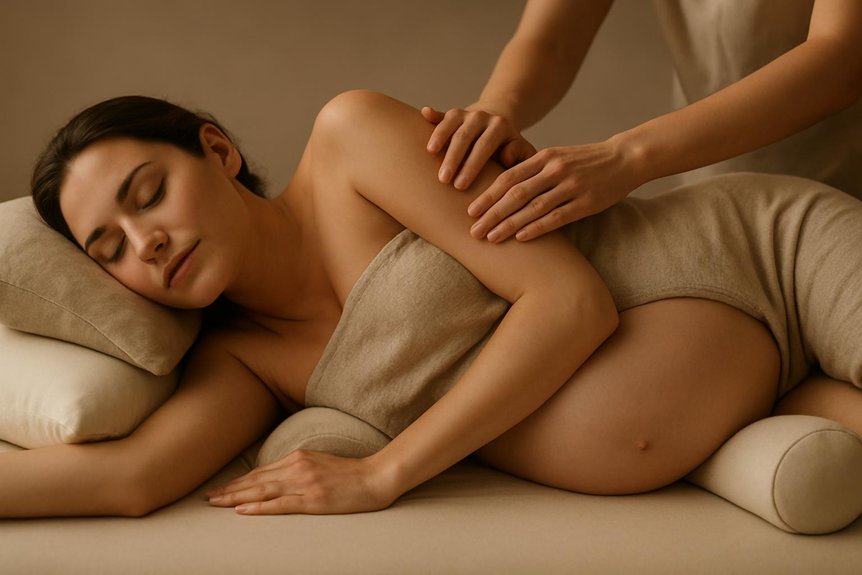
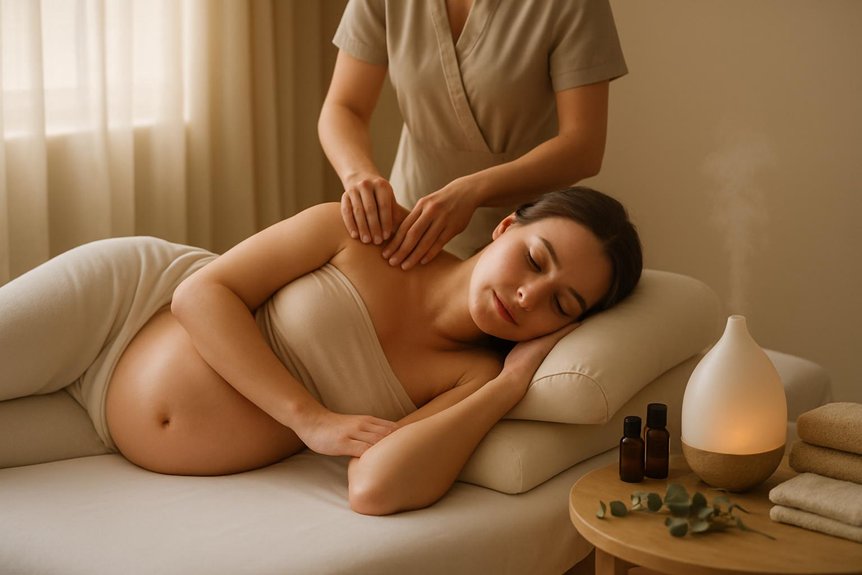
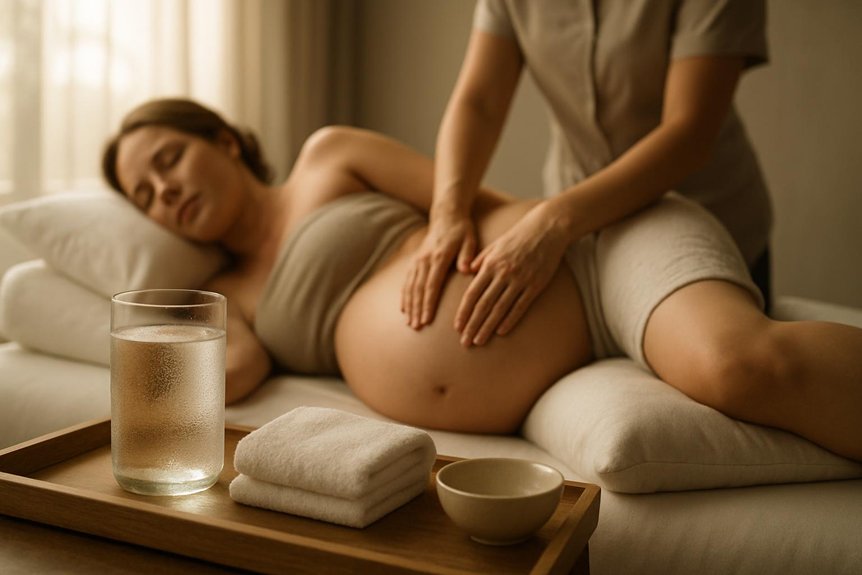
For most people in the third trimester, a properly supported side‑lying setup is regarded as the lowest‑risk massage position because it avoids prolonged supine pressure on the vena cava and reduces abdominal compression while still allowing safe access to the back, hips, and legs.
In Spa & Massage clinics, therapists use firm pillows or bolsters under the head, between the knees, and behind the back to prevent rolling and pelvic strain. The top hip and shoulder are aligned to limit lumbar rotation and sacroiliac stress. A small support under the bump can reduce ligament pull without pressing the uterus.
Pressure is kept moderate, with slow, grounding strokes that encourage relaxation while avoiding deep work over varicosities, the inner thigh, or tender calf tissue. Regular check‑ins assure comfort and breath ease.
Semi-Reclined Upper Body
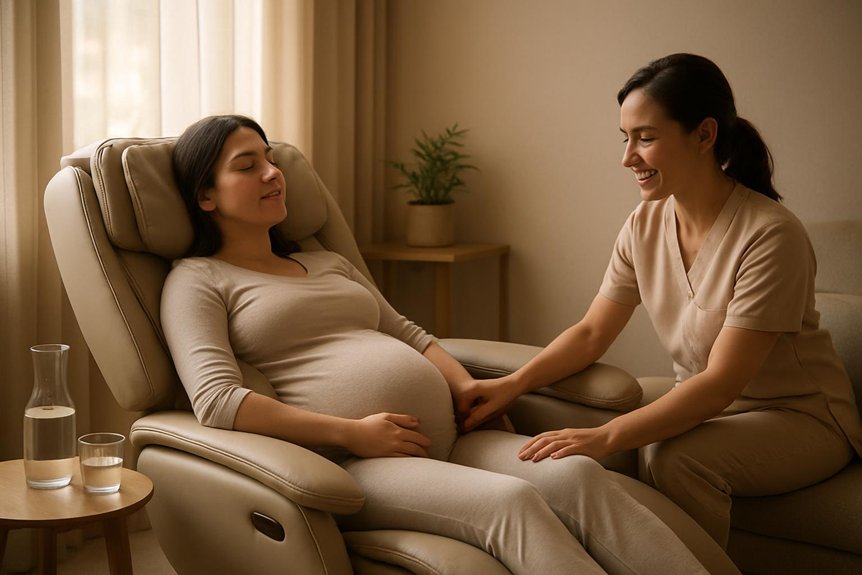
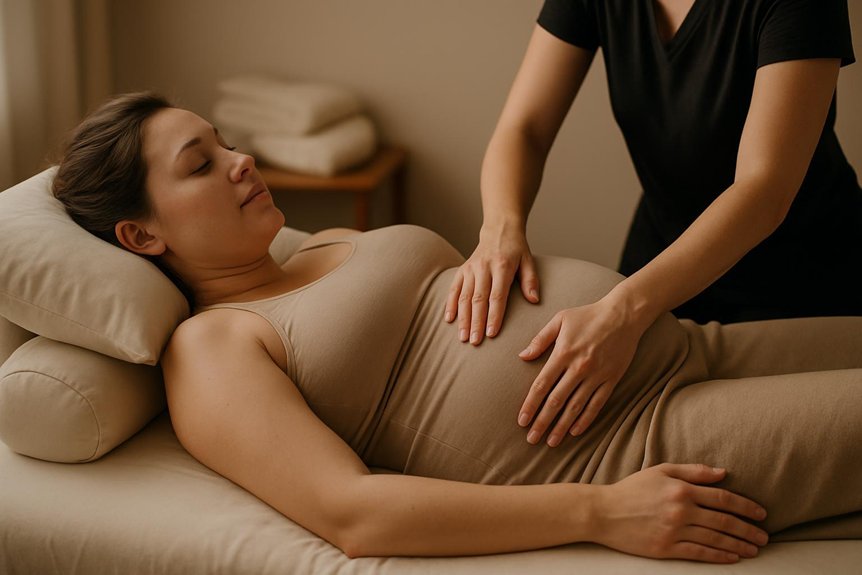
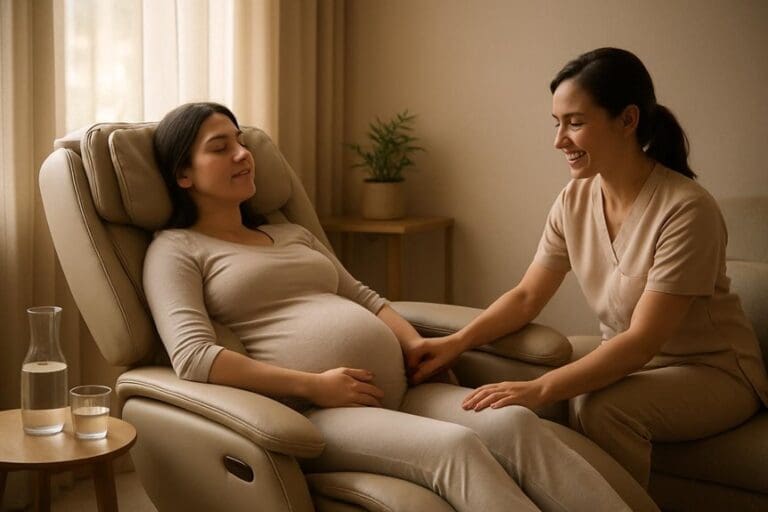
Side‑lying support is widely used in late pregnancy, yet a semi‑reclined upper‑body position can be equally appropriate when supine time needs to be limited while maintaining easy access to the neck, shoulders, arms, and upper back. By elevating the torso, venous return is less likely to be compromised, reducing risk of supine hypotensive symptoms such as dizziness, nausea, or breathlessness.
At Spa & Massage clinics across London, therapists use this position for focused work where close, calming contact is desired without compressing the abdomen. Pressure is kept moderate, avoiding sustained deep work over the rib margins if tenderness is present. Sessions remain responsive: any lightheadedness, reflux, or shortness of breath prompts immediate repositioning, slower pacing, and shorter holds to maintain comfort and safety.
Bolster Use And Alignment
To minimise positional strain and reduce vena cava compression risk in the third trimester, careful bolster use and alignment are treated as primary safety controls.
Side‑lying is typically supported with a full‑length bolster behind the back to prevent rolling supine, and a second bolster between knees and ankles to maintain hip neutrality and ease pelvic ligaments.
A small wedge under the upper abdomen can reduce uterine drag without compressing.
Cervical support is adjusted so the neck stays midline, avoiding brachial plexus traction.
In Spa & Massage clinics, therapists reassess alignment after each turn, watching for dizziness, nausea, breathlessness, or pallor—signs warranting immediate repositioning.
Proper bolstering allows close, soothing contact while keeping circulation and comfort clinically protected throughout.
Safe Prenatal Massage Techniques and Pressure Levels
In the third trimester, prenatal massage is generally safest when it prioritises light‑to‑moderate pressure, avoids sustained compression of major vessels and sensitive regions, and uses positioning that supports uteroplacental circulation.
Clinically, this means slow effleurage, gentle petrissage, and rhythmic compressions that reduce guarding without provoking tissue strain or post‑treatment soreness. Pressure is titrated to comfort, keeping work superficial over oedematous tissues and using broader contact (forearm or palm) rather than pointed thumbs.
At Spa & Massage clinics across London, therapists favour side‑lying and supported semi‑recline, with frequent check‑ins on breathing, warmth, and dizziness. Shorter sets, gradual shifts, and hydration guidance help minimise hypotension and reflux. Intimacy is maintained through steady tempo, warm draping, and consent‑led touch.
Areas and Pressure Points We Avoid in Trimester Three
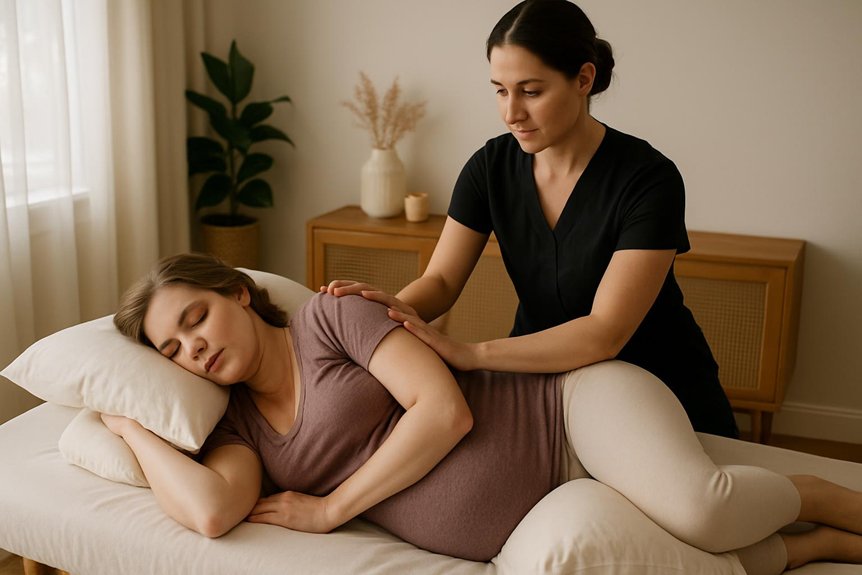
Building on appropriate positioning and light‑to‑moderate pressure, third‑trimester prenatal massage also depends on clearly defined no‑work zones and conservative handling of commonly cited acupressure sites. At Spa & Massage clinics, therapists avoid deep abdominal work, strong sacral pressure, and any direct compression over the uterus.
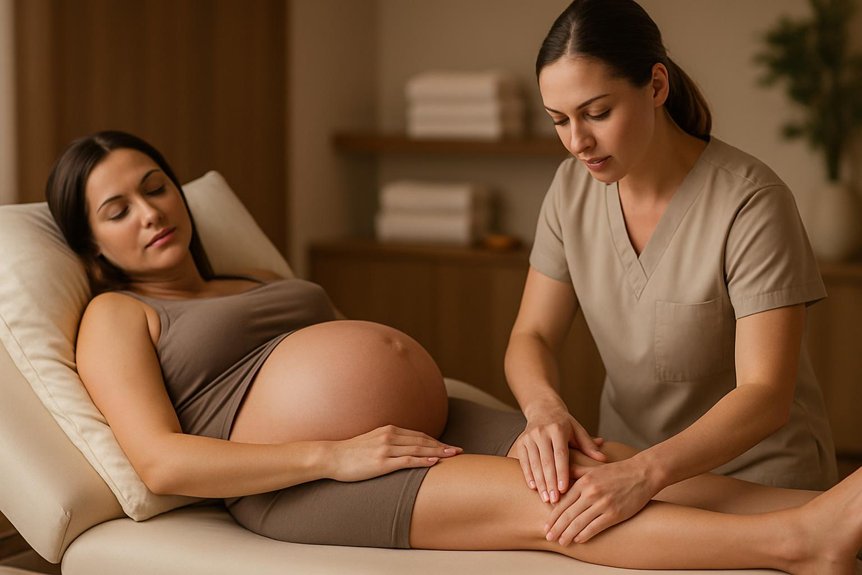
They also work cautiously around varicose veins, oedema, or signs of DVT risk; vigorous, percussive techniques and deep stripping on calves are avoided. Commonly referenced points linked to uterine activity—ankle/inner‑leg regions (e.g., around SP6), webbing between thumb and index (LI4), and areas around the lower back/sacrum—are treated with gentle, broad contact rather than sustained, targeted pressure.
Any unusual pain, cramping, spotting, or dizziness stops the session.
How Prenatal Massage Eases Third-Trimester Symptoms
Relieving late‑pregnancy musculoskeletal load is one of the most consistent, evidence‑supported reasons third‑trimester prenatal massage is used in clinical practice. By reducing paraspinal and pelvic‑girdle muscle guarding, massage may ease low‑back pain, hip discomfort, and rib‑cage tightness, supporting more comfortable movement and rest.
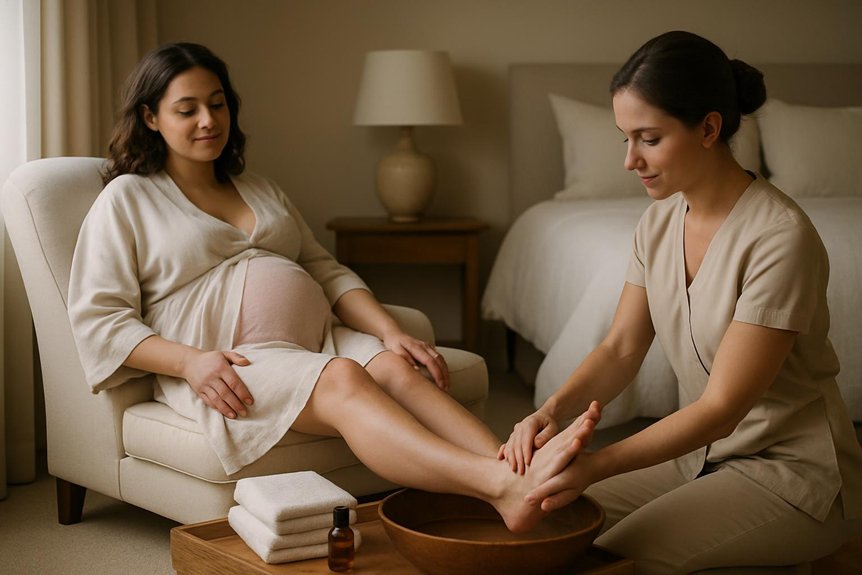
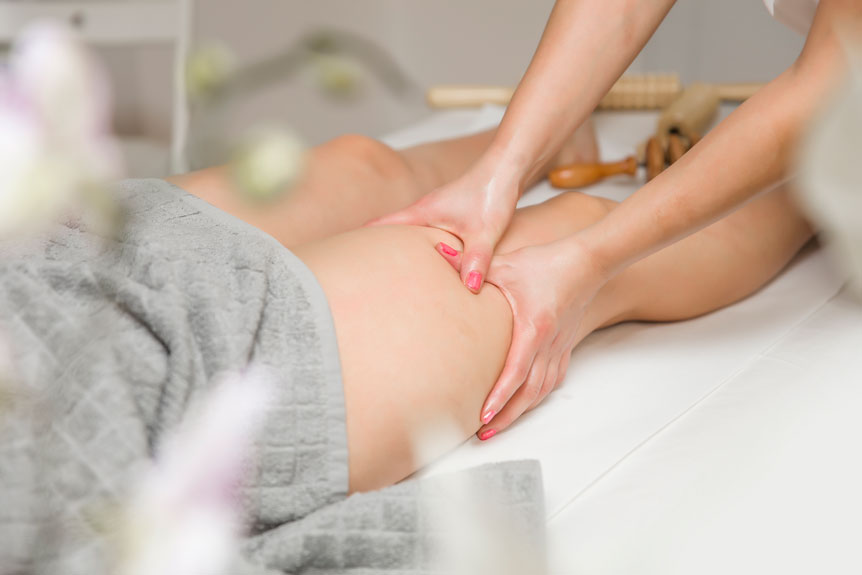
Gentle work to calves, feet, and forearms can lessen perceived swelling and heaviness by improving local circulation and lymphatic return, while avoiding deep pressure where clot risk is a concern. Slow, soothing strokes can down‑shift sympathetic arousal, helping stress, irritability, and sleep disruption common late in pregnancy.
At Spa & Massage London clinics, pregnancy sessions prioritise side‑lying support, moderated pressure, and fragrance‑sensitive oils to maintain comfort and safety.
How to Choose a Qualified Prenatal Massage Therapist
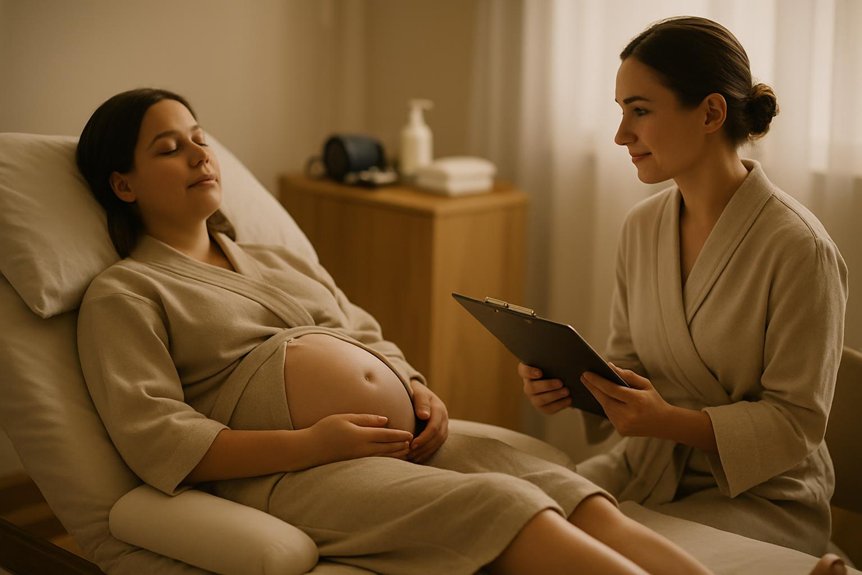
Symptom relief in late pregnancy depends not only on technique but also on the therapist’s training and safety screening. A qualified prenatal therapist should hold recognised massage credentials plus specific pregnancy-massage education, with documented competence in third-trimester positioning, pressure modification, and contraindication management.
Screening should include blood pressure concerns, pre-eclampsia symptoms, vaginal bleeding, preterm labour risk, DVT history, placenta complications, and medication changes; any red flag warrants medical clearance.
The client should expect clear consent, draping, and communication that supports comfort and emotional closeness without overstepping boundaries.
At Spa & Massage clinics across London, therapists tailor sessions after intake and adjust touch to avoid sustained deep pressure on calves and abdomen.
Choosing a therapist who welcomes questions and explains rationale reduces risk and builds trust.
Third-Trimester Prenatal Massage Aftercare Tips
After a third-trimester prenatal massage, aftercare should prioritise hydration, gradual postural changes, and short-term monitoring for red-flag symptoms (e.g., persistent abdominal pain, vaginal bleeding, reduced fetal movements, severe headache/visual changes, sudden swelling, chest pain, or unilateral calf pain), as late-pregnancy physiology increases susceptibility to post-treatment light-headedness, fluid shifts, and thromboembolic risk.
At Spa & Massage clinics across London, therapists advise rising from side-lying slowly, then sitting for 1–2 minutes before standing, to reduce supine-related dizziness and hypotension.
Warm (not hot) water, a light protein-and-fibre snack, and brief walking support circulation; prolonged immobility should be avoided.
Any new uterine tightening, leakage, or shortness of breath warrants prompt medical review. Soreness should be mild; increasing pain suggests overloading.
Conclusion
Third‑trimester prenatal massage can feel like “switching off gravity” for aching backs and swollen legs, yet safety hinges on clinical caution. When delivered by a trained prenatal therapist using side‑lying support, conservative pressure, and strict avoidance of contraindicated areas, it is generally well tolerated for low‑risk pregnancies. It is not advised with red‑flag symptoms or complications (e.g., pre‑eclampsia, bleeding, DVT risk). Best practice: obtain midwife/GP clearance and stop immediately if symptoms change.