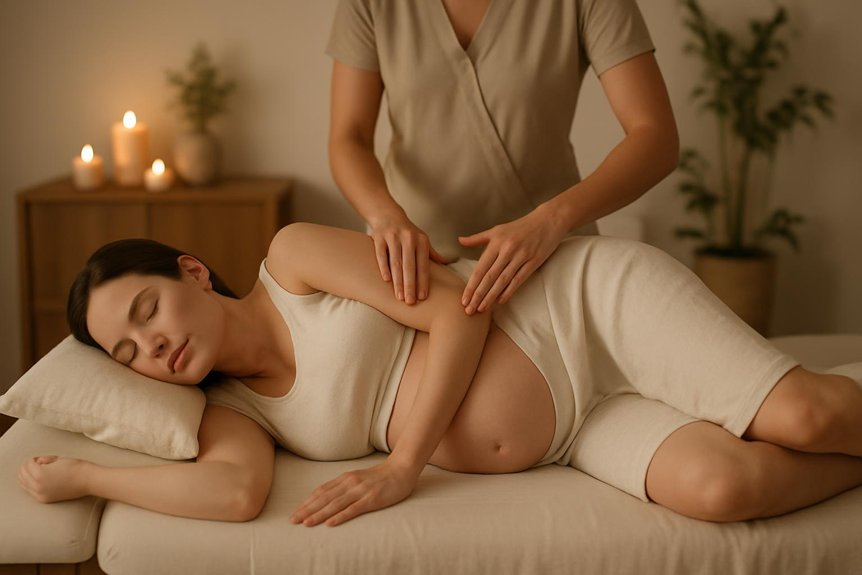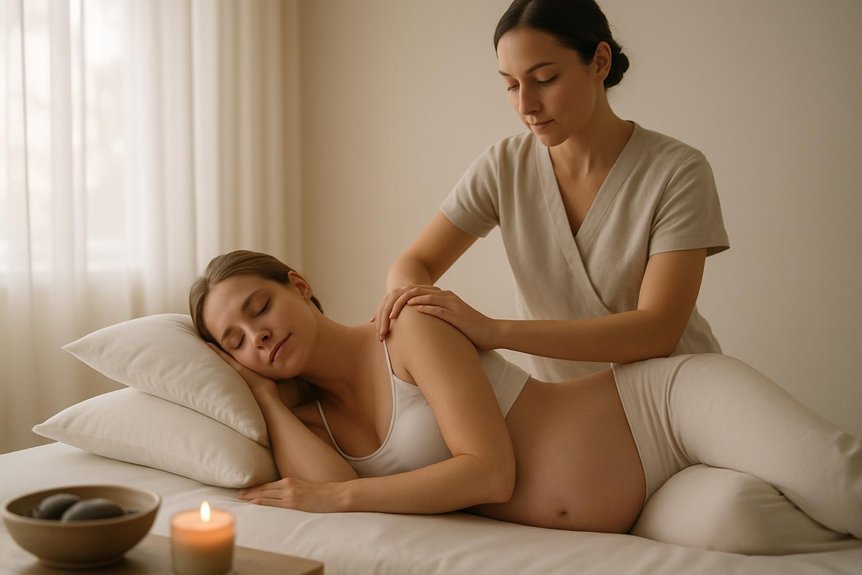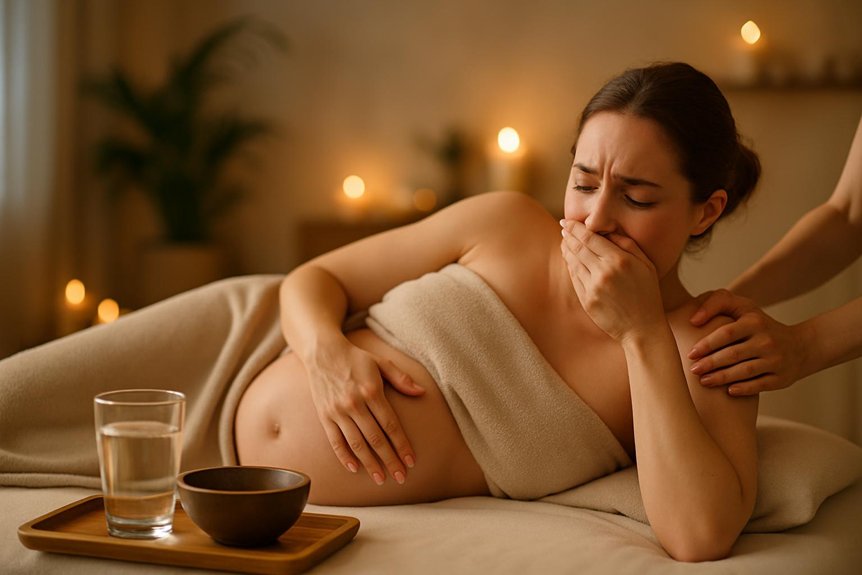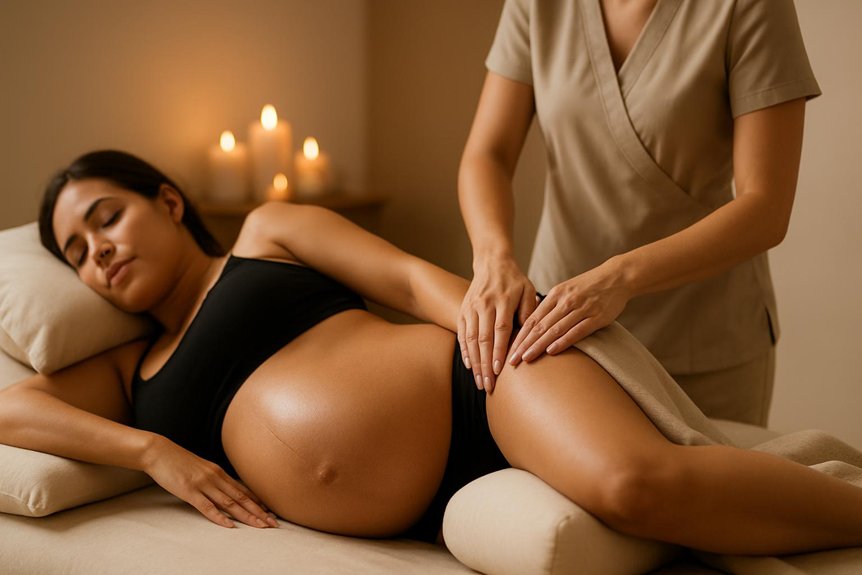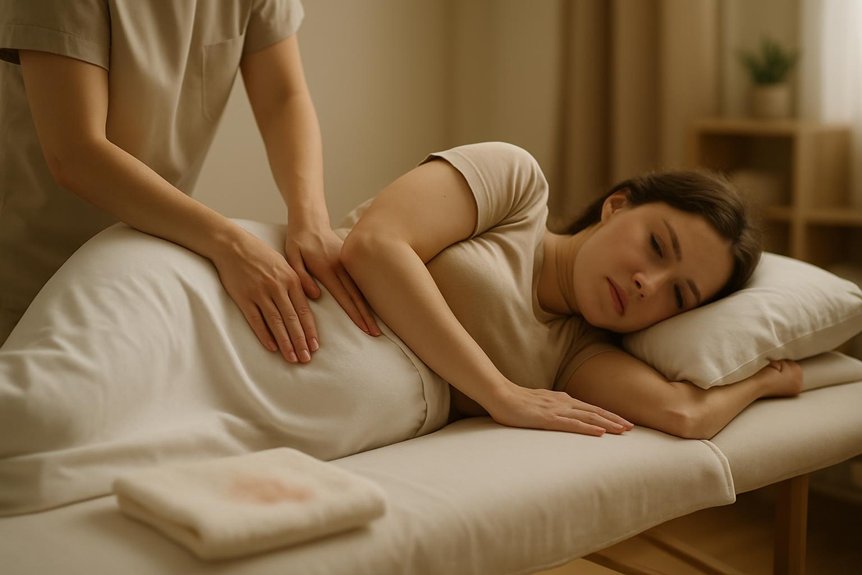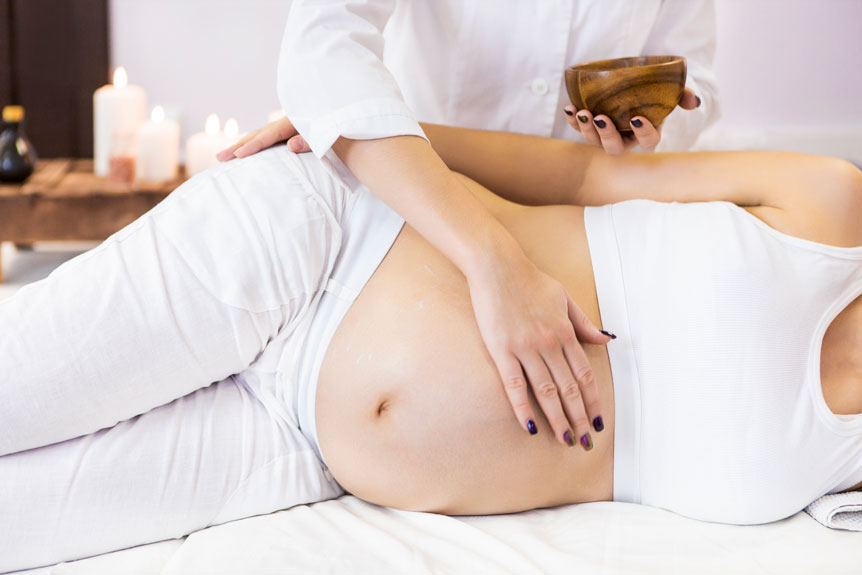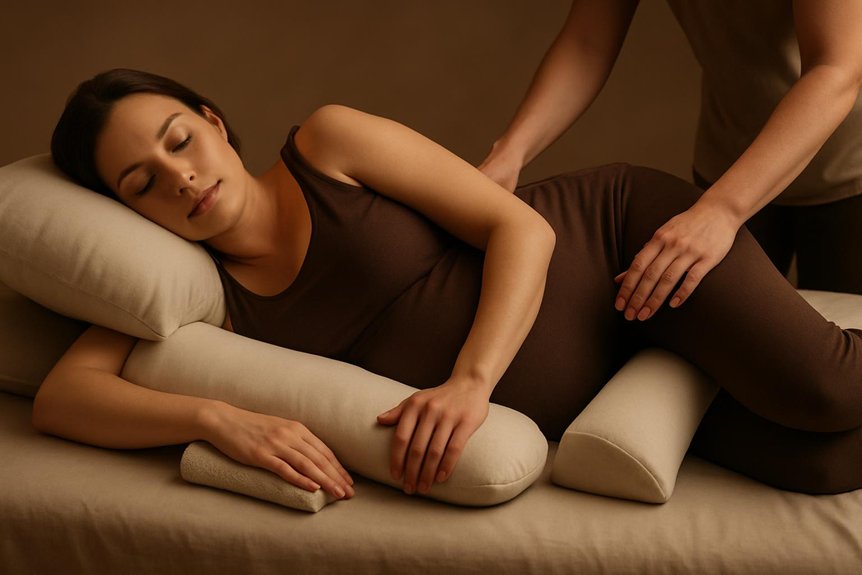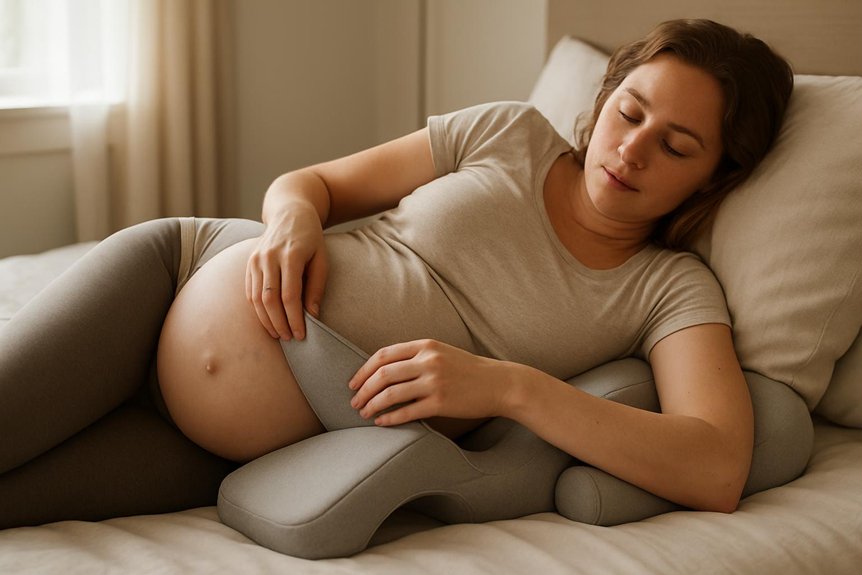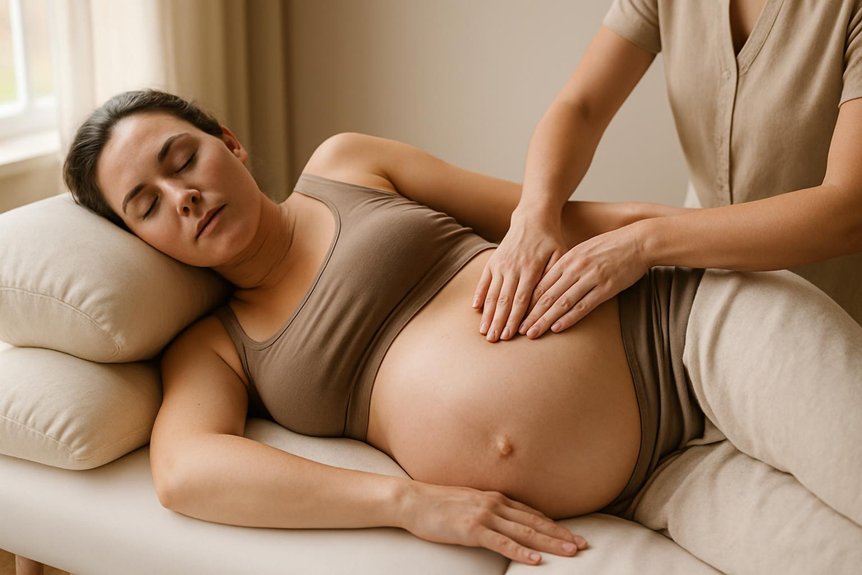
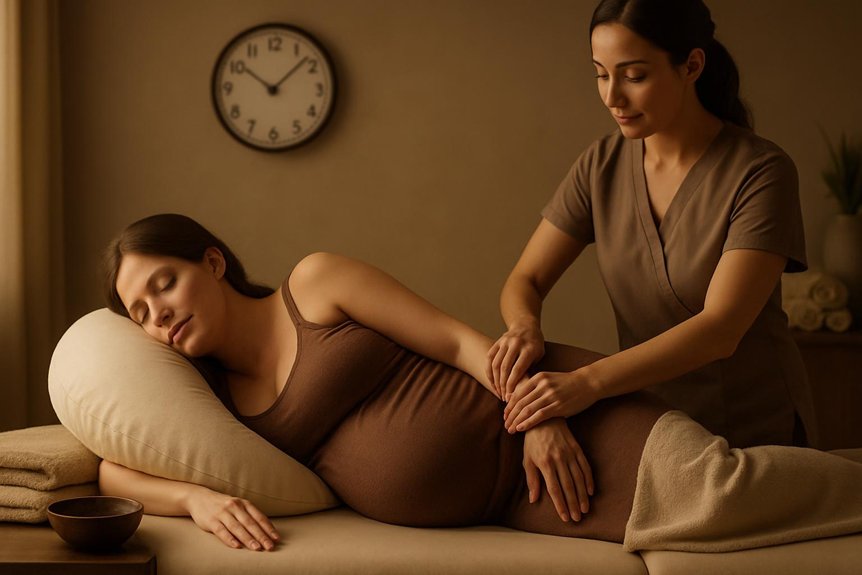
A prenatal massage is typically 45–60 minutes, balancing full-body relief with comfort and safety. First-time clients or those with tenderness often start at 30–45 minutes, while 30 minutes can be effective for focused areas like hips or low back. In healthy, low-risk pregnancies, 60 minutes is common in the second trimester, and 75–90 minutes may suit the third trimester with trained therapists and regular position checks. The sections below explain how timing changes by trimester.
How Long Should a Pregnancy Massage Be?
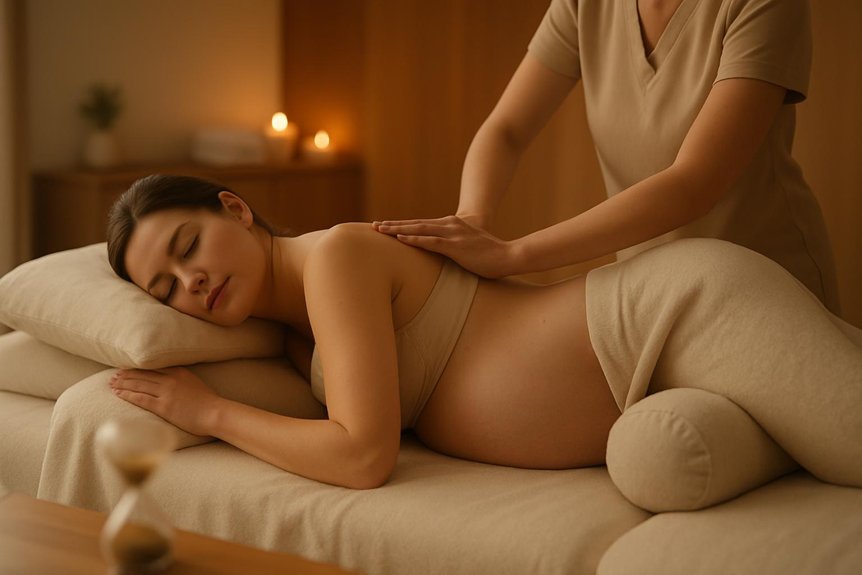
How long should a prenatal massage be to balance comfort with clinical safety? At Spa & Massage, 60 minutes is typically recommended: long enough for soothing full-body work, yet short enough to minimise prolonged positioning and fatigue.
For first-time clients or those with tenderness, 45 minutes may be preferable.
When pregnancy discomfort is focused—such as hips, low back, or legs—30 minutes can be effective and less demanding.
Session length should reflect trimester, energy levels, and any clinical considerations discussed at intake; therapists adapt pace, pressure, and side-lying support throughout.
Many clients find that a consistent schedule of moderate-length sessions sustains calm, circulation, and sleep more reliably than occasional very long appointments.
Regular prenatal massage may also support reduced swelling and relaxation for expecting mothers.
Comfort and consent guide every decision always.
Is a 90-Minute Prenatal Massage Safe?
A 60‑minute prenatal massage is often the most comfortable starting point, but some clients in London ask whether a longer session offers added relief. A 90‑minute session can be safe for many pregnancies when delivered by trained therapists, with appropriate positioning, gentle pacing, and regular check-ins to prevent overheating, dizziness, or low blood pressure.
At Spa & Massage clinics across London, therapists screen for contraindications (bleeding, severe swelling, pre‑eclampsia concerns, clotting risk, fever, or unexplained pain) and adapt pressure, bolstering, and side‑lying support to keep breathing easy and the baby well protected.
Many clients find the extra time allows slower, more intimate work on hips, lower back, and legs without rushing. Hydration, light snacks, and stopping immediately if discomfort arises are advised.
How Long Should Prenatal Massage Be in Each Trimester?
Prenatal massage duration often needs to be adjusted by trimester to reflect changing comfort, positioning tolerance, and clinical considerations.
In the first trimester, many practitioners—including Spa & Massage therapists—tend to keep sessions shorter and more conservative, while the second and third trimesters commonly allow for longer appointments when the client remains comfortable and the pregnancy is low-risk.
The sections below outline typical timing ranges for each trimester and how Spa & Massage tailors session length to symptoms, medical history, and real-time feedback.
First Trimester Timing
In the first trimester, session length is typically kept conservative—most clients do best with 30–60 minutes—because comfort, nausea, fatigue, and sensitivity to positioning can change quickly at this stage.
At Spa & Massage clinics across London, therapists prioritise steady, soothing work and frequent check-ins so the client feels held, safe, and unrushed.
A shorter session also supports gentle pacing: light-to-moderate pressure, careful bolstering, and breaks for water or the loo, as needed.
For those experiencing heightened scent sensitivity, many clients choose a fragrance-free option; if oils are used, they are kept mild and used sparingly.
If there is bleeding, severe cramping, dizziness, or pregnancy complications, treatment is deferred until medical guidance is confirmed.
Second And Third Trimester Timing
From the second trimester onward, most healthy pregnancies can comfortably accommodate longer prenatal massage sessions—typically 60 minutes, with 75–90 minutes often appropriate in the third trimester—provided positioning, temperature, and pressure are adapted to changing circulation, joint laxity, and back or pelvic load.
At Spa & Massage clinics across London, therapists usually favour side-lying support, gentle bolstering, and lighter-to-moderate pressure to ease hip, sacral, and mid-back tension without overstimulating sensitive tissues.
Breaks for water, bathroom, or position changes are built in, especially late pregnancy when breath and comfort shift quickly. Sessions may be shortened if swelling, dizziness, high-risk conditions, or obstetric advice indicates caution.
The aim is calm, close-held comfort with safe relief, guided by ongoing check-ins and consent.
How Often Should You Book Prenatal Massage?
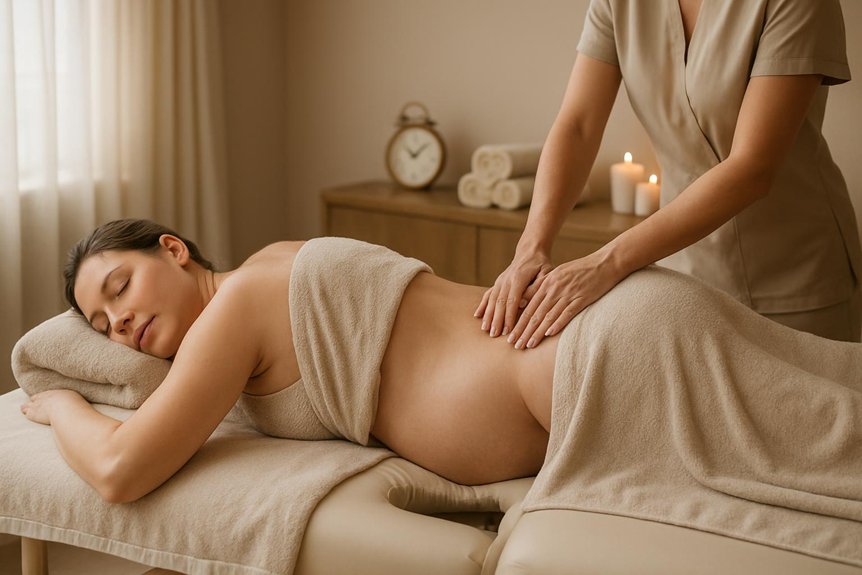
How often prenatal massage is booked typically varies by trimester, symptom intensity, and guidance from a maternity care provider, with Spa & Massage therapists tailoring plans to each client’s comfort and medical history.
Many clients find that occasional sessions in the first trimester and more regular appointments in the second and third trimesters help manage common changes such as back, hip, and leg discomfort, provided there are no contraindications.
Signs that a higher frequency may be appropriate include persistent swelling, sleep disruption, recurrent headaches, or escalating pelvic and low-back tension, all of which should be reviewed in a safety-first way.
Ideal Frequency By Trimester
Generally, the ideal prenatal massage frequency changes by trimester and should be guided by individual symptoms, pregnancy risk factors, and comfort levels rather than a fixed schedule.
In the first trimester, many clients keep sessions occasional (for example, every 3–4 weeks) and only with pregnancy-trained therapists, prioritising gentle relaxation and nausea-sensitive positioning.
In the second trimester, comfort often improves, so fortnightly care can support sleep, circulation, and easing low-back or hip tension as the pelvis adapts.
In the third trimester, weekly or fortnightly sessions may feel most nurturing as weight and fluid shifts increase; pacing remains conservative for swelling, reflux, or breathlessness.
At Spa & Massage clinics, therapists tailor pressure, bolstering, and aromatherapy choices, and recommend GP or midwife clearance when indicated.
Signs You Need More
Trimester-based guidance provides a helpful baseline, but booking frequency should ultimately respond to symptom patterns and day-to-day function. Signs more sessions may help include recurring low-back or pelvic ache, sciatica-like discomfort, leg cramps, swelling that returns quickly, headaches linked to neck tension, or sleep disruption from soreness. Emotional signs matter too: persistent restlessness, shallow breathing, or difficulty “switching off” after work.
At Spa & Massage, therapists suggest increasing to weekly or fortnightly care when relief lasts only a few days, posture strain escalates, or daily activities feel harder. Any new severe pain, bleeding, dizziness, reduced fetal movement, fever, or sudden swelling should be medically assessed before rebooking. Frequency should feel nurturing, never pushing limits.
When Is a Shorter Prenatal Massage Safer?
At certain points in pregnancy, a shorter prenatal massage can be the safer option because it reduces time in one position and limits cumulative stimulation while still providing meaningful relief. This is especially relevant in the first trimester, during episodes of nausea or dizziness, or when blood pressure feels labile.
Shorter sessions can also be wiser for clients with pelvic girdle pain, sciatica flares, reflux, or breathlessness, as prolonged side-lying may increase discomfort. If there is swelling, a history of clotting risk, or new calf pain, a brief, gentle treatment—or postponing until medical review—may be safest.
At Spa & Massage, therapists prioritise slow, soothing touch, supportive bolstering, and frequent check-ins to keep the body calm and well-cared-for throughout.
How We Tailor Your Prenatal Massage Length at Spa & Massage
Because a shorter prenatal massage can sometimes be the safer choice, session length at Spa & Massage is set on an individual basis rather than a fixed rule. Therapists begin with a brief health screening, gestational stage check, and a discussion of symptoms, sleep, swelling, and medical guidance, then recommend a duration that supports comfort and circulation without overtaxing the nervous system.
Across London clinics (Crouch End, Bayswater, Chiswick, Earl’s Court, Belsize Park, Richmond), time is adjusted for positioning tolerance, breath, and tenderness. Many clients start with 30–45 minutes, then extend to 60 minutes when they feel steady and relaxed. If fatigue, dizziness, or uterine irritability appears, the therapist shortens, slows, and prioritises soothing, skin-warming strokes with pregnancy-safe oils.
Conclusion
Choosing the right prenatal massage length is like finding the correct setting on a dimmer switch: enough to bring relief, not so much that the body feels overwhelmed. Evidence-informed practice supports tailoring duration to trimester, symptoms, and medical history, with careful positioning and frequent comfort checks. Shorter sessions may suit fatigue, swelling, or sensitivity, while longer visits can address widespread tension when tolerated. Ongoing scheduling and clear aftercare help maintain comfort safely.