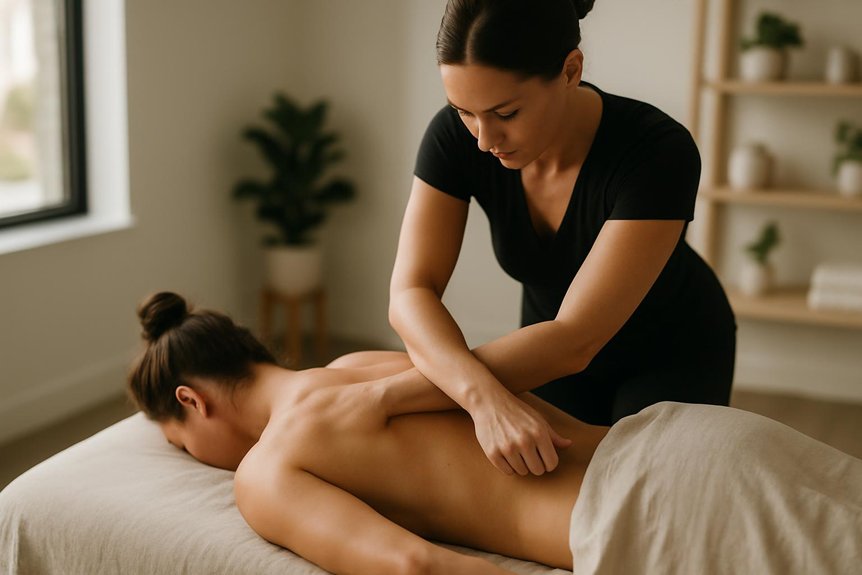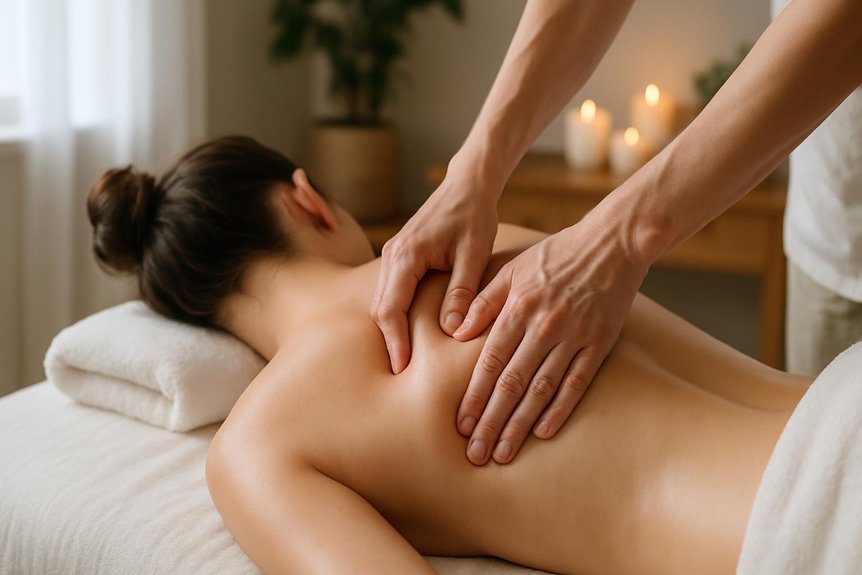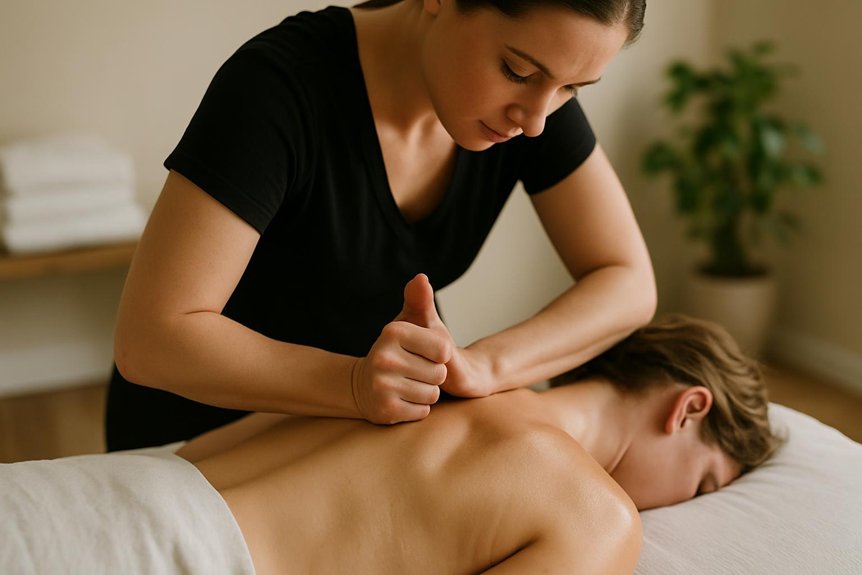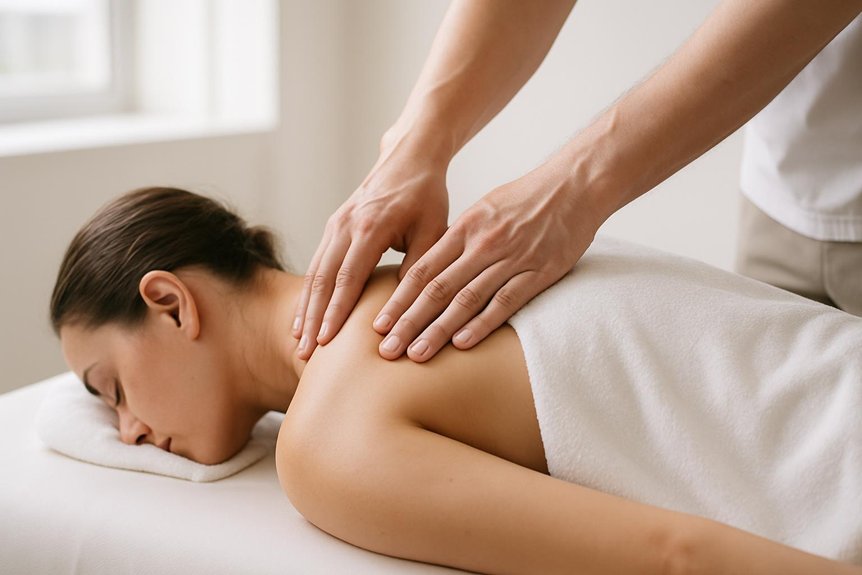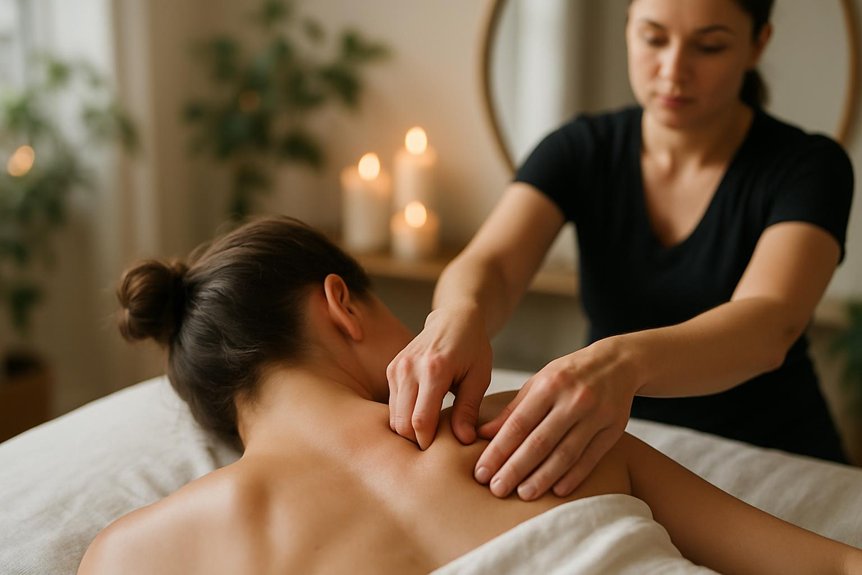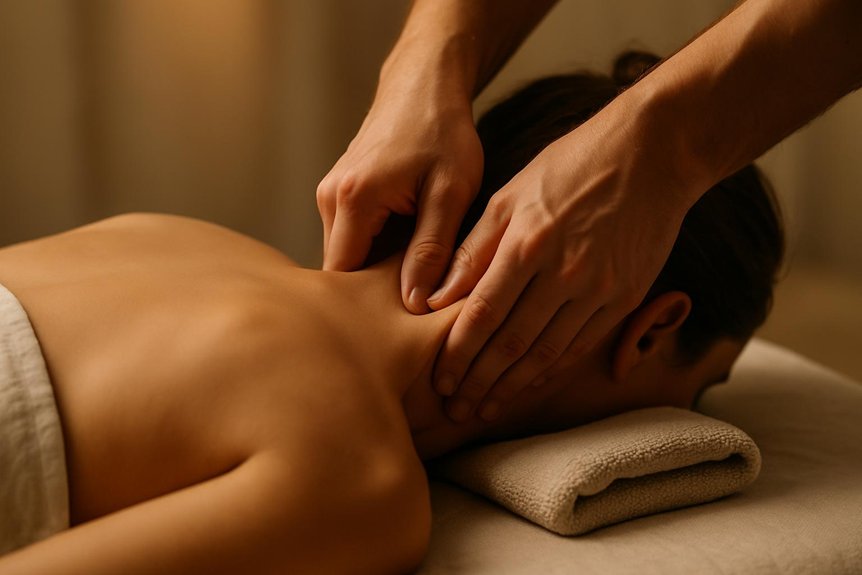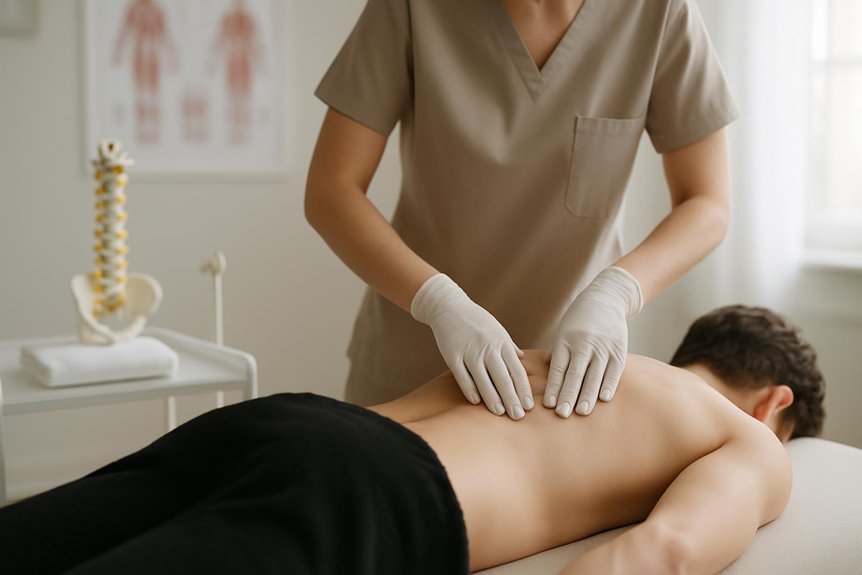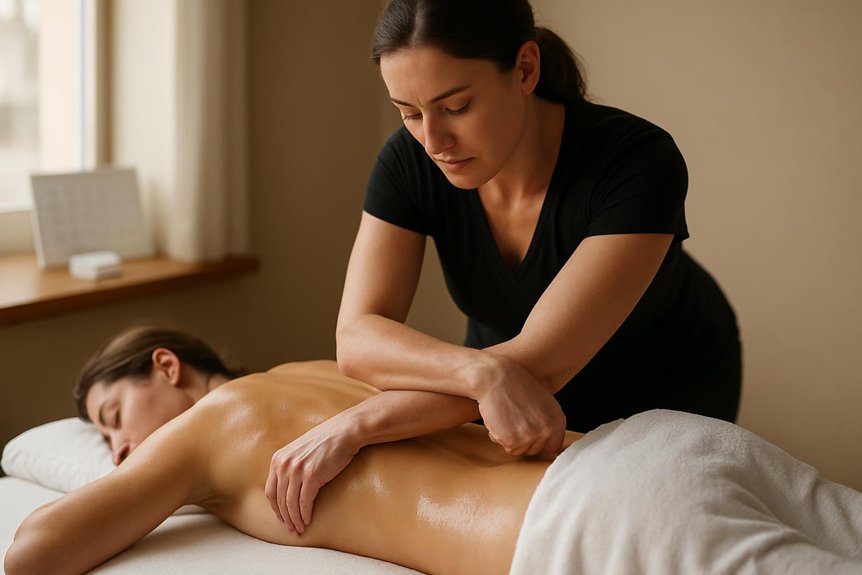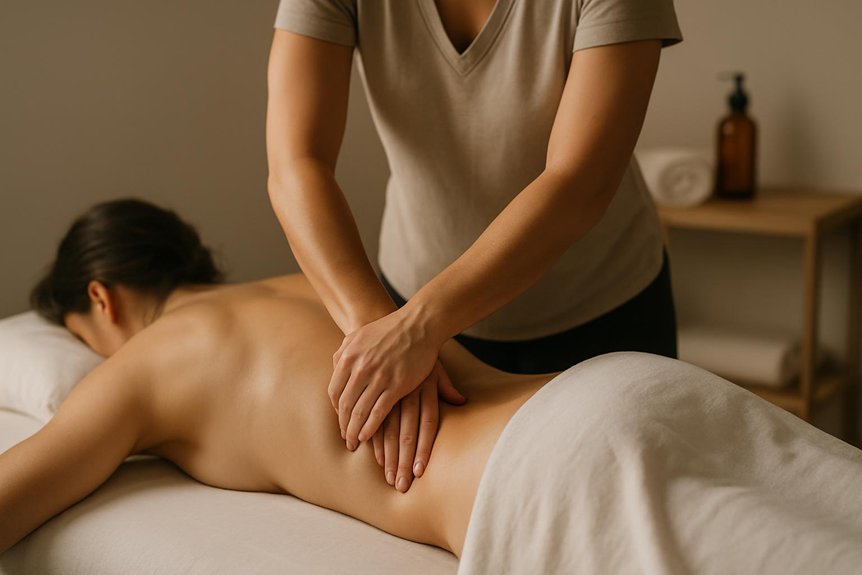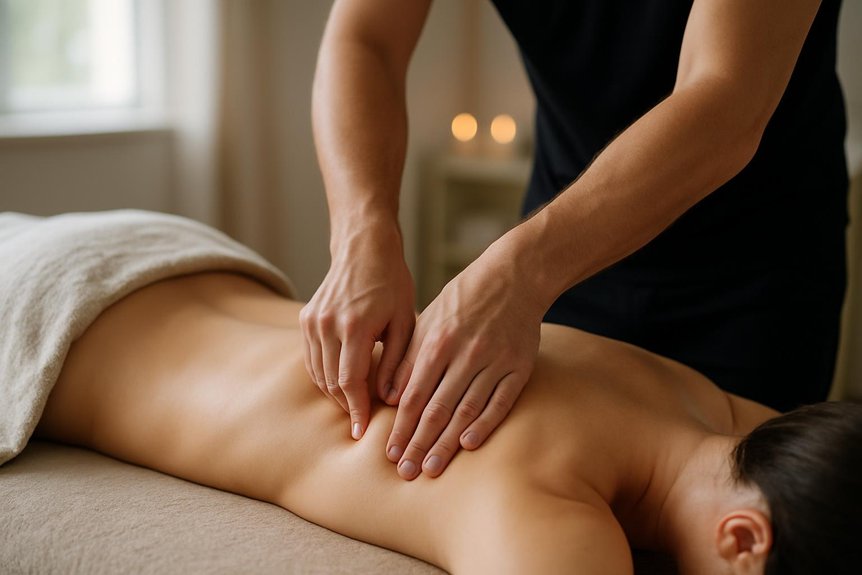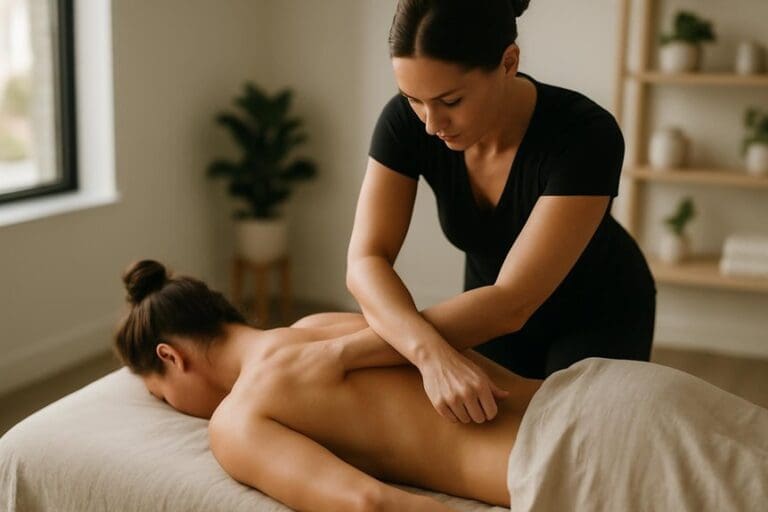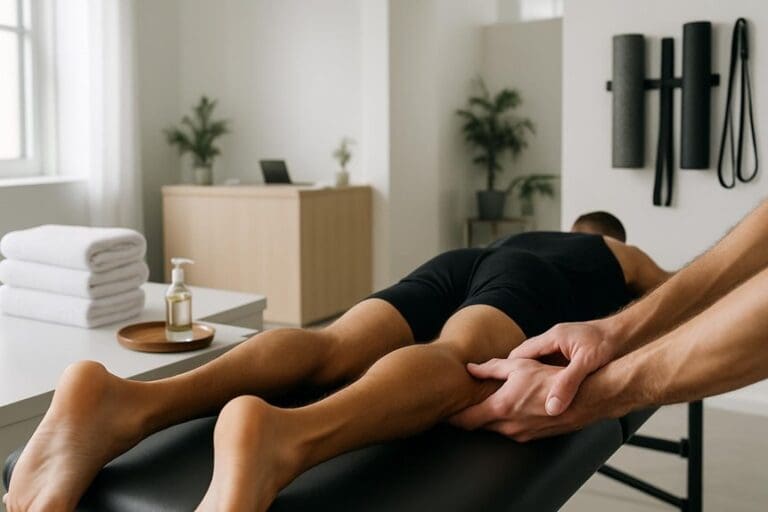
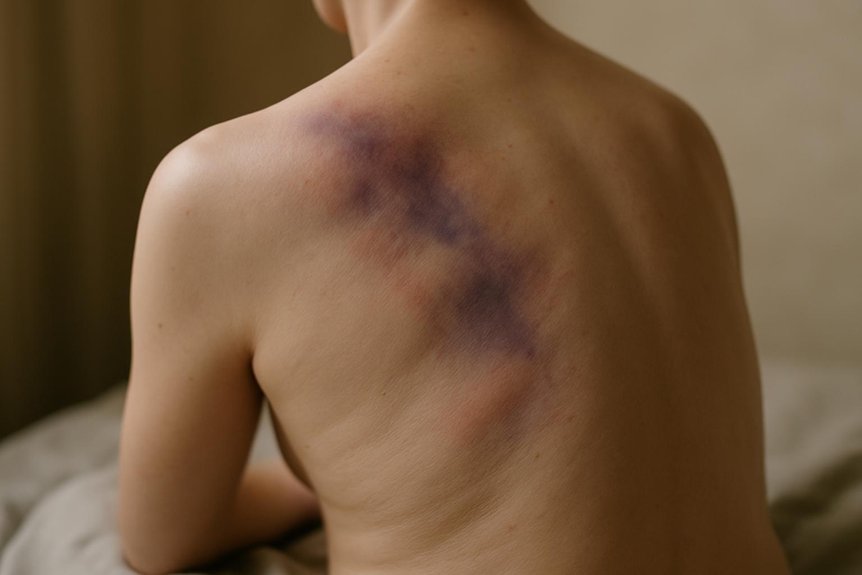
Mild, localised bruising can be normal after intensive tissue massage because sustained pressure or friction may rupture superficial capillaries, especially over bony areas or where tissue padding is thin. It is more likely with intense trigger-point work, inadequate glide, fragile skin, or use of anticoagulants, antiplatelets, corticosteroids, or certain supplements. Typical bruises appear within 24–72 hours and fade over 7–14 days. Rapidly spreading discoloration, severe pain, swelling, warmth, numbness, or persistent bruising warrants medical review; further detail follows.
Is Bruising After Deep Tissue Massage Normal?
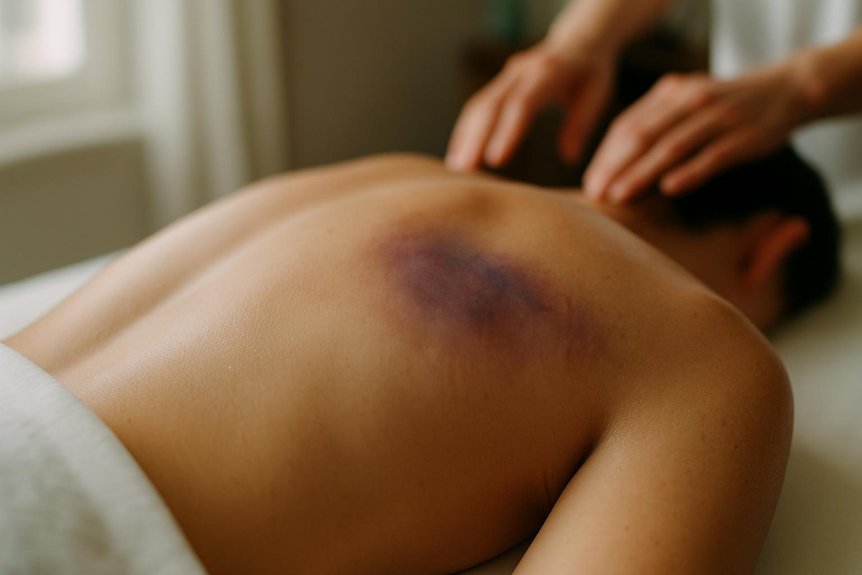
Experiencing mild bruising after an intensive tissue massage can be normal, as sustained pressure and friction may cause small superficial blood vessels (capillaries) to rupture, particularly in tight or sensitised muscle areas. It is more likely with higher pressure, limited hydration, fragile skin, or certain medicines that affect clotting.
The techniques use sustained, targeted pressure to address deeper muscle layers and connective tissue, which can increase the likelihood of capillary rupture in sensitive areas.
At Spa & Massage clinics across London, therapists treat bruising risk as a consent and safety issue, adjusting depth, pace, and tools to match tissue response and comfort cues. Mild, localised bruises that fade over several days are typically benign.
However, extensive, worsening, or unexplained bruising warrants medical advice, especially with bleeding disorders, anticoagulants, pregnancy, or severe pain. Clients should report prior bruising history and request gentler, closer-contact work.
Is It Bruising or Just Post-Massage Soreness?
Mild, localised bruising can be a benign response to deep tissue work, but many post-treatment symptoms are instead delayed-onset muscle soreness (DOMS) from mechanical stress on muscle fibres.
Bruising typically appears as visible discolouration that may feel tender to touch, changes colour over days, and is more defined in a small area. DOMS is usually broader, feels like an ache or stiffness, and peaks 24–72 hours after treatment without marked colour change.
At Spa & Massage clinics, therapists advise clients to note size, colour, and progression: worsening pain, swelling, heat, numbness, or rapidly spreading discolouration warrants prompt medical review.
Gentle movement, hydration, and warm showers often ease soreness, while direct pressure on tender spots should be minimised.
What Causes Bruising After Intensive Tissue Massage?
In most cases, bruising after intensive tissue massage results from small superficial blood vessels (capillaries) rupturing under mechanical load when firm, sustained pressure or friction is applied to soft tissue.
Deeper work on dense muscle, trigger points, or adhesions can amplify shear forces and local microtrauma, especially where tissue is tight or previously inflamed.
Individual factors also influence susceptibility: fragile capillaries, age-related skin thinning, dehydration, vigorous exercise, or recent sun exposure may reduce tissue resilience.
Medical contributors include anticoagulants, antiplatelet drugs, corticosteroids, certain supplements (e.g., fish oil), bleeding disorders, or low platelet counts.
At Spa & Massage, therapists minimise risk by moderating pressure, using slow, controlled strokes with adequate lubrication, and checking in frequently so the client remains relaxed and safely comfortable throughout.
How Long Does Bruising Last After Massage?
After a massage, minor bruising typically fades over several days, often changing colour as it resolves in line with normal soft‑tissue healing.
Duration can vary with treatment intensity, individual clotting tendency, medications (e.g., anticoagulants), hydration, and local tissue sensitivity—factors Spa & Massage therapists consider when tailoring pressure and aftercare.
Medical review is advisable if bruising is severe, rapidly expanding, very painful, accompanied by significant swelling or numbness, or persists beyond roughly two weeks.
Typical Bruise Timeline
Over the first 24–72 hours, any bruising that follows an intensive tissue massage typically becomes most noticeable, then begins to change colour and fade as the body reabsorbs the leaked blood under the skin. Colour often shifts from red-purple to blue, then green, and finally yellow-brown as healing progresses.
Most uncomplicated bruises soften and lighten within 7–14 days, with tenderness settling sooner. Smaller marks may resolve in under a week; deeper bruises can remain visible for up to two weeks. At Spa & Massage clinics, therapists advise gentle warmth after 48 hours, light movement, hydration, and avoiding further pressure over the area until it feels comfortable. A bruise that rapidly expands, becomes very painful, feels hot, or is accompanied by dizziness or unusual swelling warrants prompt medical assessment.
Factors Affecting Duration
Depending on tissue depth, individual physiology, and technique intensity, bruising after an intensive tissue massage may clear within a few days or persist for up to two weeks.
Duration is influenced by capillary fragility, age, hydration, sleep, and baseline inflammation.
Areas with thinner tissue (neck, inner arms) can discolor longer than denser regions (glutes, thighs).
Treatment variables matter: sustained pressure, friction, and rapid stripping tend to prolong visible marks versus slower, graded work.
At Spa & Massage clinics across London, therapists tailor depth to client feedback, gradually warming tissue and adjusting pressure to reduce unnecessary microtrauma.
Post-session care also affects fading: gentle movement supports circulation, while adequate fluids and avoiding additional pressure on tender spots may help.
Seasonal cold may slow clearance slightly.
When To Seek Help
Within the first 48–72 hours, post‑massage bruising should generally remain mild, begin to stabilise, and show early signs of fading.
If bruising expands rapidly, becomes very dark, or is accompanied by severe pain, numbness, weakness, marked swelling, heat, or increasing tenderness, clinical review is advised. Medical help is urgent for shortness of breath, chest pain, calf swelling, dizziness, fainting, or uncontrolled bleeding.
At Spa & Massage, therapists recommend contacting the clinic if bruising persists beyond 10–14 days, new bruises appear without clear pressure, or skin breaks, blistering, or infection signs occur (spreading redness, pus, fever).
Extra caution is warranted for clients on anticoagulants, with bleeding disorders, or who are pregnant. Follow-up can refine pressure and aftercare.
How Can You Reduce Bruising After Intensive Tissue Massage?
Bruising can often be reduced by prompt, targeted aftercare that limits local inflammation and protects recently stressed capillaries.
A cool compress for 10–15 minutes at a time during the first 24 hours may help; avoid direct ice-to-skin contact.
Gentle elevation and light, pain-free movement can support circulation without re-aggravating tissue.
For the first day, clients are advised to avoid vigorous exercise, hot baths/saunas, and alcohol, which can increase local blood flow and swelling.
Hydration and adequate sleep aid recovery.
In Spa & Massage clinics, therapists recommend communicating tenderness early and booking follow-up sessions with lighter pressure if bruising occurs.
Topical arnica may be considered if tolerated, patch-test first.
Who Bruises More Easily After Intensive Tissue Massage?
Bruising after intensive tissue massage is more likely in individuals with naturally delicate skin, lower subcutaneous fat, or increased capillary fragility. Risk is also higher for those taking blood thinners or other medications that affect clotting or platelet function, so disclosure during intake is essential for safe pressure selection.
At Spa & Massage clinics, therapists screen for these factors and modify techniques and intensity to reduce tissue trauma while still achieving therapeutic goals.
Naturally Delicate Skin
Some individuals naturally bruise more easily following intensive tissue massage, particularly those with delicate, thin, or more translucent skin where superficial capillaries are less protected by connective tissue and subcutaneous fat.
Minor bruising can occur even with appropriate technique, especially around bony landmarks (shins, collarbone, shoulders) and in areas with tight fascia.
At Spa & Massage clinics across London, therapists screen for skin fragility, adjust pressure gradually, and prioritise slow, broad contact rather than pinpoint compression.
Using adequate glide and warming the tissue first can reduce shear on the skin while still reaching deeper layers.
Clients seeking a close, reassuring experience are encouraged to communicate tenderness early; intensity should feel purposeful, not sharp.
Persistent swelling, expanding bruises, or significant pain warrants medical review.
Blood Thinners And Medications
Where anticoagulant or antiplatelet medicines are used, even well-delivered deep tissue work can lead to more visible and longer-lasting bruising because clot formation is intentionally reduced.
This includes prescribed blood thinners and drugs that affect platelet function, as well as some anti‑inflammatories and supplements.
At Spa & Massage clinics, therapists ask about current medications and bleeding history before treatment, then adjust pressure, pace, and techniques to protect capillaries while still addressing tension.
Clients are advised to disclose recent dose changes, missed doses, or new bruising tendencies, as these can alter risk.
Deep work should not be performed over unexplained bruises, varicose veins, or areas of tenderness.
If bruising is extensive, painful, or persists, medical review is recommended promptly.
Low Body Fat Levels
In individuals with low body fat, intensive tissue massage is more likely to produce visible bruising because there is less soft-tissue padding between the therapist’s pressure and superficial blood vessels over bony prominences (e.g., shins, hips, ribs, shoulders). Capillaries can shear more easily when compressive or frictional forces are applied close to bone, so even “comfortable” pressure may leave marks.
At Spa & Massage clinics across London, therapists screen for body composition and tenderness, then adapt depth, angle, and pacing, using slower, grounded strokes and broader contact to reduce focal loading. Clients are encouraged to communicate pressure in real time, especially during close-contact work around hips and shoulders.
If bruising is frequent, unusually painful, or paired with swelling, heat, or limited movement, medical review is advised.
When Is Bruising After Massage Not Normal?
When does post‑massage bruising indicate a safety issue rather than a routine response to deep pressure? Concern rises when bruising is extensive, rapidly spreading, very painful, or accompanied by swelling, warmth, numbness, weakness, dizziness, fever, shortness of breath, or chest pain.
Bruising that appears far from the treated area, shows pinpoint “petechiae,” forms firm lumps, or persists beyond 10–14 days also warrants assessment.
Higher risk exists for clients on anticoagulants/antiplatelets, with clotting disorders, liver disease, recent surgery, cancer, or fragile skin.
Spa & Massage advises pausing further deep work and seeking medical review if any red flags occur, especially in pregnancy or with unexplained bruising.
Intimate areas should never be deeply pressured without explicit consent.
How Our Spa & Massage Therapists Help Prevent Bruising?
Before any deep pressure is applied, Spa & Massage therapists reduce bruising risk through structured screening, pressure calibration, and tissue‑appropriate technique.
Intake includes medications (e.g., anticoagulants), recent procedures, clotting disorders, and prior bruising, with referral or modified care when indicated.
Pressure is titrated using continuous consent, breath cues, and pain thresholds; “good pressure” is kept below sharp or burning sensations.
Techniques prioritise slow, broad contact (forearm, soft fist) over pinpoint elbows on fragile areas, and avoid bony prominences and superficial vessels.
For sports or deep tissue sessions, therapists warm tissue first and layer intensity gradually to support capillary integrity.
Aftercare is explained quietly: hydration, heat or cool guidance, and activity pacing to protect tender tissue.
Conclusion
Bruising after intensive tissue massage is usually mild and short‑lived, like faint ink blooming beneath the skin where small capillaries have been stressed. Most marks fade within days as the body reabsorbs pooled blood and tenderness settles with rest, hydration, and gentle movement. Risk rises with blood‑thinning medicines, fragile vessels, or high treatment pressure. Large, worsening, or unexplained bruises—especially with swelling, severe pain, or dizziness—are not typical and warrant clinical advice.