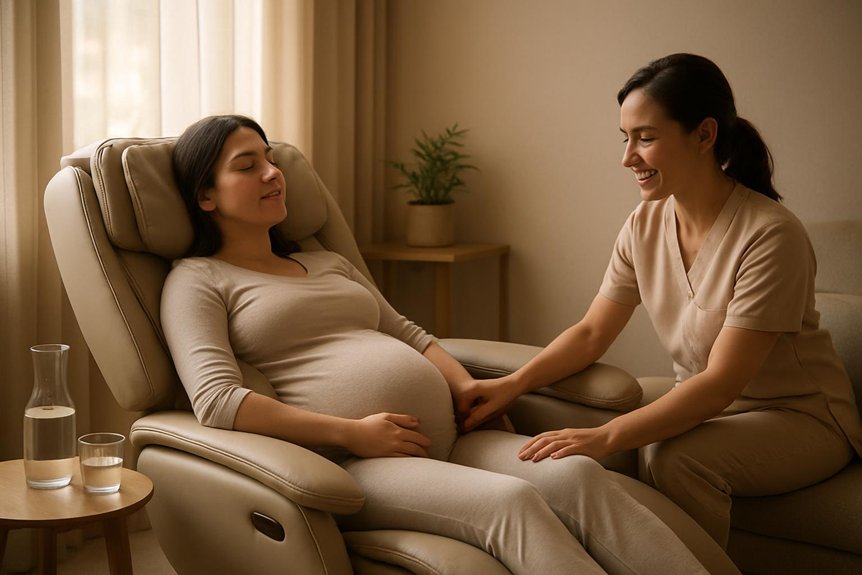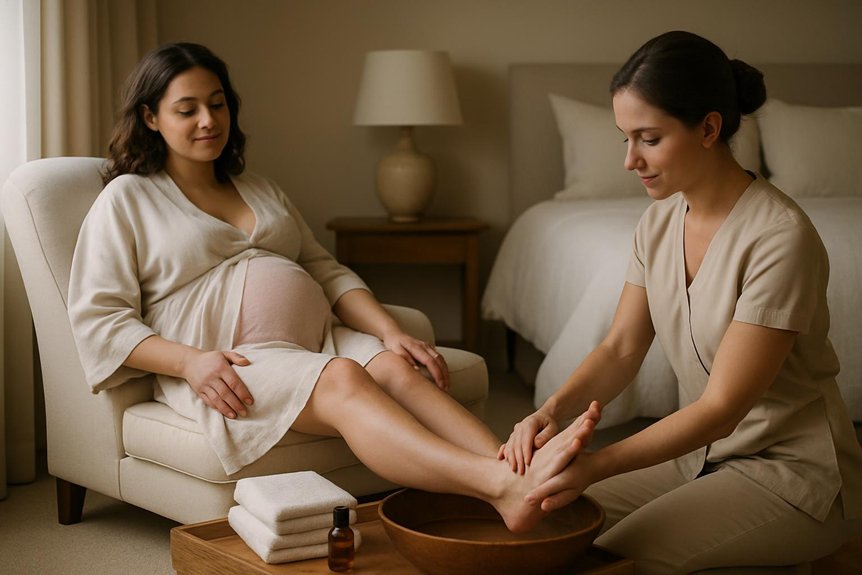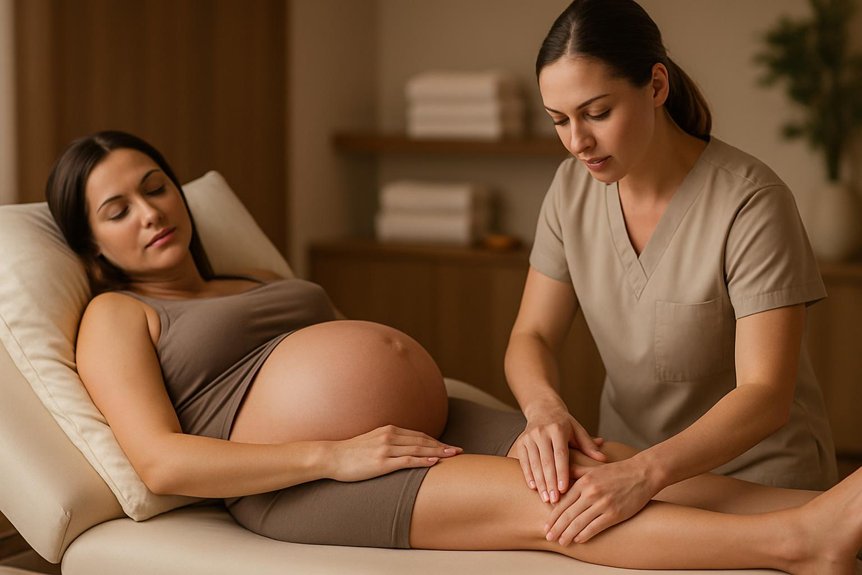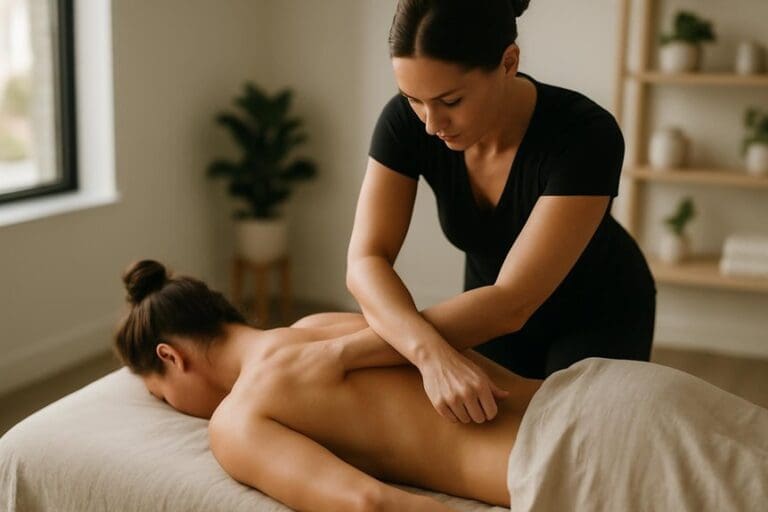
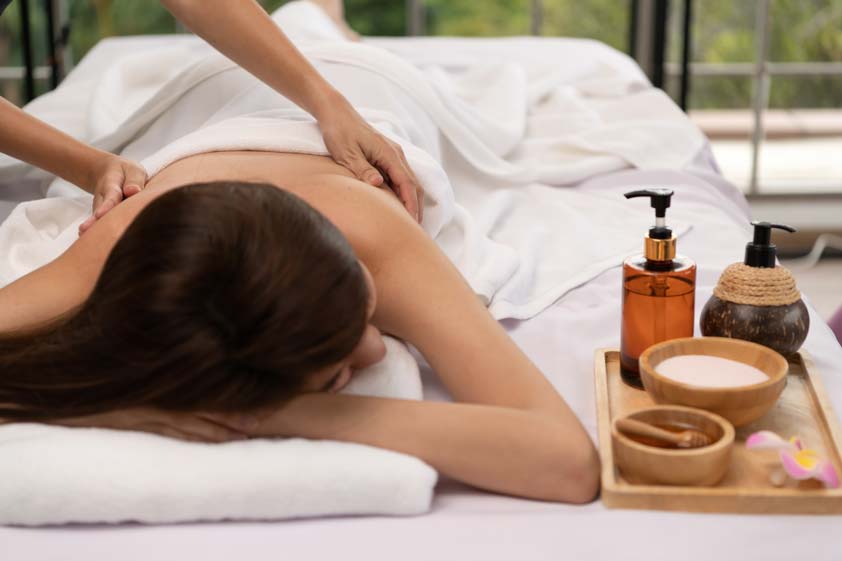
Stomach-lying during a prenatal massage is generally only suitable early in pregnancy, and only if comfort is complete and there is no pressure on the abdomen or breasts. Many people stop as soon as the bump grows or breast tenderness increases, often from late first trimester into the second. Any breathlessness, dizziness, nausea, reflux, tightening, tingling, or pain means the position should be changed immediately. Clinics typically use side-lying or semi-reclined supports; further guidance explains safer positioning and when to seek clearance.
Can You Lie on Your Stomach for Prenatal Massage?
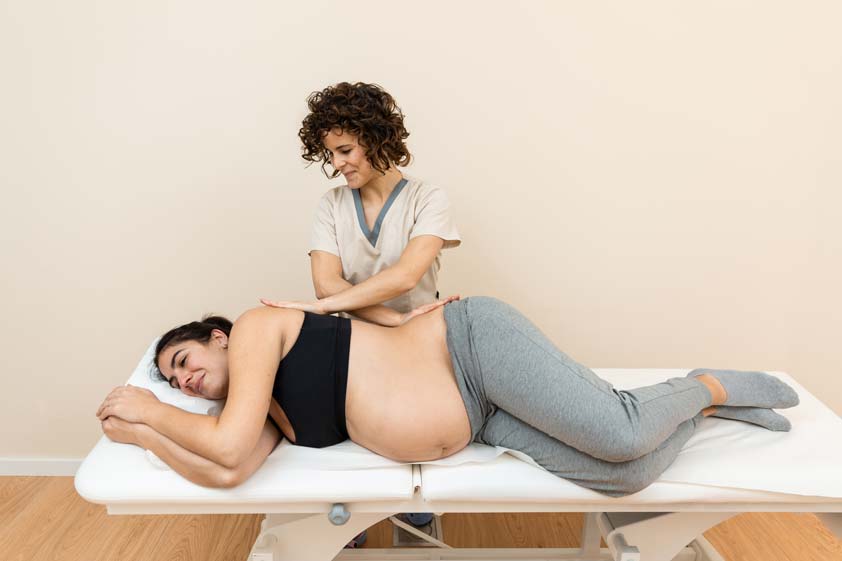
When, if ever, is it safe to lie on the stomach during a prenatal massage? It can be, for some people, early in pregnancy and only when comfort is fully maintained, breathing is easy, and there is no pressure on the abdomen or breasts.
Evidence and clinical practice prioritise maternal comfort and circulation; once any strain appears, positioning should change.
Because of the benefits of pregnancy massage, many therapists focus on supportive positioning that helps expecting mothers relax while reducing unnecessary strain.
At Spa & Massage clinics across London, therapists typically avoid traditional prone work and instead use side‑lying or semi‑reclined support.
If a client strongly prefers a face‑down feeling, specialised bolsters or cushions may be used briefly, with continual check‑ins and immediate adjustment at any discomfort, dizziness, nausea, or tightening.
Consent, warmth, privacy, and a calm pace help keep the experience intimate and safe.
When Should You Stop Lying on Your Stomach in Pregnancy?
A practical rule is to stop lying on the stomach as soon as it stops feeling completely comfortable or begins to create any pressure across the abdomen, ribs, or breasts—often from the late first trimester into the second, as the bump and breast tenderness increase.
Evidence-based guidance prioritises comfort, breathing ease, and circulation; if there is breathlessness, back strain, tingling, reflux, uterine tightening, dizziness, or any pain, stomach-lying should be avoided.
People with placenta complications, bleeding, high blood pressure, or multiple pregnancy should be especially cautious and follow their midwife or obstetric advice.
At Spa & Massage, therapists encourage honest, moment‑to‑moment feedback, so the body’s cues guide choices with tenderness, dignity, and calm reassurance.
If uncertainty persists, a quick clinical check-in helps.
How Do We Position You for Prenatal Massage at Spa & Massage?
At Spa & Massage, prenatal massage positioning is designed to prioritise comfort and circulation, most often using a side-lying support setup.
Therapists place bolsters and pillows to stabilise the hips, support the bump, and reduce strain on the lower back and shoulders.
The arrangement is then adjusted for each trimester and individual body changes, with ongoing check-ins to guarantee safe, pressure-free positioning throughout the treatment.
Side-Lying Support Setup
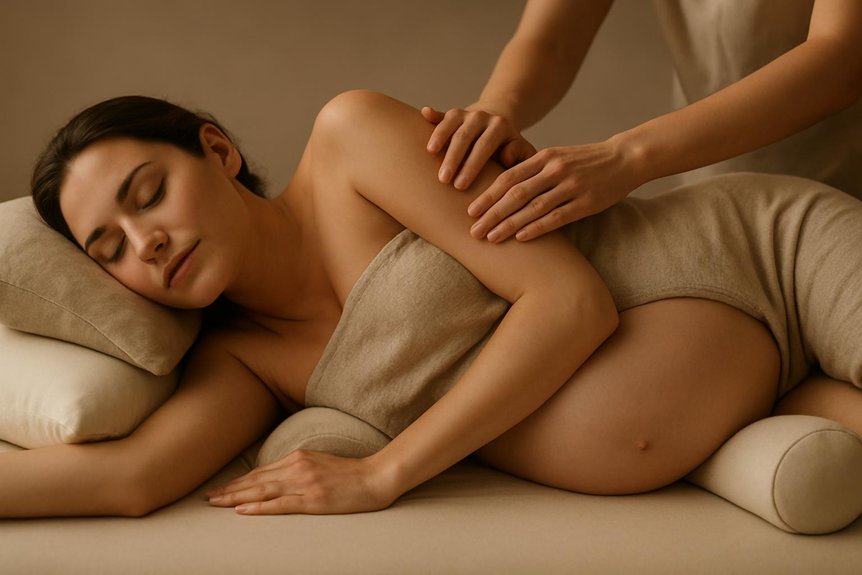
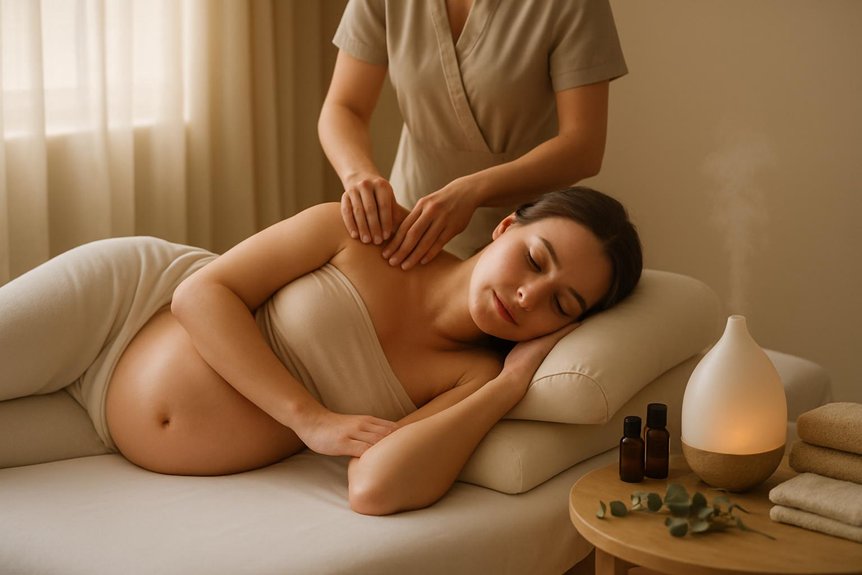
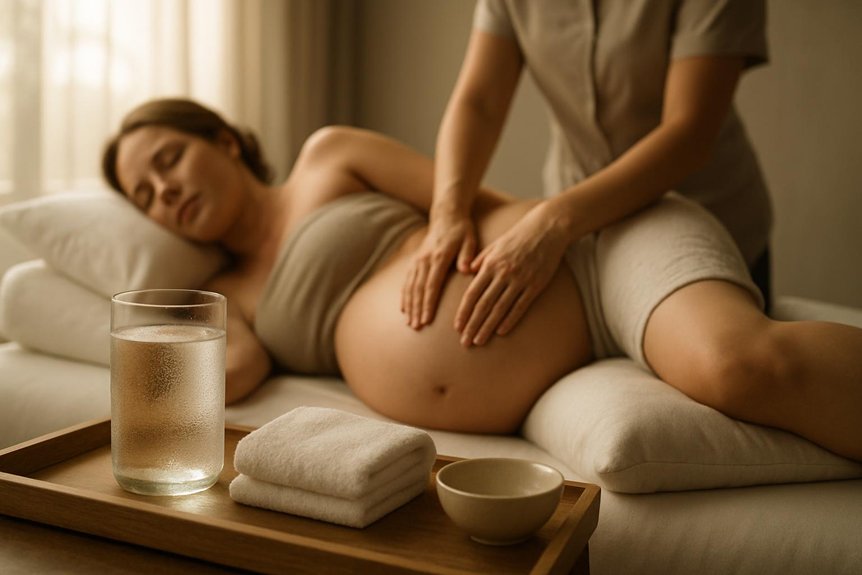
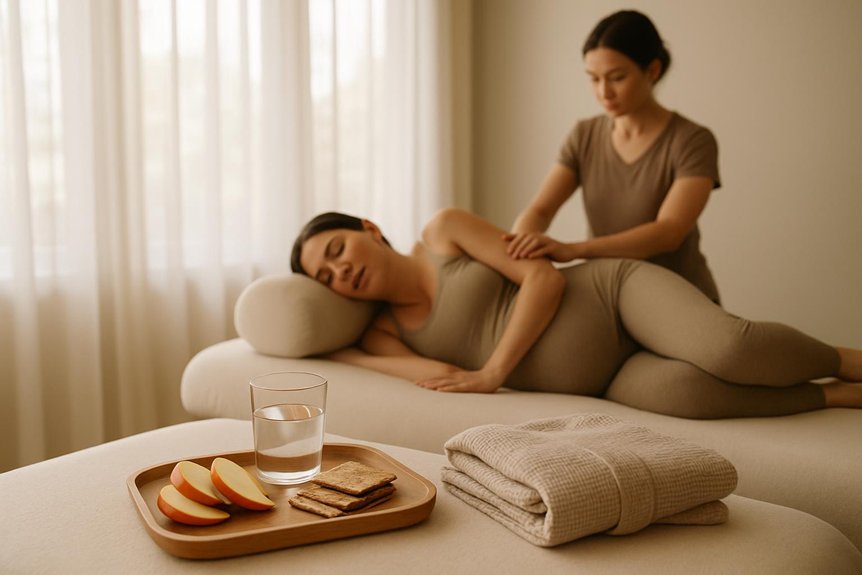
For both comfort and clinical safety, prenatal massage at Spa & Massage is typically delivered in a supported side-lying position rather than face-down. This approach helps reduce abdominal pressure and avoids prolonged supine positioning that may affect circulation later in pregnancy, while still allowing thorough work through the back, hips, glutes, and legs.
Therapists guide each client into a neutral, relaxed posture, keeping the spine long and the pelvis level, with small adjustments for bump size, tenderness, and breath comfort. The client is encouraged to move slowly and to speak up if anything feels tight, breathless, or emotionally overwhelming.
Draping remains secure and respectful, maintaining warmth and privacy while creating a close, reassuring sense of care throughout the session.
Bolsters And Pillow Placement
Supported side-lying provides the safest baseline, and bolster placement is then used to fine-tune alignment, comfort, and circulation throughout the massage.
At Spa & Massage clinics across London, therapists typically position a firm pillow between the knees and ankles to reduce pelvic strain and protect the lower back. A long bolster is often placed behind the client to prevent rolling and to create a secure, held feeling.
A smaller support under the abdomen can soften any gentle pull through the round ligaments, while a cushion under the upper arm keeps the shoulder relaxed and the chest open for easy breathing.
Head pillows are adjusted so the neck stays neutral. All supports are checked frequently for warmth, numbness, or pressure points.
Adjusting For Each Trimester
Across pregnancy, positioning is adjusted trimester by trimester to protect circulation, breathing, and pelvic comfort while still allowing effective therapeutic work.
In the first trimester, most clients can rest prone briefly if comfortable, though Spa & Massage therapists often begin with side-lying to minimise nausea and breast tenderness while maintaining a close, reassuring sense of support.
In the second trimester, prone lying becomes less suitable; therapists typically use left side-lying with pillows between knees and under the bump, keeping hips neutral and the lower back relaxed.
In the third trimester, semi-reclined or left side-lying is prioritised to reduce vena cava compression and breathlessness, with frequent check-ins and gentle repositioning to maintain warmth, privacy, and ease.
Which Side-Lying Positions Work Best for Prenatal Massage?
In most pregnancies, side-lying is considered the safest and most comfortable positioning for massage, because it helps reduce pressure on the abdomen and can support steady circulation. At Spa & Massage clinics, therapists typically alternate left and right side-lying to maintain comfort and ease muscular strain.
Left side-lying is often preferred when a client feels breathless or heavy, as it can be gentler on circulation. A supportive “nest” of cushions is used: one under the head and neck, one along the back to prevent rolling, one between the knees and ankles to protect hips, and a small bolster under the bump if needed.
The upper arm is rested forward to soften shoulder tension. This setup allows close, reassuring contact while keeping pressure light and stable.
Can You Lie on Your Back During Prenatal Massage?
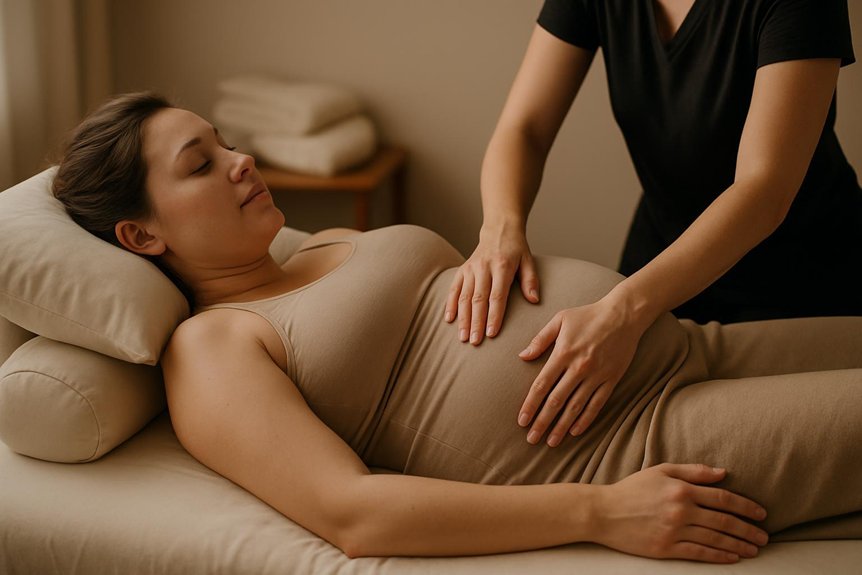
Back-lying during prenatal massage can be appropriate for some people, particularly earlier in pregnancy or for brief periods, but it should be guided by comfort, symptoms (such as dizziness or nausea), and clinical safety considerations.
At Spa & Massage, therapists typically use alternatives and support options—like a semi-reclined position, a slight left tilt with bolsters, or side-lying—to reduce pressure and maintain healthy circulation.
This section outlines when supine positioning may be suitable and the practical adjustments used in-clinic to keep treatment both effective and reassuring.
When Back-Lying Is Safe
Often, lying on the back during a prenatal massage can be safe for short periods when the client feels comfortable and shows no signs of dizziness, nausea, breathlessness, or light-headedness.
Evidence indicates that supine positioning may reduce blood return in later pregnancy for some people, so comfort and symptoms guide decisions.
At Spa & Massage, therapists keep back-lying brief, check in frequently, and watch for pallor, sweating, or a sudden “can’t catch my breath” feeling.
It is typically most tolerable earlier in pregnancy and after light meals, with slow, unhurried changes on and off the couch.
If any symptoms appear, the position is stopped immediately.
A calm room, steady touch, and clear consent help the client feel held, safe, and connected throughout.
Alternatives And Support Options
Comfort and symptom-checking may allow brief periods on the back, yet most prenatal massage sessions benefit from positions that reduce compression through the abdomen and major blood vessels.
In practice, Spa & Massage therapists often favour side-lying with a pillow between the knees, under the bump, and supporting the upper arm, helping the hips and lower back soften while keeping breathing easy.
A semi-reclined “wedge” position can also relieve reflux and shortness of breath, and a left-tilt (about 15–30 degrees) maintains circulation if brief supine work is needed.
For sensitive pelvis or rib discomfort, bolsters can cradle the spine and allow gentle, close contact without pressure.
Any dizziness, nausea, clamminess, or breathlessness signals an immediate position change and pause.
What Helps You Stay Comfortable During Prenatal Massage?
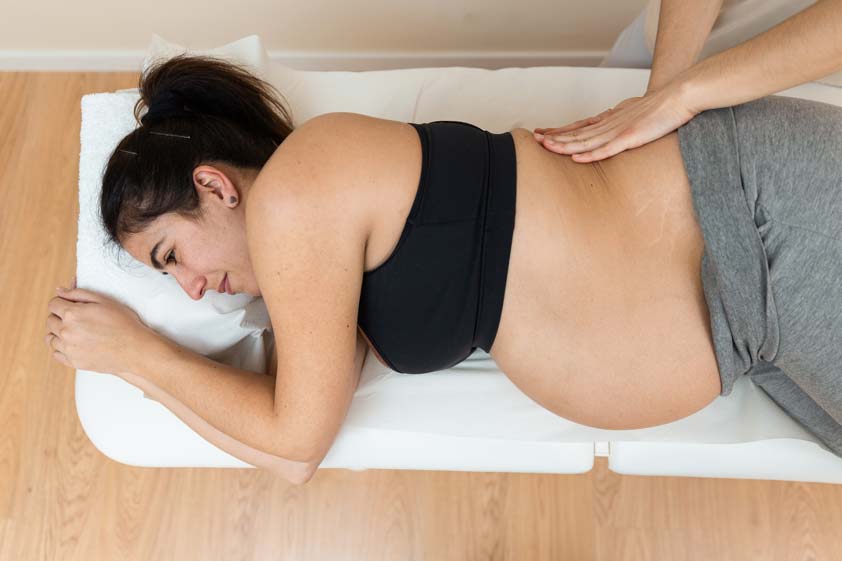
In a well-designed prenatal massage, comfort is supported by safe positioning, responsive pressure, and clear communication throughout the session.
Side-lying set-ups with bolsters under the bump, between the knees, and behind the back help keep the spine neutral and hips relaxed. At Spa & Massage clinics across London, therapists adjust head, shoulder, and ankle support so breathing stays easy and circulation is not restricted.
Pressure is kept soothing and adaptive, with slower strokes to calm the nervous system and reduce tenderness in the low back, glutes, and legs.
Unscented or gently scented oils are used when preferred, and draping preserves warmth and modesty. Regular check-ins invite small changes—pillows, pressure, room temperature—so the body feels held and safe.
When Should You Avoid Prenatal Massage or Ask Your GP?
When should prenatal massage be avoided or cleared with a GP first? It should be postponed in the first trimester unless a GP or midwife advises otherwise, and avoided with vaginal bleeding, leaking fluid, fever, infection, persistent abdominal pain, reduced fetal movements, pre‑eclampsia symptoms, suspected DVT (one‑sided leg swelling, redness, warmth), or new shortness of breath or chest pain.
Extra caution is needed with placenta praevia, history of miscarriage or preterm labour, severe pelvic pain, uncontrolled hypertension, diabetes complications, or recent surgery.
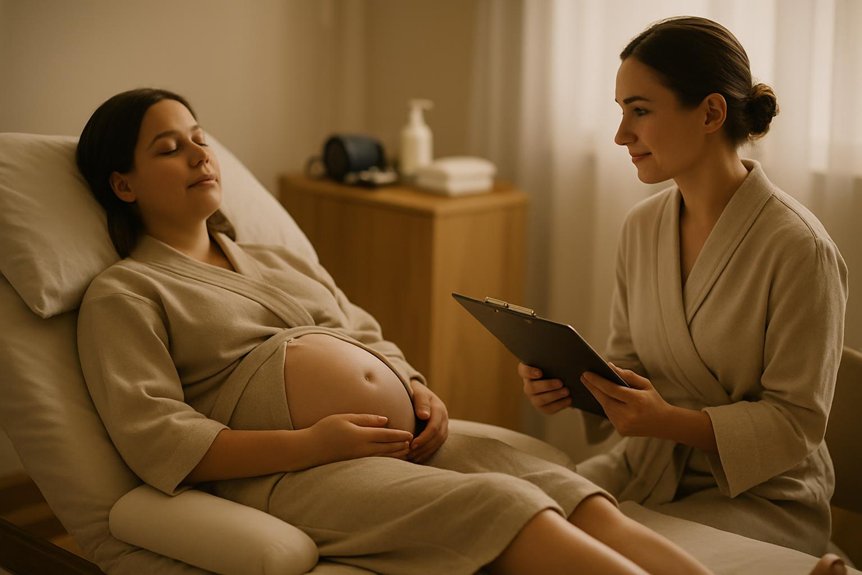
At Spa & Massage, therapists complete an intake each visit and will suggest medical clearance when risks are present.
Sessions remain gentle, side‑lying, and respectfully draped to support comfort and intimacy without compromising safety.
Conclusion
Lying face-down may feel possible early on, but it typically becomes less comfortable and less advisable as pregnancy progresses. Evidence-based prenatal massage prioritises safe positioning that supports circulation and reduces strain on the abdomen and lower back, usually using side-lying and careful bolstering. At Spa & Massage, therapists tailor support to gestation, symptoms, and medical history, checking comfort throughout. Like a well-fitted seatbelt, the right setup protects while still allowing relaxation.