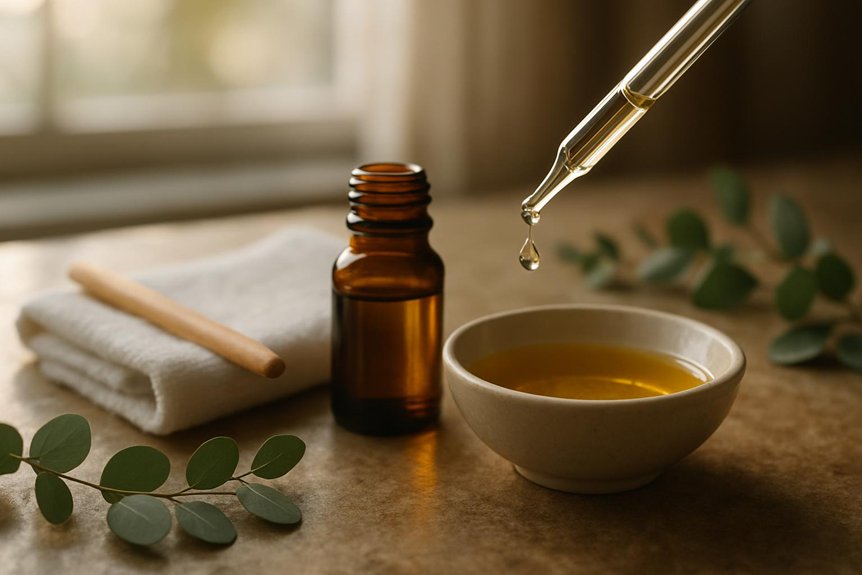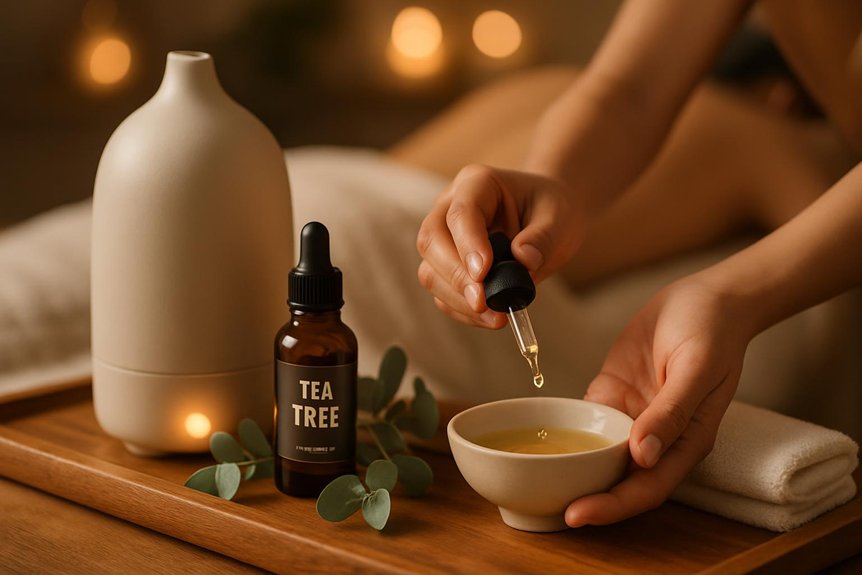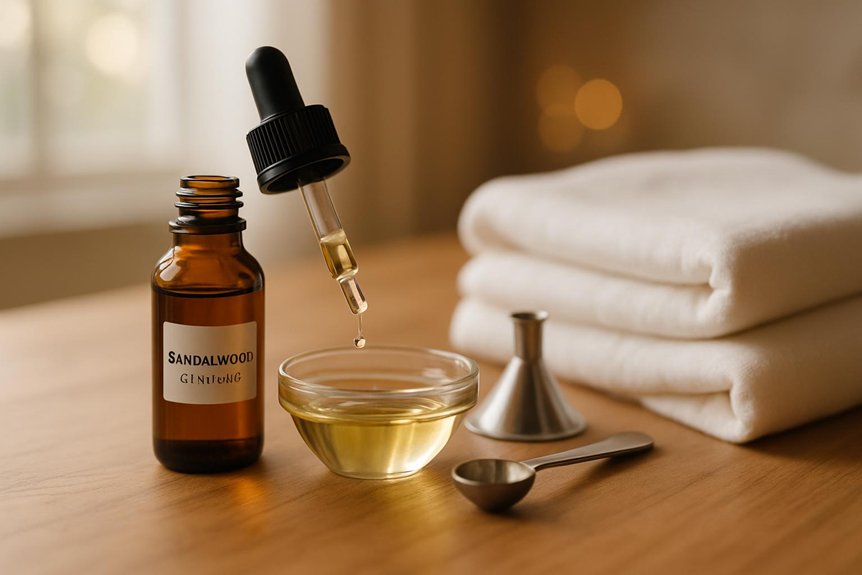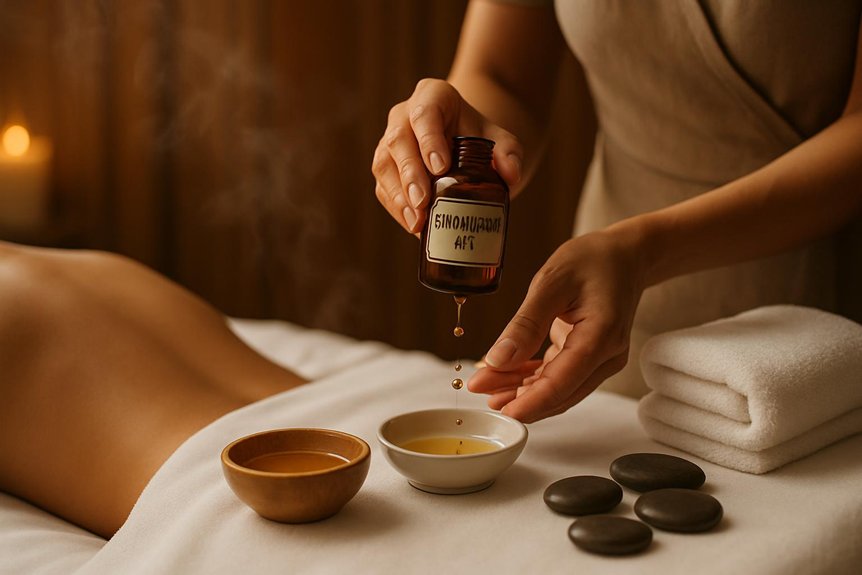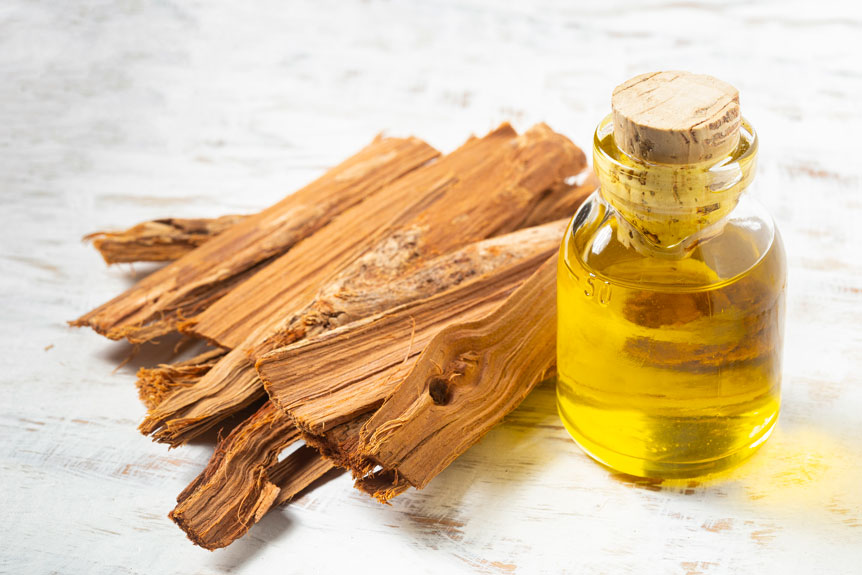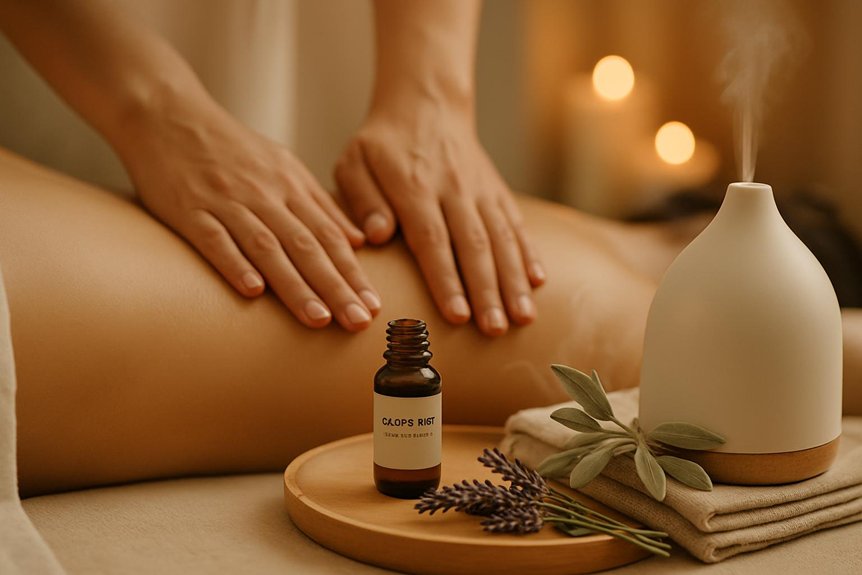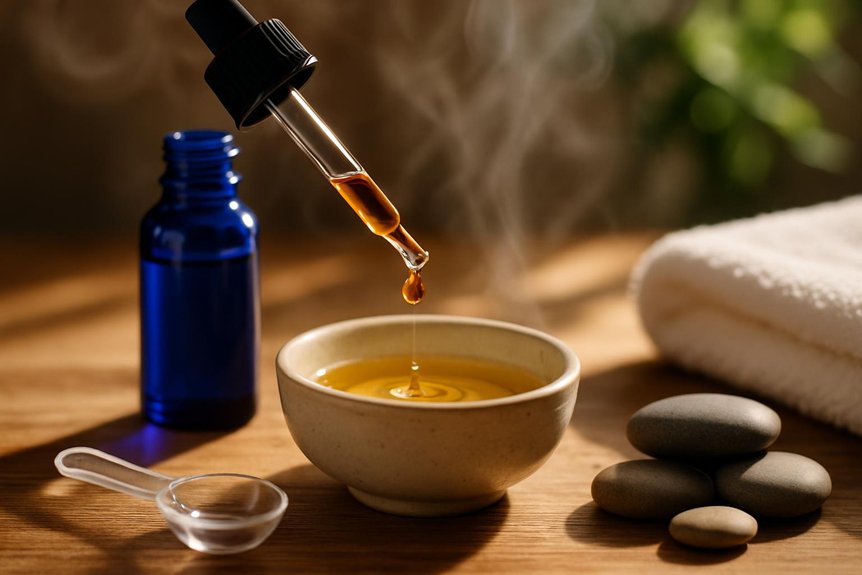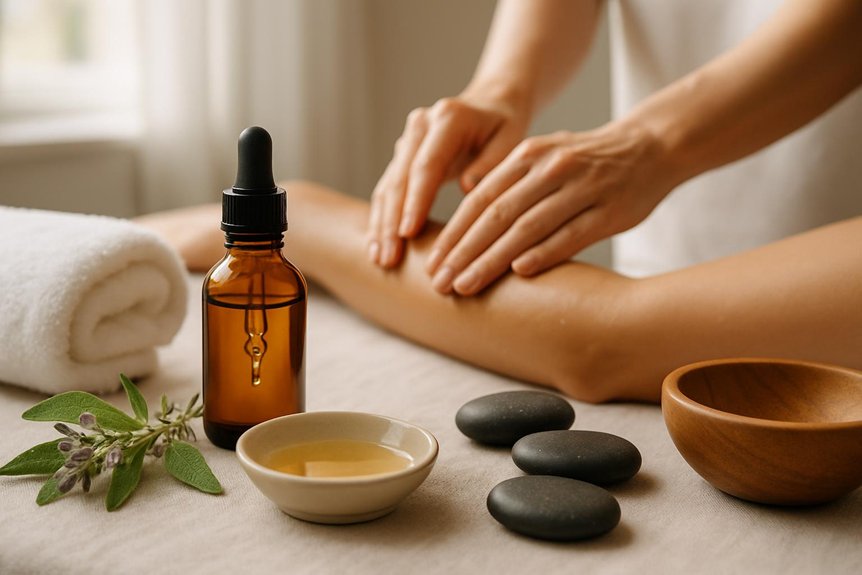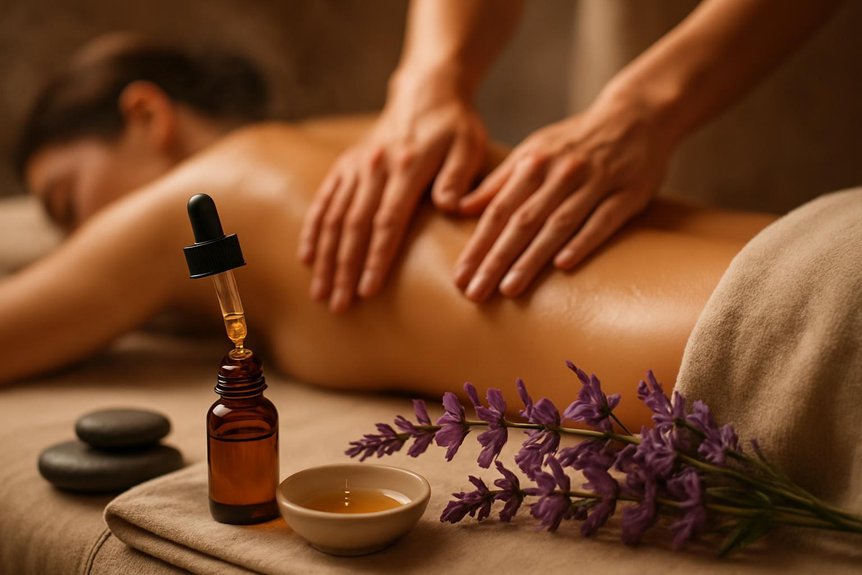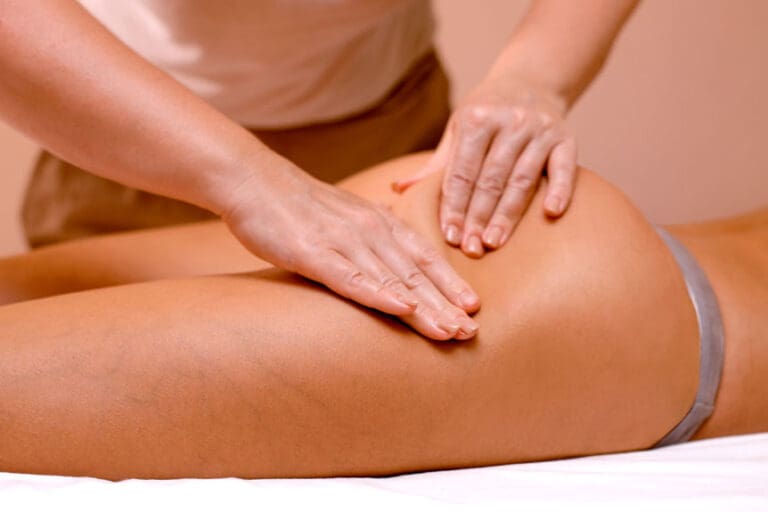
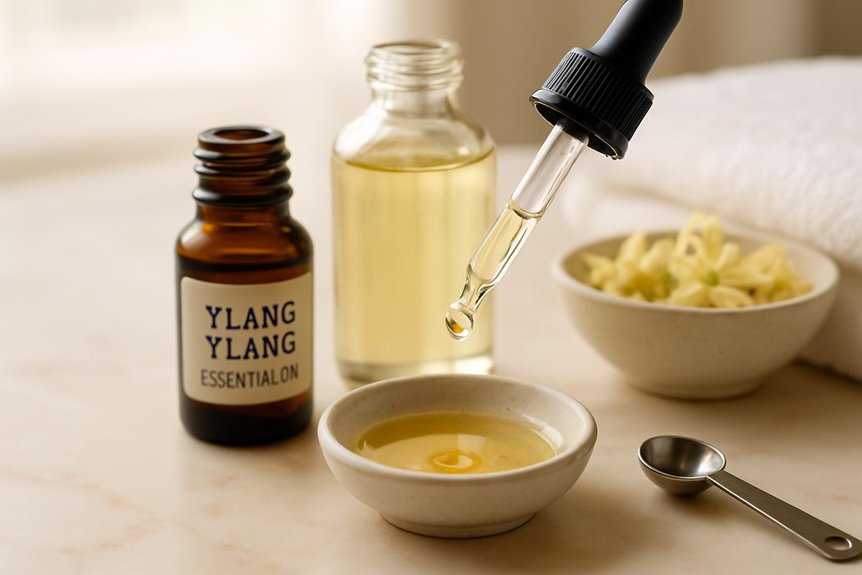
For aromatic massage, ylang ylang essential oil should be diluted in a carrier oil at 1–2% to minimise irritation (about 2 drops per 10 ml, or 6 drops per 30 ml for 1%; 12 drops per 30 ml for 2%). Measure with a calibrated dropper, mix thoroughly, and label with contents and date. Avoid use on broken or inflamed skin, and stop if stinging occurs. Further guidance covers patch testing, storage, and pregnancy-specific limits.
Ylang Ylang Oil Safety Rules (Before You Blend)
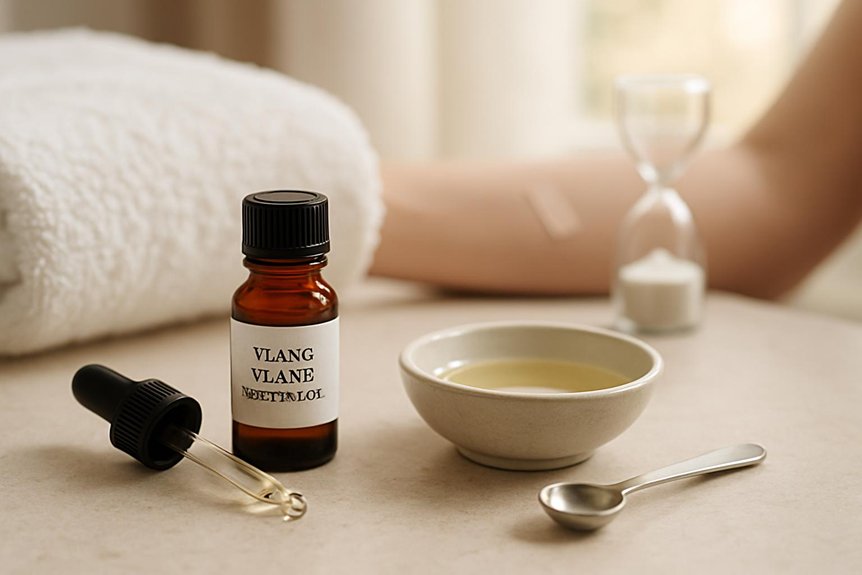
Before any ylang ylang essential oil is blended for aromatic massage, basic safety rules should be applied to reduce the risk of skin irritation, sensitisation, and adverse reactions.
Product identity should be confirmed (botanical name, batch, expiry) and the oil stored away from heat and light.
A client consultation should screen for pregnancy, asthma, migraines, epilepsy, low blood pressure, and known fragrance allergies; medication use should also be noted.
Patch testing may be advised for sensitive or reactive skin.
In Spa & Massage clinics, therapists avoid use on broken skin, freshly shaved areas, or active dermatitis, and make certain hands and linens are clean to prevent contamination.
Eye, mucosal, and intimate internal contact should be avoided; if stinging occurs, stop and cleanse with carrier oil.
Used correctly, aromatherapy massage can help clients relax and heal, so these precautions support both comfort and safety throughout the session.
Ylang Ylang Dilution Ratios (Quick Guide)
Once the basic safety checks and client screening have been completed, the next control measure is correct dilution of ylang ylang essential oil in a suitable carrier oil, as over-concentration increases the likelihood of irritation and sensitisation.
For full-body aromatic massage, Spa & Massage therapists typically work at 1% for first-time clients or sensitive skin (about 2 drops per 10 ml), and 2% for most adults (about 4 drops per 10 ml).
For smaller, more intimate areas or prolonged skin contact, a lower range of 0.5–1% is preferred.
For short, localised application, up to 3% may be used only when appropriate and well tolerated.
Blends should be mixed thoroughly, labelled, and patch-tested when uncertainty exists. Avoid eyes and mucosa always.
Choose a Carrier Oil for Ylang Ylang Massage
For ylang ylang aromatic massage, the carrier oil should be selected to match the client’s skin type, the intended treatment area, and the required glide, as the carrier determines both tolerability and how evenly the essential oil is dispersed on the skin.
At Spa & Massage clinics, therapists typically choose fractionated coconut for a light feel and clean absorption, sweet almond for smooth, sensual glide over larger areas, and grapeseed for oily or acne‑prone skin.
Jojoba suits sensitive skin and intimate zones because it is stable and closely mimics sebum.
For very dry skin, apricot kernel or avocado can cushion friction and support a slower, more nurturing rhythm.
All carriers should be cold‑pressed, fresh, and patch tested if reactivity is suspected.
Unscented bases preserve ylang ylang’s profile.
Ylang Ylang Dilution Ratios for Adults
Carrier oils provide the base and determine spreadability, but safe aromatic massage depends on keeping ylang ylang at an appropriate adult dilution to minimise irritation and sensitisation.
For general full‑body relaxation, Spa & Massage therapists typically keep ylang ylang at 1% (about 6 drops per 30 ml carrier).
For shorter sessions, smaller areas, or more sensual, close-contact massage, 1–2% is usually sufficient; 2% equals about 12 drops per 30 ml.
Higher concentrations are avoided because ylang ylang can trigger headache or skin reactivity in sensitive clients.
First-time users should start at 0.5–1% and perform a patch test.
Avoid eyes, mucous membranes, and broken skin; discontinue if warmth becomes burning.
Make a 30ml Ylang Ylang Massage Blend
A standard 30 ml ylang ylang aromatic massage blend is prepared by measuring 30 ml of a skin-compatible carrier oil into a clean, dry glass bottle, then adding essential oil to the target adult dilution used in Spa & Massage clinics—typically 6 drops for 1% (general full-body relaxation) or 12 drops for 2% (smaller areas/shorter sessions).
Cap and roll the bottle between the palms for 30–60 seconds; avoid vigorous shaking to minimise aeration.
Label with contents, dilution, and date.
Before intimate, close-contact massage, dispense a small amount into warmed hands, then apply with slow, even strokes to maintain consistent glide and scent.
Keep the blend away from eyes and mucous membranes, and avoid use on broken skin.
Store cool, dark, tightly closed.
Sensitive Skin? Use a Lower-Drop Ratio
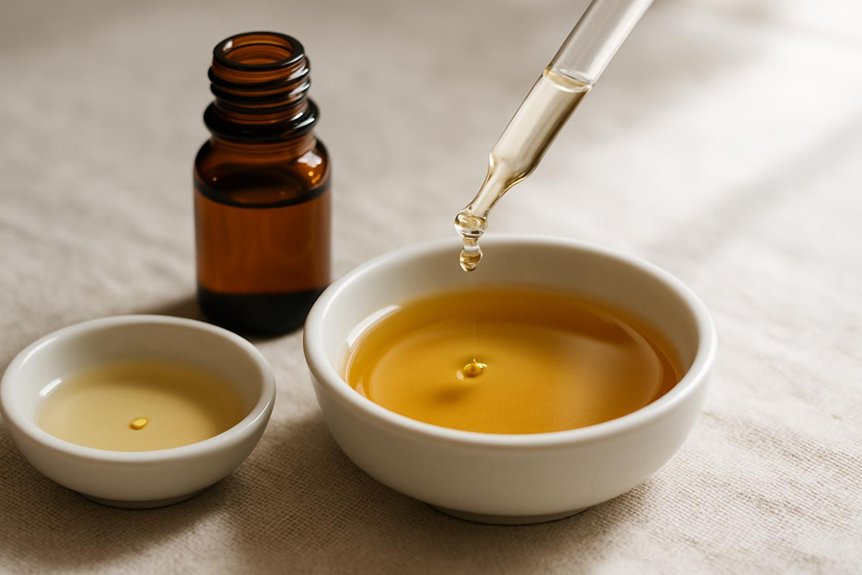
For sensitive skin, a lower-drop ratio is indicated, starting with one drop of ylang ylang in 30ml of a gentle carrier oil such as jojoba or fractionated coconut.
In Spa & Massage clinics, therapists select mild, non-fragranced base oils where possible and adjust strength conservatively to minimise irritation risk.
A patch test should always be completed before full application, with use discontinued if redness, burning, or itching occurs.
Start With One Drop
One drop of ylang ylang essential oil is an appropriate starting point when preparing an aromatic massage blend, allowing skin tolerance and scent strength to be assessed before increasing concentration. This low-dose approach supports a calm, close-contact experience without overwhelming the senses or the skin.
Spa & Massage therapists advise mixing the single drop thoroughly into the prepared massage base, then performing a patch test on the inner forearm for 24 hours before full-body use. If any stinging, itching, redness, or warmth develops, the blend should be removed and not reapplied.
If the skin remains comfortable and the aroma feels gentle and inviting, the concentration may be increased gradually on a later session, one drop at a time. This controlled titration maintains safety while allowing personal preference to guide intensity.
Choose Gentle Carrier Oils
Gentle, well-tolerated carrier oils should be selected before adding ylang ylang, because the base determines overall skin feel, glide, and irritation risk.
In Spa & Massage clinics, therapists typically choose light, low-scent options such as jojoba, fractionated coconut, grapeseed, or sweet almond for close, full-body work.
For very dry skin, a richer base like avocado can be blended in small amounts to maintain a slow, comforting glide without heaviness.
Sensitive, reactive, or pregnancy-prone skin should use a lower-drop ratio than standard aromatherapy blends, keeping ylang ylang minimal and increasing only if comfort remains consistent.
Fragrance-free, fresh oils in clean bottles are preferred, and mixtures should be prepared in small batches to reduce oxidation and avoid concentrated “hot spots” during intimate massage.
Patch Test First Always
Even with a well-chosen, low-scent carrier oil, ylang ylang must be patch tested before any full-body aromatic massage to screen for irritation or sensitisation.
Spa & Massage advises preparing the intended dilution, then applying a pea-sized amount to the inner forearm or behind the ear on clean, dry skin.
The area should be left uncovered and observed for 24 hours; any burning, itching, swelling, or rash means the blend should not be used.
For sensitive skin, a lower-drop ratio is safer: start at 0.5% (about 1 drop per 10 ml carrier) and increase only if tolerated.
During intimate massage, therapists keep the blend away from eyes, mucous membranes, and freshly shaved areas, and discontinue immediately if discomfort appears.
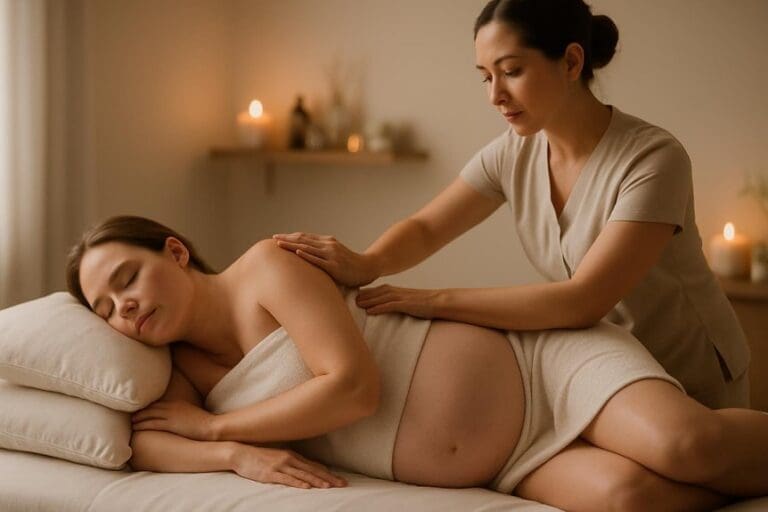
Ylang Ylang Dilution for Pregnancy Massage
For pregnancy massage, ylang ylang should be diluted to a pregnancy-safe ratio (typically 0.5–1% in a suitable carrier oil), with trimester-specific caution and avoidance in early pregnancy unless a qualified therapist has confirmed appropriateness.
At Spa & Massage clinics, therapists adjust drop counts to the minimum effective level and tailor use to the client’s stage of pregnancy, medical history, and sensitivity profile.
A patch test is advised before full application, followed by simple aftercare guidance—monitoring for headache, nausea, dizziness, or skin irritation and discontinuing use if any adverse response occurs.
Pregnancy-Safe Dilution Ratios
Because pregnancy alters skin sensitivity and systemic response to aromatics, ylang ylang (Cananga odorata) should only be used in pregnancy massage at very low dilutions and with clear contraindication screening.
In Spa & Massage clinics, therapists limit ylang ylang to 0.25–0.5% in a carrier oil (about 1–3 drops per 20 ml), keeping the aroma soft and comforting rather than heady.
For clients who are scent-sensitive, 0.1–0.25% is preferred (1 drop per 30–50 ml) or the oil is omitted entirely.
Application should be local and light, avoiding prolonged full-body saturation.
A patch test is advised, and the blend should be discontinued if nausea, headache, dizziness, irritation, or uterine cramping occurs.
Only use in a well-ventilated room.
Trimester-Specific Considerations
Across pregnancy, ylang ylang dilution and exposure should be adjusted by trimester, with screening and symptom monitoring guiding whether it is used at all.
In the first trimester, Spa & Massage therapists typically avoid ylang ylang in pregnancy massage and prioritise unscented carrier oils, given heightened sensitivity, nausea, and conservative risk management.
In the second trimester, if a client remains comfortable and has no contraindications, ylang ylang may be introduced at the lowest pregnancy-safe dilution, kept local, and paired with steady, slow strokes to support calm connection.
In the third trimester, dilution is not increased; exposure is kept brief and well-ventilated, with close attention to dizziness, headache, or uterine tightness, stopping immediately if symptoms arise.
Patch Testing And Aftercare
Trimester-appropriate dilution is only one part of safe use; ylang ylang should also be patch tested and followed by clear aftercare to reduce the risk of irritation or sensitisation during pregnancy.
A patch test uses the same carrier and dilution intended for massage. Apply a pea-sized amount to the inner forearm, cover, and wait 24 hours; redness, itching, burning, swelling, or headache indicates avoidance and clinician advice. In Spa & Massage clinics, therapists document reactions and avoid re-exposure if symptoms occur.
After massage, skin should be kept calm: avoid hot baths, saunas, exfoliation, and fragranced products for 12–24 hours. Keep the area dry, wear breathable clothing, and hydrate.
Any persistent rash, dizziness, or nausea warrants medical review promptly.
Patch Test Your Ylang Ylang Oil Blend
Before any full-body application, a patch test should be performed on the diluted ylang ylang oil blend to screen for irritation or sensitisation.
A small amount should be applied to clean, dry skin on the inner forearm or behind the ear, then left uncovered.
The area should be observed at 15 minutes and again after 24 hours for redness, itching, burning, swelling, or heat.
If any reaction occurs, the blend should be washed off with mild soap and cool water and not used for massage.
In Spa & Massage clinics, therapists confirm patch-testing before aromatherapy sessions, especially when planning close, skin-to-skin work across the chest, neck, or lower back.
Patch testing supports comfort, consent, and a relaxed, intimate experience.
Common Dilution Mistakes and Storage Tips
Avoid dilution and storage errors by treating ylang ylang essential oil as a concentrated, light- and heat-sensitive product: common mistakes include adding undiluted oil directly to skin, exceeding safe dilution percentages, measuring drops inconsistently, blending into water-only carriers (leading to uneven “hot spots”), and using oxidised oil from poorly sealed bottles; in Spa & Massage clinics, therapists mitigate these risks by measuring precisely, mixing into a suitable carrier oil, labelling blends with date and dilution, and storing them in dark glass containers kept tightly closed in a cool, dry place.
Additional safeguards include using a calibrated dropper or syringe, mixing thoroughly before each use, and discarding blends that smell sharp, rancid, or unusually faint. Blends should be kept away from radiators, sunlight, and steamy bathrooms.
For intimate areas, use extra-conservative dilutions and avoid mucous membranes. If irritation occurs, remove with carrier oil, not water, and stop use.
Conclusion
Diluting ylang ylang is like fitting a lantern with the correct shade: the light remains soothing, not glaring. Clinics standardise low percentages, choose an appropriate carrier, and reduce drops for sensitive skin or pregnancy. A patch test acts as the lock on the door, screening for irritation before full exposure. Accurate measuring, clean containers, and cool, dark storage preserve stability. When blended precisely, the aroma supports calm without compromising skin safety or comfort.