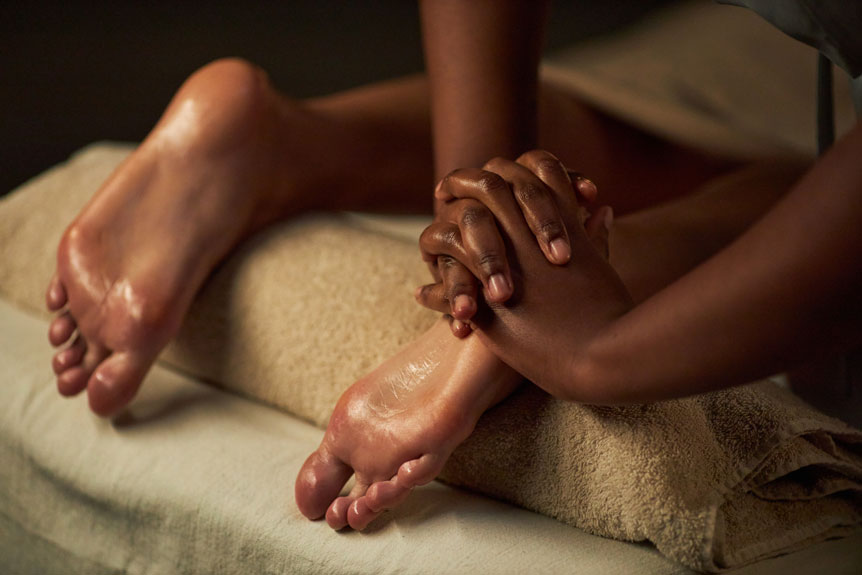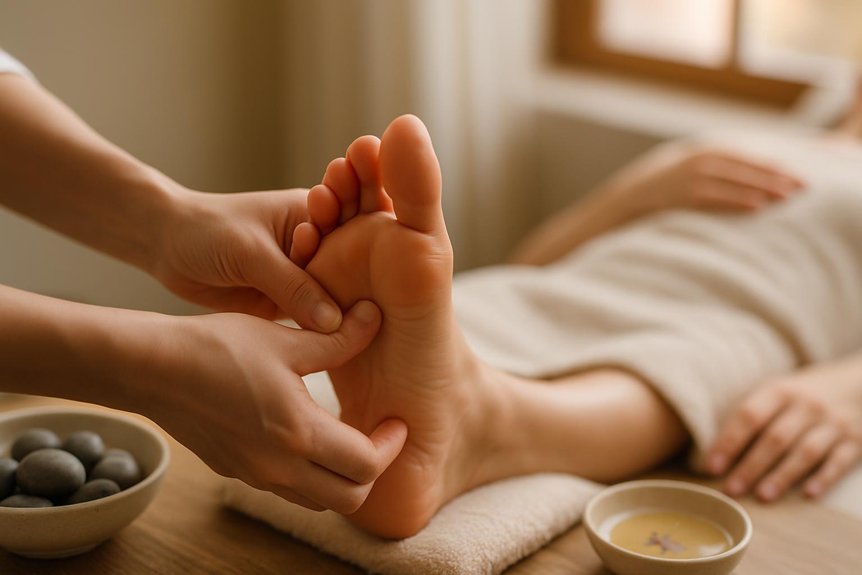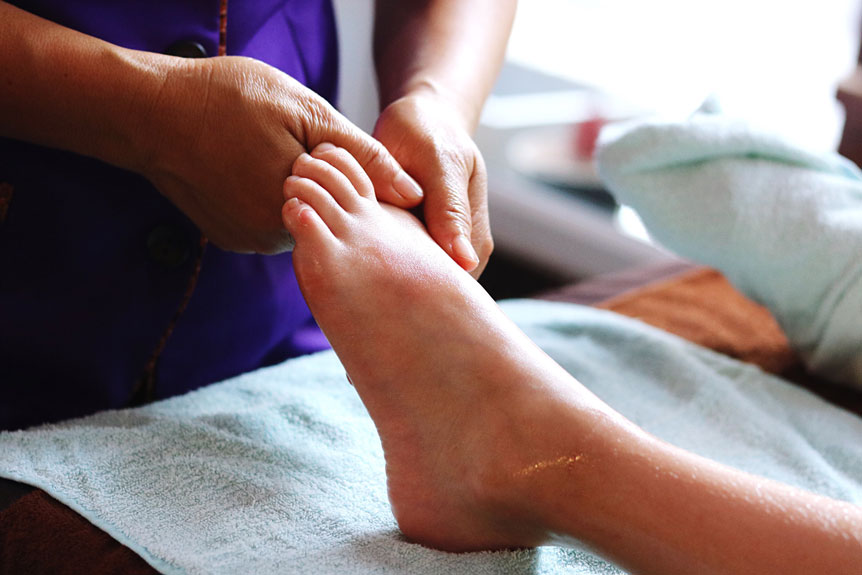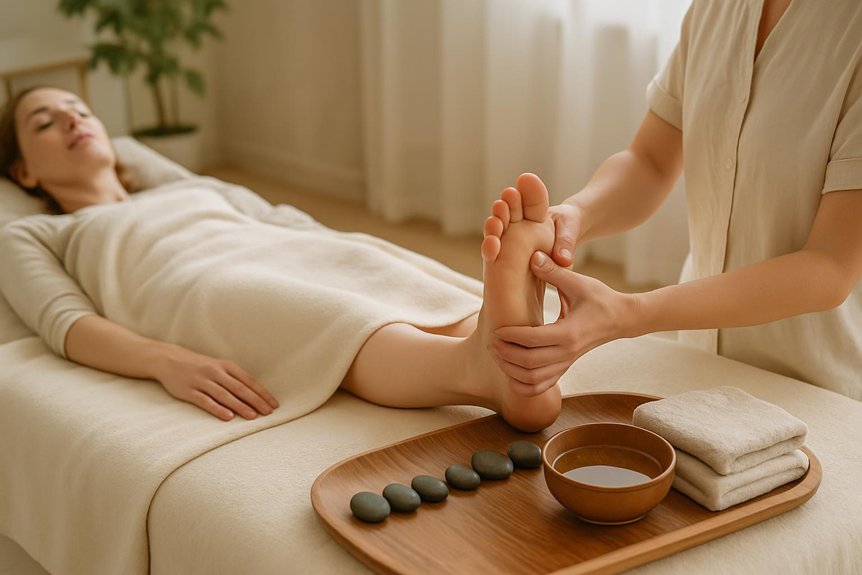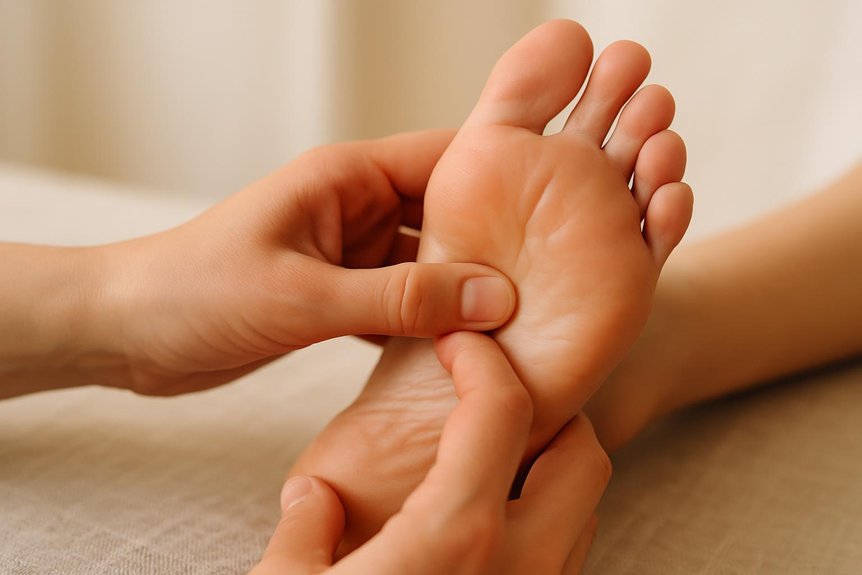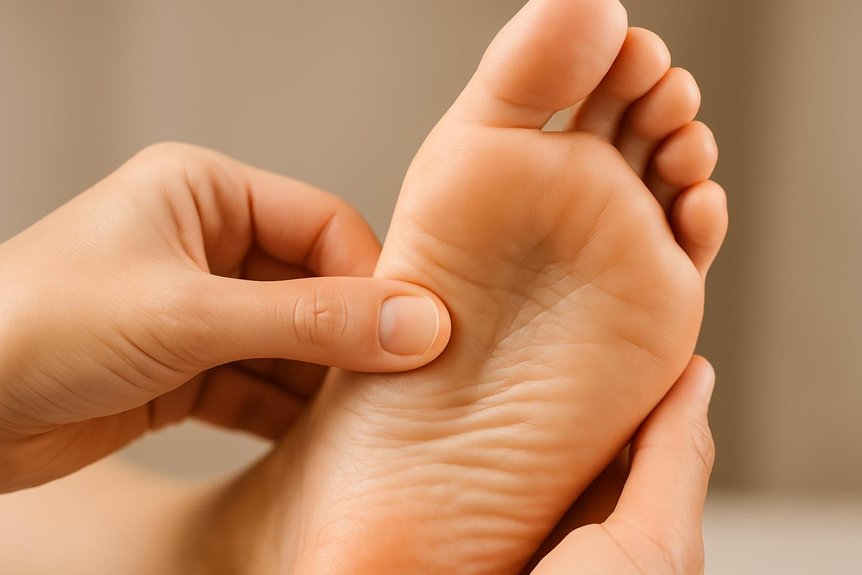
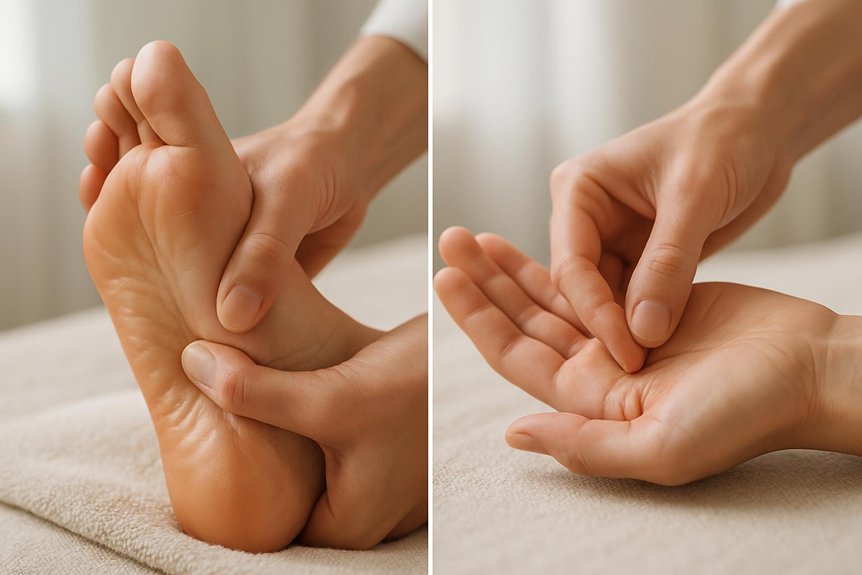
It works from mapped reflex zones on the feet, hands, or ears, using techniques like thumb-walking to promote systemic relaxation and a “downshift” of the nervous system. Acupressure applies steady pressure to specific acupoints along meridians to regulate Qi and address more targeted concerns such as neck tension, headaches, stress, or sleep disruption. Both require screening for pregnancy, clotting risk, neuropathy, or recent surgery, and neither replaces medical care for acute symptoms. Further details clarify session feel, point selection, and indications.
Reflexology vs Acupressure: The Key Difference
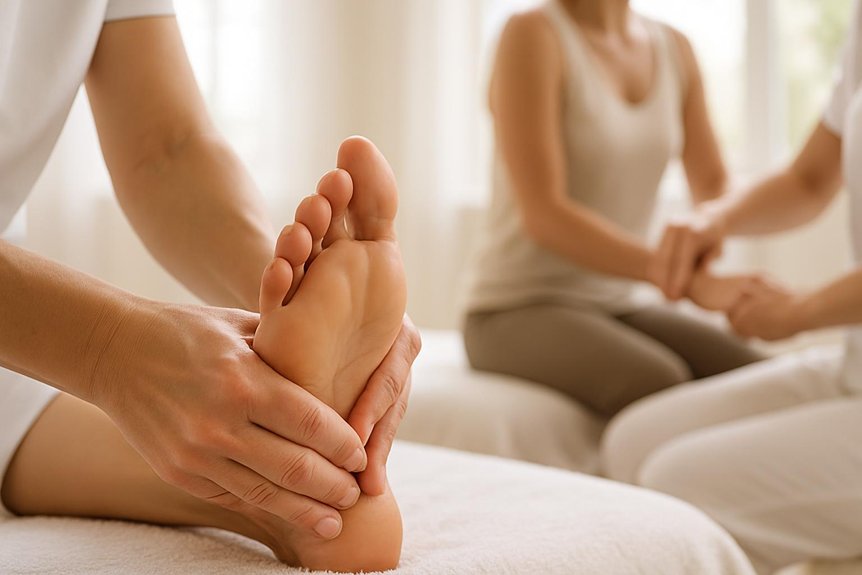
Where do zone therapy and acupressure diverge most clearly? iT maps the body onto the feet, hands, and ears, using specific zones and “reflex points” to influence corresponding organs and systems. Acupressure is rooted in Traditional Chinese Medicine, applying steady pressure to acupoints along meridians to regulate Qi, ease stagnation, and support balance. Many people explore it to discover the healing power of this approach.
In Spa & Massage clinics, therapists explain that it is typically protocol-driven within the reflex map, while acupressure is point-selection driven, based on pattern and presentation. Both can be delivered with grounded, respectful touch and clear consent, supporting relaxation and body awareness.
Safety remains central: pressure is adapted for pain sensitivity, neuropathy, pregnancy, anticoagulant use, or skin compromise, and acute infection, DVT risk, and recent surgery warrant postponement.
Zone Therapy vs Acupressure: Which Should You Choose?
How should a person decide between zone therapy and acupressure? The choice should follow goals, comfort with pressure, and any medical considerations.
In TCM terms, acupressure is often selected when someone wants targeted support along meridians, such as easing neck tension, headaches, or stress patterns. It may suit those wanting a more contained, nurturing session that feels private and grounding, with touch focused away from the torso.
Safety matters: pregnancy, recent surgery, clotting disorders, neuropathy, and anticoagulant use require modified pressure or medical clearance.
At Spa & Massage clinics across London, therapists take a brief health history, explain consent and boundaries, and adjust contact to maintain warmth without over-stimulation. When in doubt, a blended plan can be recommended.
Reflexology: Feet, Hands and Ear Reflex Maps
In zone therapy, the Foot Reflex Zone Map, Hand Reflex Point Map, and Ear Reflex Micro Map are used to guide pressure application along patterned reflex areas that, in TCM terms, may help regulate qi and support systemic balance.
At Spa & Massage clinics across London, therapists use these maps to select appropriate points and adjust pressure to the client’s presentation, keeping intensity within a safe, tolerable range.
Caution is applied for pregnancy, anticoagulant use, neuropathy, acute inflammation, or recent injury, and any persistent or worsening symptoms are referred for medical assessment.
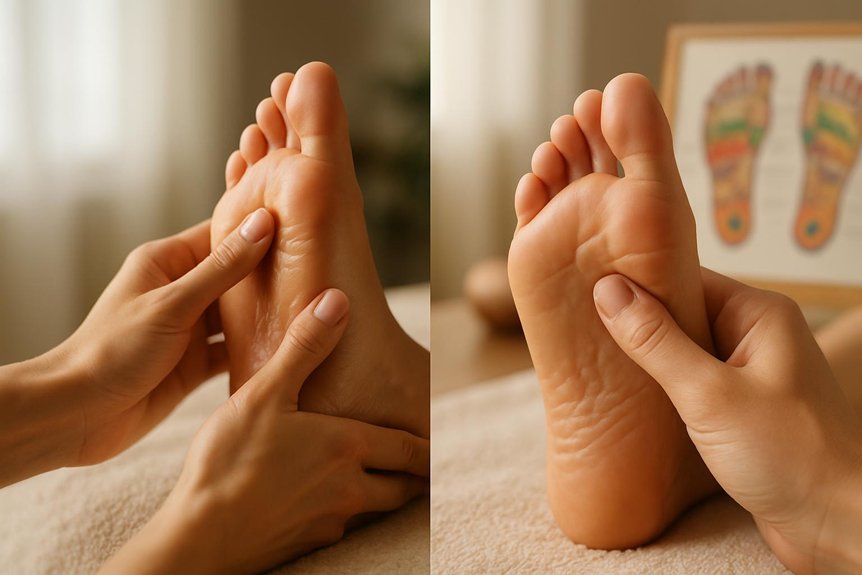
Foot Reflex Zone Map
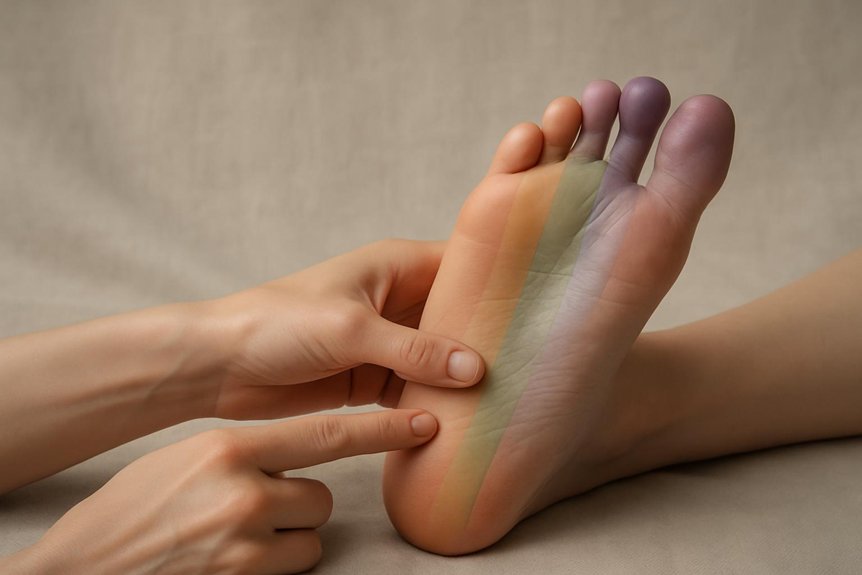
For practical reference during a zone therapy session, a foot reflex zone map is used to correlate specific areas of the foot with corresponding body systems and regions, reflecting a TCM-informed view of meridian connectivity and energetic balance.
At Spa & Massage clinics, therapists use the map to guide measured pressure along longitudinal “zones,” observing tissue tone, temperature, and client feedback to maintain comfort and consent.
Common layouts place head and neck influences at the toes, thoracic and abdominal regions through the ball and arch, and pelvic influences toward the heel, with medial and lateral edges reflecting spinal and limb-related pathways.
Safety screening is essential: pressure is modified or deferred for acute injury, infection, thrombosis risk, severe neuropathy, or high-risk pregnancy. Communication stays close and reassuring throughout.
Hand Reflex Point Map
Across the palm and fingers, a hand reflex point map is used to associate defined hand regions with corresponding organs, musculoskeletal areas, and meridian-informed energetic pathways.
Practitioners often read the thumb and fingertips as head/neck zones, the thenar area as chest/upper back, the mid‑palm as digestive function, and the heel of the hand as pelvic and low‑back support.
In TCM terms, pressure may be applied along hand regions linked to Lung, Heart, Pericardium, and Large Intestine channels to encourage smooth qi flow.
At Spa & Massage clinics, therapists use slow, intimate, consent-led compressions and glides, avoiding sharp pain, numbness, or skin irritation.
Caution is advised with fractures, neuropathy, acute inflammation, or pregnancy-related contraindications.
Ear Reflex Micro Map
Hand reflex mapping highlights how small surface areas can be used to guide targeted pressure work; the ear reflex micro map applies the same principle to the auricle, where discrete zones are palpated and treated to support whole‑body regulation. In TCM-informed practice, the ear is treated as a somatic “mirror,” with points linked to Shen calming, autonomic balance, and pain modulation.
At Spa & Massage clinics across London, therapists use gentle, clean, fingertip pressure or blunt tools, monitoring tenderness, heat, or texture changes. Sessions may pair ear work with foot or hand zone therapy to deepen relaxation while keeping pressure comfortable and consent-led.
Safety is prioritised: avoid inflamed skin, piercings, infection, recent surgery, or unexplained dizziness; pregnant clients are assessed individually. Aftercare: hydrate, rest, and note any delayed sensitivity.
Acupressure Explained: Meridians and Pressure Points
Within Traditional Chinese Medicine (TCM), acupressure is understood as the application of sustained, targeted manual pressure to specific points along meridians—mapped pathways associated with the movement of qi (vital energy) and with organ-system functions.
Points are selected to influence patterns such as stagnation, deficiency, or excess, and are commonly described by standard names and locations (for example, along the Lung, Heart, or Gallbladder channels).
Clinically, pressure is typically applied with a thumb, finger, knuckle, or palm, with intensity kept within a client’s comfortable “good pressure” range.
At Spa & Massage clinics across London, therapists prioritise clear consent, steady breath, and continuous feedback to maintain safety, especially around sensitive areas, pregnancy, bruising tendency, anticoagulants, or acute inflammation.
Acupressure is complementary and not a substitute for medical care.
What a Reflexology vs Acupressure Session Feels Like
In Spa & Massage clinics, zone therapy typically feels like focused, graded pressure and small movements applied to mapped areas of the feet (and sometimes hands), while acupressure uses steady, held contact along TCM meridians and specific points to support qi and blood flow.
Pressure is adjusted to remain therapeutic rather than painful, with ongoing check-ins and contraindication screening (e.g., pregnancy, acute injury, circulatory issues) to prioritise safety.
A typical session includes a brief health consultation, targeted work based on symptoms and palpation findings, and simple aftercare guidance such as hydration and monitoring for transient soreness or fatigue.
Touch, Pressure, And Flow
Two elements typically distinguish the experience of zone therapy versus acupressure in a session: where the therapist applies pressure and how that pressure is delivered over time.
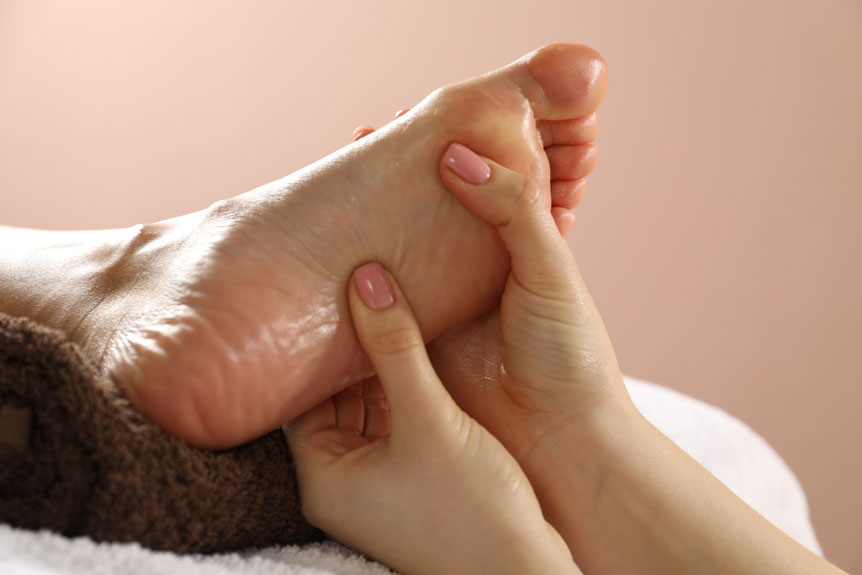
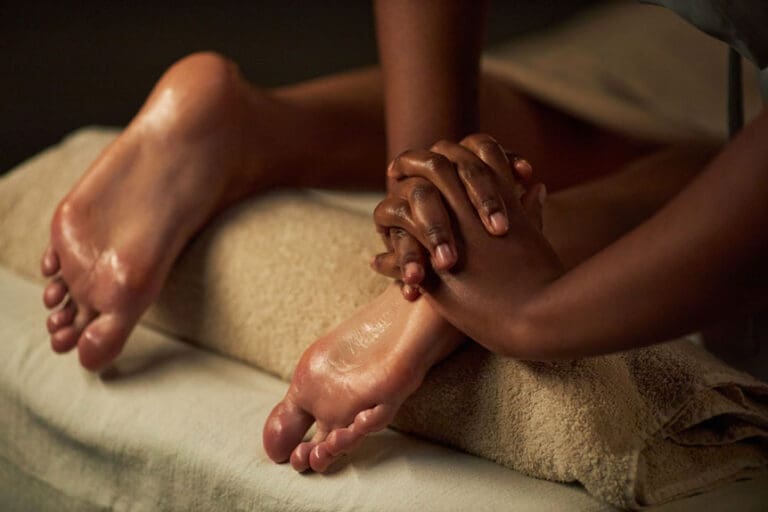
It commonly uses thumb-walking, gentle knuckling, and sustained holds on mapped points of the feet (and sometimes hands), often creating a grounded, enveloping sensation.
Acupressure applies fingertip or palm pressure to specific points along TCM meridians across the body, with pauses, releases, and reapplication that can feel wave-like and circulatory.
In Spa & Massage clinics, pressure is titrated to comfort and breath, avoiding sharp pain, numbness, or bruising.
Clients may notice warmth, tingling, or a soft “unwinding” as qi and blood are encouraged to move, followed by calm heaviness and steadier flow.
Typical Session Structure
Beyond the differences in touch and pressure patterns, the overall structure of a session shapes how zone therapy and acupressure are perceived in the body.
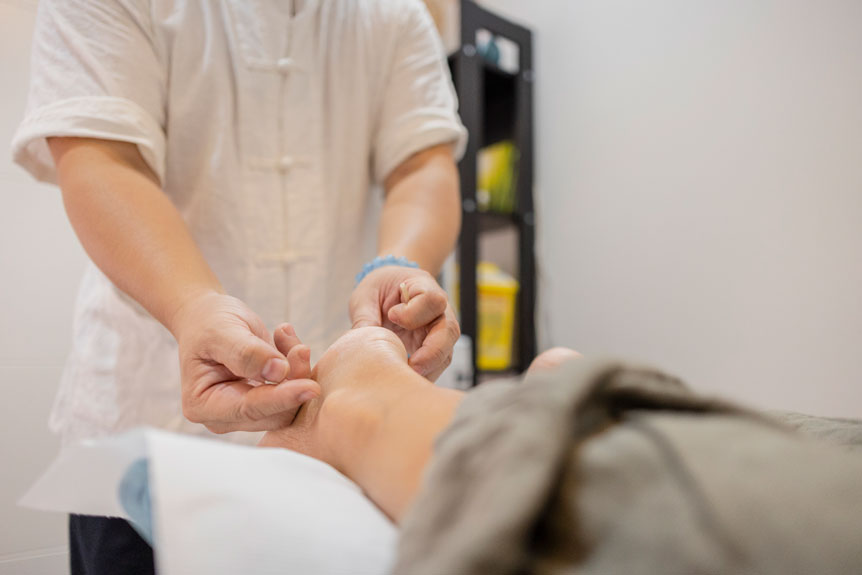
In zone therapy at Spa & Massage, the client is typically settled supine, shoes removed, and feet cleansed. A brief intake reviews comfort, pregnancy status, circulation issues, neuropathy, and any skin sensitivities. Work then follows mapped zones on feet (sometimes hands), using rhythmic thumb-walking and holds; sensations often feel intimate, warm, and deeply grounding, with pauses to regulate breath.
Acupressure sessions begin with a TCM-informed assessment of sleep, digestion, stress, and pulse/tongue notes where appropriate. Points are held along meridians through clothing or with minimal oil. Pressure is titrated, avoiding contraindicated points and excessive force. Aftercare includes hydration and rest advice.
Zone Therapy vs Acupressure Benefits: Stress, Pain, Sleep
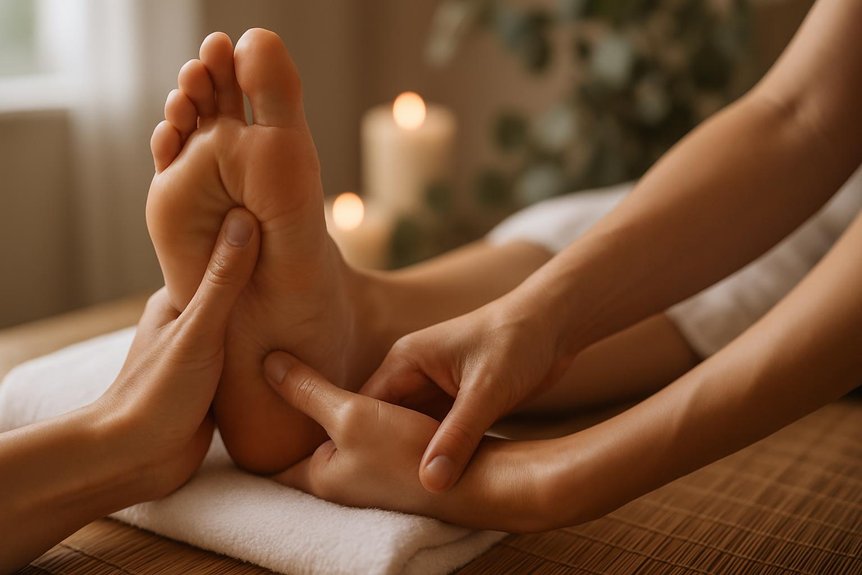
For clients seeking measurable relief from stress, pain, or disrupted sleep, zone therapy and acupressure offer distinct—often complementary—benefit profiles.
It uses mapped foot, hand, or ear zones to downshift the nervous system; many clients report calmer breathing, warmer extremities, and easier sleep onset after sessions at Spa & Massage.
Acupressure applies sustained, precise pressure to meridian points to regulate Qi and soften muscular guarding; it is commonly used for tension headaches, neck/shoulder tightness, and menstrual discomfort.
For sleep, points such as HT7 and SP6 are traditionally selected with caution, especially in pregnancy.
Both methods may reduce perceived pain via relaxation and improved circulation; neither replaces medical assessment for acute, neurological, or unexplained symptoms.
Bruising risk is minimized by graded pressure.
Choosing Zone Therapy vs Acupressure at Spa & Massage
In practice, choosing between zone therapy and acupressure at Spa & Massage is guided by the client’s primary goal, medical history, and comfort with touch.
It is often preferred when a nurturing, contained session focused on the feet is desired, supporting relaxation and sleep with minimal body exposure.
Acupressure may suit clients seeking more targeted work along meridians for tension, headaches, or digestive discomfort, using steady finger pressure on selected points.
Therapists complete a brief consultation, then adapt pressure, positioning, and draping to preserve warmth, privacy, and ease.
Extra caution is used for pregnancy, anticoagulant use, neuropathy, recent injury, or skin conditions; clients are advised to report sharp pain, dizziness, or unusual tenderness immediately.
Aftercare includes hydration and gentle rest.
Conclusion
Zone therapy and acupressure both use therapeutic pressure, but differ in method: it works mainly through mapped zones on feet, hands, and ears, while acupressure targets meridian points to support qi flow and reduce stagnation. Choice depends on goals, comfort, and any contraindications. In London clinics, therapists screen for pregnancy, neuropathy, anticoagulant use, and acute inflammation, then tailor pressure accordingly. With informed guidance, the right approach can be the best of both worlds.