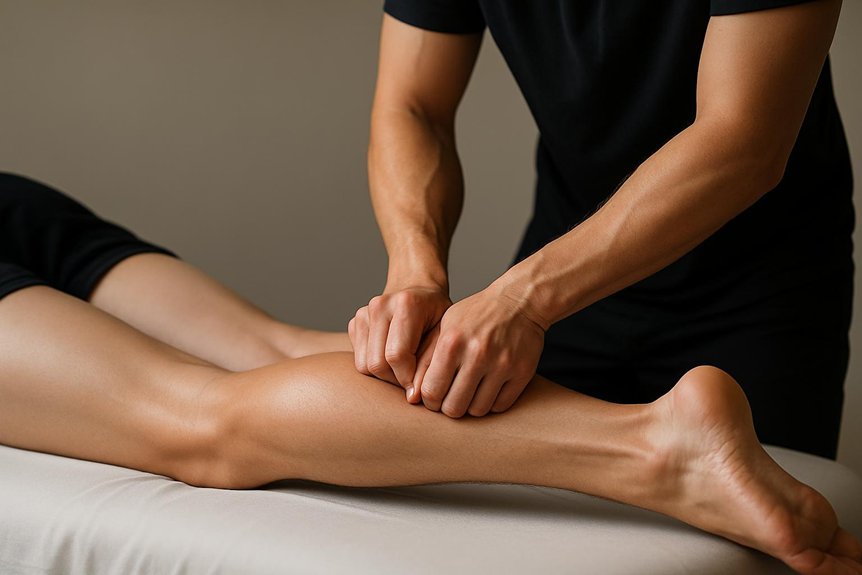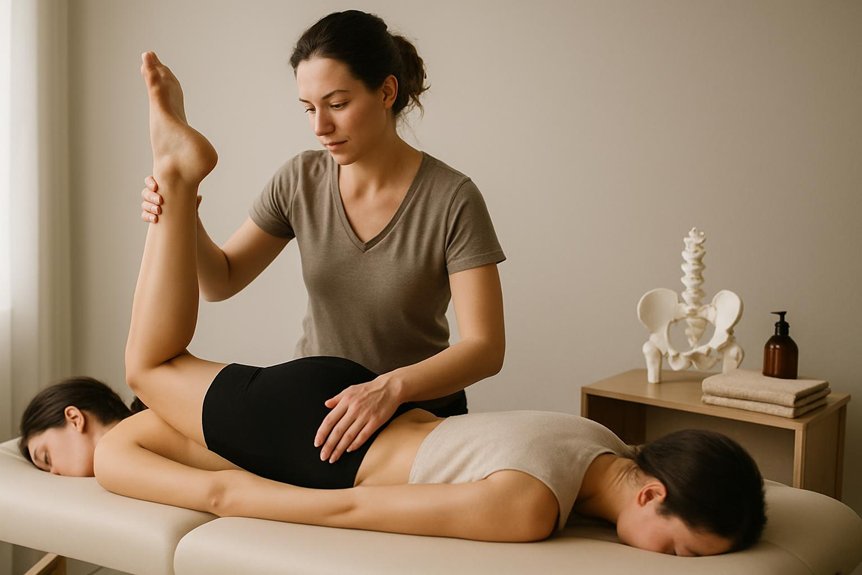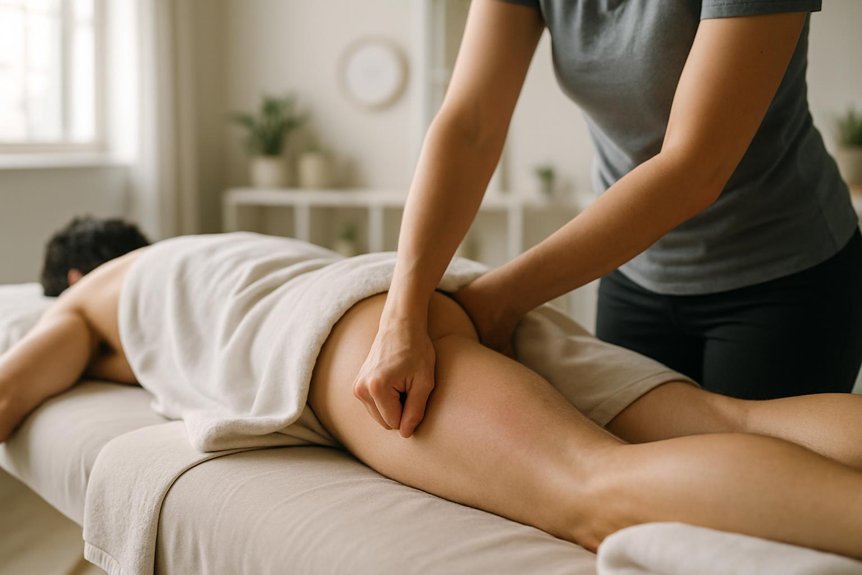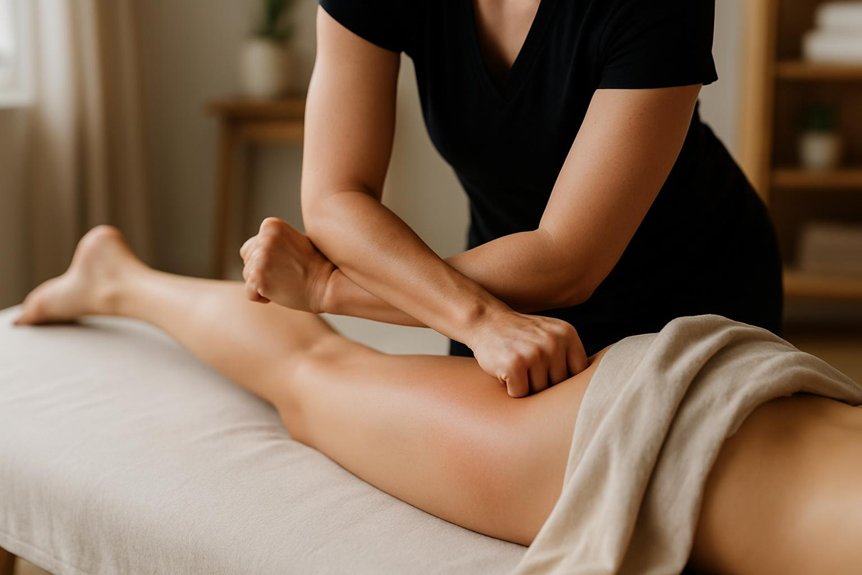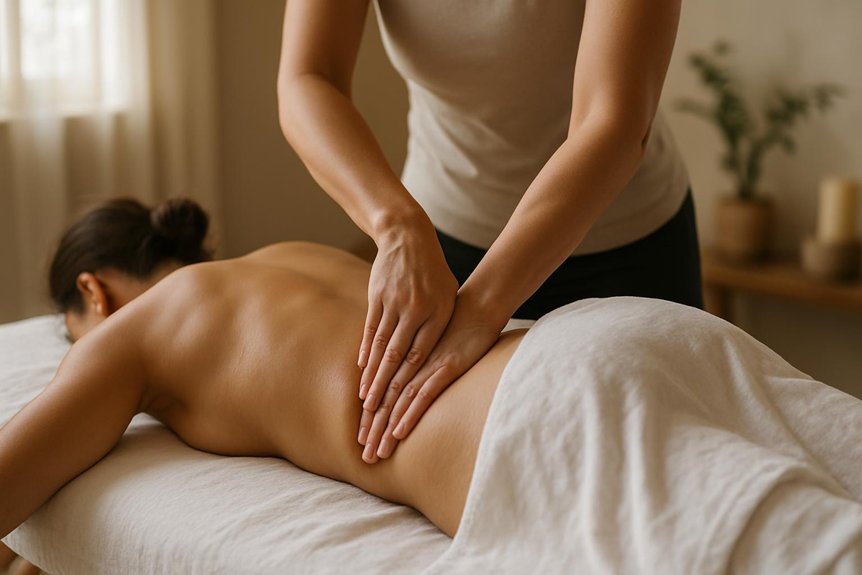
Tiredness after intensive tissue massage is common because sustained pressure can shift the nervous system toward parasympathetic “rest-and-digest” activity, lowering heart rate, muscle tone, and perceived stress arousal. Deep work may also create mild, exercise-like tissue strain and trigger short-term circulation and fluid shifts that feel heavy or sleepy. Fatigue usually peaks within a few hours and resolves within 24–48 hours with hydration, light movement, and rest. Additional guidance helps clarify timing, aftercare, and warning signs.
Why Do You Feel Tired After Intensive Tissue Massage?
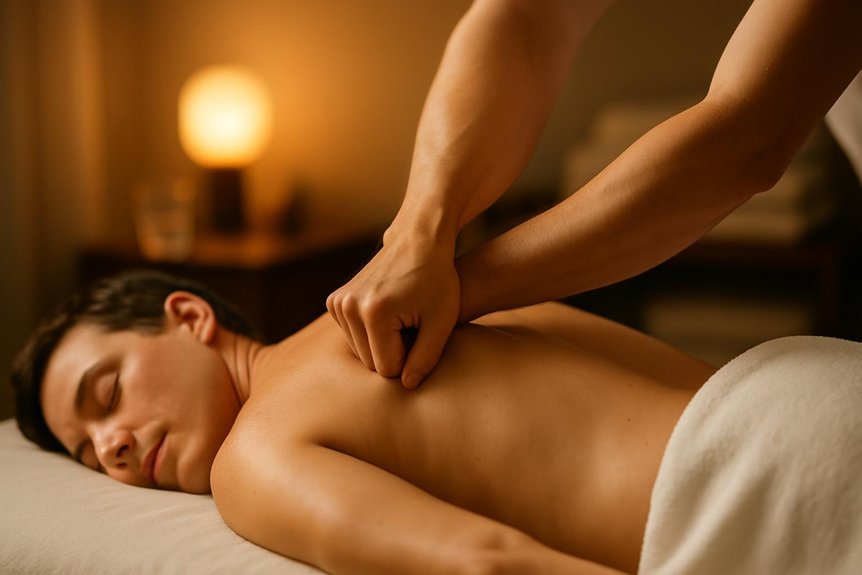
Why does tiredness sometimes follow an intensive tissue massage? Deep pressure can downshift the nervous system from alertness toward parasympathetic “rest-and-digest,” lowering muscle tone and heart rate and creating a drowsy, soothed state.
Targeted work on tight fascia may also change local circulation and fluid movement, which some clients perceive as heaviness. Because deep tissue massage works into deeper muscle layers to release chronic tension, the body may respond with an overall sense of fatigue as it recalibrates.
When treatment reduces pain signals and guarding, the body often releases effortful holding patterns, and that relief can feel like a quiet, intimate exhale.
At Spa & Massage clinics across London, therapists pace intensity and breathing cues to avoid overload. Hydration, gentle movement, and a calm shift after the session support steadier energy and comfort.
Is Post–Intensive Tissue Massage Fatigue Normal (and How Long Does It Last)?
Post–remedial massage fatigue is commonly reported and is generally considered a normal, short-term response to intensive soft-tissue work and nervous-system downregulation.
For most clients, tiredness peaks within the first few hours and resolves within 24–48 hours with adequate hydration, light movement, and sleep.
At Spa & Massage clinics across London, therapists frame recovery expectations in advance and tailor pressure and aftercare to support a steady return to usual energy levels.
Normal Fatigue After Massage
Fatigue after a remedial massage is common and typically reflects a normal, short-term response to intensive manual pressure on muscles and connective tissue. Many clients experience a calm, heavy-limbed sleepiness as the nervous system shifts toward parasympathetic “rest-and-digest” activity, while local tissue loading can briefly increase soreness and perceived effort.
Mild light‑headedness may also occur if breathing deepens and blood flow redistributes when long‑held tension releases. At Spa & Massage clinics across London, therapists explain that this post‑treatment dip is usually benign when it feels like gentle, restorative tiredness rather than distress. Clients are advised to notice red flags—fainting, chest pain, severe headache, fever, or escalating weakness—which warrant medical review and should be reported before the next session.
Typical Duration And Recovery
Over the first 24 hours after a remedial massage, transient tiredness is generally considered a normal response and, for most clients, begins to ease the same day or by the next morning.
Mild heaviness may persist up to 48 hours, especially after stronger pressure, a first session, high stress, or poor sleep.
Recovery typically improves with hydration, a light meal, and gentle walking to support circulation. In Spa & Massage clinics, therapists advise avoiding intense training, alcohol, and late nights that can amplify fatigue.
Warm bathing and early bedtime often help the body settle.
If exhaustion lasts beyond 72 hours, is worsening, or comes with fever, marked dizziness, or unusual pain, a clinician review is appropriate and a lighter treatment plan should be discussed.
Why Remedial Massage Can Make You Sleepy
Remedial massage can make some clients feel sleepy because firm, sustained pressure often promotes a nervous system downshift toward parasympathetic (“rest-and-digest”) activity.
Increased local circulation and support of lymphatic fluid movement may also contribute to a transient sense of heaviness or fatigue as tissues rehydrate and metabolic by-products are cleared.
In Spa & Massage clinics, therapists also note that reduced stress arousal—commonly reflected in lower perceived stress hormones and muscle guarding—can leave clients feeling calm and ready to sleep.
Nervous System Downshift
Following a deep tissue session, many clients report sleepiness because the body shifts from sympathetic “fight-or-flight” activity toward parasympathetic “rest-and-digest” dominance. Slow, sustained pressure and mindful pacing can reduce perceived threat signals from tight, guarded tissues, allowing breathing to deepen and heart rate to settle.
This downshift is associated with increased vagal tone and a calmer mental state, so drowsiness may feel like a safe “let-go” rather than a problem. At Spa & Massage clinics across London, therapists regularly observe clients becoming quieter, warmer, and more inwardly focused as the nervous system relaxes.
Clients are advised to plan gentle time afterwards, avoid rushing back into demands, and allow a short nap if it arises naturally.
Circulation And Lymph Release
As tissues are mobilised under slow, firm pressure, local blood flow and lymphatic drainage tend to increase, which can contribute to post‑massage sleepiness.
Improved circulation can shift warmth toward worked areas and support metabolic waste clearance, while gentle lymph release may reduce local fluid congestion; together, this can leave the body feeling heavy and ready to rest.
Some clients notice a brief drop in peripheral tension and a calmer, softer breath, which can feel intimate and soothing on the table.
At Spa & Massage clinics across London, therapists pace deep tissue work and encourage steady hydration after treatment to support these fluid shifts.
Light walking later and avoiding alcohol can help clients feel clear yet relaxed.
Stress Hormone Reduction
By downregulating the body’s stress response, remedial massage can reduce circulating stress hormones (particularly cortisol) and shift the nervous system toward parasympathetic “rest-and-digest” activity, which commonly presents as sleepiness.
Evidence suggests massage can also lower sympathetic arousal and support calmer breathing and heart rate, making the post-treatment state feel deeply safe and quiet.
At Spa & Massage clinics across London, therapists often notice clients becoming drowsy once sustained pressure releases protective tension patterns, especially in the neck, shoulders, and hips. This isn’t “weakness”; it is a physiological recalibration.
Clients are encouraged to plan a slower evening, hydrate, and avoid intense workouts or alcohol after a deep tissue session. If fatigue is prolonged, therapists can adjust intensity and pacing.
Why You Feel Sore After Remedial Massage
Mild soreness after a remedial massage is common and usually reflects a normal, short-term response to targeted pressure on tight muscles and connective tissue.
Firm, slow strokes can create microscopic strain in muscle fibres and fascia, similar to post-exercise tenderness, while improving local circulation and reducing trigger-point sensitivity.
Some clients also notice tenderness where protective tension was “holding” the body, and the nervous system begins letting go.
At Spa & Massage clinics across London, therapists work within the client’s comfort, yet therapeutic intensity can still leave a dull ache for 24–48 hours.
Soreness should feel like a warm bruise, not sharp pain, numbness, or swelling.
Gentle movement, heat, and light stretching typically ease symptoms; ongoing or escalating pain warrants review.
Can Dehydration Make You Tired After Remedial Massage?
After a remedial massage, dehydration can contribute to post-treatment tiredness, mainly by compounding the normal fluid shifts and metabolic demand that follow sustained, firm pressure on muscle and fascia.
When fluid intake is low, blood volume and circulation efficiency can drop slightly, making it harder to deliver oxygen and clear metabolites, which can feel like heaviness, low energy, or a mild “hangover” sensation. Dehydration may also increase headache risk and amplify post-session soreness, further reducing alertness.
At Spa & Massage clinics across London, therapists recommend steady hydration before and after treatment, aiming for pale-yellow urine and avoiding excess alcohol or high caffeine that day.
Warm herbal tea and electrolyte-balanced water can suit sensitive clients, especially after intense work.
When Tiredness After Remedial Massage Means “Too Much Pressure
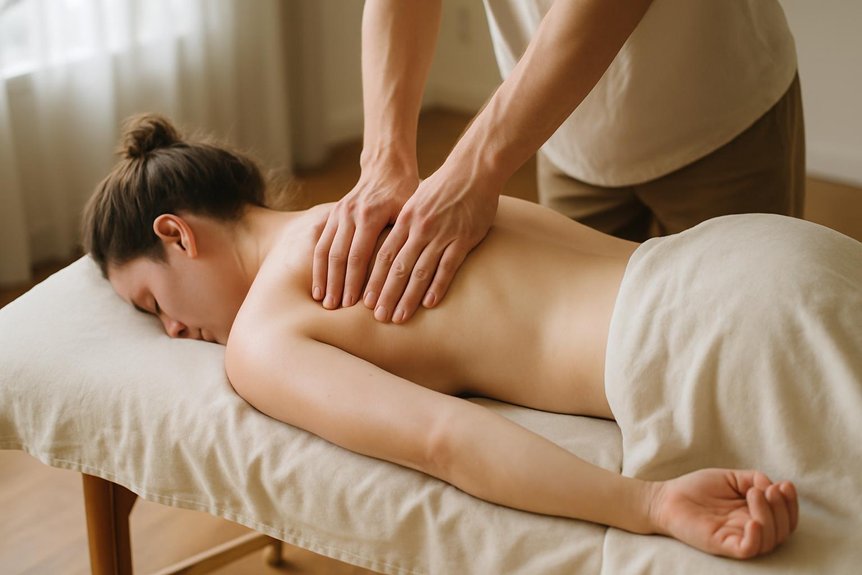
When does post‑massage fatigue signal that the session was simply too intense? Concern rises when tiredness is paired with sharp or burning pain during treatment, significant soreness beyond 48 hours, bruising, headache, nausea, dizziness, or a “wiped‑out” feeling that disrupts normal functioning. These features may indicate excessive pressure causing unnecessary micro‑trauma and a heightened stress response rather than therapeutic load.
At Spa & Massage clinics across London, therapists treat “good pain” as controlled, breathable intensity—warm, releasing, and always within consent. If a client finds themselves tensing, holding breath, or feeling emotionally overwhelmed, pressure is likely too high. Ongoing tenderness, swelling, or reduced range of motion warrants prompt feedback and adjustment at the next visit.
How to Recover Faster After Remedial Massage (Today and Tomorrow)
Post‑massage fatigue is often a normal short‑term response once pressure is kept within safe, breathable intensity; the priority then becomes supporting recovery so clients feel clear-headed and comfortable by the next day.
At Spa & Massage, therapists advise hydration across the afternoon and evening to support circulation and lymphatic clearance; alcohol is best avoided.
A protein-and-complex‑carbohydrate meal within a few hours can stabilise energy.
Gentle walking, light stretching, and warmth (a shower or bath) may reduce lingering heaviness without re‑irritating treated tissue.
If tenderness appears, brief cool compresses can help.
That night, prioritise an early, uninterrupted sleep window and a calm wind‑down.
The next day, keep activity moderate, continue fluids, and choose restorative movement over intense training.
How to Feel Less Tired After Your Next Remedial Massage Session
For many clients, fatigue following remedial massage is predictable and can be reduced with simple pre‑session planning. At Spa & Massage clinics across London, therapists advise arriving well‑hydrated, eating a light, protein‑balanced meal 1–2 hours beforehand, and avoiding alcohol or heavy training on the day. Adequate sleep the night before supports nervous‑system recovery and steadier energy afterward.
During treatment, clients benefit from slower breathing and clear, intimate communication about pressure so the body stays receptive rather than braced.
After the session, gentle walking, warm fluids, and an early, quiet evening help maintain circulation without adding stress. If post‑massage tiredness is frequent, booking earlier in the day and requesting a shorter, targeted deep tissue focus may reduce load while preserving results.
Conclusion
Post–deep tissue fatigue is usually a predictable, short-lived response to nervous-system downshifting, increased circulation, and tissue loading—often intensified by poor sleep, stress, or low hydration. Soreness may follow as muscles adapt, but marked exhaustion can also signal excessive pressure or inadequate recovery. The next 12–24 hours matter most: fluids, light movement, warmth, and rest typically restore baseline. Yet if fatigue is disproportionate, persistent, or paired with dizziness, the true cause may be pressure—and it may not be obvious until next time.