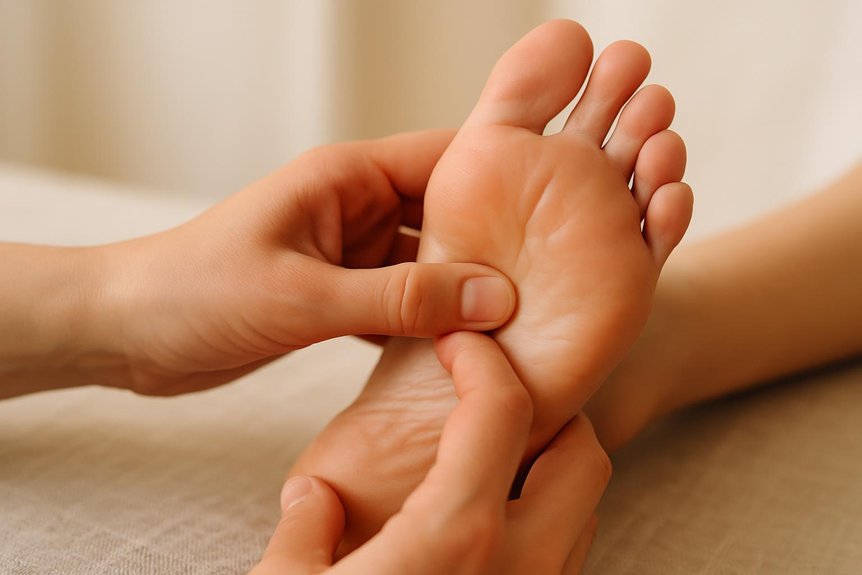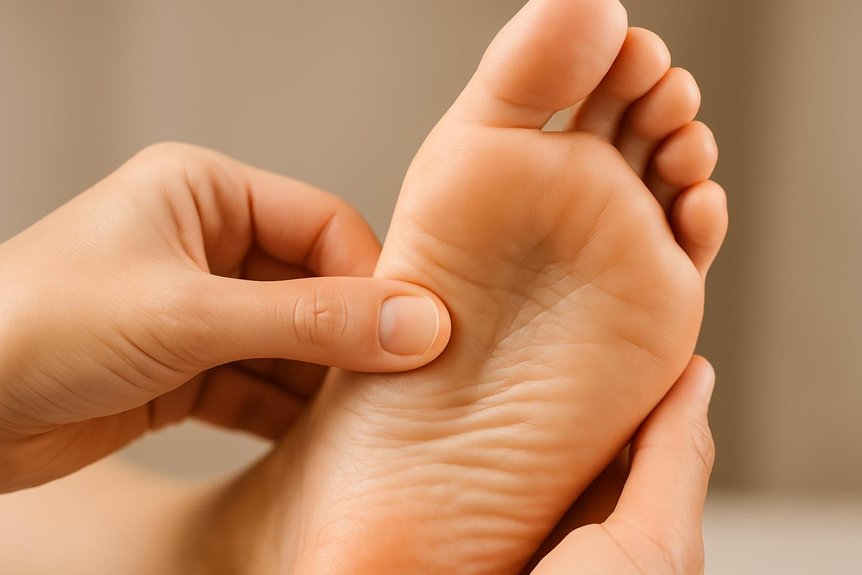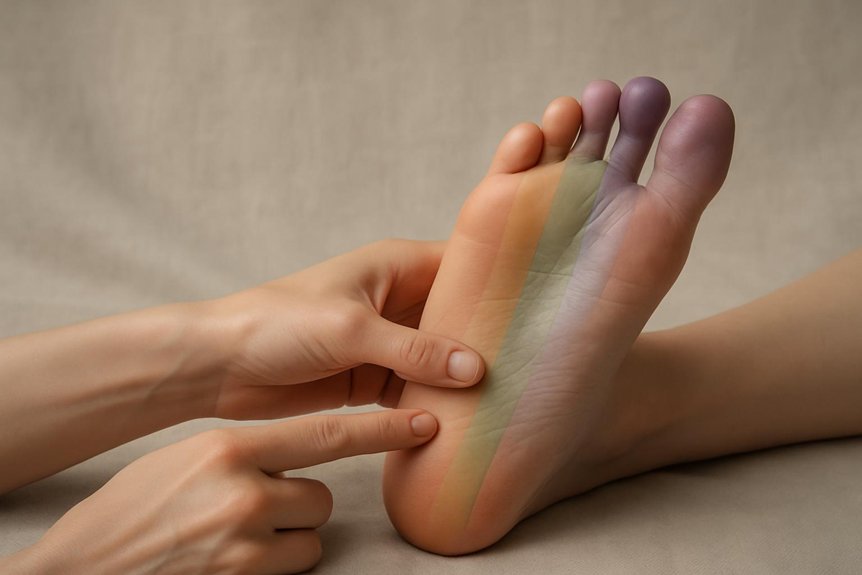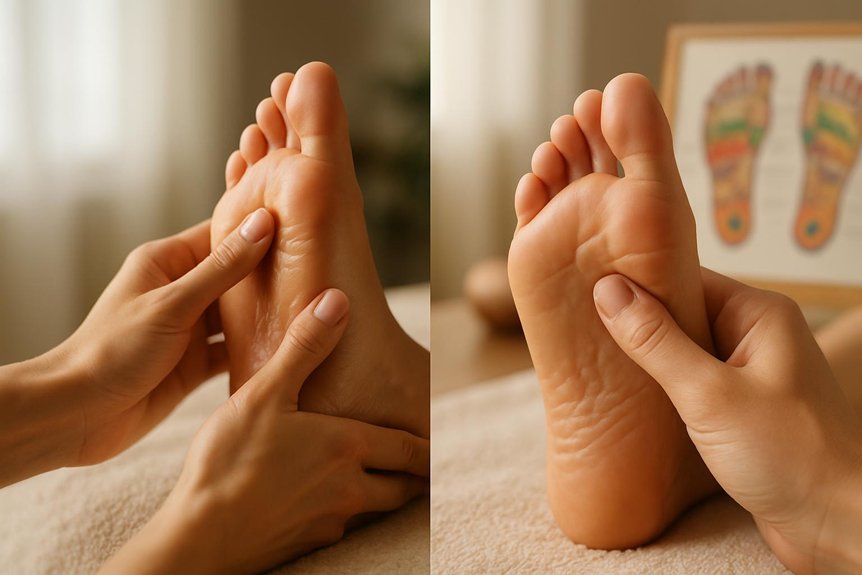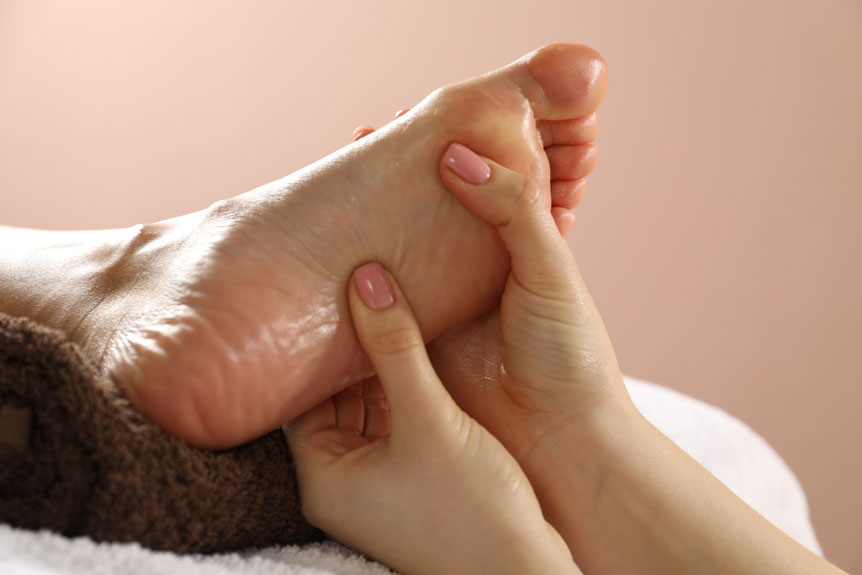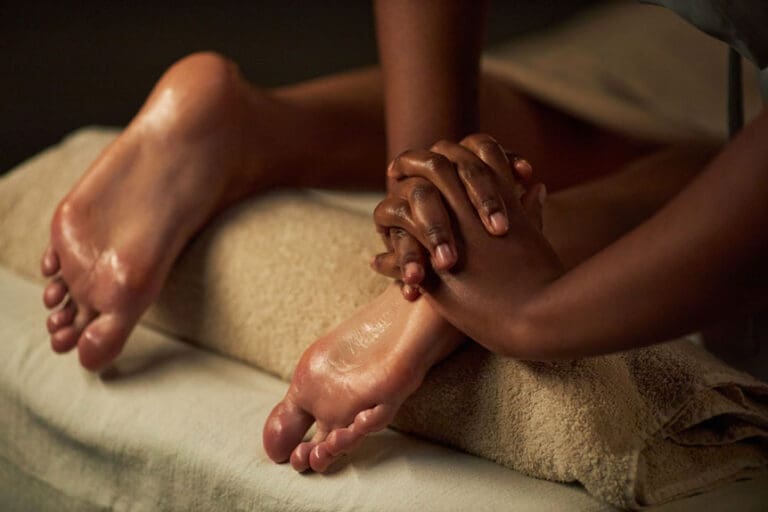
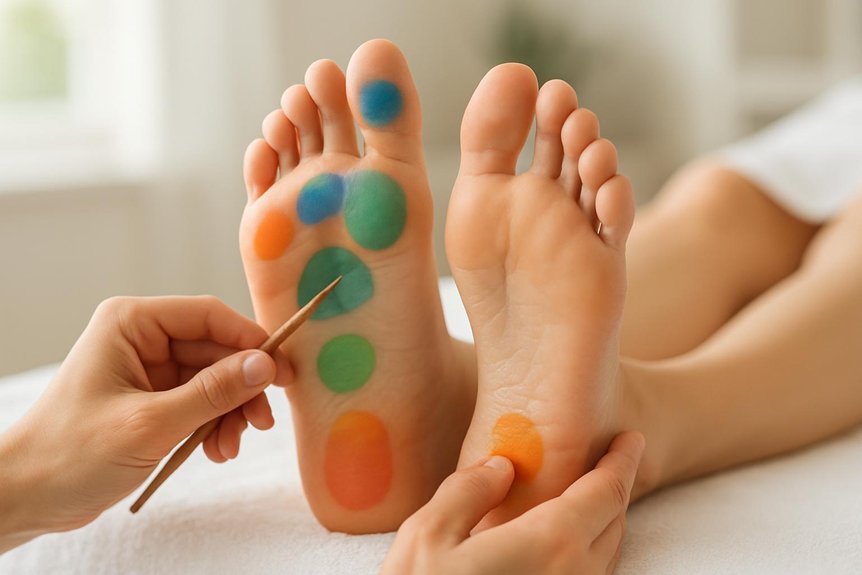
To read a zone therapy foot chart, first confirm left versus right foot and the top-to-bottom body layout: toes map to head/neck, the ball to chest/upper back, the arch to abdominal organs, and the heel to pelvis/lower back. Use the inner edge as the spine/midline reference and check the legend: shaded zones indicate broader regions, dots mark specific points, and lines show boundaries. Apply gentle pressure only; avoid broken skin, acute swelling, or severe neuropathy. Additional guidance follows below.
Zone Therapy Foot Chart Basics: Orientation and Symbols
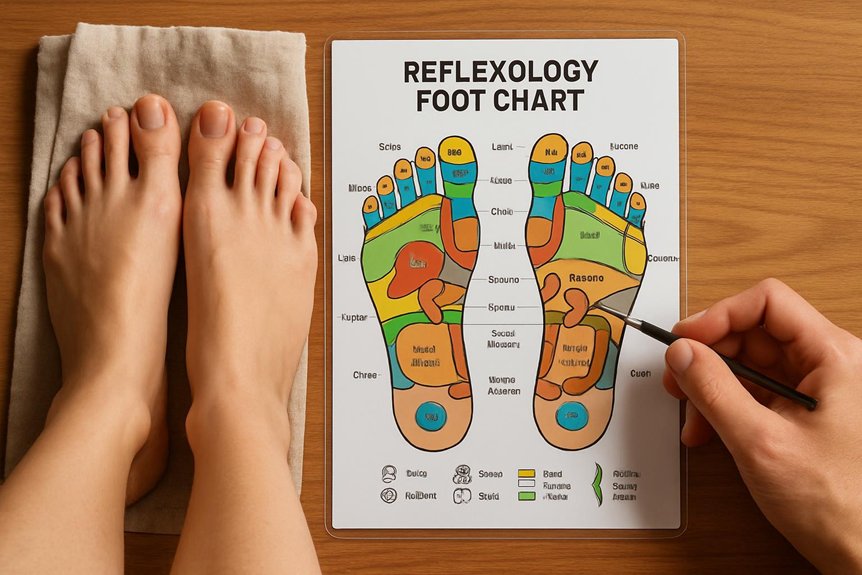
To begin with orientation, a zone therapy foot chart is read by first identifying left versus right foot and the chart’s top-to-bottom layout: toes represent the head and neck, the ball of the foot maps to the chest and upper back, the arch corresponds to abdominal organs, and the heel relates to the lower back and pelvic area.
Next, symbols are checked: shaded zones usually indicate broader reflex regions, dots mark specific points, and lines suggest boundaries or pathways. A legend, when present, is used before touch begins.
Many people explore zone therapy for its potential healing power as a complementary wellness practice.
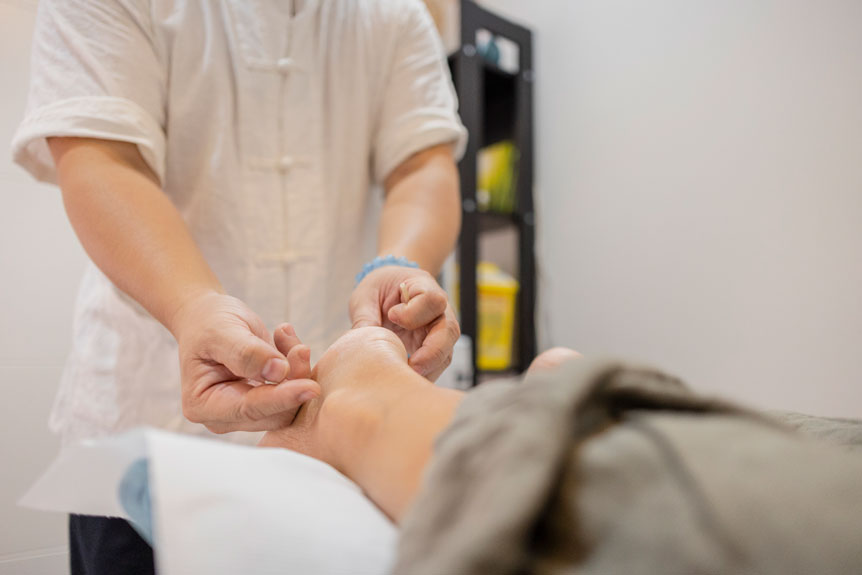
In Spa & Massage clinics, therapists use light pressure at first, then increase only with consent and feedback. Skin integrity is assessed; pressure is avoided over wounds, inflammation, varicose veins, or acute pain. Breathing is kept slow, and communication stays tender and continuous.
Which Foot Shows What on a Reflexology Foot Chart
How does a zone therapy foot chart indicate left-versus-right body areas? It maps each foot to the same side of the body: left foot reflects left-side structures, right foot reflects right-side structures.
Step 1: confirm the chart’s midline; the inner edges of both feet correspond to the spine and central line.
Step 2: note paired organs; work each foot separately for areas such as shoulder, hip, kidney, and ovary/testis on that side.
Step 3: recognise exceptions; midline regions and some organs are shown on both feet, so pressure is balanced.
Step 4: proceed gently; avoid sharp pain, bruised skin, recent fractures, or inflamed areas.
At Spa & Massage, therapists maintain steady, comforting contact and invite feedback throughout.
Toe and Ball Zones on a Zone Therapy Foot Chart
On a zone therapy foot chart, the toe reflex points are mapped first by identifying each toe pad and its corresponding head and neck references, then confirming left–right alignment as previously established.
Next, the ball of the foot zones are located beneath the toe line and checked systematically across the medial to lateral side to maintain consistent positioning and pressure.
When reading pressure sensations, a therapist notes tenderness, heat, or resistance and adjusts intensity to remain within a comfortable range, as done in Spa & Massage clinics to support safe, client-led treatment.
Toe Reflex Points Mapped
Begin by identifying the toe tips and the ball of the foot on the zone therapy chart, as these zones are mapped to head/neck and upper-body reflex points and are commonly assessed first for sensitivity.
Next, match each toe to the chart’s head-region labels, noting that the big toe commonly corresponds with central head areas, while smaller toes track adjacent regions.
Apply gentle, slow pressure with the thumb pad, keeping contact warm and reassuring; pain should never be forced.
Observe texture changes, tenderness, or temperature differences, and reduce pressure immediately if sharp discomfort occurs.
Work toe-by-toe, then compare left and right feet for asymmetry.
At Spa & Massage clinics, therapists document client feedback and adjust technique to remain safe, discreet, and comfortable throughout each zone therapy session.
Ball Of Foot Zones
After the toe tips have been assessed, attention shifts to the ball of the foot, located directly beneath the toes and spanning from the first to fifth metatarsal heads.
On most zone therapy charts, this area corresponds primarily to the chest and upper back, with the left ball often mapped to heart and left lung reflexes and the right ball to liver and right lung reflexes.
A therapist at Spa & Massage would position the client’s foot in one hand, keeping the ankle neutral.
Using a cleaned thumb pad, contact is applied along the diaphragm line at the base of the toes, then worked in small, controlled steps across each metatarsal head.
Skin is supported, nails are kept short, and pressure remains gentle on tender tissue.
Avoid open wounds, acute inflammation, and recent fractures.
Reading Pressure Sensations
With the toe tips and ball zones mapped, pressure sensations are interpreted as feedback on tissue response rather than as a diagnosis. A therapist at Spa & Massage begins with light, steady thumb-walking, asking the client to note tenderness, warmth, dull ache, or “good pain.” Sensations are graded (0–10), then pressure is reduced to remain within a comfortable, intimate boundary.
If sharp, burning, or numb feelings arise, work pauses; the area is held gently, then reassessed, and the client is advised to seek medical guidance when appropriate. In toe and ball zones, tight, grainy, or resistant tissue is treated with slower pacing, smaller movements, and longer holds. After each pass, sensitivity changes are checked to confirm calming and comfort.
Arch and Instep Areas on a Zone Therapy Foot Chart
On most zone therapy foot charts, the arch and instep form the central “midline” zone used to map the digestive tract, kidneys, and spinal-related reflex areas. A reader should locate the inner arch first, then trace forward toward the ball to follow stomach and intestinal reflex pathways.
Next, they should note the upper arch/instep where kidney and ureter lines are commonly drawn; chart symbols often show a kidney point with a descending track. Pressure is applied slowly with thumb-walking, keeping contact close and reassuring, never forcing through sharp pain.
In Spa & Massage clinics, therapists reassess sensitivity after each pass and reduce depth if tenderness rises. Clients are advised to hydrate and pause if dizziness, fever, pregnancy complications, or acute inflammation are present.
Heel and Ankle Points on a Zone Therapy Foot Chart
On a zone therapy foot chart, the heel zone is reviewed first to identify its mapped organ links, then pressure points are applied in a controlled sequence using light-to-moderate contact.
The ankle area is checked next and worked gradually along the ankle and calf pathways, with slow shifts to avoid strain on sensitive tendons and joints.
In Spa & Massage clinics, therapists monitor comfort and circulation throughout and modify or stop techniques if pain, swelling, or acute injury is present.
Heel Zone Organ Links
Around the heel and ankle region on a zone therapy foot chart, the mapped points are commonly linked to pelvic structures and lower-back function, including the sciatic nerve pathway and areas associated with the bladder and reproductive organs. Practitioners typically read the inner heel as pelvic-floor and sacral support, the central heel as bladder/uterus-prostate associations, and the outer heel as hip and sciatic referral patterns.
Step-by-step, pressure is applied slowly with the thumb pad, then held briefly, aiming for a “comfortably intense” sensation rather than sharp pain. In Spa & Massage clinics, therapists check consent, breathing, and temperature, and reduce pressure if tenderness spikes. Heel work is avoided over broken skin, acute inflammation, or severe neuropathy, and clients with pregnancy complications or pelvic pain are advised to seek medical guidance first.
Ankle And Calf Pathways
Within a zone therapy foot chart, the ankle and lower calf pathways are read as intermediary zones that connect heel-based pelvic and lower-back mappings with the leg’s lymphatic and circulatory support lines.
At Spa & Massage, therapists map the malleoli (ankle bones) as boundary markers: work stays on soft tissue, not on bone or inflamed areas.
Step 1: apply warm, grounded holds around the ankle ring to invite relaxation and trust.
Step 2: use slow thumb-walks up the Achilles edges and along the inner calf line, matching pressure to the client’s breath.
Step 3: pause at tender nodules; reduce intensity, then release.
Step 4: finish with light, upward strokes to support drainage.
Avoid treatment with acute swelling, suspected clot, broken skin, or severe neuropathy.
Use a Zone Therapy Foot Chart Safely at Home
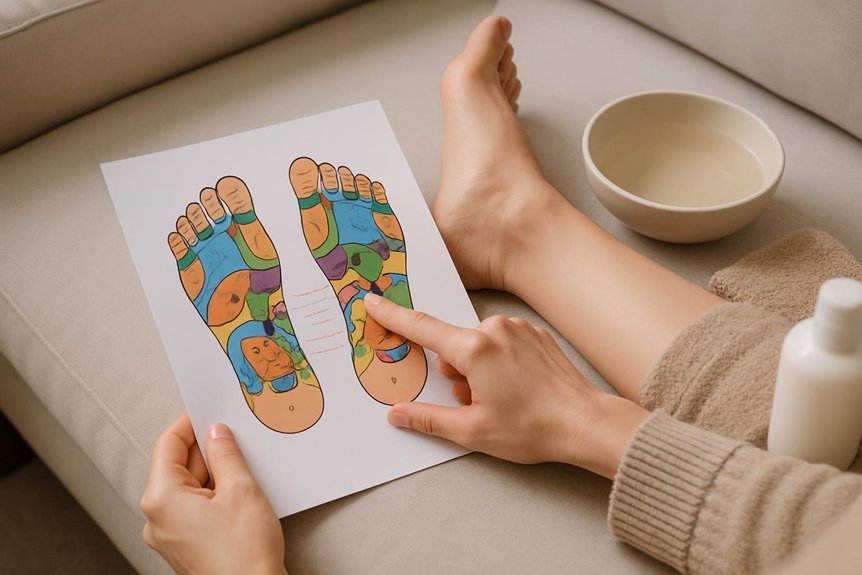
For safe use at home, a zone therapy foot chart should be treated as a general guide rather than a diagnostic tool. It may support relaxation, not replace medical care; persistent pain, swelling, numbness, fever, or unexplained symptoms require a clinician.
Step-by-step: wash and warm the feet, then sit comfortably with one foot supported. Apply a small amount of neutral oil or balm, as Spa & Massage therapists often do, to reduce friction. Use gentle thumb-walking or slow circular pressure on the mapped zone for 30–60 seconds, keeping sensation “tender but pleasant.”
Avoid broken skin, varicose veins, recent fractures, and acute inflammation. In pregnancy, use light pressure and seek professional guidance. Finish with soothing strokes and hydration. Stop immediately if sharp pain occurs.
Conclusion
Reading a zone therapy foot chart is presented as simple—until the “simple” map requires orientation, symbol decoding, and left–right distinctions. Step 1: confirm foot, zones, and legend; do not improvise. Step 2: relate toes, ball, arch, heel, and ankle to the labelled structures, applying light, tolerable pressure only. Step 3: note tenderness without chasing it. Step 4: stop with pain, skin changes, pregnancy concerns, or vascular/neuropathic risk; seek professional guidance.