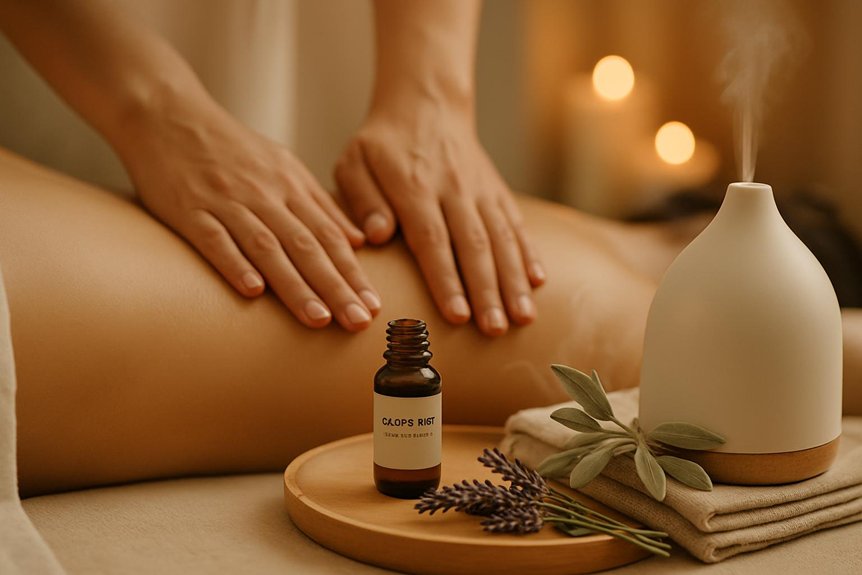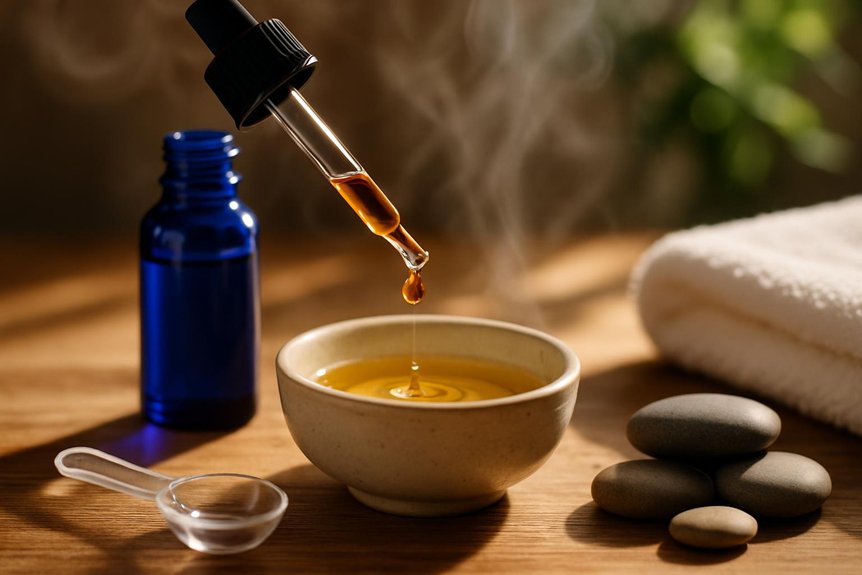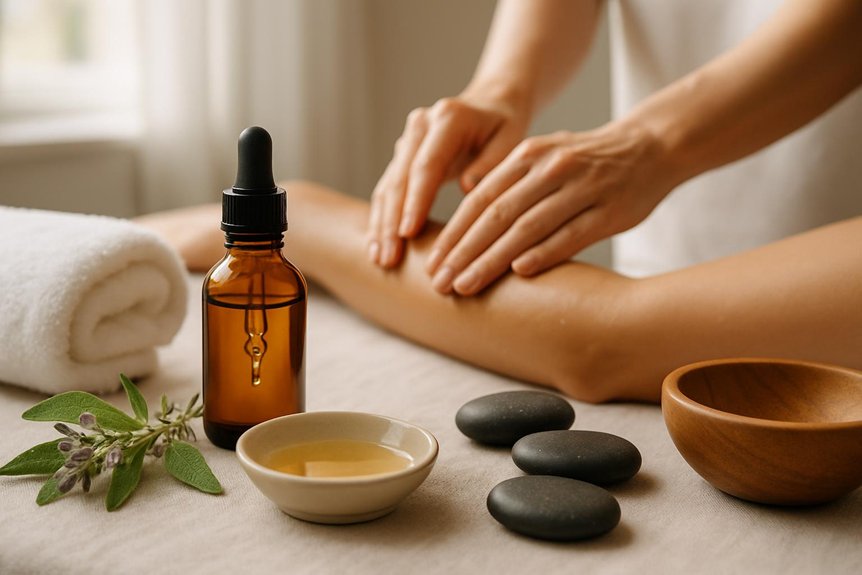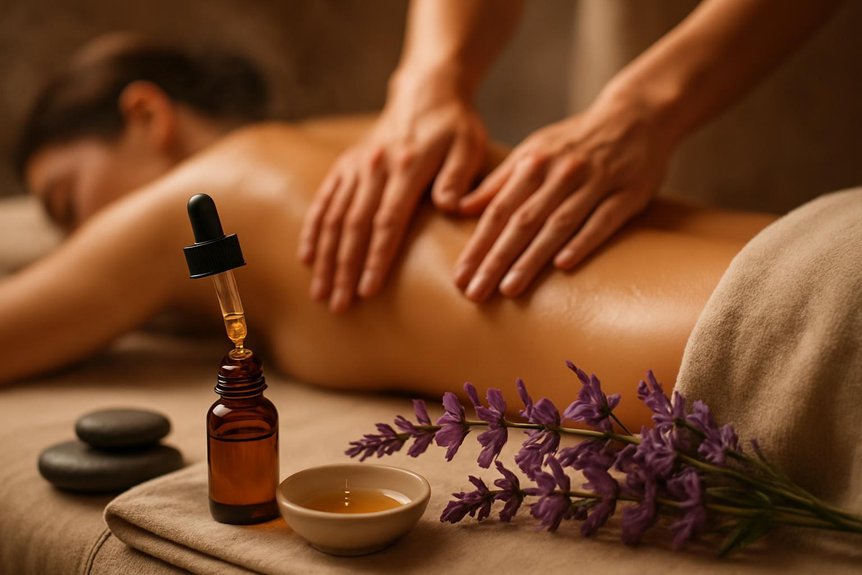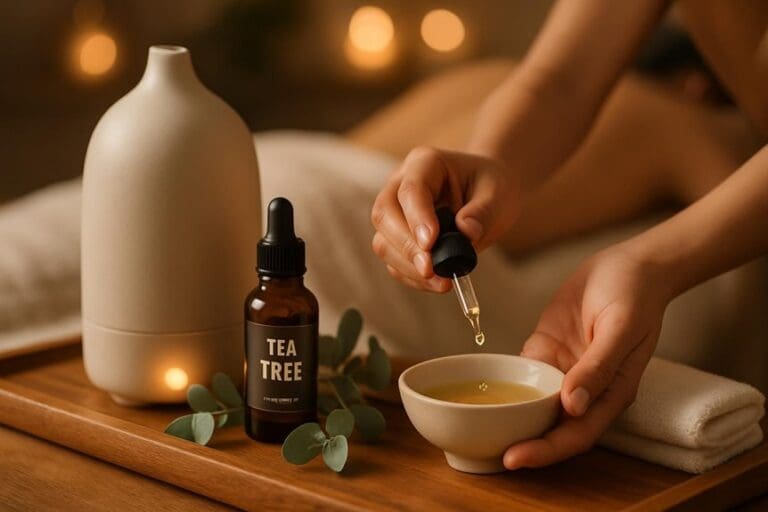
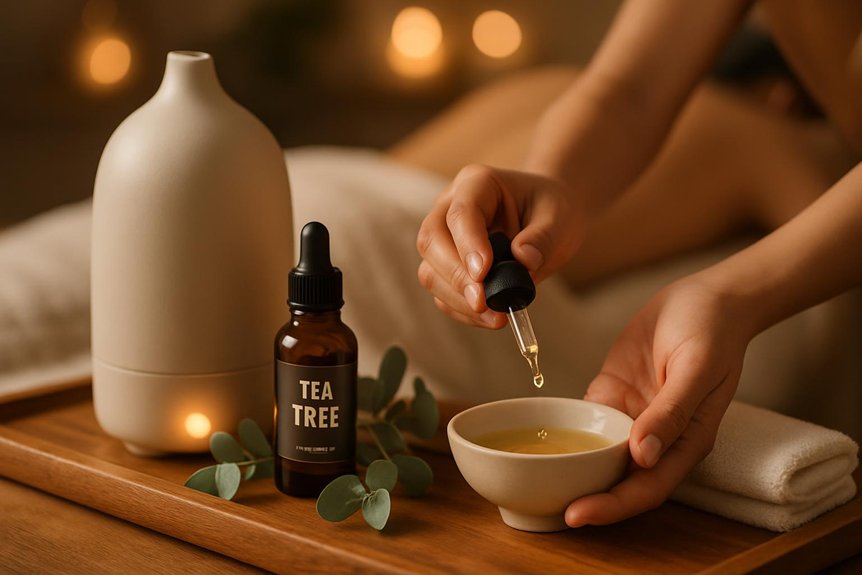
Tea tree oil can be safe for aromatic massage when it is properly diluted in a carrier oil, patch-tested 24–48 hours ahead, and used on intact, non-irritated skin. Because it irritates and sensitizes skin more often than many oils, conservative dilutions of 0.5–1% (about 1–2 drops per 10 ml) are typically preferred, and use should stop if stinging, redness, or tightness occurs. Guidance on contraindications, pregnancy, and alternatives can help.
Is Tea Tree Oil Safe for Aromatic Massage?
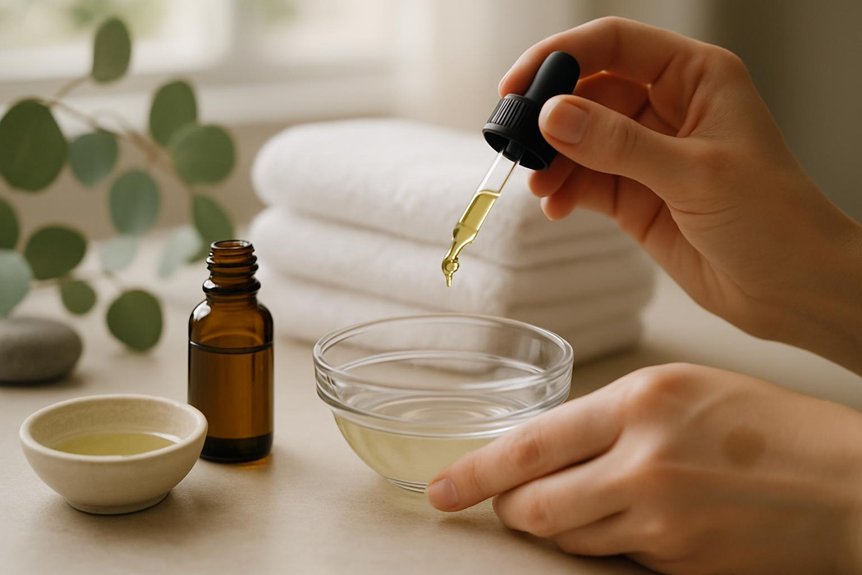
In general, tea tree essential oil can be safe for aromatic massage when it is properly diluted, patch-tested where appropriate, and used with clear clinical caution.
Evidence indicates it is more likely to irritate skin than many oils, so safe use depends on conservative dilution in a carrier oil and avoiding use on broken or freshly shaved skin.
To relax and recover more fully, some therapists pair tea tree with aromatherapy massage tips that focus on gentle strokes and a calm pace.
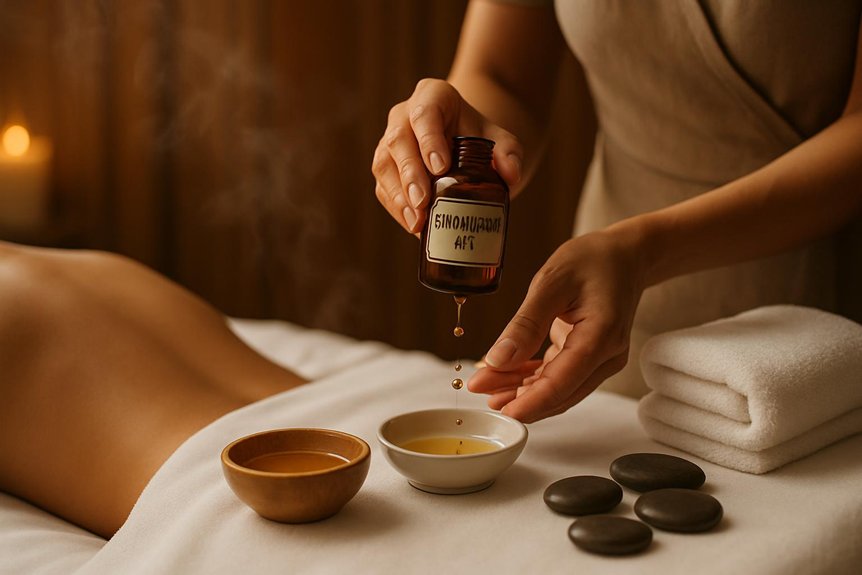
At Spa & Massage clinics across London, therapists personalise blends, keep concentrations low, and monitor comfort throughout the session, adjusting immediately if warmth, stinging, or redness appears.
A calm consultation covers sensitivities and goals, supporting closeness without overwhelm.
Aftercare typically includes leaving the oil on briefly, then cleansing if any tingling persists, and noting any delayed reaction within 24 hours.
When Should You Avoid Tea Tree Oil for Massage?
Several situations warrant avoiding tea tree oil in massage, because its higher irritant and sensitising potential increases the risk of redness, stinging, or delayed dermatitis in susceptible clients.
It should be avoided with a known allergy to tea tree, eucalyptus, or fragrance allergens, or any prior reaction to essential oils.
It is also best avoided on broken, freshly shaved, sunburnt, inflamed, or eczema‑prone skin, and around the eyes, genitals, and other mucous membranes.
Caution is advised in pregnancy, breastfeeding, and for children, unless a clinician has cleared its use.
Clients taking topical acne treatments, retinoids, or recent peels may have a compromised barrier.
At Spa & Massage, therapists substitute gentler aromatherapy options when skin history or comfort signals risk.
How Do You Dilute Tea Tree Oil for Massage?
For clients who can safely use tea tree oil, correct dilution is the main safeguard against irritation and sensitisation during massage.
Evidence-based practice keeps tea tree low: typically 0.5–1% for most adults, and up to 2% only when clinically appropriate and skin is robust.
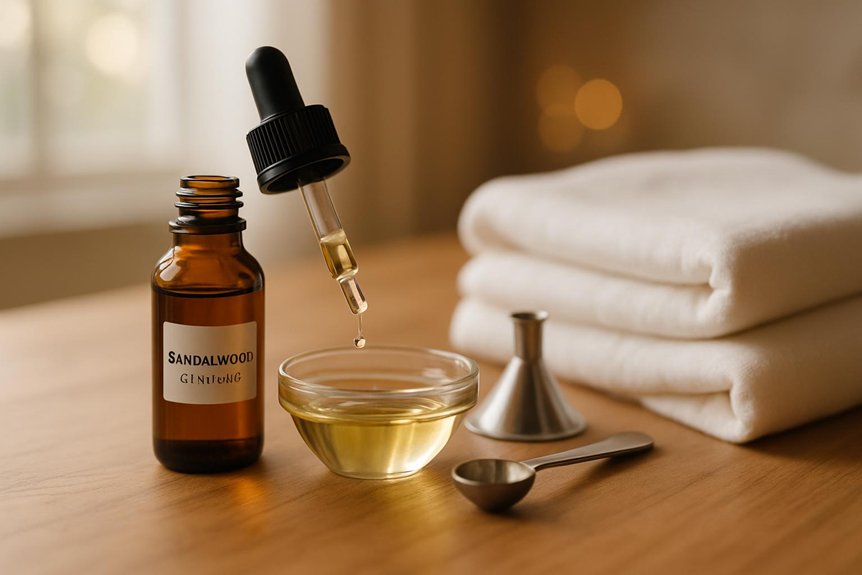
That equals 1–2 drops per 10 ml of carrier oil for 0.5–1%, or 4 drops per 10 ml for 2%.
It should be blended thoroughly into a neutral carrier (such as fractionated coconut, grapeseed, or sweet almond) before it touches skin, never used neat, and avoided on broken skin and mucosa.
In Spa & Massage clinics, therapists measure precisely and adjust to the client’s body area, heat, and desired closeness during touch.
How Do You Patch Test Tea Tree Oil Before Massage?
Why patch testing matters with tea tree oil is simple: even when properly diluted, it can trigger irritation or delayed allergic contact dermatitis in some people.
Spa & Massage advises testing 24–48 hours before an aromatic massage, especially for sensitive skin, pregnancy, or eczema history.
They should cleanse a small area on the inner forearm, apply a pea-sized amount of the intended dilution in carrier oil, and cover with a breathable plaster.
The area should be kept dry and left undisturbed; rubbing, heat, or additional products can confuse results.
If redness, itching, swelling, burning, blistering, or spreading rash appears, it should be washed off and the oil avoided.
A therapist can offer alternative blends to keep touch comfortable and close.
Tea Tree Oil on Skin: Benefits and Irritation Risks
Patch testing helps flag sensitivity early, but understanding tea tree oil’s everyday effects on skin also matters before it is used in an aromatic massage.
Evidence suggests tea tree oil has antimicrobial and anti-inflammatory activity, which may support blemish-prone skin and soothe minor irritation when properly diluted in a carrier oil. However, undiluted or overused tea tree oil can disrupt the skin barrier and trigger burning, dryness, redness, or allergic contact dermatitis, especially on sensitive areas or recently shaved skin.
Oxidised, old oil increases irritation risk.
At Spa & Massage clinics across London, therapists use low dilutions, avoid broken skin, and keep contact gentle for close, relaxing treatments. Clients should mention eczema, rosacea, fragrance sensitivities, or recent peels so blends can be adjusted.
Is Tea Tree Oil Safe in Pregnancy and Breastfeeding?
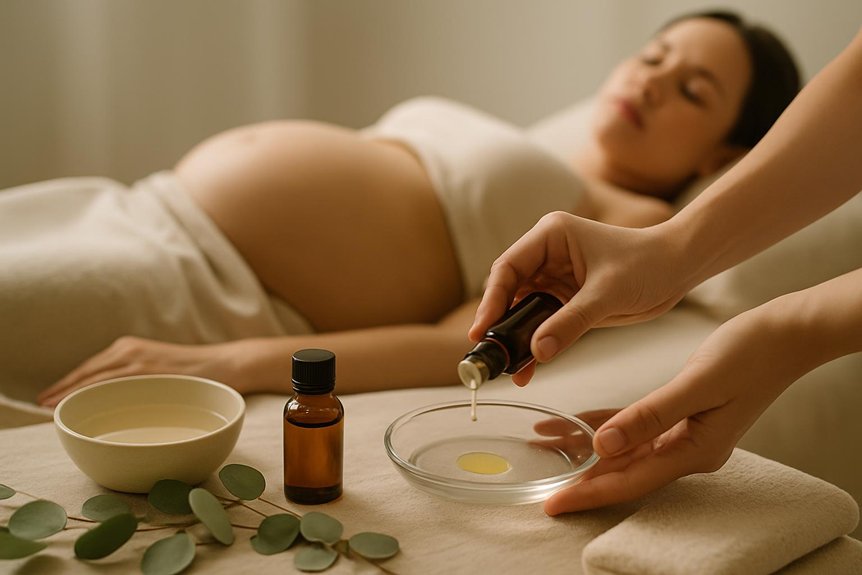
In pregnancy, tea tree oil is generally approached with caution because safety evidence is limited and individual sensitivity can be higher, so Spa & Massage therapists typically recommend avoiding use unless a healthcare professional has advised it and a suitably low dilution is confirmed.
During breastfeeding, the priority is to minimise infant exposure, particularly by avoiding application on or near the chest and using only conservative, well-diluted blends when appropriate.
In Spa & Massage clinics, treatment plans are tailored to trimester and feeding status, with patch testing and alternative pregnancy-safe aromatherapy options considered when there is any uncertainty.
Pregnancy Safety Considerations
During pregnancy and breastfeeding, tea tree oil should be treated as a higher‑caution essential oil because robust safety data for routine aromatic massage use in these periods is limited.
In Spa & Massage clinics, therapists generally avoid tea tree in pregnancy aromatherapy blends unless a client’s midwife or GP has advised it is appropriate. If used, it should be highly diluted in a suitable carrier, applied to small areas only, and avoided on broken or freshly shaved skin to reduce irritation and sensitisation risk.
Many clients also prefer gentler, well‑tolerated aromas during pregnancy, as nausea and heightened scent sensitivity are common.
A careful consultation, patch‑testing where appropriate, and a stop‑immediately approach to tingling, redness, or tightness support comfort and trust.
Breastfeeding Safety Considerations
With breastfeeding, tea tree oil is generally treated as a higher‑caution essential oil for aromatic massage because reliable safety data on routine topical exposure (and potential transfer to the infant via skin contact) is limited.
Professional practice consequently prioritises minimising infant contact, avoiding use on the chest, and preventing residue on hands, clothing, and linens.
At Spa & Massage clinics, therapists would typically recommend choosing gentler, well‑tolerated oils and using very low dilutions only when clearly appropriate.
If tea tree is requested, a patch test and conservative dilution are advisable, and treatment should avoid the upper torso and any areas likely to touch the baby’s face.
Clients are encouraged to wash thoroughly before feeding or skin‑to‑skin contact, and to stop use if irritation occurs.
If in doubt, medical advice is recommended.
What Are Safer Aromatherapy Alternatives to Tea Tree Oil?
Often, a safer aromatherapy approach than tea tree oil is to choose essential oils that are generally better tolerated on sensitive or reactive skin while still supporting relaxation and comfort during massage.
In practice, lavender, roman chamomile, and frankincense are often selected because they are commonly used at low dilutions and are less associated with sensitisation than strongly antimicrobial oils.
Sweet orange or bergamot (FCF/low-furocoumarin) can offer a bright, affectionate mood lift, but sun exposure guidance remains essential.
At Spa & Massage, therapists prioritise patch-awareness, avoid use on broken skin, and keep total essential oil dilution conservative (typically 1–2% for adults, lower for pregnancy).
For very sensitive clients, unscented carrier oils can still create a close, nurturing massage experience.
Conclusion
Tea tree oil can be safe in aromatic massage when chosen well, diluted correctly, and applied thoughtfully. It suits clients seeking a cleaner, fresher aroma, but not those with reactive skin, known allergies, or higher-risk circumstances such as pregnancy without professional guidance. Safety comes from not using it neat, from patch testing before treatment, and from adjusting dilution to skin type. In clinic practice, informed consultation, careful technique, and calm aftercare support comfortable results.