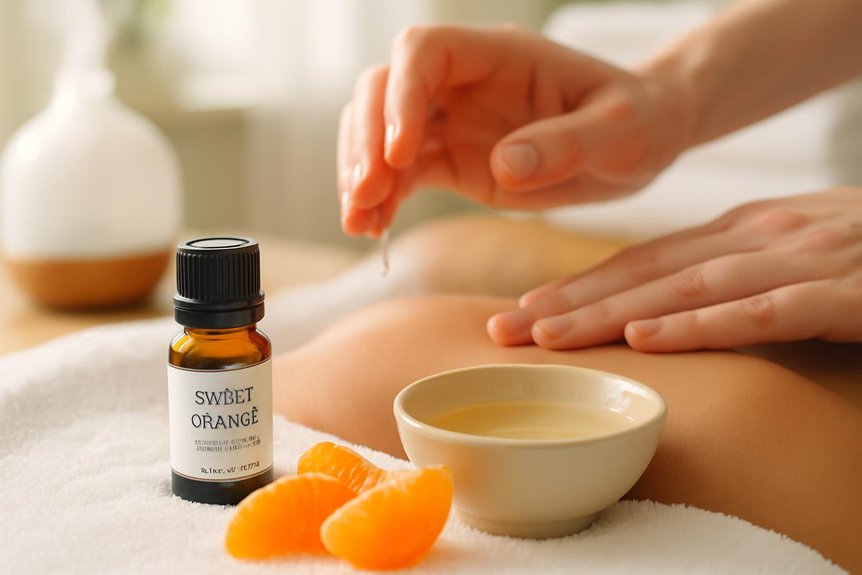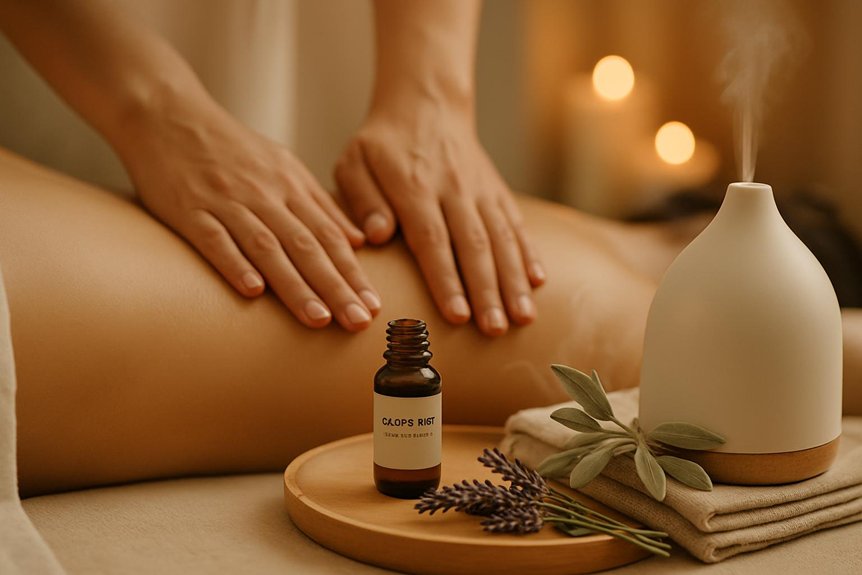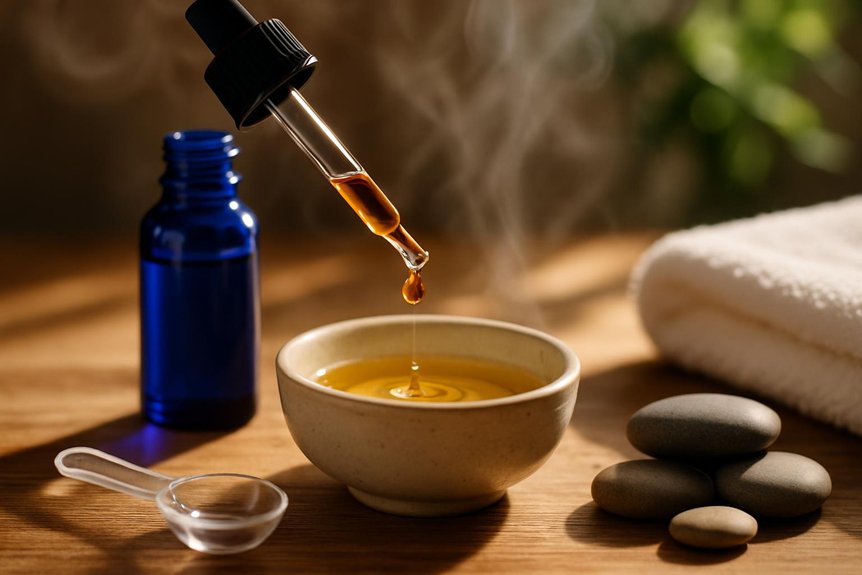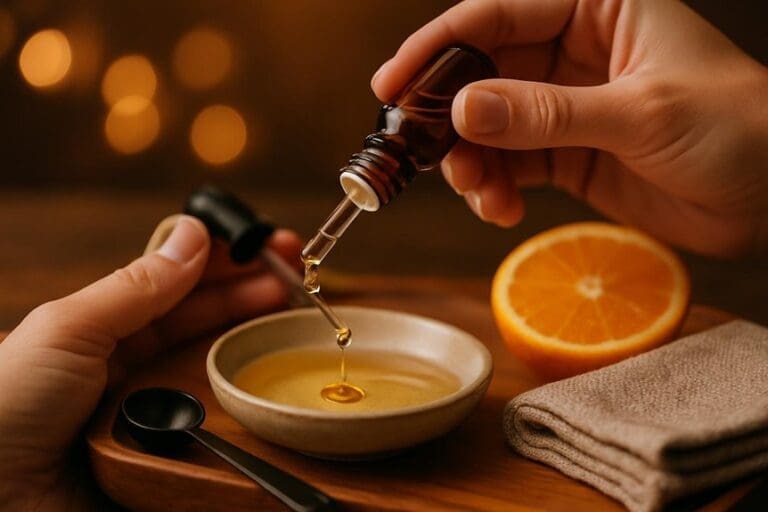
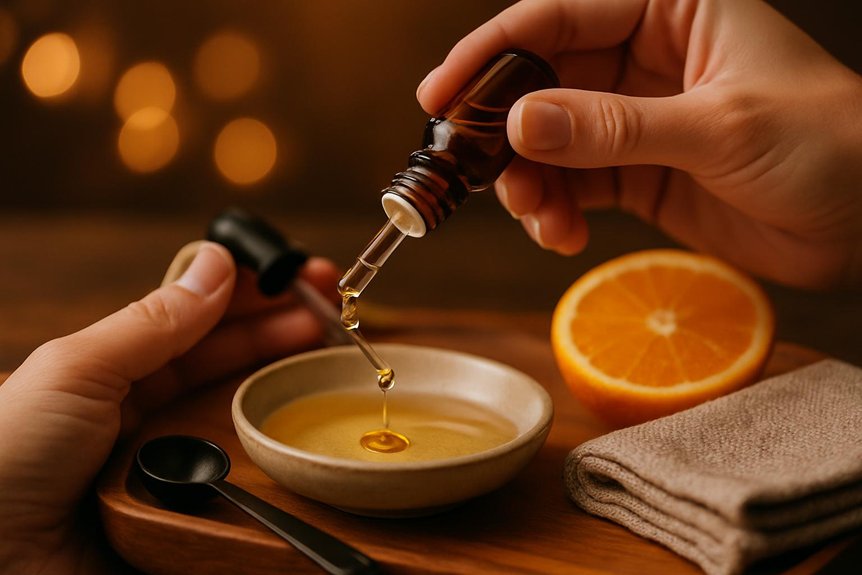
For aromatic massage, sweet orange essential oil is typically diluted to 1–2% in a fresh, unscented carrier oil, with 0.5–1% preferred for sensitive skin. A practical guide is 1% = 2 drops per 10 ml carrier and 2% = 4 drops per 10 ml (e.g., fractionated coconut, grapeseed, or jojoba). A patch test is advised, and cold-pressed citrus may require avoiding strong sun for 12–24 hours; further guidance follows.
Sweet Orange Oil Dilution Ratios (Safe Ranges)
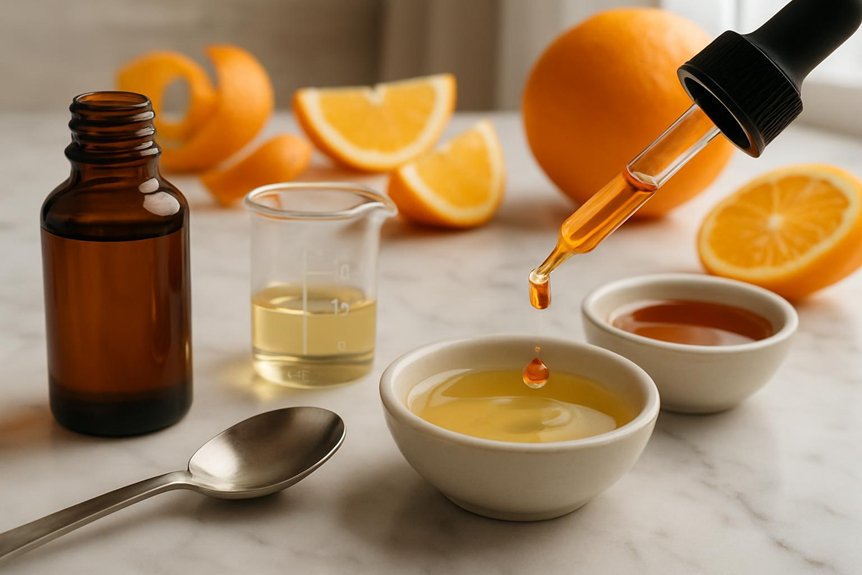
Most adults can use sweet orange essential oil safely in aromatic massage when it is diluted within evidence-based ranges. In Spa & Massage clinics, therapists typically work at 1–2% for full-body relaxation, balancing noticeable aroma with low irritation risk.
For shorter sessions or smaller areas, 2% is commonly well tolerated; sensitive skin often suits 0.5–1%. As a practical guide, 1% equals about 1 drop per 5 ml, 2% equals 2 drops per 5 ml, and 0.5% equals 1 drop per 10 ml.
Higher dilutions (up to 3%) may be reserved for brief, robust treatments under professional supervision. Patch testing and stopping use if stinging, redness, or itching occurs remain prudent. Aromatherapy massage can also help you relax and heal when you keep dilution within safe ranges.
Choose a Carrier Oil for Sweet Orange Massage
For an aromatic massage with sweet orange essential oil, the carrier oil should be selected to match the client’s skin type, the treatment goal (e.g., full-body relaxation vs. targeted work), and any allergy history, because it determines both dilution accuracy and skin tolerability.
At Spa & Massage clinics, therapists typically choose fractionated coconut or grapeseed for a light, fast-glide full-body flow, and jojoba for balanced, low-odour wear on sensitive or acne-prone skin.
Sweet almond offers richer slip for slow, close-contact work, but is avoided when nut allergy is possible.
For very dry or mature skin, avocado or a small amount of wheatgerm can increase cushioning, while patch testing supports cautious use.
Unscented, cold-pressed, fresh oils reduce irritation and oxidation risk.
Convert Ratios Into Drops Per 10ml (Quick Guide)
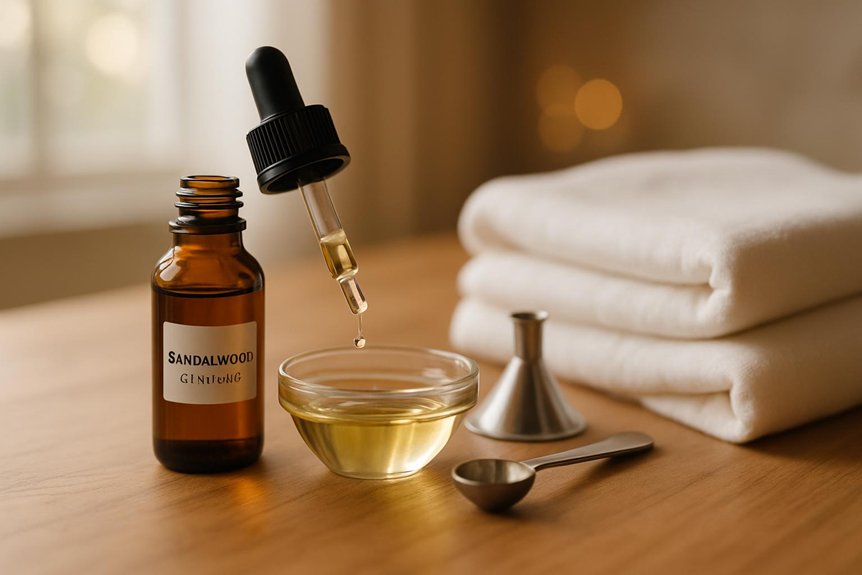
Three practical conversions cover the dilutions commonly used with sweet orange essential oil in aromatic massage: per 10 ml of carrier oil, a 0.5% blend is 1 drop, 1% is 2 drops, 2% is 4 drops, and 3% is 6 drops (based on the clinical convention of ~20 drops per 1 ml); in Spa & Massage clinics, therapists measure conservatively, adjust by skin sensitivity and treatment area, and avoid exceeding client-appropriate limits to reduce irritation risk.
For larger volumes, the same ratios scale predictably: multiply drops by the number of 10 ml portions (e.g., 30 ml at 1% equals 6 drops).
For precision, drops should be added last, then the bottle rolled between palms to disperse evenly. This keeps the aroma soft, enveloping, and consistent across the massage.
Patch Test + Sunlight Safety (Phototoxicity Rules)
Before sweet orange oil is used in an aromatic massage, standard practice is to complete a patch test and apply clear sunlight precautions, because citrus oils can trigger irritation in sensitive skin and some expressed (cold‑pressed) varieties may be phototoxic.
A patch test is typically done by applying a small amount of the diluted blend to the inner forearm, covering, and checking at 24 hours for redness, itching, swelling, or heat; any reaction means the oil should be avoided.
Phototoxicity guidance focuses on UV exposure: if the sweet orange oil is cold‑pressed, clients are advised to avoid sunbeds and strong sunlight on treated areas for 12–24 hours.
Distilled sweet orange is generally not phototoxic.
At Spa & Massage clinics, therapists also adjust for pregnancy, eczema, or recent peels.
How to Use Diluted Sweet Orange Oil in Massage
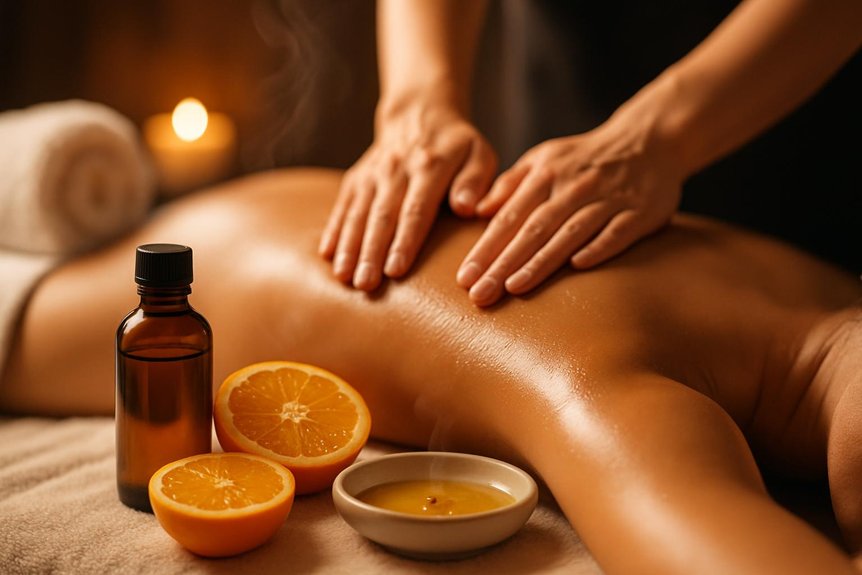
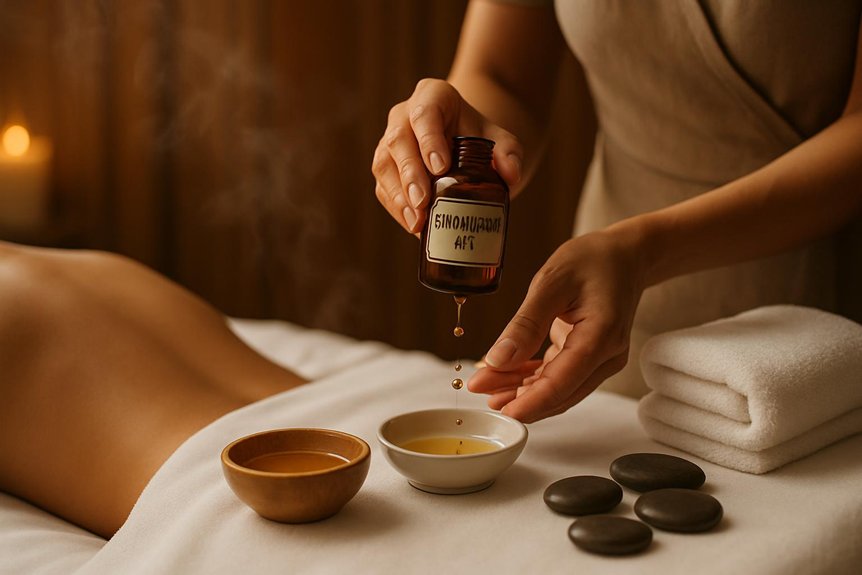
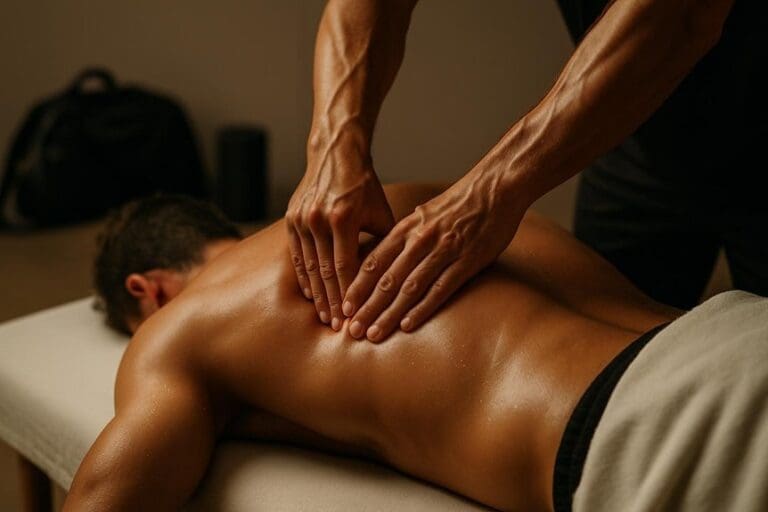
With the dilution prepared and skin safety checks completed, sweet orange essential oil is best introduced through slow, even strokes that spread a thin, consistent layer over the treatment area.
At Spa & Massage, therapists typically begin with effleurage to warm the tissues, then deepen pressure only as comfort allows, keeping glide steady to reduce friction and irritation.
The oil is used sparingly; adding more is preferable to overloading, which can increase sensitivity and compromise grip. Avoid eyes, mucous membranes, broken skin, and freshly shaved areas.
For intimate relaxation, many clients respond well to long strokes across shoulders, upper back, and forearms, paired with unhurried breathing cues.
After massage, the skin should be blotted, not scrubbed, and hydration encouraged.
Conclusion
Diluting sweet orange essential oil is the cornerstone of safe, effective aromatic massage. Using evidence-based ranges, an appropriate carrier oil, and accurate drop counts helps maintain skin comfort and consistent results. A patch test remains essential, especially for sensitive skin or first-time use. Because sweet orange oil can be phototoxic, treated areas should be protected from UV exposure after application. With careful measuring, the blend becomes a well-balanced bridge between uplifting aroma and skin-safe relaxation.