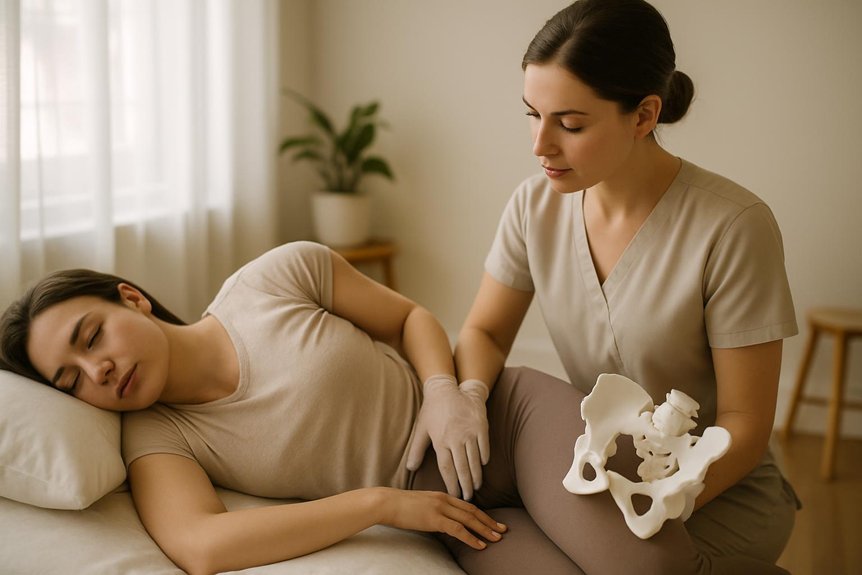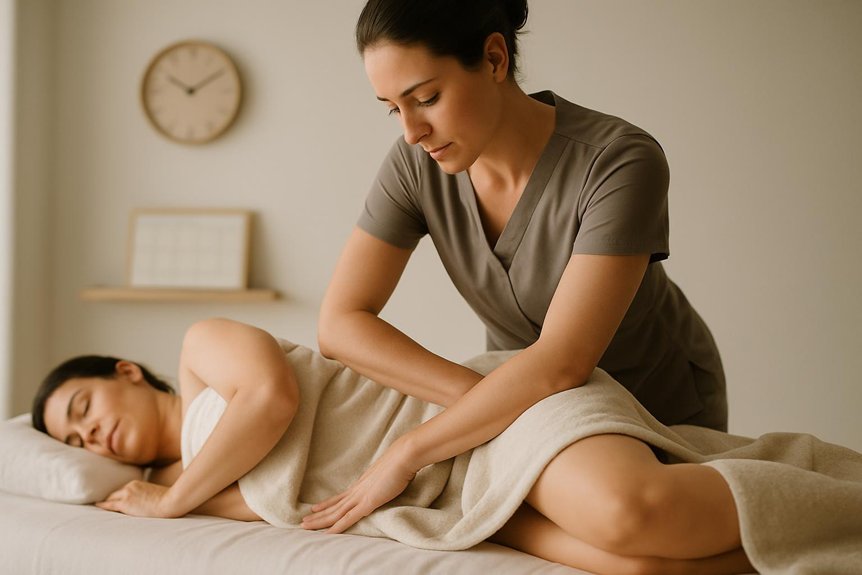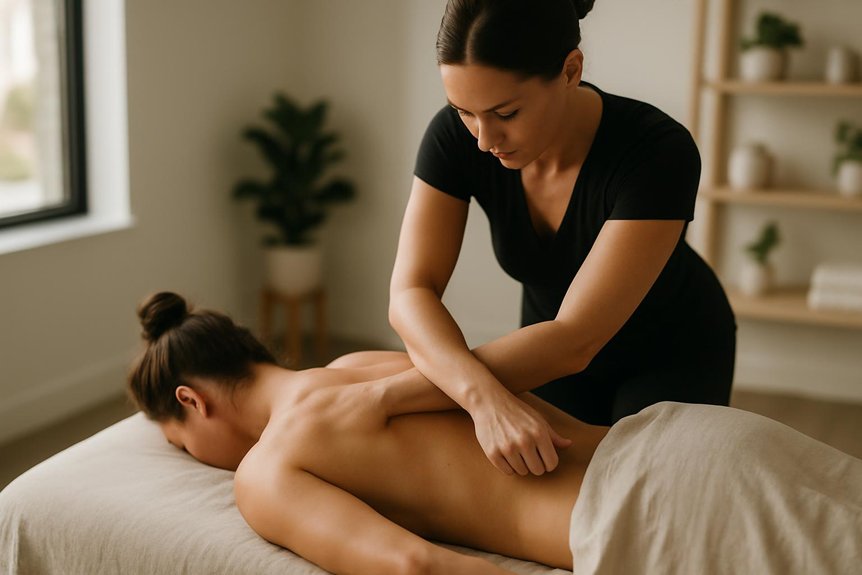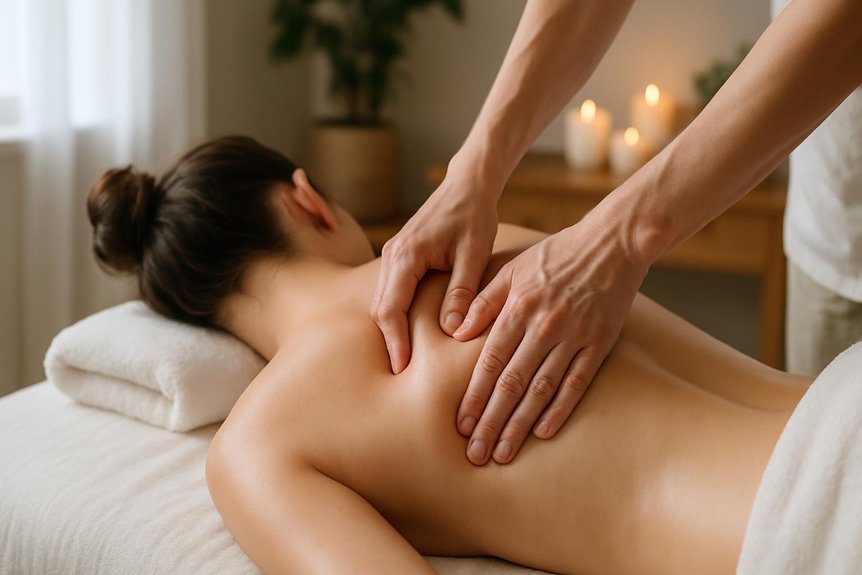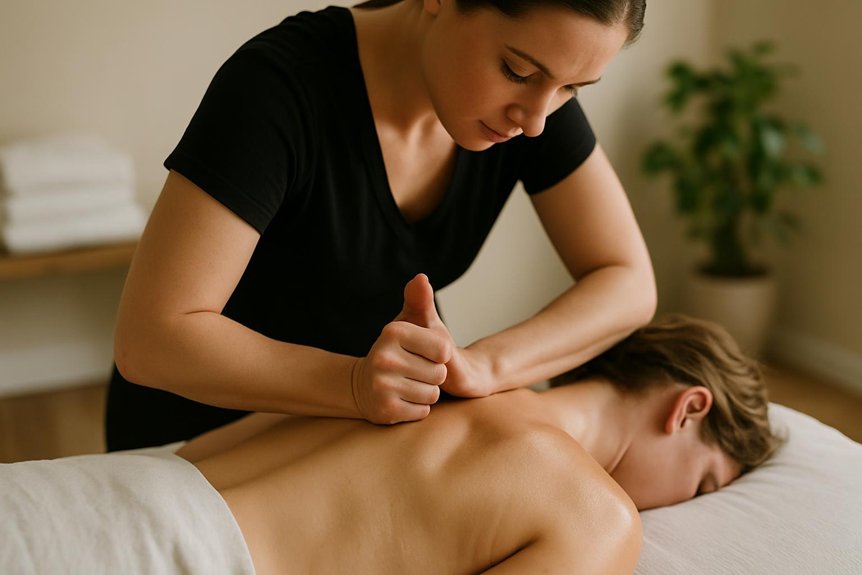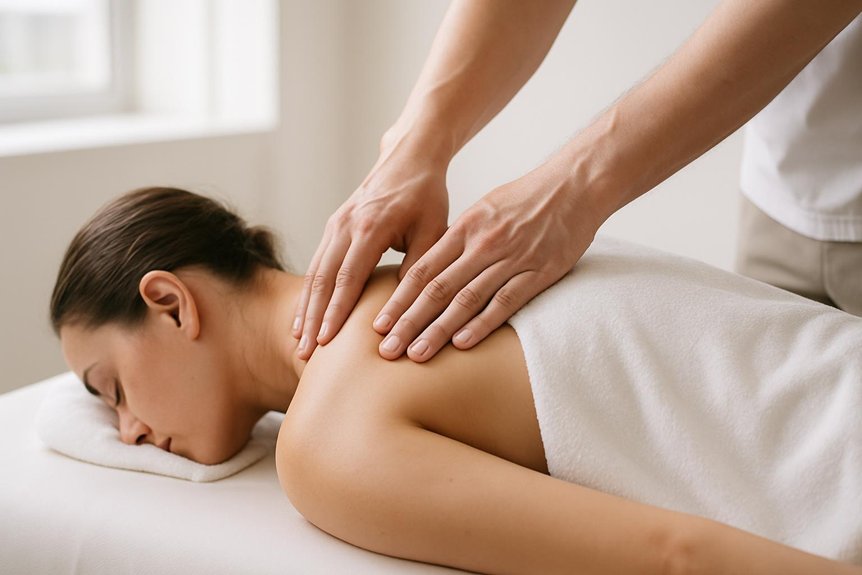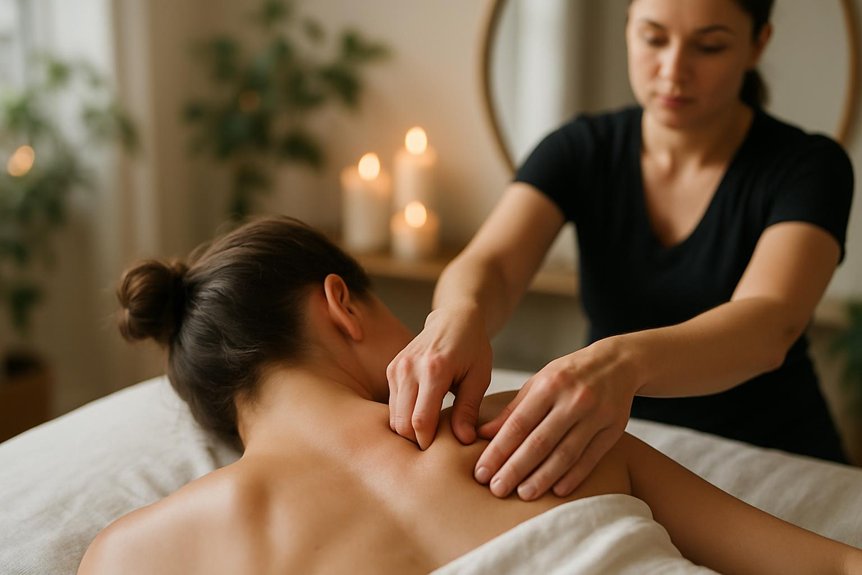
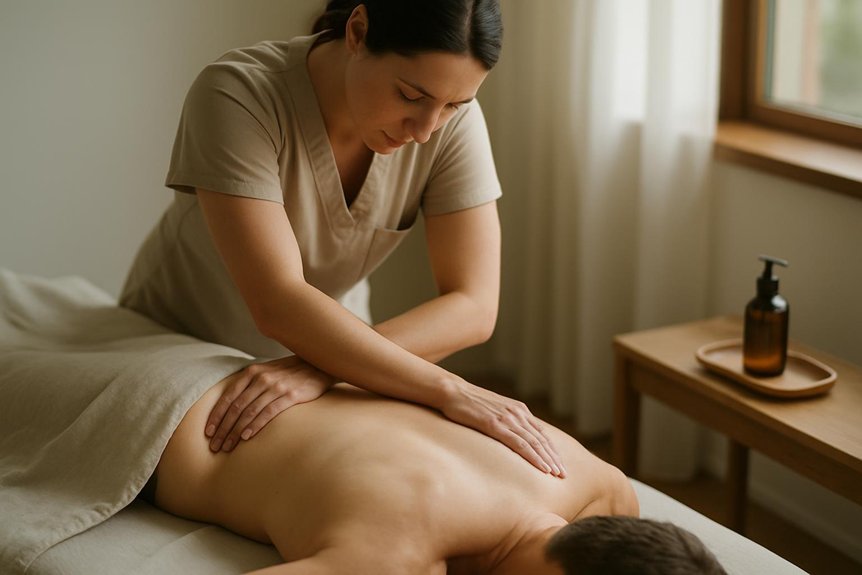
Therapeutic massage can help sciatica symptoms when muscle tightness in the lower back, glutes, hip rotators, or hamstrings is contributing to irritation along the sciatic nerve pathway. Slow, precise pressure may reduce myofascial compression, improve local circulation, and calm protective muscle guarding, which can ease radiating pain, tingling, or stiffness. Results vary if true nerve compression from a disc or stenosis predominates. Urgent medical review is needed for bowel/bladder changes, saddle numbness, or worsening weakness. Further guidance covers safety checks, techniques, and realistic expectations.
What Is Sciatica, and What Triggers It?
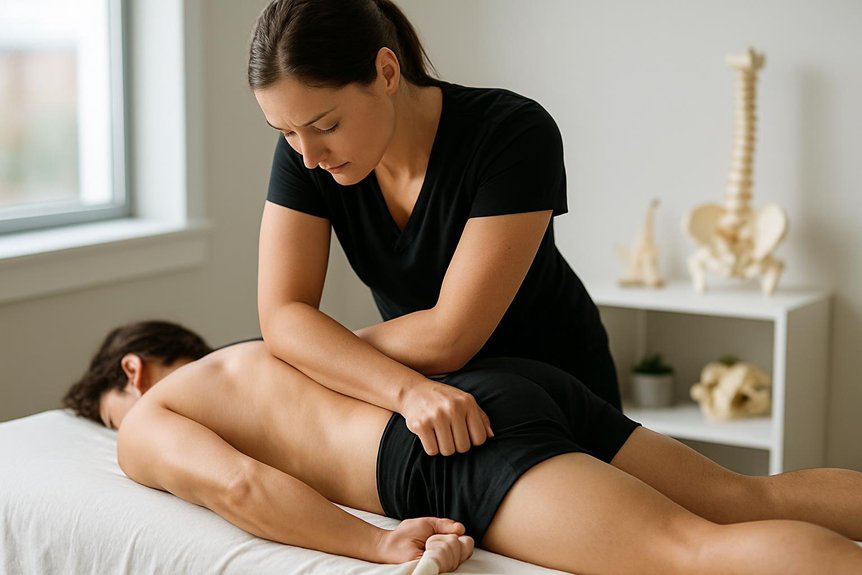
Sciatica refers to pain and related symptoms that follow the pathway of the sciatic nerve—typically radiating from the lower back or buttock down the back of the thigh and sometimes into the calf or foot—most often because a lumbar nerve root is irritated or compressed.
It is a symptom pattern rather than a diagnosis, and may include tingling, numbness, or weakness in the leg, often worse with sitting, coughing, or bending.
Common triggers include lumbar disc herniation, spinal stenosis, and degenerative changes that narrow nerve spaces; less often, pregnancy-related pelvic changes or inflammation around the sacroiliac region contribute.
Prolonged sitting, heavy lifting with poor mechanics, and sudden twisting can precipitate flare-ups.
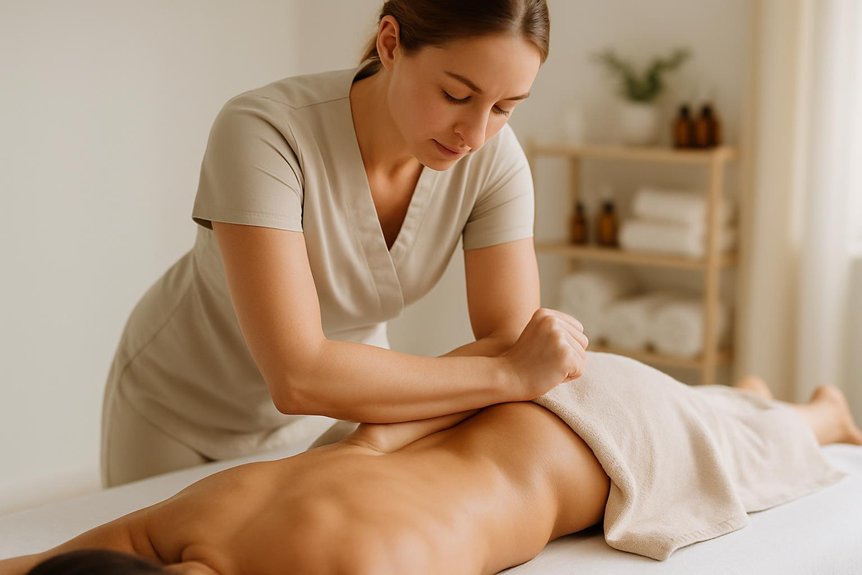
Because deep tissue work targets deeper layers of muscle and fascia, deep tissue massage techniques are sometimes used to address stubborn tightness that may accompany sciatica-related discomfort.
At Spa & Massage, therapists encourage timely assessment for red flags.
Can It Help Sciatica Pain?
In many cases, therapeutic massage can help reduce sciatica-related pain—particularly when symptoms are driven or aggravated by muscular tension around the lower back, glutes, hip rotators (such as the piriformis), and hamstrings rather than ongoing nerve compression alone. By decompressing tight myofascial tissues, improving local circulation, and calming protective muscle guarding, massage may ease radiating discomfort, stiffness, and sleep-disrupting ache.
At Spa & Massage clinics across London, therapists assess posture, tenderness, and movement, then apply slow, precise pressure to the glutes, lumbar paraspinals, and hip rotators, adapting depth to the client’s breath and comfort. Many clients also benefit from targeted stretching and simple aftercare—heat, hydration, and gentle walking—to prolong relief between sessions and support recovery.
When Massage Is Unsafe for Sciatica (Red Flags)
It can reduce sciatica-related discomfort when muscular tension is a key driver, but it is not appropriate for every presentation of radiating leg pain.
Massage should be deferred and urgent medical assessment sought with red flags: new bowel or bladder changes, saddle numbness, rapidly worsening weakness, foot drop, severe unrelenting pain, fever, unexplained weight loss, cancer history, recent significant trauma, suspected fracture, or signs of infection.
Caution is also required with pregnancy complications, anticoagulant use, bleeding disorders, deep vein thrombosis symptoms (calf swelling, heat, redness), or progressive neurological symptoms.
At Spa & Massage clinics, therapists screen carefully; if symptoms shift during treatment—sharp electric pain, spreading numbness, dizziness—pressure is stopped and referral advised.
Safety comes first, always.
How Does It Help Sciatica Symptoms?
For many people with radiating leg pain, targeted manual pressure can ease symptoms when the primary driver is myofascial tightness and protective muscle spasm around the lumbar spine, pelvis, and deep hip rotators.
By reducing tone in tissues such as the piriformis, gluteals, and erector spinae, deep tissue work may lessen secondary compression and irritation along the sciatic nerve pathway. It can also improve local circulation, support lymphatic clearance of inflammatory metabolites, and downshift pain sensitivity via calmer nervous-system signalling.
At Spa & Massage clinics across London, therapists aim for “good pain” only—slow, specific pressure matched to breathing—so clients feel held rather than braced.
Many clients report easier walking, fewer night twinges, and improved hip range after consistent sessions and home mobility.
Best Deep Tissue Techniques for Sciatica Relief
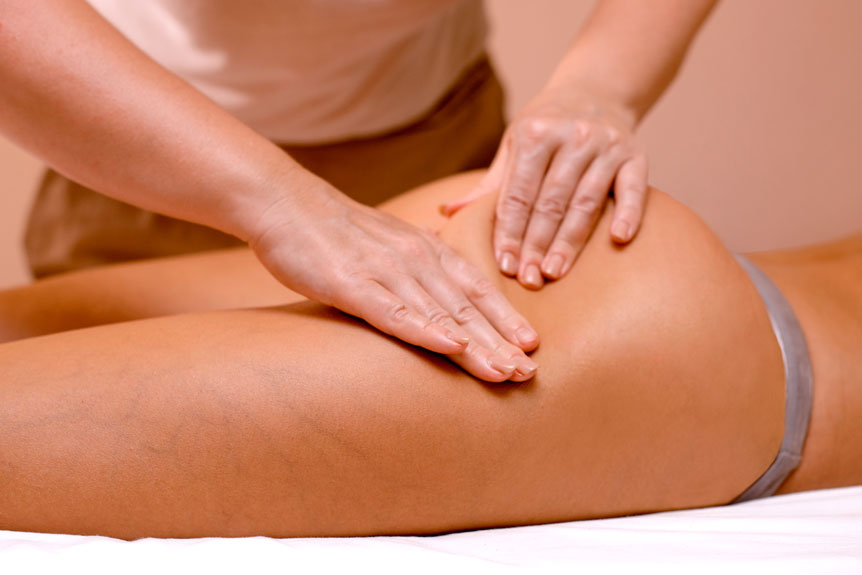
Three deep tissue approaches tend to be most useful for sciatica-like pain when symptoms are driven by myofascial overload and protective guarding rather than a progressive neurological deficit: slow, sustained myofascial release to the gluteals and deep hip rotators (including piriformis), trigger-point compression with graded pressure and timed release to reduce referred pain patterns, and targeted longitudinal stripping along the thoracolumbar paraspinals and lateral hip to restore tissue glide and hip range.
At Spa & Massage clinics, therapists pair these with careful pacing, diaphragmatic breathing cues, and continuous consent so pressure feels “strong but safe.”
Work often prioritises the hip capsule, TFL/ITB interface, and proximal hamstrings to reduce pelvic pull, then follows the nerve’s pathway indirectly to avoid sensitising tissues.
When findings suggest true nerve compromise, referral is advised promptly.
What to Expect From Therapeutic Massage for Sciatica
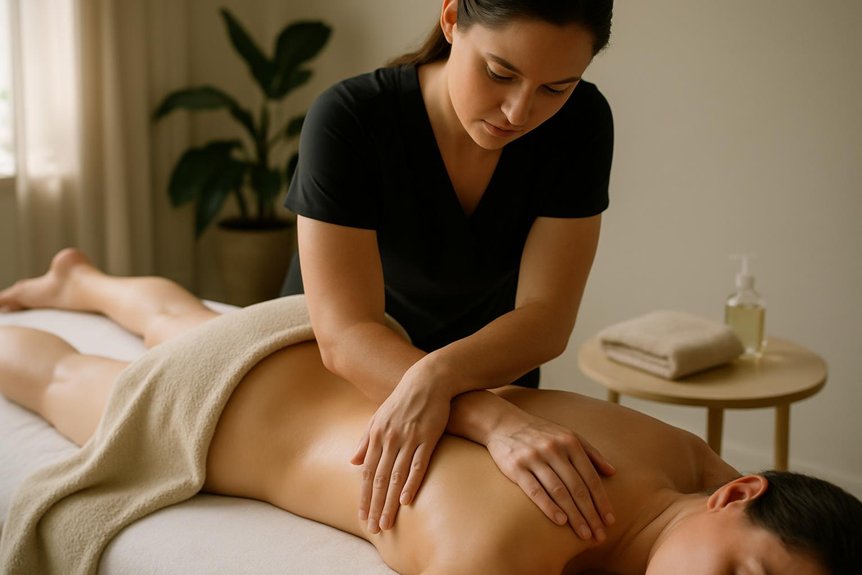
Relief-oriented techniques such as myofascial release, graded trigger-point work, and controlled stripping are only helpful when they are delivered within a clear, safe treatment process.
At Spa & Massage, the session typically begins with a brief health screen, pain map, and consent, including red-flag checks and comfort boundaries. Pressure is built gradually, with frequent feedback; “good pain” is avoided, aiming for tolerable, easing intensity and calmer breathing.
Work often targets gluteals, deep hip rotators, hamstrings, and lumbar fascia to reduce protective tone around the sciatic pathway. Sensations may include strong, slow pressure and referred ache; sharp, burning, or numb symptoms prompt immediate adjustment.
Afterward, mild soreness can occur; therapists recommend hydration, gentle walking, and heat-free rest for 24 hours.
Choosing a Sciatica Massage Plan in London
Often, choosing an effective sciatica massage plan in London starts with matching the likely driver of symptoms (lumbar nerve root irritation, piriformis-related sciatic nerve sensitivity, or protective hip and back muscle guarding) to an appropriate treatment schedule and technique mix. At Spa & Massage, therapists begin with a brief history, movement checks, and palpation to guide pressure, pacing, and positioning so the work feels safe, close, and unforced.
For acute flare-ups, shorter sessions weekly may focus on gentle deep tissue, gluteal and hip rotator release, and calming breath-led down‑regulation. For persistent pain, a 4–6 session plan often blends deep tissue, sports techniques, and myofascial work, with home advice on heat, walking, and sleep support. Plans are adjusted promptly if numbness, worsening weakness, or severe night pain appears.
Conclusion
Sciatica can feel like a live wire running from the low back through the hip and down the leg, tightening life into smaller steps. Therapeutic massage may reduce pain when symptoms are driven by myofascial tension in the lumbar, gluteal, or piriformis region, improving movement and sleep for some. It is not a cure for disc herniation or neurological compromise, and red flags require medical assessment. With skilled technique, aftercare, and a structured plan, relief can be realistic.