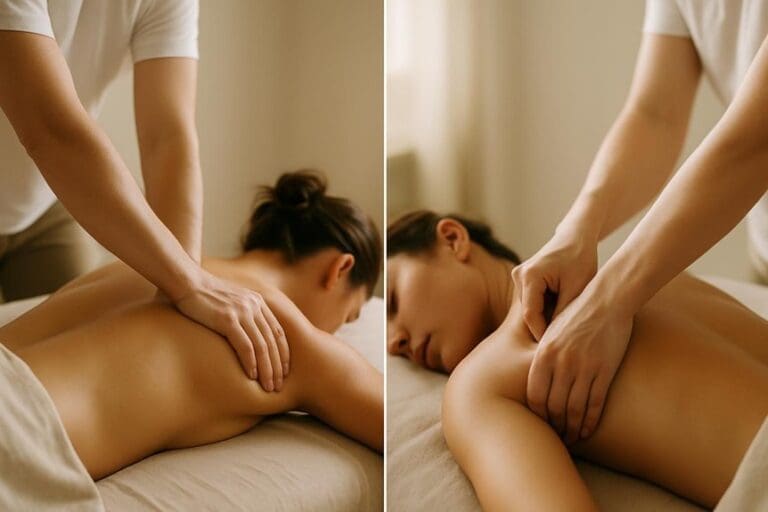
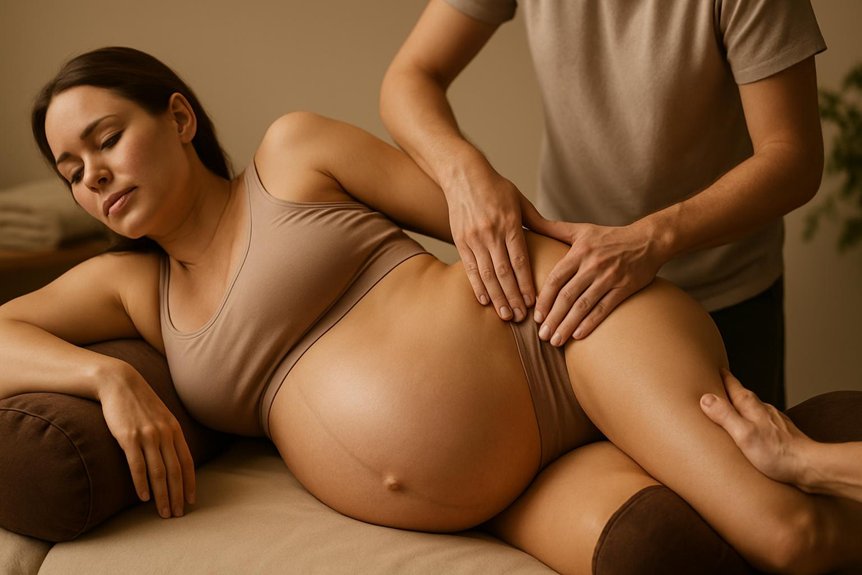
Prenatal massage can help pregnancy-related hip pain by easing protective muscle tension in the glutes, hip flexors, and lower back, and by supporting circulation and relaxation, which may reduce pain sensitivity and improve sleep. It is generally safe in uncomplicated pregnancies when performed by a trained therapist using side-lying positioning and trimester-appropriate pressure. Massage should be avoided or postponed with bleeding, fever, pre-eclampsia concerns, or new numbness or weakness. Further guidance on safety, positioning, and frequency follows.
Can Prenatal Massage Help Pregnancy Hip Pain?
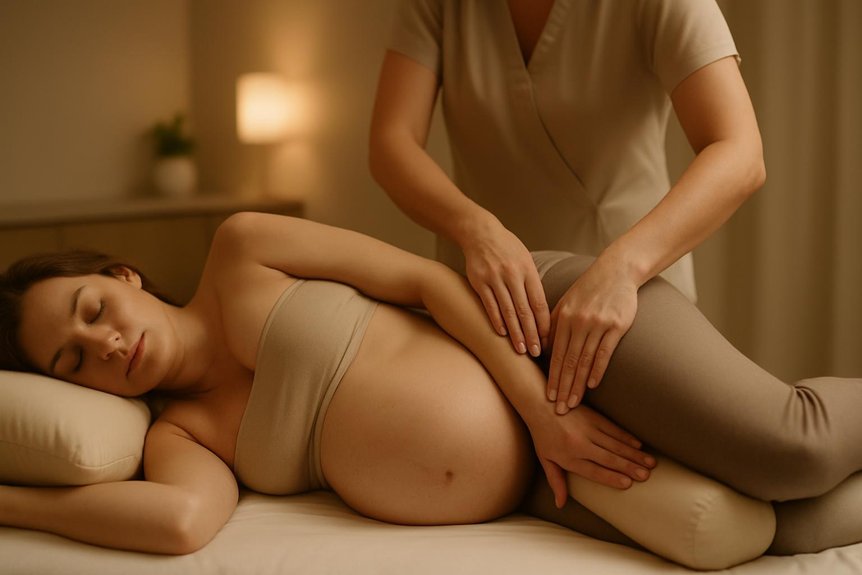
In many pregnancies, hip pain is driven by postural change, altered gait, and ligament laxity associated with hormonal shifts. Prenatal massage may help by easing protective muscle tension around the hips, glutes, and lower back, improving comfort and sleep, and supporting circulation.
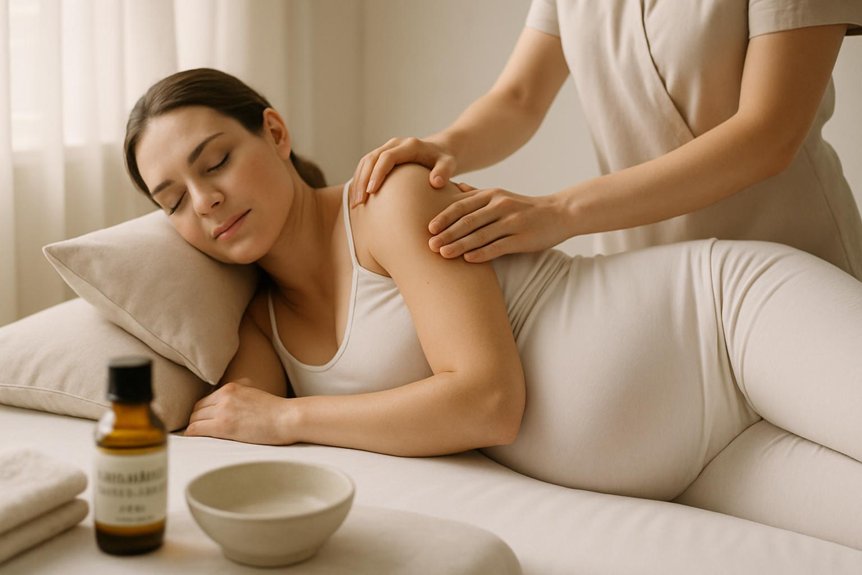
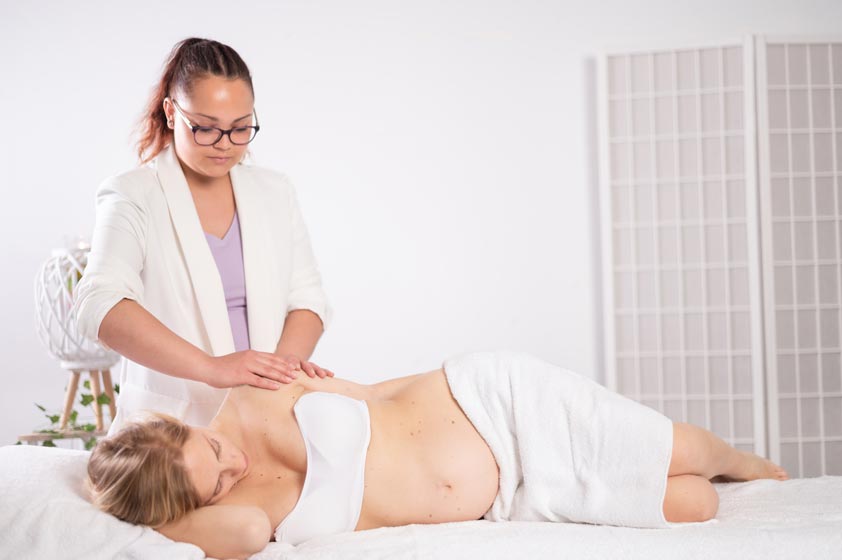
At Spa & Massage clinics across London, therapists use side-lying positioning with supportive bolsters, light-to-moderate pressure, and careful avoidance of painful joint compression, adapting to trimester and symptoms. Many clients report reduced stiffness and a calmer nervous system after treatment, which can soften pain perception. When appropriate and comfortable, elements of deep tissue massage techniques can be used with modified pressure to address stubborn muscle tightness.
Safety matters: massage is best when pregnancy is uncomplicated, hydration is maintained, and new or worsening pain, numbness, bleeding, fever, or swelling prompts urgent clinical review.
What Causes Hip Pain in Pregnancy?
Hip pain during pregnancy often reflects a combination of normal biomechanical and hormonal changes rather than a single problem, which is why relief strategies—such as the careful, side-lying prenatal massage used at Spa & Massage clinics in London—tend to work best when tailored to the underlying driver.
As the uterus grows, the centre of gravity shifts, increasing load through the hips and lower back and encouraging muscle guarding in the glutes, hip flexors, and pelvic floor.
Hormones such as relaxin can increase ligament laxity, sometimes irritating the sacroiliac joints or pubic symphysis and creating a deep, achy “unstable” feel.
Sleep positions, reduced core control, and swelling may also compress nerves, causing sharp, radiating discomfort.
Prior hip injuries, hypermobility, and long commutes can amplify symptoms.
Is Prenatal Massage Safe: and When to Avoid It?
Prenatal massage is generally considered safe for many people when it is adapted by trimester, with appropriate positioning, pressure, and a health-screening approach like that used at Spa & Massage clinics.
Safety considerations can change across the first, second, and third trimesters, so guidance is typically tailored to symptoms, medical history, and obstetric advice.
It is also important to know when massage should be postponed or avoided—such as with certain pregnancy complications, unexplained bleeding, fever or infection, suspected clotting issues, or severe swelling—so hip-pain relief is pursued without increasing risk.
Safety By Trimester
Across the three trimesters, pregnancy massage is generally considered safe for most low-risk pregnancies when it is delivered by trained therapists using appropriate positioning, pressure, and contraindication screening—yet it should be modified or avoided altogether if there are red-flag symptoms (such as vaginal bleeding, severe abdominal pain, dizziness/fainting, suspected pre-eclampsia, or signs of preterm labour) or high-risk conditions that require medical clearance.
In the first trimester, many clinicians advise lighter pressure and shorter sessions; Spa & Massage therapists focus on relaxation and gentle hip-release work with comfortable, supportive bolstering.
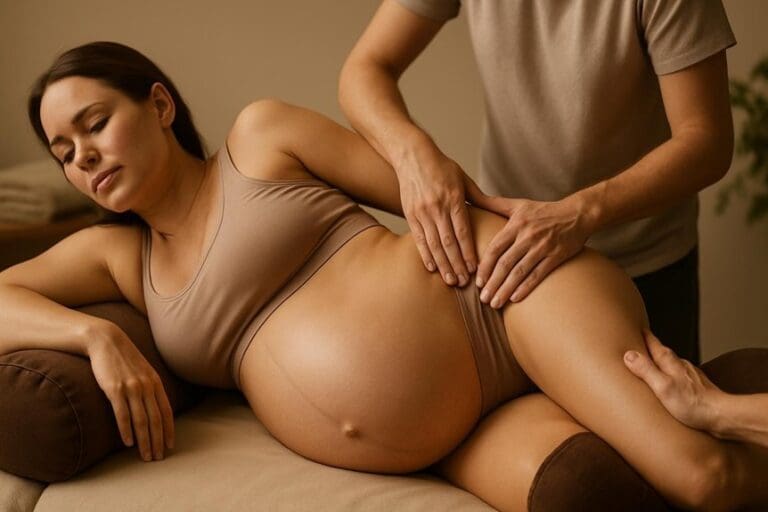
In the second trimester, side-lying positioning supports circulation and allows deeper, still-comfortable work through glutes, piriformis, and lower back.
In the third trimester, pressure is moderated and time is spent cushioning hips and easing pelvic tension, prioritising slow, soothing rhythms.
When To Avoid Massage
Even with trimester-appropriate positioning and carefully moderated pressure, prenatal massage is not suitable in every situation. It should be avoided with vaginal bleeding, suspected preterm labour, ruptured membranes, fever, uncontrolled high blood pressure or pre-eclampsia, severe swelling, deep vein thrombosis risk, or unexplained calf pain, warmth, and redness.
Anyone with placenta praevia, cervical insufficiency, or recent hospital admission should seek written clearance first.
At Spa & Massage, therapists also pause treatment when hip pain is sudden, sharp, linked to trauma, or accompanied by numbness, weakness, or bladder or bowel changes—signals that need medical assessment.
When massage is appropriate, pressure remains gentle, draping preserves privacy, and communication is constant so care stays both safe and intimately reassuring.
Safe Prenatal Massage Positions (Side-Lying + Support)
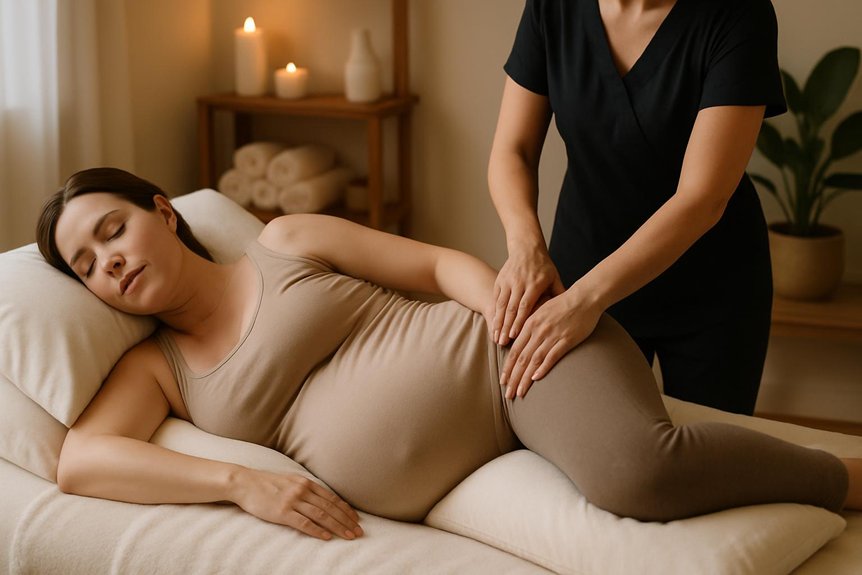
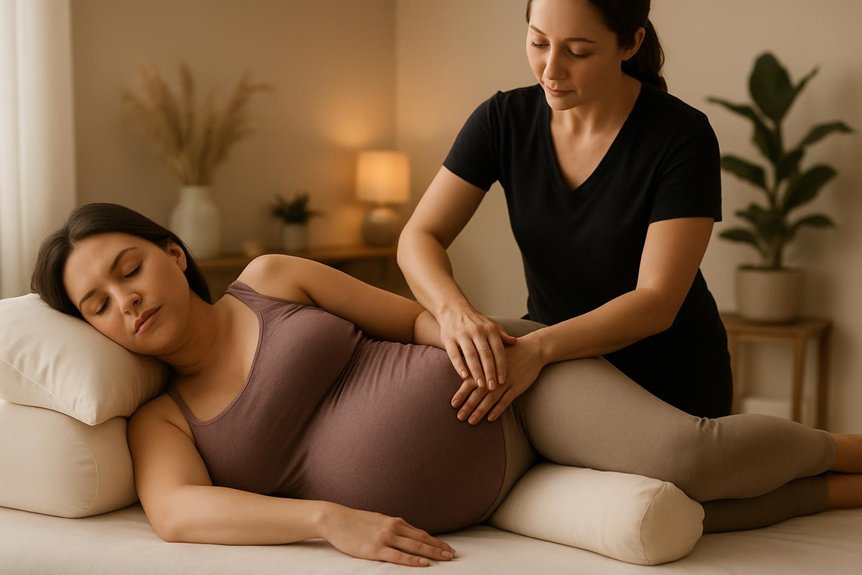
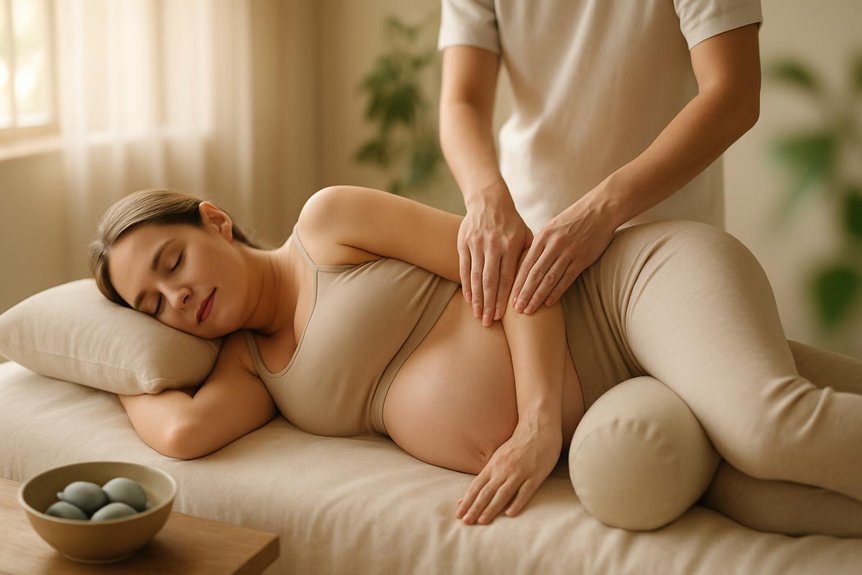
For many pregnant clients experiencing hip pain, the safest and most comfortable massage position is typically side-lying with well-placed support. This positioning helps reduce pressure on the abdomen and major blood vessels, and allows the pelvis to rest more neutrally—important as pregnancy progresses.
In Spa & Massage clinics across London, therapists use firm pillows or bolsters to support the head and neck, tuck one between the knees and ankles, and place another behind the back to prevent rolling and encourage a secure, held feeling. A small support under the bump may be added if it eases strain.
Comfort and breathing remain the guide: frequent check-ins, slow shifts, and stopping immediately if dizziness, nausea, or shortness of breath occurs.
How Prenatal Massage Relieves Hip and Pelvic Tension
With pregnancy-related biomechanical shifts and hormone-driven ligament laxity, hip and pelvic tension often builds in the gluteals, deep rotators (including piriformis), hip flexors, adductors, and the lower back. Prenatal massage can ease this by improving local circulation, lowering muscle guarding, and supporting parasympathetic “rest-and-digest” tone, which may reduce pain sensitivity.
At Spa & Massage clinics, therapists use side-lying support and slow, nurturing strokes, plus gentle myofascial release around the sacrum, glutes, and outer hip to soften tight tissues without stressing joints. Careful work to the hip flexors and inner thigh—always within comfort—can also reduce pelvic pull. Many clients notice easier walking, less night ache, and a calmer, more connected sense of bodily ease afterward.
When to Speak to Your GP or Midwife About Hip Pain
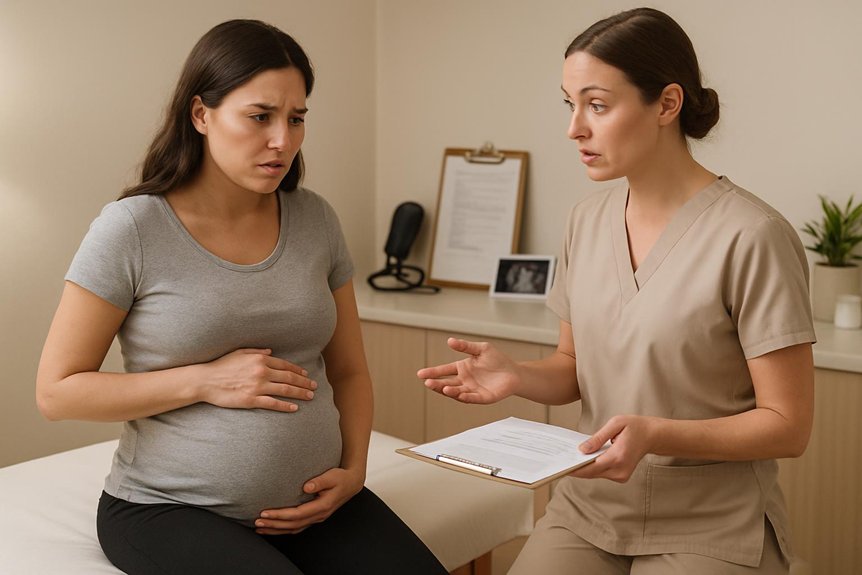
During pregnancy, most hip discomfort is mechanical and manageable, but certain patterns warrant timely advice from a GP or midwife.
Contact them promptly if pain is sudden, severe, worsening, or follows a fall; if there is fever, redness, marked swelling, or warmth; or if hip pain comes with vaginal bleeding, leaking fluid, regular contractions, reduced baby movements, or severe abdominal pain.
Urgent review is also sensible for numbness, weakness, sciatica with loss of bladder or bowel control, or pain that prevents weight-bearing or disrupts sleep despite rest.
At Spa & Massage, therapists can support comfort, yet they will pause treatment and recommend medical assessment when symptoms suggest infection, nerve compromise, clot risk, or preterm labour.
Reassurance matters, and asking early is protective.
How Often to Book Prenatal Massage for Hip Pain
For prenatal hip pain, Spa & Massage typically recommends starting with a weekly or fortnightly prenatal massage, then adjusting based on symptom response and guidance from a GP or midwife where needed.
Scheduling often changes by trimester—more conservative early on, with many clients benefiting from more regular sessions as pelvic load and sleep disruption increase later in pregnancy.
Worsening night pain, difficulty walking, or reduced daily function are signs that more frequent support or clinical review may be appropriate, and in Spa & Massage clinics the plan is tailored to comfort and safety at every visit.
Recommended Session Frequency
Often, the most effective schedule for prenatal massage to ease hip pain is a steady, adaptable rhythm—typically every 2–4 weeks for general comfort, increasing to weekly sessions when symptoms are persistent or sleep and mobility are affected.
Evidence suggests regular, low-intensity hands-on care can reduce muscle guarding and improve circulation, which may ease pelvic and hip tension without overloading sensitive tissues.
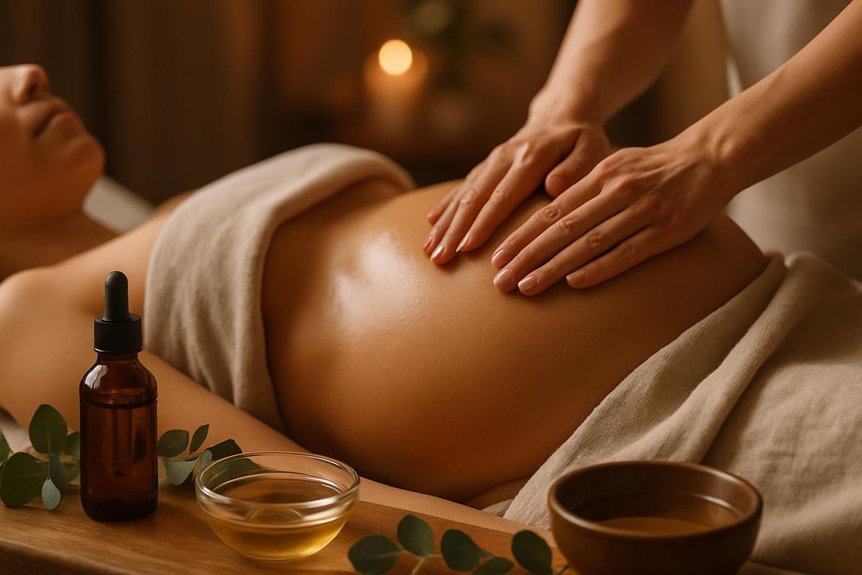
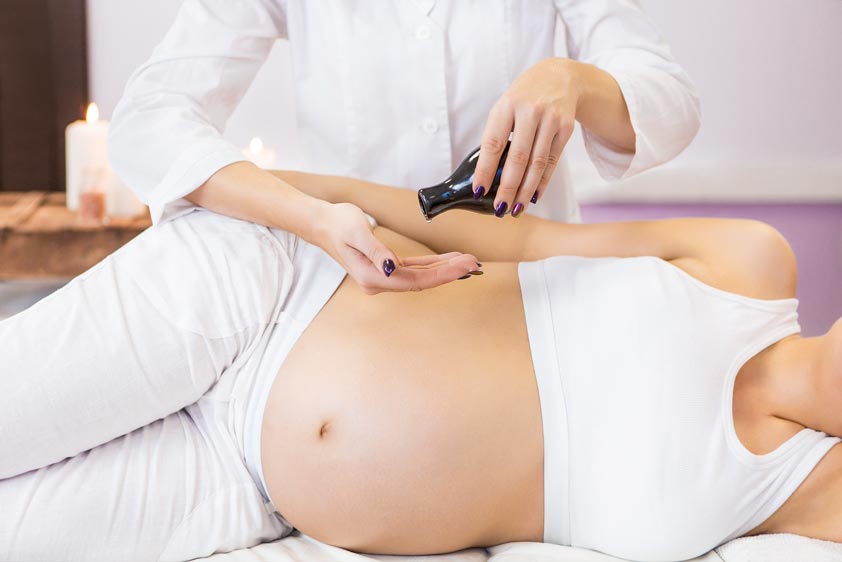
At Spa & Massage clinics across London, therapists reassess each visit, adjusting pressure and positioning and using pregnancy-safe oils to support comfort and closeness.
Between appointments, gentle hydration and brief walking are often recommended to maintain softness through the hips.
Booking should remain flexible: any increase in pain, swelling, numbness, or headaches warrants medical advice before the next session.
Trimester-Based Scheduling
From the first trimester through to late pregnancy, the most appropriate booking rhythm for prenatal massage to ease hip pain tends to change as hormones, posture, and sleep demands shift.
In early pregnancy, a lighter, less frequent schedule (often every 3–4 weeks) is commonly chosen to support comfort while respecting fatigue and nausea.
As the second trimester brings more stable energy and increasing pelvic load, many clients at Spa & Massage book every 2–3 weeks to maintain hip mobility and ease gluteal and lower-back tension.
In the third trimester, weekly or fortnightly sessions can help manage side-sleeping strain and pelvic discomfort, with careful side-lying positioning and bolsters.
Therapists adapt pressure, avoid deep abdominal work, and use pregnancy-safe oils throughout.
Signs You Need More
Sometimes, hip pain in pregnancy escalates quickly enough that a standard booking rhythm no longer keeps symptoms under control. Signs more frequent prenatal massage may help include night waking from hip discomfort, pain that returns within 24–48 hours of treatment, increasing pelvic or SI joint ache, difficulty walking or turning in bed, and rising tension in glutes, hip flexors, or lower back.
At Spa & Massage clinics across London, therapists often suggest shorter intervals when symptoms limit sleep, intimacy, or calm movement. Safety matters: worsening pain with numbness, shooting leg pain, fever, bleeding, reduced fetal movements, or sudden swelling warrants urgent medical advice before booking.
Otherwise, adjusting frequency and home aftercare can restore steadier relief safely.
Aftercare: Safe Stretches and Daily Tips Between Sessions
Following a prenatal massage for hip pain, gentle aftercare can help maintain relief while protecting joints and ligaments that are naturally more mobile during pregnancy.
At Spa & Massage clinics, therapists suggest slow, pain-free movement and avoiding deep end‑range stretches. Safe options include a supported hip flexor stretch (cushion under the back knee), a figure‑4 stretch lying on the side with pillows, and a seated pelvic tilt to ease lumbar tension. Hold 20–30 seconds, breathe steadily, and stop with any pulling, numbness, or sharp pain.
Between sessions, short walks, warm showers, and a pillow between knees at night can reduce pelvic strain.
Hydration and gentle self‑massage with unscented oil may soothe tenderness; avoid strong pressure over the abdomen.
Conclusion
Prenatal massage may ease pregnancy-related hip pain by reducing muscle tension around the pelvis, glutes, and lower back, supporting movement and sleep. Evidence suggests it can help discomfort when delivered by a trained therapist using side-lying positioning, appropriate pressure, and clear screening. Like a steady handrail on stairs, it can offer support rather than a cure. Persistent, worsening, or one-sided pain, numbness, or swelling warrants GP or midwife review.