Prenatal massage can help pelvic girdle pain (PGP) in pregnancy by providing short-term pain relief and improving day-to-day comfort. It may reduce protective muscle guarding in the hips, gluteals, adductors, lower back, and pelvic floor that can increase strain on the pelvic ring. Massage does not realign the pelvis, so it works best alongside exercise, pacing, and activity modification. Safety screening is essential, especially with bleeding, pre-eclampsia, or DVT symptoms. Further details clarify what to expect.
Pelvic Girdle Pain (PGP): Common Symptoms
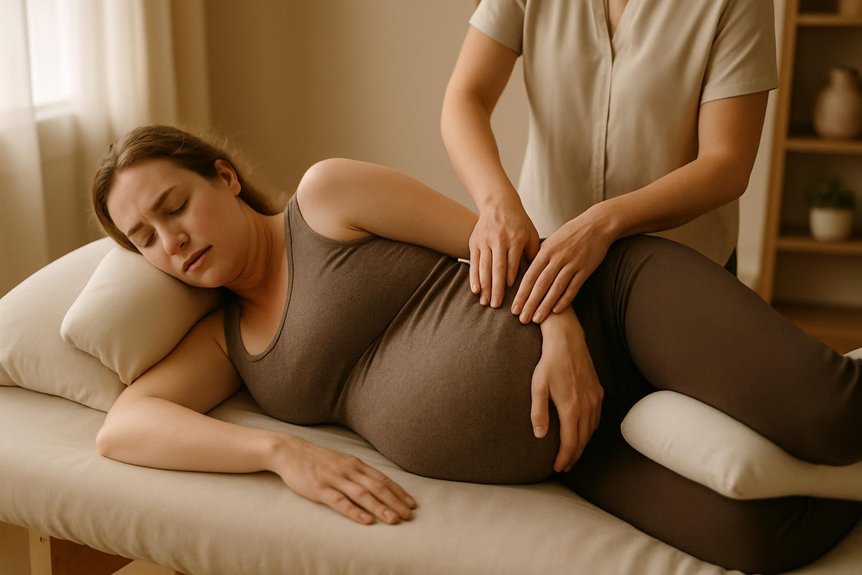
Often described as a pregnancy-related musculoskeletal condition, pelvic girdle pain (PGP) typically presents as aching, sharp, or stabbing pain around the pelvis—most commonly at the pubic symphysis (front of the pelvis) and/or the sacroiliac joints (either side of the lower back).
Symptoms often fluctuate, worsening with walking, stairs, turning in bed, getting in and out of cars, standing on one leg, or widening the knees. Some notice clicking, grinding, or a sense of “giving way” through the pelvis, alongside reduced stride length and a waddling gait. Pain may radiate into the groin, inner thigh, buttocks, or hips, and can be paired with protective muscle tension.
At Spa & Massage clinics, therapists commonly hear about disturbed sleep and reduced confidence in daily movement. Because prenatal massage is designed specifically for expecting mothers, pregnancy massage may also support relaxation and comfort when PGP symptoms are disrupting rest.
Can Prenatal Massage Help Pelvic Girdle Pain (PGP)?
These symptoms can make everyday movement feel unpredictable and tiring, which is why many pregnant clients ask whether prenatal massage can meaningfully ease pelvic girdle pain (PGP). Evidence suggests massage may support short-term pain relief and improved comfort by reducing muscle guarding around the hips, lower back, and pelvic floor, and by calming stress responses that amplify pain.
It does not “realign” the pelvis, and it is best viewed as a supportive therapy alongside guided exercise and activity modification. At Spa & Massage clinics across London, therapists adapt positioning, pressure, and pacing to protect tender joints and respect the client’s sense of safety and closeness.
Many clients report easier walking, better sleep, and a steadier relationship with their changing body after treatment.
How Prenatal Massage Targets PGP Pain Points
While pelvic girdle pain is felt at the pelvis, it is frequently sustained by protective tension and altered movement patterns in the surrounding tissues.
Prenatal massage can target these drivers by easing overactive hip flexors, gluteals, adductors, and lower-back muscles that compress and tug on the pelvic ring.
Clinically, gentle, pregnancy-safe myofascial release and slow effleurage may reduce tone, improve local circulation, and downshift stress-mediated guarding, supporting more comfortable walking, turning in bed, and standing.
At Spa & Massage, therapists also work the thoracolumbar fascia and breathing muscles to support pelvic stability through calmer core recruitment.
Touch is kept respectful and attuned, helping clients feel held and heard—often improving sleep and confidence without forcing painful ranges.
Pressure is always adjusted to symptoms.
What to Expect in a PGP Prenatal Massage
Reducing protective muscle guarding around the hips, adductors, gluteals, and lower back can ease strain on the pelvic ring, and a PGP-focused prenatal massage is structured to do this safely and comfortably.
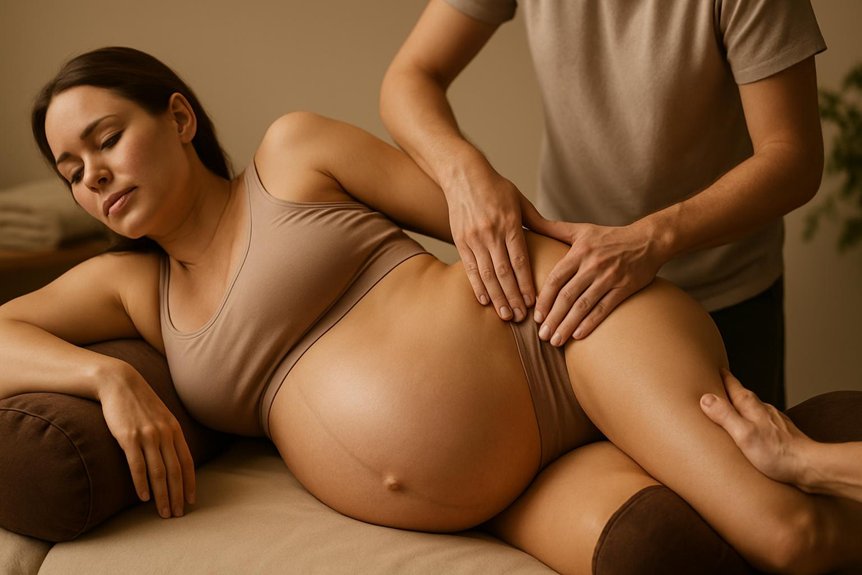
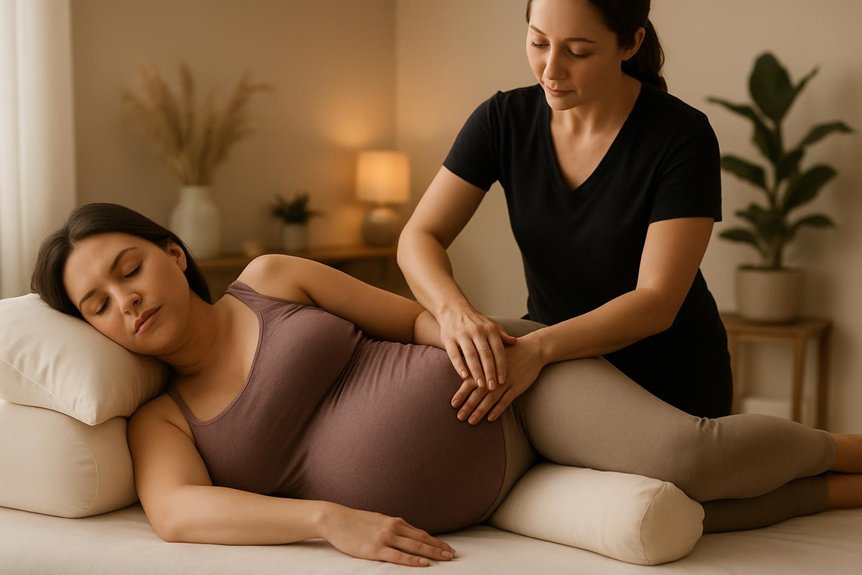
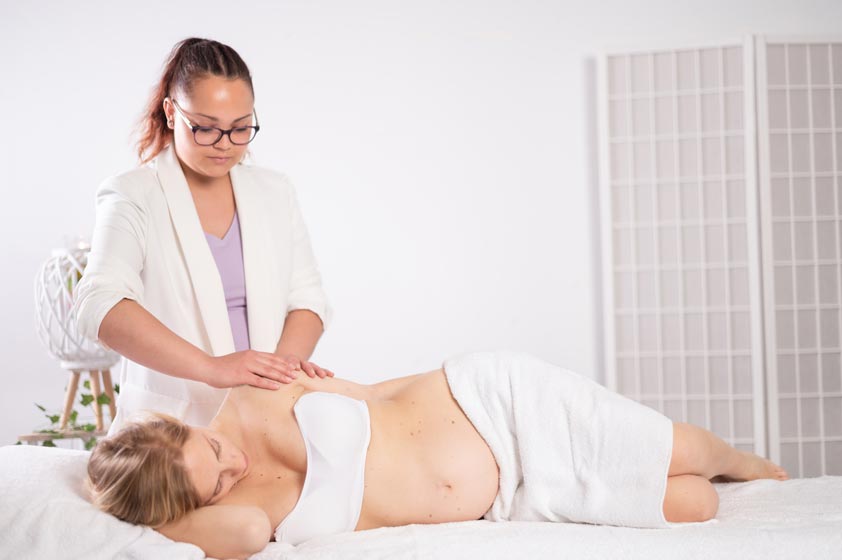
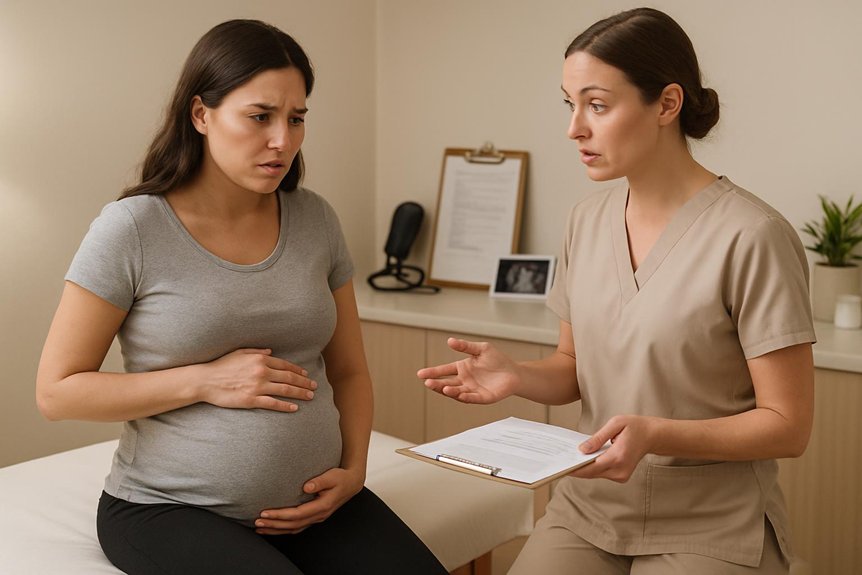
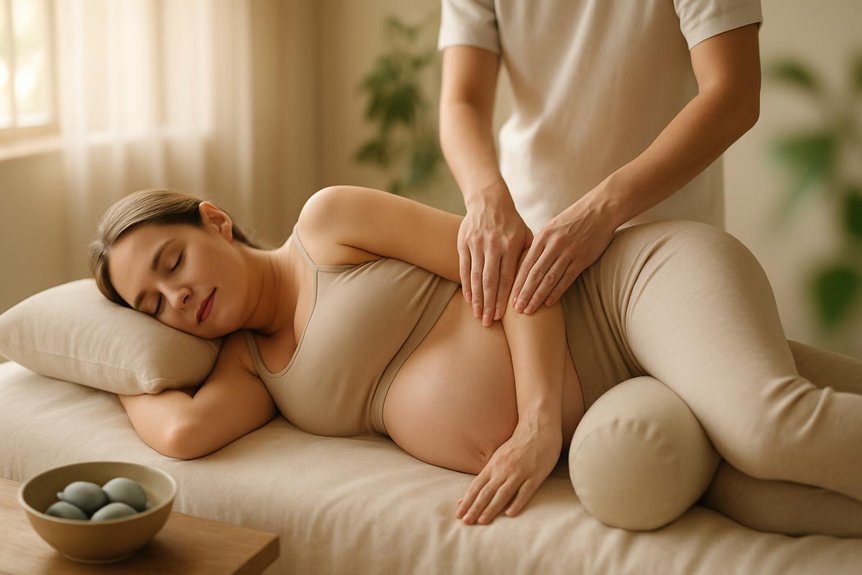
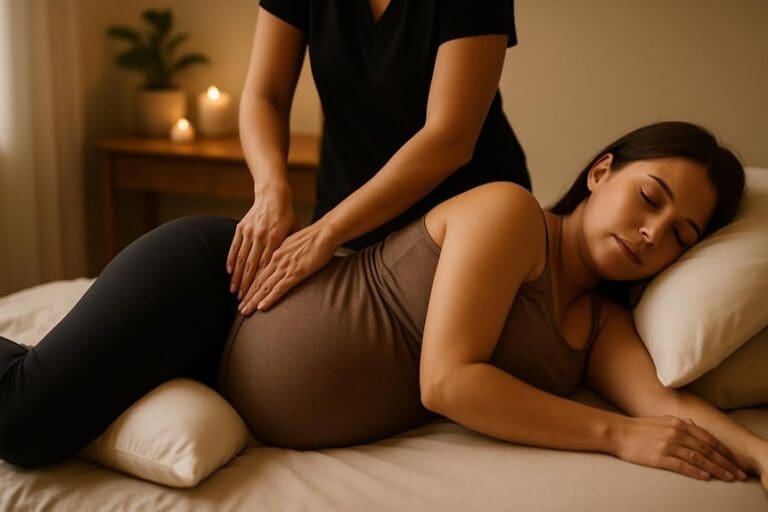
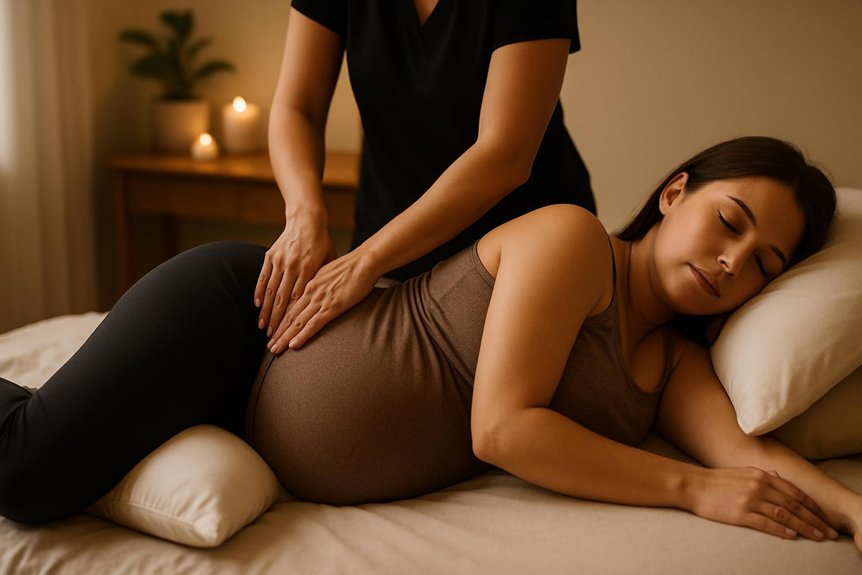
At Spa & Massage, the therapist begins with a brief intake on symptoms, aggravating movements, sleep positions, and preferred pressure. Positioning uses side-lying support with pillows to cradle the bump, reduce sacroiliac stress, and help breathing stay calm.
Treatment typically combines slow myofascial work, gentle trigger-point release, and soothing effleurage through hips, inner thigh attachments, gluteals, and lumbar paraspinals, avoiding forceful stretching.
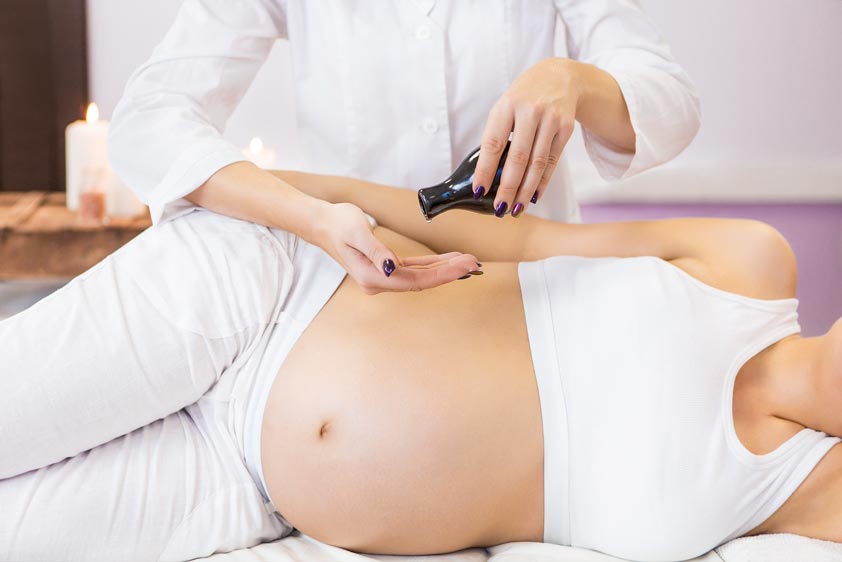
Neutral, pregnancy-safe oils may be used for comfort and glide.
Sessions end with brief home guidance on pacing, pelvic support, and aftercare.
When Prenatal Massage Isn’t Safe for PGP
In a small number of cases, prenatal massage is not appropriate for pelvic girdle pain and should be postponed or only provided with explicit medical clearance. Caution is advised with vaginal bleeding, suspected preterm labour, ruptured membranes, pre-eclampsia, severe swelling, fever, new calf pain or swelling (possible DVT), uncontrolled hypertension, or significant abdominal pain.
Massage should also be delayed if there is worsening pelvic instability, recent trauma, or pain that is escalating despite rest. At Spa & Massage clinics across London, therapists screen carefully and may request confirmation from a midwife or GP.
When treatment is cleared, they use gentle positioning, avoid deep work over the pelvis, and prioritise soothing touch, breath, and comfort-focused aftercare.
Conclusion
Prenatal massage may support pelvic girdle pain management by reducing surrounding muscle tension, improving comfort, and encouraging relaxation when provided by appropriately trained therapists. It is not a cure, but it can complement physiotherapy, exercise advice, and pacing strategies, with effects varying by individual and pregnancy stage. A thorough intake and side-lying positioning help protect vulnerable joints. Because pregnancy carries specific risks, massage should be avoided or coordinated with a midwife or GP when red flags arise—pain that feels “unbearable enough to stop time.”