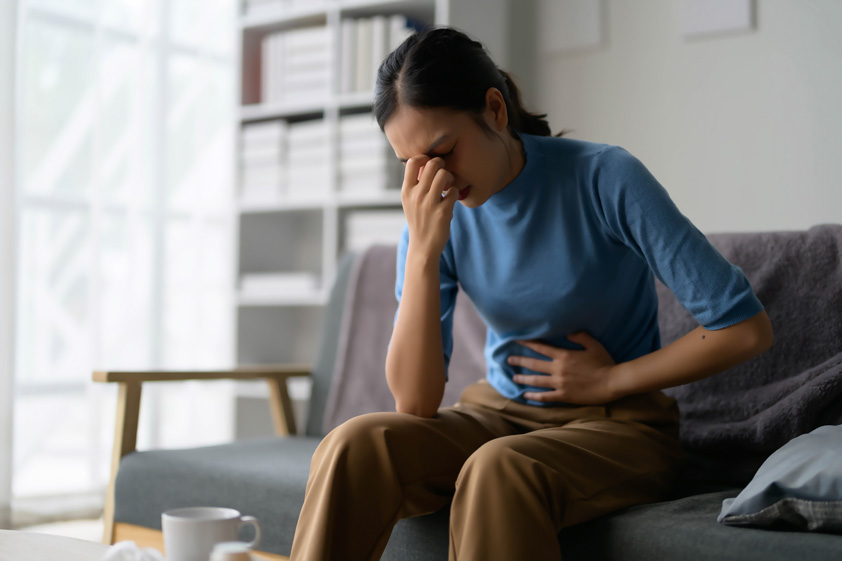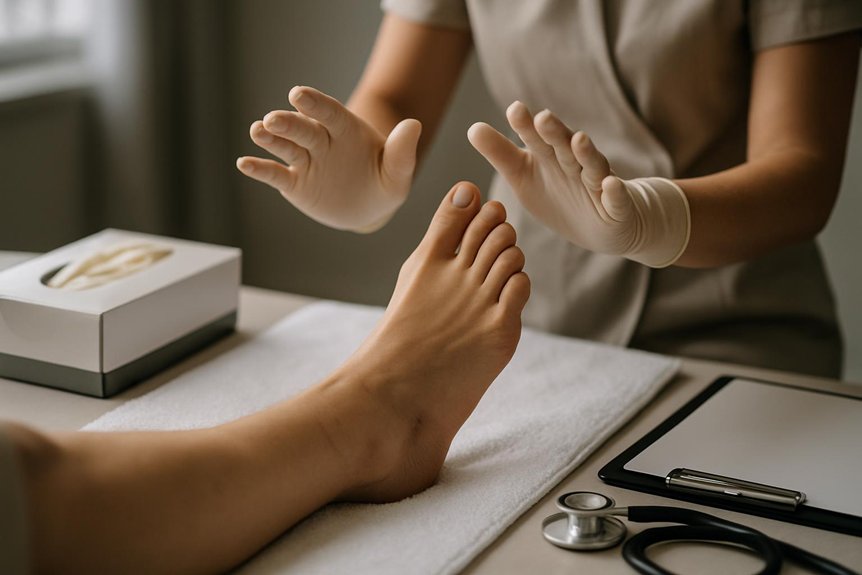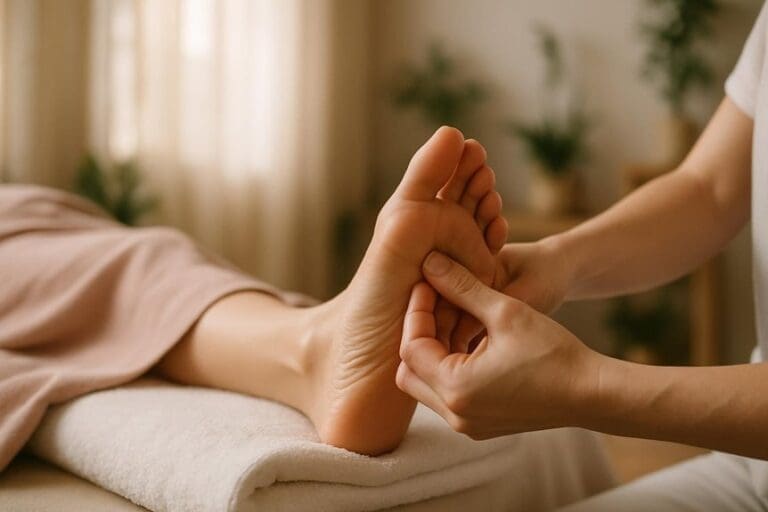
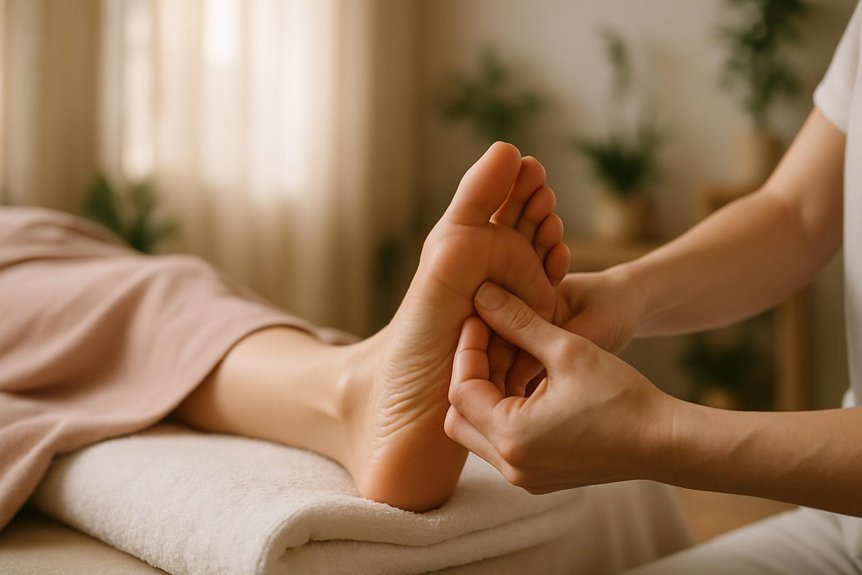
It may help ease PMS symptoms such as cramping, bloating, breast tenderness, headaches, irritability, and sleep disruption by promoting nervous-system relaxation and reducing pain sensitivity, though research results are mixed. Sessions are typically 45–60 minutes, fully clothed, and consent-led, using measured thumb-walking and gentle holds on foot zones linked with pelvic, digestive, lymphatic, and endocrine support. Benefits often build over 4–6 weekly treatments, ideally booked in the late luteal phase. Further details can clarify timing, techniques, and precautions.
Can Reflexology Help PMS Symptoms: and What to Expect?

Often used as a supportive therapy, it may help reduce common PMS symptoms—such as lower abdominal cramping, bloating, breast tenderness, headaches, low mood, and disrupted sleep—by promoting relaxation and modulating stress-related nervous system activity. Many people explore the healing power of reflex therapy as a gentle, non-invasive approach to support overall wellbeing.
At Spa & Massage London clinics, therapists begin with a brief check-in on cycle timing, symptoms, pressure preferences, and comfort boundaries, then work deliberately through the feet using thumb-walking, hook-and-back-up, and gentle holds to settle the body.
Many clients report a warm, drifting calm and softened pelvic tension during treatment, with effects that may build over a series.
Sessions typically last 45–60 minutes.
Aftercare is simple: hydrate, keep warm, and allow extra rest that night.
What Is It, and Why It May Help PMS?
It is a structured manual therapy in which specific points on the feet (and sometimes hands) are palpated and treated on the basis that they correspond to body regions and systems.
In Spa & Massage clinics, therapists use sustained thumb-walking, gentle pressure, and slow holds to encourage relaxation while keeping communication close, respectful, and consent-led.
Evidence suggests that it may support PMS by downshifting stress physiology, improving sleep quality, and easing pain sensitivity through calming input to the nervous system.
The session is tailored: pressure is adjusted to comfort, areas of tenderness are worked gradually, and breathing cues help clients stay present.
For many, this intimate, grounded touch creates a sense of being held and listened to, which can soften the monthly strain.
Which PMS Symptoms Can It Help Most?
In clinical practice, PMS symptoms most likely to respond to reflex therapy are those strongly influenced by stress load, pain modulation, and sleep quality. These include cramping pelvic pain, low-back ache, tension headaches, breast tenderness, bloating linked to gut motility, and fatigue.
Many clients also seek support for irritability, feeling overwhelmed, and sleep disruption, where calming touch may downshift sympathetic arousal. Evidence is mixed, yet small studies and clinic outcomes suggest improvements in perceived pain and anxiety, and sometimes in sleep and digestive comfort.
At Spa & Massage, therapists prioritise pressure that feels “melting” rather than sharp, pacing the work to support nervous-system settling and noticing moment-to-moment changes. It is least reliable for heavy bleeding, severe depression, or new, escalating symptoms.
What Happens in a PMS Reflex Therapy Session?
What, exactly, can a client expect when booking PMS-focused reflex therapy at Spa & Massage? A therapist begins with a brief, private consultation covering cycle pattern, symptoms, stress, sleep, and any medical considerations.
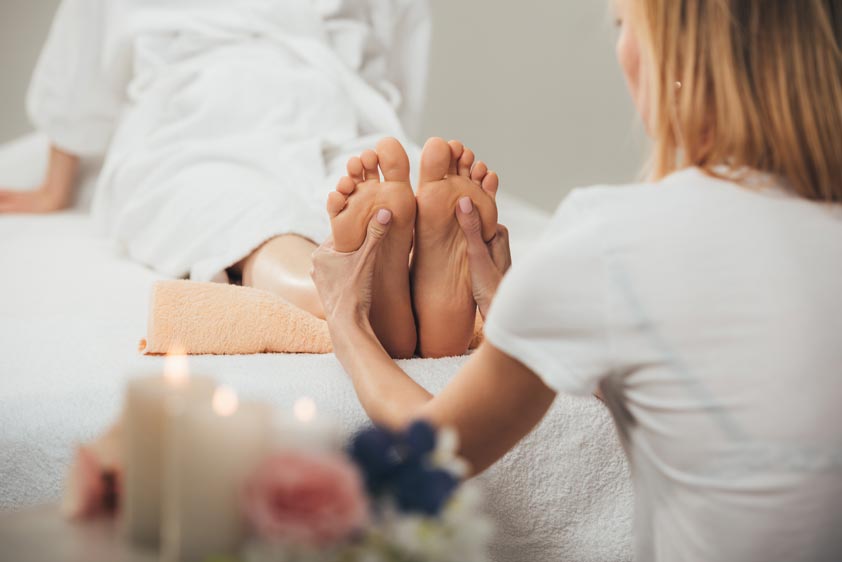
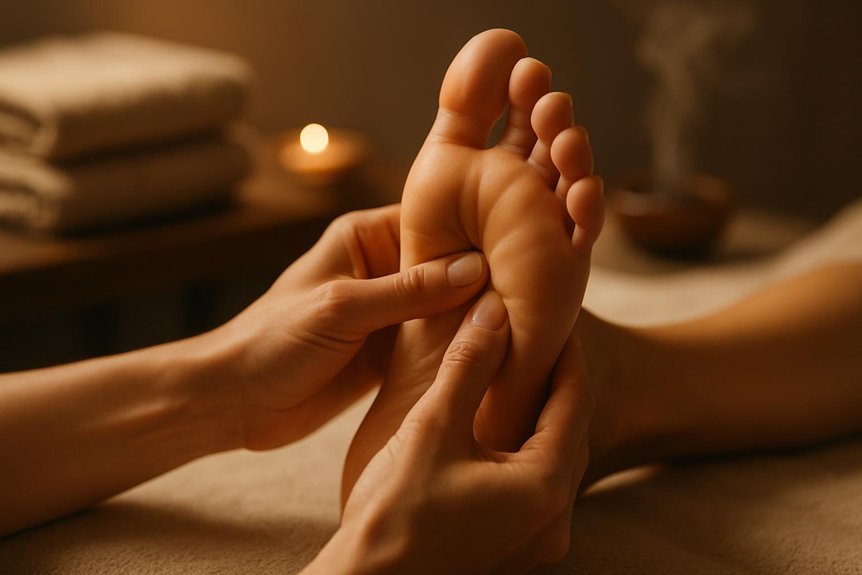
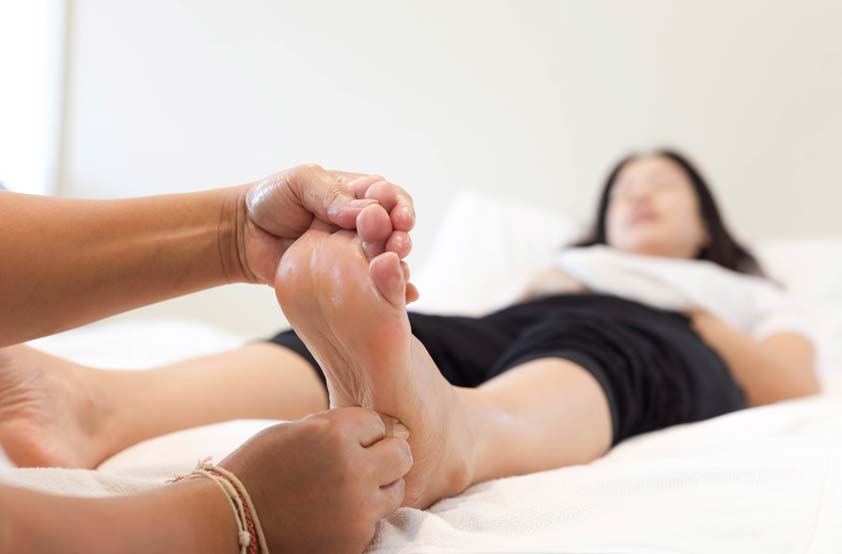
The client then settles fully clothed on a heated couch, with blankets and calm lighting to support nervous‑system downshifting.
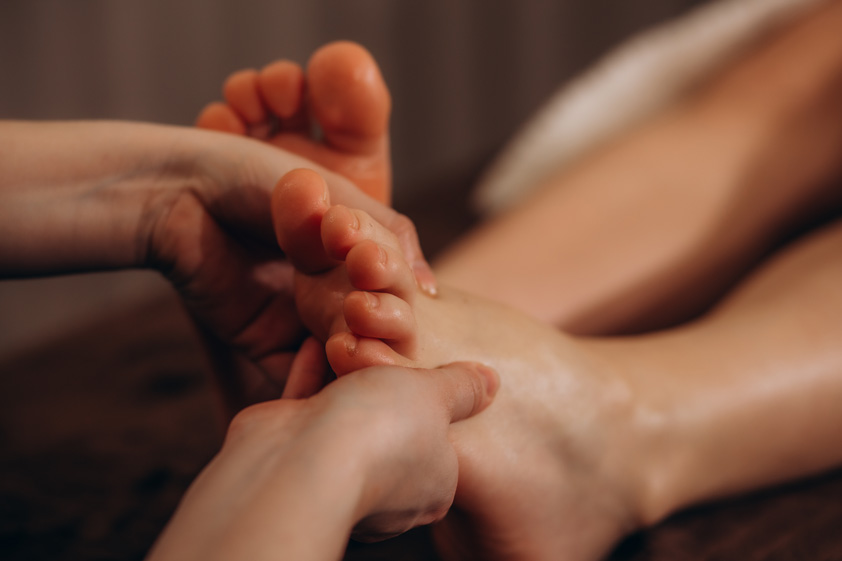
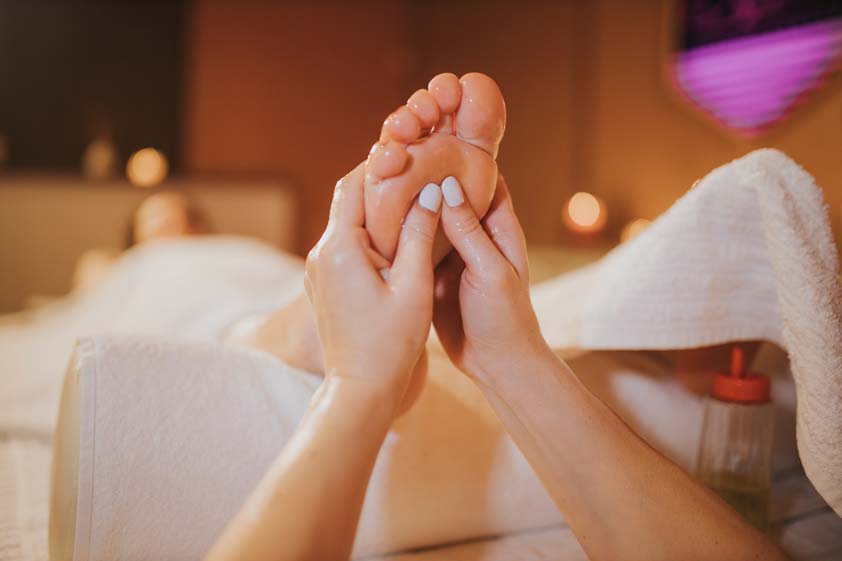
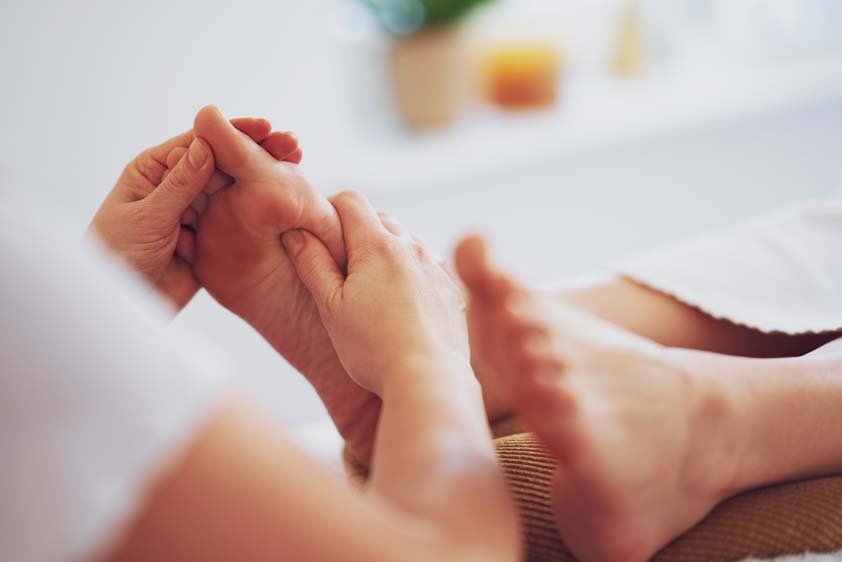
Treatment focuses on measured thumb-walking and gentle, sustained pressure across the feet, mapping work to reflex areas commonly associated with pelvic comfort, hormonal regulation, digestion, and lymphatic flow. Pressure is adjusted moment by moment, inviting ease rather than intensity.
In Spa & Massage clinics, therapists may use a small amount of unscented or lightly aromatherapeutic oil for glide. Aftercare includes hydration, light movement, and noting symptom changes over 24–48 hours.
When Should You Book Reflex Therapy for PMS?
For PMS support, reflex therapy is typically booked in the late luteal phase (about 7–10 days before bleeding starts), when symptoms most often intensify and a consistent technique plan can be applied.
At Spa & Massage, therapists commonly recommend a short course—weekly or fortnightly sessions across 2–3 cycles—then adjusting frequency based on symptom tracking and client tolerance.
Booking is best planned around individual cycle patterns, with earlier appointments considered when cramps, mood changes, or sleep disruption reliably begin.
Best Timing In Cycle
Across most menstrual cycles, reflex therapy is typically most effective for PMS when scheduled in the late luteal phase—about 7–10 days before bleeding starts—when symptoms such as bloating, breast tenderness, irritability, and sleep disruption commonly build.
At Spa & Massage clinics across London, therapists time sessions to support nervous-system downshifting and pelvic comfort, using slow, sustained pressure and warming strokes across the diaphragm, solar plexus, and pelvic reflex zones, adapted to sensitivity and consent.
If cramps are the main concern, booking 1–3 days before an expected period can help ease tension before it peaks.
For irregular cycles, clients are guided to book at the first clear signs—fluid retention, mood change, restless sleep—so soothing touch meets the body early.
Session Frequency Planning
In practice, the most reliable results for PMS come from planning reflex therapy as a short, consistent run rather than a one-off appointment: one session weekly for 2–3 weeks in the late luteal phase, then a maintenance session each cycle if symptoms recur.
At Spa & Massage clinics across London, therapists tailor pressure, pacing, and point selection to the client’s symptom pattern—cramping, breast tenderness, bloating, headaches, or mood shifts—so booking is matched to when the body feels most reactive.
If cycles are irregular, sessions can be anchored to the first noticeable PMS signals, then repeated 7–10 days later.
Many clients benefit from a 60-minute appointment; more sensitive clients often prefer 45 minutes with lighter work, plus calm aftercare and hydration.
How Many Reflex Therapy Sessions Help PMS Most?
For PMS support, Spa & Massage therapists typically recommend a short course of reflex therapy—often weekly or fortnightly sessions for 4–6 appointments—then adjusting frequency based on symptom patterns and cycle timing.
Many clients notice early shifts in tension, sleep, and mood within 1–3 sessions, while more consistent change in cycle-related symptoms tends to emerge after several treatments.
Session planning is kept client-centered and technique-focused, with pressure and reflex points tailored each visit to the individual’s responses and comfort.
Typical Session Frequency
Often, the most noticeable PMS improvements with reflex therapy come from scheduling sessions in a consistent pattern over two to three menstrual cycles, rather than relying on a single treatment. At Spa & Massage, a common plan is weekly sessions during the two weeks before bleeding, then tapering to fortnightly for maintenance.
For clients with stronger cramps, irritability, or breast tenderness, twice-weekly sessions in the luteal phase may be used short-term, then reduced once symptoms feel manageable. Session length is typically 45–60 minutes, allowing focused work through pelvic, endocrine, and lymphatic reflex zones using steady, comfortable thumb-walking and gentle holds.
Scheduling is tailored around cycle tracking, stress load, and sensitivity, with consent-led pressure and calm, private pacing.
When You’ll Notice Change
When will reflex therapy start to ease PMS symptoms? Many clients notice subtle shifts after 1–2 sessions: softer abdominal tension, steadier mood, and improved sleep. Evidence on PMS suggests benefits build with consistency rather than a single treatment. At Spa & Massage, therapists track symptom timing, flow, and stress levels to tailor pressure and pacing.
Most meaningful change is typically reported after 4–6 weekly sessions, especially when treatment targets pelvic reflex areas, diaphragm release, and gentle nervous-system downregulation. Some feel earlier relief in breast tenderness or headaches; others need two cycles to judge results. For best results, sessions are scheduled in the luteal phase and repeated before symptoms peak. Aftercare includes hydration, warmth, and quiet time to support regulation.
Which Reflex Therapy Points Are Used for PMS Support?
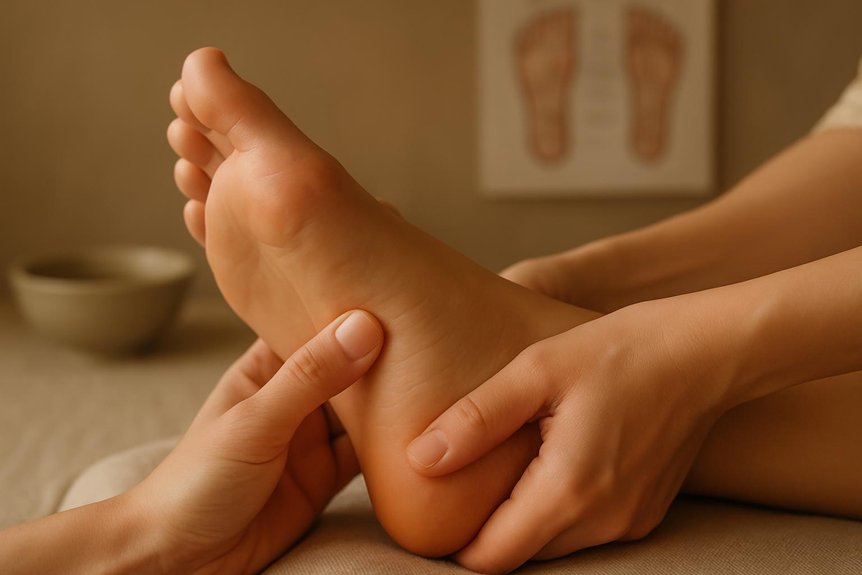
Several reflex therapy zones are routinely targeted to support common PMS symptoms such as cramps, bloating, mood changes, and breast tenderness, with pressure applied to specific points on the feet to influence pelvic, endocrine, and lymphatic-related pathways.
At Spa & Massage clinics, sessions often prioritise the pelvic reflexes (uterus/ovaries) around the inner heel and ankle, using slow, sustained thumb-walking to ease lower-abdominal tension.
For hormonal rhythm and fatigue, therapists work the pituitary point at the centre of the big toe, plus thyroid/adrenal areas along the toe line and upper arch, titrating pressure to comfort.
Bloating and water retention are addressed via the kidney–ureter–bladder pathway and gentle lymphatic strokes across the top of the foot.
Tenderness is met with soft, warming holds.
When Should You Avoid Reflex Therapy for PMS?
In some situations, reflex therapy for PMS should be postponed or avoided to reduce risk and prevent symptom aggravation. It is not advised with fever, acute infection, vomiting/diarrhoea, or new, severe pelvic pain, heavy bleeding, fainting, or suspected pregnancy complications—these require medical assessment.
Clients with recent foot/ankle fractures, open wounds, skin infections, or severe varicose veins should avoid local work.
Caution is recommended with blood thinners, clotting disorders, uncontrolled diabetes with neuropathy, or significant oedema; pressure may need modification or deferral.
At Spa & Massage, therapists screen health history and adjust technique, using lighter, slower pressure and shorter sessions when appropriate.
If touch feels emotionally overwhelming, clients should pause and choose a gentler treatment plan.
Conclusion
It may offer supportive relief for PMS by promoting relaxation and easing the body’s stress response, which can amplify cramps, tension, sleep disruption, and mood changes. While evidence is still emerging, many clients report reduced discomfort and improved wellbeing when sessions are timed in the luteal phase and repeated across cycles. Used alongside hydration, movement, and sleep routines, it can act like a “pressure-release valve” for premenstrual strain. Individual responses vary, and contraindications should be screened.