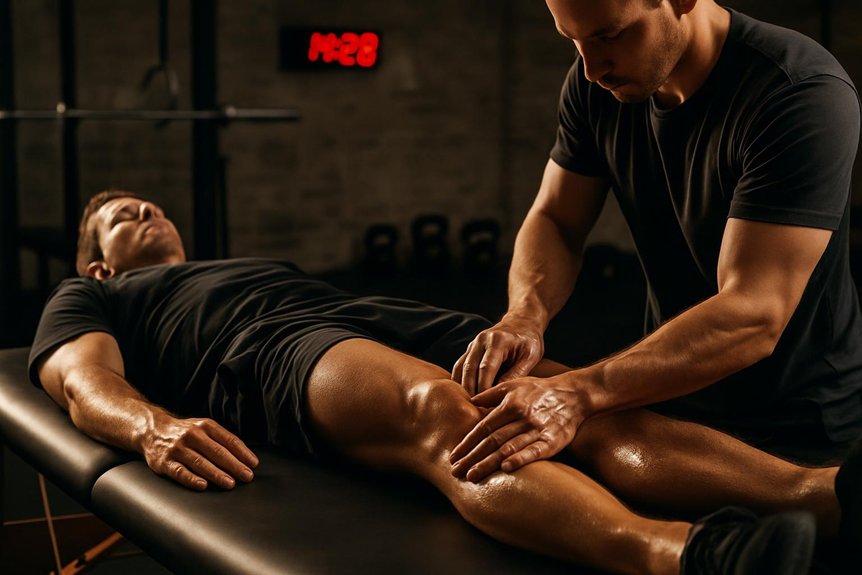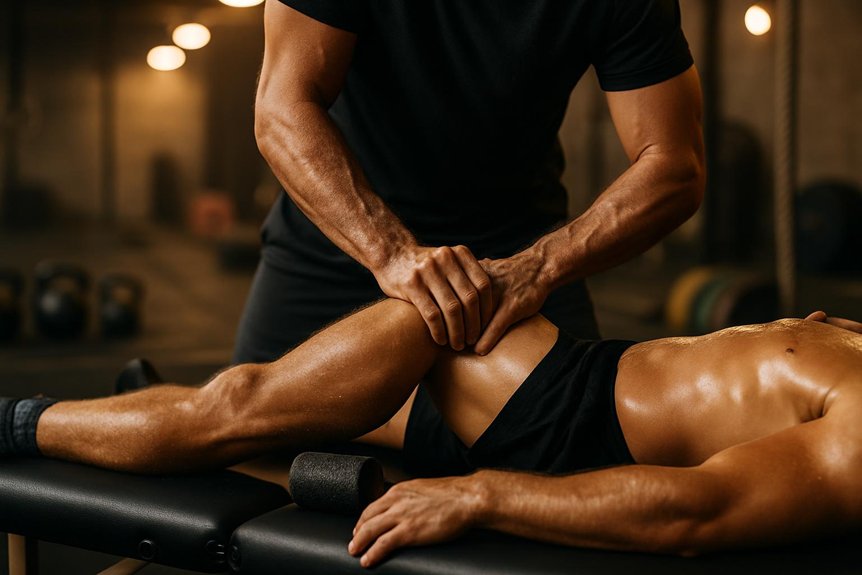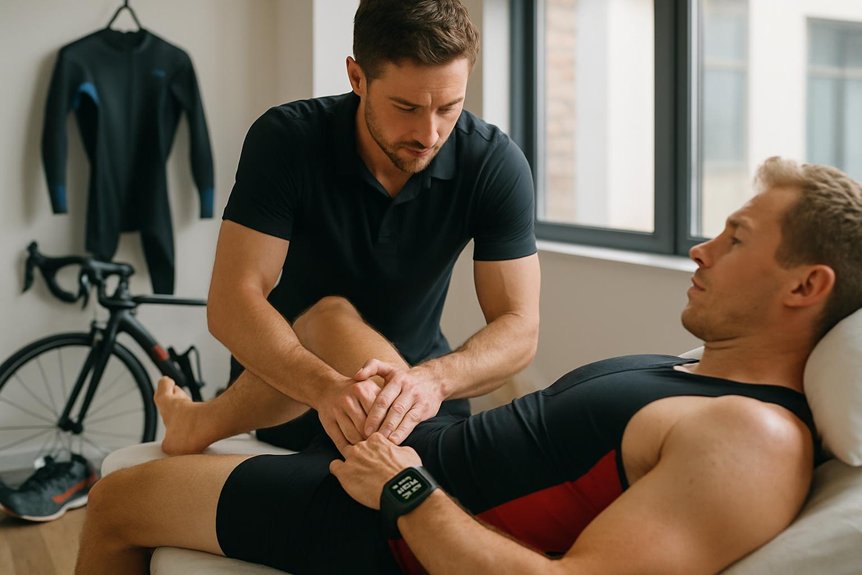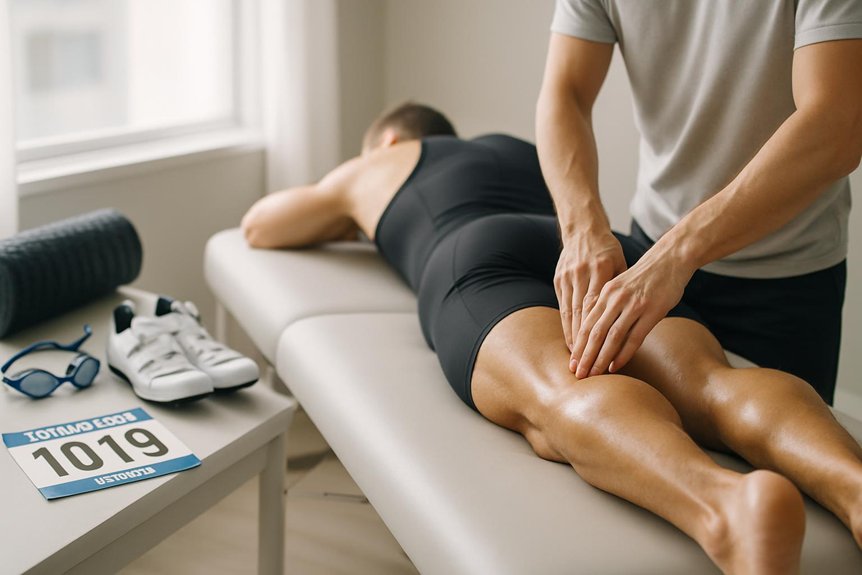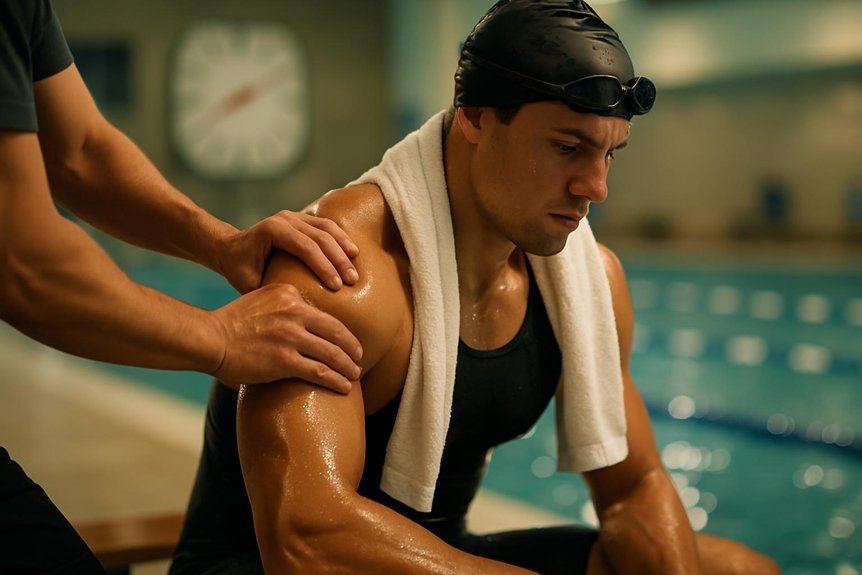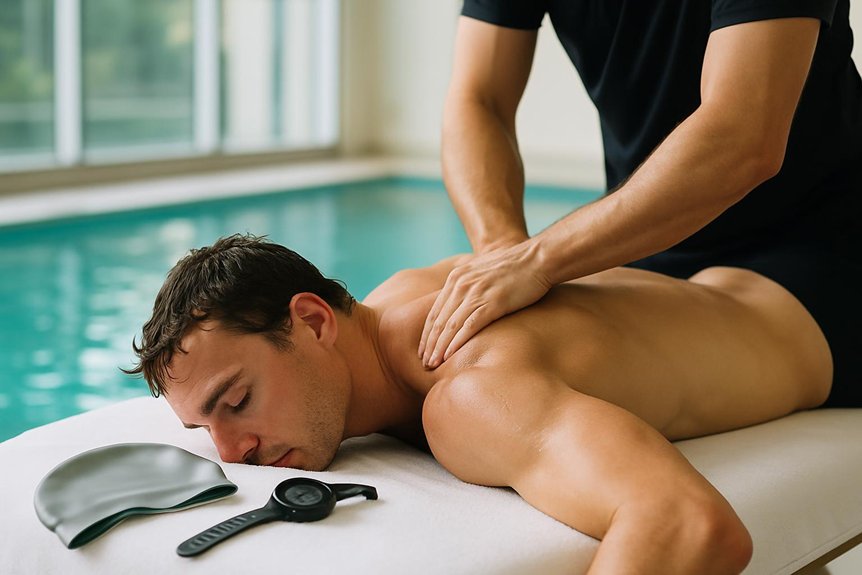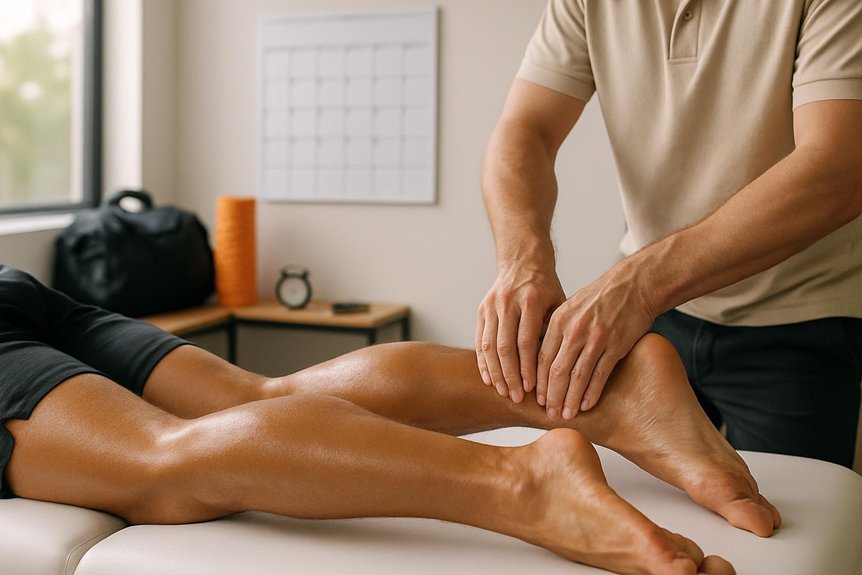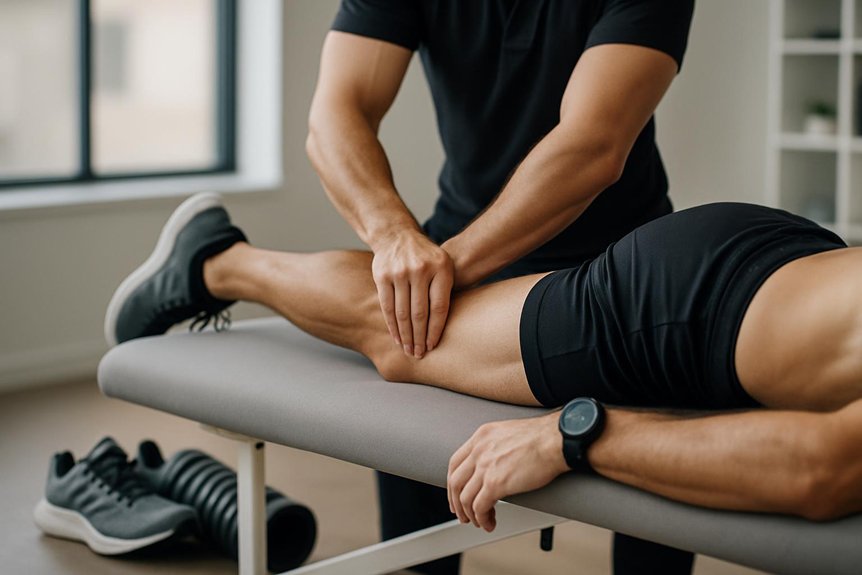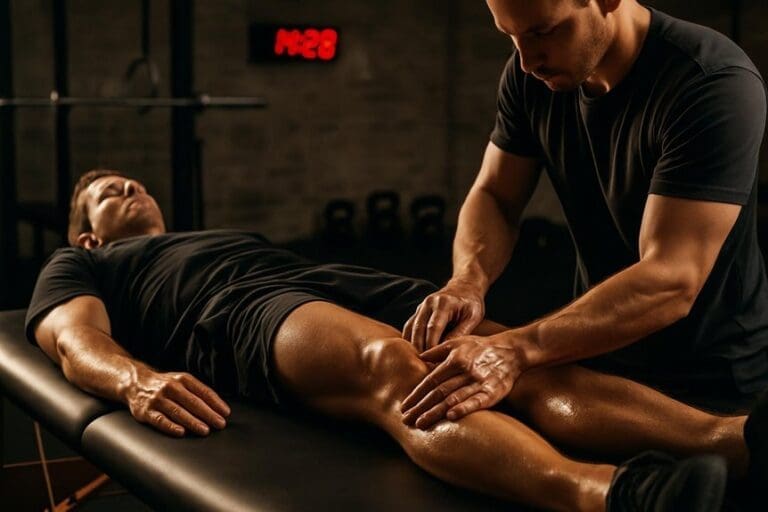
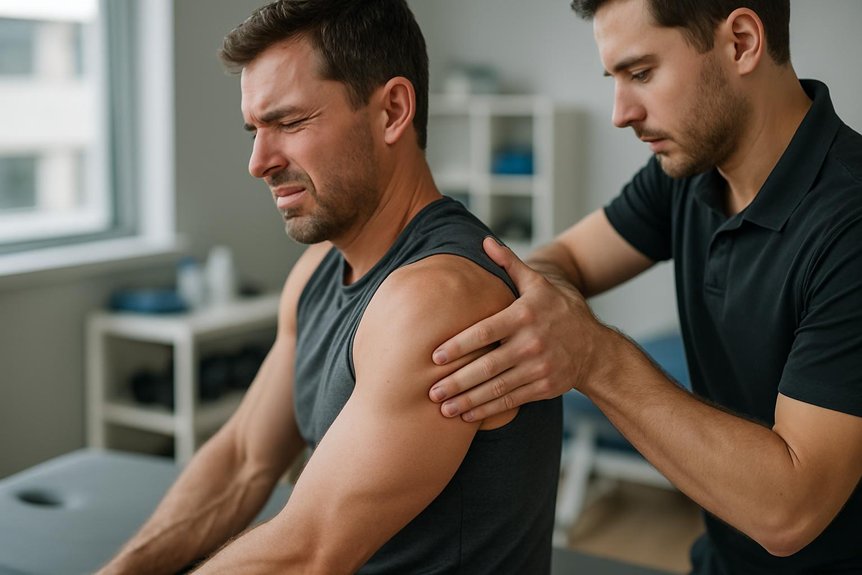
Athletic massage can help rotator cuff pain when symptoms are stable and mechanically driven, by reducing protective muscle guarding, modulating soft-tissue tone, and improving local circulation around the shoulder. Graded pressure, slow deep-tissue strokes, myofascial release, and trigger-point work can decrease nociceptive input, improve fascial glide, and support scapulohumeral mechanics via treatment of the posterior cuff, trapezius, serratus anterior, pectorals, and latissimus. Key safety indications, red flags, and session expectations are outlined next.
Can It Help Rotator Cuff Pain?
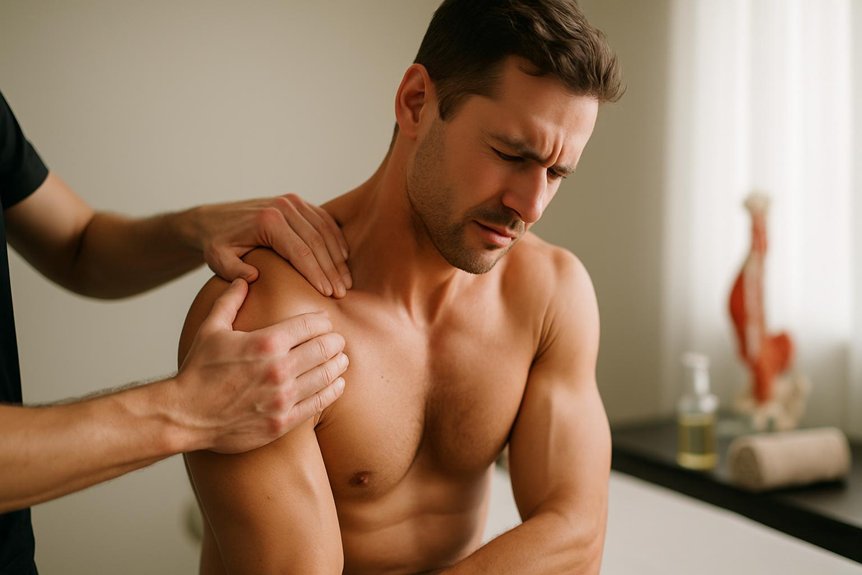
It can often support rotator cuff pain by addressing modifiable contributors such as myofascial tightness, trigger points, and altered scapulothoracic mechanics rather than “treating” a tendon tear itself. Evidence-informed hands-on work may reduce nociceptive input and guarding in the upper trapezius, levator scapulae, pectoralis minor, posterior cuff, and thoracic extensors, improving shoulder centration and tolerance to loading. In athletes, this approach is often used as part of sports massage to support performance and recovery alongside training.
At Spa & Massage clinics across London, therapists typically blend deep tissue and sports techniques—graded pressure, myofascial release, and targeted trigger point therapy—then integrate gentle scapular and thoracic mobility work to normalise movement quality. Many clients report easier overhead reach, less night discomfort, and improved training capacity when sessions complement progressive rehabilitation and ergonomic changes. Outcomes vary with diagnosis, irritability, and activity demands.
When zit Is Safe for Rotator Cuff Pain
Generally, it is considered safe for rotator cuff–related shoulder pain when symptoms are mechanically driven and stable—e.g., a gradual onset ache, localised tenderness, and predictable provocation with reaching or lifting—without red flags such as acute trauma, rapidly worsening weakness, marked swelling/bruising, fever, or progressive neurological symptoms.
In such presentations, soft-tissue work can be applied to adjacent load-sharing structures (upper trapezius, posterior cuff, pectoralis minor, latissimus) to reduce protective tone and improve scapulohumeral mechanics.
At Spa & Massage clinics across London, therapists typically start with low-to-moderate pressure, short exposures, and symptom-guided dosing, prioritising comfort and consent.
Massage is often paired with education on graded activity, sleep positioning, and gentle mobility to support tissue tolerance and reduce irritability.
When to Avoid Athletic Massage for Rotator Cuff Pain
Although soft‑tissue treatment can be appropriate for many stable, mechanically driven shoulder complaints, athletic massage should be avoided for rotator cuff pain when clinical features suggest acute structural compromise, significant inflammation, infection/systemic illness, vascular risk, or neurological involvement—such as sudden onset after trauma (including a suspected tear or dislocation), rapidly progressive weakness (notably loss of abduction or external rotation), visible deformity, marked swelling or extensive bruising, night pain that is severe and unrelenting, fever or unexplained malaise, or radiating pain with numbness/tingling and evolving sensory or motor deficits; in these scenarios, immediate medical assessment is indicated before any manual therapy is attempted.
At Spa & Massage, therapists also defer treatment when anticoagulants, clotting disorders, uncontrolled hypertension, or recent injection/surgery increase bleeding risk. Where pain is highly irritable, even gentle pressure can sensitise tissues; a calm consultation and referral are prioritised.
Rotator Cuff Pain or Shoulder Strain: Key Signs
Rotator cuff–related pain typically presents with a painful arc during abduction, nocturnal discomfort when lying on the affected side, and weakness with resisted external rotation or elevation, whereas shoulder strain more often follows an acute overload event with focal tenderness and pain on isometric contraction.
Movement tests and pain patterns—such as symptom reproduction with Hawkins–Kennedy or Neer impingement testing versus pain limited to a specific muscle-tendon unit—help differentiate likely tissue involvement.
At Spa & Massage clinics across London, therapists use structured range-of-motion and resisted testing to guide whether athletic massage is appropriate or whether medical assessment is indicated.
Common Rotator Cuff Symptoms
Often, rotator cuff pain presents with a characteristic cluster of symptoms that helps differentiate it from referred neck pain or general shoulder soreness.
Typical features include lateral shoulder pain over the deltoid, exacerbated by overhead reach, abduction, or external rotation, and discomfort when lying on the affected side at night.
Clients may report a painful arc (roughly 60–120°), reduced active range versus near-normal passive range, and weakness on resisted elevation or rotation.
Crepitus or catching can accompany tendinopathy.
Symptoms often increase after repetitive loading, computer work with protracted shoulders, or sudden pulling.
At Spa & Massage clinics, therapists note compensatory upper trapezius overactivity and scapular dyskinesis, which can amplify local tendon irritation and sensitise tender points.
Shoulder Strain Warning Signs
Symptom patterns such as a painful arc, nocturnal discomfort, and weakness on resisted movements can indicate rotator cuff involvement, but similar complaints may arise from an acute shoulder strain of the peri-scapular or glenohumeral musculature.
Strain is suggested by a clear inciting load, sudden “grab” pain, focal tenderness, and pain that is most prominent with one specific muscle action, rather than diffuse shoulder aching. Early bruising, local warmth, and pain on palpation along the muscle belly or tendon are supportive.
Guarding, reduced active range due to pain, and discomfort when lying on the affected side are common. Red flags include deformity, rapid swelling, marked loss of function, paraesthesia, or pain after a fall; urgent assessment is indicated. Spa & Massage therapists screen for these signs before hands-on care.
Movement Tests And Pain Patterns
In clinical screening, movement-evoked pain patterns help differentiate rotator cuff–related tendinopathy or tear from a local shoulder strain. Painful arc between ~60–120° abduction, weakness on resisted external rotation, and pain on “empty can” elevation implicate supraspinatus/infraspinatus. Night pain when lying on the affected side and discomfort reaching behind the back suggest cuff overload rather than a superficial strain.
A strain more often reproduces pain with a single direction, palpation of a discrete muscle belly, and preserves strength once pain is inhibited. Limited passive range with capsular end-feel implies stiffness rather than tear.
At Spa & Massage clinics, therapists use gentle active-assisted testing and symptom mapping to guide tailored athletic massage and safe loading advice.
How Athletic Massage Reduces Rotator Cuff Pain
Athletic massage can measurably reduce rotator cuff–related shoulder pain by modulating soft-tissue tone, improving local circulation, and down-regulating protective neuromuscular guarding around the glenohumeral joint.
At Spa & Massage clinics across London, therapists apply graded pressure and slow, targeted strokes to decrease nociceptive input, improve glide between fascial layers, and normalise resting tone that can compress sensitive subacromial tissues.
Mechanistically, this supports pain modulation via peripheral desensitisation and central inhibitory pathways, often improving comfortable range during reaching and dressing.
Treatment is dosed to the client’s tolerance, with continuous consent and close attention to referral patterns.
Gentle, warming oils may be used to support tissue pliability without provoking shear.
Post-session, many clients report easier sleep and reduced protective bracing.
Which Muscles Are Worked for Rotator Cuff Pain?
Pain reduction and improved shoulder range following treatment is typically linked to releasing overload in the rotator cuff and its supporting scapulothoracic musculature.
Primary targets include supraspinatus, infraspinatus, teres minor, and subscapularis, which commonly develop myofascial trigger points and protective tone with tendinopathy or impingement. Therapists also address deltoid and biceps brachii (long head) to reduce anterior shoulder traction.
Scapular control muscles—upper/middle/lower trapezius, serratus anterior, rhomboids, and levator scapulae—are assessed for hypertonicity or inhibition that alters glenohumeral mechanics.
Pectoralis minor/major and latissimus dorsi are often treated to restore posterior tilt and external rotation capacity.
At Spa & Massage clinics, pressure is titrated for comfort, maintaining a safe, close therapeutic rapport.
What Happens in a Rotator Cuff Athletic Massage Session?
Typically, a rotator cuff–focused athletic massage session begins with a brief clinical intake and movement screen to clarify symptom behaviour, aggravating activities, and current shoulder range and control.
At Spa & Massage clinics, the therapist then positions the client for comfortable access to the posterior shoulder, scapular border, and upper arm, maintaining privacy and clear consent throughout.
Treatment typically combines slow deep-tissue strokes and targeted myofascial release to the infraspinatus, supraspinatus region, subscapularis access points, posterior deltoid, pectoralis minor, and latissimus, aiming to reduce tone and improve scapulohumeral mechanics.
Trigger-point compression may be used with graded pressure and constant feedback.
Gentle joint and soft-tissue mobilisation around the scapula and thoracic spine may follow, prioritising symptom-free range and calm breathing.
Aftercare After Athletic Massage for Rotator Cuff Pain
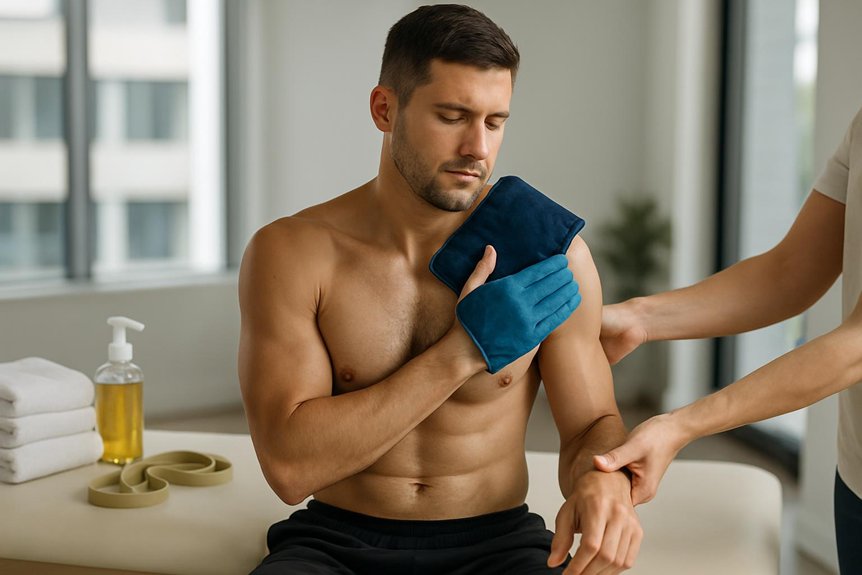
Following a rotator cuff–focused session that addresses myofascial tone and scapulohumeral mechanics, aftercare aims to stabilise the response to treatment and reduce post-treatment irritability.
At Spa & Massage clinics, therapists advise relative rest for 24–48 hours, avoiding provocative overhead loading and end-range external rotation if symptomatic.
Hydration, gentle heat, and light active range-of-motion are used to modulate soreness and support tissue perfusion.
If local tenderness persists, brief cold application may down-regulate nociception.
Clients are guided through low-load scapular control drills (serratus anterior, lower trapezius) and isometric rotator cuff work within pain limits, supporting tendon capacity without flare.
Sleep positioning is discussed: side-lying on the unaffected shoulder with a pillow supporting the forearm reduces compressive stress.
Follow-up frequency is individualised.
Conclusion
It may support rotator cuff pain management by addressing myofascial restriction, reducing protective muscle tone, and improving scapulothoracic mechanics, particularly when symptoms are load-related and no red flags are present. Treatment is typically most effective when integrated with progressive strengthening, movement retraining, and activity modification. However, acute trauma, marked weakness, night pain, or neurological signs warrant prompt clinical assessment. Could targeted soft-tissue intervention, alongside structured rehabilitation, restore function more efficiently than rest alone?