
Lying on the back during a prenatal massage is often fine only for short, well-supported periods early on, but after about 20 weeks it is typically avoided or kept brief because the uterus can compress major blood vessels and reduce blood flow. Any dizziness, nausea, clammy sweating, breathlessness, paleness, or faintness is a stop-now sign and requires immediate repositioning, usually onto the left side. Safe alternatives and positioning options are explained next.
Can You Lie on Your Back for Pregnancy Massage?
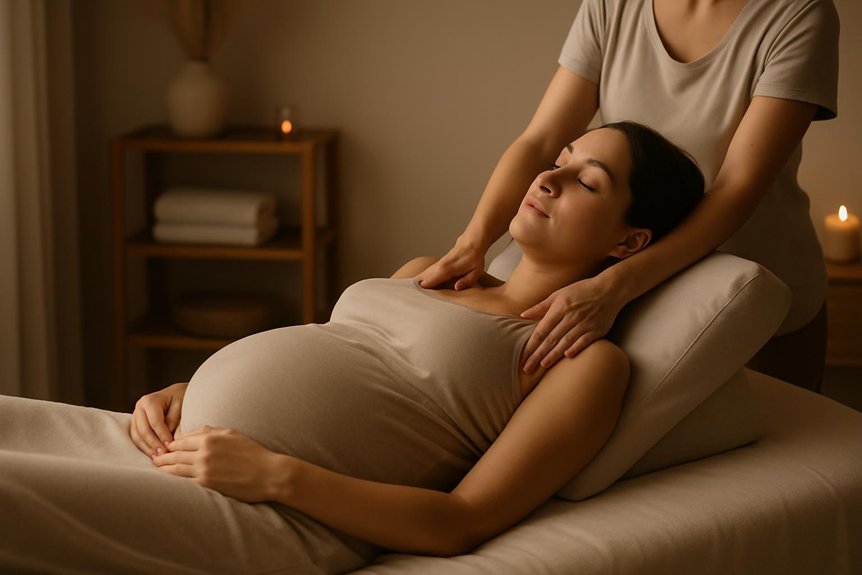
In most cases, lying flat on the back for a prenatal massage is limited—especially after around 20 weeks—because the weight of the uterus can compress major blood vessels, potentially reducing blood flow and causing symptoms such as dizziness, nausea, or breathlessness.
That said, short periods on the back may be comfortable for some, particularly earlier in pregnancy, when supported and closely monitored.
It can offer many benefits for expecting mothers when positioning is adapted to keep both comfort and circulation in mind.
At Spa & Massage, therapists typically adapt positioning with a gentle incline, side-lying support, and carefully placed bolsters so the body stays relaxed while circulation is prioritised.
Clients are encouraged to speak up if anything feels “off,” even subtly.
A personalised, consent-led approach helps keep touch soothing and intimate without compromising safety, and any back-lying is adjusted immediately if symptoms appear.
When Is Back-Lying Unsafe in Prenatal Massage?
Back-lying can become unsafe later in pregnancy, most often from mid–late second trimester onwards, when the weight of the uterus may compress major blood vessels and trigger supine hypotension.
Key red flags include dizziness, nausea, sweating, paleness, breathlessness, a sudden drop in blood pressure, or feeling faint, and these symptoms should prompt immediate repositioning to a side-lying or well-supported semi-reclined position.
In Spa & Massage clinics, therapists monitor comfort closely and adjust positioning promptly to keep both parent and baby well supported.
Supine Hypotension Timing
From around 20 weeks of pregnancy onwards, lying flat on the back can become unsafe for some people during massage because the weight of the uterus may compress major blood vessels (particularly the inferior vena cava), reducing blood return to the heart and triggering “supine hypotension.”
Risk generally rises as pregnancy progresses into the third trimester, though body shape, baby position, and multiple pregnancy can make it relevant earlier, while others remain comfortable for short periods.
In Spa & Massage clinics, therapists treat back-lying as time-limited after 20 weeks, using gentle left-tilt support, side-lying, or a semi-reclined position to keep circulation steady while maintaining a close, nurturing feel.
This approach allows soothing abdominal and chest-area work without prolonged flat supine positioning.
Red Flags And Symptoms
Often, the clearest sign that a pregnant client should not remain flat on the back during massage is the onset of supine hypotension symptoms—such as dizziness, light-headedness, nausea, clammy sweating, shortness of breath, paleness, a sudden drop in energy, or feeling faint—especially after 20 weeks.
At Spa & Massage, therapists treat these as immediate cues to reposition, typically into a left-leaning side-lying or supported tilt, restoring comfort and circulation.
Additional red flags include new abdominal tightness, chest pressure, persistent headache, visual changes, rapid heartbeat, or anxiety that escalates when supine.
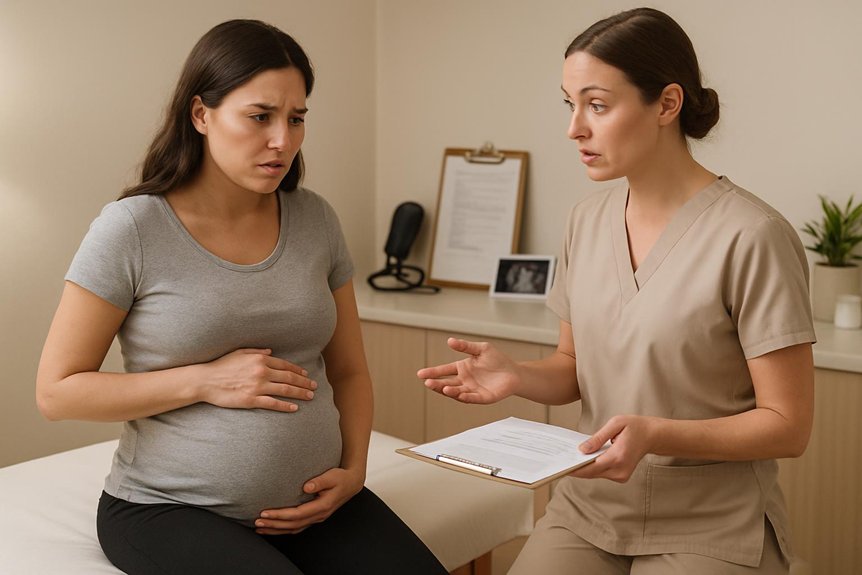
If symptoms do not resolve within minutes after adjusting, the session should pause and the client should seek medical advice.
Prior histories of low blood pressure, multiple pregnancy, or vena cava compression warrant extra support and shorter supine periods, if any.
When Can Back-Lying Still Be OK in Prenatal Massage?
Sometimes, lying on the back can still be appropriate during a prenatal massage when it is brief, comfortable, and clinically assessed as low risk for that individual.
It is most commonly considered in early pregnancy, or later on if the client has no dizziness, breathlessness, nausea, clamminess, or sudden anxiety when supine.
Short, symptom-free intervals may allow precise work on the neck, shoulders, chest, jaw, arms, and scalp—areas that often hold stress and benefit from nurturing touch.
At Spa & Massage clinics, therapists screen health history, monitor colour, breathing, and comfort, and keep communication continuous.
Back-lying is avoided if there is hypertension, pre-eclampsia risk, significant swelling, multiple pregnancy, or prior fainting episodes.
Comfort always governs duration.
How Do We Position You Safely for Prenatal Massage?

Back-lying can be appropriate in carefully selected cases, but positioning is usually adapted to protect circulation, breathing comfort, and overall ease as pregnancy progresses. At Spa & Massage, therapists assess trimester, bump size, symptoms, and medical guidance, then choose the most supportive setup.
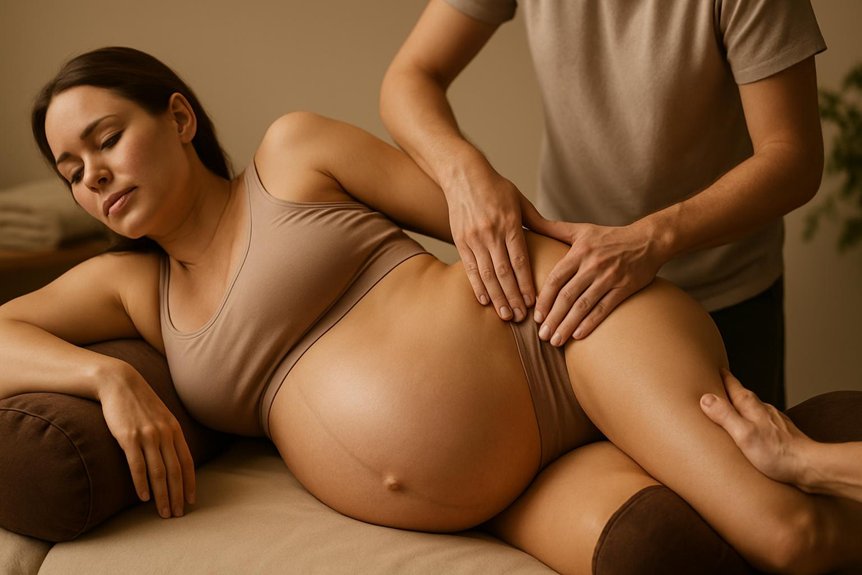
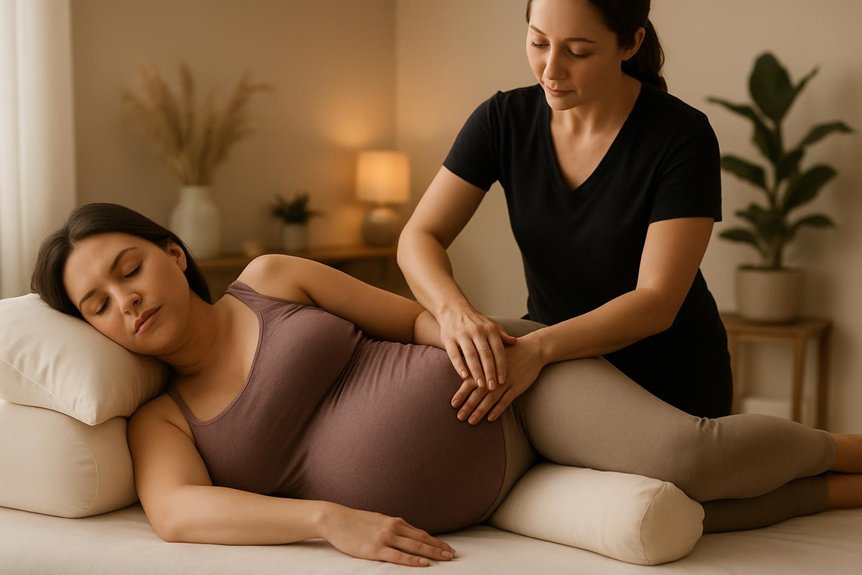
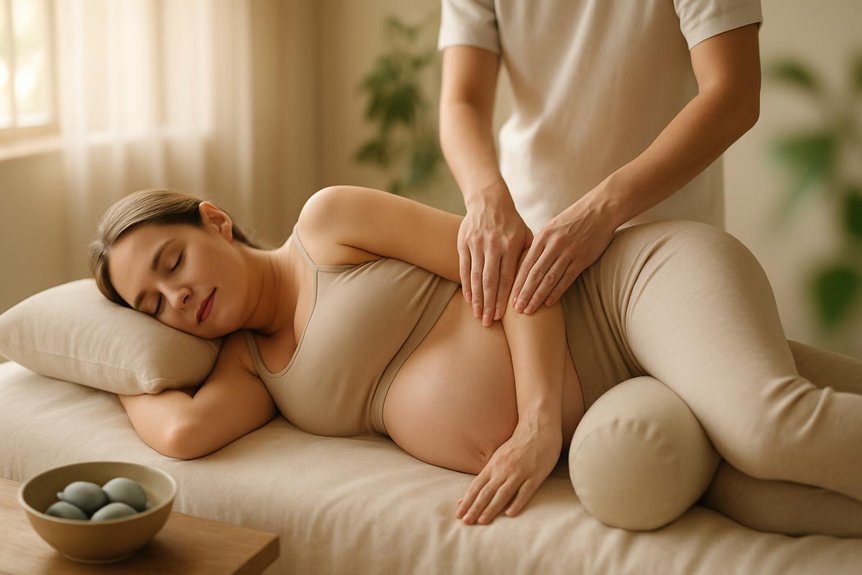
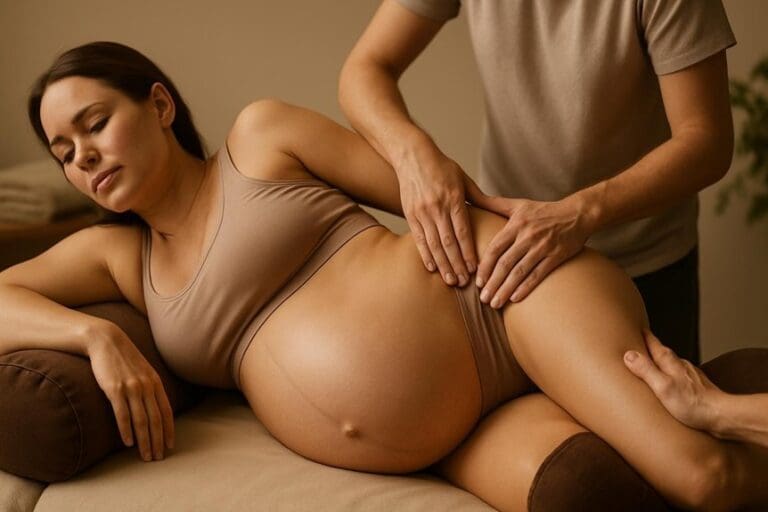
Most sessions use side-lying with cushions between knees and under the abdomen, keeping hips level and the spine relaxed.
When face-up work is desired, a semi-reclined angle is created with bolsters so the chest feels open and pressure is reduced; a small left-tilt may be added.
Arms are supported to soften shoulders and encourage closeness without strain. Positions are adjusted throughout, and clients are invited to speak up immediately if anything feels tight, breathless, or uncomfortable.
What Does Supine Hypotensive Syndrome Feel Like?
Supine hypotensive syndrome can feel like sudden lightheadedness, dizziness, nausea, clamminess, breathlessness, or faintness when lying flat on the back, most often later in pregnancy as the uterus can compress major blood vessels.
It typically eases quickly with a change of position—such as turning onto the left side—which is why Spa & Massage therapists monitor comfort and use supportive bolsters during prenatal massage.
Warning signs to act on include worsening dizziness, fainting, chest discomfort, severe shortness of breath, or feeling unwell that does not resolve promptly after repositioning.
Common Symptoms And Sensations
Often, supine hypotensive syndrome feels like a sudden wave of light‑headedness or faintness that comes on when a pregnant person is lying flat on their back, particularly in mid‑to‑late pregnancy.
They may notice nausea, dizziness, sweating, a sense of warmth, blurred vision, or clammy skin.
Some feel breathless, unusually restless, or “not quite right,” and may become pale or drowsy.
A rapid, fluttering heartbeat or a sudden drop in energy can occur, and symptoms typically ease promptly once the position changes.
At Spa & Massage, therapists treat these sensations as a clear cue to adjust support: gentle side‑lying or a small wedge under one hip, plus calm, steady breathing.
If symptoms persist, medical advice is recommended.
When It Typically Occurs
From around the mid‑second trimester onward, supine hypotensive syndrome is most likely to occur when a pregnant person lies flat on their back for several minutes, because the growing uterus can compress major blood vessels and reduce blood return to the heart.
It is often more noticeable later in pregnancy, when the uterus is heavier, and may be triggered sooner after a full meal, during dehydration, or in warm rooms that encourage blood pooling.
Some people notice it during sleep, yoga, or a massage if positioned fully supine for too long.
In Spa & Massage pregnancy sessions, therapists typically use supportive bolsters and a gentle left-tilt to minimise prolonged flat-back time, helping most clients stay comfortable while still receiving close, nurturing care.
Warning Signs To Act On
Because symptoms can come on quickly once major blood vessels are compressed, it helps to recognise the warning signs of supine hypotensive syndrome early.
It may feel like sudden light-headedness, dizziness, nausea, sweating, breathlessness, pallor, or a racing pulse, sometimes with faintness or an “uneasy” pressure in the chest.
Some people notice anxiety, blurred vision, or that they simply cannot get comfortable lying flat.
At Spa & Massage, therapists treat these as stop-now signals: the client is guided to roll onto the left side, supported with pillows, and encouraged to take slow breaths.
Symptoms often ease within minutes when the pressure is relieved.
Any chest pain, persistent shortness of breath, or fainting warrants urgent medical assessment.
Partners should stay close and help repositioning.
What Positions Are Safer Than Lying on Your Back?

Which positions are safer than lying flat on the back during a prenatal massage? Side-lying is generally preferred, especially after mid-pregnancy, because it reduces pressure on major blood vessels and can ease breathlessness or dizziness.
At Spa & Massage, therapists support the abdomen and hips with cushions, keeping the spine neutral and the body comfortably close to the table for a secure, cocooned feel.
A semi-reclined position is another evidence-informed option, using bolsters to elevate the upper body and maintain circulation while allowing soothing chest, neck, and arm work.
Short, well-supported back-lying may be used briefly when symptoms are absent. Any numbness, nausea, or lightheadedness warrants immediate repositioning.
Conclusion
Lying on the back during prenatal massage can be comfortable for some, but it is not always appropriate as pregnancy progresses. After mid‑pregnancy, prolonged supine positioning may compress major blood vessels and reduce circulation, so therapists often limit time or use a slight incline. Side‑lying with supportive pillows and bolsters is commonly safer and equally relaxing. If dizziness, nausea, or breathlessness occurs, position should change promptly—better safe than sorry.