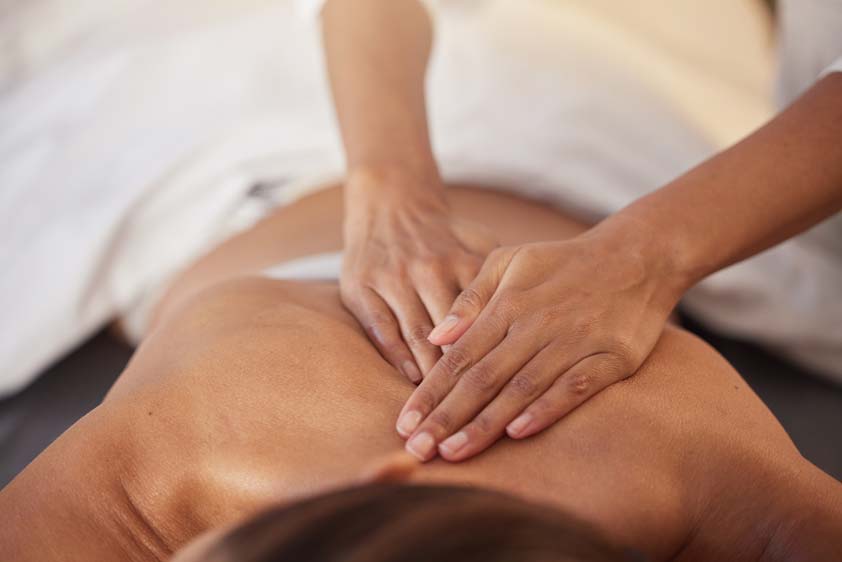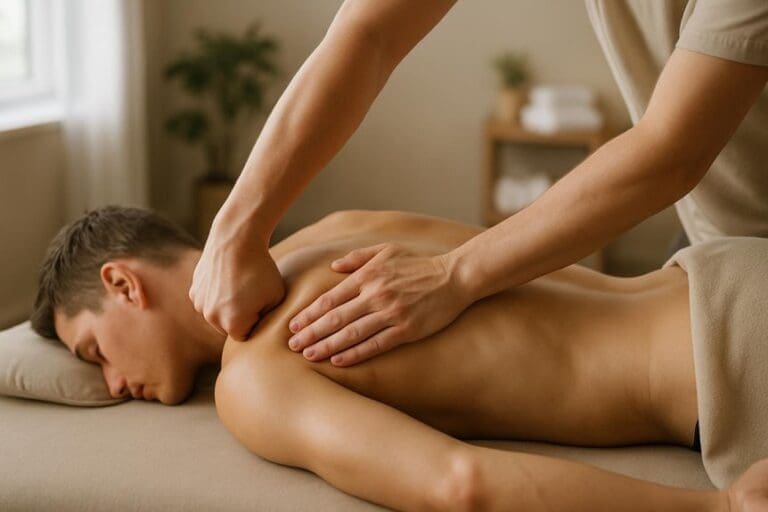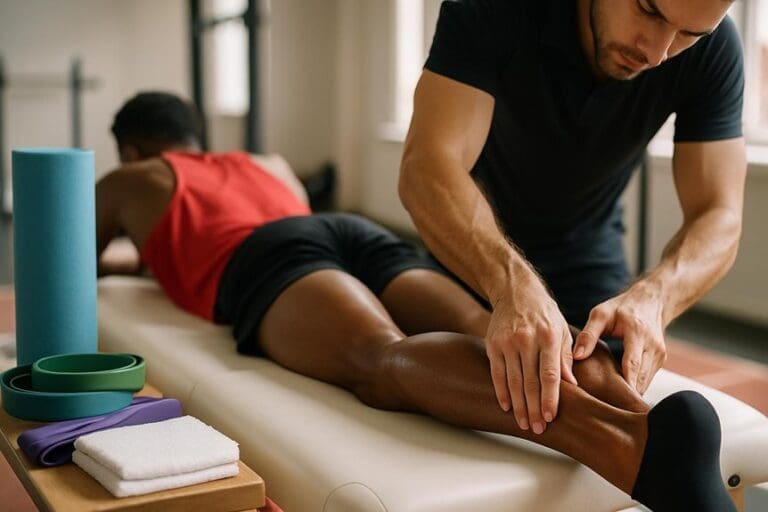
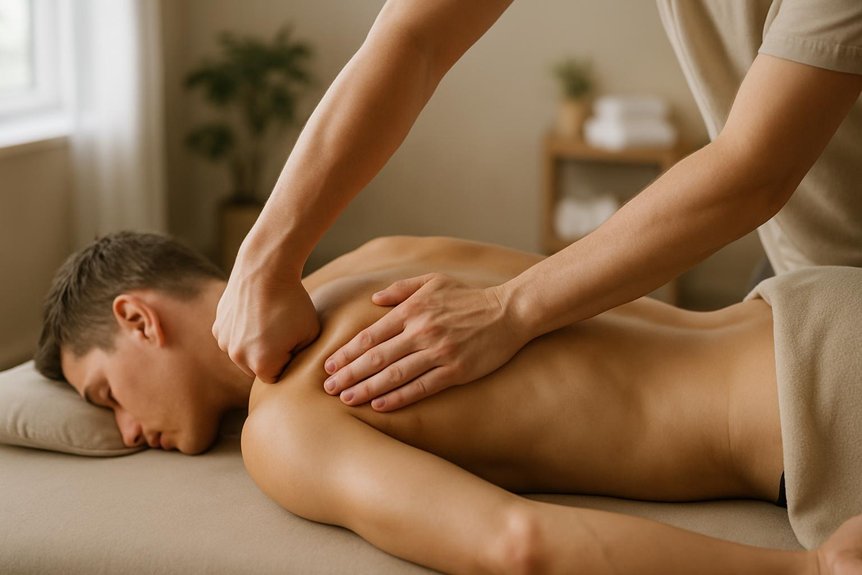
Intensive tissue massage can help posture by reducing myofascial tightness and excessive muscle tone that pull the body out of neutral alignment. Slow, firm, specific pressure may improve soft-tissue extensibility, circulation, and fascial glide, temporarily lowering pain and stiffness so upright positioning feels easier. Common targets include the pectorals, upper trapezius/levator scapulae, hip flexors, and lumbar tissues. Lasting change is gradual and typically requires mobility, strengthening, and ergonomic habits alongside treatment, with practical guidance ahead.
Does Intensive Tissue Massage Help Posture?
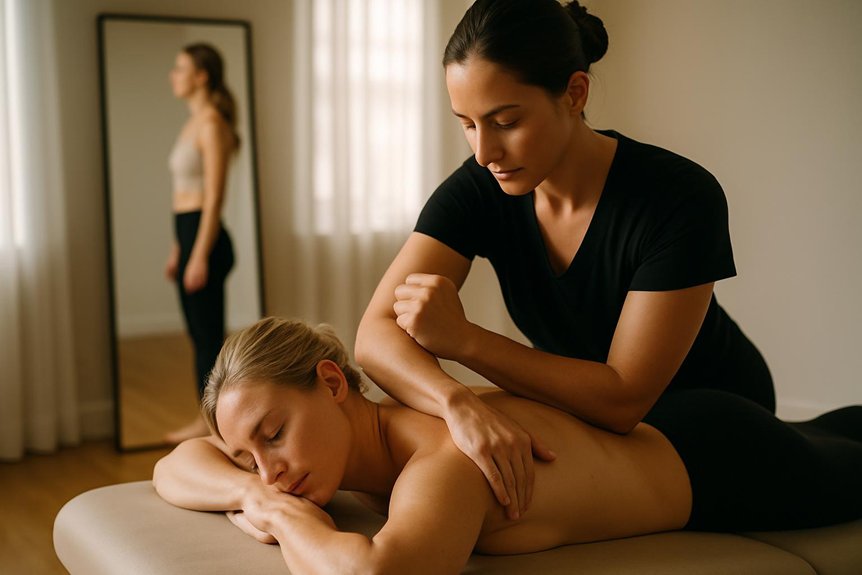
In many cases, deep tissue massage can support better posture by reducing myofascial tightness and muscle hypertonicity that contribute to common postural deviations (such as rounded shoulders or anterior pelvic tilt).
By improving soft‑tissue extensibility and local circulation, treatment may help clients tolerate more neutral alignment with less discomfort, especially when prolonged sitting or stress has increased guarding.
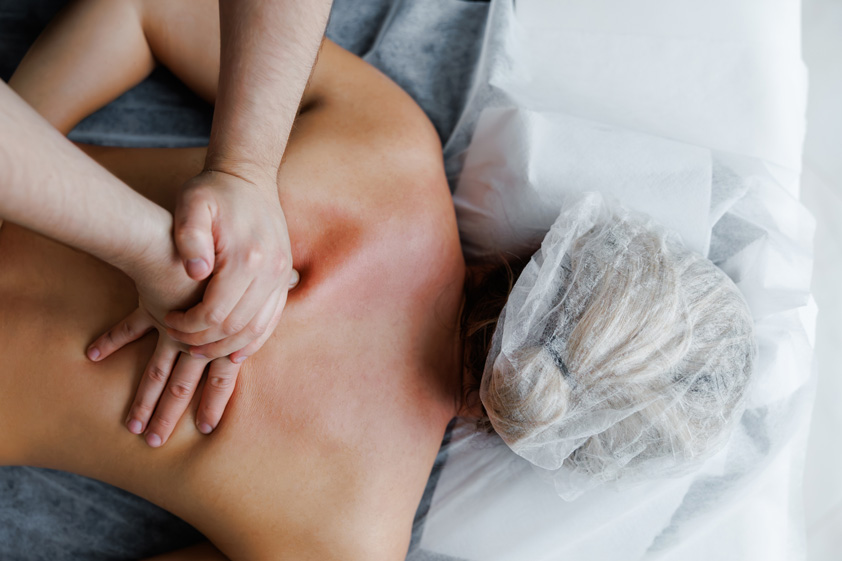
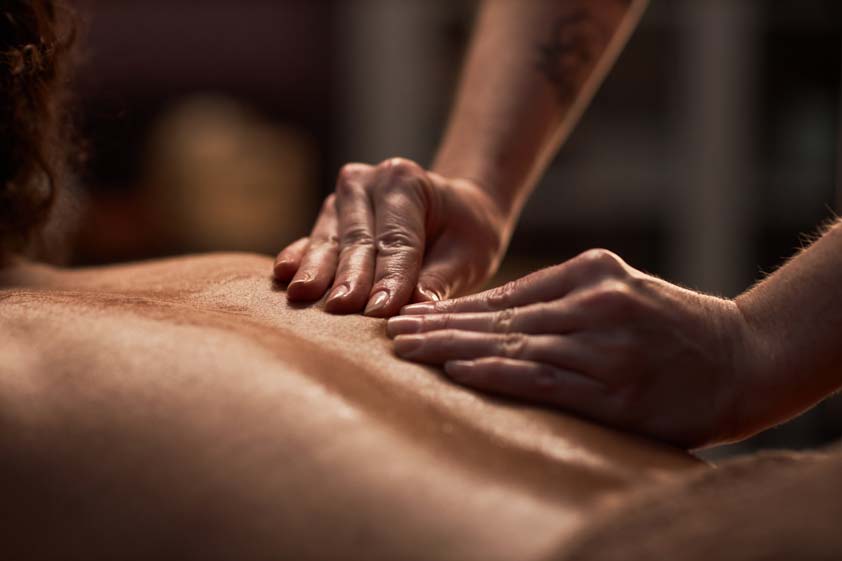
Deep tissue work uses slow, firm strokes to target deeper muscle layers and release built‑up tension that can restrict alignment.
Evidence suggests massage can reduce pain and perceived stiffness, which often improves movement quality and postural awareness.
At Spa & Massage clinics across London, therapists assess how symptoms present, then apply slow, specific pressure and guided breathing to calm protective tone while respecting sensitivity.
The most durable changes occur when sessions are paired with simple home mobility, ergonomic tweaks, and regular follow‑up.
Which Tight Muscles Commonly Distort Posture?
Postural distortion is frequently associated with adaptive muscle tightness, most commonly in the chest and anterior shoulders, the hip flexors and quadriceps, and the upper trapezius and levator scapulae.
When these tissues remain shortened—often with prolonged desk work, stress, or repetitive loading—they can contribute to forward-shoulder posture, anterior pelvic tilt, and elevated or protracted shoulder positioning.
At Spa & Massage, therapists assess these patterns and use targeted deep tissue and sports massage to reduce excessive tone while guiding clients on practical self-care to support more neutral alignment.
Chest And Front Shoulders
Across desk work, commuting, and gym routines, tightness in the chest and front shoulders commonly contributes to a rounded-shoulder, forward-head posture.
Clinically, shortened pectoralis major/minor and an overactive anterior deltoid can pull the shoulder girdle forward, limiting comfortable thoracic extension and altering scapular mechanics. This often feels like a guarded chest, neck strain, and reduced ease with overhead reach.
At Spa & Massage, therapists assess tissue tone, breathing pattern, and shoulder range, then use deep tissue and myofascial techniques to soften the pectorals and anterior shoulder while supporting sensitive structures.
Many clients benefit most when massage is paired with gentle doorway pec stretches, slow nasal breathing to reduce bracing, and post-session retraction drills to reinforce calmer alignment.
Hip Flexors And Quads
Lengthen the hip flexors and quadriceps, and pelvic alignment often changes measurably.
When these tissues stay shortened—commonly from prolonged sitting or high training loads—they can contribute to anterior pelvic tilt and increased lumbar extension, which may feel like a “stuck” low back or heavy hips.
Deep tissue and sports massage can reduce tone and tenderness in iliopsoas, rectus femoris, and TFL, improving hip extension and easing compensatory strain during standing and walking.
At Spa & Massage clinics, therapists assess gait, sitting habits, and pain patterns, then apply slow, specific pressure with mindful breathing to keep the nervous system settled.
Aftercare usually pairs gentle hip-flexor stretching with glute activation to help changes hold between sessions.
Upper Traps And Levator
While hip and pelvic mechanics influence the spine from below, many day-to-day postural distortions are reinforced from above by persistently overactive upper trapezius and levator scapulae.
When these muscles guard, they can elevate the shoulders, tip the neck into extension, and contribute to a subtly forward head position, often paired with tension headaches or a “shoulders up” feeling during stress.
Clinically, this pattern is commonly linked to prolonged laptop work, phone use, and bracing through the breath.
At Spa & Massage clinics, therapists assess shoulder height, scapular motion, and neck range, then use deep tissue and myofascial techniques to reduce tone while keeping pressure comfortable and consent-led.
Aftercare typically includes slow nasal breathing, gentle neck side-bends, and scapular depression drills.
How Does Intensive Tissue Massage Improve Posture?
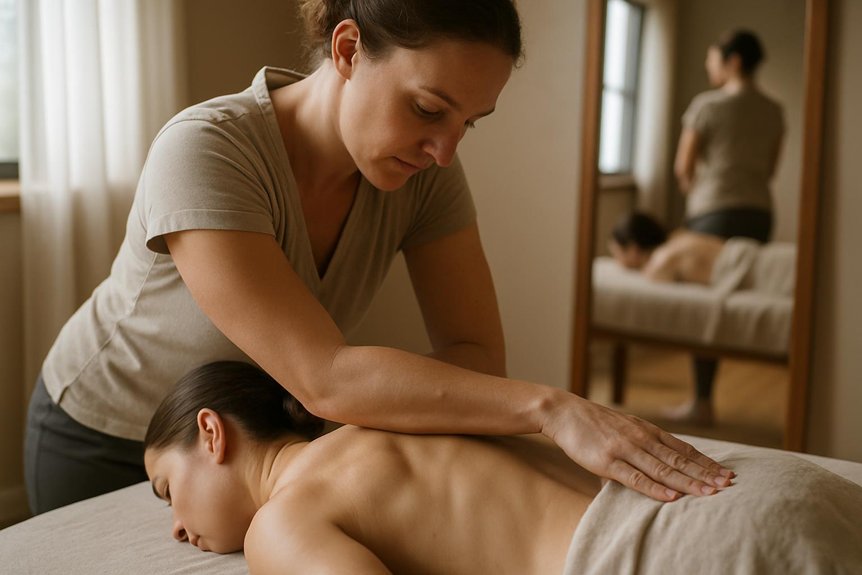
In clinical practice, intensive tissue massage can support postural improvement by reducing excessive muscle tone and myofascial restriction that pull the body out of neutral alignment. Targeted, slow pressure helps desensitise tender trigger points, improve local circulation, and restore glide between fascial layers, allowing joints to sit more efficiently.
This can enhance proprioceptive input, so the nervous system more readily “accepts” a calmer, upright position without bracing. At Spa & Massage clinics across London, therapists assess movement and breathing, then treat shortened chains and overworked stabilisers to decrease compensatory holding patterns.
Patients often report easier standing, smoother walking, and less fatigue during desk work. Best results occur when sessions are paired with gentle stretching, hydration, and brief posture cues between treatments.
Can Intensive Tissue Massage Fix Rounded Shoulders and Neck Tension?
With rounded shoulders and neck tension, intensive tissue massage can be a clinically useful component of correction, but it rarely “fixes” the problem in isolation. It can reduce protective tone and tenderness in the upper trapezius, levator scapulae, scalenes, pectoralis minor, and thoracic fascia, improving comfort and shoulder positioning in the short term.
At Spa & Massage clinics across London, therapists pair slow, specific pressure with breath-led cueing to help clients feel safe enough to let go, without chasing pain. Results are strongest when massage is combined with simple strengthening of mid-back and deep neck flexors, plus ergonomic changes. Clients should expect a gradual unwind: less pulling at the base of the skull, easier chest opening, and calmer breathing between sessions.
Can Intensive Tissue Massage Help Anterior Pelvic Tilt?
Anterior pelvic tilt is commonly associated with muscle imbalance—often increased tone in the hip flexors and lumbar extensors alongside reduced activation and strength of the abdominals and gluteals—which can contribute to discomfort and altered pelvic positioning.
At Spa & Massage, intensive tissue massage may support this pattern by targeting high‑tone tissues such as the iliopsoas, rectus femoris, and lumbar paraspinals to reduce protective tightness and improve tolerance to movement.
Meaningful, lasting change typically also requires mobility work and consistent posture habits, so treatment is best paired with practical guidance tailored to the client’s daily activities.
Muscle Imbalances And Tilt
Addressing muscle imbalances associated with anterior pelvic tilt often benefits from targeted soft-tissue work alongside corrective exercise. Clinically, tilt is frequently linked to overactive hip flexors and lumbar extensors, with under-recruited abdominals and gluteals, altering pelvic position and load through the low back.
It may help by reducing resting tone, tenderness, and protective guarding in shortened tissues, allowing more efficient movement and improved tolerance to strengthening. At Spa & Massage London clinics, therapists assess posture, breathing, and symptom behaviour, then tailor pressure to stay within a “good pain” range and protect sensitive structures.
Clients are guided to pair sessions with simple home drills, hydration, and heat-free recovery when irritation flares. Results are typically gradual, not instant.
Deep Tissue Release Targets
Deep tissue release targets for anterior pelvic tilt typically focus on shortening-prone tissues that bias the pelvis into forward rotation, particularly the iliopsoas and rectus femoris/hip flexor complex, lumbar erector spinae, quadratus lumborum, and often the tensor fasciae latae with associated lateral thigh fascia.
In Spa & Massage clinics, therapists assess pelvic position, tone, and tenderness, then apply slow, specific pressure with careful breath pacing to reduce guarding and improve tissue glide.
Work often includes psoas-accessible abdominal edging, hip flexor stripping, and lumbar fascial decompression, while respecting comfort and consent.
Evidence suggests manual therapy can temporarily reduce pain and stiffness, creating a window for easier neutral alignment.
When these tissues soften, clients commonly report less pull at the front hips and more ease standing.
Mobility And Posture Habits
Softening overactive hip flexors and lumbar tissues can make a more neutral pelvis feel attainable, but lasting change in pelvic position typically depends on what happens between sessions: daily mobility work and posture habits that reduce repeated hip-flexed sitting and improve lumbopelvic control.
Evidence suggests intensive tissue massage may lower tone and discomfort, supporting better movement practice, yet it does not “hold” alignment alone. At Spa & Massage clinics across London, therapists pair focused work on iliopsoas-adjacent tissues, rectus femoris, glutes, and paraspinals with simple homework: hip-flexor and quadriceps stretching, glute activation, and gentle core bracing during breathing.
Small habits matter—standing breaks every 30–45 minutes, hip-hinge sitting, and walking. When discomfort softens, clients often reconnect with their body, moving with quiet confidence and ease.
How Often Should You Book Deep Tissue for Posture?
Often, the most effective booking frequency for intensive tissue massage to support postural change depends on symptom severity, tissue irritability, and how consistently the client is also addressing movement habits between sessions.
At Spa & Massage, therapists typically suggest a short initial block: weekly sessions for 2–4 weeks when pain, guarding, or restriction is prominent, then tapering to every 2–3 weeks as tenderness settles and range improves.
For milder tension without significant pain, starting every 2–4 weeks may be sufficient.
If soreness lasts beyond 48 hours, bruising is frequent, or symptoms flare, a longer interval and lighter pressure are advised.
Reviews at each visit guide pacing, with consent, comfort, and the nervous system’s response prioritised throughout.
How Do You Keep Posture Gains After Intensive Tissue Massage?
After a deep tissue session, postural improvements are best maintained by reinforcing new range and muscle tone with consistent movement habits, targeted strengthening, and ergonomic adjustments rather than relying on massage alone.
Spa & Massage therapists advise gentle mobility the same day (neck rotations, thoracic extensions, hip flexor opening) to “teach” tissues their new length without provoking soreness.
Within 24–48 hours, low-load strength work sustains alignment: deep neck flexor holds, scapular retraction, glute bridges, and anti-rotation core drills, progressed gradually.
Consistent micro-breaks (every 30–45 minutes) and workstation changes—screen at eye level, lumbar support, feet grounded—reduce relapse.
Hydration and sleep support recovery.
Many clients schedule follow-up sessions to reassess asymmetry, ease protective tension, and refine home cues for comfort and confidence.
Conclusion
It can support posture by reducing myofascial tightness, improving joint range, and easing pain that reinforces protective slumping. It rarely “corrects” alignment alone; lasting change typically requires strengthening, movement retraining, and ergonomic adjustment. When targeting common restrictions in the pectorals, upper trapezius, hip flexors, and lumbar tissues, treatment may make upright positioning feel more attainable. Used consistently, it functions like loosening a knotted rope—creating slack for better mechanics and comfort.