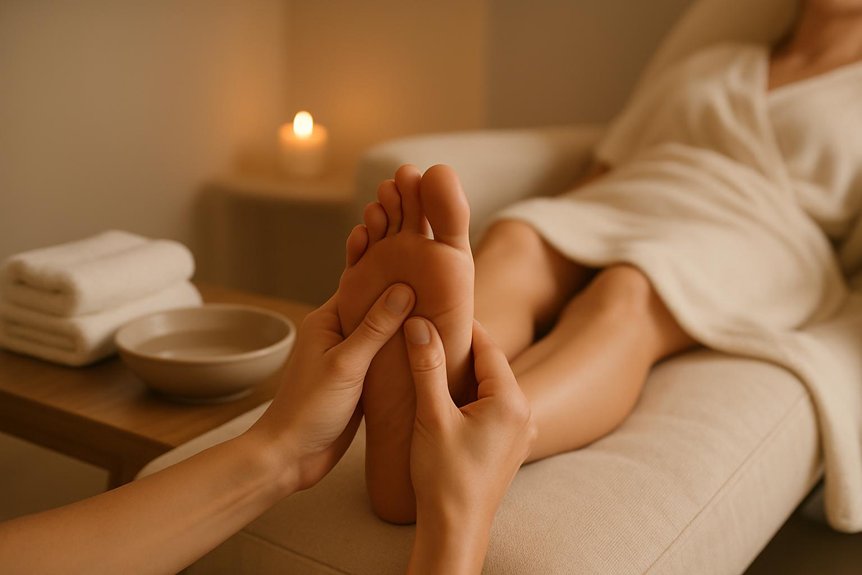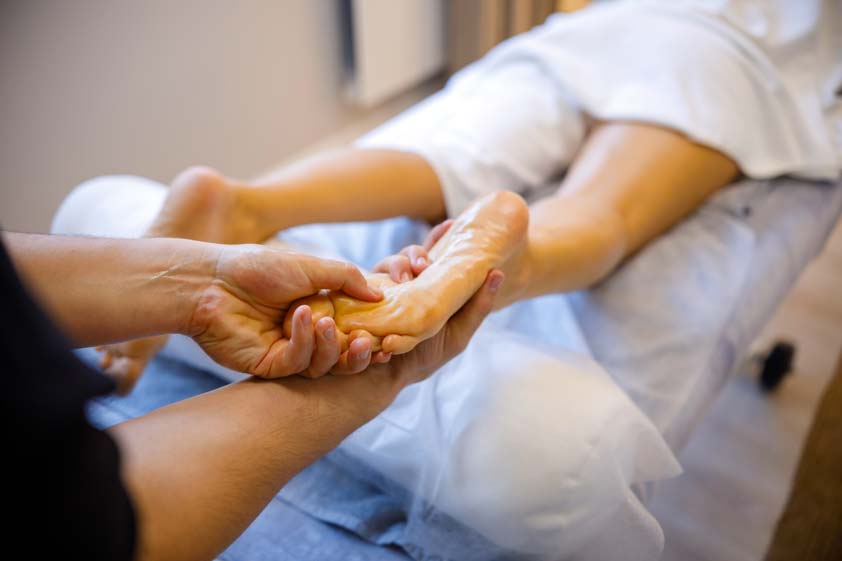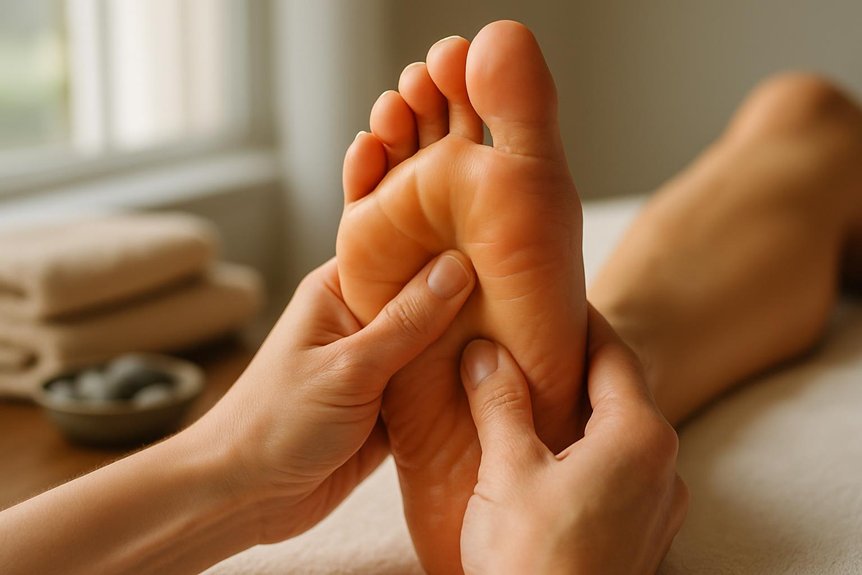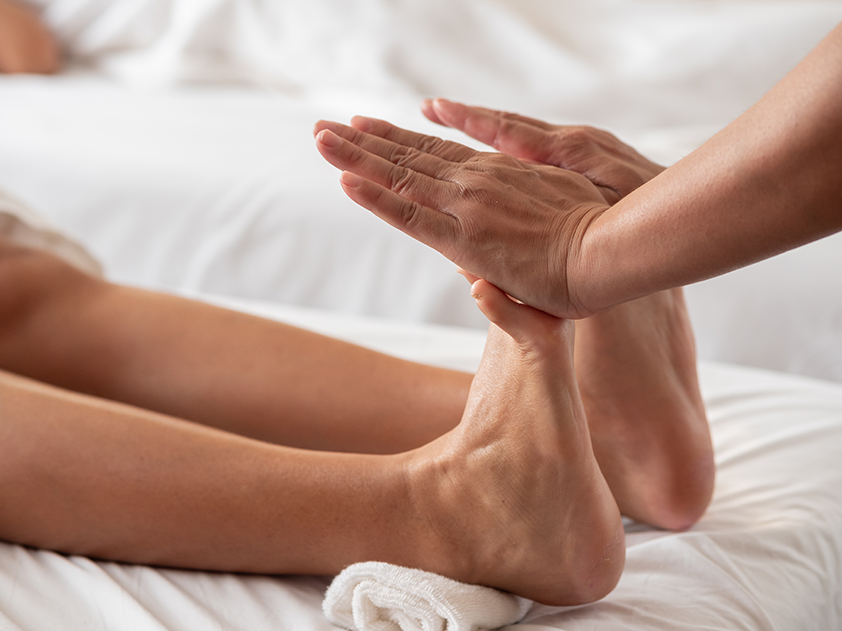
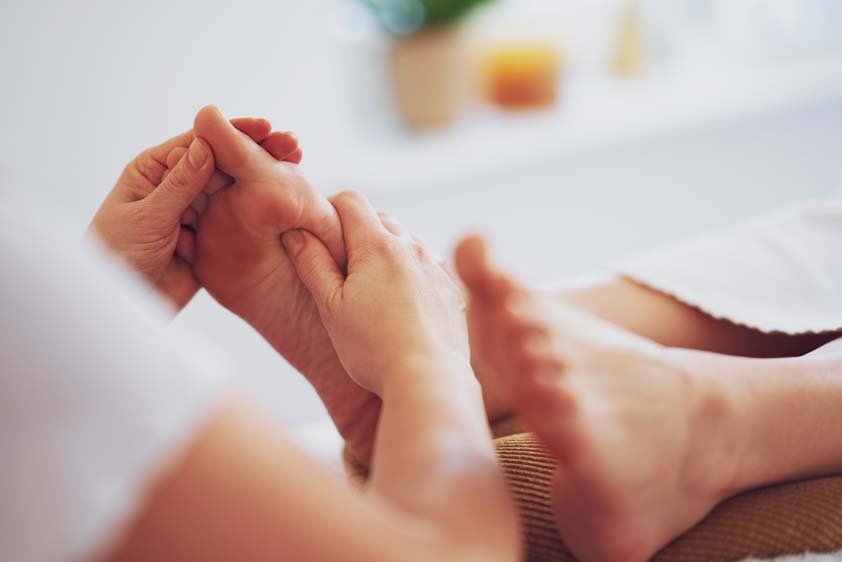
It is not meant to hurt, and most people feel firm, controlled pressure rather than sharp pain. Common sensations include a “good ache,” brief tenderness that eases, warmth, tingling, or a spreading pulse that can travel through the foot or leg. Practitioners typically aim for a comfortable 4–6 out of 10 and adjust immediately if sharp, burning, or breath-holding occurs. Certain conditions or injuries can increase sensitivity, and more guidance follows.
Does It Hurt? Usually It Shouldn’t
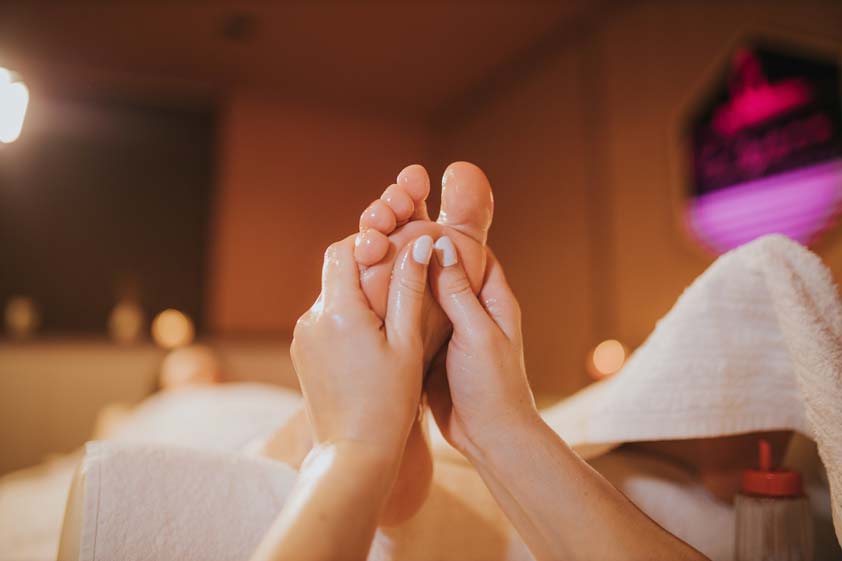
It rarely “hurts” in the way people associate with injury or harsh pressure; when delivered by a trained therapist, it is typically experienced as a firm, controlled sensation rather than pain. For most clients, discomfort is a sign to adjust, not to push through.
At Spa & Massage clinics across London, therapists begin with a brief consultation, checking health history, sensitivities, and comfort preferences to keep the session safe and soothing. Many people seek reflexology because they want to discover the healing power of targeted touch. Research on touch-based therapies suggests that perceived pain can reduce relaxation and may limit therapeutic benefit, so treatment is adapted in real time.
If a client feels sharpness, lingering soreness, or anxiety, the therapist should ease off and reassess positioning, pacing, and contraindications. Comfort and trust remain central throughout.
What It Should Feel Like (Pressure, Sensations, Intensity)
Pressure is typically applied from light to firm and should feel purposeful and tolerable, with Spa & Massage therapists adjusting intensity to the client’s comfort and feedback.
Common sensations include warmth, gentle aching, tenderness in specific points, or a deep sense of relaxation, while sharp pain, numbness, or lingering discomfort are not expected.
If intensity feels too much at any point, it is an appropriate signal to reduce pressure, change technique, or pause to keep the treatment safe and effective.
Pressure Levels Explained
Expect a firm, steady pressure rather than sharp pain—most sessions feel like a “good” intensity that is strong enough to be effective while still comfortable.
Pressure is typically built gradually, guided by continuous check-ins and the client’s breathing, so the body can soften rather than brace.
At Spa & Massage clinics across London, therapists match pressure to individual preference, tissue sensitivity, and treatment goals.
Light pressure suits first-time clients, pregnancy, or heightened tenderness; moderate pressure supports relaxation and circulation; deeper pressure is reserved for those who tolerate it well and want more targeted work.
Evidence-informed practice emphasises that beneficial zone therapy does not require pain; sustained, tolerable pressure supports relaxation responses.
Clients should feel safe to ask for less or more at any point.
Common Sensations During Treatment
Pressure may be adjusted throughout a session, so the sensations can shift from moment to moment without ever needing to become painful. Most clients notice a steady, reassuring compression, gentle warmth, or a pleasant “good ache” as the therapist works through the feet.
Brief tenderness can appear on specific areas, often easing after a few seconds as the tissue relaxes. Some people feel tingling, pulsing, or a spreading sensation that travels through the foot or up the leg, alongside deep relaxation and slower breathing.
Others experience subtle emotional softening, like a quiet release. At Spa & Massage clinics across London, therapists aim for clear, grounded pressure that feels nurturing, not forcing, with regular check-ins to keep intensity within a comfortable, intimate range.
When Intensity Feels Too Much
When does zone therapy cross the line from “therapeutic” into too intense?
Healthy pressure feels purposeful: a “good ache,” warmth, tingling, or brief tenderness that softens with slower breathing. It should never feel sharp, burning, electric, or like the foot is being “braced against.” Intensity that makes someone hold their breath, clench, withdraw the foot, or feel nauseous is a clear cue to reduce pressure.
Evidence-informed practice recognises that comfort supports parasympathetic relaxation, which is central to zone therapy’s calming effect. At Spa & Massage clinics across London, therapists invite a simple 0–10 scale and adjust immediately—lighter, broader contact, shorter holds—so the work stays intimate, safe, and effective.
Afterward, mild tenderness is acceptable; lingering pain is not.
Why Some Reflex Points Feel Tender
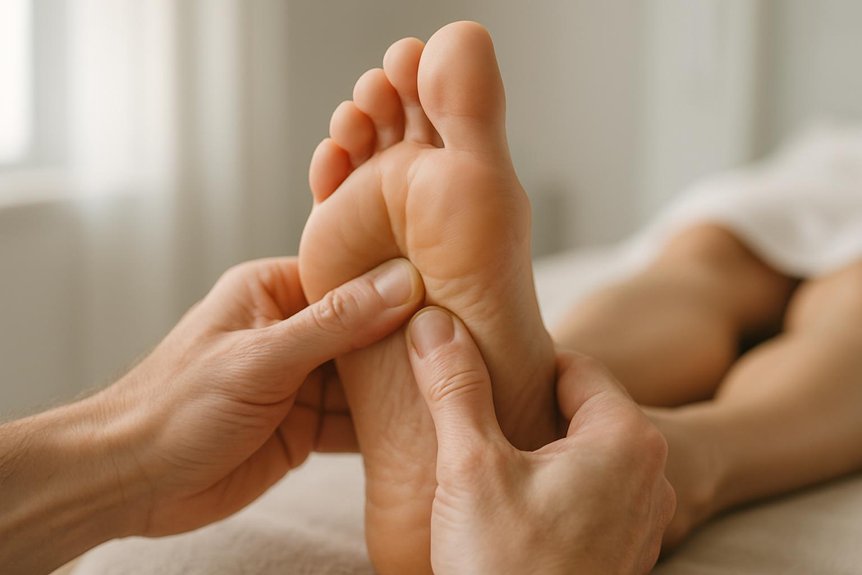
In this therapy, certain points may feel tender because the underlying tissues are more sensitive that day, often due to local muscle tension, mild inflammation, reduced circulation, or heightened nervous-system response.
Areas of the feet and hands also vary in skin thickness and nerve density, so pressure can register more sharply in some zones. Recent activity—long walks, tight footwear, standing commutes, or sport—may leave fascia and small muscles guarded, increasing sensitivity.
Stress and poor sleep can amplify pain signalling, making otherwise comfortable touch feel intense. Hydration status and temperature may influence tissue pliability as well.
At Spa & Massage clinics across London, therapists interpret tenderness as feedback, adjusting pressure, pace, and holds to maintain comfort while supporting relaxation and a sense of being safely held.
Is It “Good Pain” or Too Much? How to Tell
In reflex therapy, a mild, “productive” discomfort is typically felt as a manageable tenderness that eases with steady breathing and does not linger, whereas sharp, burning, or escalating pain can indicate the pressure is excessive.
Warning signs include involuntary tensing, withdrawal of the foot, numbness, tingling, bruising, or soreness that persists beyond 24–48 hours.
At Spa & Massage, clients are encouraged to speak up immediately using a simple 0–10 comfort scale so the therapist can adjust pressure, technique, or timing to keep the treatment both safe and effective.
Good Discomfort Vs Pain
It often creates a “good discomfort” as pressure is applied to sensitive points in the feet, but there is a clear line between productive intensity and pain that signals the body is guarding.
Helpful intensity tends to feel like a “sweet spot”: strong, specific pressure that remains steady, eases with slow breathing, and leaves the area feeling warmer or looser afterward. Pain, by contrast, is often sharp, escalating, or distracting, pulling attention away from relaxation and making it hard to stay present.
At Spa & Massage clinics across London, therapists use a pain scale and invite clients to describe sensations in real time, adjusting depth and pace to keep work therapeutic. The aim is comfort with purpose, not endurance.
Signs Pressure Is Excessive
Knowing the difference between helpful intensity and pain is only half the picture; the next step is recognising when pressure has crossed the line into something counterproductive.
Excessive pressure is suggested by sharp, stabbing, or burning sensations; involuntary flinching or pulling the foot away; or a reflex urge to hold the breath or tense the jaw. Pain that lingers, throbs, or worsens after the point is released is another red flag, as is bruising, swelling, numbness, pins-and-needles, or reduced circulation (cold, pale toes). A client may also feel emotionally “flooded” rather than safely relaxed.
At Spa & Massage clinics across London, therapists look for softened breathing, warmth, and a sense of release—signals the body is responding, not defending.
How To Speak Up
Between comfort and overload lies a narrow, personal threshold, so clients are encouraged to speak up the moment a sensation shifts from “productive pressure” to pain.
“Good” intensity in reflex therapy is typically strong yet controllable—breathing stays steady, the body remains relaxed, and the discomfort eases quickly when the therapist reduces pressure—whereas “too much” feels sharp, burning, or makes the person tense, hold their breath, or want to pull the foot away.
At Spa & Massage clinics across London, therapists invite clear, simple cues: “lighter,” “hold there,” “that’s tender,” or “stop.”
A 1–10 scale helps; aiming for 4–6 supports therapeutic work without guarding.
If soreness lingers or bruising appears, pressure should be adjusted next time.
Comfort and trust guide outcomes.
Who May Find It Painful (and When to Avoid It)
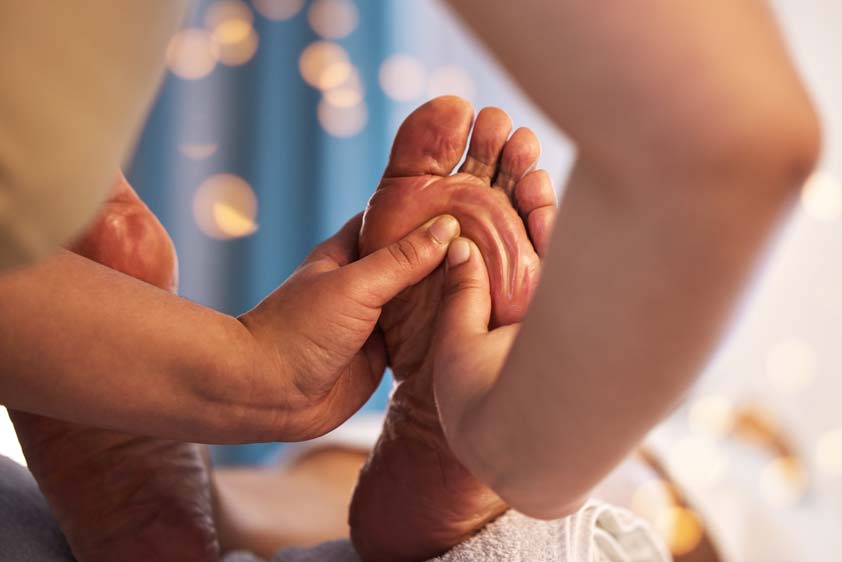
In certain situations, foot pressure work can feel uncomfortable or even painful, particularly for people with acute inflammation, recent injury, nerve sensitivity (such as peripheral neuropathy), or conditions that lower pain tolerance, and it may be unsuitable when there are open wounds, skin infections, severe swelling, suspected deep vein thrombosis, or an unstable medical condition.
People with plantar fasciitis flare-ups, gout, bruising, fractures, or post-surgical healing may experience sharp tenderness. Those with diabetes or reduced sensation may not reliably gauge pressure, increasing risk of irritation.
Pregnancy is not automatically a contraindication, yet clients with complications, high blood pressure, or a history of clotting should seek medical clearance. In Spa & Massage clinics, therapists may request GP guidance for complex conditions and may postpone treatment when safety, comfort, or healing could be compromised.
How We Keep It Comfortable in Our Clinics
To keep it comfortable, Spa & Massage therapists begin by evaluating the client’s health history, current foot sensitivity, and pressure preferences, then tailor technique accordingly.
In London clinics across Crouch End, Bayswater, Chiswick, Earl’s Court, Belsize Park, and Richmond, sessions start slowly, allowing the nervous system to settle before deeper work is attempted. Pressure is built in small, consent-led increments, with check-ins that invite honest feedback without awkwardness.
When tender points appear, therapists soften contact, adjust angle, or use broader thumb-and-finger techniques to reduce intensity while maintaining therapeutic intent. Warm towels, supportive bolstering, and a calm pace help the feet relax and feel safely held.
Clear boundaries and attentive draping preserve comfort, privacy, and trust throughout.
Therapy Aftercare If Your Feet Feel Sore
Post-session foot soreness after reflex therapy is usually mild and short-lived, particularly when deeper work has been done on tender areas or when the feet are naturally sensitive. At Spa & Massage clinics, therapists advise clients to treat this as a normal “worked tissue” response, similar to gentle post-exercise tenderness.
For 24–48 hours, clients are encouraged to drink water, keep feet warm, and avoid long walks, high heels, or intense training. A warm bath, light stretching of calves and arches, and slow self-massage with a small amount of oil can soothe sensation and support circulation. If swelling, sharp pain, bruising, numbness, or worsening discomfort occurs, professional advice should be sought; a lighter pressure plan can be agreed at the next visit.
Conclusion
It is typically experienced as a steady, reassuring pressure—like warm hands smoothing tension from the soles—rather than pain. Brief tenderness may surface where tissues are tight or sensitised, but it should remain tolerable and responsive to adjustment. Skilled therapists monitor comfort closely, tailoring depth and technique to individual sensitivity and health status. When clients communicate clearly and follow simple aftercare, any post-treatment soreness usually fades quickly, leaving feet feeling lighter, calmer, and grounded.