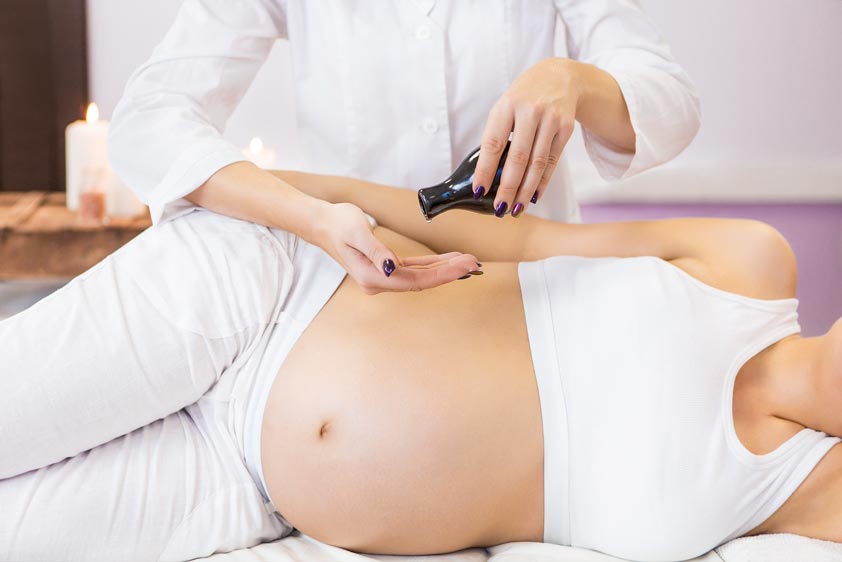
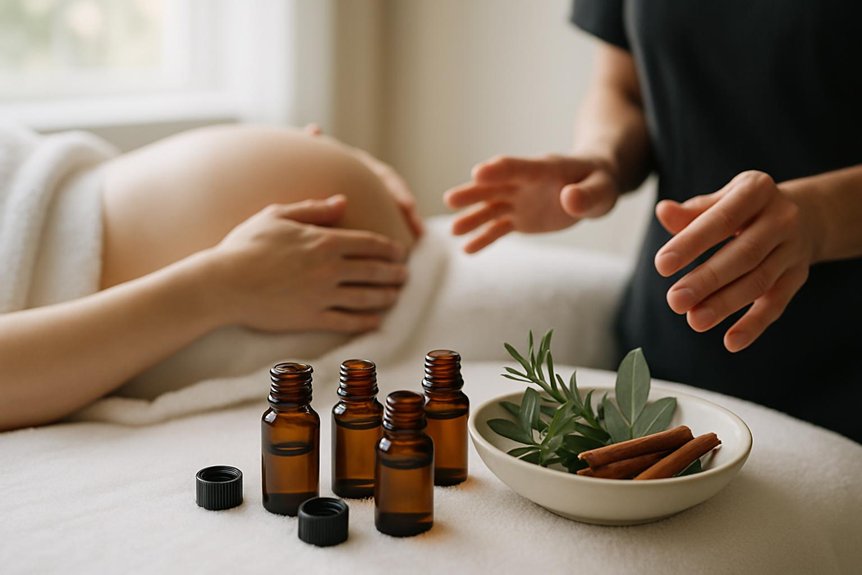
In prenatal massage, essential oils most commonly avoided include clary sage, rosemary, juniper berry, thyme, basil, and strongly emmenagogue oils such as pennyroyal, due to concern about uterine‑stimulating effects. Oils with hormone‑like activity, including clary sage, fennel, aniseed/star anise, and sage, are also typically avoided. “Hot” or irritating oils such as cinnamon, clove, oregano, black pepper, ginger, and lemongrass may trigger skin reactions or nausea. Further guidance covers safer alternatives and dilution.
Essential Oils to Avoid in Prenatal Massage
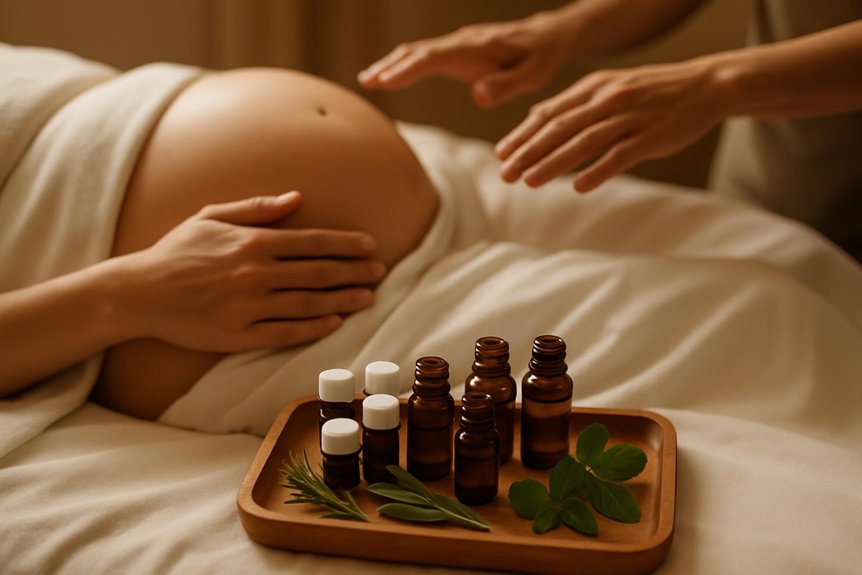
Why do certain essential oils need extra caution during prenatal massage? During pregnancy, skin absorption, scent sensitivity, and individual medical factors can change, so Spa & Massage therapists treat aromatherapy as a clinical choice, not a lifestyle add‑on. Prenatal massage can support comfort and relaxation, which is one of the core benefits of pregnancy massage for expecting mothers.
In prenatal massage, oils typically avoided include clary sage, rosemary, juniper berry, cinnamon bark, thyme, oregano, wintergreen, and peppermint (especially later in pregnancy), plus high‑aldehyde or “hot” oils that may irritate skin. Because blends vary, product labels and dilution matter as much as the plant name.
In Spa & Massage clinics, therapists prioritise fragrance‑free carriers or gentle, low‑dose alternatives, and they invite clients to share trimester, symptoms, and any history of miscarriage, hypertension, asthma, or migraines before selecting any aroma.
Why Some Oils Are Unsafe in Prenatal Massage
Some essential oils are considered unsuitable in prenatal massage because their active constituents can produce physiological effects that are unhelpful—or potentially risky—during pregnancy.
Certain chemotypes may stimulate uterine activity, alter blood pressure, or increase skin sensitivity as hormonal shifts make reactions more likely.
Others contain compounds linked with neurotoxicity or anticoagulant effects when absorbed, especially if used undiluted or over large areas.
Evidence is limited and varies by dose, route, and individual health history, so a precautionary approach is widely recommended.
At Spa & Massage clinics across London, therapists prioritise comfort and informed consent, using low dilutions and pregnancy-appropriate carrier oils, and adapting aroma choices to nausea, headaches, and scent aversions for a calm, close, nurturing experience.
First Trimester: Essential Oils We Avoid
In the first trimester, Spa & Massage takes a precautionary, evidence-informed approach and limits essential oil use because early pregnancy is a period of heightened sensitivity and lower risk tolerance.
In their prenatal massage treatments, therapists routinely avoid oils most often linked with uterine stimulation, hormone-like activity, or higher irritation potential, and they screen for medical history, symptoms, and scent tolerance before any aromatherapy is considered.
When fragrance is requested, they use gentle, low-allergen alternatives at conservative dilutions—or choose unscented carrier oils—to prioritise comfort and safety.
First-Trimester Safety Approach
Although many essential oils are marketed as “natural,” the first trimester is treated as a high‑caution period in which Spa & Massage avoids oils with higher perceived risk of uterine stimulation, hormonal effects, or increased sensitisation.
Because early pregnancy is also when nausea and scent aversion are common, therapists prioritise gentle, low‑odour options and keep any aromatic exposure minimal.
In practice, this means a thorough intake at each London clinic, checking medical history, medications, allergies, and any prior reactions.
Patch testing may be used for sensitive clients, and diffusion is avoided in enclosed rooms.
When aromatherapy is requested, dilution is kept conservative and applied away from the abdomen, with comfort checked frequently.
The aim is calm, nurturing touch without unnecessary chemical load.
Oils We Routinely Avoid
Given the heightened caution used in the first trimester, Spa & Massage follows a clear “avoid list” for aromatherapy to reduce exposure to oils most often flagged in clinical aromatherapy and maternity massage guidance for potential uterotonic activity, endocrine effects, or higher sensitisation risk.
In practice, therapists routinely avoid clary sage, rosemary, juniper berry, fennel, aniseed, cinnamon bark, clove bud, thyme (thymol), oregano, and wintergreen. Many clinics also exclude peppermint in early pregnancy due to nausea variability and sensitivity. Strongly emmenagogue oils such as parsley seed and pennyroyal are not used at all.
Where a client has a history of asthma, migraines, dermatitis, or hyperemesis, the list is widened and fragrance intensity reduced. Every appointment includes consent, patch-awareness, and symptom check-ins throughout.
Gentle Alternatives We Use
For first‑trimester clients who still want an aromatherapy element, Spa & Massage therapists typically prioritise ultra‑low dilutions and a short list of gentle, well‑tolerated essential oils selected for calming support rather than strong physiological effects. When suitable, they may choose lavender (Lavandula angustifolia), mandarin, sweet orange, or frankincense in a carrier oil, keeping total dilution around 0.5% and avoiding prolonged inhalation. Therapists patch‑check preferences, consider nausea triggers, and offer an unscented option at any time.
In Spa & Massage clinics across London, the emphasis stays on comfort: slow, nurturing strokes, grounding touch, and careful positioning. If scent feels too much, warmth, breath‑led relaxation, and simple plant oils can create the same intimate, held feeling safely.
Oils We Avoid for Uterine-Stimulating Effects
In pregnancy, particular caution is taken with essential oils known for uterine-stimulating (emmenagogue) effects, because even small amounts may theoretically increase uterine activity and are thus avoided as a safety-first measure.
In prenatal massage, Spa & Massage therapists consequently avoid oils commonly cited for this property, including clary sage, rosemary, thyme, basil, cinnamon bark, cassia, juniper, and pennyroyal.
While robust human evidence is limited, professional aromatherapy safety guidance errs on non-exposure, especially in the first trimester, with any history of bleeding, cramping, or miscarriage, or where medical risk is present.
Clients seeking a close, nurturing experience are supported with unscented carrier oils or very mild, pregnancy-appropriate aromas, and therapists always check preferences, sensitivities, and midwife or GP advice.
Oils We Avoid for Hormone-Like Effects
Beyond oils avoided for potential uterine stimulation, pregnancy aromatherapy also takes a cautious approach to essential oils with hormone-like (oestrogenic or endocrine-modulating) activity, as these may theoretically influence hormonal signalling even at low exposure.
In practice, Spa & Massage tends to avoid clary sage, fennel, aniseed, star anise, and sage during prenatal massage, as these are commonly cited for possible oestrogenic activity.
Tea tree and lavender are sometimes discussed in this context; rather than assuming risk, the clinic’s approach is conservative: they are used only when a client’s history is reassuring, dilution is minimal, and inhalation is limited.
Therapists prioritise comfort, consent, and alternatives, often choosing unscented carrier oils to keep touch nurturing, predictable, and safe for sensitive stages.
Hot” Oils That Can Irritate Pregnancy Skin
Pregnancy skin can sometimes become more reactive, making so‑called “hot” essential oils—those that feel warming, tingling, or strongly stimulating—more likely to cause irritation or sensitisation. Common examples include cinnamon bark or leaf, clove bud, oregano, thyme, black pepper, ginger, and lemongrass, which contain higher levels of skin‑active constituents linked with contact dermatitis in susceptible people. Even at low dilution, friction from massage can intensify the sensation and leave skin feeling flushed, itchy, or tender.
At Spa & Massage, therapists prioritise comfort and safety by avoiding these oils in prenatal massage and choosing gentle, well‑tolerated alternatives, always patch‑aware and conservatively diluted. Clients are encouraged to mention eczema, allergies, or heightened sensitivity so the blend can be personalised.
Nausea in Pregnancy: Scents We Avoid and Use
Why can certain aromas feel soothing one day and overwhelming the next when nausea is present? In early pregnancy, heightened smell sensitivity and fluctuating hormones can amplify responses to fragrance, especially rich, sweet, or “spicy” oils.
At Spa & Massage, therapists consequently avoid strong blends and commonly nausea-triggering scents such as peppermint, clove, cinnamon, and intense florals when a client reports queasiness. Even generally popular aromas can feel intrusive in a close, warm room.
Instead, therapists use only if welcomed: minimal, well‑diluted, gentle notes and plenty of unscented options, keeping exposure brief and allowing the client to change their mind at any moment. Consent, ventilation, and immediate scent removal remain central to comfort and safety throughout.
Pregnancy-Safe Alternatives We Use in Clinic
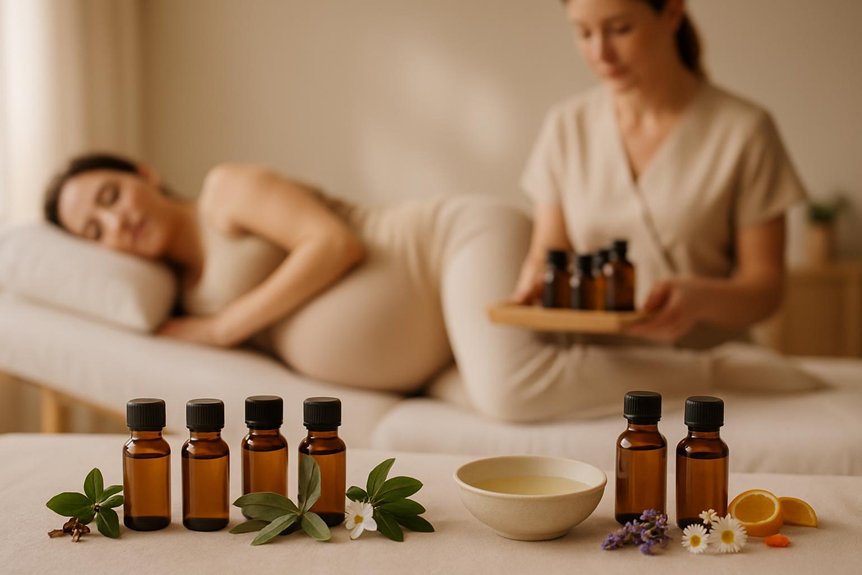
When fragrance is appropriate, Spa & Massage clinics prioritise either unscented carrier oils or very lightly diluted, low-intensity options chosen for broad tolerability and close monitoring.
In prenatal massage, therapists often use simple, skin-friendly bases such as grapeseed, sunflower, or fractionated coconut, selected for glide, low odour, and minimal irritation risk.
If a client requests a gentle scent, Spa & Massage may choose calming, familiar notes that are widely considered low-risk in pregnancy when used conservatively, such as lavender or sweet orange, and only when there is no history of sensitivity, asthma, or scent-triggered nausea.
For congestion or fatigue, non-aromatic comfort measures—warm compresses, paced breathing, and supportive positioning—are typically preferred to stronger essential oils.
How We Dilute and Patch-Test Oils Safely
Even low-intensity scents that are generally considered well tolerated can irritate sensitive skin or trigger nausea if the blend is too strong, so Spa & Massage clinics control risk through conservative dilution and simple patch-testing protocols.
For prenatal massage, therapists typically keep essential oils at 0.5–1% in a neutral carrier, adjusting lower for first trimester sensitivity or fragrance aversion. Blends are measured precisely, never “eyeballed,” and only applied after informed consent and a brief health check.
Patch-testing is offered when a client is new to aromatherapy or has eczema, allergies, or reactive skin: a diluted drop is placed on the inner forearm, covered, and checked after 20–30 minutes and again later. Any redness, itch, or headache means the oil is avoided.
Conclusion
It can soothe—yet aromatherapy requires restraint. In clinic, therapists avoid oils associated with uterine stimulation, hormone-like activity, sensitisation, or “hot” irritation, particularly in the first trimester. Scents that commonly trigger nausea are also minimised, while well-tolerated options are used only when appropriate. Like a soft light in a dark room, careful dilution and patch-testing guide safe choices. When in doubt, unscented massage remains the most conservative, client-centred approach.