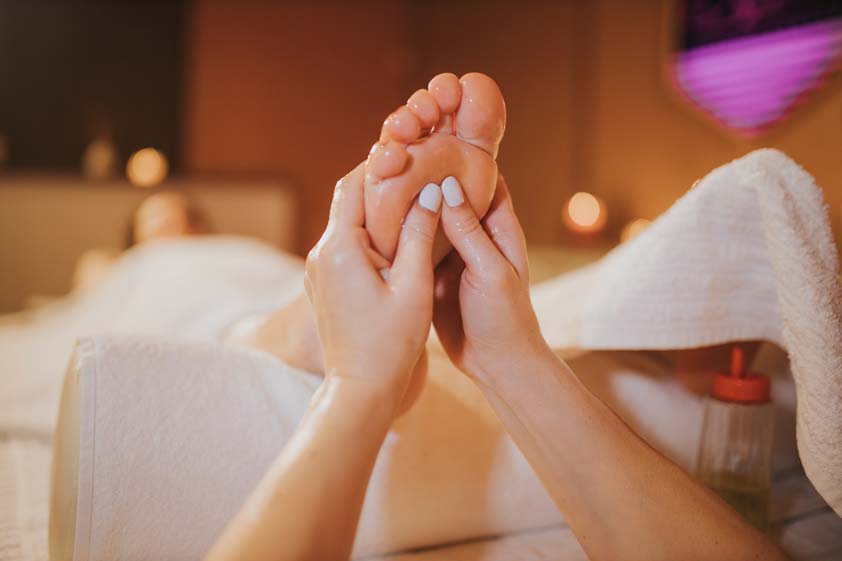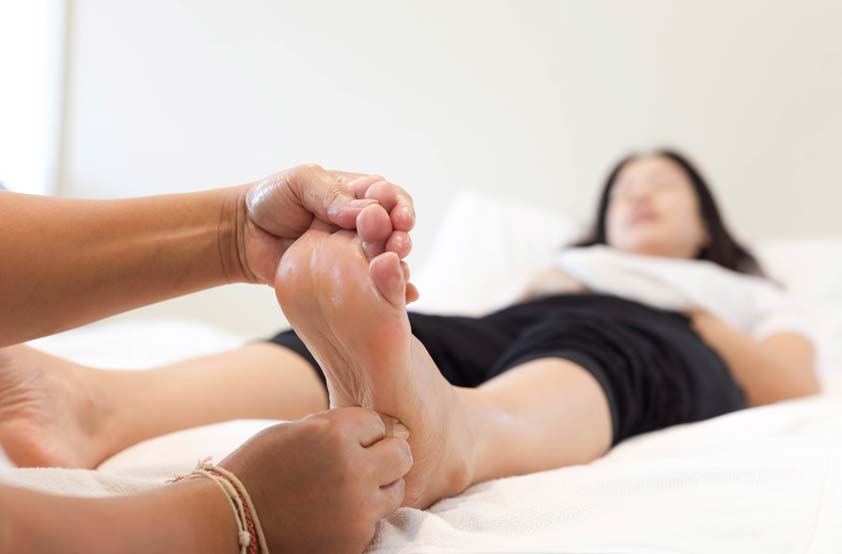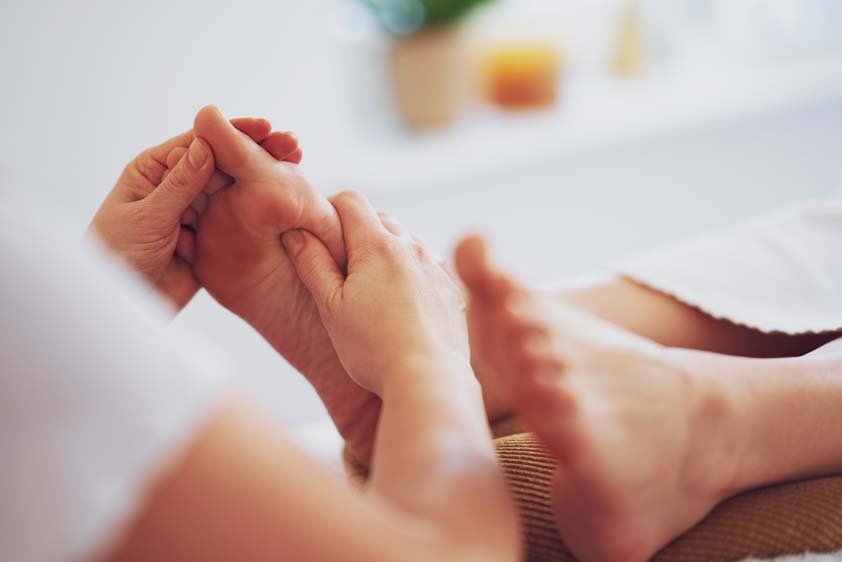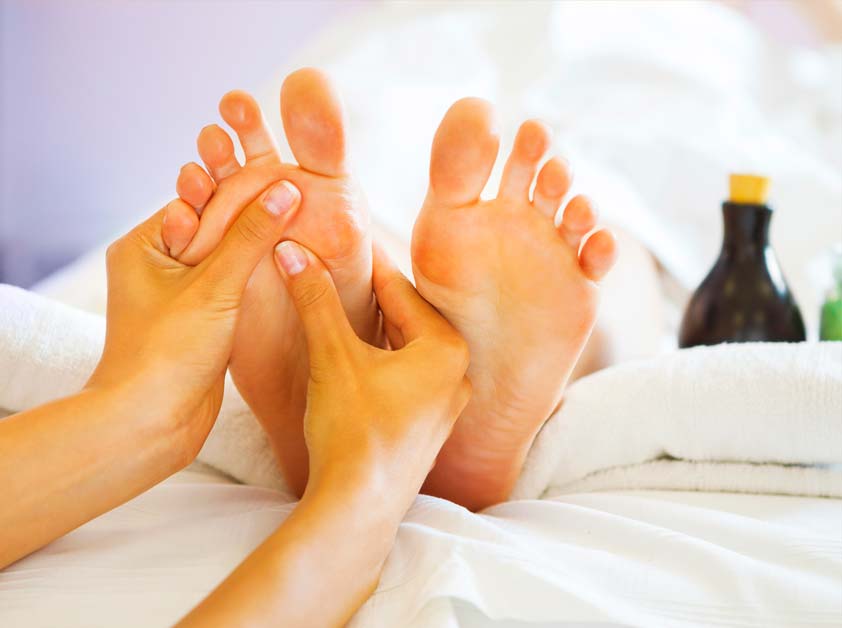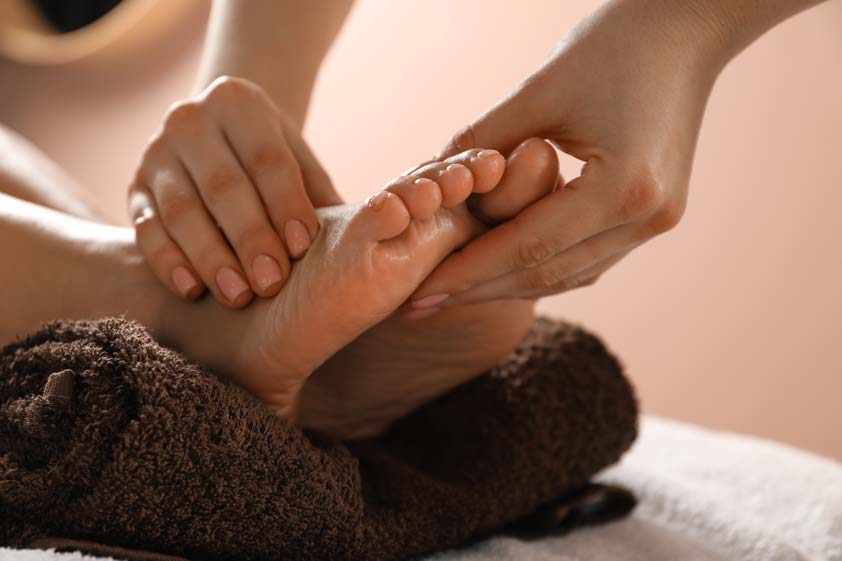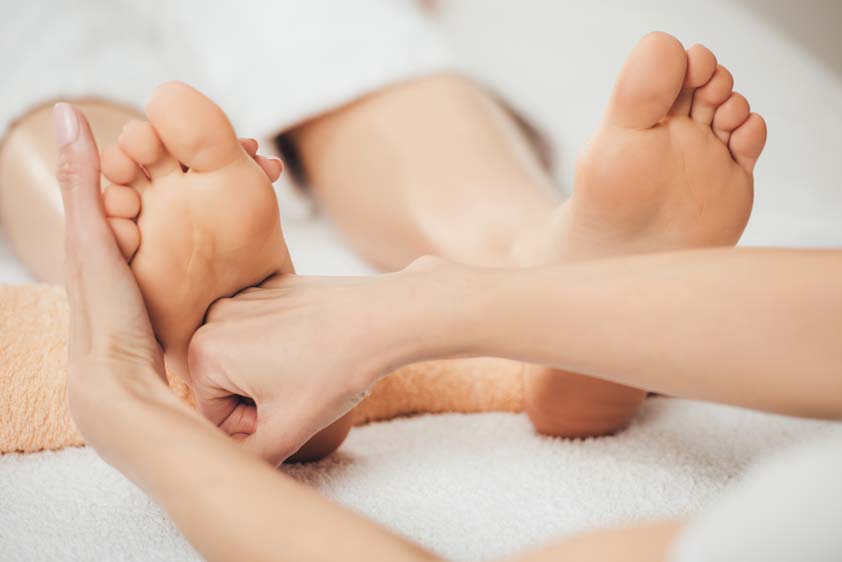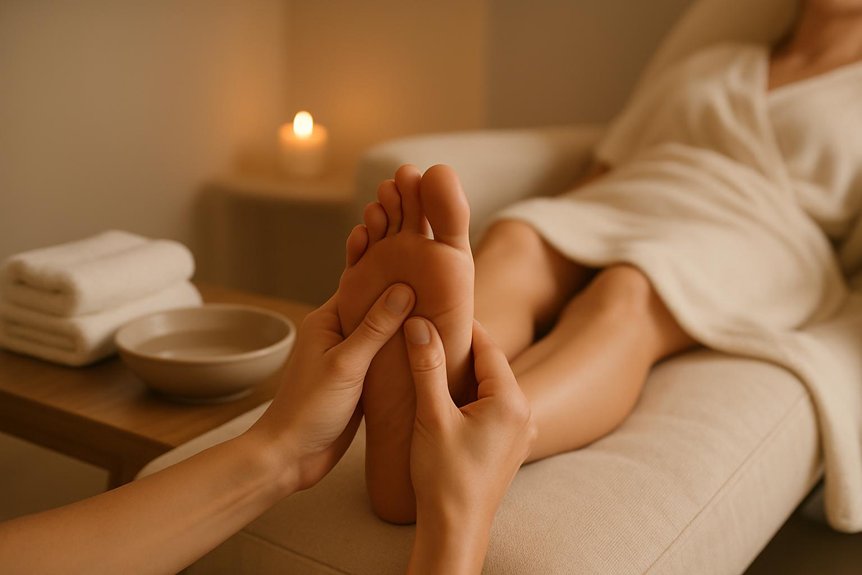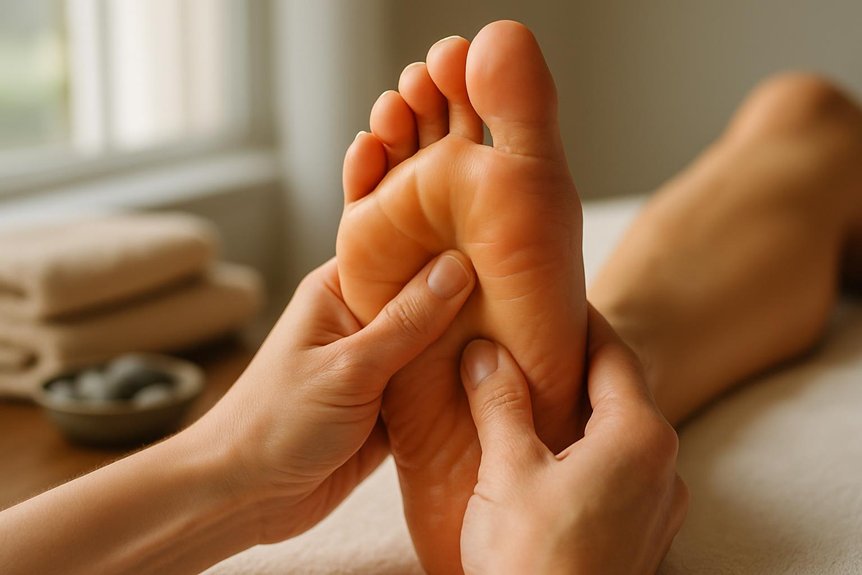
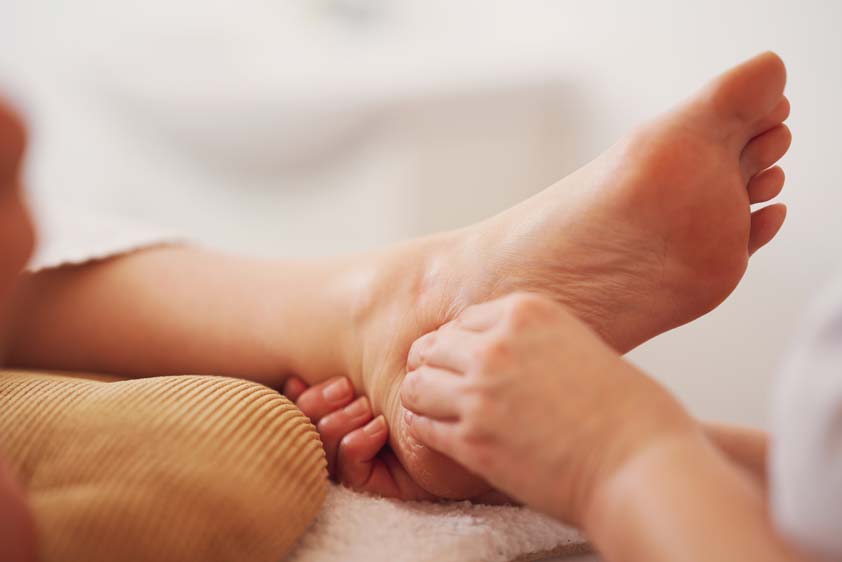
A reflex therapy session typically lasts 45–60 minutes, allowing time for a brief consultation, comfortable positioning, focused work across both feet, and a short settling period at the end. Many clinics also offer 30‑minute appointments for targeted concerns and 75–90 minutes for first-time clients, multiple symptoms, or deeper nervous-system relaxation. Session length is usually matched to goals, sensitivity, and practical needs, with aftercare guidance included. Further details can help choose the best option.
How Long Is a Reflexology Session?

Typically, a session lasts 45–60 minutes, allowing sufficient time for a brief consultation, focused work on the feet (and, where appropriate, hands), and a short settling period afterwards.
At Spa & Massage clinics across London, therapists use this structure to understand comfort levels, relevant health history, and the client’s goals, then apply measured pressure to mapped reflex areas.
Some appointments may run shorter for targeted work, or longer when additional time is needed for assessment, gradual pressure, and integration.
Evidence suggests relaxation responses are time-dependent, so a steady pace and unhurried shifts matter.
Many people seek this therapy to discover the healing power of this approach as part of their overall wellness routine.
Clients are encouraged to arrive a little early, settle into warmth and privacy, and leave a few moments to reorient before heading out.
Which Reflex Therapy Session Length Should You Book?
The most suitable session length depends on the client’s goals, symptom profile, and how much time is needed to assess, treat, and reassess responses.
At Spa & Massage clinics in London, common options (for example, 30, 45, or 60 minutes) are chosen to balance targeted work with adequate relaxation and integration.
The following guidance outlines how to match session duration to outcomes and practical scheduling needs.
Match Length To Goals
Many clients find that the “right” session length depends less on a fixed standard and more on the outcome they want, the complexity of their symptoms, and how their body responds to treatment.
For simple stress relief or gentle nervous-system settling, a shorter appointment can be sufficient to create warmth, ease, and a sense of being held.
When the goal is deeper relaxation, sleep support, or sustained tension reduction, a longer session may allow fuller assessment, unhurried work across key reflex areas, and time for the body to integrate.
For persistent, multi-site discomfort or recurring symptoms, added time can support a more all-encompassing approach and calmer pacing.
At Spa & Massage London clinics, therapists typically align session length with goals, comfort, and feedback throughout.
Time Options And Fit
In practice, choosing a reflex therapy session length comes down to balancing the time available with the level of support needed.
A 30-minute appointment can suit a focused reset—ideal for busy London schedules or first-time clients who want a gentle introduction.
A 45-minute session allows more unhurried assessment and steadier work across key reflex zones.
A 60-minute session is often preferred for deeper relaxation and broader whole-body support, with time to settle the nervous system and finish calmly.
At Spa & Massage clinics across London, therapists help clients decide based on symptoms, stress load, and sensitivity to touch.
Those seeking a more intimate, nurturing pace typically choose 60 minutes, while regular maintenance can fit well at 45 minutes.
What Happens in a 30-Minute Session?
A 30-minute reflex therapy session typically focuses on a targeted set of reflex points to address one or two priorities—such as stress regulation, sleep support, or tension relief—rather than a full, all-encompassing routine.
At Spa & Massage, the therapist begins with a brief check-in, then positions the client comfortably and uses calm, steady thumb-walking and pressure holds on the feet (and, when appropriate, hands).
Pressure is adjusted to feel deeply soothing, never sharp, and attention stays on a small map of zones linked to the chosen goal.
Many clients notice warmth, soft releases, slower breathing, or a gentle emotional exhale.
The session usually ends with grounding strokes and simple aftercare: hydrate, move slowly, and rest if possible.
What Happens in a 45–60 Minute Reflex Therapy Session?
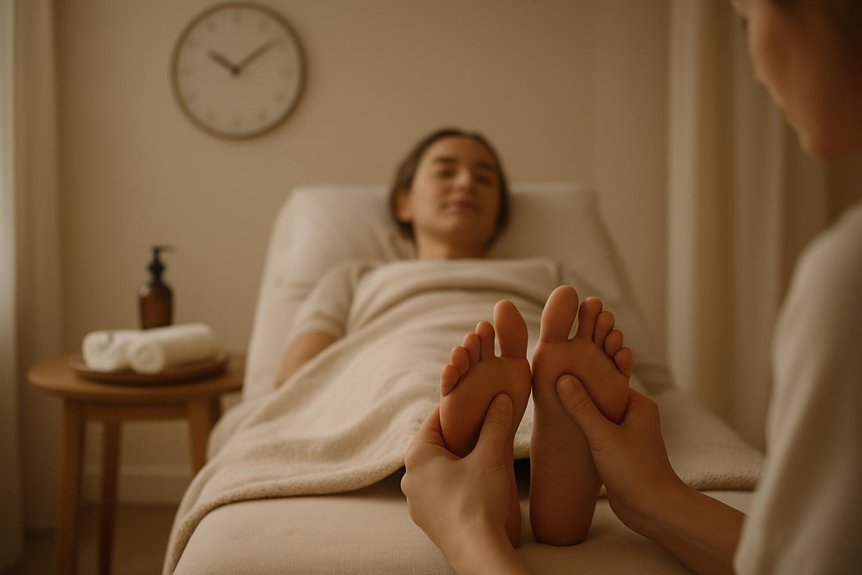
For clients seeking a more complete reset, a 45–60 minute reflex therapy session allows time for both a thorough assessment and full-foot work rather than a narrow focus. At Spa & Massage, the therapist begins with brief check-in on health history, stress load, and comfort preferences, then observes feet for temperature, tenderness, and tension patterns.
The treatment typically includes warm cleansing, gentle mobilisations, and progressive pressure across arches, heels, toes, and ankle lines, with pauses to let the nervous system settle. Reflex points linked to common London stress areas—neck, shoulders, digestion, sleep—may be prioritised, while keeping the experience slow and held.
Clients often notice deep relaxation, eased foot tightness, and a grounded body. Aftercare usually includes water, light movement, and rest when possible.
When Should You Book 75–90 Minutes of Reflex Therapy?
Many clients find 45–60 minutes is enough for full-foot work and noticeable relaxation, but a 75–90 minute reflex therapy session is better suited when there are multiple concerns to address or when the goal is a deeper, longer-lasting downshift in the nervous system.
At Spa & Massage, this length is often chosen for first-time clients who want unhurried assessment, gradual pressure progression, and more time on priority zones (e.g., sleep, stress, digestion, hormonal balance). It also suits periods of high workload, frequent travel, or persistent tension patterns, when slower pacing supports comfort and steadier breathing.
The additional time allows integrated work on feet and lower legs, easing heaviness and improving circulation. Many clients report feeling more “held,” grounded, and emotionally settled after longer sessions.
What Affects Its Session Length?
In practice, reflex therapy session length is shaped by the client’s goals, health history, and how quickly the nervous system settles into a relaxed state. A focused aim, such as easing tension after a long workday, can be addressed efficiently, while broader concerns may call for more time to assess, pace pressure, and allow the body to respond.
At Spa & Massage clinics across London, therapists also factor in first-time visits, where consultation, consent, and settling in take longer than repeat sessions. Sensitivity, pregnancy, recent injury, medication, or fatigue may require gentler, slower work and additional grounding at the end.
Practical considerations—arrival time, mobility needs, and whether a brief aftercare chat is wanted—also influence the overall appointment length.
How Many Sessions Do You Need?
The number of reflex therapy sessions needed typically depends on session frequency and the client’s goal, with many people starting weekly or fortnightly before shifting to monthly maintenance as symptoms stabilise.
At Spa & Massage, therapists commonly recommend a time-limited plan (for example, a short course of several sessions) for targeted concerns, while prioritising regular reviews to adjust based on measurable changes in comfort, stress levels, or sleep.
For general wellbeing, a consistent but less frequent schedule is often sufficient, whereas more persistent issues may call for closer spacing at the outset.
Typical Session Frequency
Typically, the number of reflex therapy sessions needed depends on the client’s goals, symptom pattern, and response to treatment.
In practice, many clients begin with weekly sessions for 3–6 weeks to build momentum and allow the nervous system to adapt. If symptoms are stable, sessions often shift to every two weeks, then monthly for maintenance and stress regulation.
For acute flare-ups, a short, closer-spaced series may be used, then tapered as comfort returns. At Spa & Massage clinics across London, therapists review progress at each visit and agree the next appointment interval with the client, prioritising safety, comfort, and realistic scheduling.
Consistency matters more than intensity; gentle, regular sessions tend to support deeper relaxation, better sleep, and steadier wellbeing.
Treatment Plans By Goal
Set clear outcomes first, because the number of reflex therapy sessions needed depends most on the client’s primary goal—such as stress regulation, sleep support, headache or digestive symptom management, or ongoing wellbeing maintenance.
For acute stress or sleep disruption, many clients begin with 3–6 weekly sessions to settle the nervous system, then taper to fortnightly.
For persistent patterns (e.g., tension headaches or functional digestive discomfort), a plan of 6–10 sessions, weekly or fortnightly, is often used to track triggers and adjust pressure, pacing, and point focus.
For maintenance, one session every 3–4 weeks helps sustain calm and body awareness.
At Spa & Massage clinics across London, therapists review responses each visit, agree gentle home practices, and refine the plan around comfort and progress.
What to Expect After a Massage Session, and When to Rebook?
After a session, clients often notice a period of deep relaxation followed by subtle, short‑lived changes such as increased thirst, mild tiredness, or a temporary shift in mood as the body settles back into balance.
In Spa & Massage clinics, therapists recommend drinking water, keeping the feet warm, and allowing a quieter evening so the nervous system can settle. Light soreness in the feet can occur, but should ease within 24–48 hours; persistent pain, dizziness, or new symptoms warrant medical advice.
Rebooking depends on the goal and how the body responds: for stress, sleep, or gentle ongoing support, many clients choose weekly or fortnightly sessions for 4–6 weeks, then monthly maintenance. For acute strain or high workload, shorter intervals may be suggested.
Conclusion
Reflex therapy sessions can last 30 to 90 minutes, because apparently even feet require a calendar invite. Short appointments suit quick stress relief; longer ones allow thorough assessment, tailored pacing, and targeted work, with time for consultation and settling in. Duration depends on goals, tolerance, and clinical focus—not on how persuasive the toes are. Rebooking is guided by symptoms, response, and practical scheduling. Expectations should be realistic: relaxation is common; lasting change typically needs consistency.