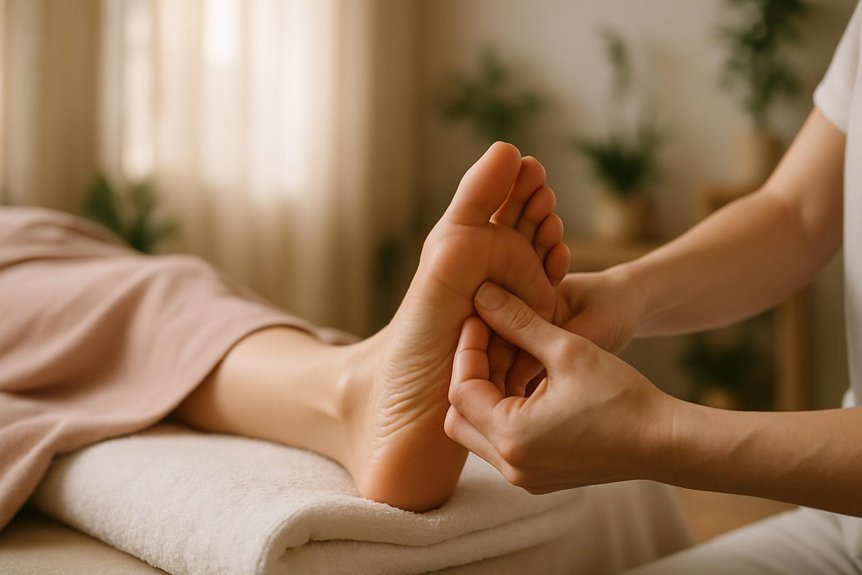

Reflex therapy in London is typically priced by session length and therapist specialism. A 30‑minute session is positioned as a lower-cost, focused option, while 60 minutes is the most common standard rate. Premium 75–90‑minute appointments cost more due to extended room time and deeper, slower nervous-system settling. Fees usually include an intake, contraindication screening, tailored treatment, hygiene standards, and aftercare guidance. Packages can reduce per-session costs by 5–20%, with mobile visits adding travel fees; further detail follows.
How Much Does It Cost in London?
In London, reflex therapy prices typically vary based on session length, therapist experience, and clinic location, with central areas generally priced higher than neighbourhood clinics.
Additional cost drivers include treatment customisation, specialist training (e.g., pregnancy reflex therapy), and whether a consultation and aftercare plan are included.
Evidence-informed practice also influences pricing, as therapists allocate time for assessment, contraindication screening, and outcome tracking.
Many people are drawn to reflex therapy for its potential healing power and holistic approach to supporting relaxation and wellbeing.
At Spa & Massage, clients across Crouch End, Bayswater, Chiswick, Earl’s Court, Belsize Park, and Richmond can expect transparent fees aligned with therapist expertise and a calm, private setting designed for close, attentive care.
Many clients value the therapeutic focus: unhurried touch, clear boundaries, and tailored pressure to support relaxation and wellbeing.
Booking ahead may secure preferred therapists and quieter appointment windows.
Reflex Therapy Prices in London by Session Length
By session length, reflex therapy pricing in London generally scales with therapist time, clinical-grade assessment, and the depth of treatment delivered.
Short appointments of 30 minutes are typically positioned for focused work and are priced lower than standard sessions.
The most common booking is 60 minutes, reflecting a fuller therapeutic arc and allowing unhurried, attentive touch that many clients find emotionally settling.
Extended 75–90 minute sessions sit at a premium, often chosen when a slower pace supports nervous-system downshifting and deeper comfort.
Across Spa & Massage clinics in Crouch End, Bayswater, Chiswick, Earl’s Court, Belsize Park, and Richmond, longer sessions also increase availability costs and room-time, which is typically reflected in fees.
Clients often balance budget, goals, and desired intimacy.
What’s Included in a Reflexology Session Price?
Beyond the appointment length, a reflex therapy session price typically covers the therapist’s pre-treatment intake, brief wellbeing screening, and a tailored treatment plan based on the client’s goals and current symptoms.
It also includes time for consent, positioning support, and a calm settling-in period to encourage parasympathetic downshift. In Spa & Massage clinics, therapists apply targeted pressure to specific foot and ankle zones, adapting depth and pacing to comfort, sensitivity, and clinical history. Hygiene and safety provisions—fresh linens, sanitised equipment, and hand hygiene—are built into the fee.
Many sessions incorporate grounding breathing cues and gentle range-of-motion for the feet to improve tissue readiness. The price commonly includes brief post-treatment feedback, self-care guidance, and hydration recommendations, supporting intimacy, reassurance, and continuity between visits.
What Factors Change Reflex Therapy Prices in London?
Across London, reflex therapy prices vary according to a combination of clinic location and overheads, therapist training and specialisms, appointment duration, and the level of assessment and individualisation required for the client’s needs.
Premium neighbourhoods and longer clinic opening hours can raise costs. Therapists with advanced anatomy knowledge, pregnancy training, or experience supporting stress and sleep concerns may command higher fees.
Session length matters: 30 minutes is typically priced lower than 60 or 90 minutes, and extended time allows slower, more attentive pressure and fuller nervous-system settling.
Prices also reflect whether the appointment includes a detailed intake, contraindication screening, and a tailored plan for sensitivity, circulation, or tension patterns.
At Spa & Massage, consistent quality across six London clinics influences pricing through careful therapist supervision and calm, private treatment rooms.
Is Mobile Reflex Therapy Cheaper Than a Clinic?
Mobile reflex therapy is not automatically cheaper than clinic-based care because pricing often reflects therapist travel fees and non-billable time between appointments.
Cost comparisons should also account for treatment quality and setup, including whether the practitioner can provide appropriate hygiene standards, positioning, and a calm therapeutic environment in the client’s home.
In Spa & Massage clinics across London, dedicated rooms and specialist equipment help standardise the clinical setup, which can influence overall value even when the session fee appears similar.
Travel Fees And Time
In practice, whether at-home reflex therapy is cheaper than a clinic appointment often depends on travel time and any associated call-out fees. Mobile practitioners may add a fixed travel charge, mileage, or a minimum spend, especially during peak hours or for longer journeys across London.
Even without an explicit fee, extended travel time is often reflected in the session price because it limits how many clients can be seen in a day.
Clinic appointments can feel more cost-efficient when the client is near one of Spa & Massage’s London locations, as travel costs are borne by the client and remain predictable (often just local transport).
For clients seeking a more private, unhurried experience at home, any premium is best weighed against saved commuting time and added convenience.
Treatment Quality And Setup
From a treatment-quality perspective, the “cheaper” option is not always the one with the lower headline price, because the setup can materially affect outcomes. Clinic-based reflex therapy typically provides a dedicated couch, ideal positioning, consistent temperature, professional hygiene controls, and minimal interruptions—factors linked to comfort, parasympathetic settling, and therapist precision. Mobile sessions may save on venue overheads, yet results can vary if space is cramped, lighting is harsh, or boundaries are harder to maintain.
At Spa & Massage’s London clinics, the environment is designed for quiet, warmth, and privacy, enabling unhurried assessment and tailored pressure. When comparing costs, clients should weigh session length, intake quality, aftercare guidance, and how well the setting supports deep relaxation and trust.
Reflex Therapy Packages in London: How Much You Save
In London, reflex therapy packages commonly include pre-paid multi-session bundles or structured care plans, with pricing set to reduce the per-session rate compared with single bookings. The measurable saving depends on package size, session length, and booking frequency, so clients benefit most when appointments align with an evidence-informed schedule and consistent therapeutic goals.
Selecting the right package should reflect presenting concerns, preferred cadence, and clinic access—such as Spa & Massage locations across Crouch End, Bayswater, Chiswick, Earl’s Court, Belsize Park, and Richmond—so value and continuity of care are both optimised.
Package Types And Pricing
How much can a London client realistically save by choosing a reflex therapy package rather than booking single sessions? In practice, packages are priced to reward commitment: common formats include 3-session starters, 5-session progress packs, and 10-session programmes designed for sustained nervous-system support.
At Spa & Massage, pricing typically scales by session length (for example, 45 vs 60 minutes) and therapist seniority, with clearer value on longer, multi-session blocks. Some packages pair reflex therapy with complementary treatments—such as a bespoke massage—when clients want a more intimate, full-body reset.
Clients should expect transparent terms: validity periods, transferability, and upgrade options between clinics in Crouch End, Bayswater, Chiswick, Earl’s Court, Belsize Park, and Richmond.
Savings Versus Single Sessions
When comparing reflex therapy packages with single-session bookings in London, the key question is the per-session rate once a client commits to a block of treatments. A package typically reduces unit cost by 5–20%, depending on session length and block size, while preserving the same therapist standards and clinic setting.
For clients seeking consistent nervous-system downshifting, scheduled repeats may also improve adherence, a practical driver of outcomes in stress-related complaints. At Spa & Massage, many clients find that booking a short series supports continuity of touch, pressure preference, and a discreet therapeutic relationship across appointments.
Savings are most tangible when sessions are used within the validity window; otherwise, the effective rate rises toward single-session pricing. Packages can also simplify budgeting for regular, intimate self-care rituals.
Choosing The Right Package
For many Londoners balancing wellbeing goals with busy diaries, the right reflex therapy package is the one that matches treatment frequency, session length, and budget without diluting clinical quality.
Packages typically reduce per-session cost, but the best value depends on clinical aims: stress regulation may suit weekly sessions for 4–6 weeks, while maintenance often works monthly.
At Spa & Massage clinics across Crouch End, Bayswater, Chiswick, Earl’s Court, Belsize Park, and Richmond, therapists help clients choose between shorter, more frequent appointments and longer sessions that allow unhurried assessment and deeper work.
A suitable package should include clear expiry terms, easy rescheduling, and continuity with a preferred therapist to support rapport and comfort. Clients should prioritise outcomes, not discounts.
Reflex Therapy Prices for Stress, Pain, and Pregnancy
Across common wellbeing goals—such as easing stress, managing persistent pain, or supporting comfort during pregnancy—reflex therapy pricing typically reflects the session length, clinical focus, and any additional assessment or tailoring required.
Stress-focused sessions are often positioned as restorative, with longer, slower pacing and optional aromatherapy-style relaxation, which can place them mid-range.
Pain-oriented reflex therapy may be priced slightly higher when it includes a structured intake, targeted mapping, and careful pressure modulation to suit sensitivity.
Pregnancy reflex therapy is usually costed similarly to specialist treatments because therapists adapt positioning, avoid contraindicated points, and prioritise circulation and lower-limb comfort.
At Spa & Massage clinics across London, therapists explain the rationale for any upgrade, so clients can choose a price point that still feels personal and safe.
How Many Reflex Therapy Sessions Do You Need (and How Often)?
Price is only one part of the decision; the expected number of reflex therapy sessions and the recommended frequency often determine overall value and outcomes.
At Spa & Massage, therapists typically advise starting with 3–6 sessions to assess responsiveness, especially for stress load, sleep disruption, or musculoskeletal discomfort. Many clients book weekly sessions for the first month to build consistency and allow the nervous system time to settle, then taper to fortnightly. For ongoing wellbeing, a maintenance rhythm of every 3–4 weeks is common.
Pregnancy clients often prefer shorter, more frequent visits as symptoms fluctuate, with timing agreed alongside comfort and clinical considerations.
Session planning should be personalised after an intake, considering goals, sensitivity, medication use, and how the body feels after each treatment.
When Reflex Therapy Is Worth Paying For (and When It Isn’t)
Choose reflex therapy when there is a clear goal and a realistic expectation of what it can deliver. It is often worth paying for stress regulation, sleep support, gentle pain modulation, and a nurturing reset during demanding periods, including pregnancy (with appropriate screening). In Spa & Massage clinics across London, therapists tailor pressure and pacing to comfort, making sessions feel safe, grounded, and deeply personal. It may also suit clients who prefer fully clothed treatment and quiet, one-to-one care.
It is less worth the cost for rapid structural change, acute injury rehabilitation, or as a substitute for medical assessment of new, worsening, or unexplained symptoms. Clients should pause if budgets are tight and no measurable benefit appears after a short, agreed trial.
Conclusion
Reflex therapy pricing in London ultimately reflects more than minutes on a treatment couch; it accounts for clinical setting, therapist expertise, and the tailoring needed for stress, pain, or pregnancy support. A well‑structured session typically includes consultation, hygiene standards, and a measured pressure sequence designed to calm the nervous system. Like stepping from a busy street into a quiet, warm room, value is felt in outcomes. It is worth paying for when goals, credentials, and follow‑up frequency align.