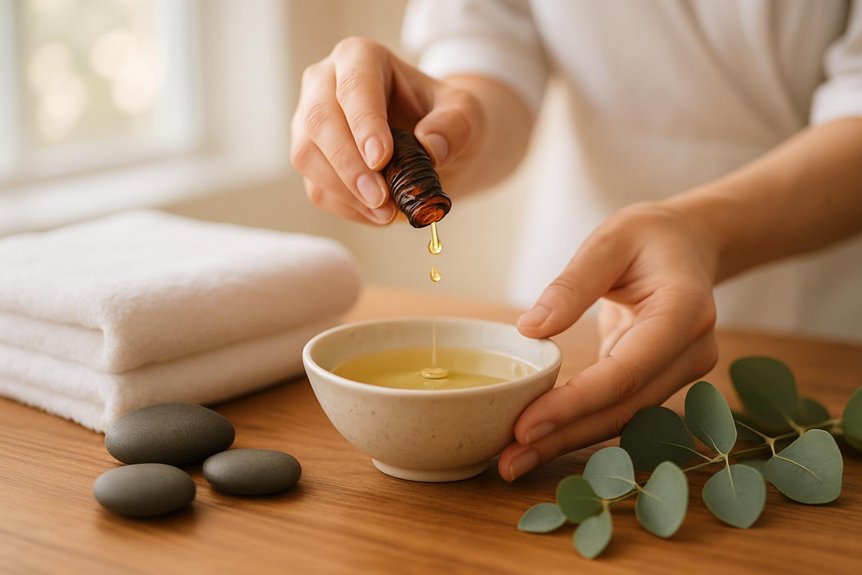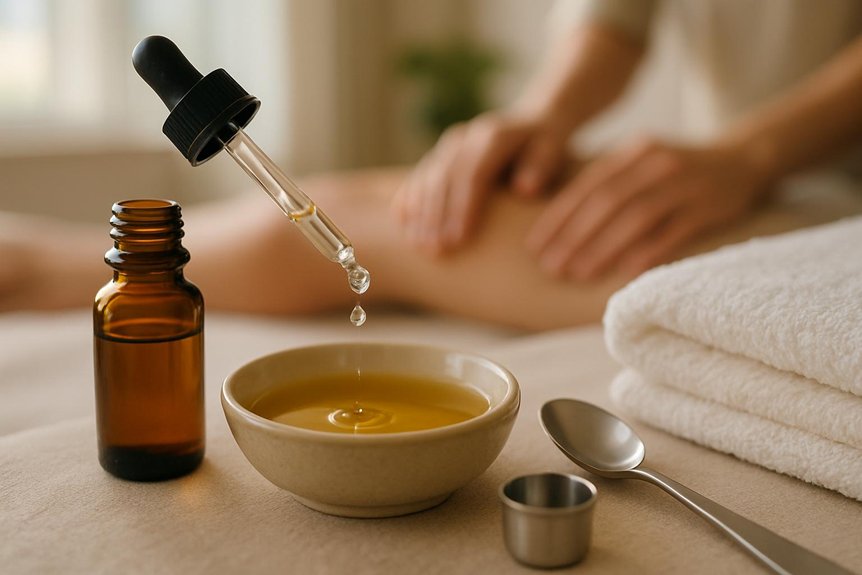
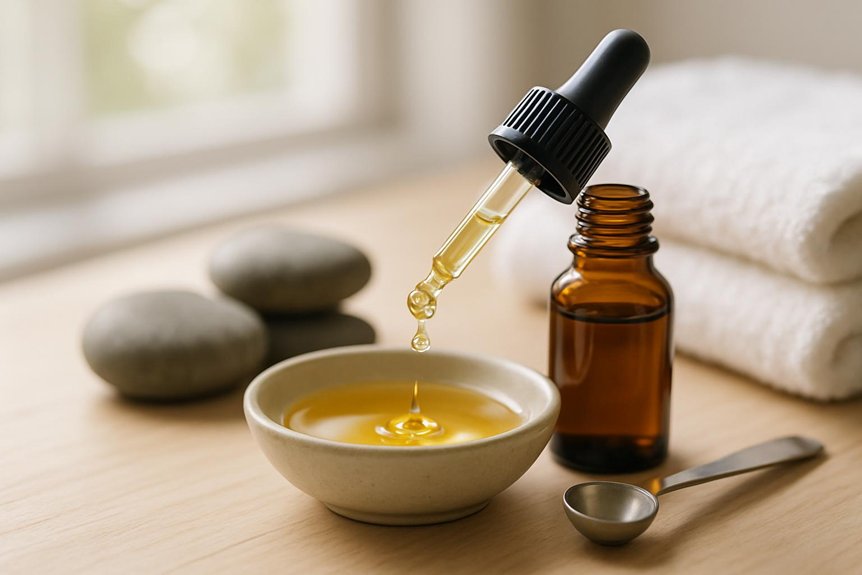
For aromatic massage, eucalyptus essential oil should be diluted in a carrier oil to about 1–2% for most adults (roughly 1–2 drops per 5 ml; 2–4 drops per 10 ml; 6–12 per 30 ml; 20–40 per 100 ml). Start lower (0.5–1%) for sensitive skin, older adults, or first-time use. Patch test on the inner forearm for 24 hours and avoid eyes, broken skin, pregnancy, asthma, and young children. More guidance on blending, carriers, and storage follows.
Dilute Eucalyptus Oil for Massage: Safe Baseline (1–2%)
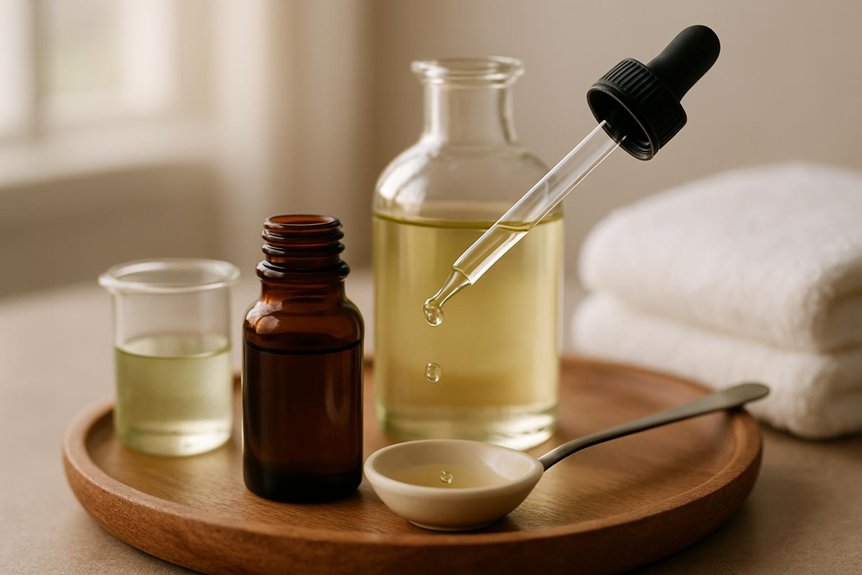
A safe baseline for diluting eucalyptus essential oil for body massage is 1–2%, which means 1–2 drops per 5 ml (one teaspoon) of carrier oil. This level supports a close, sensual glide on the skin while keeping exposure conservative for most healthy adults.
At Spa & Massage clinics across London, therapists begin low, observe skin and breathing comfort, then adjust only when appropriate. Eucalyptus can feel cooling and intensely aromatic; higher strengths raise the risk of irritation, sensitisation, or headaches, especially on the neck, chest, or after heat.
Clients should request an unscented option if pregnant, asthmatic, prone to eczema, or using strong medications, and avoid use on broken skin. A patch test adds reassurance. It can help you relax and unwind with aromatherapy massage techniques that pair gentle touch with carefully chosen essential oils.
Use This Drop Chart (10ml, 30ml, 100ml)
For most at-home aromatic massage blends, a simple drop chart makes the safest 1–2% eucalyptus dilution easy to measure by bottle size: 10 ml carrier oil = 2–4 drops, 30 ml = 6–12 drops, 100 ml = 20–40 drops.
This range reflects typical professional guidance for adult topical use and helps keep the aroma present yet gentle for close, skin-to-skin relaxation.
Accuracy matters: drops vary by bottle and viscosity, so the lower end suits first-time users or sensitive skin, while the upper end suits those who already know they tolerate eucalyptus well.
In Spa & Massage clinics, therapists patch-check for comfort and adjust strength to the client’s breathing and warmth response.
If stinging, watering eyes, or tightness occurs, dilute further immediately.
Keep blends away from mucous membranes always.
Pick a Carrier Oil That Suits Your Skin
With eucalyptus oil already measured to a skin-safe 1–2% dilution, the carrier oil becomes the deciding factor in how comfortable the blend feels and how evenly it spreads. Lightweight, low-odour oils suit most bodies and allow eucalyptus to stay clear; richer oils create more slip for slow, close contact.
At Spa & Massage clinics, therapists match carriers to skin and purpose: grapeseed or fractionated coconut for quick absorption and minimal residue; sweet almond for a silky glide; jojoba for a balanced, non-greasy finish; and sunflower for a simple, generally well-tolerated option. For acne-prone areas, non-comedogenic choices help reduce congestion risk. For very dry patches, a slightly heavier carrier supports the skin barrier.
Patch testing on the inner forearm remains a sensible precaution, especially before intimate full-body work.
Lower Dilutions for Sensitive Skin (0.5–1%)
In sensitive or reactive skin, eucalyptus essential oil is typically kept to a lower, skin-safer range of 0.5–1% to reduce the likelihood of irritation while still offering a clear aromatic effect. This approach supports comfort, especially for clients prone to redness, dryness, eczema, or fragrance sensitivity.
At Spa & Massage clinics, therapists typically begin at 0.5% for first-time users or during flare-prone periods, increasing only if the skin remains calm. A patch test on the inner forearm for 24 hours is advised before a full-body aromatic massage.
The oil should never be used neat, and contact with eyes, mucous membranes, or broken skin is avoided. If tingling, burning, or persistent warmth occurs, the blend is removed with carrier oil and discontinued for safety.
Blend Eucalyptus Oil for Massage: Step-by-Step
At Spa & Massage, therapists begin by selecting a suitable carrier oil based on the client’s skin type, allergies, and the intended treatment outcome.
They then measure eucalyptus essential oil to a safe, evidence-based dilution ratio before mixing thoroughly to make certain even distribution.
Finally, a small patch test is performed to check for irritation or sensitivity prior to full-body application.
Choose Your Carrier Oil
For a safe, skin‑friendly eucalyptus massage blend, the choice of carrier oil matters as much as the essential oil itself, because it controls dilution, glide, and tolerability. At Spa & Massage clinics, therapists select carriers to suit skin type, sensitivity, and the kind of touch a client wants—slow, grounding strokes or lighter, warming work.
For most bodies, jojoba or fractionated coconut offers stable, low‑scent glide that lets eucalyptus feel clean and close to the skin. Sweet almond gives a silky, more “embracing” slip, while grapeseed feels lighter for oil‑averse clients. For very dry or mature skin, a richer base like avocado can support comfort. Allergy history matters: nut‑derived oils should be avoided when relevant. Fresh, well‑stored oils reduce irritation risk.
Measure Safe Dilution Ratio
Two measurements determine whether eucalyptus oil is massage‑safe: the client’s risk profile (age, pregnancy status, asthma sensitivity, skin reactivity, and medication use) and the essential‑oil percentage in the final blend.
At Spa & Massage clinics, therapists generally keep full‑body aromatic massage blends at 1% for sensitive or first‑time clients, and up to 2% for healthy adults with prior tolerance.
For facial, neck, or intimate close‑contact work, they stay at 0.5–1% to protect delicate skin and breathing comfort.
Practical measuring: 1% equals 1 drop per 5 ml carrier (or 6 drops per 30 ml); 2% equals 2 drops per 5 ml (12 per 30 ml). Lower is preferred when uncertainty exists.
Mix And Patch Test
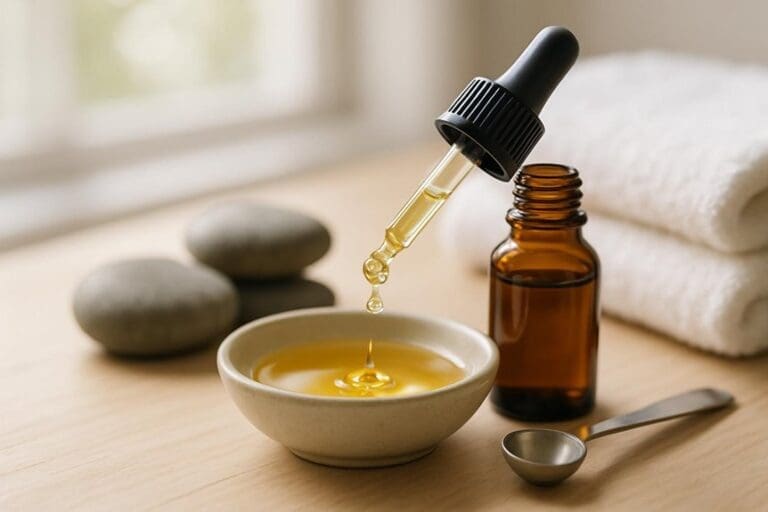
How should eucalyptus essential oil be blended so the aroma feels therapeutic without risking skin irritation or respiratory discomfort? At Spa & Massage, therapists first add the measured essential oil drops to a clean bowl, then pour in the carrier oil and stir slowly for 30–60 seconds to disperse evenly; shaking in a capped bottle also works.
The blend is kept away from eyes, mucous membranes, and the throat area, and inhalation is kept gentle, especially for clients with asthma.
A patch test follows: apply a pea-sized amount to the inner forearm, cover, and wait 24 hours. Redness, itching, burning, headache, or tight breathing means the blend is not used; dilution is reduced or avoided.
Clients are invited to confirm comfort before full-body work.
Patch Test Before Using Eucalyptus in Massage
Often, a patch test is the simplest safety step before using diluted eucalyptus oil in massage, because even well-diluted essential oils can trigger irritation or allergic contact dermatitis in some people—especially those with sensitive skin, eczema, asthma, or a history of fragrance reactions.
At Spa & Massage clinics, therapists recommend applying a small amount of the prepared blend to the inner forearm or behind the ear, then leaving it undisturbed for 24 hours.
The area should be kept dry and uncovered, avoiding heat, friction, or other products that could confuse results.
If redness, itching, burning, swelling, or a tight, wheezy feeling appears, the blend should not be used on larger areas.
For intimate, close-contact massage, this step helps protect comfort, trust, and skin integrity.
When to Avoid Eucalyptus Oil in Massage
When should eucalyptus oil be left out of a massage blend?
It is best avoided during pregnancy, while breastfeeding, and for infants and young children, due to higher sensitivity and inhalation risks.
It should also be skipped for clients with asthma, chronic cough, or fragrance-triggered migraines, as its strong vapour may provoke symptoms even at low dilution.
People with epilepsy, significant liver disease, or multiple medication allergies should consult a clinician before use.
Eucalyptus can irritate compromised skin, so it should not be applied over eczema flares, broken skin, recent shaving, or sunburn.
In Spa & Massage clinics, therapists omit eucalyptus when a client reports past reactions to mentholated products, or when a softer, more enveloping scent is preferred for close, calming work.
Store Your Eucalyptus Blend (Keep It Fresh)
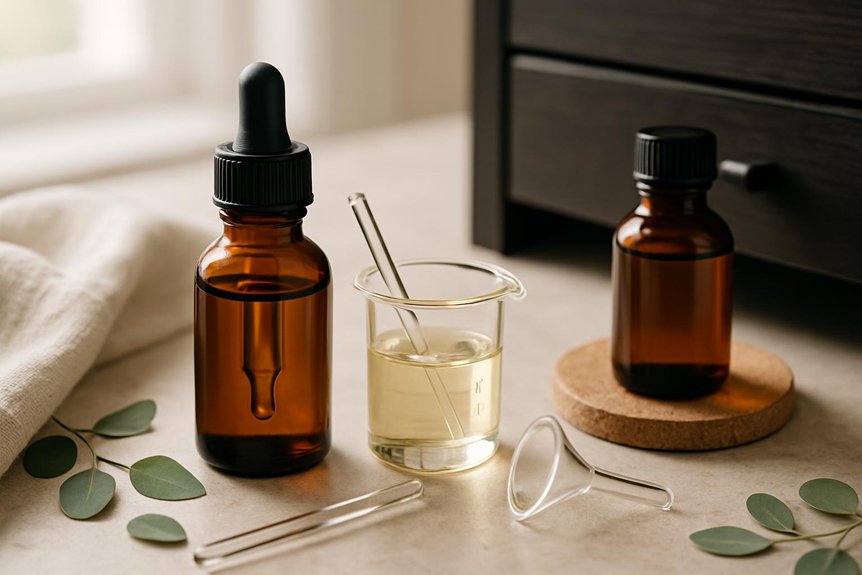
For best stability and skin safety, a diluted eucalyptus massage blend should be stored as carefully as it is mixed. Keep it in a dark glass bottle with a tight cap, labelled with the dilution, date, and ingredients, then store it cool and away from sunlight and radiators to reduce oxidation and irritation risk. Avoid dipping fingers into the bottle; decant a small amount to preserve hygiene for close skin-to-skin use.
In Spa & Massage clinics, therapists prefer small batches, used within 1–3 months, or sooner if the carrier oil has a shorter shelf life. Discard the blend if it smells sharp, rancid, or looks cloudy, as degraded oils may sensitise delicate skin and disrupt comfort during an intimate massage.
Conclusion
Used correctly, eucalyptus can enhance massage without compromising skin safety. For most adults, a 1–2% dilution (about 2–4 drops per 10 ml carrier) supports a clear, invigorating aroma while keeping dermal exposure low; sensitive clients often need 0.5–1%. One practical statistic underscores why measuring matters: at 2%, a 30 ml blend contains roughly 12 drops of essential oil—enough for full-body use without “neat” application. Patch testing and contraindication screening remain essential.