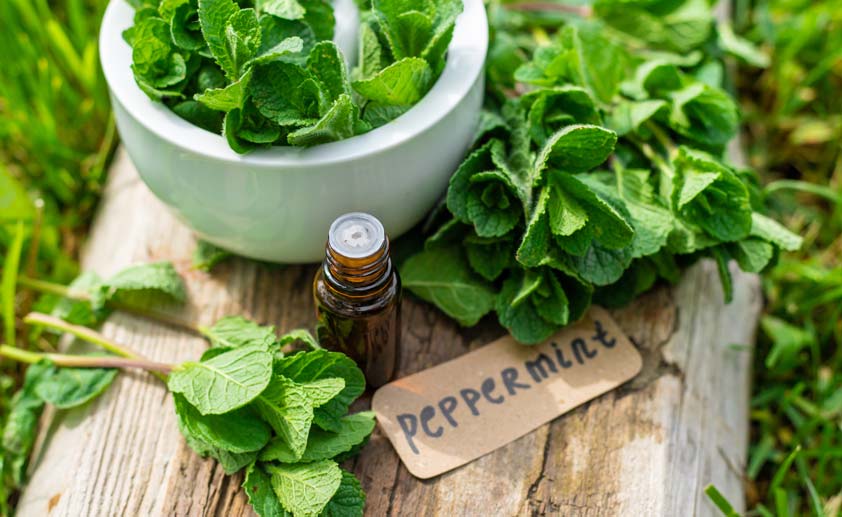
For aromatic massage, peppermint essential oil is typically diluted to 0.5–1% for full-body use (1–2 drops per 10 ml carrier) and up to 1.5–2% for small areas like neck or feet (3–4 drops per 10 ml); for sensitive or first-time clients, use 0.25% (1 drop per 20 ml). Add drops to a clean bottle first, top with carrier oil, mix, label, and patch test. Further safety tips and aftercare follow.
Peppermint Oil Massage Dilution Ratios (Drops Per 10ml)
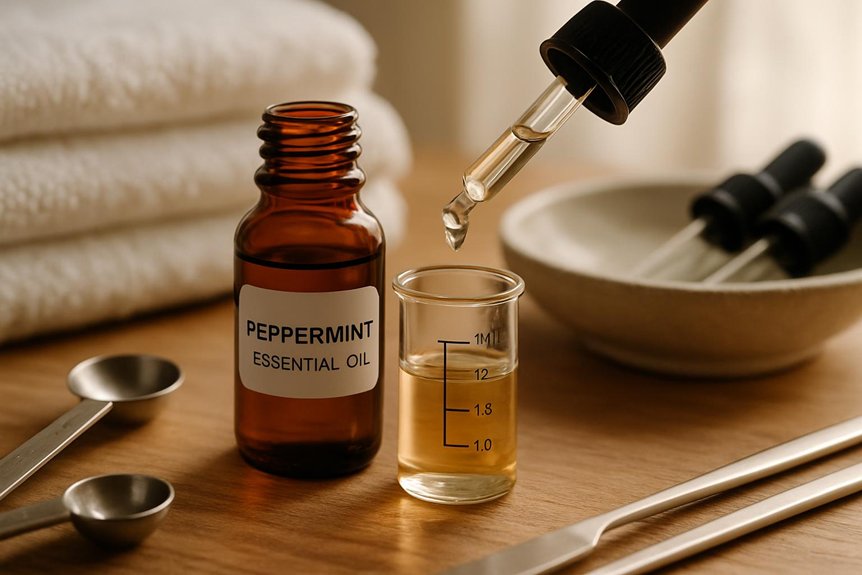
For aromatic massage, peppermint essential oil should be diluted in a carrier oil at a low, measured concentration to reduce the risk of skin irritation and sensitisation.
In Spa & Massage clinics, therapists typically aim for 0.5–1% dilution for full-body use: 1–2 drops per 10 ml.
For smaller areas (neck, shoulders, feet) a short, supervised 1.5–2% may be used: 3–4 drops per 10 ml, stopping immediately if stinging or redness appears.
For sensitive skin or first-time clients, 0.25% is safer: 1 drop per 20 ml.
Accurate measuring matters; drops vary by bottle.
Peppermint’s cooling sensation can feel intimate and invigorating, so lighter blends are preferred to avoid overwhelming heat-cold contrast during slow, close-contact strokes.
These low dilutions support a calm, restorative experience during aromatherapy massage.
Choose the Best Carrier Oil for Peppermint Blends
In aromatic massage, the carrier oil determines how evenly peppermint disperses on the skin, how quickly it absorbs, and how likely it is to irritate sensitive areas. At Spa & Massage, therapists match texture and skin needs to keep touch smooth, close, and comfortable.
For most bodies, fractionated coconut or grapeseed offers light glide with fast absorption, supporting intimate, unbroken strokes. Sweet almond provides richer slip for longer work but is unsuitable for nut allergy. Jojoba suits reactive or acne‑prone skin due to stability and low scent, helping peppermint stay balanced. Sunflower is a gentle, budget option when fragrance sensitivity is a concern.
Safety checks matter: choose fresh, cosmetic‑grade oils, avoid oxidised products, and patch‑test when skin is delicate, recently shaved, or eczema‑prone.
How to Dilute Peppermint Oil for Massage (Step-by-Step)
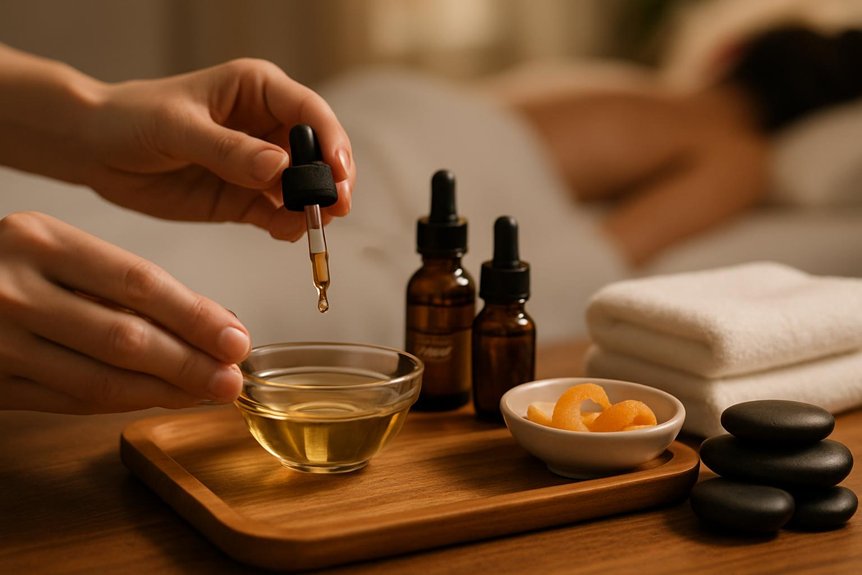
Often, effective peppermint massage starts with precise dilution rather than adding “a few drops” by guesswork; at Spa & Massage clinics, therapists follow clear dilution ranges and measured mixing steps to reduce irritation risk while maintaining the oil’s cooling, invigorating effect on the skin.
Step 1: Choose a clean bottle and a compatible carrier oil.
Step 2: Use a 1% dilution for most full-body intimacy (about 6 drops peppermint per 30 ml carrier).
Step 3: For smaller areas (neck, temples, feet), a 2% blend may suit some adults (about 12 drops per 30 ml).
Step 4: Add peppermint drops first, then carrier; cap and roll gently to mix.
Step 5: Label date and strength; discard if scent changes.
How to Patch Test Peppermint Essential Oil Safely
Why patch test peppermint essential oil before a massage blend touches larger areas of skin? Because peppermint’s menthol can trigger irritation or allergy, and close, skin-to-skin work can amplify sensation. Spa & Massage therapists advise patch testing every new blend, especially for sensitive skin.
To patch test, apply a pea-sized amount of the fully diluted blend to the inner forearm (or behind the ear), then cover lightly with a plaster. Keep the area dry and avoid fragranced products.
Check at 30 minutes, then again at 24 hours for redness, itching, swelling, burning, or a raised rash. If any reaction appears, wash with mild soap and cool water and do not use the blend. If no reaction occurs, proceed with the massage dilution.
Peppermint Massage Aftercare + When to Avoid It
Patch testing confirms a peppermint blend is likely to be tolerated; aftercare then focuses on preventing irritation and avoiding situations where menthol’s cooling effect may be unsafe.
After the massage, the blend should be left on only if comfortable; otherwise it should be washed off with mild soap.
In Spa & Massage clinics, therapists advise avoiding hot showers, saunas, vigorous exercise, and occlusive clothing for 6–8 hours, as heat and friction can increase absorption and stinging.
Eyes, genitals, and broken skin should be kept strictly clear; hands should be washed after touching treated areas.
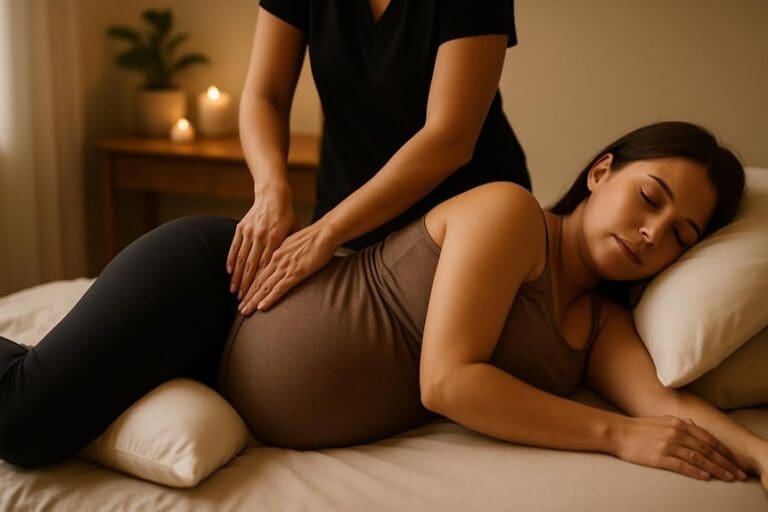
It should be avoided in pregnancy, for children, with asthma triggered by strong aromas, on neuropathic or reduced-sensation areas, and before applying heat packs.
Discontinue if burning, rash, or dizziness occurs.
Conclusion
Diluting peppermint essential oil is not a minor detail; it is the difference between a revitalizing massage and a skin-stinging mistake. Using evidence-based drop ratios, a suitable carrier oil, and accurate measuring turns a potent concentrate into a controlled, comfortable blend. Patch testing and extra caution on sensitive areas prevent avoidable reactions. When applied with aftercare and clear contraindications in mind, peppermint’s cooling effect can feel remarkably invigorating—without risking irritation, burns, or unnecessary discomfort.