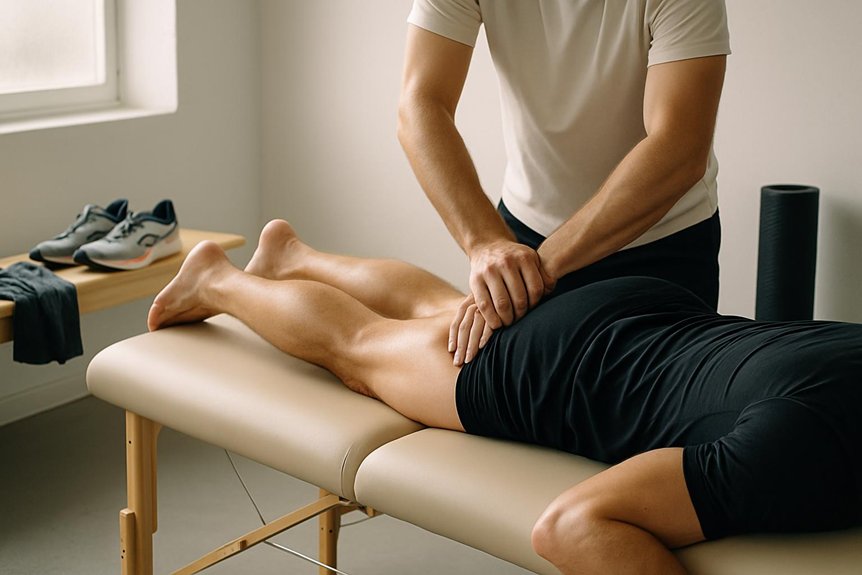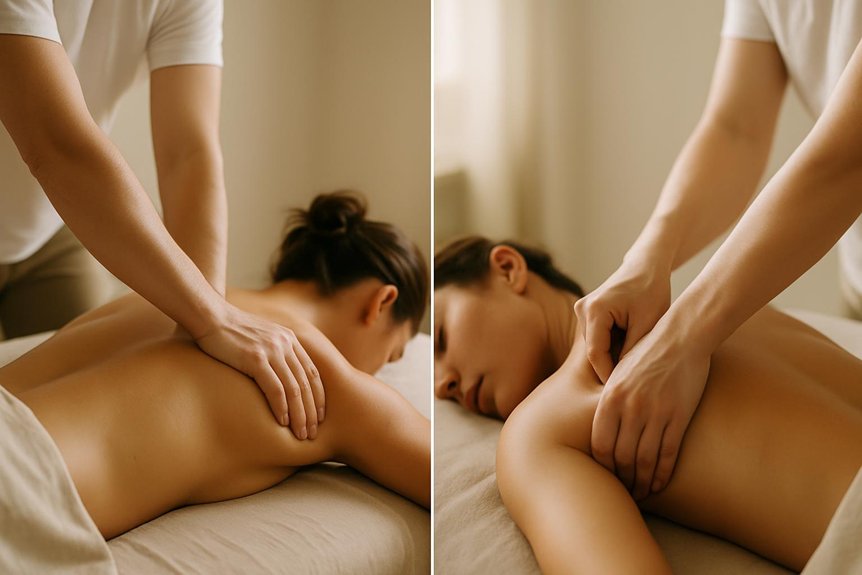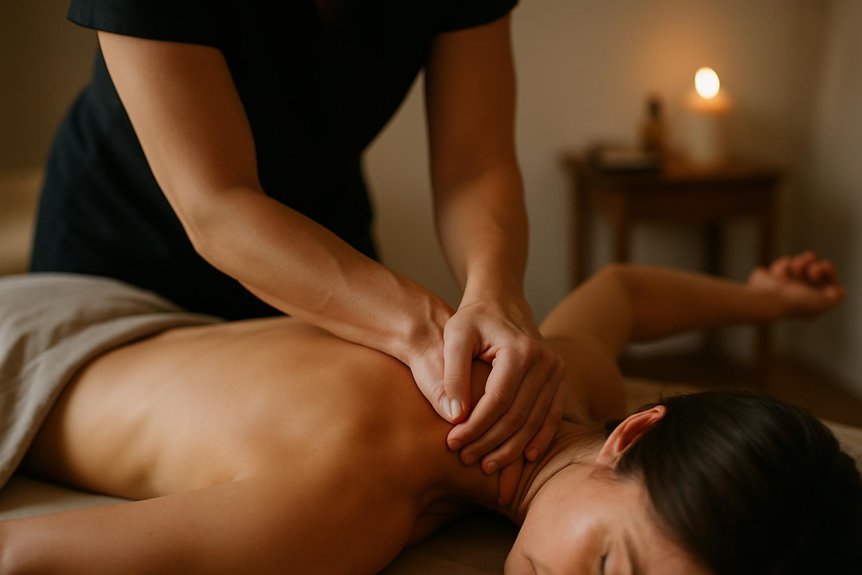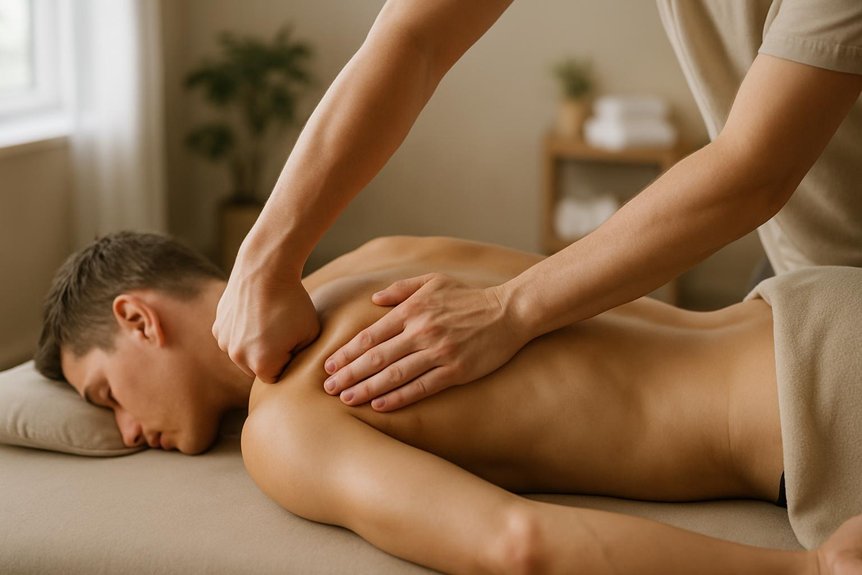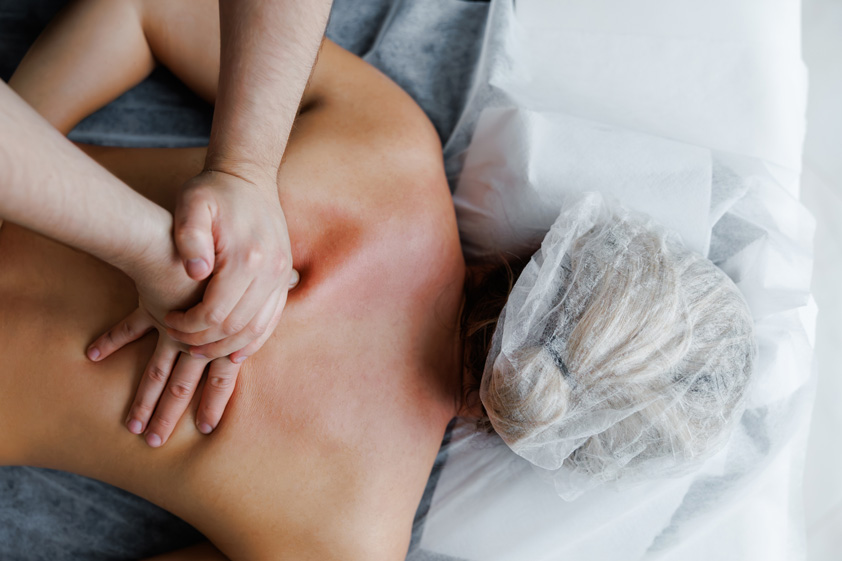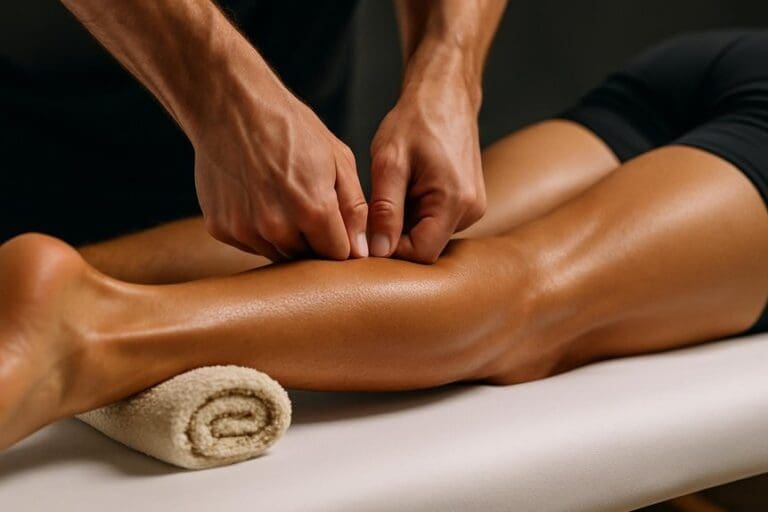
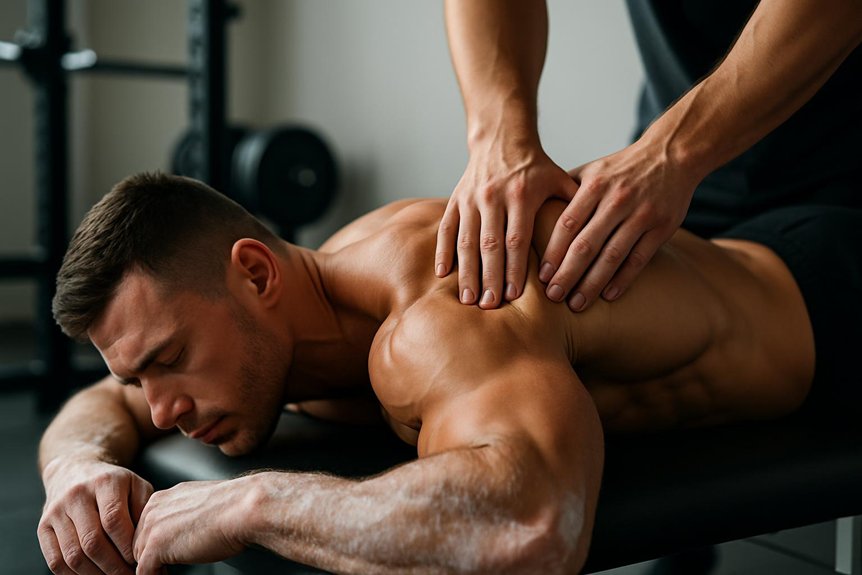
It can benefit weightlifters when used to address specific, persistent restrictions rather than general post-workout soreness. It targets deeper muscle and connective tissue with slow, precise strokes, trigger-point compression, and fascial release to improve tissue glide and restore positions such as squat depth, rack comfort, and overhead lockout. Evidence suggests short-term reductions in perceived soreness and stiffness, supporting training tolerance. Scheduling works best on rest or lighter days, with pressure kept tolerable and reassessed by movement changes. Further details clarify timing, frequency, and when to avoid deep work.
Is It Good for Weightlifters?
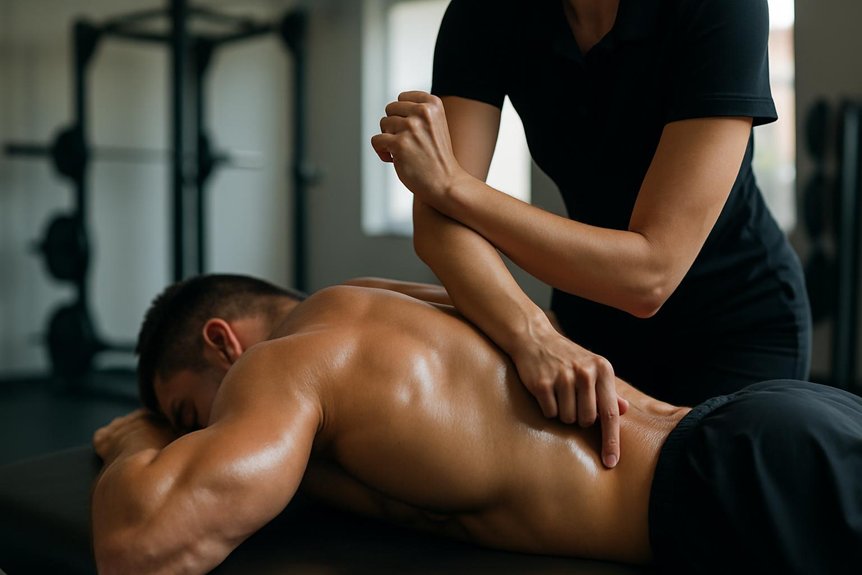
For weightlifters managing high training loads, intensive tissue massage can be a highly effective adjunct to strength programming when it is applied with clear goals and appropriate pressure. It suits lifters who accumulate dense tone in hips, lats, adductors, pecs, and forearms, where restricted glide can degrade positions under the bar.
Evidence supports massage for short‑term reductions in soreness and perceived stiffness; used well, it helps athletes tolerate volume and keep technique consistent. Deep tissue work targets deeper muscle layers and connective tissue, supporting pain relief and improved mobility when applied skillfully. In Spa & Massage clinics across London, therapists favour slow, specific strokes, trigger‑point compression, and fascial release, then reassess squat depth, overhead lockout, and grip comfort.
Pressure stays within “strong but safe,” allowing the nervous system to settle. It is less appropriate over acute injury, bruising, or when inflammation dominates symptoms.
How Does Deep Tissue Massage Help Lifting Recovery?
After heavy sessions, intensive tissue massage can support lifting recovery by downshifting protective muscle tone, easing local tenderness, and improving tissue glide so joints move through training ranges with less “drag.” Evidence suggests it can reduce perceived soreness, support circulation, and calm the nervous system—helping athletes feel more ready for the next session.
In Spa & Massage clinics across London, therapists use slow, angled pressure, forearm stripping, and specific cross-fibre work along loaded lines (lats, glutes, quads, forearms), then recheck range and bar-path positions. Treatment is paced to the client’s breathing and comfort, creating a close, grounded experience rather than “no pain, no gain.” Many lifters also benefit from brief myofascial holds around hips and thoracic spine to restore smooth movement.
Soreness vs Tightness: When to Book Deep Tissue
Feeling beaten up after a heavy block is not always a signal to “go deeper”—weightlifters often need to distinguish normal post‑training soreness (DOMS) from true tightness or protective guarding that alters range of motion and bar path.
DOMS tends to feel diffuse, tender to touch, and peaks 24–72 hours; movement usually eases it once warmed up, and technique remains stable.
Tightness is more specific and “grippy,” producing asymmetry, pinching, or a hard end‑feel that changes a front rack, overhead lockout, or squat depth.
That pattern is when Spa & Massage therapists often book deep tissue to calm tone and restore glide around key tissues.
A good rule: book if restrictions persist beyond two sessions or disrupt sleep, breathing, or setup comfort.
When Intensive Tissue Massage Isn’t the Right Choice
Although deep tissue work can be valuable for managing stubborn restrictions, it is not the best option when a weightlifter presents with acute inflammation, sharp or radiating pain, significant bruising or swelling, suspected muscle tear, uncontrolled medical conditions (e.g., clotting disorders), or symptoms that worsen with pressure. In these cases, heavy pressure may amplify protective guarding and delay recovery.
A safer approach is to pause loading, seek clinical assessment where needed, and use gentler techniques that support circulation and comfort. At Spa & Massage clinics across London, therapists screen for red flags, then adjust to lighter sports massage, lymphatic-style strokes, or soothing aromatherapy work, keeping communication close and consent explicit. If pain changes, spreads, or feels “electric,” deep tissue should wait until symptoms settle.
Intensive Tissue Massage for Shoulders, Hips, and Lower Back
In weightlifters, the shoulders, hips, and lower back often develop predictable patterns of overload—dense posterior shoulder tightness from pressing and catching, hip flexor and gluteal restriction from deep squatting, and lumbar erector guarding from bracing—so deep tissue work is most effective when it targets these regions with precise, load-informed technique rather than uniform pressure.
At Spa & Massage, therapists assess range, tenderness, and training history, then use slow, specific stripping and cross-fibre friction to the posterior cuff and lats, freeing overhead position without irritating the anterior shoulder.
Around the hips, sustained pressure and myofascial release to iliopsoas, adductors, and glute medius can restore depth and symmetry.
For the lower back, work prioritises quadratus lumborum, thoracolumbar fascia, and breath-coordinated softening, keeping pressure intimate, tolerable, and communicative.
How Often Should You Get Intensive Tissue Massage?
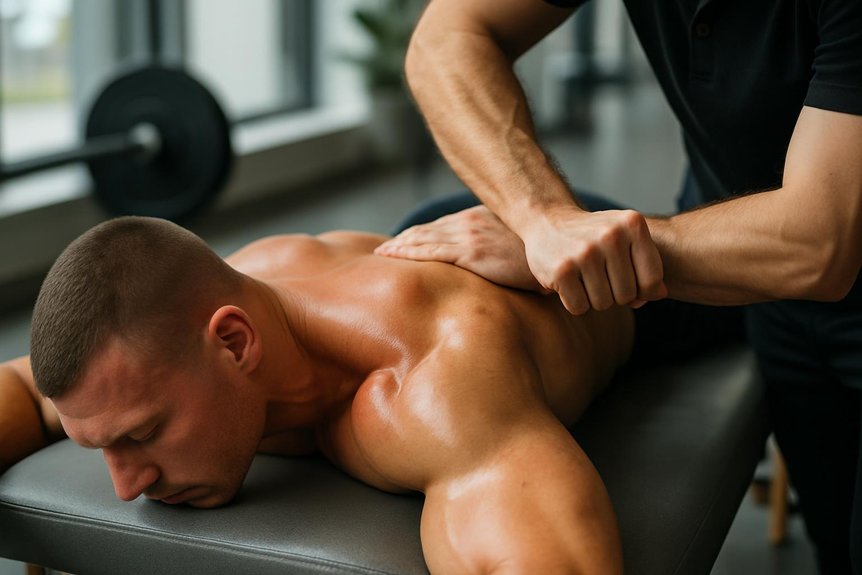
How often a weightlifter should book intensive tissue massage depends on training load and session frequency, with higher-volume blocks typically tolerating more frequent, targeted work on key tissues.
Recovery goals and timing also guide scheduling—at Spa & Massage, therapists often place deeper sessions away from maximal lifts and use shorter maintenance treatments between heavy days to support range of motion and soreness management.
Signs that more support may be needed include persistent localized tightness, reduced mobility under the bar, lingering DOMS beyond 48–72 hours, or recurring niggles that don’t settle with rest and structured self-care.
Training Load And Frequency
Often, the most effective intensive tissue massage schedule for weightlifters is dictated by training load, recovery capacity, and the specific tissues under stress rather than a fixed “one-size” interval.
During high-volume blocks or increased intensity, many lifters benefit from weekly or fortnightly sessions to address accumulating tone in hip flexors, glutes, lats, pecs, and forearms. When training is steady and well-tolerated, a maintenance cadence of every 3–4 weeks often suffices.
At Spa & Massage clinics across London, therapists match frequency to objective signs: persistent tightness that limits depth or lockout, asymmetry between sides, localized tenderness, or recurring “hot spots” around tendons.
Technique is adjusted—slow stripping, cross-fibre work, and targeted trigger-point pressure—to restore glide while keeping the athlete feeling safe and held.
Recovery Goals And Timing
After demanding sessions, the most useful intensive tissue massage timing for weightlifters is best set by the recovery outcome being targeted—next-day range of motion, reduced post-training soreness, or improved tissue tolerance ahead of the next heavy exposure—rather than by the calendar.
For soreness, a session 24–48 hours after lifting often supports comfort by downshifting protective tone and improving local circulation without overloading sensitised tissue.
For mobility, lighter, slower fascial work and targeted trigger-point techniques can be placed the evening before or morning of training, avoiding bruising pressure.
For tolerance, weekly or fortnightly deeper sessions can progressively load dense areas (hips, lats, forearms), paired with breathing-led relaxation.
In Spa & Massage London clinics, therapists match pressure to feedback and track response across sessions.
Signs You Need More
Training load and recovery outcomes can guide timing, but frequency is best set by repeatable signs that tissues are no longer adapting well between sessions. For weightlifters, cues include persistent “stuck” tightness lasting beyond 48–72 hours, loss of range at end‑positions (deep squat, overhead lockout), tender trigger points that reappear in the same lines, or strength dropping despite adequate sleep and nutrition.
Lingering soreness that changes mechanics—hip shift, rib flare, elbow ache—often indicates compensations worth addressing sooner. At Spa & Massage clinics in London, therapists use slow, specific pressure, fascial sinking, and targeted stripping to restore glide without overwhelming recovery.
When these signs recur weekly, many athletes benefit from weekly sessions; when they settle, spacing to biweekly often sustains calm, resilient tissue.
Intensive Tissue Massage vs Sports Massage for Lifters
For lifters, intensive tissue massage and sports massage are selected based on treatment goals: resolving persistent myofascial restriction and pain patterns versus supporting performance, mobility, and event-specific readiness.
They also differ in pressure, techniques, and tools—slow, targeted stripping and sustained pressure compared with faster rhythm work, compression, stretching, and occasional assisted methods—approaches Spa & Massage therapists tailor to the athlete’s tolerance and tissue response.
Recovery timing and programming then determine which fits best, with deeper sessions typically scheduled away from heavy training blocks and sports-focused work used closer to key lifts or competitions to reduce tone and maintain range without excessive soreness.
Treatment Goals And Focus
Target the right outcome by distinguishing what each modality is designed to change: intensive tissue massage typically prioritises reducing persistent muscle and fascial tension, improving local tissue mobility, and easing “stuck” areas that limit comfortable range of motion, whereas sports massage is usually programmed around performance demands—preparation, recovery, and load management—using more sport-specific assessment, pacing, and techniques to address the tissues most stressed by lifting (often hips, glutes, thoracic spine, lats, pecs, and forearms).
In Spa & Massage clinics, treatment planning for weightlifters is guided by the athlete’s current training phase, symptom pattern, and movement restrictions so pressure, technique selection, and session focus match the intended goal rather than simply “going deep.” The aim is to support training consistency: reduce flare-ups, protect key positions, and keep movement feeling smooth, confident, and connected.
Pressure, Techniques, And Tools
Once the goal is defined—mobility in a “stuck” area, symptom relief, or performance-focused recovery—the practical difference comes down to how pressure is applied and which techniques are selected.
Deep tissue work typically uses slower, sustained compression and targeted friction to influence deeper layers and reduce protective tone around hips, lats, pecs, and forearms—kept within a tolerable “good pain” that allows breathing to stay calm.
Sports massage more often blends moderate pressure with quicker strokes, stretching, and mobilisations to improve glide and readiness without provoking soreness.
At Spa & Massage, therapists may use elbows, knuckles, and forearms for precision, plus instrument-assisted tools for dense tissue, always checking consent and sensation.
Trigger-point holds and myofascial release are commonly combined for intimate, effective specificity.
Recovery Timing And Programming
After heavy training blocks, recovery outcomes depend as much on timing and dosage as on the modality itself. For lifters, sports massage is often programmed 24–72 hours post-session or between competition lifts to support circulation, reduce perceived soreness, and maintain range without provoking tenderness.
It is better placed on rest days or lighter microcycle days, when slow, specific work on adhesions and trigger points can be tolerated without blunting training readiness. At Spa & Massage clinics, therapists scale pressure and tempo to the athlete’s upcoming sessions, keeping the nervous system settled and the tissue responsive.
A practical rhythm is weekly sports massage during high-volume phases, then deeper sessions every 2–4 weeks, with lighter touch in deloads or peaking.
What Happens in a Deep Tissue Session at Spa & Massage
Expect a deep tissue session at Spa & Massage to begin with a brief, structured intake that maps training load, current lifts, pain history, and range-of-motion limits, so pressure and techniques can be selected to suit the athlete’s goals.
The therapist then palpates key tissues (pecs, lats, erectors, glutes, quads, calves) to identify tone, trigger points, and adhesions common in heavy pressing, pulling, and squatting.
A slow, warm-up layer follows, then deeper, sustained pressure with forearm or elbow, working along muscle fibres and fascial lines while staying inside the client’s “productive discomfort” threshold.
Targeted releases are paired with guided breathing and small, consented joint movements to improve glide and reduce guarding.
Sessions finish with reassessment and brief feedback, suited to London lifters.
Aftercare After Intensive Tissue Massage (Hydration, Training, Sleep)
In the hours following an intensive tissue massage, recovery hinges on three controllable variables—hydration, training load, and sleep quality—because tissue work can transiently increase local soreness while restoring range and reducing protective tone.
At Spa & Massage clinics, therapists advise steady water intake and electrolytes if sweating, aiming for pale urine rather than forced chugging.
Training should be adjusted for 24–48 hours: keep intensity moderate, prioritise technique, tempo, and pain-free range; avoid maximal pulls, heavy eccentrics, and aggressive stretching over treated areas. A short walk and gentle mobility help circulation without provoking tenderness.
Sleep is the amplifier: a dark, cool room and a consistent bedtime support parasympathetic settling and tissue remodeling.
If bruising or sharp pain appears, rest and consult the therapist promptly.
Conclusion
It can be a valuable recovery tool for weightlifters when applied strategically: targeting high-load tissues, modulating tone, and restoring usable range without chasing pain. It is most appropriate for persistent tightness, movement restriction, and overuse-related discomfort—not acute injury or severe inflammation. Integrated with smart programming, sleep, and hydration, it supports training continuity and body awareness. Done well, it can feel like a reset button the size of a planet—powerful, but best used with restraint.