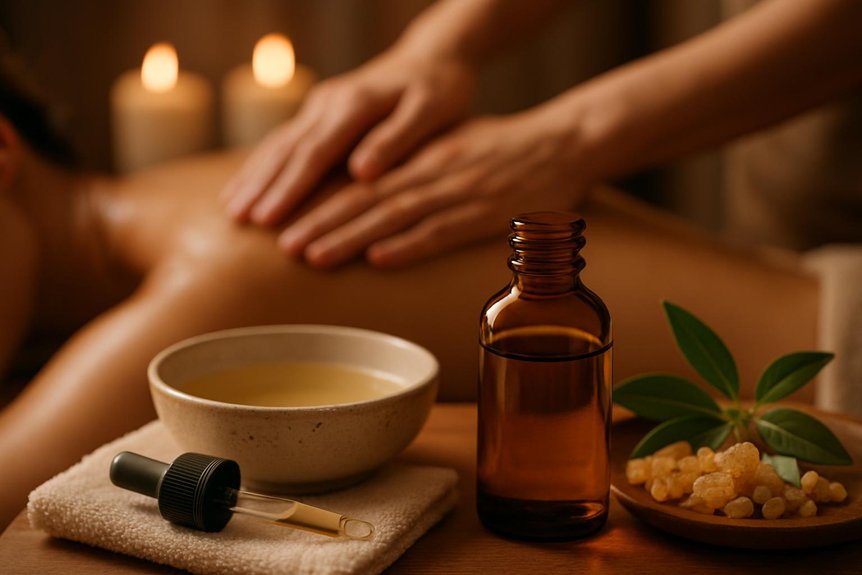
Frankincense essential oil is generally considered safe for aromatic massage in healthy adults when professionally used and properly diluted, but it can still cause irritation or allergic reactions. A 1% dilution is typical for full-body treatments (about 2 drops per 10 ml carrier oil), with up to 2% for small areas. It should be avoided on broken or inflamed skin and used cautiously with pregnancy, asthma, migraines, or fragrance allergy. Next are key dilution, patch-testing, and aftercare steps.
Is Frankincense Oil Safe for Massage?
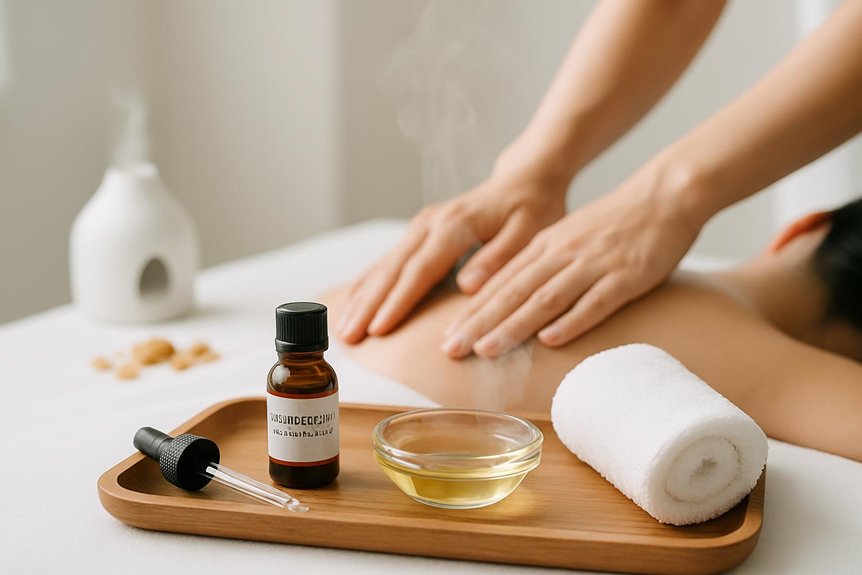
When used correctly, is frankincense oil safe for massage? For most healthy adults, it is generally well tolerated when applied in a professional setting, yet essential oils can still trigger irritation or allergy.
At Spa & Massage clinics across London, therapists treat frankincense as an active ingredient: they assess skin sensitivity, asthma or migraine history, and any current medications before use.
Clients are advised to avoid use on broken skin and to stop immediately if stinging, redness, or itching occurs.
Extra caution is recommended during pregnancy, breastfeeding, or for those with eczema, rosacea, or very reactive skin.
For intimate, close-to-skin treatments, a brief patch check and clear consent help keep the experience both safe and deeply relaxing.
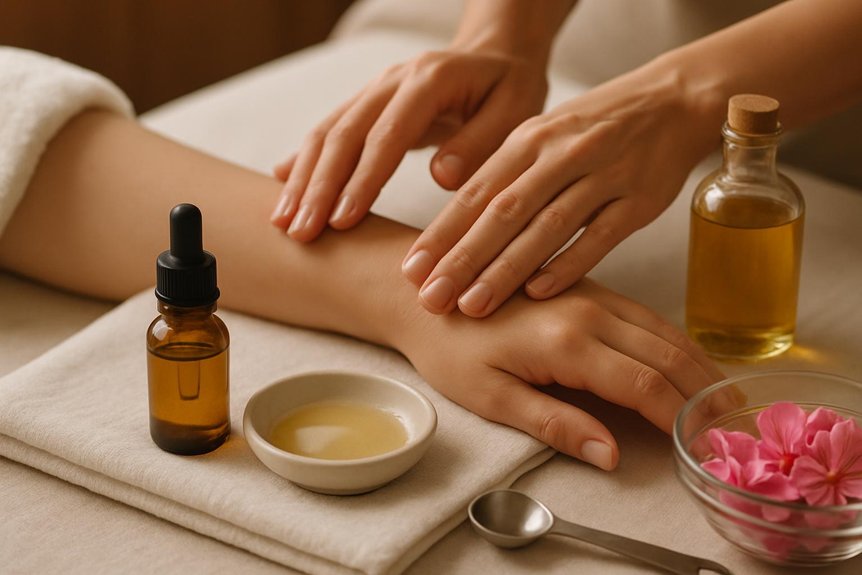
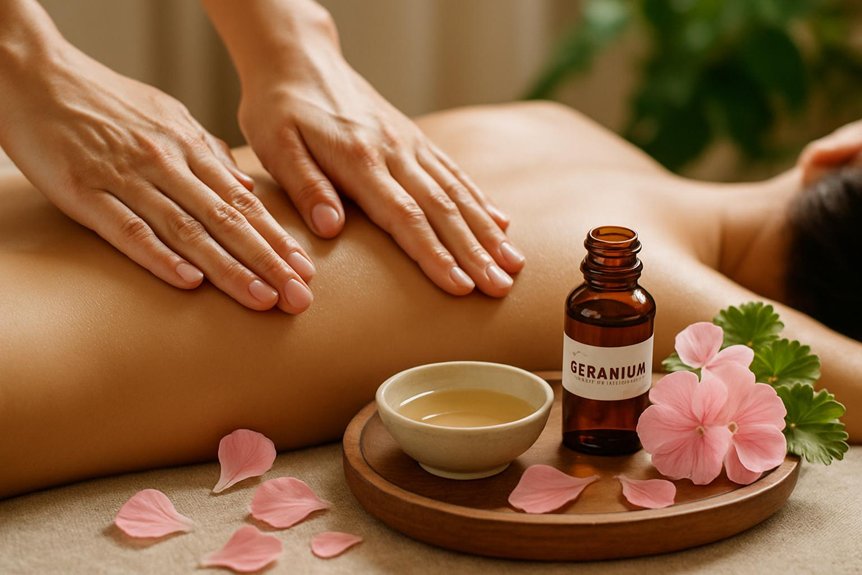
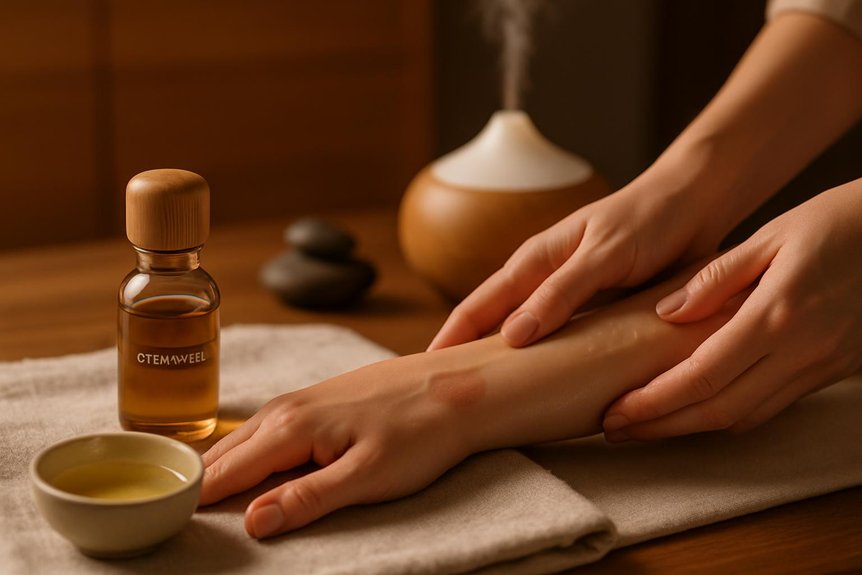
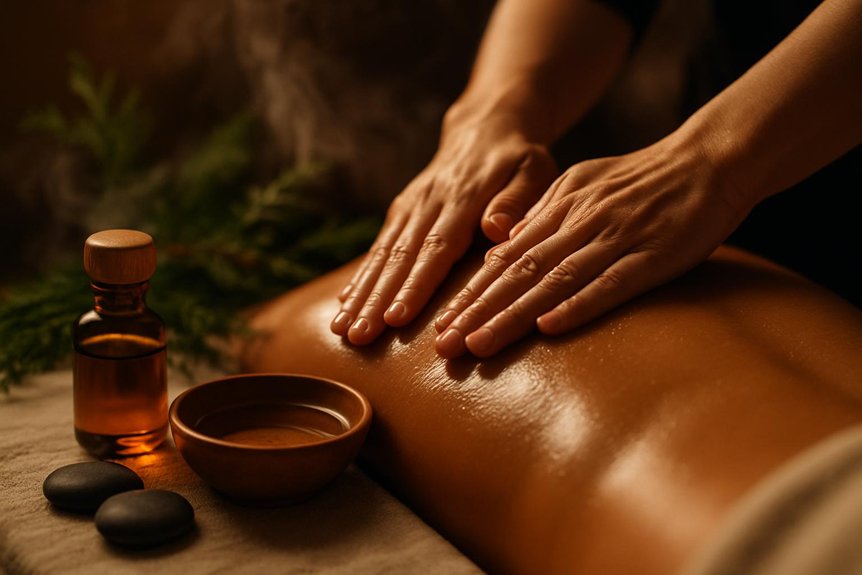
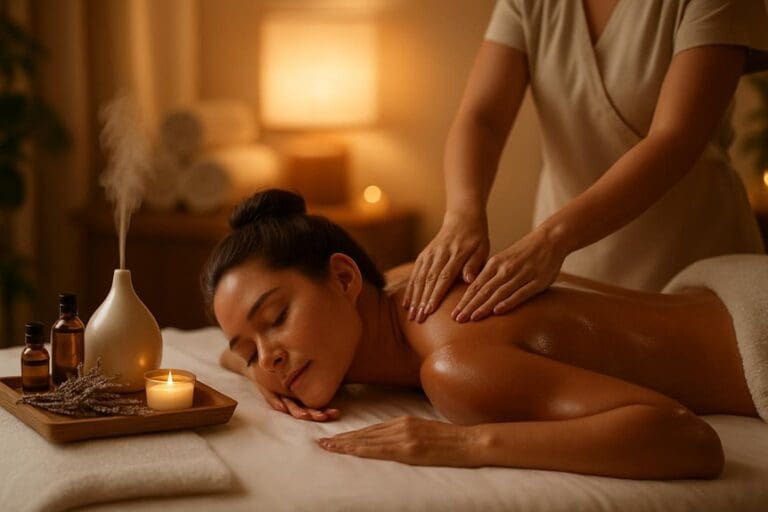
Many people also pair frankincense with aromatherapy massage to enhance relaxation and support a calm, restorative session.
How to Dilute Frankincense Oil for Massage
Proper dilution is essential for using frankincense oil safely in massage, as undiluted essential oils increase the risk of irritation and sensitisation.
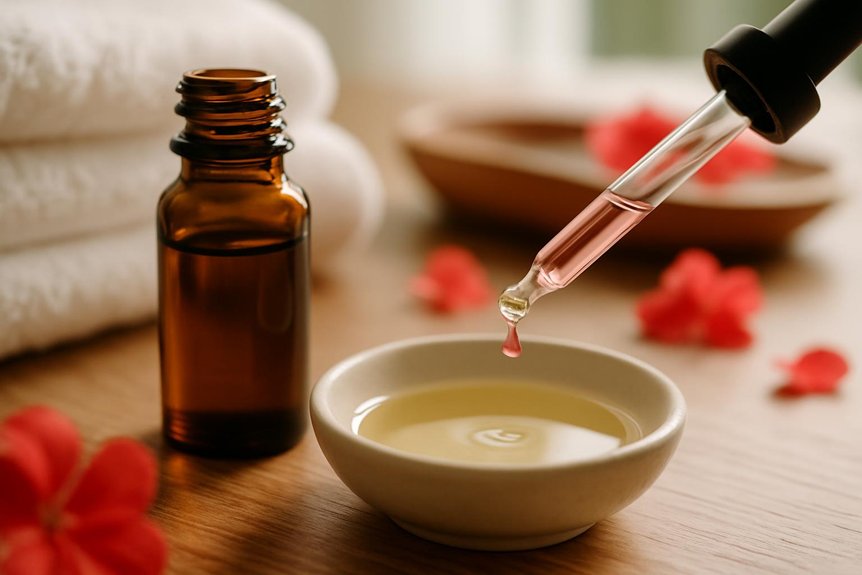
At Spa & Massage, therapists typically use a 1% dilution for full-body, close-contact treatments (about 2 drops per 10 ml carrier oil) and up to 2% for smaller areas (about 4 drops per 10 ml) when appropriate.
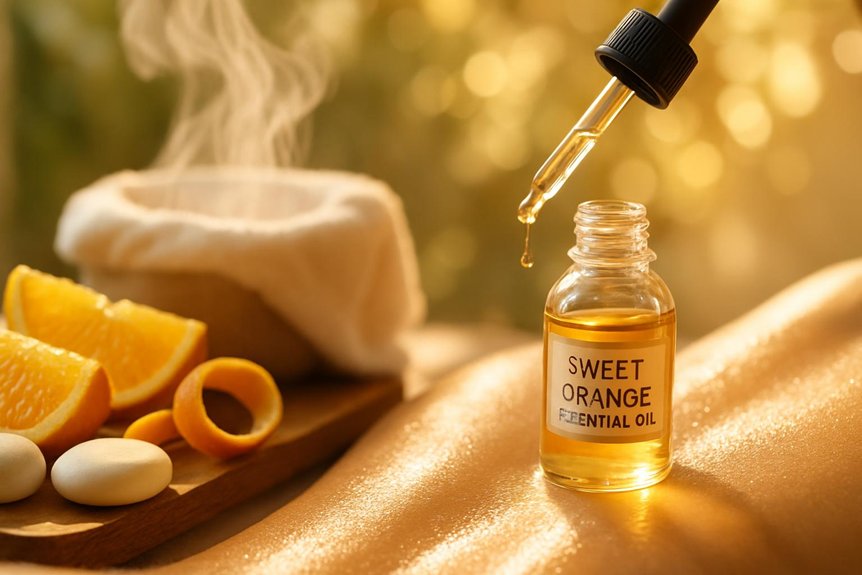
Frankincense should be blended into a skin-friendly carrier such as fractionated coconut, jojoba, grapeseed, or sweet almond, then mixed thoroughly before application.
For clients seeking a more intimate, slow-touch experience, lighter dilution supports longer glide without overwhelming aroma.
A patch test on the inner forearm for 24 hours helps identify sensitivity, especially with reactive skin types.
When Should You Avoid Frankincense Oil Massage?
Although frankincense oil is generally well tolerated at appropriate dilutions, certain situations warrant avoiding an aromatic massage with it altogether—particularly where there is a higher risk of skin reaction or where medical considerations make essential oils unsuitable.
Spa & Massage advises avoiding it on broken, sunburnt, freshly shaved, or inflamed skin, and when a client has active eczema, dermatitis, hives, or a known fragrance/essential-oil allergy.
It should also be avoided if the client is pregnant or breastfeeding unless a clinician has approved essential oils, or if they have uncontrolled asthma, migraines triggered by scent, or are undergoing chemotherapy or radiotherapy.
Extra caution is needed with anticoagulants or before surgery.
In Spa & Massage clinics, therapists switch to unscented carrier oil and focus on touch-led relaxation.
How to Patch Test Frankincense Oil (and React Safely)
For anyone introducing frankincense oil to the skin, a simple patch test is the most reliable first step to reduce the risk of irritation or allergic contact dermatitis before an aromatic massage.
At Spa & Massage, therapists advise diluting frankincense in a carrier oil, then applying a small amount to the inner forearm or behind the ear.
The area should be left uncovered and kept dry, then checked at 30 minutes and again at 24 hours.
If there is stinging, increasing warmth, itch, swelling, hives, or blistering, the product should be washed off with mild soap and cool water and not used again.
If breathing symptoms, facial swelling, or widespread rash occurs, urgent medical help is appropriate.
When in doubt, clients should request a therapist-led oil selection.
Aftercare: Reduce Irritation After Frankincense Massage
When mild redness or tingling appears after a frankincense aromatic massage, simple aftercare can usually settle the skin and prevent it worsening. The area should be gently cleansed with lukewarm water and a fragrance-free wash, then patted dry.
A cool compress for 10 minutes can reduce heat and itch. In Spa & Massage clinics, therapists recommend avoiding hot showers, saunas, and vigorous exercise for 24 hours, as heat and sweat may amplify irritation.
Loose, breathable clothing helps minimise friction during close contact. A plain, unscented moisturiser may support the skin barrier; avoid applying more essential oils.
If symptoms spread, blister, swell, or persist beyond 24–48 hours, medical advice is appropriate, especially for asthma or pregnancy.
Conclusion
Frankincense oil may seem “safe” because it is natural—an oddly persistent myth in massage. Used correctly, it is generally well tolerated: diluted in a carrier, selected from reputable sources, and tailored to the client’s skin and health history. Used casually, it can irritate, trigger allergy, or worsen eczema and asthma symptoms. A patch test, clear contraindications (pregnancy, breastfeeding, sensitised skin), and thoughtful aftercare turn tradition into safer practice—not luck.