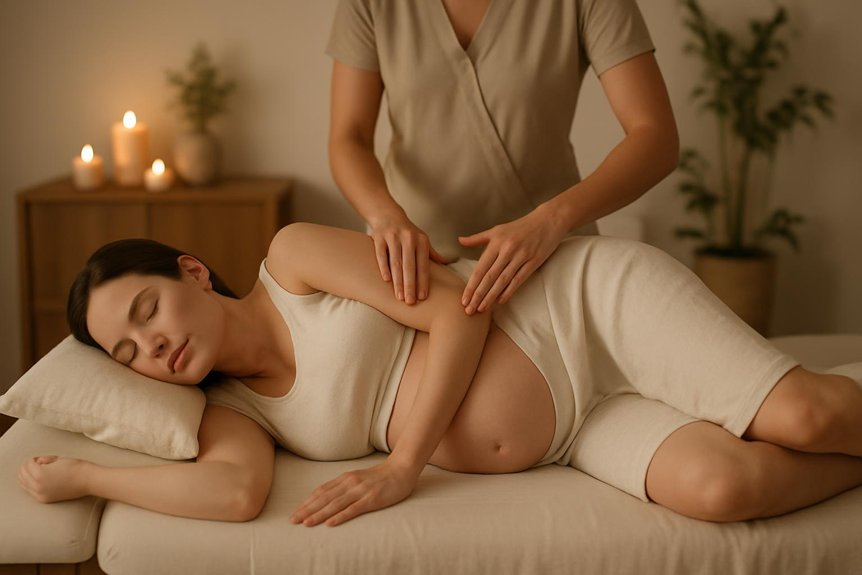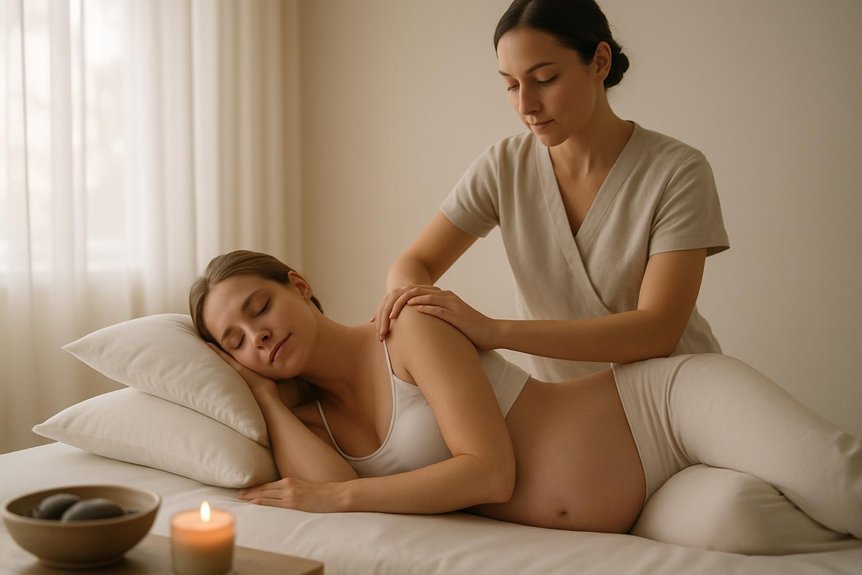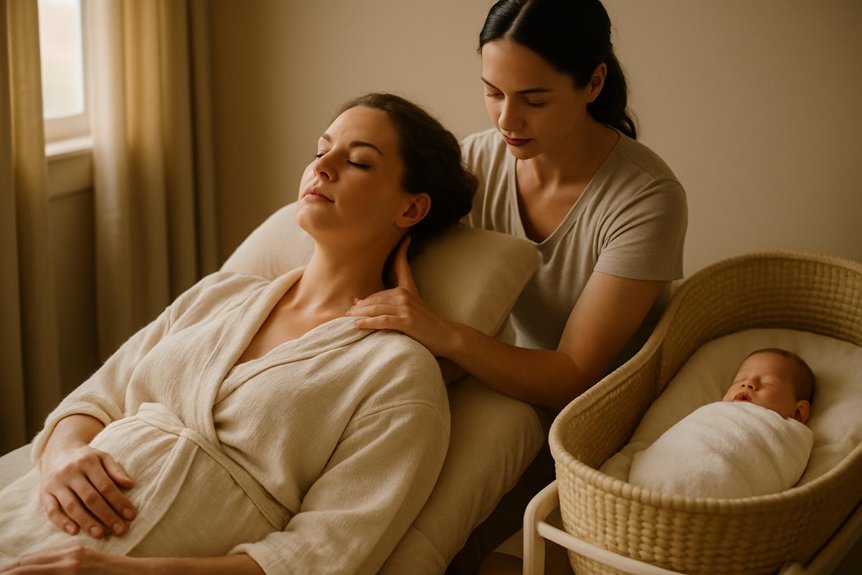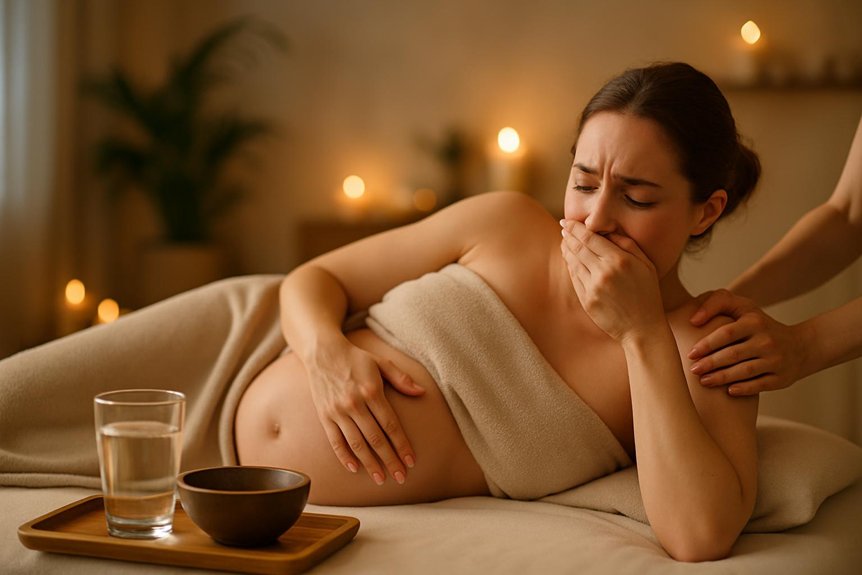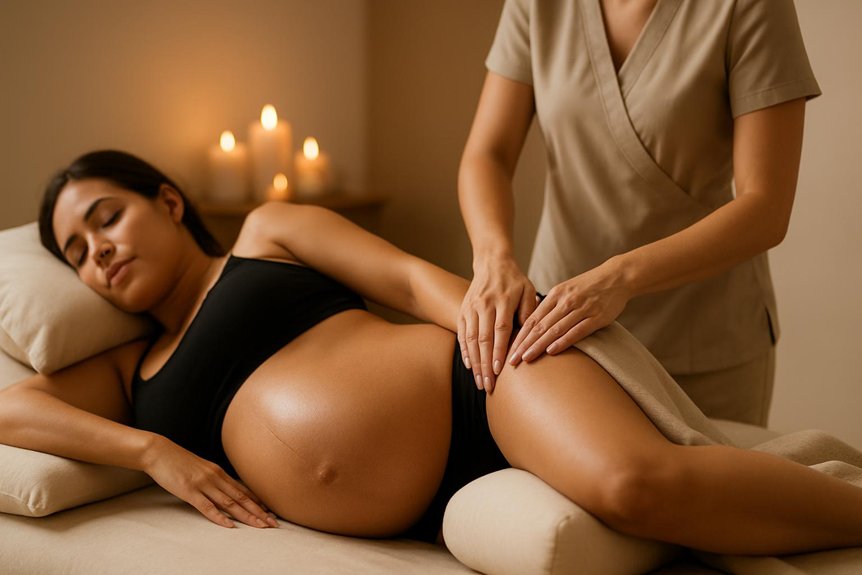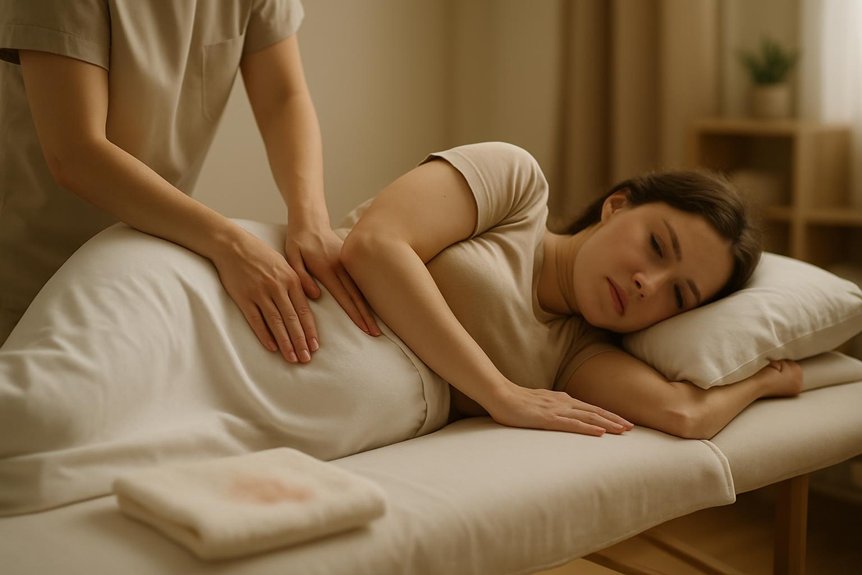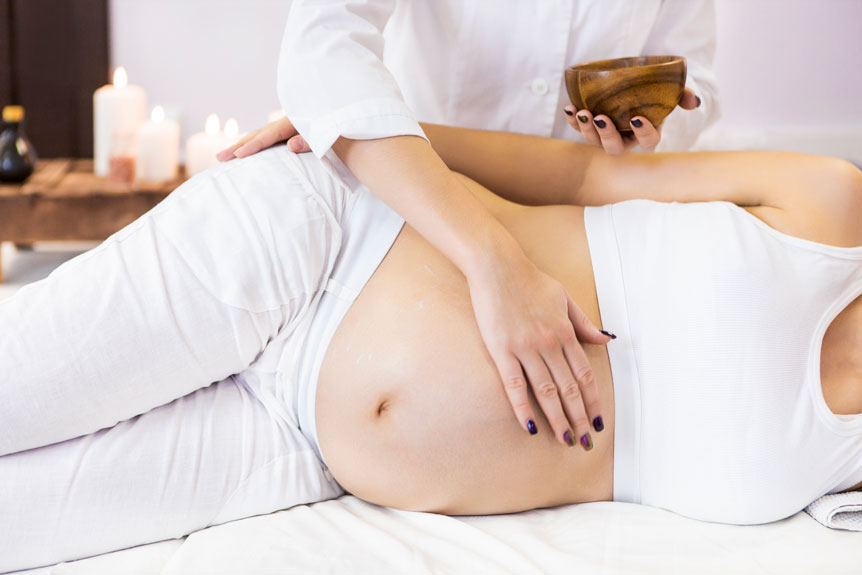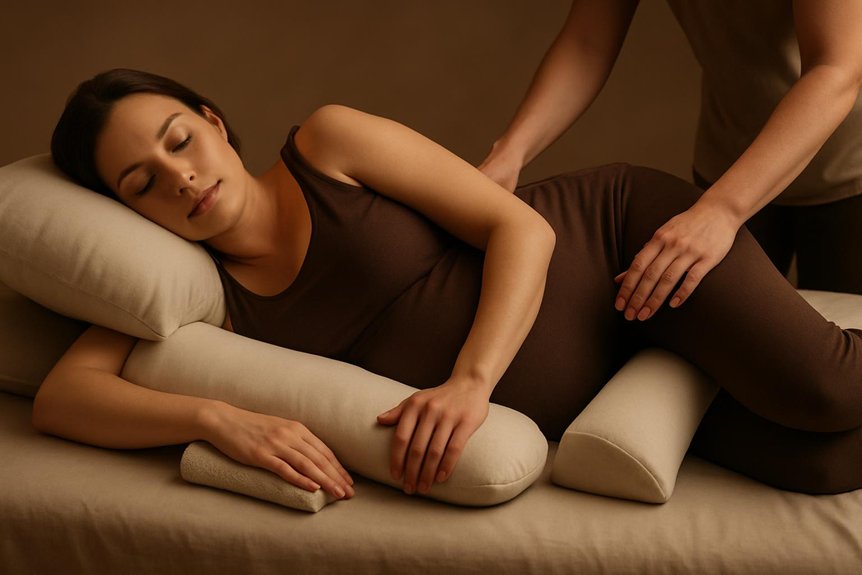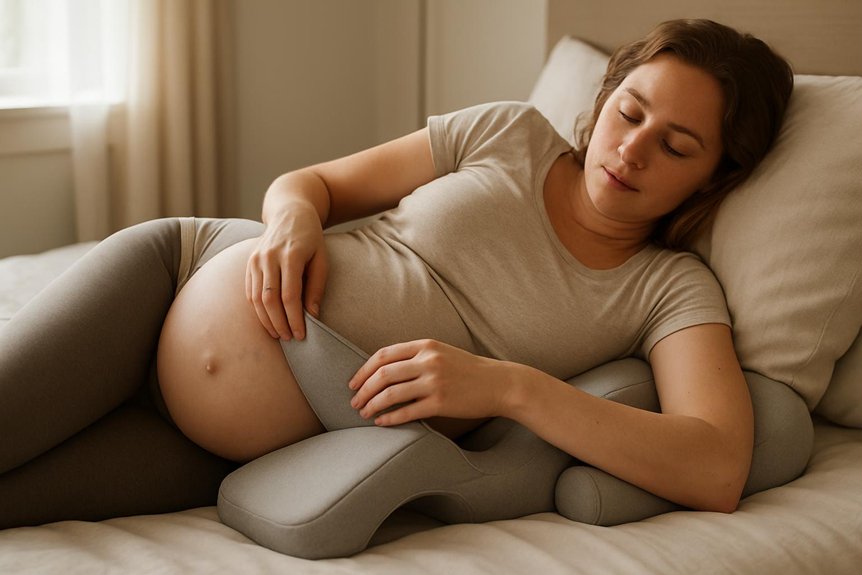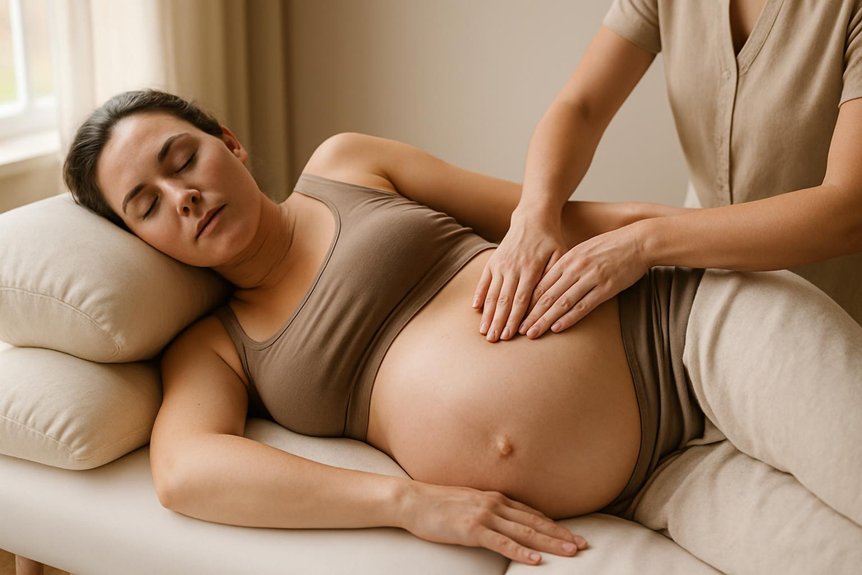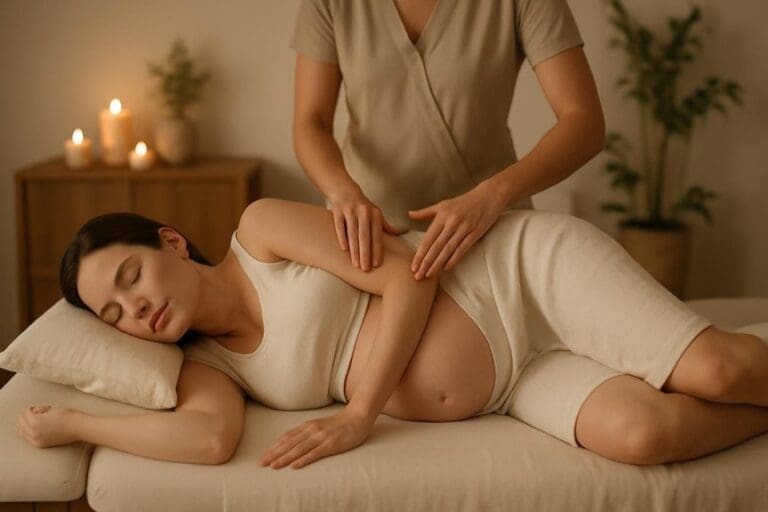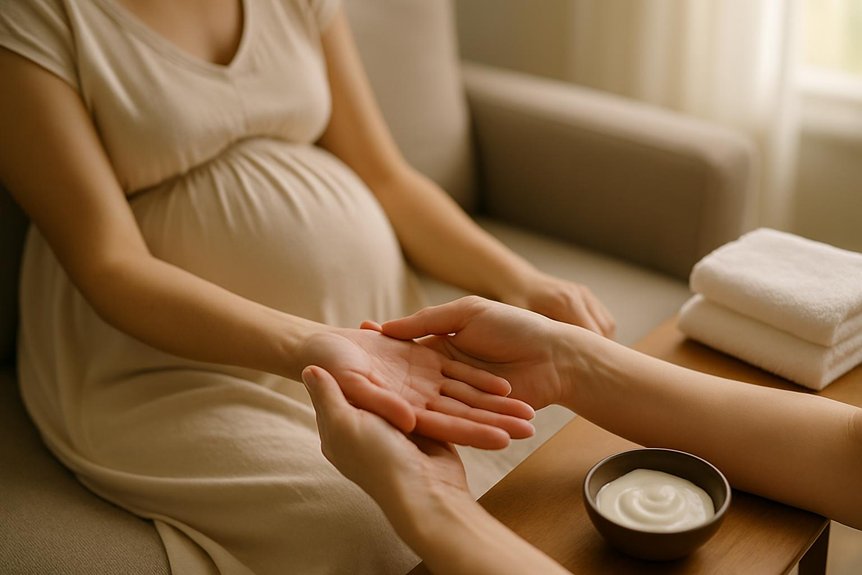
Hand massage is generally safe during an uncomplicated pregnancy when it is gentle, comfortable, and kept to soothing strokes or light kneading. It may help reduce stress, support sleep, and ease hand or wrist tension linked to fluid shifts. Massage should be avoided or postponed with high-risk pregnancy concerns, sudden pitting swelling, redness, heat, fever, or worsening pain unless a midwife or obstetrician advises otherwise. Deep, sustained pressure on LI4 and similar points is usually skipped, with more practical guidance available below.
Is Hand Massage Safe During Pregnancy?
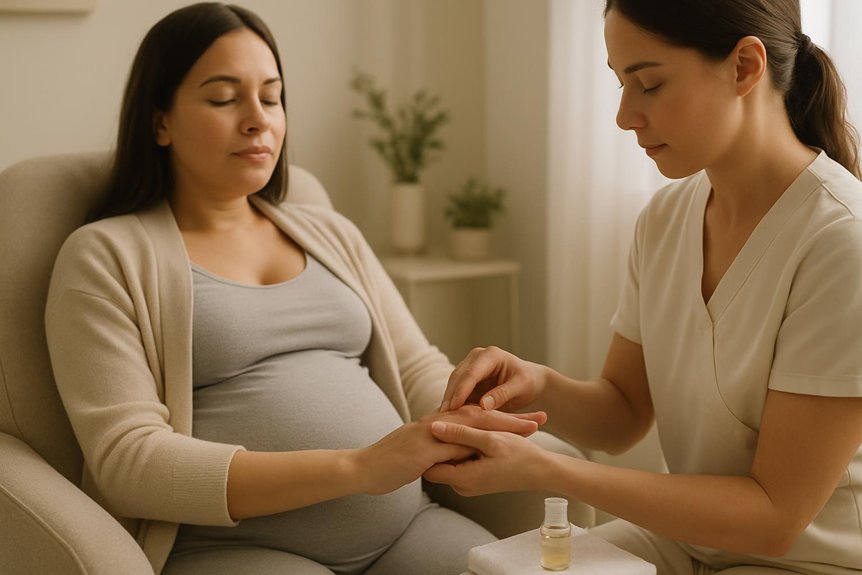
In most uncomplicated pregnancies, hand massage is considered safe when delivered with gentle, comfortable pressure and with attention to the client’s health history.
Evidence suggests soothing touch can ease stress, support sleep, and relieve hand and wrist tension that often accompanies fluid shifts and increased daily strain.
As part of the wider pregnancy massage approach for expecting mothers, this gentle hand-focused care can complement overall relaxation and comfort during pregnancy.
At Spa & Massage clinics across London, therapists use slow, calming strokes and light kneading, checking in frequently so pressure stays nurturing rather than intense.
Unscented or pregnancy-appropriate oils are chosen when needed, and positioning is kept comfortable, with the arm supported to reduce fatigue.
Many clients find the close, caring focus on the hands feels intimate and grounding, offering a quiet way to reconnect with the body while respecting personal comfort and consent.
When Should You Avoid Hand Massage in Pregnancy?
Hand massage is generally gentle, but it should be avoided or postponed in high‑risk pregnancy situations unless a midwife or obstetrician has confirmed it is appropriate.
It should also be skipped if there are signs of infection or concerning swelling—such as redness, heat, worsening pain, fever, or sudden/pitting swelling in the hands or face—until medical advice is sought.
At Spa & Massage, therapists screen for these red flags and will recommend pausing treatment and liaising with the client’s maternity care team to keep care safe and reassuring.
High-Risk Pregnancy Situations
Although hand massage is generally gentle and well tolerated during pregnancy, certain high‑risk situations warrant avoiding it or proceeding only with explicit guidance from a midwife or obstetrician.
Caution is advised with a history of recurrent miscarriage, unexplained vaginal bleeding, preterm labour risk, placenta praevia, pre‑eclampsia or gestational hypertension, significant cardiac or clotting disorders, or when hospital monitoring has been recommended.
In these contexts, even soothing touch may be best kept to quiet, non‑therapeutic holding until clinicians confirm safety.
At Spa & Massage, therapists routinely screen for red flags and adapt pressure, positioning, and session length, or postpone treatment when uncertainty exists.
When approval is given, many clients prefer slow, nurturing strokes and comfort-focused hand support, prioritising calm connection over intensity.
Infection Or Swelling Signs
Even with a generally low‑risk technique, hand massage should be avoided during pregnancy when there are signs of infection or abnormal swelling, as these may indicate inflammation, cellulitis, or a circulatory issue needing medical assessment.
Red flags include warmth, spreading redness, tenderness, broken skin, pus, fever, or new swelling in one hand or arm, especially with pain.
Sudden, marked swelling in both hands, headaches, visual changes, or upper‑abdominal pain can also warrant urgent maternity review.
At Spa & Massage clinics across London, therapists pause treatment and encourage clients to contact their midwife or GP before any further touch.
If cleared, massage should remain light and non‑irritating, avoiding inflamed areas; in‑clinic, fragrance‑free oils are preferred for sensitive skin.
Which Hand Pressure Points Should You Avoid in Pregnancy?
During pregnancy, which spots on the palm and fingers should be left alone?
Therapists generally avoid sustained, deep pressure on points traditionally linked in acupressure to uterine activity: the web between thumb and index finger (LI4), the center of the palm (PC8), and firm squeezing along the thumb pad and base (thenar area).
Evidence that hand points alone trigger labour is limited, yet many clinicians take a cautious approach because comfort and peace of mind matter.
At Spa & Massage clinics across London, pregnancy clients are asked about contractions, bleeding, or high-risk care, and any “strong-point” work is skipped if there is doubt.
Light, comforting touch is typically preferred, especially when nausea, swelling, or tingling is present.
How to Do Safe Hand Massage (By Trimester)
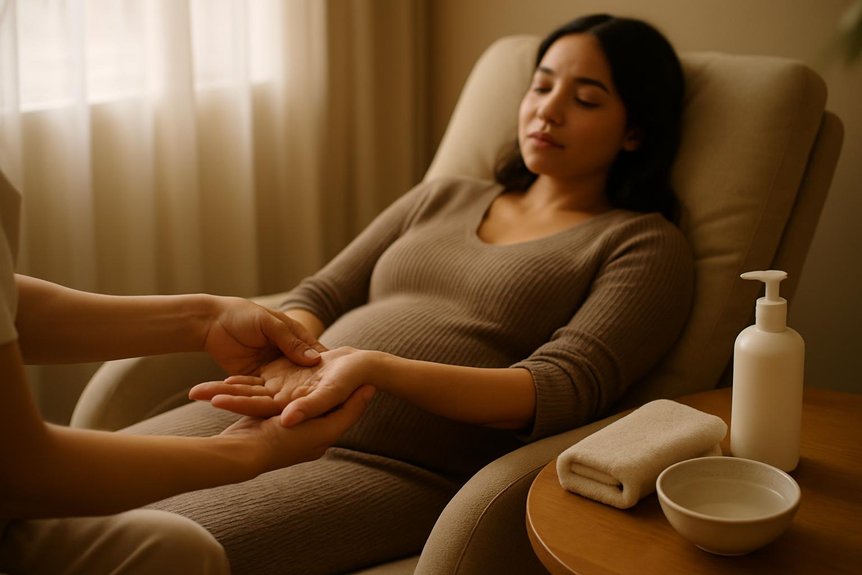
Across the three trimesters, a safe hand massage is guided by the same principles our Spa & Massage therapists use in clinic: keep pressure light-to-moderate, prioritise comfort, and adapt to changing symptoms such as nausea, swelling, tingling, or joint laxity.
In the first trimester, sessions should be brief (5–10 minutes), focusing on gentle palm warming, slow thumb circles between metacarpals, and soothing strokes toward the wrist; stop if queasiness rises.
In the second trimester, add soft kneading of the thenar muscles and finger traction, keeping wrists neutral to protect lax joints.
In the third trimester, emphasise lymph-friendly strokes from fingertips to forearm, avoid deep pressure over swollen tissues, and elevate the hand.
Any sharp pain, numbness, or worsening swelling warrants stopping and clinical advice.
Best Oils for Pregnancy Hand Massage
For pregnancy hand massage, the safest “best” oils are typically simple, fragrance-free carrier oils that provide slip without triggering skin sensitivity or nausea.
In Spa & Massage clinics, therapists often favour cold-pressed sweet almond, grapeseed, or jojoba oil because they are lightweight, absorb well, and support gentle, close-contact strokes without tugging.
For very dry hands, a small amount of olive oil can feel deeply nourishing, though it may be heavier.
Patch testing on the inner wrist for 24 hours is advised, as pregnancy can heighten reactivity.
Essential oils are usually avoided in pregnancy hand work unless a therapist has confirmed suitability, dilution, and comfort.
The ideal oil should feel soothing, neutral in scent, and allow slow, calming touch.
When to Book a Professional Prenatal Massage in London
Choosing a gentle, fragrance-free oil can make home hand massage more comfortable, but persistent swelling, tingling, sleep disruption, or rising stress levels often signal that hands-on care is better delivered by a trained pregnancy therapist.
In London, booking is sensible from the second trimester onward, and earlier if a midwife or GP advises it. A professional session is also appropriate when wrists feel tight, grip weakens, or headaches and anxiety are building, as safe positioning and pressure need adjusting for pregnancy changes.
At Spa & Massage clinics across Crouch End, Bayswater, Chiswick, Earl’s Court, Belsize Park, and Richmond, therapists use pregnancy-specific bolstering and measured, calming touch, with options such as prenatal massage and reflexology.
Aftercare includes hydration, gentle stretches, and monitoring symptoms.
Conclusion
Hand massage is generally safe during pregnancy when adapted to comfort, trimester, and health history. Gentle techniques may ease swelling and support relaxation, while caution is warranted with high-risk pregnancies, unexplained pain, or conditions such as preeclampsia or clotting concerns. Some practitioners avoid strong pressure over traditional acupressure points, despite limited evidence of harm. Why not treat hand massage like any prenatal care—individualised, conservative, and guided by clear communication?