Lavender oil is generally safe for aromatic massage when it is properly diluted in a carrier oil (typically 1–2% for adults, lower for sensitive skin) and applied to intact skin by a trained therapist. Most clinics screen for allergies, asthma or fragrance sensitivity, pregnancy status, and relevant medications, and can switch to unscented oil if needed. Irritation or allergy is uncommon but possible, especially with old or oxidised oils; stop if symptoms occur. Further details cover patch testing, pregnancy, and aftercare.
Is Lavender Oil Massage Safe for Most People?
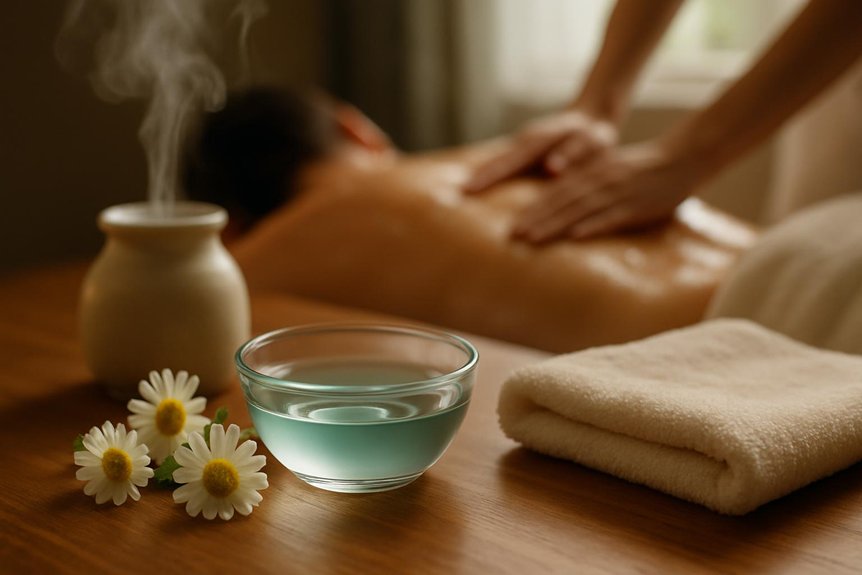
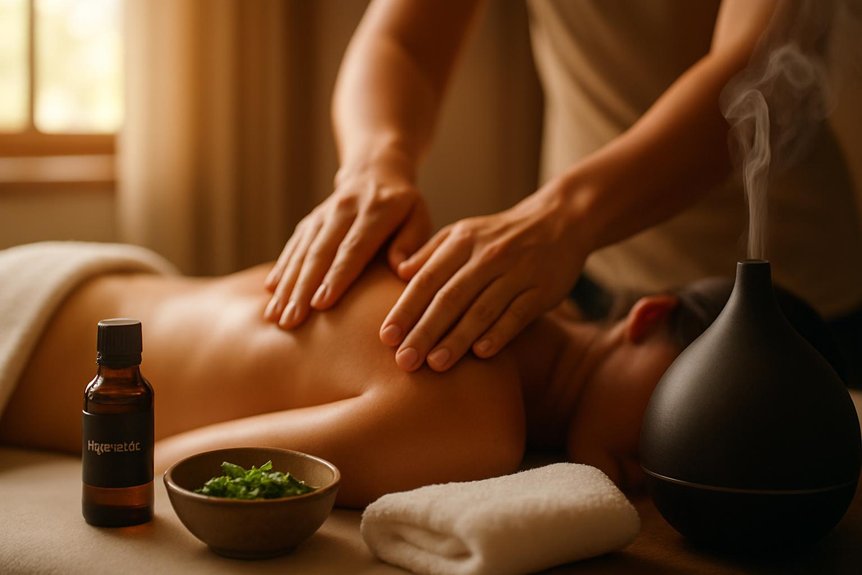
Lavender oil massage is generally safe for most people when the essential oil is properly diluted in a carrier oil and applied by a trained therapist. Evidence suggests lavender aromatherapy is well tolerated and commonly used to support relaxation and ease muscular tension during close, nurturing touch. Many people also relax and unwind with aromatherapy massage as part of a calming self-care routine.
At Spa & Massage clinics across London, therapists take a client-centered approach, checking health history, allergies, pregnancy status, and current medications before selecting oils and pressure. Caution is advised for people with asthma triggered by scents, very sensitive skin, or a history of fragrance reactions.
Anyone with a known lavender allergy should avoid it. For first-time clients, therapists can offer a scent check and adapt the treatment, including using an unscented oil, so comfort and consent remain central throughout.
What Makes Lavender Oil Safe on Your Skin?
Lavender oil is generally considered skin-safe in aromatic massage when it is properly diluted in an appropriate carrier oil, which reduces the likelihood of irritation while supporting even application.
At Spa & Massage clinics, therapists select dilution levels based on the client’s skin type, treatment goals, and any known sensitivities, and patch testing is advised for first-time use or reactive skin.
This safety-first approach helps identify sensitivity early and guarantees the massage remains comfortable and client-centered.
Proper Dilution And Carrier Oils
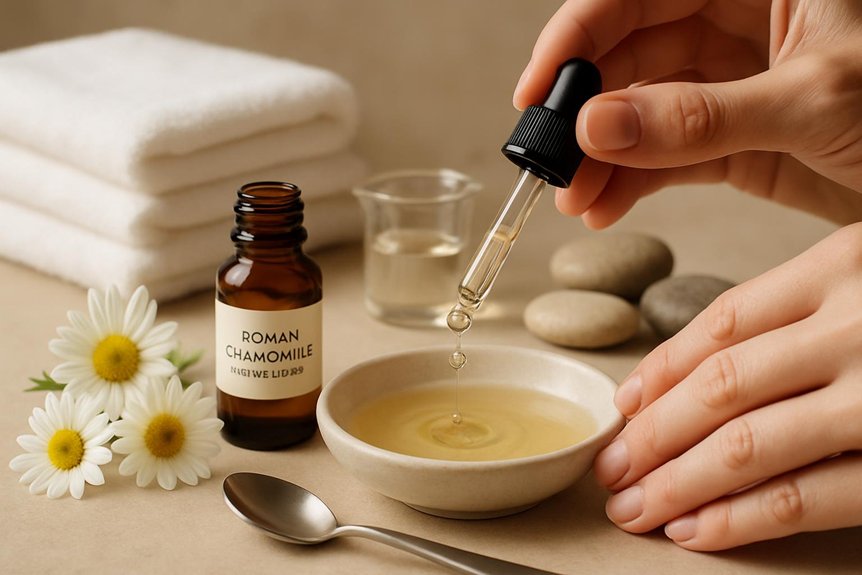
In aromatic massage, skin safety depends largely on proper dilution: essential oils are highly concentrated and are typically blended into a carrier oil before application to reduce the risk of irritation or sensitisation.
For adult body massage, many professional guidelines place lavender at roughly 1–2% (about 1–2 drops per 5 mL carrier), with lower dilutions preferred for facial work or clients wanting a lighter, more intimate scent.
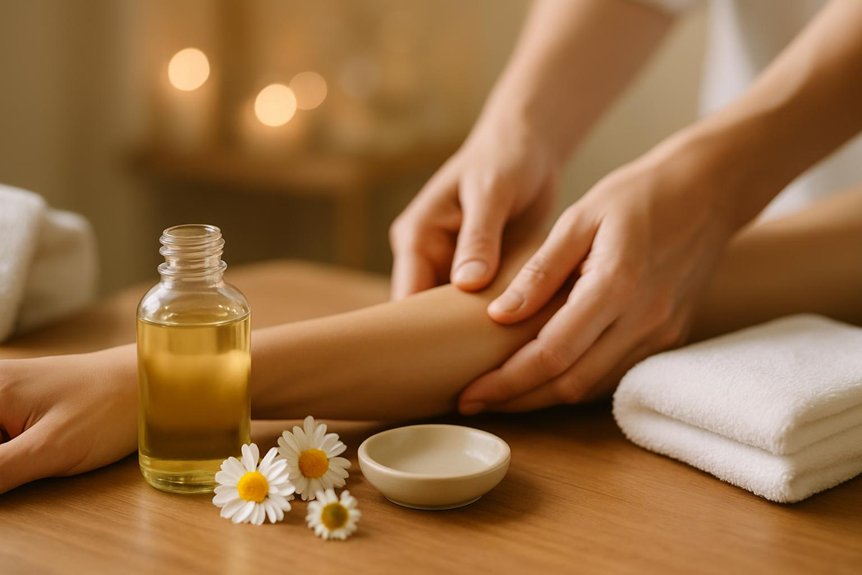
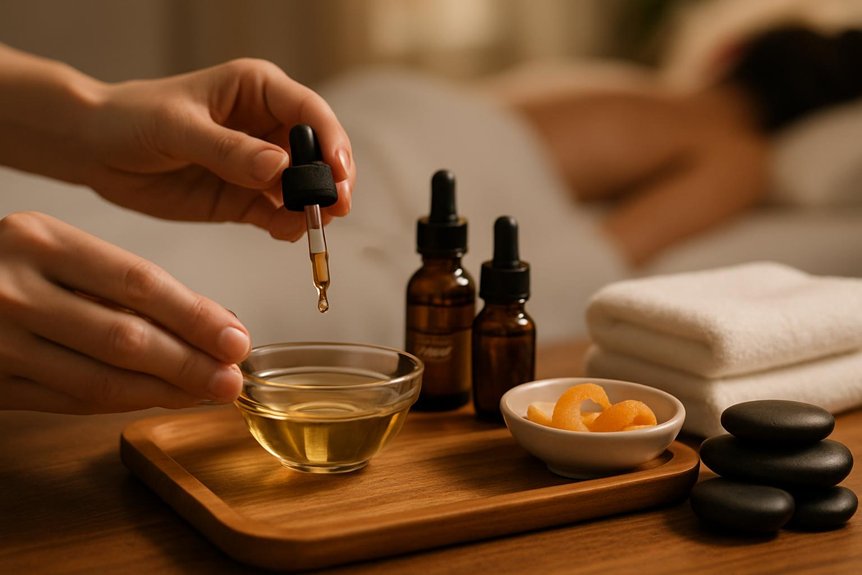
Carrier oils help “cushion” the essential oil and improve glide, allowing slow, comforting strokes without drag. In Spa & Massage clinics, therapists select carriers such as grapeseed for a light feel, jojoba for stability, or sweet almond for softness, then adjust dilution to skin type, treatment area, and desired aroma intensity.
Proper blending keeps the experience soothing and close, not sharp.
Patch Testing And Sensitivity
Even with careful dilution in a suitable carrier oil, individual skin responses vary, so patch testing is the simplest safeguard before wider use of lavender oil in aromatic massage.
A small amount of the diluted blend can be applied to the inner forearm, covered, and observed for 24 hours for redness, itching, burning, swelling, or a rash.
Sensitivity is more likely with eczema, very reactive skin, recent shaving, or use of retinoids or acids.
If any reaction occurs, the oil should be washed off and avoided; persistent symptoms warrant medical advice.
At Spa & Massage clinics across London, therapists routinely ask about allergies and past reactions and can adjust dilution, switch carriers, or omit essential oils to keep touch soothing and safe.
How Should Lavender Oil Be Diluted for Massage?
For massage, lavender essential oil should be diluted in a carrier oil, with most healthy adults typically using 1–2% (about 1–2 drops per 5 mL, or 5–10 drops per 25 mL) and lower ratios (0.5–1%) preferred for sensitive skin or first-time clients.
In Spa & Massage clinics, therapists measure drops carefully, blend into skin-safe carriers, and patch-check client history to reduce irritation and sensitisation risk.
Safe blending practices also include keeping total essential oils within the chosen dilution, avoiding use on broken skin, and adjusting the ratio for pregnancy, allergies, or existing skin conditions.
Recommended Dilution Ratios
Most adults tolerate lavender essential oil best when it is diluted to a low, well-measured concentration before any massage application. Spa & Massage typically recommends 1–2% dilution for full‑body aromatic massage (about 1–2 drops per 5 ml carrier oil).
For smaller, more intimate areas—neck, shoulders, hands, or feet—up to 2% is usually sufficient to feel soothing without overwhelming the skin or senses. For clients with sensitive skin, eczema history, or those new to essential oils, 0.5–1% is safer (roughly 1 drop per 10 ml).
Higher ratios are rarely necessary and increase irritation risk. A patch test and clear consent help keep touch comfortable, calm, and confidently shared.
Safe Blending Practices
In practice, safe lavender oil blending for massage starts with measuring both the essential oil and the carrier oil precisely, then mixing to a defined dilution rather than “adding a few drops” by feel. At Spa & Massage clinics, therapists select a skin-friendly carrier (such as sweet almond or grapeseed), use clean glassware, and blend fresh to reduce oxidation and irritation risk.
A simple rule is to calculate drops per 10 ml, label the bottle with date and dilution, and discard if scent changes or cloudiness appears. Clients with sensitive skin, asthma, pregnancy, or a history of allergies should use lower dilutions and request a patch test. Lavender should never be applied neat to intimate areas or broken skin.
Can Lavender Oil Massage Cause Irritation or Allergy?
How likely is irritation or an allergic reaction during a lavender oil massage? For most people it is uncommon, but it can happen, especially with sensitive skin, eczema, fragrance allergy, or prior reactions to essential oils.
Lavender contains aromatic compounds that may trigger contact dermatitis; oxidation in older oil can increase sensitisation risk. Reactions may include stinging, redness, itching, hives, or a warm rash where the oil was applied.
In Spa & Massage clinics, therapists minimise risk by using properly diluted lavender in a carrier oil, selecting fresh products, and adjusting pressure and exposure time to keep touch soothing and intimate rather than overstimulating.
Clients should mention asthma, pregnancy, and any history of allergies, and should request fragrance-free alternatives if uncertain.
How to Patch Test Lavender Oil at Home
Patch testing is often the simplest way to check whether lavender oil is likely to irritate the skin before it is used in an aromatic massage.
A small, diluted mix should be prepared: 1 drop lavender essential oil in 1 teaspoon (5 ml) of a plain carrier oil, similar to blends used in Spa & Massage clinics.
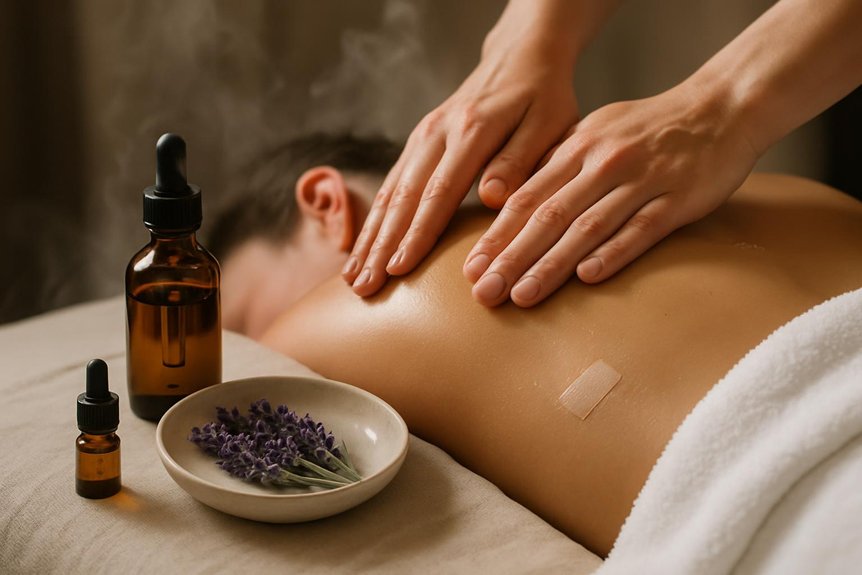
A pea-sized amount can be applied to the inner forearm, then covered with a plaster and left for 24 hours.
The area should be kept dry and not rubbed.
Redness, itching, burning, swelling, or blistering suggests the oil should not be used; the skin should be washed with mild soap and cool water.
No reaction supports cautious use, with fresh dilution each time.
Who Should Avoid Lavender Oil Massage?
For some people, lavender oil aromatic massage is best avoided or used only with explicit clinical guidance, because essential oils can trigger allergy, irritation, or unwanted systemic effects even when properly diluted.
Those with a known lavender or fragrance allergy, asthma triggered by scent, eczema, psoriasis flares, or very reactive skin should skip it or request a fragrance-free massage.
Extra caution is advised for clients with a history of contact dermatitis, migraines provoked by aroma, or low blood pressure where relaxation effects may feel too strong.
People taking sedatives, anticoagulants, or multiple medicines should check interactions with a clinician.
At Spa & Massage clinics, therapists invite full health disclosure and can tailor pressure, ventilation, and oil choice—often switching to unscented carrier oils for close, comfortable care.
Is Lavender Oil Massage Safe in Pregnancy?
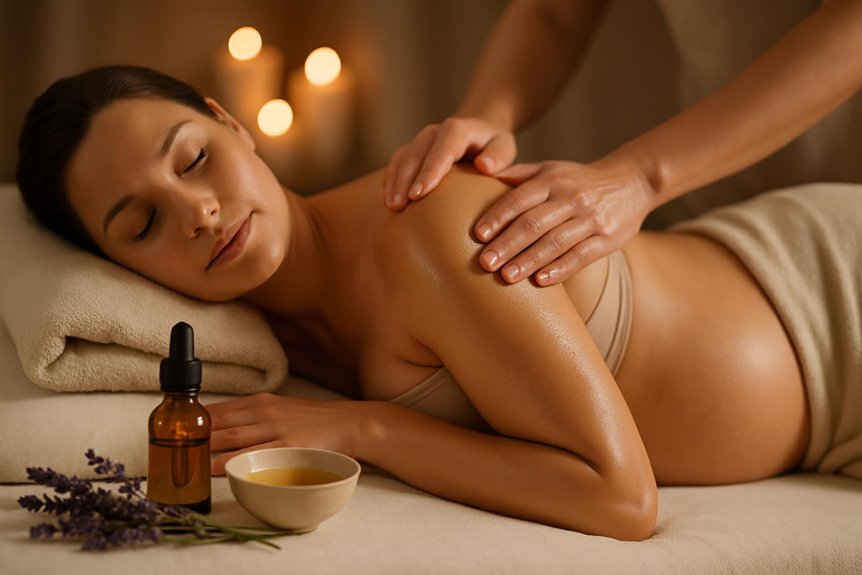
A lavender oil aromatic massage can be appropriate in pregnancy for some clients, but safety depends on gestational stage, symptom profile, and correct dilution and application.
In early pregnancy, many clinicians advise caution with essential oils; from the second trimester, low-dilution use (typically 0.5–1%) is more commonly accepted when the client is well and has no prior sensitivity.
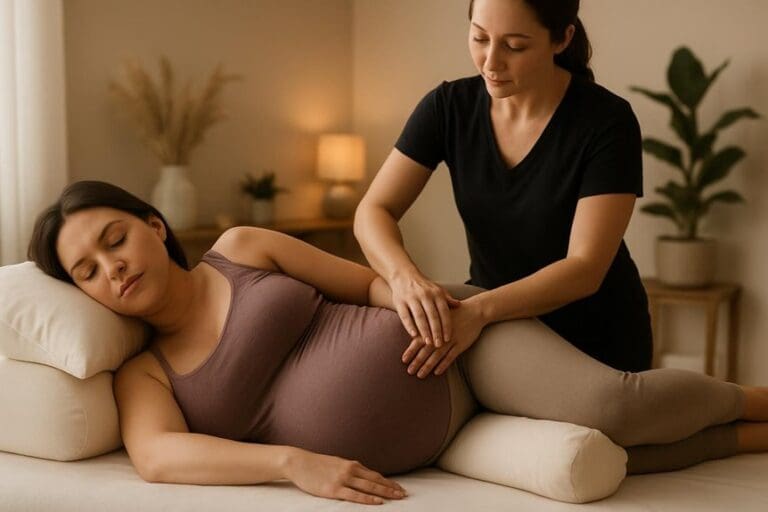
At Spa & Massage, therapists take a pregnancy-specific consultation, patch-test if needed, and use gentle, side-lying positioning to support comfort and circulation.
The oil should never be applied to broken skin or used in strong concentrations, and any dizziness, headache, nausea, or uterine cramping warrants stopping.
For clients seeking closeness and calm, soft pressure and slow strokes can soothe without overwhelming scent.
Always clear with midwife/GP.
Lavender Oil and Medications: Any Interactions?
In clinical practice, lavender essential oil used in aromatic massage is generally low risk, yet potential interactions matter most for clients taking sedatives or sleep aids, antidepressants/anxiolytics, blood-pressure medicines, or anticoagulants/antiplatelets, because lavender’s calming effects and possible mild cardiovascular effects could theoretically add to medication effects.
At Spa & Massage, therapists consequently ask about medicines and tailor dilution, session length, and pressure accordingly.
Caution is sensible if a client feels unusually drowsy, light‑headed, bruises easily, or is newly started on, or changing doses of, these drugs.
While topical aromatherapy uses low doses, evidence is limited and individual sensitivity varies.
Clients are encouraged to share prescriptions and over‑the‑counter products confidentially, and to seek medical advice when uncertainty exists, especially with complex regimens.
Aftercare: What to Do After a Lavender Oil Massage
Medication considerations are only part of safe lavender aromatherapy; what happens after the session also influences comfort and risk, particularly around drowsiness, light‑headedness, and skin sensitivity.
At Spa & Massage clinics, therapists advise clients to rise slowly, sip water, and avoid driving or alcohol if sleepy. Warmth and calm breathing help the body settle, especially after deep tissue or sports work.
Clients should keep treated skin clean, avoid hot showers, saunas, and sun exposure for 12–24 hours, and pause new skincare to reduce irritation risk. If redness, itching, or wheeze occurs, the oil should be washed off and medical advice sought. Minor tenderness is normal; escalating pain, swelling, or headache warrants follow‑up.
Conclusion
Lavender oil is generally safe in aromatic massage when properly diluted, patch-tested when indicated, and tailored to the client’s health history, pregnancy status, and skin condition. Risk rises with undiluted use, broken skin, or prior fragrance allergy. For example, a London client with eczema who chose a 0.5% dilution in a gentle carrier oil tolerated the massage well after a negative patch test, whereas a stronger blend might have triggered dermatitis. Professional screening and aftercare reduce avoidable reactions.