Gentle neck massage is generally considered safe in an uncomplicated pregnancy when performed with light-to-moderate pressure and supportive positioning. It may help ease postural strain, tension headaches, and upper-back tightness, while avoiding sustained pressure on the front and sides of the neck. Massage should be postponed with vaginal bleeding, severe abdominal pain, ruptured membranes, fever, infection, acute neck injury, or symptoms suggestive of pre‑eclampsia. Further guidance covers self-massage, oils, positioning, and therapist selection.
Is Neck Massage Safe During Pregnancy?
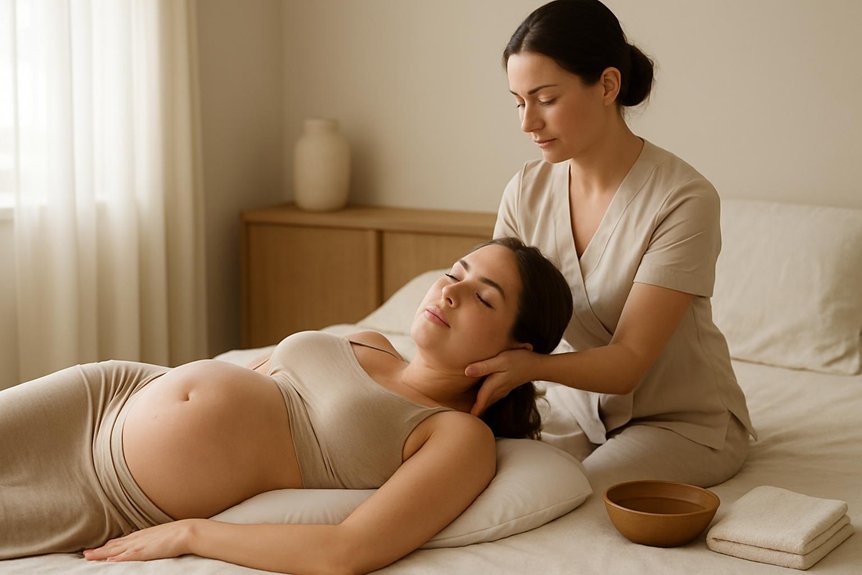
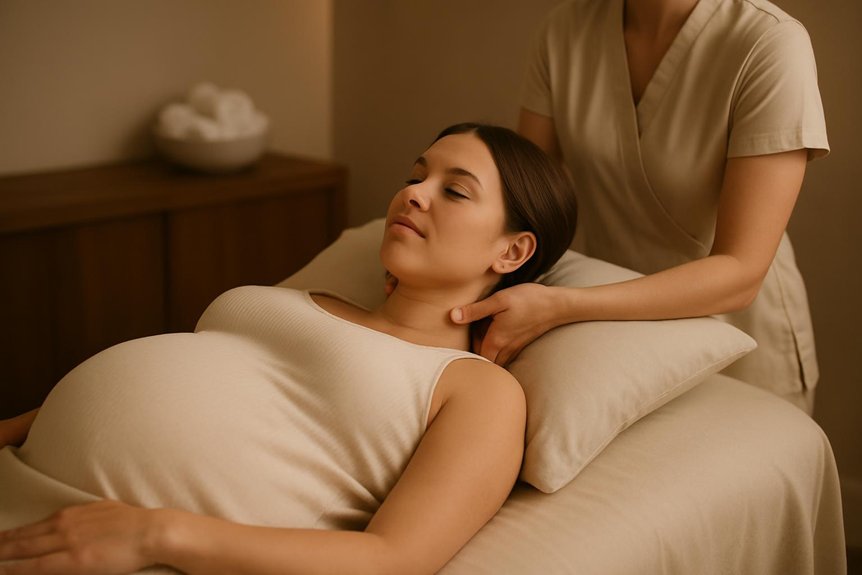
In most uncomplicated pregnancies, a gentle neck massage is considered safe when performed by a properly trained therapist and adapted to the client’s stage of pregnancy and comfort. Evidence-informed practice supports light-to-moderate pressure to ease postural strain, tension headaches, and upper-back tightness commonly associated with hormonal and biomechanical change.
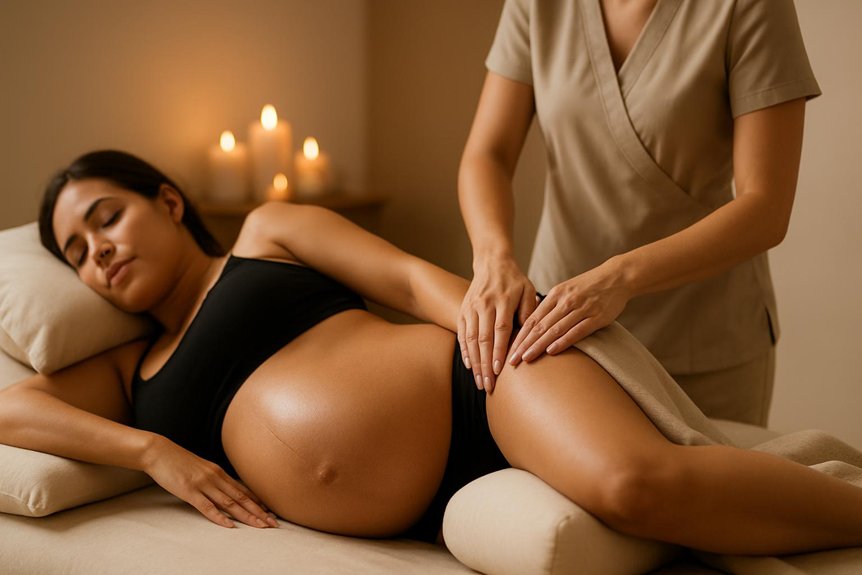
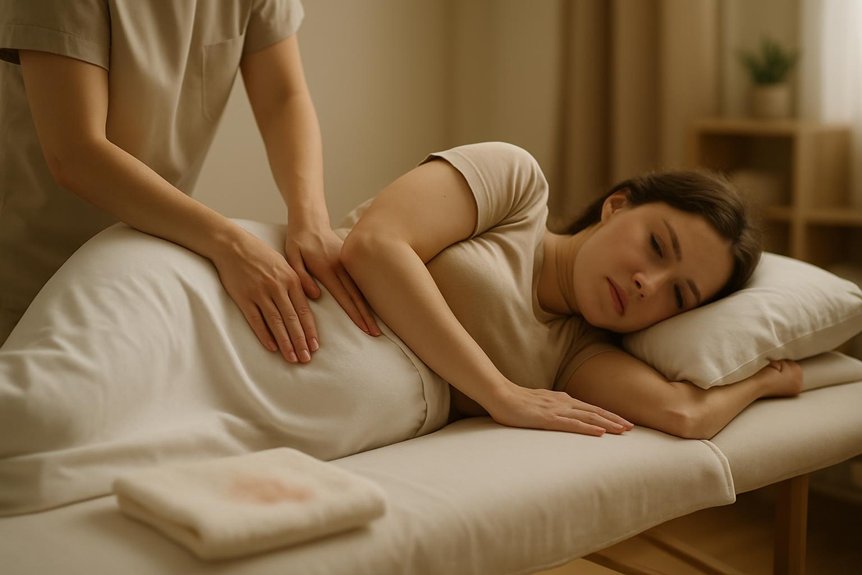
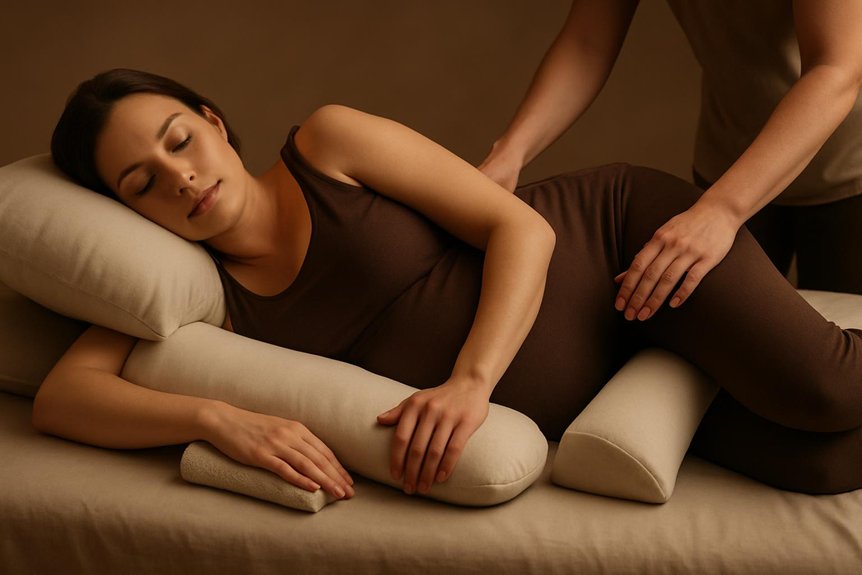
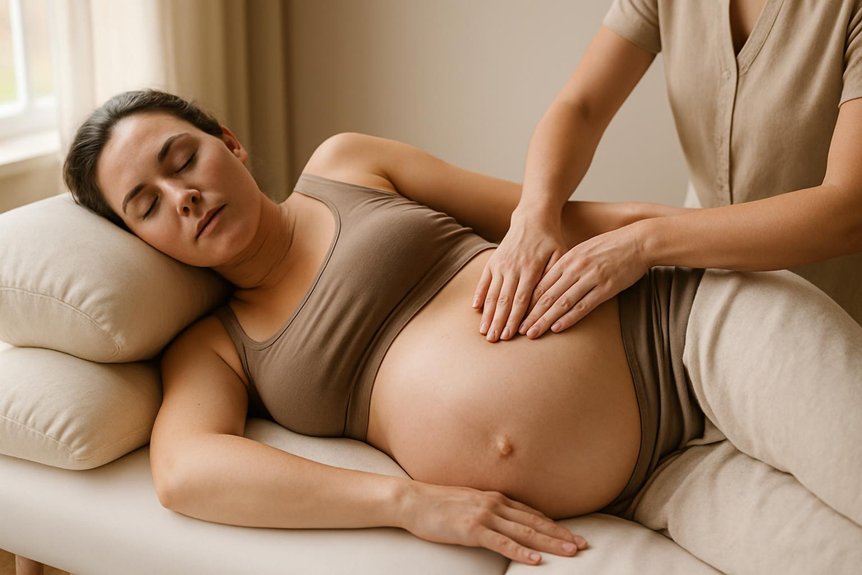
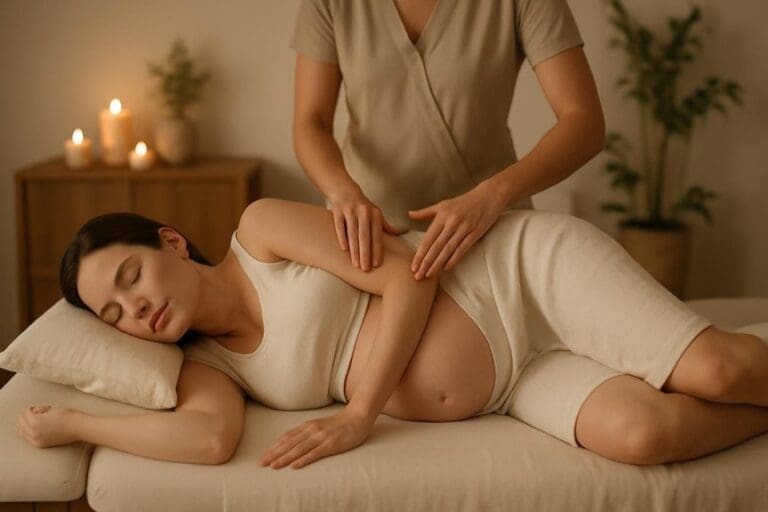
At Spa & Massage clinics across London, pregnancy-trained therapists position the body with supportive bolsters, avoid sustained pressure on sensitive anterior neck structures, and monitor comfort, breathing, and dizziness throughout. Many clients prefer unscented or pregnancy-appropriate oils, with aromatherapy kept subtle and client-led. Sessions are paced slowly, with frequent check-ins, to maintain a calm, intimate sense of safety. Aftercare typically includes hydration, gentle shoulder rolls, and rest. As part of the wider benefits of prenatal massage for expecting mothers, pregnancy massage can also promote overall relaxation and comfort throughout pregnancy.
When Should You Avoid Neck Massage in Pregnancy?
Neck massage is often well tolerated in uncomplicated pregnancy when it is gentle and appropriately adapted, yet there are clear situations where it should be postponed or avoided altogether.
It should be avoided with vaginal bleeding, severe abdominal pain, ruptured membranes, pre‑eclampsia symptoms (severe headache, visual changes, sudden swelling), fever, or suspected infection.
Caution is advised with a history of blood clots, anticoagulant use, uncontrolled hypertension, significant varicose veins in the neck or upper chest, or unexplained neurological symptoms such as numbness, weakness, or dizziness.
Massage should also be deferred over new rashes, shingles, open skin, or acute neck injury.
At Spa & Massage clinics, therapists ask screening questions and will recommend GP or midwife clearance when any red flags appear, prioritising calm, close comfort and safety.
Can You Do Neck Massage at Home While Pregnant?
With appropriate precautions, gentle neck self‑massage at home is usually safe in an uncomplicated pregnancy, provided pressure remains light, movements stay slow and comfortable, and any new pain, dizziness, headache, or swelling prompts an immediate stop and medical advice.
At Spa & Massage, therapists advise focusing on surface‑level strokes and brief kneading across the upper trapezius and the base of the skull, avoiding sustained pressure on the front and sides of the neck.
Sessions should be short (5–10 minutes), with easy breathing and frequent pauses to prevent strain.
A warm compress beforehand may help tissues relax.
If symptoms persist beyond 24–48 hours, or if there is reduced fetal movement, fever, neurological symptoms, or sudden swelling, a GP or midwife should be consulted; a prenatal massage appointment may be preferable.
What Pressure, Oils and Positions Are Pregnancy-Safe?
For most uncomplicated pregnancies, pregnancy‑safe neck massage relies on light–moderate pressure, conservative oil choices, and well-supported positioning to avoid strain or dizziness.
Pressure should feel soothing rather than “deep”; sustained compressions, gentle kneading, and slow strokes are preferred, avoiding forceful trigger-point work or aggressive stretching.
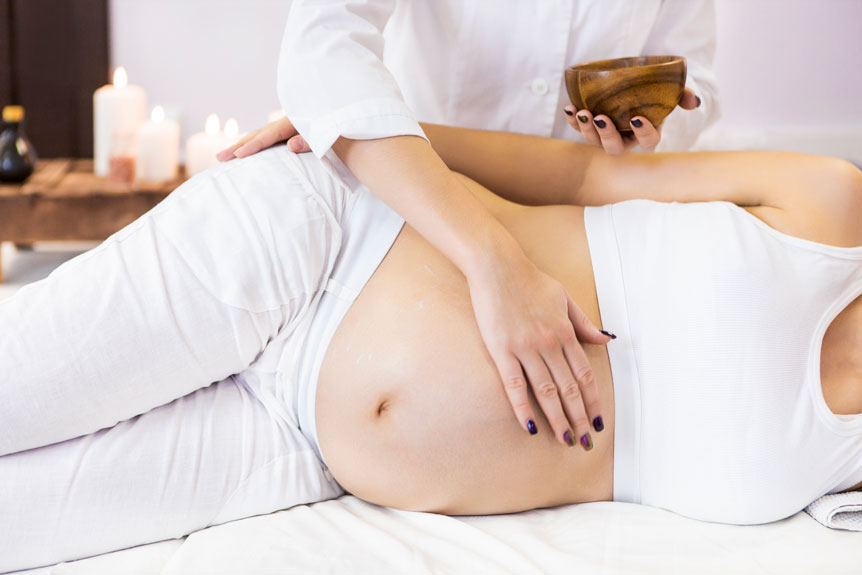
In Spa & Massage clinics, therapists typically use hypoallergenic, unscented carrier oils or pregnancy‑appropriate blends; essential oils are kept minimal, and known sensitizers are avoided, particularly in the first trimester.
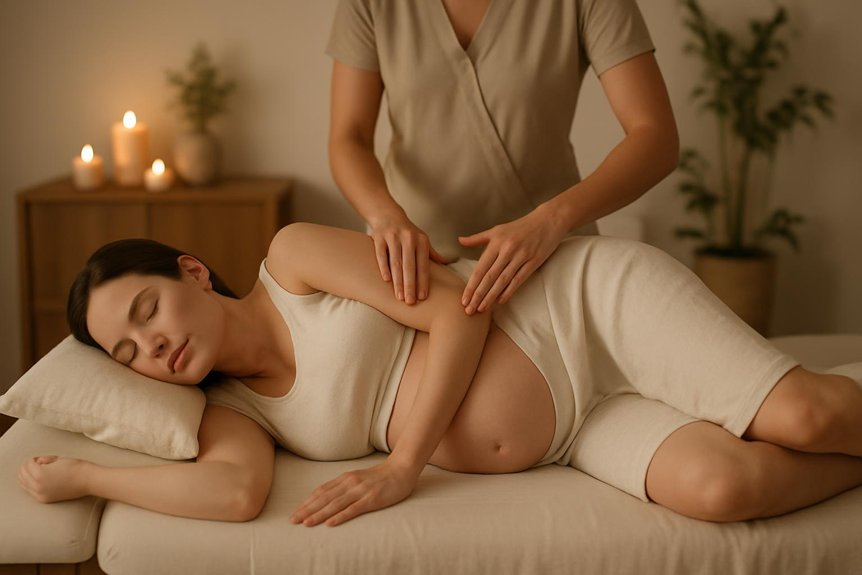
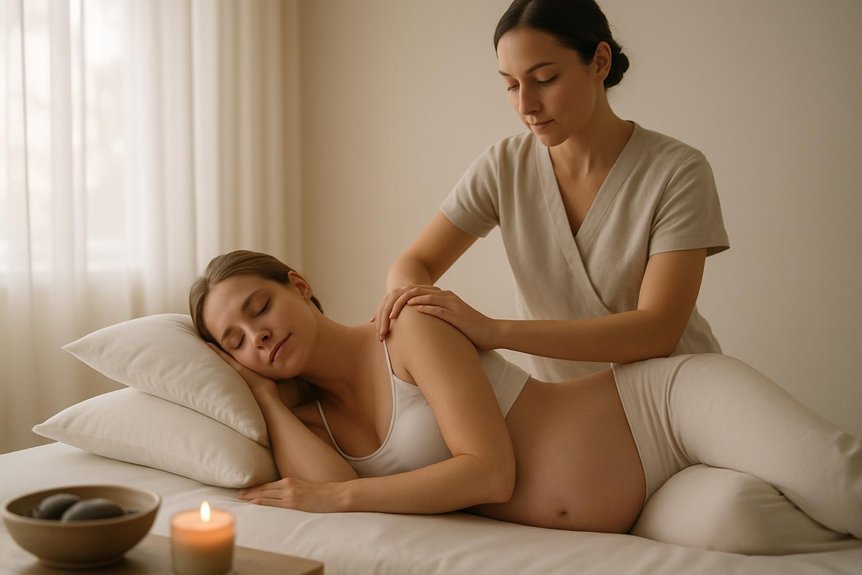
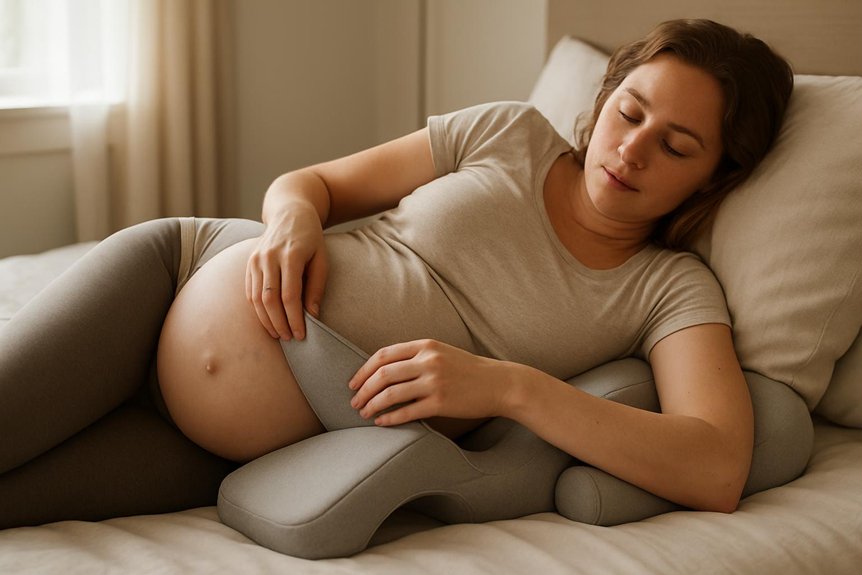
Positioning should prioritise side‑lying with pillows supporting the bump and shoulders, or a semi‑reclined posture with the head and neck neutrally aligned.
Prolonged flat‑on‑back massage is limited after mid‑pregnancy.
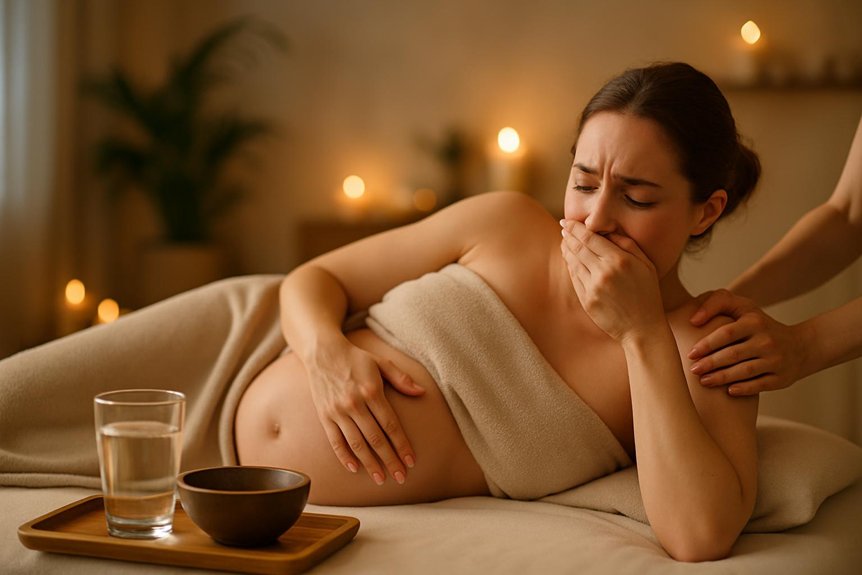
Any nausea, tingling, or headache warrants stopping and reassessing.
How to Choose a Prenatal Massage Therapist in London
In a city with wide variation in training and clinic standards, selecting a prenatal massage therapist in London should begin with verifiable qualifications in prenatal massage and current professional insurance, alongside clear screening for pregnancy stage, symptoms, and any obstetric risk factors. The therapist should explain contraindications (e.g., pre-eclampsia, bleeding, DVT history), adapt pressure, and offer side-lying support to protect comfort and circulation.
Transparent consent, modest draping, and calm communication help intimacy feel safe and respectful. Hygiene, quiet rooms, and documented intake notes indicate clinical standards.
At Spa & Massage clinics across London, therapists tailor pregnancy and neck-focused work, often using gentle, unscented options or aromatherapy only when suitable, and recommending hydration and rest afterward. Locations include Crouch End, Bayswater, Chiswick, Earl’s Court, Belsize Park, and Richmond.
Conclusion
Neck massage is generally considered safe in uncomplicated pregnancies when performed gently, with appropriate positioning and pregnancy-aware precautions. However, it should be avoided or deferred in the presence of red-flag symptoms, significant medical conditions, or clinician-advised restrictions. Home massage may be suitable at light pressure, using well-tolerated, low-risk oils and avoiding sustained supine positioning later in pregnancy. Selecting a trained pregnancy therapist helps reassure technique, comfort, and screening are up to standard—better safe than sorry.