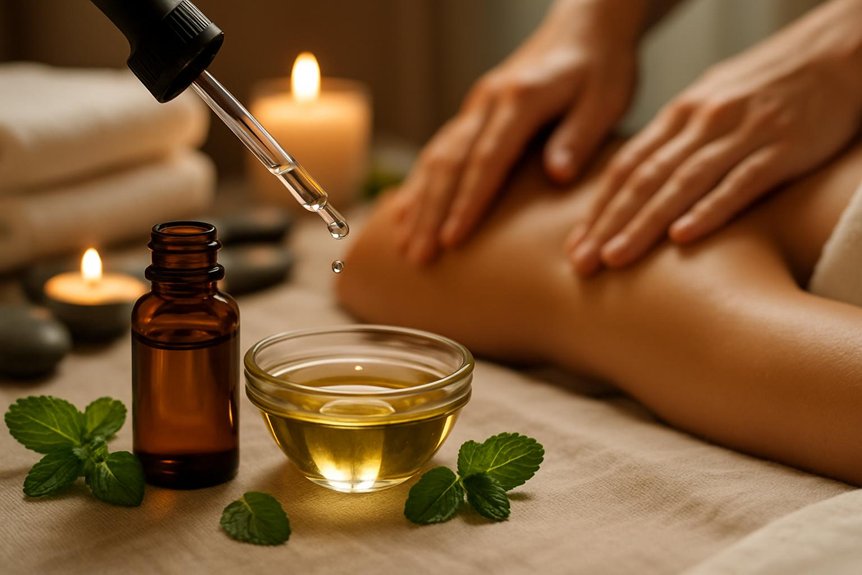
Peppermint essential oil can be safe for aromatic massage when clients are screened for sensitivities and the oil is diluted conservatively in a carrier oil. Most clinics avoid neat use and keep blends low (about 1% for body and 0.25–0.5% for face/neck), applying sparingly and away from eyes or mucous membranes. It may not suit people with eczema, rosacea, asthma, migraines, pregnancy, or fragrance sensitivity. Further guidance covers dilution, patch tests, and alternatives.
Is Peppermint Oil Safe for Massage?
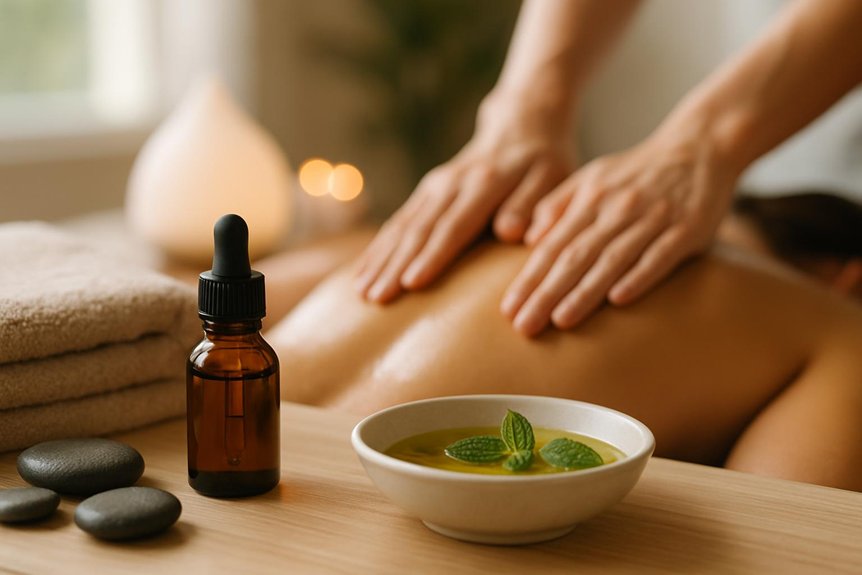
When used correctly, peppermint essential oil can be safe in massage, but it requires careful dilution, appropriate client screening, and professional application due to its potency and cooling, stimulating effects on the skin.
Evidence-based practice supports low concentrations only; in Spa & Massage clinics, therapists typically keep facial use minimal and body blends within conservative dermal limits, mixing into a quality carrier oil to reduce irritation.
A patch test is advised for sensitive skin, and contact with eyes and mucous membranes is strictly avoided.
Therapists monitor for tingling, burning, or redness and adjust immediately, prioritising comfort and consent.
Peppermint is best used for short, targeted moments rather than full-body saturation, creating a fresh, close, reassuring experience without overwhelming the skin.
Used thoughtfully, it can support relax and heal goals that many clients seek from aromatherapy massage.
Who Should Avoid Peppermint Oil Massage?
A clear rule of thumb is that peppermint oil massage is not suitable for everyone, particularly those at higher risk of skin irritation, breathing sensitivity, or adverse interactions.
At Spa & Massage, therapists screen for allergies, eczema, rosacea, or very reactive skin, where menthol can sting and inflame.
It is typically avoided for clients with asthma, chronic cough, or scent-triggered headaches, as vapour may feel sharp in close contact.
Pregnancy and breastfeeding warrant caution, especially in the first trimester, and it is generally not used on babies or young children.
Clients taking anticoagulants, with cardiovascular conditions, or using multiple topical actives should seek medical advice first.
Any genital, mucosal, or broken-skin area should be avoided for comfort and safety.
How Do You Dilute Peppermint Oil for Massage?
For a safe, comfortable aromatic massage, peppermint essential oil should be diluted in a carrier oil rather than applied neat, as menthol-rich oils can irritate skin and eyes even at low amounts.
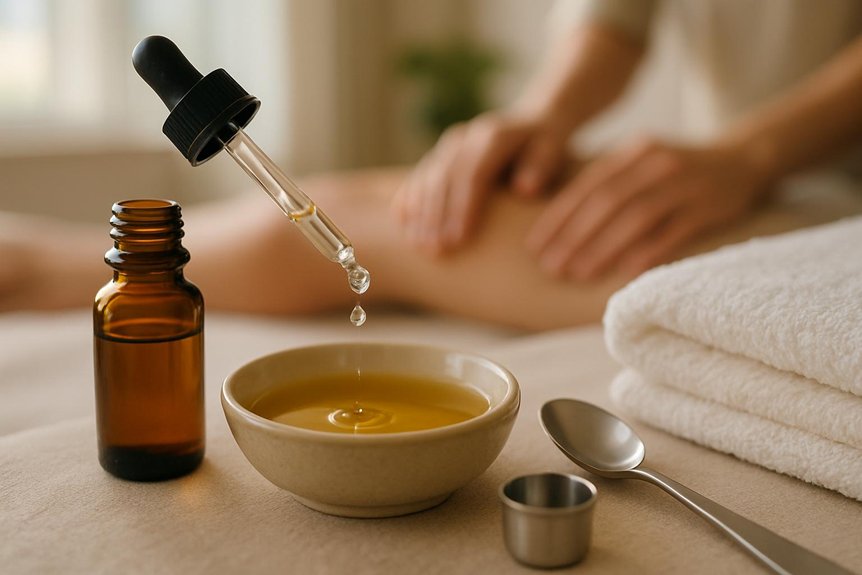
In Spa & Massage clinics, therapists typically keep facial/neck work at 0.25–0.5% (1–3 drops per 20 ml carrier) and body massage at 1% for most clients (4 drops per 20 ml), increasing to 2% only when appropriate (8 drops per 20 ml).
A measured approach supports relaxation while respecting skin sensitivity.
Suitable carriers include fractionated coconut, sweet almond, or grapeseed oil for good glide and a soft finish.
Peppermint is blended thoroughly, then applied sparingly, avoiding the eyes, mucous membranes, and freshly shaved areas.
Patch testing on the forearm is recommended.
What Side Effects Can Peppermint Oil Cause?
Peppermint oil can cause side effects, most commonly skin irritation or allergic contact reactions, particularly when it is applied undiluted or on sensitive skin.
Its strong menthol vapour may also trigger respiratory discomfort or sensitivity symptoms in some people, especially those with asthma, fragrance sensitivities, or during pregnancy.
At Spa & Massage clinics, therapists screen for these risks and use conservative dilution and patch-testing approaches where appropriate to keep aromatic massage both comfortable and safe.
Skin Irritation Risks
How well peppermint oil is tolerated on skin depends largely on dilution, contact time, and individual sensitivity.
Undiluted application can trigger stinging, redness, itching, or a cold-burning sensation, especially on the neck, inner arms, décolletage, or after shaving.
Some people develop irritant or allergic contact dermatitis, with delayed rash or swelling. Risk rises with higher concentrations, occlusion under towels, heat, or frequent reapplication.
At Spa & Massage clinics, therapists blend peppermint into a carrier oil at skin-safe levels, avoid broken skin, and check comfort throughout the session.
Clients are advised to request a patch test, disclose eczema, rosacea, or fragrance allergy, and stop immediately if discomfort appears. Gentle cleansing and a bland moisturiser usually settle mild reactions.
Respiratory And Sensitivity Effects
Inhaled during an aromatic massage, peppermint essential oil can sometimes irritate the airways or trigger sensitivity symptoms, particularly in people with asthma, hay fever, chronic sinus issues, or fragrance sensitivity.
Reported effects include coughing, throat tickle, watery eyes, sneezing, headache, or a feeling of tightness in the chest.
Higher concentrations and prolonged diffusion increase risk, especially in small rooms.
At Spa & Massage clinics, therapists keep peppermint dilution conservative, avoid direct inhalation, and check comfort throughout the session.
Clients are encouraged to mention inhaler use, recent flare-ups, pregnancy, or past reactions to fragranced products.
If symptoms appear, the oil should be removed, ventilation increased, and a neutral oil used instead.
Persistent wheeze or swelling requires urgent medical advice.
Is Peppermint Oil Safe in Pregnancy Massage?
When is peppermint essential oil appropriate during pregnancy massage? In general, it is approached cautiously, as peppermint can feel stimulating and may increase nausea, heartburn, or skin sensitivity in some clients.
Evidence and professional guidelines commonly advise avoiding essential oils in the first trimester, and using only low dilutions thereafter with informed consent.
At Spa & Massage, therapists prioritise comfort and safety: pregnancy clients are screened for migraines, reflux, asthma, and scent aversion, and peppermint is typically avoided on the abdomen and chest.
If used, it is limited to very light dilution in a carrier oil, applied to small areas such as feet, and discontinued immediately if discomfort arises.
Close communication keeps the experience intimate, calm, and reassuring.
What Oils Are Better Than Peppermint for Massage?
For many clients, alternatives to peppermint may be preferable depending on the goal and skin sensitivity, as peppermint’s cooling menthol can feel too strong for some.
At Spa & Massage clinics, therapists often select lavender when relaxation is the priority, sweet almond oil for sensitive skin and smooth glide (avoiding it when nut allergy is a concern), and jojoba for balanced hydration with a low irritation profile.
The most appropriate choice is guided by a brief consultation and patch-testing where needed to support comfort and safety.
Lavender For Relaxation
One of the most consistently calming alternatives to peppermint oil for massage is lavender, valued in aromatherapy for supporting relaxation and easing stress-related tension.
Studies suggest lavender aroma may reduce perceived anxiety and improve sleep quality, making it well suited to unhurried, close-contact treatments where the nervous system needs reassurance.
At Spa & Massage clinics across London, therapists often select lavender for clients who feel overstimulated or emotionally “wired,” pairing it with slow, grounding strokes to invite softer breathing and a sense of safety.
For responsible use, lavender essential oil is typically diluted to skin-safe levels (often 1–2% for body massage) and avoided on broken skin.
A patch test is recommended for sensitive clients, and pregnancy or medical conditions should be discussed before treatment.
Sweet Almond For Sensitive Skin
Sweet almond oil’s reputation as a gentle, low-aroma carrier makes it a common choice for clients with sensitive or easily reactive skin who find peppermint too stimulating.
It is typically well tolerated, offers good glide for close, unhurried strokes, and helps reduce friction that can trigger redness during longer sessions.
In Spa & Massage clinics, therapists often suggest sweet almond when a client wants soothing touch without a strong scent or cooling sensation.
For safety, a patch test is advisable, especially for those with nut allergies, eczema, or a history of contact dermatitis.
It should be applied to intact skin only, and any tingling, itching, or flushing warrants immediate removal and a switch to a different carrier.
Clear communication supports comfort and consent.
Jojoba For Balanced Hydration
In contrast to peppermint’s cooling, potentially sensitising effect, jojoba oil is often preferred for massage when balanced hydration and broad skin tolerance are the priority. Technically a liquid wax ester, it closely resembles natural sebum, helping skin feel supple without a greasy finish. Evidence and clinical experience suggest a low irritation profile, making it suitable for many clients prone to redness, dryness, or fragrance sensitivity.
At Spa & Massage clinics, therapists often choose jojoba as a neutral, comforting base that supports smooth, unbroken glide while allowing close, unhurried bodywork. It absorbs gradually, so the practitioner can maintain consistent pressure without repeated reapplication. For safety, a patch test is still advised, and any nut, latex, or dermatologic history should be discussed before treatment begins.
Conclusion
Peppermint oil can be safe in aromatic massage, but only when professionally selected, correctly diluted, and matched to the client’s health history and skin tolerance. A common objection is “natural means harmless”; in practice, peppermint’s menthol can irritate skin, trigger headaches, or aggravate asthma when overused. Pregnancy, breastfeeding, and sensitive clients warrant extra caution or alternatives. With patch testing, conservative dilution, and clear aftercare, therapists can deliver freshness without compromising comfort or safety.