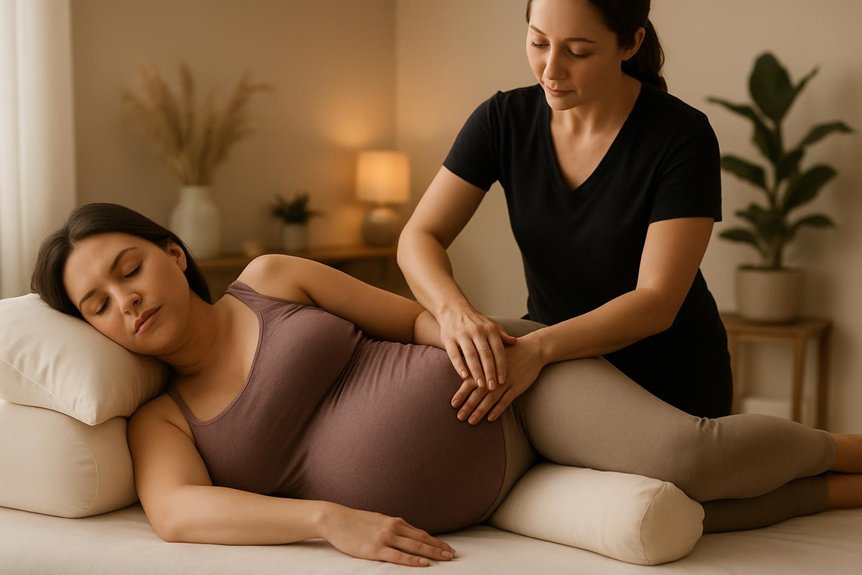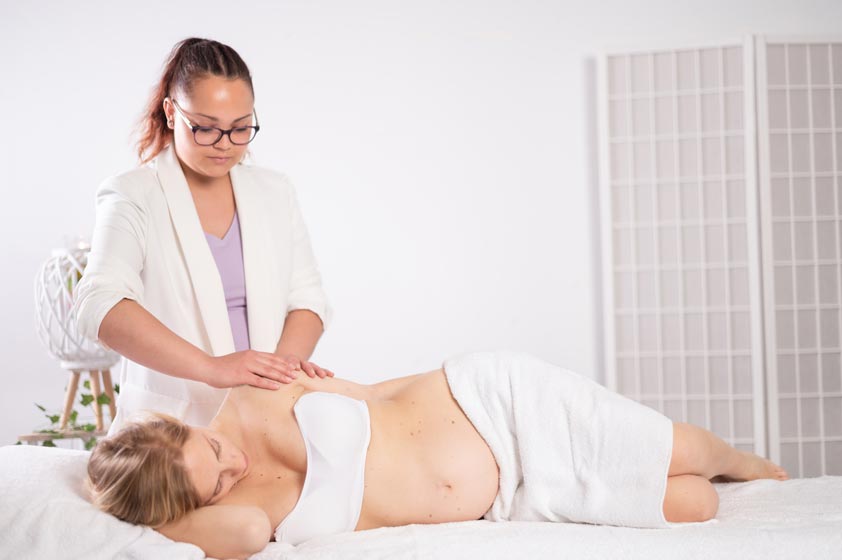

Prenatal massage is generally considered safe in the first trimester for most uncomplicated pregnancies when a midwife or GP has no concerns and the treatment is gentle and relaxation focused. There is no clear evidence that appropriately adapted massage increases miscarriage risk. Therapists typically use light to moderate pressure, avoid deep abdominal work, and position clients side-lying or semi-reclined with supportive bolsters. Massage should be postponed with bleeding, severe cramping, fever, or dizziness. More guidance follows below.
Is First-Trimester Prenatal Massage Safe?
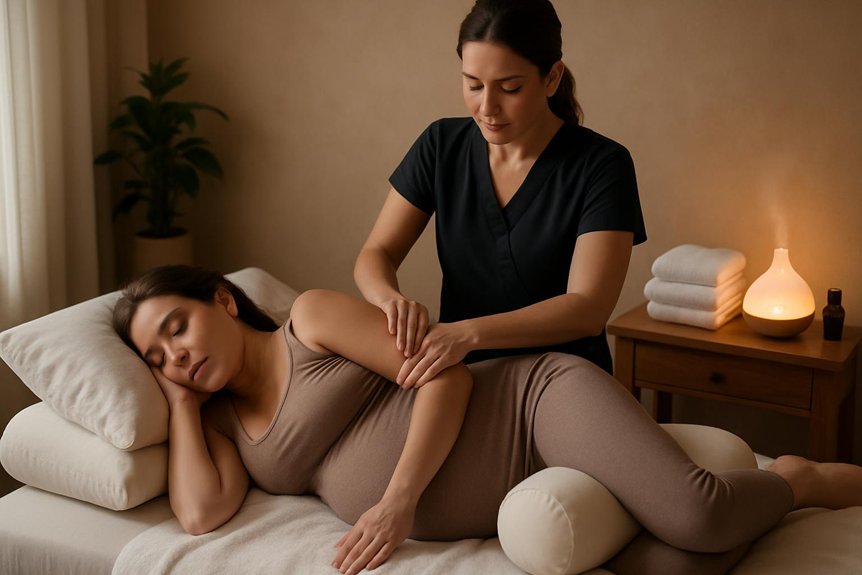
When, if ever, is prenatal massage considered safe in the first trimester? For most uncomplicated pregnancies, it can be safe when the client’s midwife or GP has no concerns and the session is adapted for early pregnancy comfort.
Evidence suggests gentle, relaxation-focused massage supports stress reduction, sleep, and muscle ease; it does not appear to increase miscarriage risk when performed appropriately.
These benefits of pregnancy massage can be especially meaningful early on, when fatigue and body changes may feel more intense.
At Spa & Massage clinics across London, therapists use light-to-moderate pressure, avoid deep abdominal work, and position clients with supportive bolsters to protect comfort and circulation.
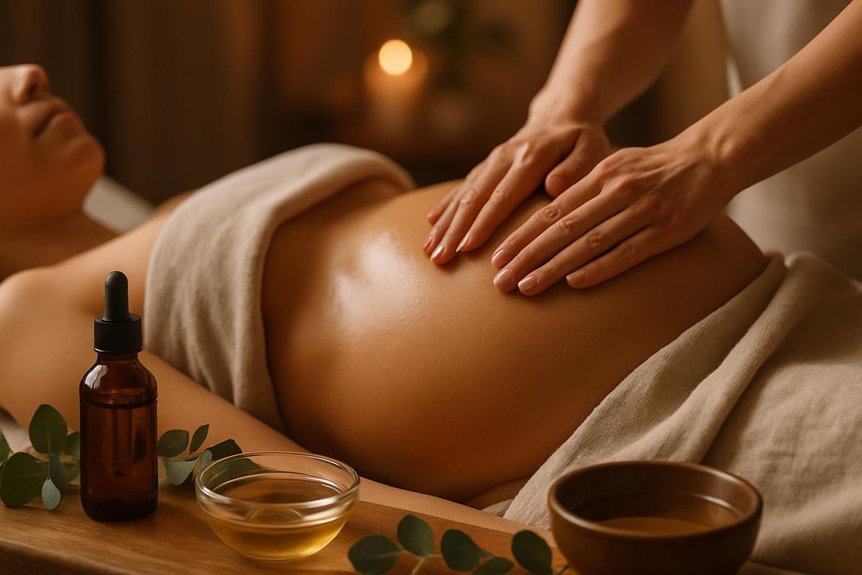
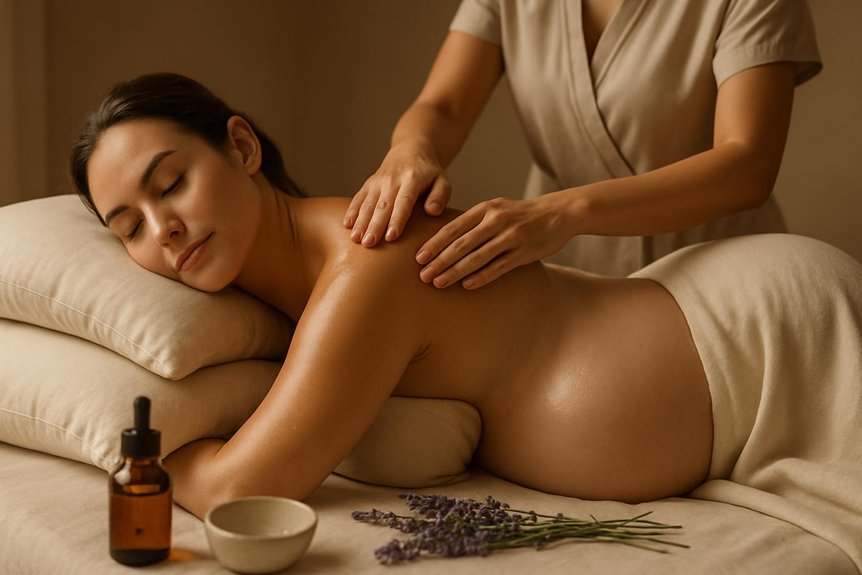
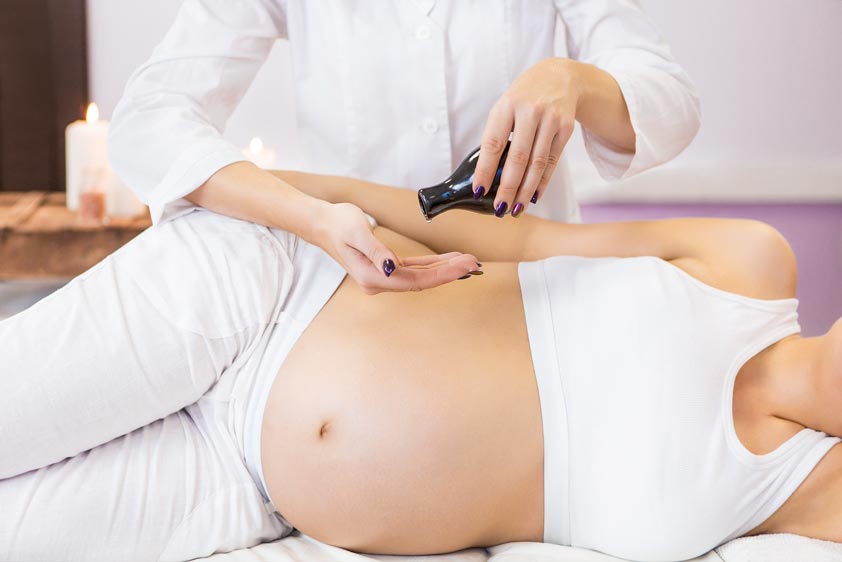
Many clients prefer unscented or low-allergen oils; aromatherapy is offered only with pregnancy-appropriate selections.
Clear communication, slow pacing, and stopping if nausea, dizziness, or cramping occurs help keep care soothing and intimate.
When Should You Avoid Massage in the First Trimester?
A first-trimester massage should be postponed or avoided if there are medical red flags or new, unexplained symptoms, because early pregnancy can change quickly and comfort-focused bodywork is not a substitute for clinical assessment.
Massage is best deferred with vaginal bleeding, severe cramping, dizziness or fainting, fever, vomiting with dehydration, sudden swelling, shortness of breath, chest pain, severe headache, or signs of infection.
Caution is also advised after recurrent miscarriage, IVF/assisted conception, high-risk pregnancy, untreated high blood pressure, clotting disorders, or a history of thrombosis, unless a clinician has cleared gentle touch.
At Spa & Massage clinics across London, therapists prioritise calm, nurturing care, and will recommend pausing and seeking midwife or GP advice when symptoms feel “not quite right.”
What Should You Tell Your Therapist First Trimester?
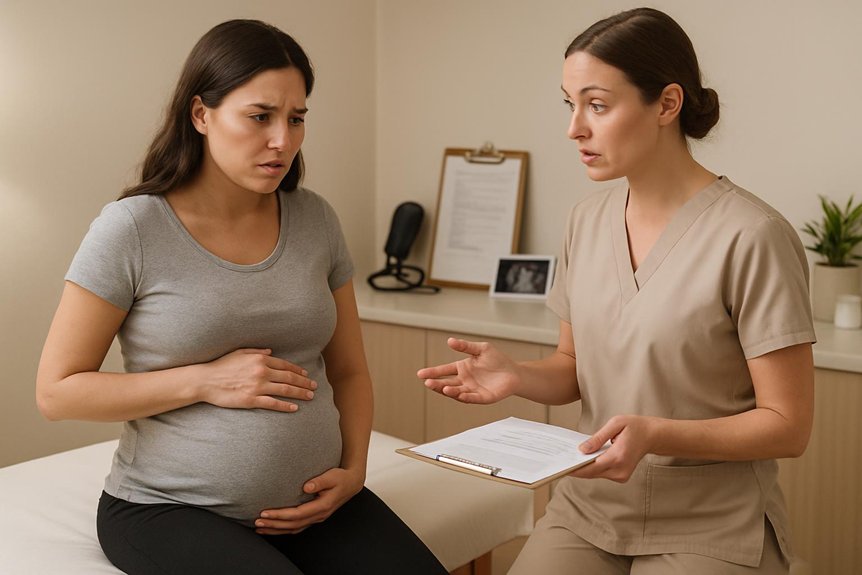
Before any first-trimester massage begins, clear, specific information should be shared with the therapist so the session can be planned safely and conservatively.
At Spa & Massage, clients are asked to confirm gestational age, any prior pregnancy loss, fertility treatment, bleeding or spotting, cramping, severe nausea, dizziness, fever, infection, or recent falls.
Medical conditions such as high blood pressure, clotting disorders, diabetes, thyroid disease, migraines, or significant swelling should also be disclosed, alongside medications and supplements.
It helps to note any tenderness, pelvic or low-back pain, and preferred boundaries around touch, draping, and conversation so intimacy feels respectful and calm.
Allergies or sensitivities to aromas should be mentioned, especially if aromatherapy is requested.
Any clinician advice or restrictions should be shared.
How We Adjust First-Trimester Prenatal Massage at Spa & Massage
Clear disclosure about gestational age, symptoms, and medical history allows the treatment plan to be adapted conservatively for the first trimester.
At Spa & Massage clinics across London, therapists begin with a brief, private consultation, then tailor session length, pacing, and the overall intensity to prioritise comfort and calm.
When nausea, fatigue, or breast tenderness is present, the approach is gentler, with frequent check-ins and the option to pause at any time.
Unscented or lightly scented, pregnancy-appropriate products are used, and ventilation is kept fresh to reduce triggers.
Therapists also observe for dizziness, unusual discomfort, or heightened sensitivity and will adjust immediately.
If any concern arises, they recommend speaking with a GP or midwife before continuing.
What Position, Pressure, and Areas to Avoid?
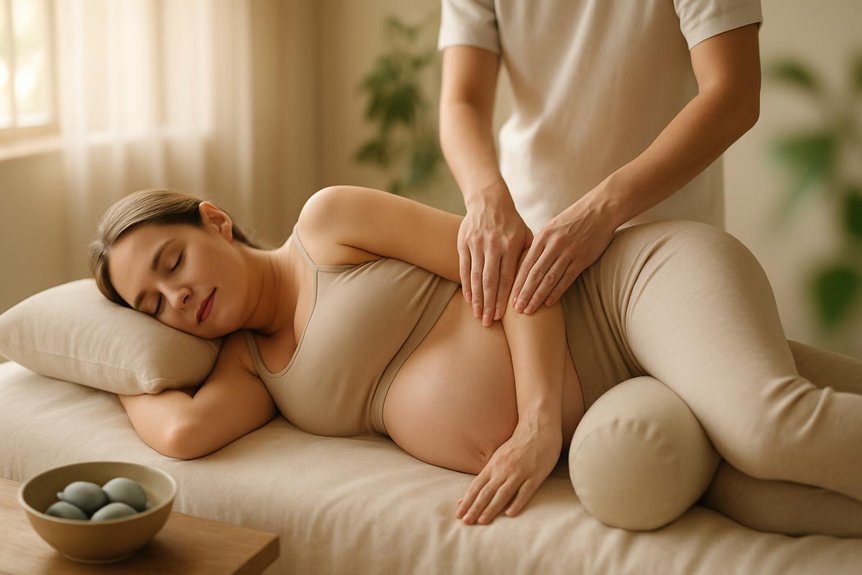
In the first trimester, safe prenatal massage depends largely on comfortable positioning, conservative pressure, and sensible avoidance of sensitive areas. At Spa & Massage, therapists typically use side-lying with supportive pillows, or semi-reclined positioning, to ease nausea, protect the abdomen, and prevent vena cava compression as pregnancy progresses.
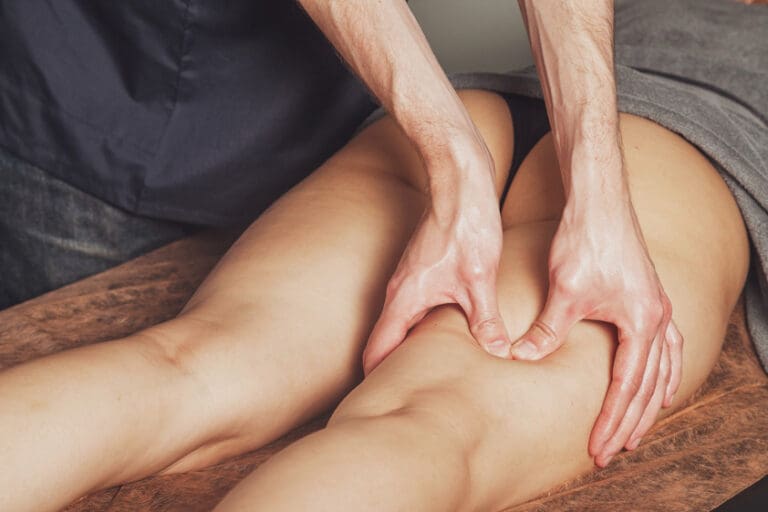
Pressure is kept light to moderate, prioritising soothing strokes and slow, grounded contact rather than deep tissue work; this supports relaxation without provoking tenderness or dizziness. Direct, sustained pressure over the abdomen is avoided, as are strong compressions over the inner thigh and behind the knee where superficial veins can be sensitive. Clients with varicose veins, unexplained swelling, or bruising receive extra caution and modified leg work. The focus stays on neck, shoulders, back, hips, and feet, within comfort limits.
First-Trimester Prenatal Massage Aftercare Tips

After a first-trimester prenatal massage, Spa & Massage therapists typically recommend hydrating well and taking gentle rest to support comfort and recovery.
It is also advised to monitor how the body feels over the next 24 hours, noting any unusual symptoms such as persistent dizziness, cramping, bleeding, or headache.
If anything feels concerning or markedly different from typical early-pregnancy sensations, clients are encouraged to pause strenuous activity and seek advice from their midwife, GP, or obstetric team.
Hydration And Gentle Rest
For many people in the first trimester, simple aftercare—adequate hydration and gentle rest—supports comfort and helps the body settle following a prenatal massage.
Drinking water over the next few hours can help replace fluids and support circulation, especially if the treatment felt deeply relaxing. At Spa & Massage clinics across London, therapists often suggest keeping a bottle nearby and sipping steadily rather than forcing large amounts at once.
Gentle rest is equally important. A quiet evening, a short nap, or an early night can help the nervous system stay calm and allow tissues to soften without strain.
Light movement, such as an easy walk, may feel soothing, but intense exercise is usually best postponed. Many clients find that a warm (not hot) shower and cosy clothing enhance that calm, close-to-self feeling.
Monitor Symptoms And Comfort
Hydration and gentle rest can leave the body feeling settled, but first-trimester aftercare should also include monitoring symptoms and day-to-day comfort.
After a prenatal massage, mild sleepiness or light muscle tenderness can be normal; worsening cramps, vaginal bleeding, fever, dizziness, shortness of breath, or severe headache are not and warrant prompt medical advice.
Comfort matters too: if nausea, breast tenderness, or fatigue increases, quieter evenings and smaller meals may help.
Any position-related soreness should ease within 24 hours; persistent pelvic, hip, or lower-back pain should be noted.
At Spa & Massage clinics across London, therapists encourage clients to track how they feel overnight, avoid overheating, and book follow-ups only when they feel calm, stable, and safely held.
Conclusion
First-trimester prenatal massage can be appropriate for many, provided screening, informed consent, and pregnancy-specific technique guide every step. Like Odysseus steering between hazards, a qualified therapist navigates symptoms, medical history, and red flags—referring out when needed and adapting positioning and pressure to protect comfort. For those with bleeding, severe pain, high-risk conditions, or clinician advice to avoid bodywork, postponing may be safest. With trained hands and clear boundaries, care can feel steady and supportive.