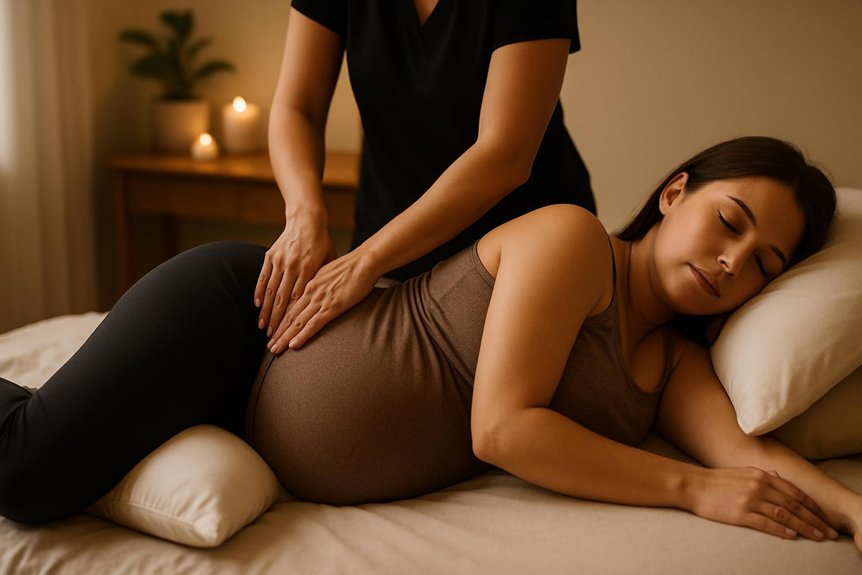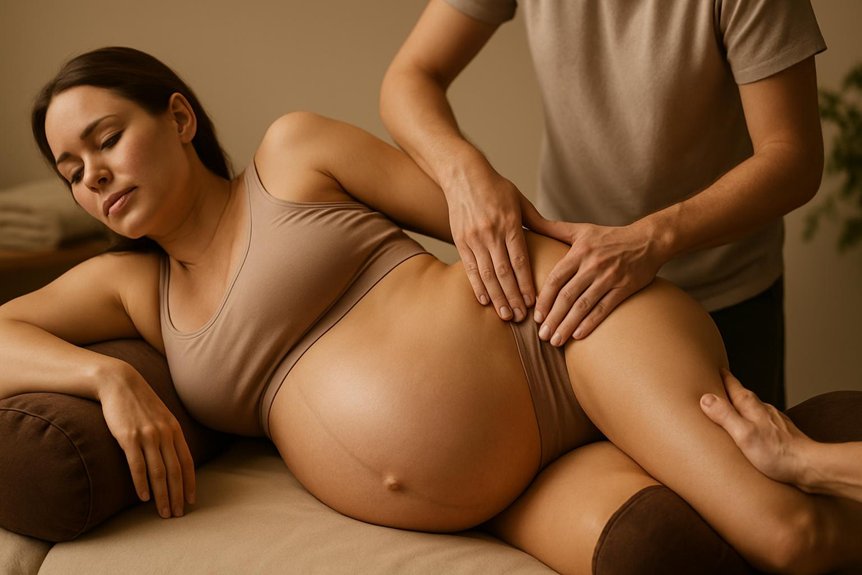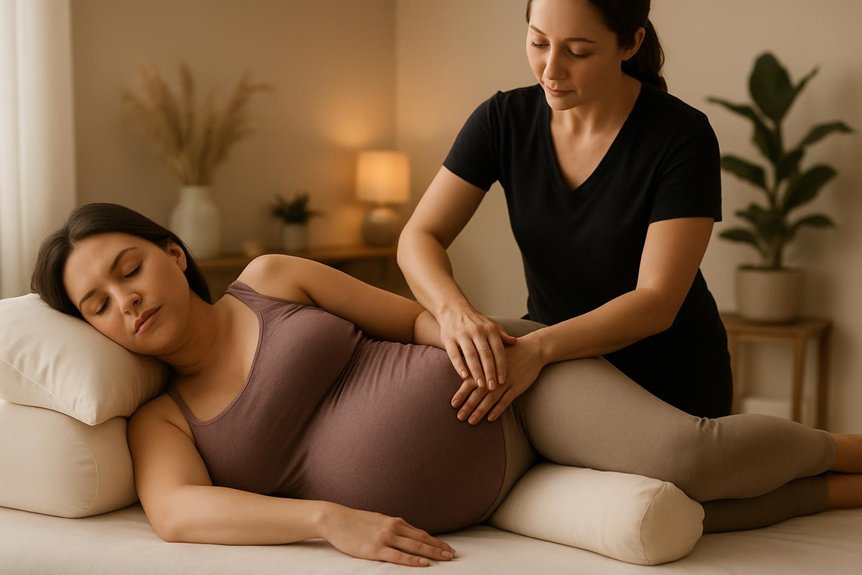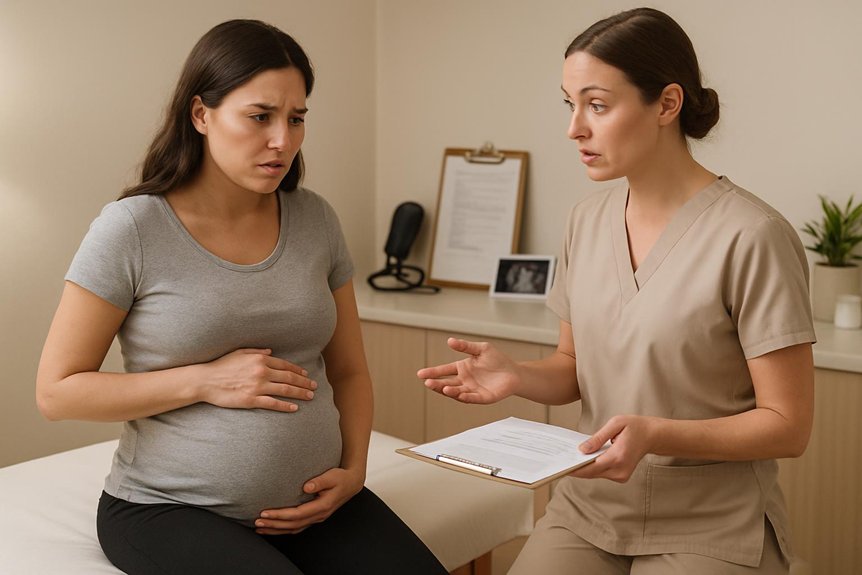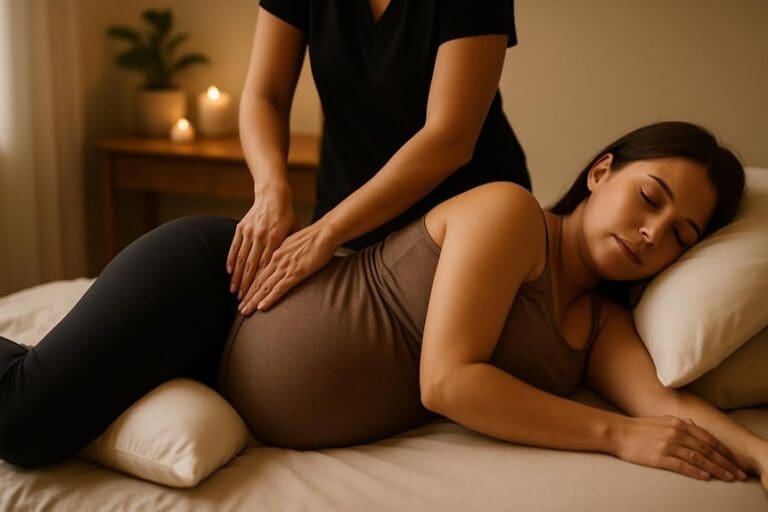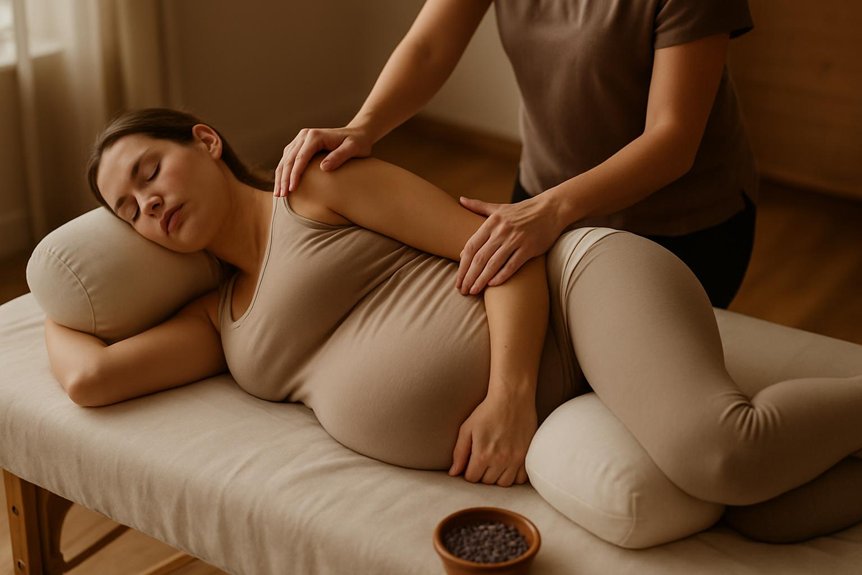
Prenatal massage is generally considered safe in the second trimester for most healthy pregnancies when provided by a properly trained therapist using pregnancy-appropriate positioning, moderate pressure, and basic screening. Side-lying bolstered support is commonly used to avoid prolonged flat-on-the-back lying, and sessions should stop if dizziness, breathlessness, numbness, overheating, or pain occurs. High-risk conditions or symptoms such as bleeding, leaking fluid, fever, or calf swelling require medical clearance first. Further guidance covers who should pause and what techniques are safest.
Is Prenatal Massage Safe in the Second Trimester?
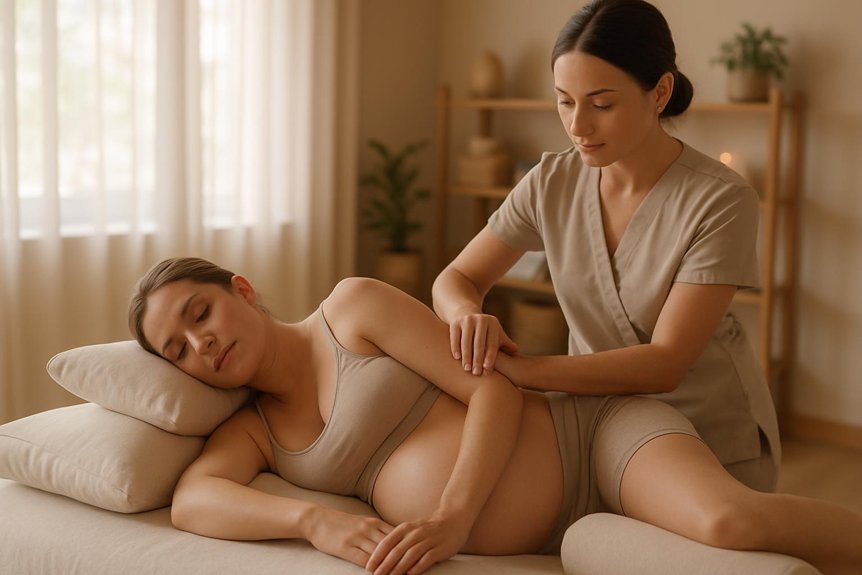
Schedule with confidence: for most healthy pregnancies, prenatal massage is generally considered safe in the second trimester when delivered by a properly trained therapist using pregnancy-appropriate positioning, pressure, and screening.
This stage is often preferred because nausea may ease while the bump remains more comfortable to position.
At Spa & Massage clinics across London, therapists use supportive side-lying bolsters, moderate pressure, and clear communication to keep sessions calm and deeply relaxing.
Clients commonly seek relief from low-back tension, hip tightness, leg heaviness, and sleep disruption.
Alongside comfort, the benefits of pregnancy massage may include easing everyday aches and supporting overall wellbeing during pregnancy.
Safety includes a short consultation, careful draping, avoiding overheating, and adapting techniques to circulation and joint laxity.
Aftercare is simple: drink water, rise slowly, and rest, for comfort.
When to Avoid Prenatal Massage in Trimester Two
In the second trimester, prenatal massage is generally well tolerated, but it should be avoided or postponed when high‑risk pregnancy conditions are present, when new or worsening symptoms suggest medical review, or when standard clinic contraindications apply.
At Spa & Massage, therapists screen for these factors and advise clients to seek guidance from their midwife or GP before treatment when there is any uncertainty.
The following points outline the key situations where pausing massage is the safest choice.
High-Risk Pregnancy Conditions
For most people, second-trimester prenatal massage can be a safe, comforting option—yet it is not appropriate when pregnancy is classified as high risk.
High-risk status may include a history of recurrent pregnancy loss, significant bleeding earlier in pregnancy, placenta praevia or suspected placental complications, preeclampsia or poorly controlled hypertension, cervical insufficiency, preterm-labour risk, insulin-dependent or poorly controlled diabetes, multiple pregnancy with complications, or major cardiac, renal, or clotting disorders.
Evidence-based guidance prioritises minimising physiological stress and ensuring close obstetric oversight.
At Spa & Massage clinics across London, therapists request GP or midwife clearance before booking and may recommend postponing hands-on work until the care team approves.
When massage is deferred, gentle, non-contact relaxation support and calm breath-focused guidance can still nurture connection.
Medical Symptoms Requiring Pause
Noticing new or worsening symptoms is a clear cue to pause prenatal massage in the second trimester until a midwife, GP, or obstetric team has assessed what is happening. Massage should be deferred with vaginal bleeding, leaking fluid, regular cramping or contractions, fever or infection symptoms, sudden swelling of face or hands, severe headache, visual changes, chest pain, shortness of breath, fainting, or persistent dizziness.
New calf pain, warmth, or one-sided swelling also warrants urgent review. Reduced fetal movements later in the trimester should be checked promptly.
At Spa & Massage, therapists welcome clients to reschedule without pressure and to share any changes privately at check-in. Once medically cleared, prenatal massage can be adapted gently, supporting comfort and calm.
Clinic Safety Contraindications
Alongside normal pregnancy screening, clear clinic-based contraindications mean second-trimester prenatal massage should be avoided or deferred until medical clearance is obtained.
At Spa & Massage, treatment is paused if there is fever, contagious illness, vomiting, new rash, uncontrolled asthma, or significant shortness of breath, as touch and warmth can increase strain.
Massage is also deferred with unexplained abdominal pain, vaginal bleeding, suspected leaking fluid, or reduced fetal movements until a midwife or GP confirms safety.
Local contraindications include acute injury, severe varicose-vein pain, redness, heat, or swelling suggestive of thrombosis, and any skin infection.
After recent surgery, invasive dental work, or new medication changes, clinicians may request written guidance.
When cleared, therapists use gentle, side-lying positioning and comfort-led pressure.
Benefits and Realistic Limits in Trimester Two
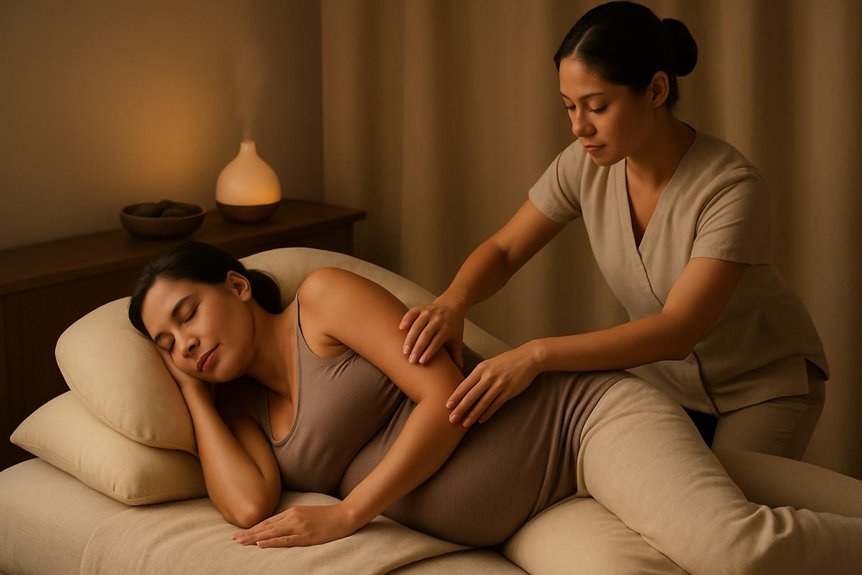
In the second trimester, prenatal massage is commonly associated with reduced muscle tension, improved relaxation, and better sleep when provided by trained therapists using pregnancy-appropriate techniques.
At Spa & Massage clinics, therapists prioritise safe adjustments—such as side-lying positioning, supportive bolstering, and avoiding sustained pressure on the abdomen and certain acupressure points—to keep treatment comfortable and low risk.
Clear limits also matter: massage may ease everyday aches and stress, but it cannot treat medical causes of pain, prevent pregnancy complications, or replace antenatal care.
Common Second-Trimester Benefits
Relief is often the headline benefit of prenatal massage in the second trimester, when many people feel well enough to address growing aches without the positional limitations of late pregnancy.
At Spa & Massage clinics across London, therapists commonly see reduced low-back, hip, and round-ligament discomfort, plus easing of neck and shoulder tension from postural change. Gentle, pregnancy-appropriate work can support circulation and help with mild swelling, while calming touch may improve sleep quality and stress regulation—benefits consistent with research on massage and relaxation.
Many clients also value the intimate feeling of being safely cared for during a body-changing season.
Realistic limits matter: massage cannot treat medical causes of pain, replace antenatal care, or guarantee symptom-free weeks. Any unusual symptoms warrant clinical advice.
Safe Adjustments And Positioning
Those second-trimester benefits are most reliably achieved when the session is adapted to the changing physiology of pregnancy, particularly through safe positioning and pressure choices.
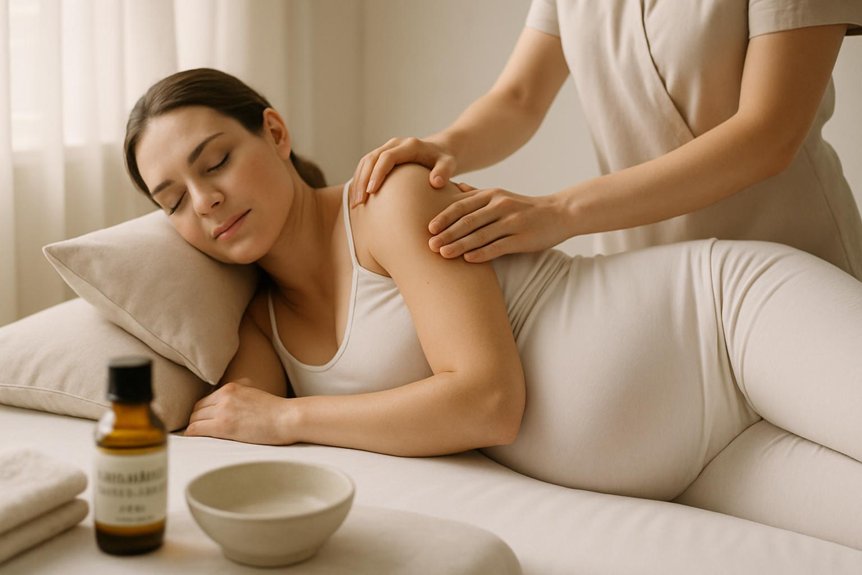
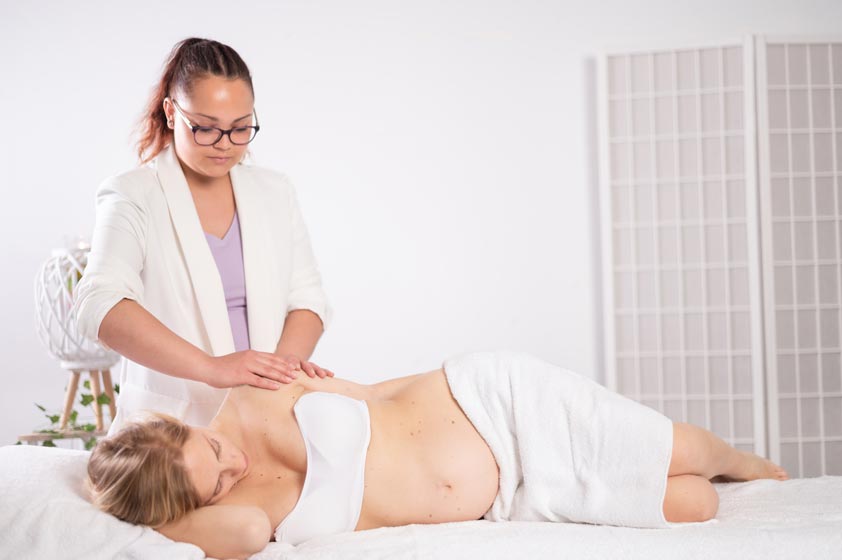
Most clients are set up side-lying with supportive pillows for belly, hips, and between the knees, helping reduce strain and avoid prolonged flat-on-back positioning that can compromise circulation.
In Spa & Massage clinics, therapists use steady, reassuring strokes and moderate pressure, adjusting continuously to comfort, tissue response, and any tenderness.
The focus tends to be on neck, shoulders, back, hips, and legs, with careful pacing and frequent check-ins to protect joints that may be more lax.
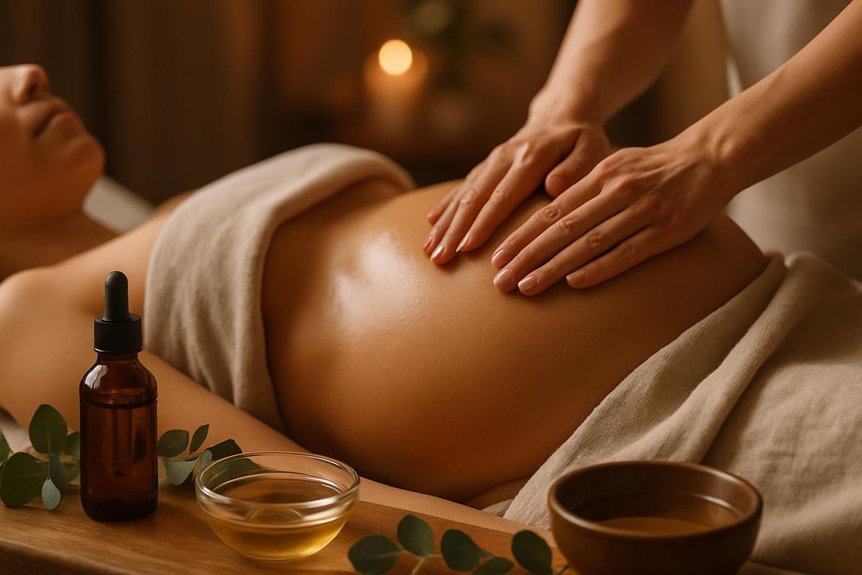
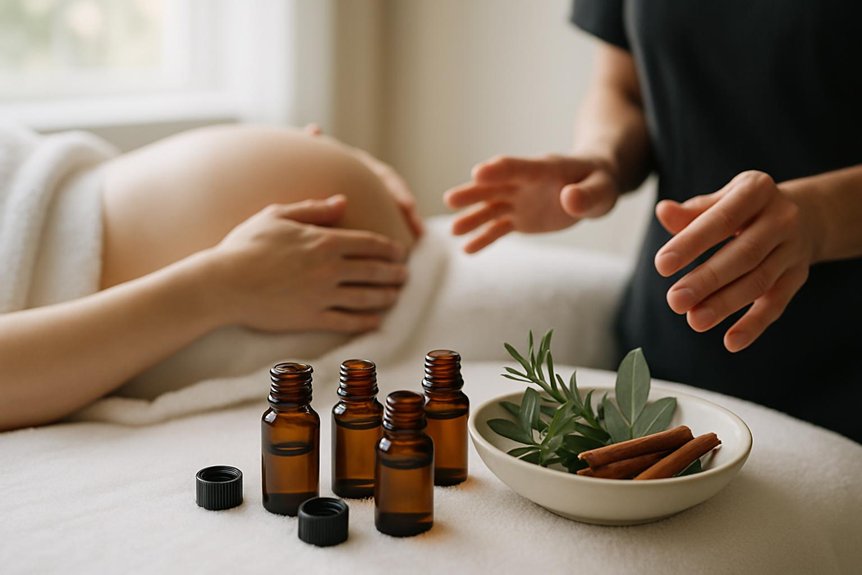
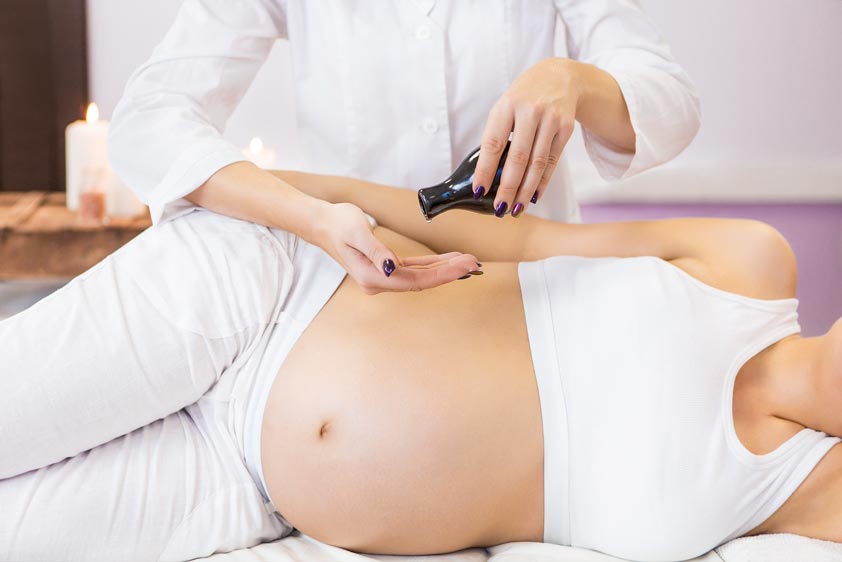
Unscented or lightly scented oils are typically chosen, and temperature and draping are kept cosy and dignified.
What Massage Can’t Fix
Although prenatal massage in the second trimester can ease common discomforts—such as neck and shoulder tension, low-back aching, hip tightness, and leg heaviness—it has clear clinical limits and should be framed as supportive care rather than a treatment for pregnancy complications.
It cannot prevent miscarriage, treat pre-eclampsia, gestational diabetes, infection, bleeding, or preterm labour, nor “move” the baby, change placental position, or correct medical swelling. Persistent headache, visual changes, sudden swelling, calf pain, fever, leaking fluid, reduced fetal movement, or vaginal bleeding require urgent clinical advice, not bodywork.
At Spa & Massage London clinics, therapists work gently around sensitive areas, avoid deep pressure over the abdomen, and encourage hydration and rest. Many clients value the calm, safe touch—yet reassurance comes from clear boundaries and midwife-led care.
Safe Massage Positions and Bolstering in Trimester Two
From around 13 weeks onward, safe prenatal massage positioning in the second trimester centres on avoiding prolonged flat-on-the-back lying and supporting the body with well-placed bolsters to protect comfort and circulation.
At Spa & Massage, therapists typically favour a side-lying set-up, with cushions between the knees, under the bump, and supporting the upper arm to reduce strain through hips, lower back, and shoulders.
A small wedge under one hip can also create a gentle tilt if a semi-reclined position is preferred.
Head and neck support is adjusted so breathing stays easy and the jaw soft.
Bolsters are checked often; even subtle numbness, dizziness, or breathlessness signals a prompt position change and immediate comfort.
Safe Prenatal Massage Techniques in Trimester Two
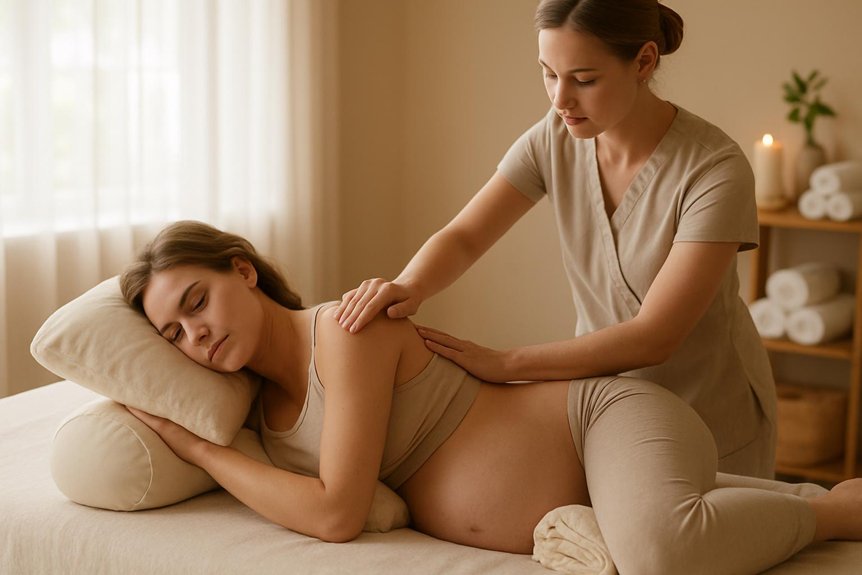
In the second trimester, safe prenatal massage technique prioritises gentle, well-supported work that reduces tension without provoking joint strain, overheating, or circulatory compromise.
Evidence-informed practice favours slow effleurage and light-to-moderate petrissage over aggressive deep pressure, especially around the lower back, inner thighs, and calves.
Broad, soothing strokes encourage relaxation and circulation, while careful trigger-point work is limited and continuously checked for comfort.
At Spa & Massage clinics, therapists often use side-lying sequences to ease hips, glutes, shoulders, and neck, pairing rhythmic compression with mindful breath cues to deepen calm.
Temperature is kept neutral, and sessions avoid prolonged static pressure, painful stretching, or rapid percussive techniques.
Fragrance is kept minimal, with pregnancy-appropriate oils selected for sensitive skin.
How to Choose a Prenatal Massage Therapist
For expectant clients, choosing the right prenatal massage therapist in the second trimester is primarily a safety decision grounded in training, screening, and clinical judgement.
A suitable therapist should hold recognised massage qualifications, specific pregnancy-massage education, and current insurance, and should welcome GP or midwife guidance when indicated. They should complete a thorough intake covering medical history, pregnancy symptoms, blood-pressure concerns, clotting risk, and contraindications, then document informed consent.
In Spa & Massage clinics across London, therapists prioritise side-lying positioning, supportive bolstering, and pressure tailored to comfort while avoiding unsafe areas and techniques.
Clients should look for clear communication, respectful boundaries, privacy, and a calm setting that supports relaxation. Transparent hygiene standards and willingness to modify or stop immediately are essential, always.
Aftercare Tips After a Trimester-Two Prenatal Massage
After a second-trimester prenatal massage, simple aftercare supports comfort, hydration, and symptom monitoring while preserving the safety benefits of the session.
Spa & Massage therapists advise slow rising, a glass or two of water, and a light snack to stabilise energy.
A warm shower, not hot, can ease lingering tenderness; avoid saunas and very hot baths.
Gentle walking and pelvic tilts may maintain circulation without overloading joints.
If oils were used in Spa & Massage clinics, clients should keep skin clean and discontinue any product that irritates.
Minor soreness can be managed with rest and supportive pillows.
Any cramping, bleeding, dizziness, reduced foetal movement, or persistent headache warrants prompt contact with a midwife or GP.
Rebook only when symptoms settle fully.
Conclusion
Prenatal massage is generally considered safe in the second trimester when delivered by a trained practitioner who adapts positioning, pressure, and techniques to pregnancy. With appropriate side-lying support and careful screening for complications, treatment can ease back discomfort, swelling, and stress within realistic limits. It should be deferred if there are warning signs such as bleeding, fever, or high-risk conditions, and medical advice sought first. Done well, it can feel like a steady handrail, supporting comfort without risk.