Roman chamomile (Chamaemelum nobile) essential oil is generally safe for aromatic massage when accurately diluted in a carrier oil and used with standard client screening. Clinics typically keep full-body blends conservative at about 0.5–1% (around 1–2 drops per 10 ml), and lower at 0.25–0.5% for facial, pregnancy, or sensitive-skin work. It should be avoided with Asteraceae (ragweed/chamomile) allergy and on broken skin; patch-testing helps identify reactions. Further guidance covers dilution, patch testing, and special populations.
Is Roman Chamomile Oil Safe for Massage?
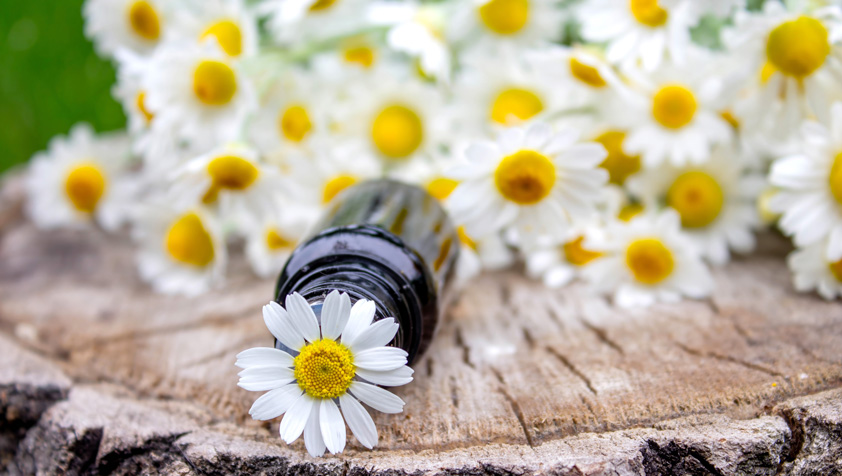
Generally, Roman chamomile essential oil can be safe for massage when it is properly diluted in a carrier oil and used with standard aromatherapy precautions. Safety depends on dose, skin sensitivity, and medical context; evidence and clinical experience support low concentrations for topical use. At Spa & Massage clinics, therapists typically patch-test when a client reports eczema, asthma, or prior fragrance reactions, and keep dilution conservative (often 0.5–1%) to protect delicate skin. Aromatic massage often focuses on helping clients relax and recover, and using aromatherapy massage tips like slow, even strokes can complement a gentle oil choice.
Clients are advised to avoid use on broken skin and to disclose pregnancy, anticoagulant use, or known plant allergies, as individual risk varies. If redness, itching, or headache occurs, the oil should be removed with carrier oil and the session adjusted to maintain comfort and closeness.
What Is Roman Chamomile Essential Oil?
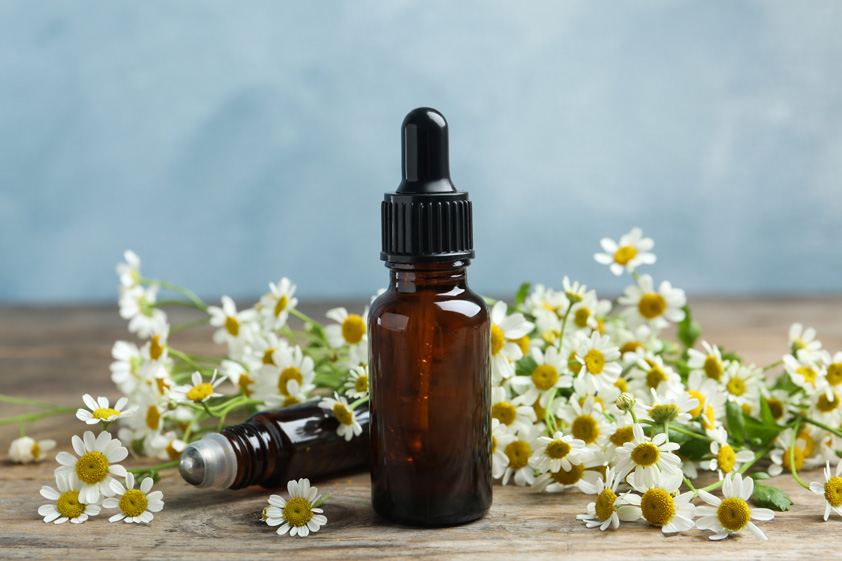
Roman chamomile essential oil is typically steam-distilled from the flower heads of *Chamaemelum nobile*, and reputable sourcing should include clear botanical identification and batch information to support safe client use.
It is known for a sweet, apple-like, herbaceous aroma and is commonly characterised in aromatherapy for its gentle, calming profile, though individual sensitivities still warrant cautious dilution and patch testing.
In Spa & Massage clinics, therapists often select it within blends intended to support relaxation and comfort, with usage guided by the client’s health history, skin tolerance, and treatment goals.
Botanical Source And Extraction
Gentle by reputation, Roman chamomile essential oil is a concentrated aromatic extract distilled—most often by steam—from the fresh flowering tops of *Chamaemelum nobile* (also known as English chamomile).
The plant belongs to the Asteraceae family; botanical identification matters because related species can differ in chemistry and irritation risk. Reliable producers document the Latin name, plant part, origin, batch number, and distillation method to support traceability.
Steam distillation separates volatile constituents into an essential oil and a hydrosol; the oil is then collected, filtered, and stored in dark glass to slow oxidation.
At Spa & Massage clinics, therapists favour oils sourced with safety documentation and use measured dilutions, helping clients feel held and cared for from the first touch.
Aroma Profile And Properties
Once a properly identified, well-documented oil has been distilled and stored to minimise oxidation, attention turns to how it smells and how it tends to behave on skin during aromatic massage.
Roman chamomile essential oil is typically soft, apple-like, and herbaceous, with a gentle sweetness that can feel emotionally close and reassuring during quiet, slow touch.
Chemically, it is characterised by esters (notably angelates), a profile associated in aromatherapy texts with soothing, calming impressions and a generally skin-kind feel when correctly diluted.
In Spa & Massage clinics, therapists treat it as a low-intensity top-to-middle note that blends well without overpowering.
Even so, professional practice favours conservative dilution, patch awareness, and avoiding use on broken or highly reactive skin.
Common Aromatherapy Uses
Often described in clinical aromatherapy as a calming, ester-rich essential oil distilled from *Chamaemelum nobile* flowers, roman chamomile is most commonly used in aromatic massage to support relaxation, ease stress-related tension, and comfort sensitive or easily reactive skin when correctly diluted.
In Spa & Massage clinics across London, therapists may choose it for evening appointments, nervous-system settling, and softening the “wired but tired” feeling clients report during periods of heavy workload or poor sleep.
It is also commonly used in gentle blends for abdominal comfort, jaw and temple tension, and post-exercise soothing when a client prefers a nurturing touch over stimulating oils.
For safety, it is used only in low dilution, patch testing is advised for allergy-prone clients, and eyes and mucous membranes are avoided.
Who Should Avoid Roman Chamomile Oil?
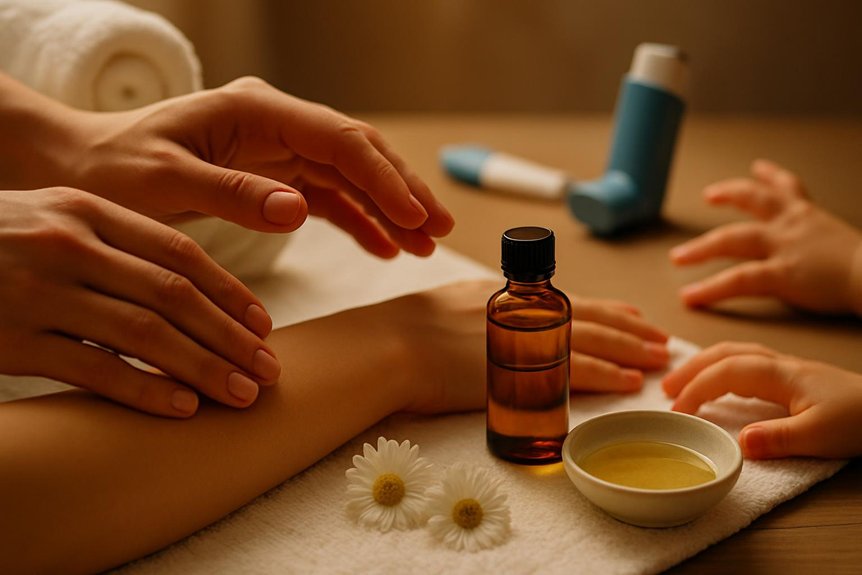
When should Roman chamomile oil be avoided in aromatic massage? It should be avoided for clients with known allergy to chamomile, ragweed, or other Asteraceae plants, due to documented risk of allergic contact dermatitis.
Caution is also advised for people with very reactive or broken skin, active eczema flare-ups, or recent shaving/waxing, where sensitisation and stinging are more likely.
Clients taking anticoagulant medicines or with bleeding disorders should consult a clinician before use, as chamomile contains coumarin-like constituents and case reports suggest possible interaction.
In Spa & Massage clinics, therapists avoid roman chamomile on infants and will patch-test when a client requests close, full-body contact, especially on the chest and neck.
Is Roman Chamomile Oil Safe in Pregnancy Massage?
Pregnancy changes skin sensitivity, circulation, and medication considerations, so the same cautions that apply to allergy-prone or reactive clients matter even more with Roman chamomile oil.
Evidence is limited in pregnancy, so Spa & Massage therapists treat it as optional rather than essential, and only consider it when a client has previously tolerated chamomile and has no ragweed/aster family allergy.
Roman chamomile’s calming scent can feel nurturing, yet fragrance sensitivity and nausea are common, especially in the first trimester.
For pregnancy massage, Spa & Massage prioritises unscented options and close consent: the client is invited to smell first, and the oil is avoided if headaches, asthma, or hives are possible.
Medical clearance is advised for high-risk pregnancies or anticoagulant use.
How to Dilute Roman Chamomile Oil for Massage
For massage use, Roman chamomile essential oil should be diluted to evidence-informed, skin-safe ratios, with lower concentrations preferred for sensitive skin and first-time clients.
In Spa & Massage clinics, therapists select a suitable carrier oil (such as sweet almond, grapeseed, or jojoba) based on the client’s skin type, allergies, and treatment goals.
Accurate measuring and thorough blending are essential to achieve an even dilution and reduce the risk of irritation during aromatic massage.
Choose Safe Dilution Ratios
In aromatic massage, Roman chamomile essential oil should be diluted to a skin-safe percentage rather than applied neat, as undiluted essential oils can increase the risk of irritation or sensitisation.
Evidence-based practice typically places full-body massage dilutions at 1–2% for healthy adults, with 0.5–1% preferred for sensitive skin or first-time clients.
For intimate, close-contact massage, therapists should consider the client’s comfort, skin history, and the size of the area being treated, keeping the aroma soft rather than overpowering.
In Spa & Massage clinics across London, therapists commonly start low, then adjust only if the client remains comfortable. Patch testing can be advised when there is a history of eczema, allergies, or fragrance reactivity. Avoid use on broken skin.
Select A Carrier Oil
Alongside a conservative dilution, selecting an appropriate carrier oil is the main safety step when preparing Roman chamomile essential oil for aromatic massage. A quality, unscented, cold-pressed carrier reduces irritation and lets the aroma stay soft and intimate rather than sharp.
In Spa & Massage clinics, therapists typically favour jojoba or fractionated coconut for stability and glide, grapeseed for a lighter feel, and sweet almond for a richer, comforting finish (avoided with nut allergy). For sensitised or eczema-prone skin, safflower or sunflower can be gentler and low-odour.
Heavier oils suit slow, grounding strokes; lighter oils support brisker work without feeling greasy. Patch testing and client allergy screening remain essential for comfort and trust.
Measure And Blend Correctly
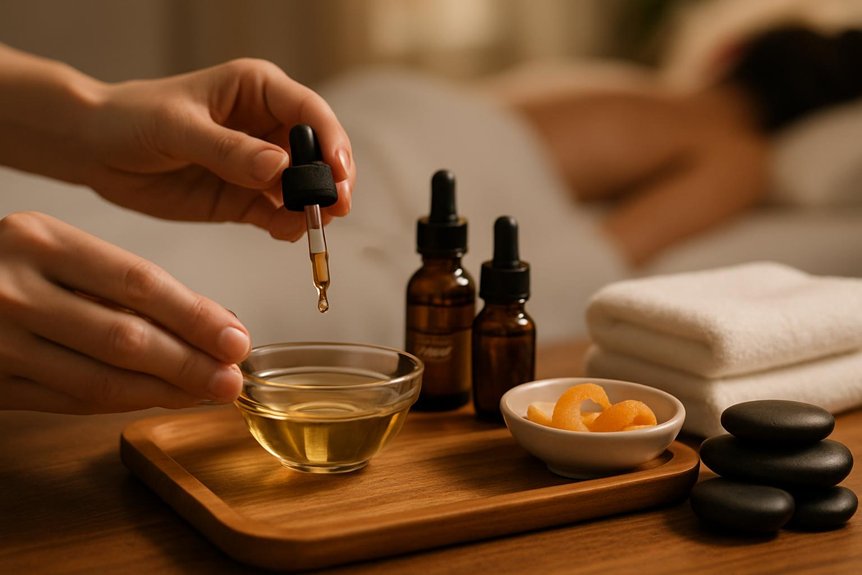
With client safety as the priority, Roman chamomile essential oil should be measured precisely and blended to a conservative dilution before any aromatic massage, since undiluted application increases the risk of irritation and sensitisation.
For full-body massage, Spa & Massage therapists typically keep dilution at 0.5–1% for most adults: about 1–2 drops per 10 ml carrier oil (or 3–6 drops per 30 ml).
For facial, neck, pregnancy, or sensitive-skin work, 0.25–0.5% is preferred.
Drops vary by dispenser, so weighing is more accurate: 1% equals 0.3 g essential oil in 30 g carrier.
Blend in a clean bottle, cap, roll gently, and label.
Patch testing and client feedback guide any adjustment.
How to Patch Test Roman Chamomile Oil
Patch testing helps identify potential skin sensitivity to Roman chamomile oil before it is used in an aromatic massage. At Spa & Massage clinics, therapists advise diluting to a massage-safe level (about 1%) in a neutral carrier oil.
A small amount is applied to a discreet area such as the inner forearm, then covered with a breathable plaster. The area is checked at 30 minutes, then again at 24 hours for redness, itching, swelling, burning, or rash.
The test should not be done on broken or freshly shaved skin. If any reaction occurs, the oil should be avoided and the skin washed with soap and water; urgent help is sought for breathing issues.
Clients should share known allergies.
Benefits of Roman Chamomile in Aromatic Massage
Supporting relaxation while remaining gentle on the skin, Roman chamomile essential oil is commonly used in aromatic massage for its calming scent profile and well-tolerated nature when properly diluted.
In Spa & Massage clinics across London, therapists often select it for clients seeking a quieter nervous system response, especially during periods of stress, low mood, or disrupted sleep. Aromatherapeutic inhalation and mindful touch can support slower breathing and an easeful, grounded body awareness.
Roman chamomile is also valued for sensitive-feeling skin, where a softer aromatic choice may be preferable to sharper oils, provided patch testing and appropriate dilution are used.
Clients frequently describe a comforting, intimate sense of being cared for, without an overpowering fragrance, during close, restorative massage work.
How We Blend Roman Chamomile Oil in Our Clinics
In Spa & Massage clinics across London, Roman chamomile essential oil is blended using conservative dilutions and a structured client-consultation process to prioritise skin safety and predictable therapeutic effects. Therapists confirm sensitivities, current skin condition, pregnancy status, and medications, then agree a scent strength the client can comfortably stay close to for the full session.
A fresh blend is typically prepared per treatment: Roman chamomile is dispersed into an unscented carrier at low dilution (often 0.5–1% for facial, sensitive, or first-time clients; up to 2% when appropriate). The oil is mixed thoroughly to reduce “hot spots,” and a patch-test can be offered on request.
During massage, therapists watch for redness, itching, or warmth, and adjust immediately, documenting outcomes for future visits.
Conclusion
Roman chamomile can be a soothing note in massage—like a soft lamp in a dim room—but safety sets the mood. Evidence-based practice prioritises proper dilution, a patch test, and careful screening for daisy-family allergies, sensitive skin, and relevant medical or medication factors. Pregnancy and paediatric use warrant extra caution and professional guidance. Quality sourcing and measured dosing help reduce irritation or sensitisation. With trained hands and informed consent, relaxation can feel both gentle and grounded.