Gentle shoulder massage is generally considered safe during an uncomplicated pregnancy when light to moderate pressure, slow strokes, and ongoing comfort checks are used. Side-lying (preferably left) or semi-reclined positioning helps avoid strain and reduces the risk of feeling faint after mid-pregnancy. Massage should be avoided with vaginal bleeding, leaking fluid, reduced fetal movements, fever, suspected pre-eclampsia, uncontrolled hypertension, or signs of a blood clot. More practical guidance follows.
Is Shoulder Massage Safe During Pregnancy?
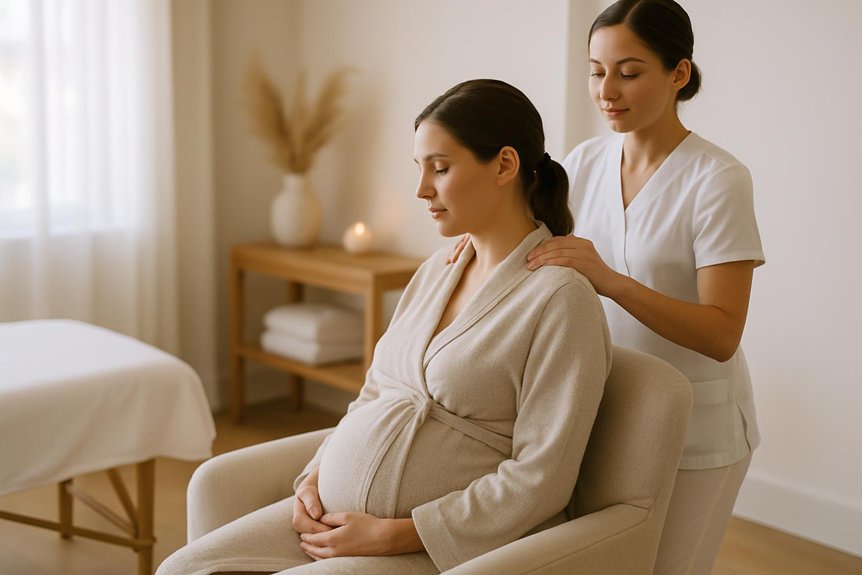
In most uncomplicated pregnancies, a gentle shoulder massage is considered safe and can help ease common tension from postural changes and stress.
Evidence-informed practice supports light to moderate pressure, slow strokes, and comfortable positioning, with the pregnant person’s feedback guiding every step.
It’s also one of the wider benefits of pregnancy massage that can support relaxation and overall comfort for expecting mothers.
At Spa & Massage clinics across London, therapists adapt techniques to reduce neck and upper-back tightness while avoiding strain on joints that may feel looser during pregnancy.
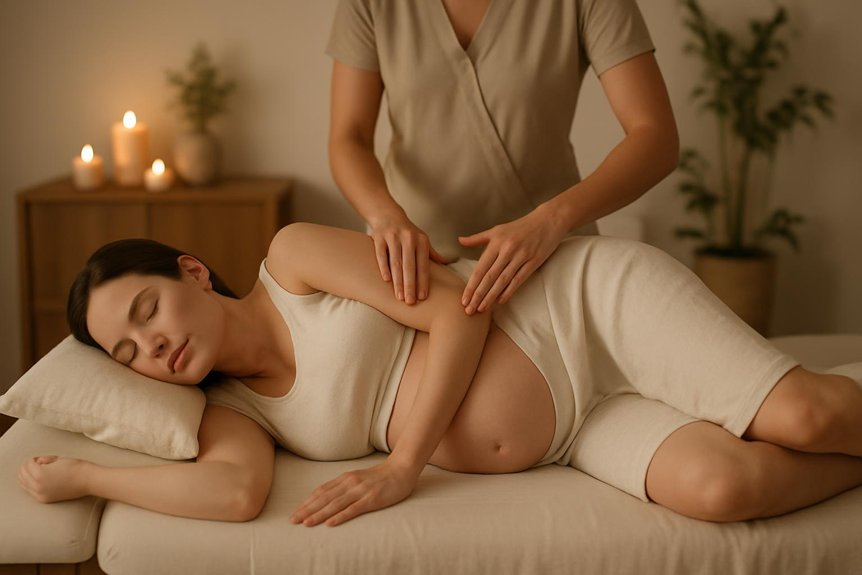
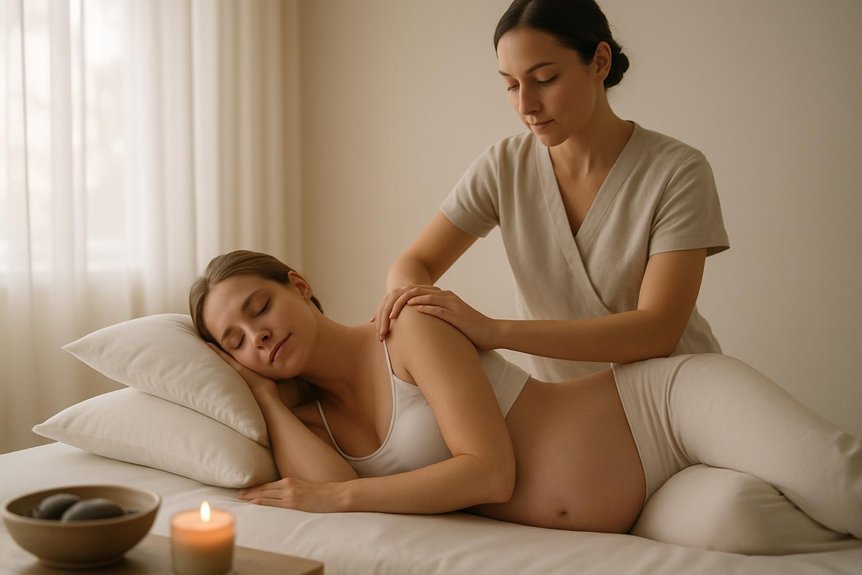
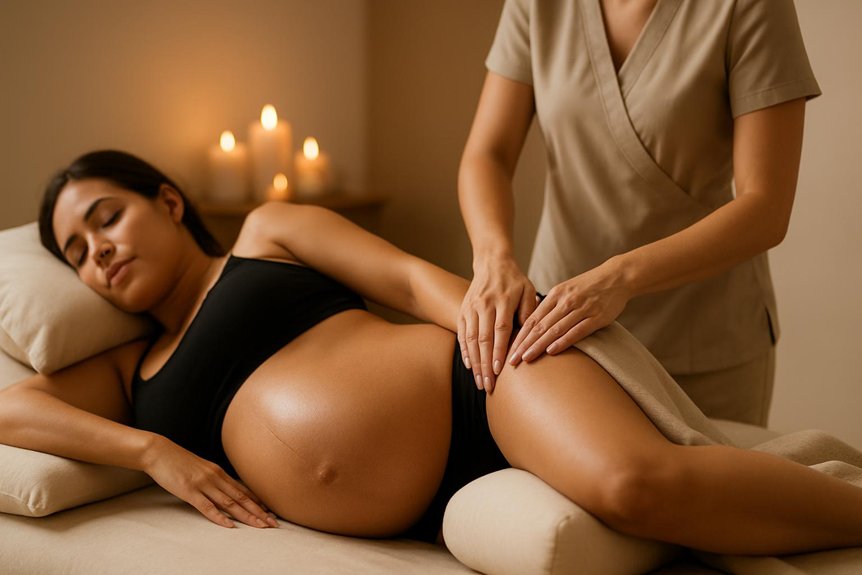
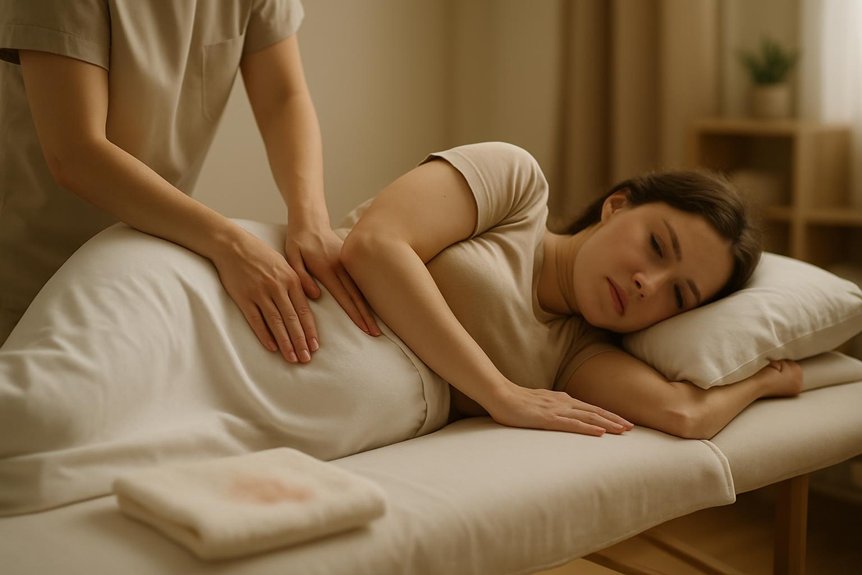
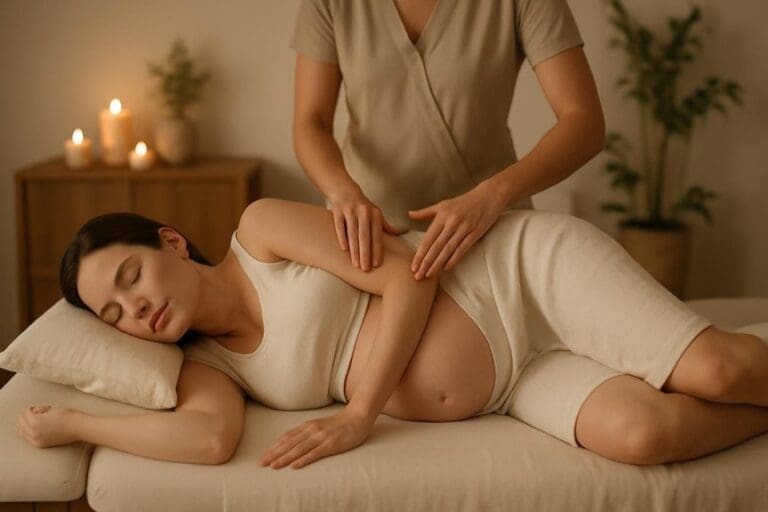
Many clients prefer side-lying support and extra pillows for a close, cocooned sense of care.
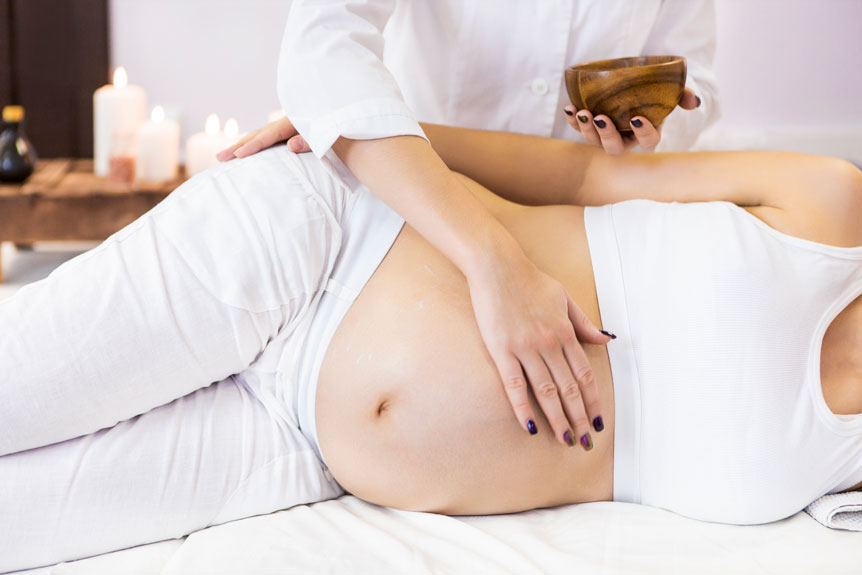
Fragrance-free or mild aromatherapy oils are offered when desired, keeping skin sensitivity in mind.
Hydration and a few minutes of quiet rest after treatment can help the body settle.
When Is Shoulder Massage Not Safe in Pregnancy?
Although shoulder massage is often well tolerated during uncomplicated pregnancies, it is not considered appropriate when there are red flags for maternal or fetal risk, new or unexplained symptoms, or medical advice to limit touch or positioning.
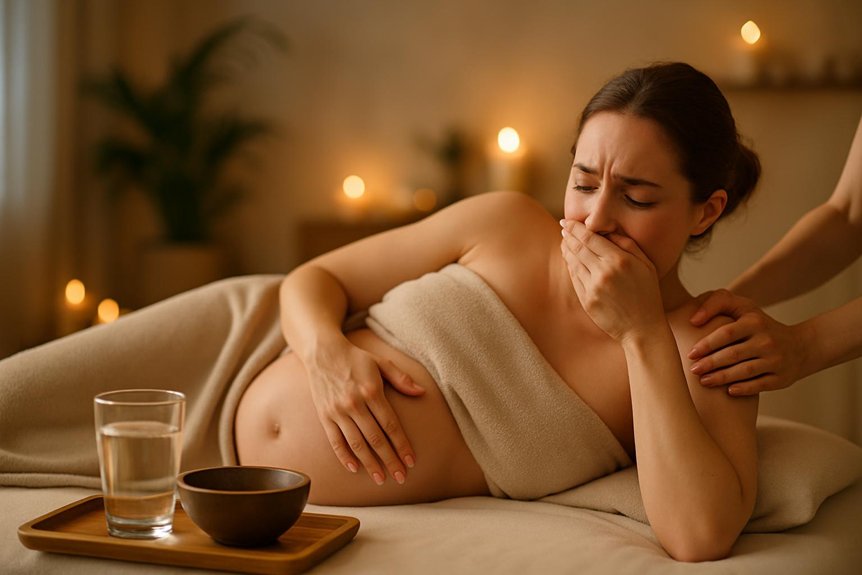
It should be avoided with vaginal bleeding, leaking fluid, reduced fetal movements, severe headache, visual changes, sudden swelling, chest pain, shortness of breath, fever, or suspected pre-eclampsia.
Massage is also not advised over a suspected blood clot, with significant calf pain or swelling, or when there is uncontrolled hypertension, placenta complications, or a history of preterm labour without medical clearance.
New shoulder pain with arm weakness, numbness, or radiating pain warrants assessment first.
At Spa & Massage, therapists pause and refer clients to midwives or GPs, prioritising reassurance, consent, and safety.
How Should You Position Yourself for Comfort and Safety?
Once any red flags have been ruled out, comfort and safety during shoulder massage in pregnancy largely come down to positioning that protects circulation, breathing, and spinal alignment.
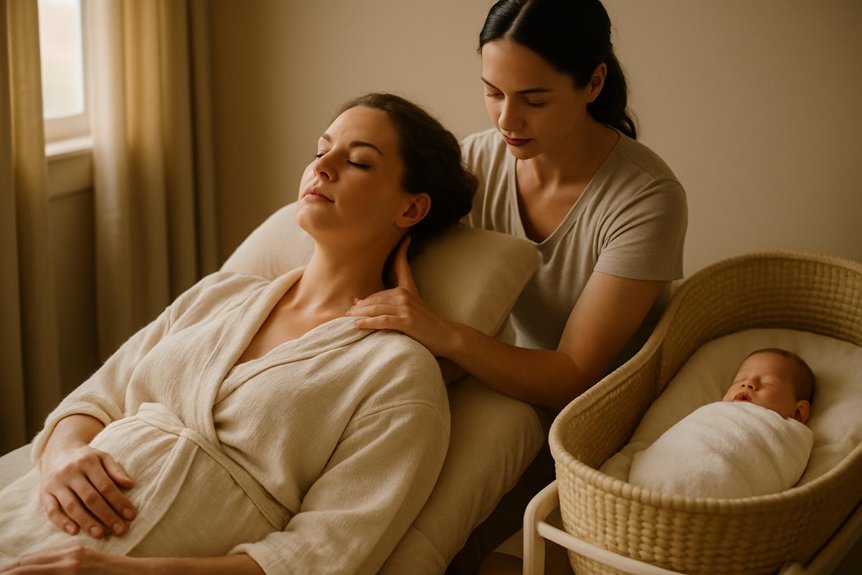
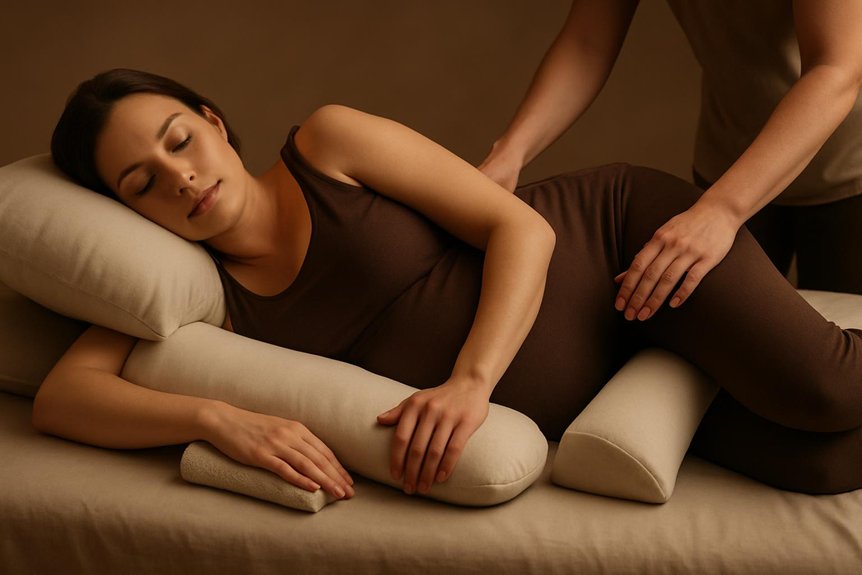
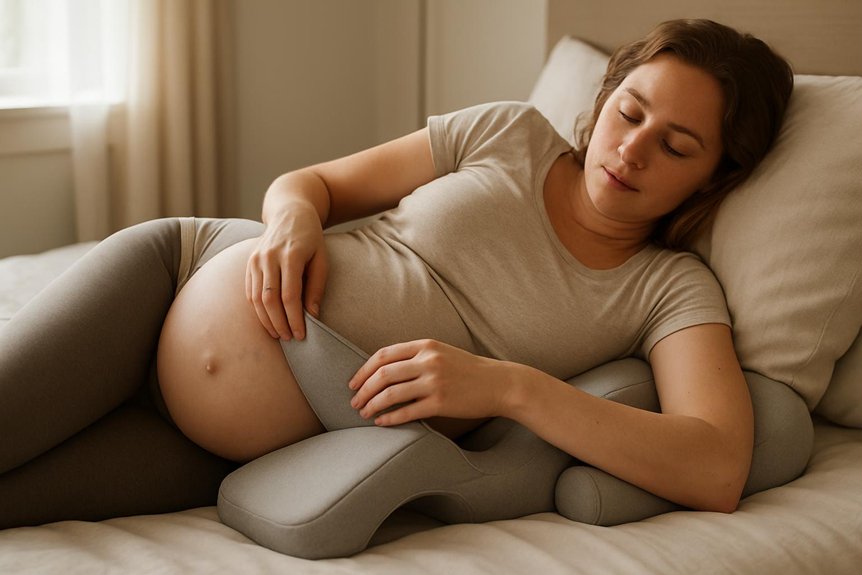
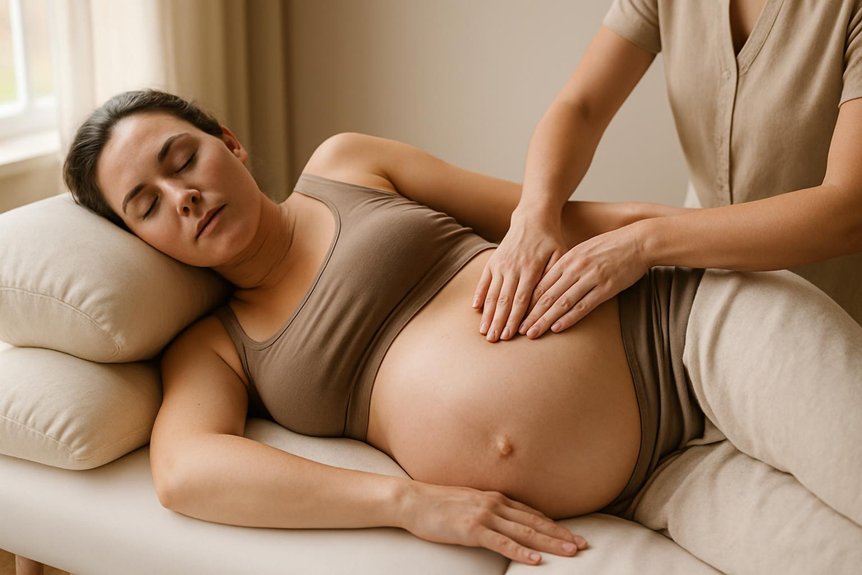
Most clients feel best side-lying, ideally on the left, with pillows supporting the head, bump, and between the knees to reduce pelvic and low-back strain. Semi-reclined can also work, with the upper back well bolstered and the chin neutral to avoid airway restriction. Prolonged flat-on-back lying is generally avoided after mid-pregnancy because it may compress major blood vessels and trigger dizziness or nausea.
Arms should be supported so shoulders can soften rather than brace.
In Spa & Massage clinics across London, therapists check comfort often and adjust bolsters immediately if symptoms appear.
What Pregnancy-Safe Shoulder Techniques Do We Use?
For pregnancy-safe shoulder work, Spa & Massage therapists prioritise gentle, well-supported techniques that ease tension without provoking abdominal strain, dizziness, or joint discomfort.
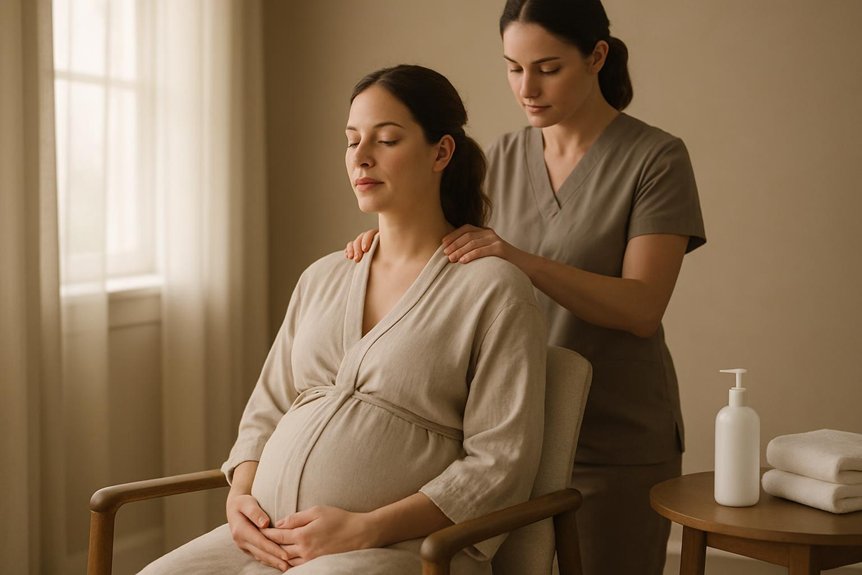
They begin with light effleurage to warm tissues and assess sensitivity, then use slow, moderate-pressure petrissage over the upper trapezius and deltoids, avoiding sharp, deep digging.
Trigger points are approached with brief, tolerable holds and immediate release, never forcing “good pain.”
Scapular mobilisation is done softly, with the arm supported, to reduce stiffness without overstretching lax joints.
When appropriate, careful myofascial glides address neck-to-shoulder pulling from posture changes.
In clinics, unscented or pregnancy-appropriate oils are used sparingly, and pressure is adjusted continuously through calm, close communication.
How Often Is Shoulder Massage Recommended in Pregnancy?
Generally, shoulder massage in pregnancy is best scheduled little and often rather than as infrequent, high-intensity sessions, with frequency guided by trimester, symptom severity, and individual risk factors.
At Spa & Massage, many clients feel best with 30–60 minutes every 2–4 weeks in the first trimester, then every 1–2 weeks from mid-pregnancy if neck and shoulder tension builds.
In the third trimester, weekly sessions can be appropriate when swelling, sleep changes, or postural strain increase, provided care remains gentle and side-lying is used.
More frequent visits should be clinician-approved for high-risk pregnancies, hypertension, clotting history, or unexplained pain.
Between appointments, therapists suggest brief daily self-massage and supported stretching to maintain comfort and closeness.
Conclusion
Shoulder massage is generally safe in uncomplicated pregnancies when performed by a pregnancy-trained therapist who adapts pressure, positioning, and technique. Comfort-led side-lying support and gentle work around the neck, upper back, and shoulder joints can ease tension linked to postural change and breast growth. However, new or severe pain, swelling, headache, dizziness, or neurological symptoms warrant medical advice first. With clear communication and appropriate screening, treatment can feel like melting an iceberg of strain.