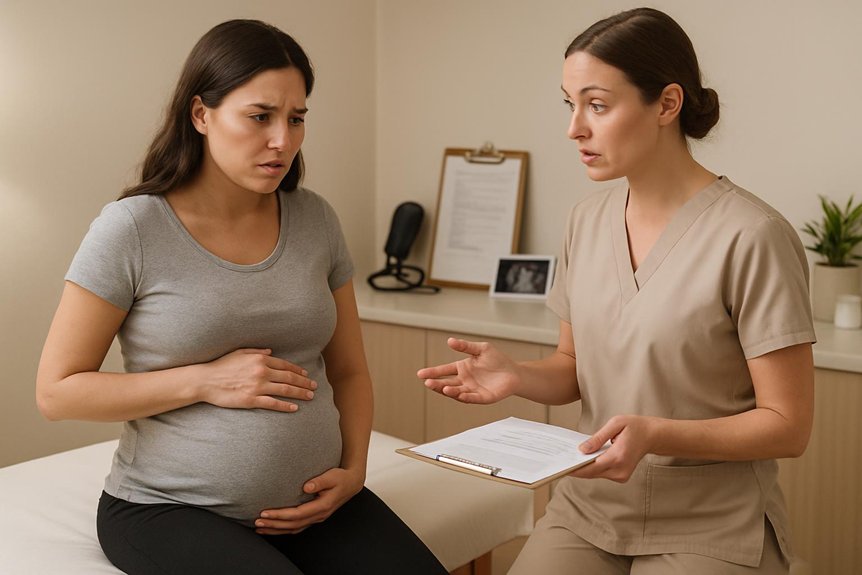
Contraindications for prenatal massage are pregnancy-related conditions or symptoms that mean massage should be avoided, modified, or postponed for safety. Absolute red flags include suspected miscarriage or ectopic pregnancy, vaginal bleeding or ruptured membranes, signs of preterm labour, pre-eclampsia symptoms (severe headache, visual changes, sudden swelling), and suspected DVT (hot, swollen, painful calf) or major trauma. High-risk pregnancies often require GP or midwife approval first. Screening, positioning, and ongoing consent guide safer choices, with key trimester adaptations explained next.
What Are Prenatal Massage Contraindications (and Why They Matter)?
In prenatal massage, contraindications refer to specific medical conditions, symptoms, or pregnancy-related risk factors that mean massage should be avoided, modified, or postponed to protect both parent and baby. They matter because pregnancy changes circulation, blood pressure, joint laxity, and sensitivity, so safe touch requires informed boundaries rather than “one-size-fits-all” pressure.
At Spa & Massage clinics across London, therapists use contraindications to guide consultation, positioning, pressure, and oil choices, ensuring comfort without compromising safety. This client-centred screening helps identify when gentler techniques, shorter sessions, side-lying support, or fragrance-free products are more appropriate. It also supports timely referral to a midwife or GP when new swelling, pain, headache, or unusual symptoms appear.
Clear contraindication awareness allows nurturing, intimate care to feel reassuring, not risky, for both body and mind. When appropriate, a therapist may discuss the benefits of pregnancy massage to help set safe, realistic expectations for comfort and wellbeing during treatment.
When Prenatal Massage Isn’t Safe (Absolute Reasons to Avoid)
When, exactly, should prenatal massage be avoided altogether? It should not be performed during a suspected miscarriage or ectopic pregnancy, any active vaginal bleeding, ruptured membranes, or signs of preterm labour (regular contractions, fluid leakage, severe pelvic pressure).
Massage is also unsafe with pre-eclampsia/eclampsia symptoms (severe headache, visual changes, sudden swelling, high blood pressure), uncontrolled fever or systemic infection, and deep vein thrombosis or suspected clot (hot, swollen, painful calf).
Recent major trauma, abdominal injury, or severe unexplained abdominal pain are absolute stop signs.
At Spa & Massage, therapists prioritise calm, close care: if any red flags are present, treatment is paused and urgent medical assessment is advised immediately.
When You Need GP or Midwife Approval First
For some pregnancies, prenatal massage may still be appropriate, but only after a GP or midwife confirms it is safe. This is typically advised for high‑risk pregnancies, a history of miscarriage or preterm labour, bleeding or persistent abdominal pain, placenta praevia, pre‑eclampsia or pregnancy‑related hypertension, gestational diabetes needing medication, significant swelling, suspected DVT, or severe anaemia. Medical clearance helps rule out complications where massage could worsen symptoms or delay urgent care.
At Spa & Massage clinics across London, therapists request written or verbal guidance when any red flags are present and adapt pressure, positioning, and treatment goals accordingly. Clients are encouraged to share notes on medications, current symptoms, and comfort preferences so touch remains soothing, respectful, and clinically appropriate throughout each session.
Prenatal Massage Contraindications by Trimester
By trimester, the safety considerations for prenatal massage can change because maternal physiology and obstetric risk factors shift as pregnancy progresses. In the first trimester, many practitioners take a cautious approach, favouring shorter, gentle sessions and avoiding deep abdominal work.
In the second trimester, side-lying positioning is usually preferred; care is taken to avoid prolonged supine lying and to keep pressure moderate, especially over varicose veins.
In the third trimester, swelling, reflux, and breathlessness can limit positioning; therapists often use extra bolstering and lighter strokes, and they avoid intense work on calves if clot risk is a concern.
At Spa & Massage clinics, prenatal massage is tailored each visit, with continual consent, comfort checks, and conservative technique selection throughout.
Pregnancy Symptoms That Mean Stop and Reassess
In addition to trimester-based precautions, certain symptoms during pregnancy warrant pausing a massage immediately and reassessing risk. These include vaginal bleeding or fluid leakage, new or severe abdominal or pelvic pain, regular uterine tightening, fainting, chest pain, shortness of breath, or severe headache with visual changes.
Fever, chills, vomiting, or signs of infection also merit stopping, as do sudden swelling of face or hands, calf pain, warmth, redness, or one-sided leg swelling that could suggest a clot.
Reduced fetal movement after viability should prompt urgent advice from a midwife or GP.
At Spa & Massage, therapists respond calmly, support privacy, and encourage the client to seek medical assessment before resuming any hands-on care. Safety remains the most intimate form of care always.
How We Keep Prenatal Massage Safe in London
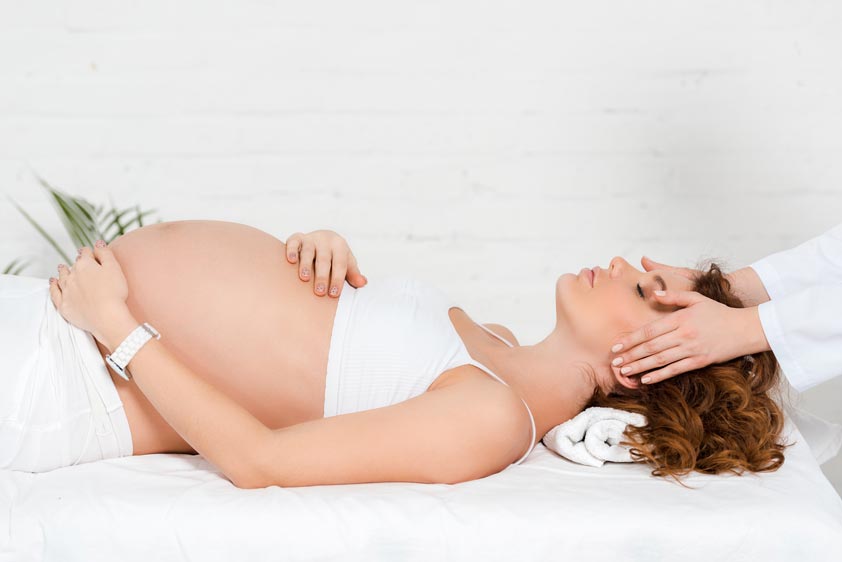
At Spa & Massage’s London clinics, prenatal massage safety is managed through pre-session health screening to identify contraindications and tailor treatment to the client’s stage of pregnancy and current symptoms.
Sessions prioritise safe positioning and appropriate bolstering to support comfort and reduce strain, with adjustments made throughout based on client feedback.
These measures are reinforced by therapist training and clear protocols so care remains consistent, evidence-informed, and responsive across all six locations.
Pre-Session Health Screening
Before any prenatal treatment begins, Spa & Massage clinics use a structured pre-session health screening to identify contraindications and determine whether massage is appropriate, needs modification, or should be deferred. Therapists review trimester, medical history, current symptoms, and any advice from a midwife or GP. Key checks include bleeding, abdominal pain, fever, infection, severe nausea, high blood pressure or pre-eclampsia concerns, clotting risk, recent surgery, pregnancy complications, and reduced foetal movement—prompting referral for medical guidance.
They also note medications, allergies, oedema, varicose veins, and skin conditions to plan safe products and pressure. Screening is handled with discretion, inviting clients to share what feels private, so care remains soothing, respectful, and confidently tailored across London clinics.
Safe Positioning And Support
Once the pre-session health screening confirms prenatal massage is appropriate, safety depends heavily on positioning and support throughout the treatment.
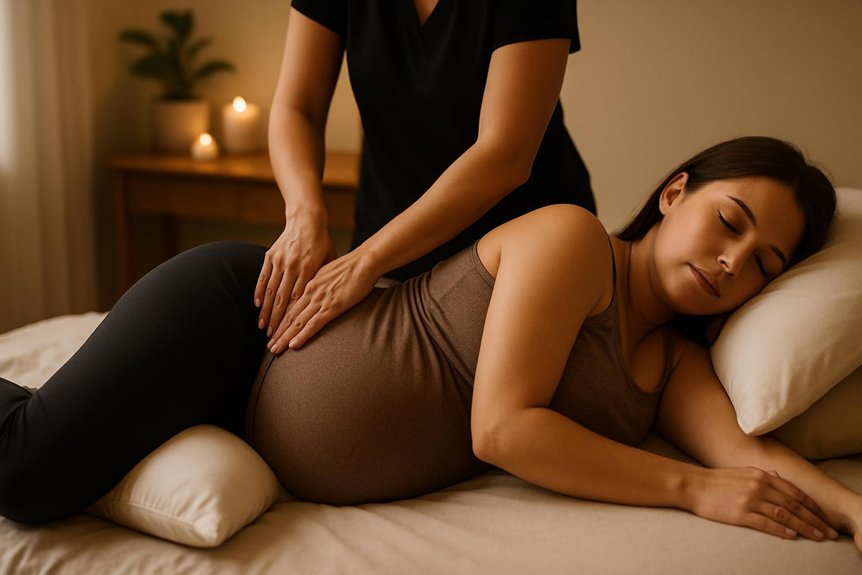
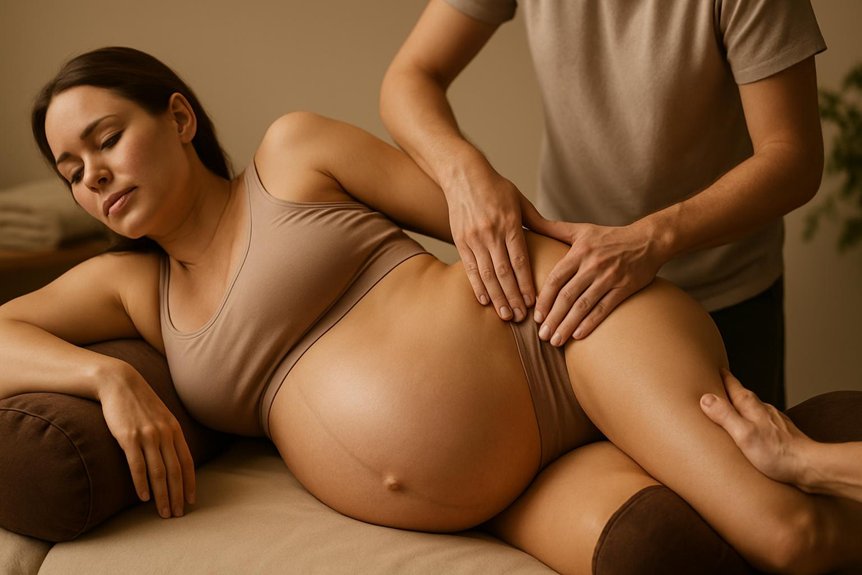
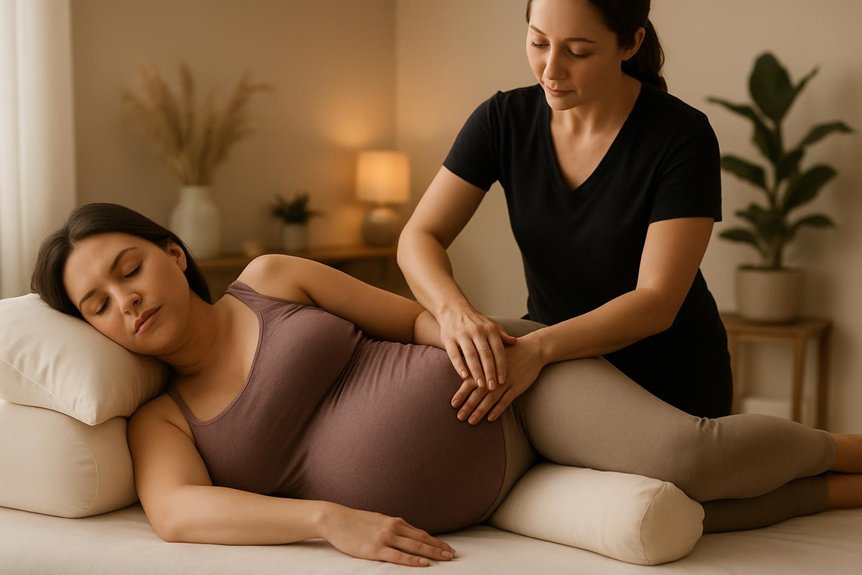
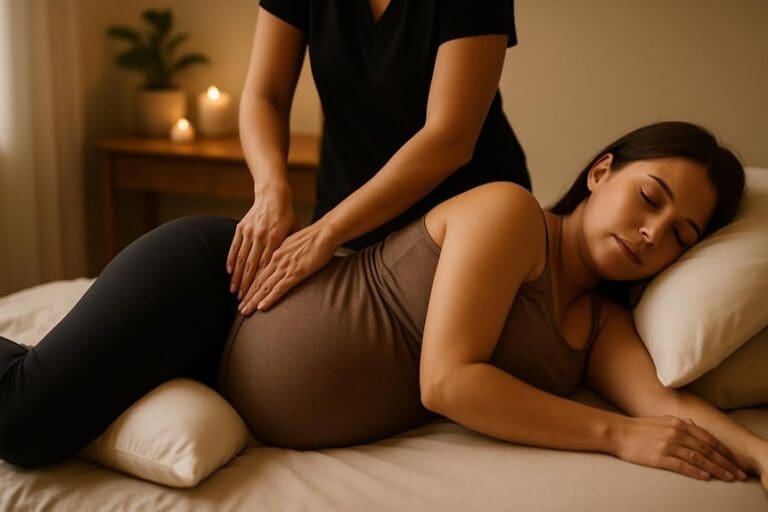
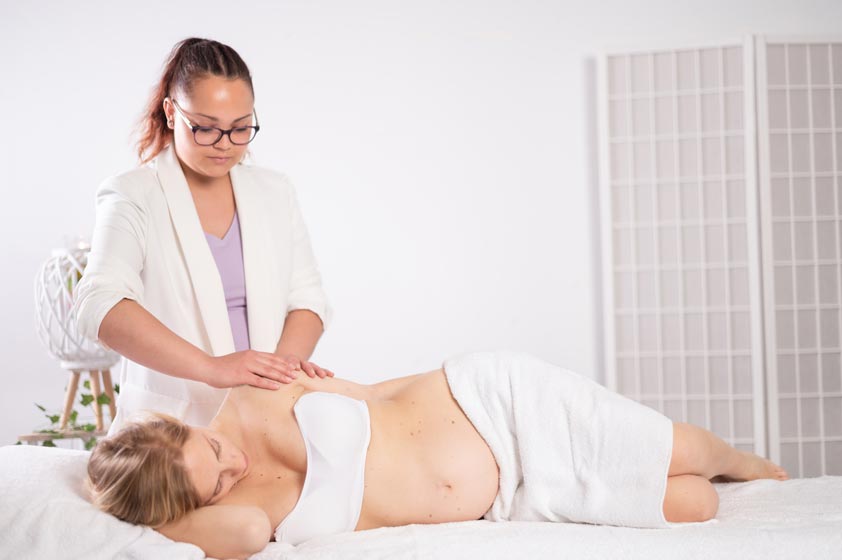
At Spa & Massage clinics across London, clients are typically placed in a comfortable side-lying position to avoid prolonged pressure on the abdomen and major blood vessels, supporting steady circulation and ease of breathing.
Cushions are used to cradle the bump, align the hips, and soften strain through the lower back, knees, and ankles.
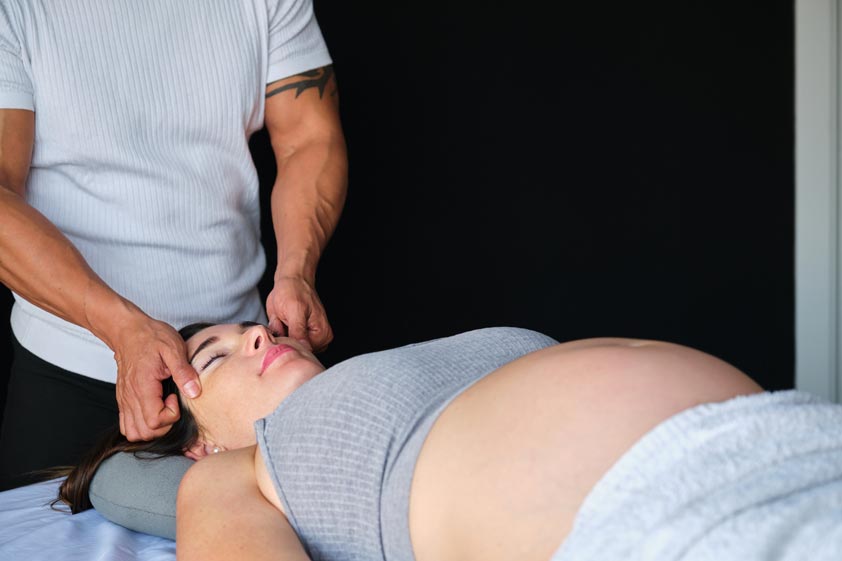
Head and shoulder support helps reduce neck tension and encourages deeper relaxation.
The table height and bolsters are adjusted so the body feels securely held, never stretched or compressed.
Position changes are offered whenever needed, so comfort, dignity, and calm remain central.
Therapist Training And Protocols
Maintaining safety in prenatal massage depends on therapist training, clear clinical protocols, and consistent risk screening.
At Spa & Massage clinics across London, prenatal massage is delivered by therapists trained in antenatal anatomy, red flags, and trimester-specific modifications, with ongoing supervision and documented continuing education.
Intake includes current gestation, medical conditions, medications, swelling, blood pressure concerns, and any clinician advice; when contraindications are present, treatment is deferred or adapted.
Protocols favour gentle, reassuring pressure, side-lying support, and avoidance of techniques linked to discomfort or risk.
Patch testing and low-allergen carrier oils are used when needed, and aromatherapy choices are conservative.
Aftercare emphasises hydration, rest, and prompt referral if unusual pain, bleeding, dizziness, or reduced fetal movement occurs.
Conclusion
Prenatal massage can be wonderfully calming—unless pregnancy decides to add plot twists like bleeding, fever, pre‑eclampsia signs, DVT risk, or “my GP said no.” In those cases, the safest massage is the one not performed, or delayed until medical clearance. A thorough consultation, symptom check, and trimester‑appropriate positioning turn relaxation into risk management. The goal is simple: comfort without compromise. Because “it felt fine” is not a clinical guideline, and babies dislike improvisation.