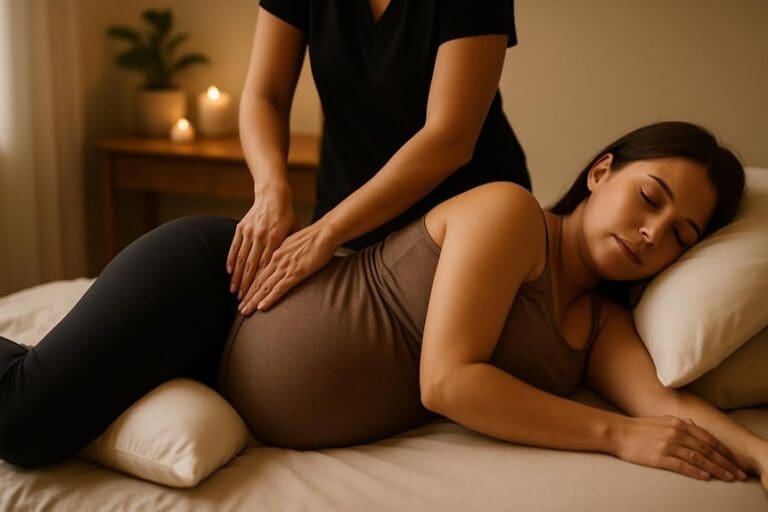
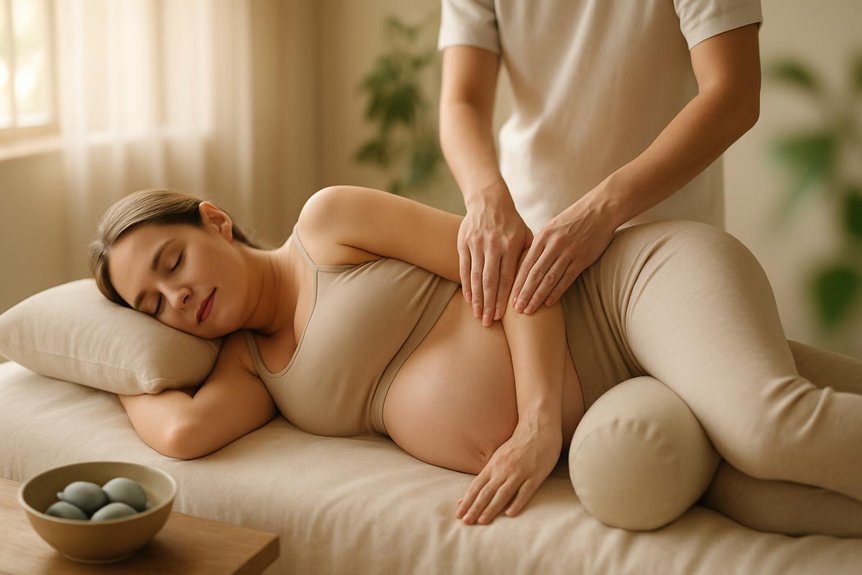
Prenatal massage can safely ease common pregnancy discomforts—especially low-back, hip, neck, and shoulder tension—while promoting relaxation and improved sleep when provided by a trained therapist from the second trimester onward. Sessions typically use side-lying or semi-reclined positioning, light-to-medium pressure, and minimal, pregnancy-safe oils to support comfort and circulation. Gentle, rhythmic strokes may help reduce swelling and muscle guarding. Ongoing screening and medical clearance are advised for high-risk pregnancies; additional guidance explains what to expect.
When Prenatal Massage Is Safe (Trimester + Red Flags)
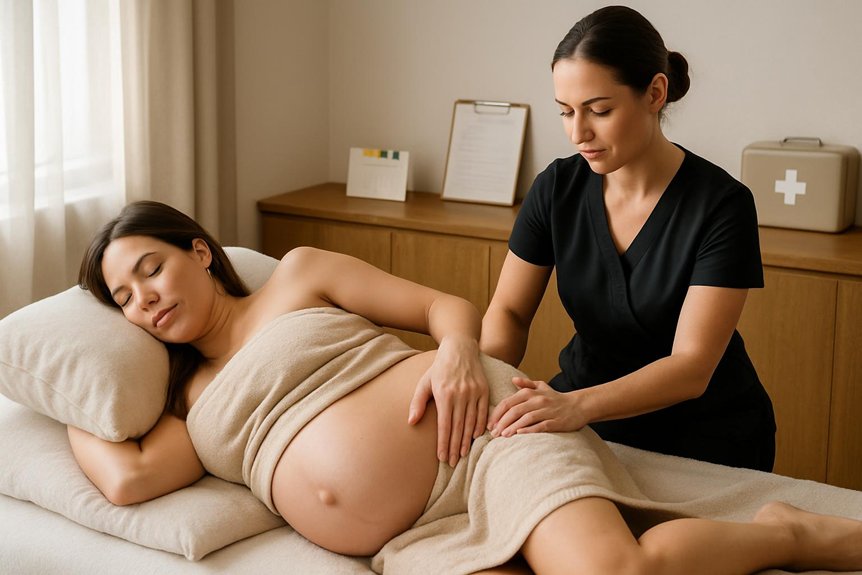
As a general rule, prenatal massage is considered safe for most low‑risk pregnancies from the second trimester onward, provided it is delivered by a trained therapist using pregnancy-appropriate positioning and pressure.
Many clinicians advise avoiding first‑trimester massage unless a midwife or GP agrees, because early pregnancy symptoms and risks can be harder to interpret.
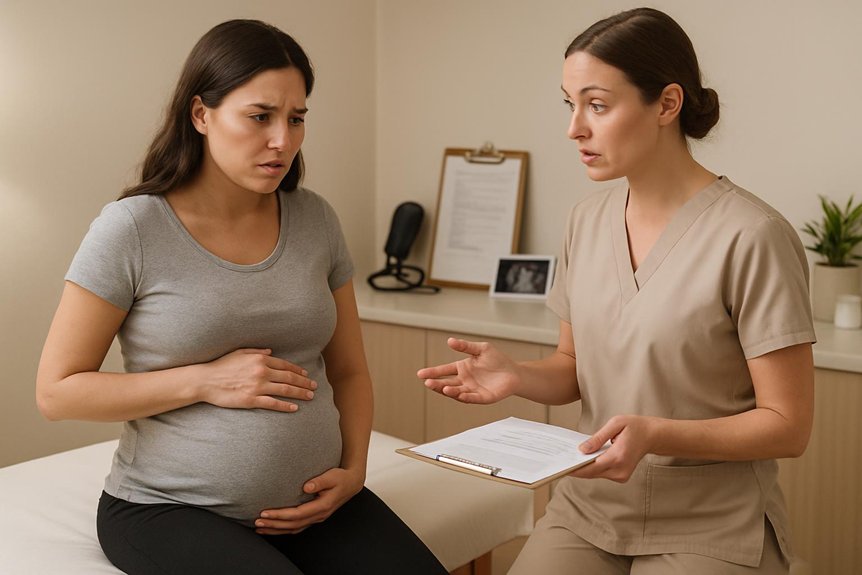
In Spa & Massage clinics across London, therapists complete a careful intake and will request medical clearance for high‑risk situations (e.g., pre‑eclampsia, placenta complications, history of preterm labour, clotting disorders, uncontrolled hypertension, or significant swelling).
Massage should be postponed if there is vaginal bleeding, leaking fluid, fever, severe headache, chest pain, calf warmth/tenderness, fainting, or reduced fetal movement.
Prenatal massage can also support comfort by easing common aches and tension through pregnancy massage techniques tailored to expecting mothers.
Safety supports calm, connected touch.
What to Expect From a Prenatal Massage (Positions, Pressure, Oils)
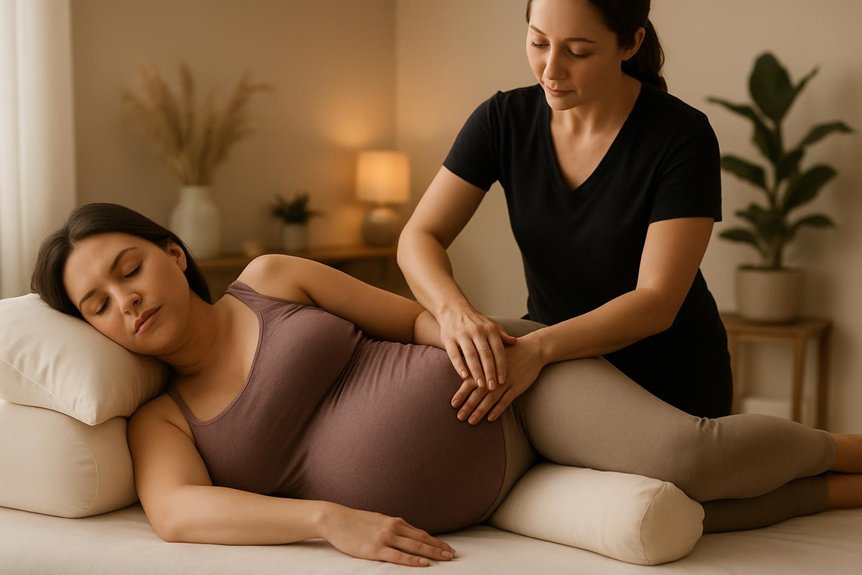
In a prenatal massage, therapists prioritise evidence-informed safety by using supportive side-lying or semi-reclined positioning to reduce strain and avoid prolonged flat-on-the-back time. Pressure and techniques are kept adaptable—typically gentle to moderate and guided by comfort, pregnancy stage, and any symptoms—so treatment remains both effective and well-tolerated.
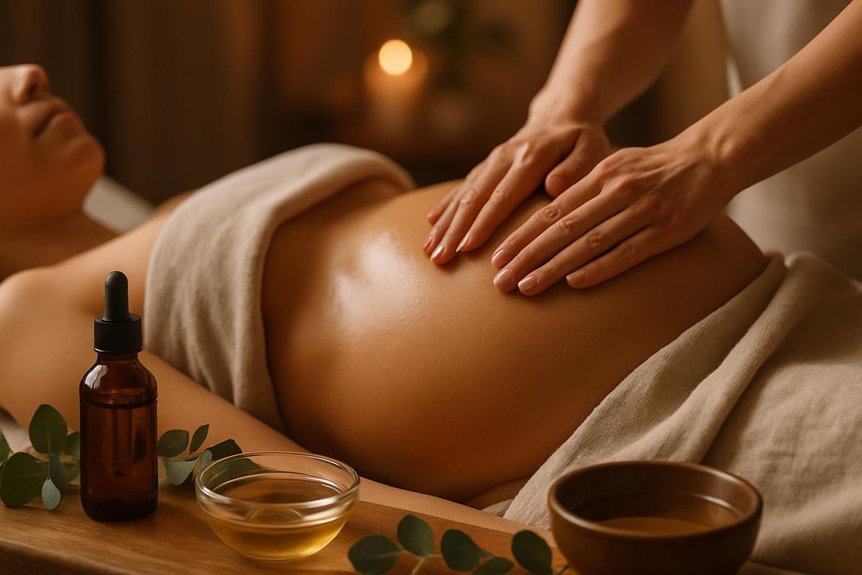
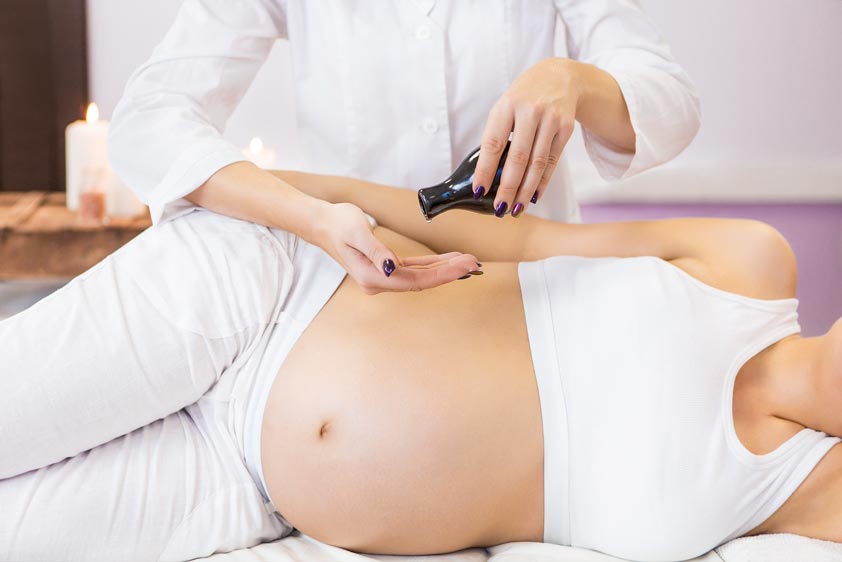
At Spa & Massage clinics, pregnancy-safe oils are selected with sensitivity in mind, and any aromatherapy use is carefully considered and discussed with the client before application.
Safe Positioning Options
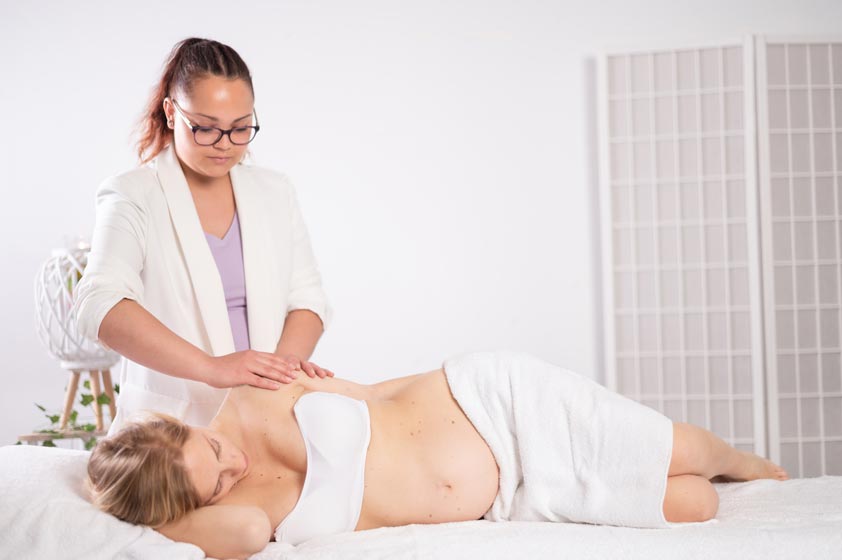
From the moment a prenatal massage begins, safe positioning is treated as a clinical priority to support circulation, breathing comfort, and spinal alignment while avoiding unnecessary pressure on the abdomen.
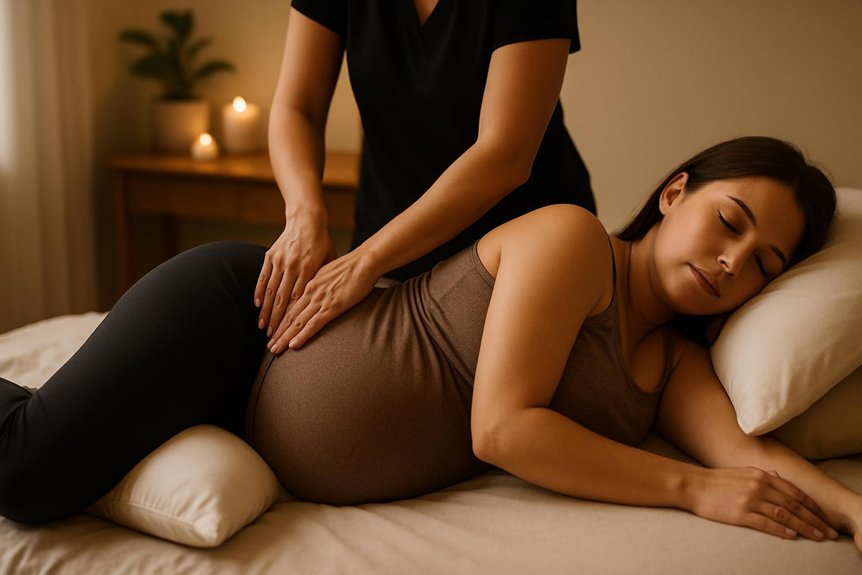
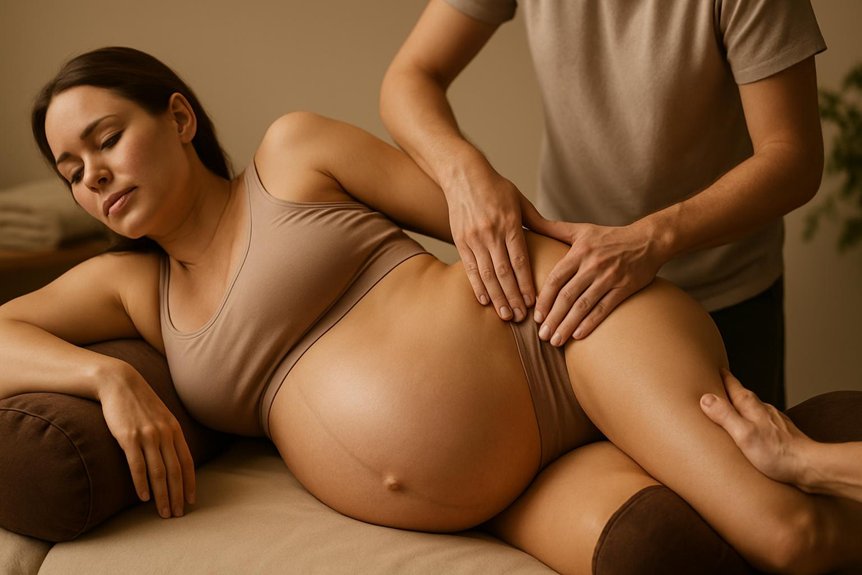
In Spa & Massage clinics, side-lying is commonly selected, with supportive bolsters for the head, bump, knees, and ankles to keep hips level and the lower back relaxed.
For early pregnancy, a semi-reclined position may also be used to ease breathing and reduce reflux, with the pelvis supported and legs gently elevated.
Prone positioning is generally avoided unless purpose-built pregnancy cushions allow the abdomen to remain completely free of pressure.
Throughout, the therapist checks comfort, temperature, and any dizziness, inviting small adjustments so the client can feel held, secure, and quietly connected.
Pressure And Technique Levels
With safety and comfort guiding every choice, pressure and technique in prenatal massage are typically moderated and highly responsive to how the client feels on the day. At Spa & Massage clinics across London, therapists begin with a brief check-in and use light-to-medium pressure, adjusting constantly to tenderness, swelling, or fatigue.
Deep, bruising work and forceful stretching are avoided; instead, slow, grounding strokes support circulation and ease muscular guarding without overstimulating sensitive tissue. Techniques are focused on common pregnancy areas—lower back, hips, shoulders, and calves—while steering clear of sustained pressure on the abdomen.
If a client reports dizziness, nausea, or unusual pain, intensity is reduced or the session paused. The aim is calm relief and safe closeness.
Pregnancy-Safe Oils Used
For most prenatal massages, the oil choice is deliberately simple, fragrance-light, and patch-test cautious to minimise irritation and avoid ingredients that may be unsuitable during pregnancy. At Spa & Massage clinics, therapists typically select gentle, hypoallergenic carrier oils and use only a small amount to maintain smooth, comforting glide without leaving skin feeling coated.
Because pregnancy can heighten scent sensitivity and skin reactivity, essential oils are used sparingly, if at all, and only after a careful consultation. Clients are invited to mention asthma, migraines, eczema, or nausea so the blend can be adjusted or kept fully neutral. The therapist may recommend a quick patch test on the forearm before fuller application.
Throughout, the priority is calm, close-to-skin comfort, with choices that support relaxation while keeping maternal and baby safety central.
Prenatal Massage Benefits for Aches and Muscle Tension
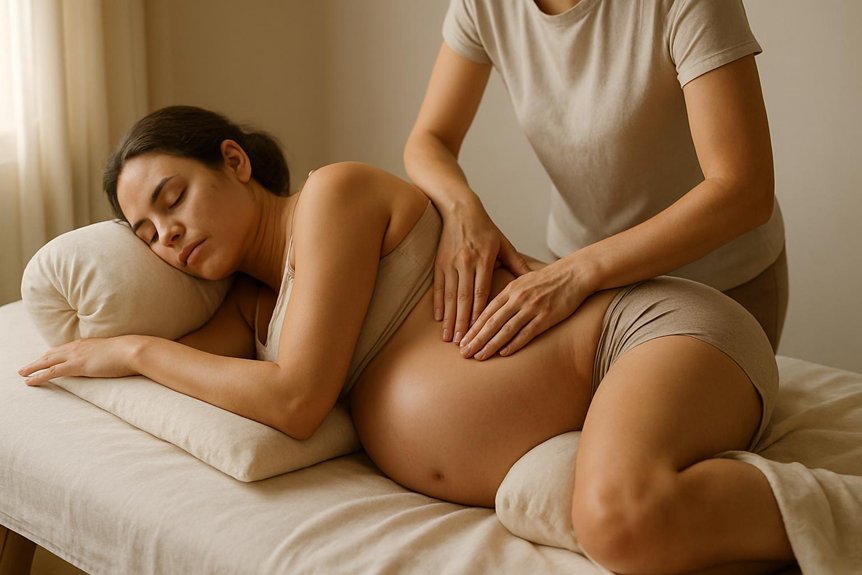
Prenatal massage is commonly used to help manage pregnancy-related aches by easing back pain, softening hip and pelvic tension, and reducing neck and shoulder tightness linked to postural changes.
At Spa & Massage clinics across London, therapists use pregnancy-appropriate positioning and light-to-moderate, symptom-led pressure to target overworked muscles while prioritising comfort and safety.
Each session is adapted to the client’s stage of pregnancy and health history, with guidance to seek medical advice where needed (for example, with new, severe, or persistent pain).
Relief for Back Pain
As pregnancy progresses, shifting posture and increased load through the pelvis and spine commonly trigger lower-back, hip, and shoulder tension. Prenatal massage can ease back pain by reducing muscle guarding, improving local circulation, and supporting calmer breathing, which may lower pain sensitivity.
At Spa & Massage clinics across London, therapists use side-lying positioning with bolsters, gentle-to-moderate pressure, and slow, grounding strokes through the back, shoulders, and along the ribcage, always avoiding deep abdominal work and uncomfortable spinal pressure. Sessions are tailored to trimester, medical history, and daily activities, with clear consent and regular check-ins to keep the experience secure and emotionally soothing.
Aftercare may include heat, hydration, and simple posture cues for lasting comfort.
Easing Hip and Pelvic Tension
With changing pelvic alignment and increased load through the hips, many pregnant clients develop glute, hip-flexor, and inner-thigh tightness that can radiate into the lower back, groin, or along the sacroiliac joints. Prenatal massage can ease this by improving local circulation, reducing protective muscle guarding, and supporting calmer movement patterns.
At Spa & Massage, therapists use side-lying positioning with supportive bolsters, then apply gentle, sustained pressure and slow myofascial techniques to the glutes, piriformis region, adductors, and hip flexors—always within the client’s comfort and with consent. Pressure is adapted for trimester, swelling, and tenderness, avoiding deep work over varicose areas. Many clients notice easier walking, smoother sleep, and a softer sense of pelvic openness afterward.
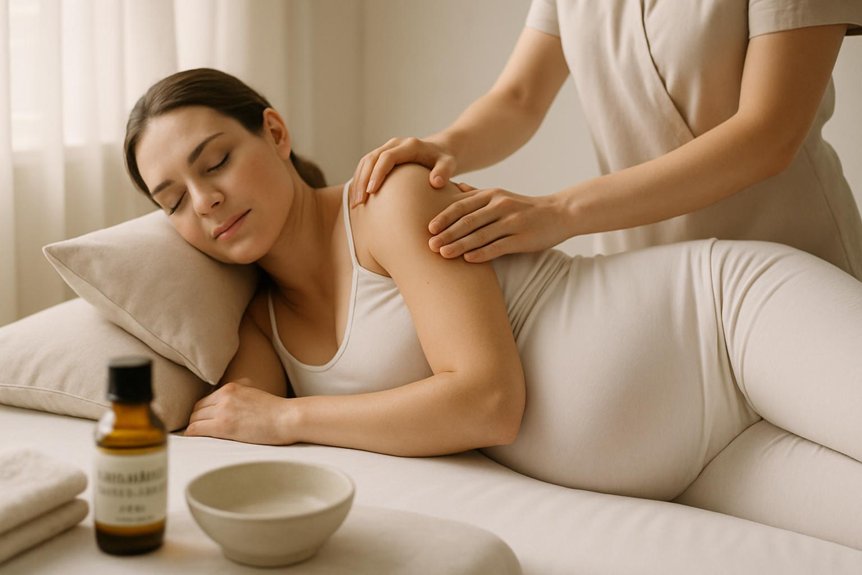
Reducing Neck and Shoulder Tightness
Tension patterns in pregnancy are not limited to the hips and pelvis; many clients also develop neck and shoulder tightness from postural changes, breast growth, and prolonged desk or phone use, often accompanied by headaches or upper-back discomfort.
At Spa & Massage clinics across London, therapists use pregnancy-safe positioning and supportive bolsters to keep breathing easy and pressure off the abdomen. Gentle myofascial work, slow effleurage, and careful trigger-point techniques to the upper trapezius, scalenes, and suboccipitals can reduce guarding and improve range of motion without aggressive force.
Sessions are tailored to trimester, blood-pressure history, and symptom pattern, with ongoing consent and comfort checks. Many clients are advised to hydrate, apply warmth, and practice brief shoulder-blade resets between appointments.
Prenatal Massage for Stress Relief and Better Sleep
Easing the nervous system during pregnancy can meaningfully reduce perceived stress and support more consistent sleep.
Gentle, well-paced touch can lower muscle guarding and encourage parasympathetic activation, helping the mind settle when hormones and discomfort make rest elusive.
At Spa & Massage clinics across London, therapists use side-lying positioning, supportive bolsters, and pressure tailored to trimester and preference.
Many clients find that slow effleurage, focused breath cues, and calm, grounding holds ease worry and create a sense of being safely held.
When appropriate, light aromatherapy may be offered with pregnancy-safe dilutions and careful screening.
Sessions are adapted for insomnia patterns, anxiety levels, and sensory needs, with clear consent and frequent check-ins.
Regular appointments can reinforce evening relaxation routines and improve sleep continuity.
Prenatal Massage Benefits for Swelling and Circulation
Better rest often makes daytime discomfort easier to manage, yet many pregnant clients continue to notice fluid retention and a heavy, “puffy” feeling in the ankles, calves, and hands—particularly later in pregnancy and after long periods of standing or sitting.
Prenatal massage may support comfort by encouraging venous and lymphatic return with gentle, rhythmic strokes that follow natural fluid pathways.
At Spa & Massage clinics across London, therapists use side-lying positioning, light-to-moderate pressure, and slow pace to avoid overloading sensitive tissues; many clients describe a warmer, lighter sensation in the legs afterwards.
Safety remains central: sudden, one-sided swelling, calf pain, redness, or breathlessness requires urgent medical assessment, not massage.
Between sessions, clients are guided to hydrate, elevate legs, and take brief walking breaks regularly.
Prenatal Massage for Back and Pelvic Pain Relief
As pregnancy progresses, shifting posture, abdominal load, and ligament laxity can aggravate lower-back discomfort and pelvic girdle pain, particularly with prolonged standing, walking, or turning in bed. Prenatal massage may ease this strain by reducing muscle guarding in the lumbar area, hips, and glutes, and by calming the nervous system to soften pain sensitivity.
At Spa & Massage, therapists use supportive side-lying positioning and pregnancy bolsters, applying slow, reassuring pressure that stays within comfort and avoids provocative joint stress. Many clients find targeted work around the sacrum, hip rotators, and upper back improves ease of rest and daily function. Safety remains paramount: pressure is adjusted, symptoms are monitored, and persistent or radiating pain is referred to a midwife or GP promptly.
Prenatal Massage to Support Posture and Movement
With the body’s centre of gravity moving forward during pregnancy, many people adopt compensatory patterns—rib flaring, anterior pelvic tilt, and rounded shoulders—that can increase fatigue and strain through the neck, mid-back, hips, and calves. Prenatal massage can support easier movement by gently releasing overworked muscles and improving body awareness, helping clients find a more comfortable, upright alignment.
At Spa & Massage clinics across London, therapists use side-lying positioning, supportive bolsters, and pregnancy-safe pressure to ease tight chest, upper back, glutes, and hip flexors while calming reactive areas around the pelvis. Sessions may include soothing myofascial work and guided breathing to encourage smoother rib and diaphragm motion.
Many clients report walking, sleeping, and changing positions with less effort afterward, and more comfort.
Conclusion
Prenatal massage can offer meaningful comfort, yet it remains a treatment where “gentle” still means “careful.” When provided by a trained therapist, tailored by trimester, and avoided when red flags are present, it can ease muscle tension while protecting vulnerable joints; calm the nervous system while respecting medical guidance. Clients often notice less back and pelvic discomfort, lighter legs, and improved sleep—small changes that contrast with the daily weight of pregnancy.