

It is generally avoided or postponed with acute fever, systemic infection, unexplained swelling, severe pain, or any medical emergency symptoms. It is contraindicated on feet with open wounds, ulcers, active bacterial or contagious skin infection, severe dermatitis or burns, or symptomatic fungal infection. GP clearance is advised for unstable cardiovascular disease, uncontrolled hypertension, DVT risk, severe diabetes with neuropathy, active cancer treatment, or anticoagulant use. Pregnancy may require modification or deferral, especially first trimester. Further guidance clarifies safe screening and adaptations.
Reflexology Contraindications: When to Cancel Immediately
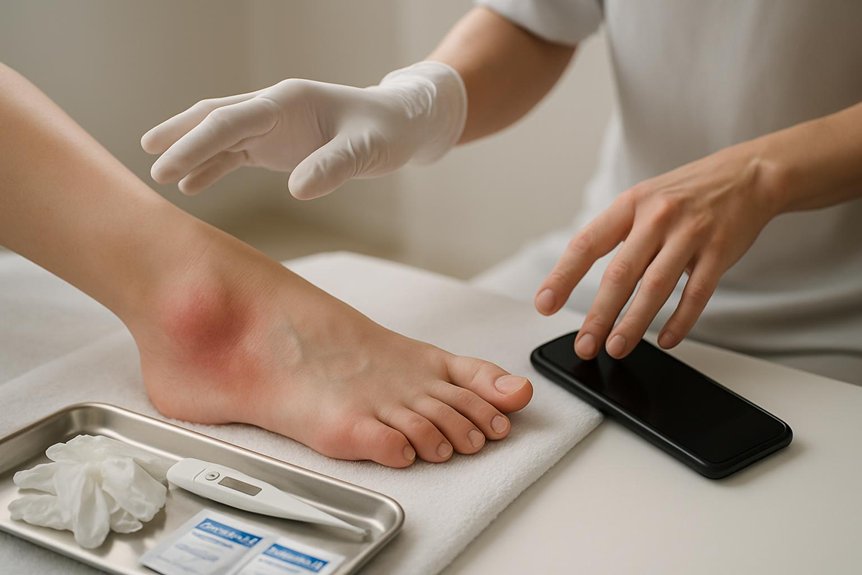
Occasionally, it should be cancelled immediately to reduce avoidable clinical risk. At Spa & Massage, therapists pause the session if a client presents with acute fever or systemic infection, sudden unexplained swelling, severe pain, or signs of a medical emergency.
Open wounds, active bleeding, or suspected fracture in the feet or ankles also warrant stopping, as pressure may aggravate tissue injury. New or rapidly worsening neurological symptoms, chest pain, breathlessness, fainting, or uncontrolled vomiting require urgent medical assessment, not touch-based care.
Because it focuses on the healing power of targeted touch, it should only continue when a client is stable and comfortable enough to safely benefit from care.
If a client feels unwell during treatment, the therapist reduces contact, supports privacy and comfort, offers water, and helps arrange safe onward care. Documentation is completed promptly and discreetly.
Reflex Therapy Contraindications: Who Should Avoid It?
In clinical practice, it is not suitable for everyone, and certain groups should avoid it altogether unless a clinician has advised otherwise.
This includes people with acute foot or ankle fractures, recent surgery, open wounds, burns, contagious skin infections, or severe inflammatory skin conditions, where touch may worsen tissue damage or spread infection.
Those with severe peripheral neuropathy, significant loss of sensation, or advanced peripheral vascular disease may not feel excessive pressure or may have poor healing capacity.
Clients with deep vein thrombosis risk, unexplained calf swelling, or sudden unilateral pain should not receive footwork.
At Spa & Massage clinics across London, therapists screen carefully and may recommend postponing or choosing a non-contact wellbeing option, prioritising safety, comfort, and dignity throughout each visit.
Medical Contraindications: When You Need GP Clearance
Some contraindications do not require reflex therapy to be ruled out entirely but do warrant medical clearance to guarantee it is appropriate and safely adapted. GP approval is prudent for clients with unstable cardiovascular disease, recent heart attack or stroke, uncontrolled hypertension, deep vein thrombosis, severe diabetes with neuropathy, active cancer treatment, epilepsy with recent seizures, or significant kidney or liver impairment.
Clearance is also advised after recent surgery, with anticoagulant use, or when symptoms are unexplained (new swelling, sudden pain, breathlessness, fever, or fainting).
At Spa & Massage clinics across London, therapists request relevant medical details, liaise with GP guidance when provided, and adjust pressure, positioning, session length, and frequency to maintain comfort, privacy, and safety. Clients should bring medication lists and recent diagnoses.
Foot and Skin Contraindications (Fungus, Wounds, Infections)
Foot and skin contraindications are clinically important in reflex therapy because fungal infections, bacterial skin infections, and other contagious conditions can be aggravated by friction and risk transmission through direct contact.
Open wounds, ulcers, and broken skin also increase the likelihood of pain, bleeding, delayed healing, and secondary infection, so treatment should be postponed until the area has fully resolved or is cleared by an appropriate clinician.
In Spa & Massage clinics across London, therapists screen feet and skin before any reflex therapy session and will recommend deferral or adaptation where infection control or tissue integrity is a concern.
Fungal And Skin Infections
With reflex therapy, the condition of the skin on the feet is a primary safety consideration, because fungal infections (e.g., athlete’s foot), open wounds, and active skin infections can increase the risk of cross-contamination and may be aggravated by pressure and friction.
In such cases, standard practice is to postpone or modify treatment until the infection is treated and no longer contagious.
At Spa & Massage clinics across London, therapists screen for itching, scaling, redness, weeping, or malodour, and will avoid direct work over affected areas.
If reflex therapy proceeds, single-use barriers, meticulous hand hygiene, and enhanced cleaning protocols are used to protect client and therapist.
Clients are advised to seek medical assessment for suspected fungal or bacterial infection, and to return once symptoms have settled and skin integrity is stable.
Open Wounds And Ulcers
In the context of reflex therapy, open wounds and ulcers on the feet or lower legs are treated as a primary contraindication because broken skin increases infection risk, may bleed or become inflamed under pressure, and can delay healing—particularly where circulation is compromised (for example, in diabetes or vascular disease).
At Spa & Massage, therapists would not work directly over affected areas and may postpone treatment until the skin has fully closed and medical guidance is followed.
If it is still desired, careful modifications may be considered, such as avoiding the foot entirely and using gentle, non-irritating contact on unaffected areas only.
Clients are advised to keep wounds clean, covered, and monitored for redness, heat, swelling, discharge, or increasing pain, and to seek prompt medical review.
Pregnancy and Postpartum Contraindications for Reflex Therapy
During pregnancy and the postpartum period, it requires careful modification and, in some cases, temporary avoidance to minimise risk and guarantee appropriate clinical safeguards.
In the first trimester, treatment is often deferred, as early pregnancy is clinically vulnerable and evidence for specific reflex “labour‑triggering” effects remains limited yet prudence is warranted.
High‑risk pregnancies (bleeding, pre‑eclampsia, placenta complications, threatened miscarriage, preterm labour, or significant pain) are contraindications unless a midwife or obstetrician explicitly approves.
Postpartum, it may be postponed after caesarean birth, severe perineal trauma, infection, or haemorrhage, and avoided with suspected deep vein thrombosis.
At Spa & Massage, practitioners prioritize gentle pressure, comfort, and clear consent, maintaining a calm, private atmosphere throughout.
How We Make Reflex Therapy Safer: Screening and Aftercare
Pregnancy-related contraindications highlight a broader principle: reflex therapy safety depends on careful client screening and proportionate aftercare rather than a one-size-fits-all approach.
At Spa & Massage clinics, therapists take a short health history, confirm medications, and ask about recent surgery, infection, fever, DVT risk, uncontrolled hypertension, neuropathy, and fragile skin.
When red flags exist, treatment is modified (lighter pressure, shorter sessions, avoiding sensitive zones) or deferred, with signposting to medical advice.
Aftercare supports regulation and comfort. Clients are advised to hydrate, rise slowly, and expect mild transient tiredness or emotional release.
Heat, alcohol, and strenuous exercise are discouraged for 24 hours if tenderness occurs. Any unusual swelling, escalating pain, or breathlessness warrants urgent review and prompt GP contact.
Conclusion
It can be restorative, yet it is not universally appropriate. Like walking across thin ice, treatment should pause when fever, acute inflammation, spreading infection, unstable circulation, recent trauma, or high‑risk pregnancy factors are present. Damaged skin, fungal changes, ulcers, and open wounds require deferral or modification. Where systemic disease or anticoagulation is involved, GP clearance is prudent. Careful consultation, observation, and aftercare keep pressure precise and risks contained.