Ylang ylang essential oil is used in aromatic massage to create a deeply calming, floral atmosphere that supports relaxation and gentle mood regulation. Inhalation during slow, gliding massage strokes may encourage steadier breathing and reduced muscular guarding, helping clients feel more grounded and at ease. Because the scent can feel heavy and may trigger headaches or skin irritation if overused, therapists keep dilution low and screen for sensitivities, pregnancy, migraines, asthma, and low blood pressure. More practical guidance follows.
What Does Ylang Ylang Oil Do in Massage?
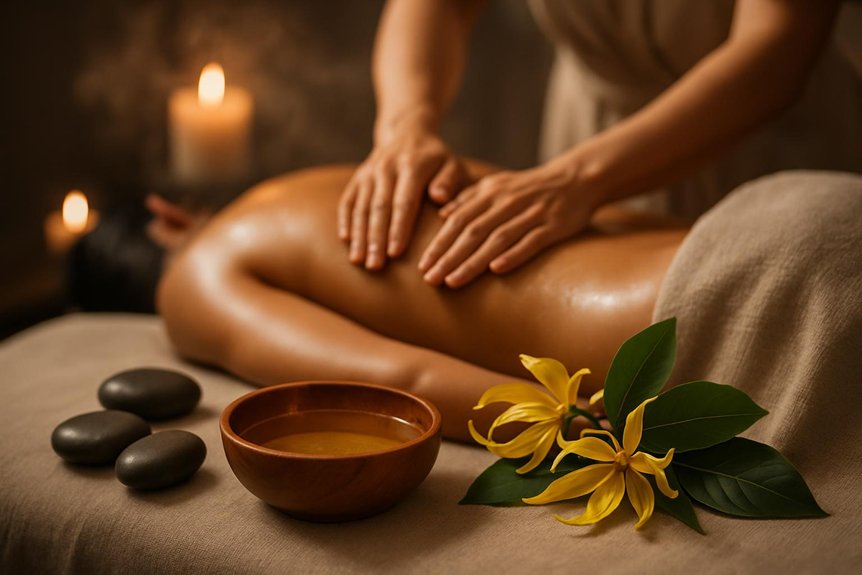
In many aromatic massage sessions, ylang ylang essential oil is used primarily to support relaxation and emotional regulation through its fragrance, while also contributing a light skin-conditioning effect when properly diluted in a carrier oil.
Emerging evidence links its scent to reduced perceived stress and gentle mood support, which can help clients soften into touch and feel more present in their bodies.
At Spa & Massage, therapists view it as a supportive adjunct rather than a cure, best suited to clients seeking calm, warmth, and a subtly sensual ambience without heaviness.
It may also complement slow, grounding bodywork by encouraging smoother breathing and lower muscular guarding.
As part of Relax and Heal With Aromatic Massage Tips, Aromatherapy Massage is framed as a gentle way to unwind by pairing therapeutic touch with carefully chosen essential oil aromas.
Safety matters: ylang ylang can irritate sensitive skin or trigger headaches if overused, so careful dilution and client feedback guide every session.
How Do We Use Ylang Ylang Oil at Spa & Massage?
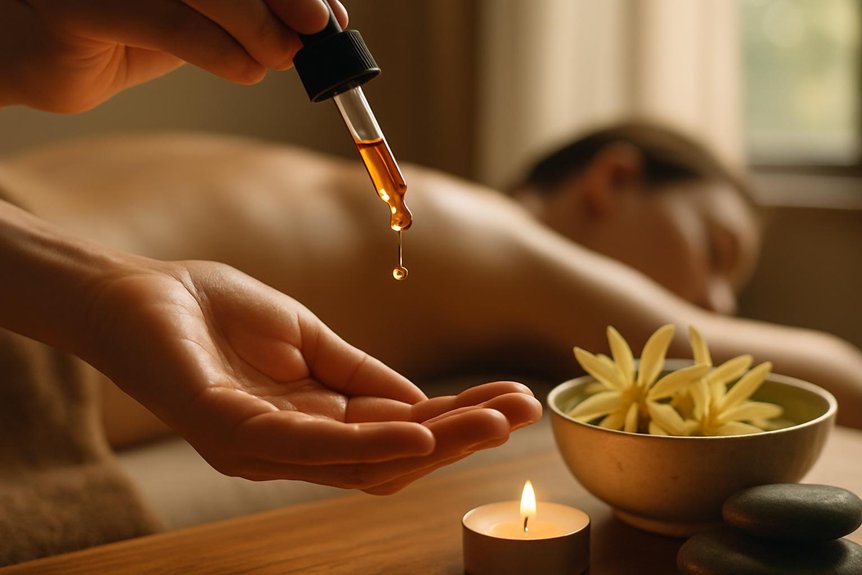
At Spa & Massage, ylang ylang essential oil is used only when appropriately blended and diluted in a carrier oil to support skin safety and client comfort.
Therapists tailor the blend and treatment plan through a brief consultation that considers goals, sensitivities, pregnancy status, and any relevant health factors.
Aftercare includes clear guidance on hydration, skin monitoring, and safe options for limited home use, including patch testing and adherence to dilution recommendations.
Blending And Dilution
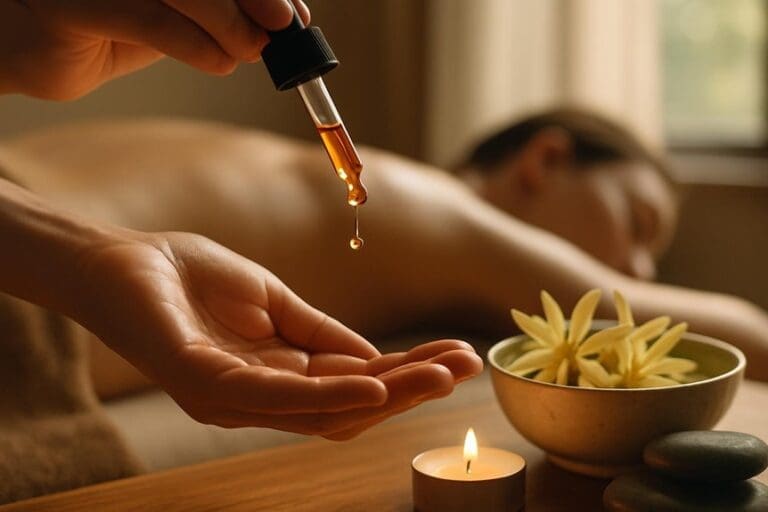
For safe, effective aromatic massage, ylang ylang essential oil is used only when properly diluted and thoughtfully blended with compatible oils.
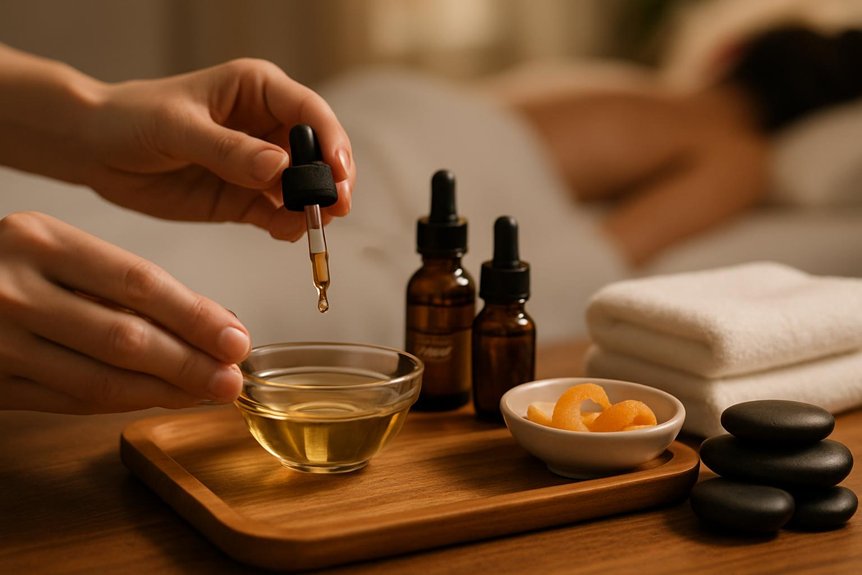
At Spa & Massage clinics across London, therapists typically blend it into a skin-friendly carrier (such as grapeseed or sweet almond) at low concentrations to reduce irritation and sensitisation risk, especially for first-time clients or sensitive skin.
Because ylang ylang can feel heady, it is often balanced with lighter florals or grounding citrus/woody notes to create a sensual, steady aroma that supports relaxation without overwhelm.
Blends are mixed fresh, measured in drops, and patch-awareness is maintained during the session.
Clients are advised to avoid undiluted application and to report redness, itching, or headache immediately.
Treatment Tailoring Process
With client safety and comfort as the primary priorities, Spa & Massage therapists introduce ylang ylang oil only after a brief, structured consultation that reviews the client’s goals (e.g., stress relief, sleep support, emotional balance), health history, pregnancy status, allergies/asthma or fragrance sensitivity, and current skin condition; the aroma choice, dilution level, and treatment focus are then tailored accordingly, with conservative dosing and ongoing check-ins to minimise the risk of headache, nausea, or skin irritation.
In treatment, therapists may begin with a light inhalation assessment at a distance, then apply the blend to a small area before fuller work. Pressure, pacing, and touch are matched to the client’s nervous-system state, using slower, grounding strokes for anxiety and gentler, supportive holds for emotional overwhelm. Communication stays soft, explicit, and consent-led throughout.
Aftercare And Home Use
Following the in-session tailoring of ylang ylang oil—covering scent tolerance, dilution, and nervous-system pacing—Spa & Massage therapists reinforce outcomes through clear aftercare and measured guidance for home use.
Clients are advised to hydrate, keep the body warm, and allow quiet time after treatment to support parasympathetic settling and reduce post-massage soreness.
Because ylang ylang can feel emotionally opening, therapists suggest gentle grounding: a slow walk, a nourishing meal, and unhurried rest.
For home use, guidance centres on safe dilution (typically 1–2% in a carrier oil), patch testing, and avoiding eyes, mucosa, and broken skin.
Diffusion is kept brief in ventilated rooms.
Pregnancy, asthma, migraines, or medication questions are reviewed before self-use.
Can Ylang Ylang Aromatic Massage Help Stress?
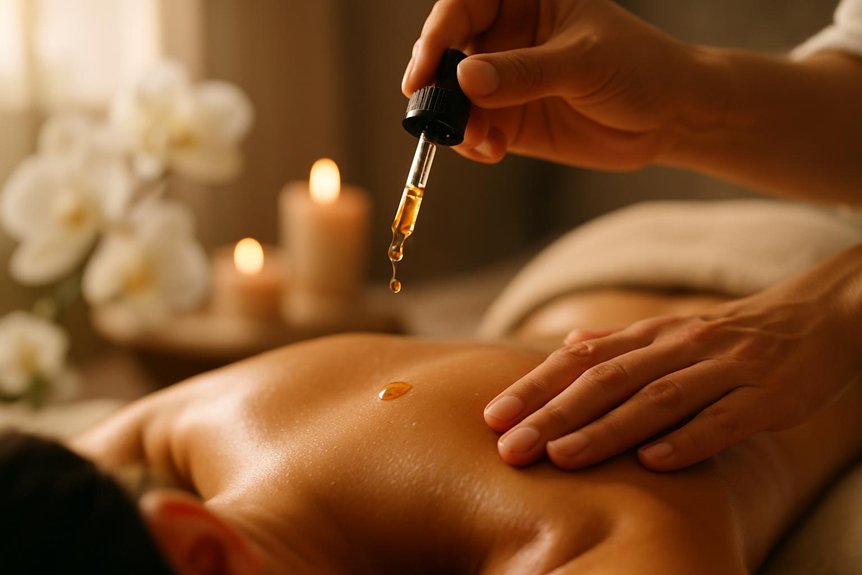
Evidence suggests ylang ylang’s floral aroma may support stress relief by promoting relaxation and a calmer mood, though responses vary by individual and should be guided by client preference and sensitivity.
In Spa & Massage clinics, therapists aim to support nervous system regulation by pairing measured inhalation exposure with slow, steady touch and monitoring comfort throughout, especially for clients prone to headaches, asthma triggers, or skin reactivity.
Calm-focused techniques—such as lighter pressure, longer effleurage strokes, and unhurried pacing—are commonly selected to help reduce perceived stress while maintaining safe dilution and clear aftercare guidance.
Stress-Soothing Scent Effects
How far can a scent shift the body’s stress response during massage? Ylang ylang’s rich, floral aroma is often described as comforting and sensual, and small clinical studies suggest inhalation may support calmer mood and lower perceived tension.
In Spa & Massage clinics, therapists may offer ylang ylang within an aromatherapy blend to create a soothing, intimate atmosphere that helps clients soften their thoughts and settle into touch. Preferences matter: some find it deeply reassuring, others feel overwhelmed, so scent strength is kept light and consent-led.
Safety comes first—proper dilution in carrier oil, avoiding eyes and mucosa, and screening for pregnancy, asthma, migraines, or fragrance sensitivity. If irritation or dizziness occurs, it is removed and ventilation increased.
Nervous System Regulation
Often, stress relief during aromatic massage is best understood through nervous system regulation: slow, comfortable pressure combined with ylang ylang’s inhaled aroma can support a shift toward parasympathetic “rest-and-digest” activity, reflected in calmer breathing, reduced muscle guarding, and a lower sense of mental load.
At Spa & Massage, therapists observe that when clients feel safe, warmly held, and unhurried, the body’s stress response can soften—sometimes alongside a gentler pulse and less jaw or shoulder tension.
Evidence suggests certain aromas may influence autonomic arousal; however, responses are individual and depend on context, expectations, and comfort with scent.
For safety, ylang ylang is diluted in carrier oil, and clients are encouraged to mention asthma, migraines, pregnancy, or sensitivities so adjustments can preserve comfort and consent.
Massage Techniques For Calm
With the nervous system beginning to settle, the next factor is technique: the way pressure, pace, and touch are applied can strongly shape whether an aromatic massage feels calming.
At Spa & Massage clinics, therapists often use slow, flowing effleurage, steady compressions, and gentle rocking to support parasympathetic tone, while avoiding abrupt changes that can feel startling. Pressure is kept within a “comfortable-close” range, checked frequently, so the body can soften without bracing.
Work commonly focuses on areas that hold tension—neck, shoulders, jaw, chest, and hands—using broad contact and warm oil to enhance a sense of safe closeness. Breath-led pacing, quiet pauses, and longer strokes help clients feel held and grounded.
Contraindications and skin sensitivity are always screened beforehand.
Ylang Ylang Oil in Massage: Skin and Body Benefits
Many clients find that ylang ylang essential oil—when properly diluted in a carrier oil and applied through aromatic massage—supports both skin comfort and whole-body relaxation, largely through its calming scent and gentle topical properties.
In Spa & Massage clinics across London, therapists often select it when a client wants to soften the edges of a stressful day and feel more at ease in their body.
Aromatic inhalation may help downshift the nervous system, while slow, gliding strokes encourage circulation and ease muscular holding.
Topically, ylang ylang is traditionally used to balance the feel of skin—neither overly dry nor overly slick—when blended at low, skin-safe concentrations.
Clients commonly report a warmer sense of connection, steadier breathing, and a lingering, sensual calm after the session.
Who Should Avoid Ylang Ylang Oil Massage?
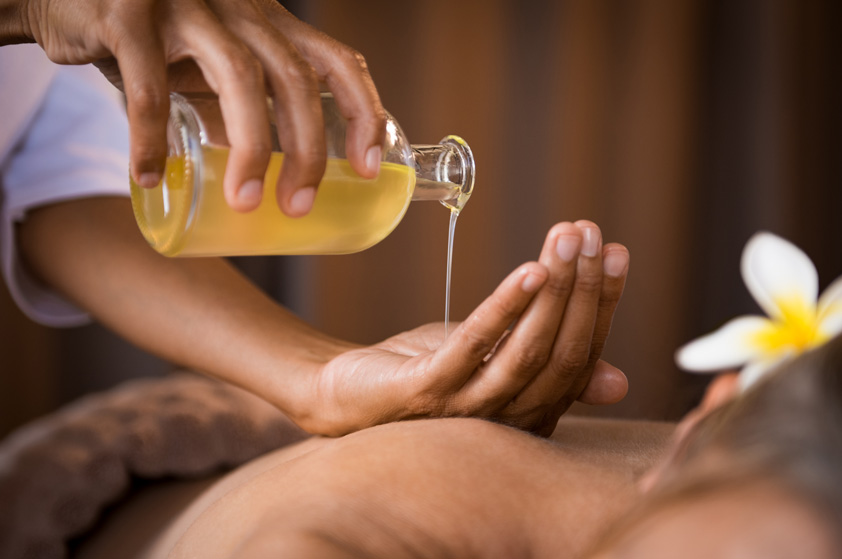
In certain situations, ylang ylang oil may be better avoided in aromatic massage to reduce the risk of irritation, sensitisation, or unwanted systemic effects.
People with a known fragrance allergy, eczema flare-ups, or very reactive skin may be more prone to contact dermatitis, especially with repeated exposure.
Those who experience headaches, nausea, or dizziness around strong aromas may prefer an unscented treatment.
Extra caution is advised for clients who are pregnant, breastfeeding, or seeking fertility support, as safety data are limited and personal tolerances vary.
Clients with low blood pressure or taking antihypertensive medication may wish to avoid oils linked with relaxing, lowering effects.
At Spa & Massage, therapists screen carefully and can tailor dilution, patch-test, or choose a gentler alternative.
What Does Ylang Ylang Smell Like (and Blend With)?
Scent sensitivity is one of the main reasons ylang ylang may not suit every client, so understanding its aroma profile helps set expectations before an aromatic massage.
Its scent is intensely floral, creamy, and sweet, with soft fruit and spice notes; many describe it as sensual and enveloping, while others find it heavy or heady in close contact.
At Spa & Massage clinics, therapists typically use low dilutions and offer a strip test to gauge comfort, especially for clients prone to nausea or headaches.
Ylang ylang blends well with citrus oils (bergamot, sweet orange) to lift sweetness, and with grounding woods (cedarwood, sandalwood) to add depth. It also pairs with lavender for a calmer, more intimate finish. For sensitive clients, reduced intensity or alternative blends are recommended.
Conclusion
Like a soft refrain in a familiar lullaby, ylang ylang often serves as the floral note that helps a massage session settle into calm. Evidence suggests inhaled aromatics can influence mood and perceived stress, and many clients report deeper relaxation when ylang ylang is included in a well-diluted blend. Used thoughtfully—matched to preference, patch-tested when needed, and avoided for those with sensitivities—it can complement therapeutic touch, supporting comfort without overpromising outcomes.