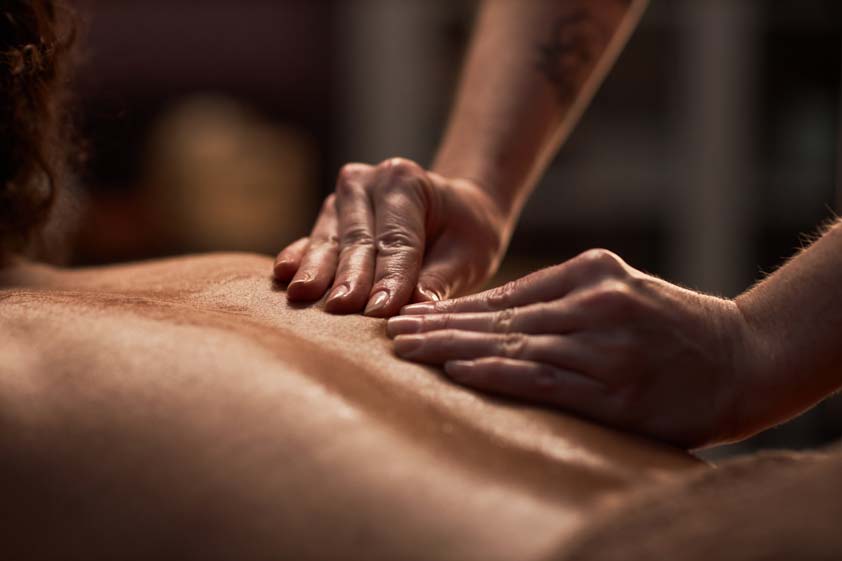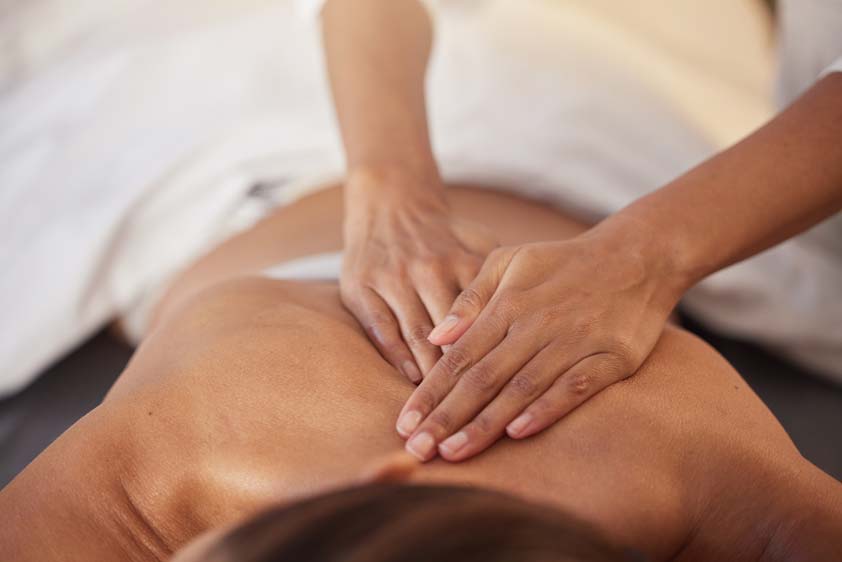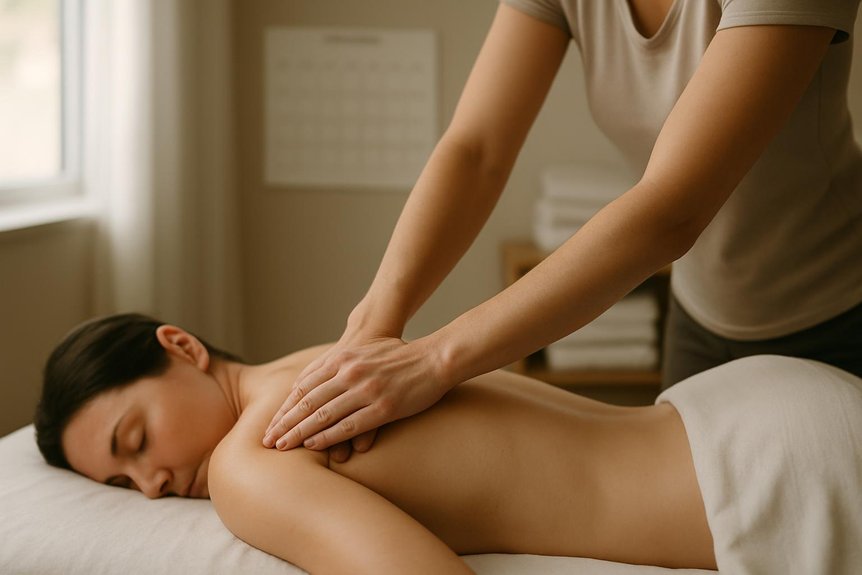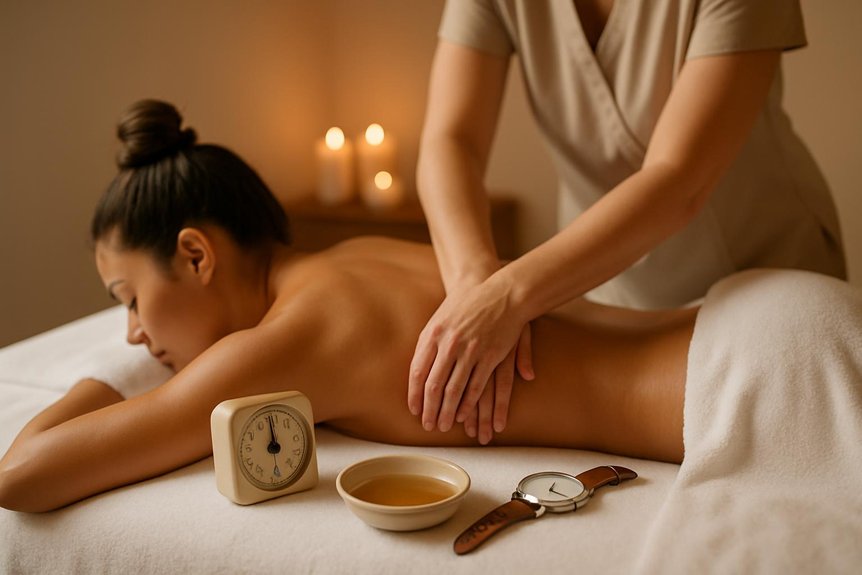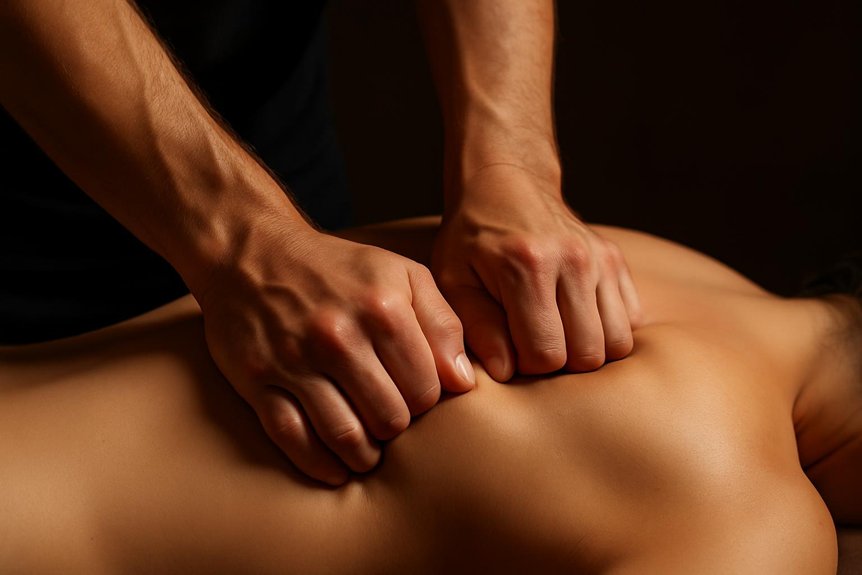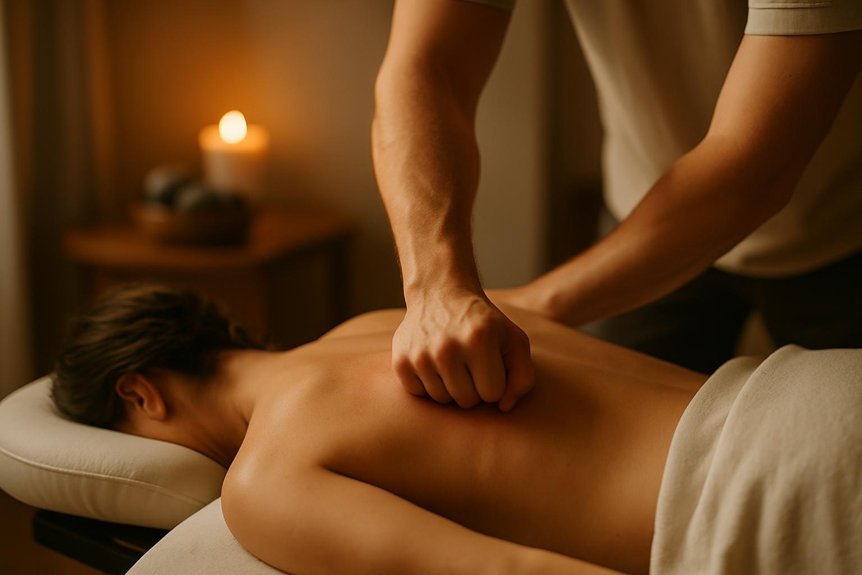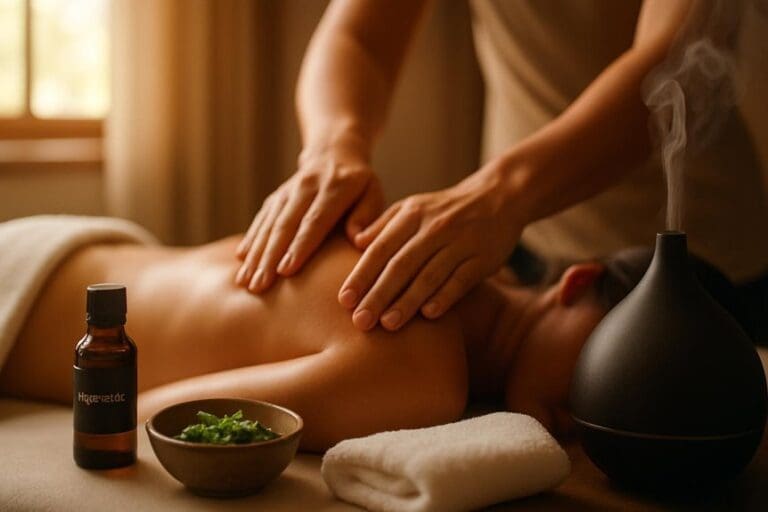
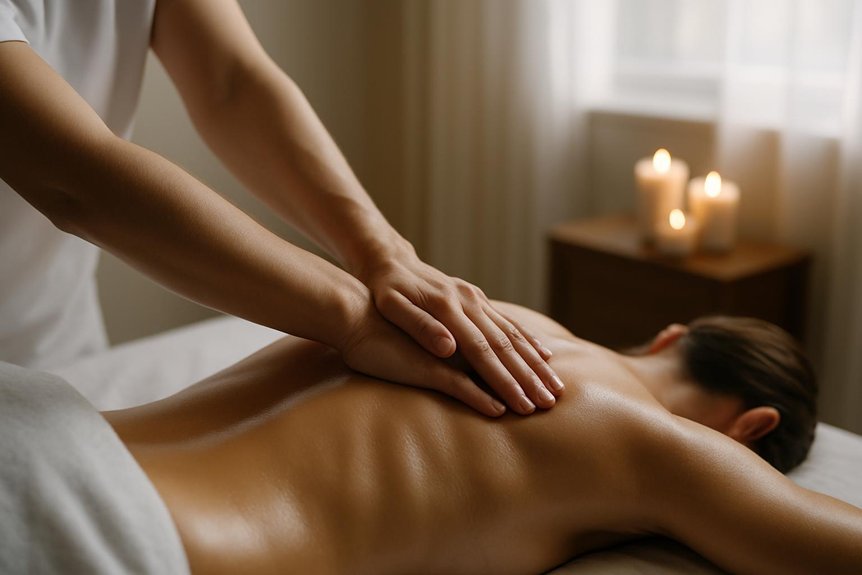
It is a manual therapy that uses slow, sustained pressure to engage deeper skeletal muscle and fascial layers. It is used to reduce persistent myofascial tension, trigger points, and chronic guarding that restrict range of motion and load tolerance. Techniques such as longitudinal stripping, controlled cross-fibre work, and trigger-point compression promote tissue glide, modulate nociceptive sensitivity, and increase local perfusion. Pressure is graded to avoid sharp pain, numbness, or tingling, with contraindications screened beforehand. Further sections explain indications, techniques, and aftercare.
What Is It Used For?
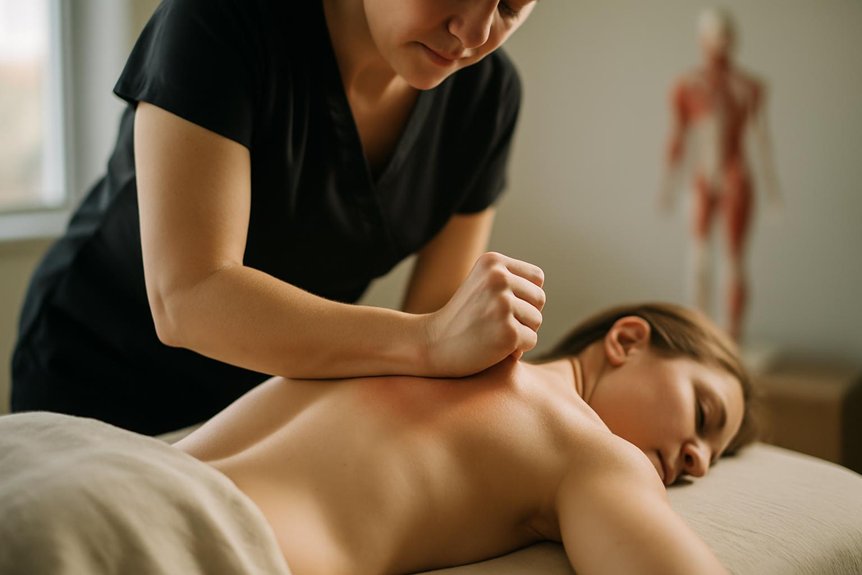
In clinical terms, it is used to address persistent myofascial tension and musculoskeletal discomfort by applying slow, sustained pressure to deeper layers of skeletal muscle, fascia, and associated connective tissue. It is commonly directed at hypertonic regions such as upper trapezius, levator scapulae, thoracolumbar fascia, gluteals, and calf complex, where adhesions and trigger points may limit range of motion and load tolerance.
At Spa & Massage clinics, therapists use measured depth, slow strokes, and selective cross-fibre work to reduce guarding, improve local circulation, and support tissue glide around joints. It can also aid pain relief by addressing deeper muscular restrictions that contribute to ongoing discomfort. It is frequently chosen after prolonged desk posture, repetitive training, or emotionally held tension when clients want focused, close-contact bodywork.
Safety remains central: pressure is titrated to breath, feedback, and neurovascular anatomy.
Is Deep Tissue Massage Right for You?
It may be appropriate when persistent myofascial tightness, trigger points, or restricted range of motion suggest deeper muscular and connective-tissue work is needed.
It should be avoided or modified in cases such as acute inflammation, recent injury, bleeding disorders, anticoagulant use, pregnancy considerations, or other medical contraindications, and Spa & Massage therapists screen for these before treatment.
Pressure level is selected clinically—starting conservative and increasing only within safe pain thresholds—to protect nerves, vessels, and irritated tissues while targeting the intended structures.
Signs You’ll Benefit
For many individuals, persistent myofascial tightness, localised muscle tenderness, or reduced range of motion are practical indicators that it may be appropriate.
These signs often reflect adhesions within fascia and hypertonicity in deeper layers such as the erector spinae, gluteals, hip flexors, and calf complex, affecting joint mechanics and posture.
Additional clues include recurrent “knots” that return after stretching, discomfort with prolonged sitting, or training-related stiffness that limits efficient movement.
Many clients also notice shallow breathing from anterior chest tightness or jaw/neck tension linked to stress-driven muscle guarding.
At Spa & Massage clinics across London, therapists assess tissue quality, pain patterns, and movement before applying slow, targeted pressure, supporting relaxation while maintaining clear consent and comfort throughout each session.
When To Avoid It
Before booking a deep tissue session, contraindications should be screened because sustained pressure and shear across deeper fascial planes can aggravate vulnerable tissues or increase bleeding and inflammatory load.
It should be avoided with fever, acute infection, recent surgery, open wounds, unstable fractures, active inflammatory flare, or suspected thrombosis.
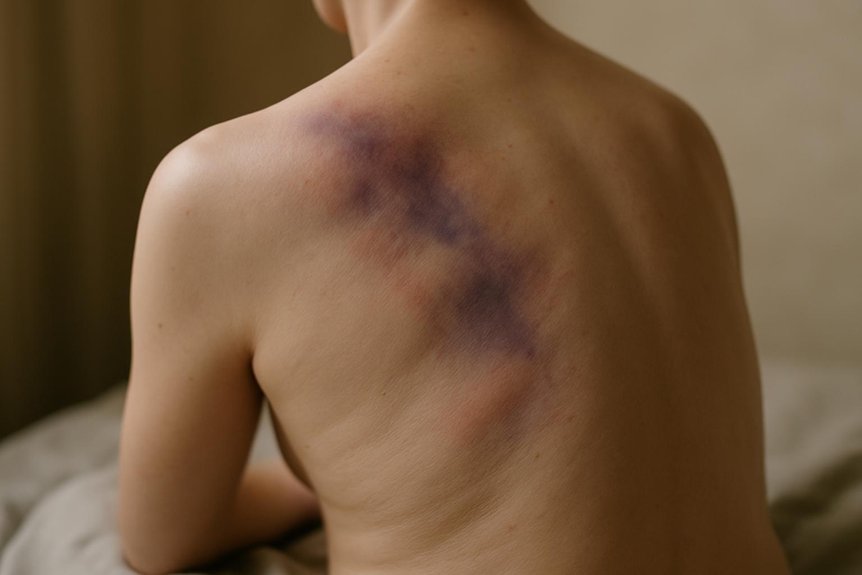
Clients on anticoagulants, with bleeding disorders, uncontrolled hypertension, severe varicose veins, or fragile skin may bruise or bleed more readily.
Deep work is not advised over acute sprains, new disc symptoms with radiating pain, or unexplained numbness, as neural tissues may be sensitised.
Pregnancy requires specialist adaptation; in Spa & Massage clinics, pregnancy massage is offered instead.
Any cancer care, osteoporosis, or autoimmune disease warrants medical clearance and therapist consultation first.
Choosing Your Pressure Level
In clinical terms, appropriate pressure in intensive tissue massage is defined by tissue response rather than therapist force: the aim is to engage deeper myofascial layers and hypertonic muscle bands while maintaining controlled breathing, manageable discomfort, and normal protective reflexes.
At Spa & Massage clinics across London, therapists calibrate pressure through ongoing consent cues: pain should remain a “good pressure” sensation without sharp, burning, or radiating symptoms. Pressure is usually increased slowly after superficial tissues soften, allowing deeper contact with the gluteals, paraspinals, and posterior chain without provoking guarding.
Clients are advised to request less depth if breath shortens, muscles brace, or numbness/tingling appears. Those new to deep tissue often begin with moderate pressure and longer strokes, then progress over subsequent sessions as tissue tolerance and trust develop.
How Deep Tissue Affects Muscles and Fascia
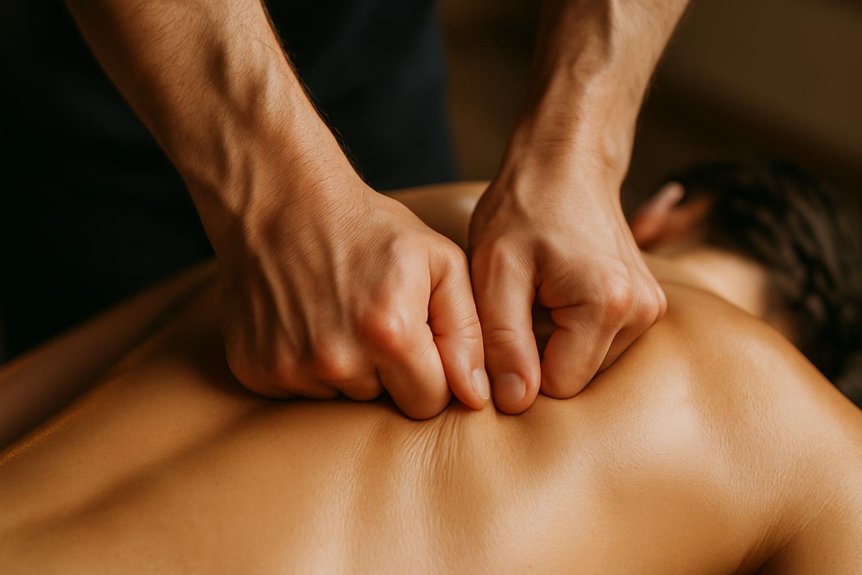
Through sustained, targeted pressure and slow stroke rates, intensive tissue massage mechanically deforms muscle fibres and the surrounding fascial layers, influencing local circulation, neuromuscular tone, and tissue glide.
The loading encourages viscoelastic “creep” in fascia, reducing adhesions and improving sliding between fascial planes.
In muscle, it may lessen hypertonicity by modulating spindle activity and sensitised trigger points, supporting more comfortable lengthening and joint range.
Increased perfusion can aid metabolic exchange and post-exertional soreness, while careful pacing protects capillaries and superficial nerves.
At Spa & Massage clinics across London, therapists monitor breath, facial tension, and verbal feedback to keep pressure intimate yet safe.
Clients with anticoagulants, acute inflammation, or recent injury require modified pressure or medical clearance.
Which Deep Tissue Techniques Do We Use?
At Spa & Massage clinics across London, deep tissue work is built around slow, load-tolerant manual techniques—applied with forearm, elbow, knuckles, or reinforced hand contact—to target specific muscle bellies, myotendinous junctions, and fascial seams without over-compressing superficial nerves or vascular structures.
Techniques include sustained longitudinal stripping along fibre direction, cross-fibre friction at tendinous edges, and controlled pin-and-lengthen to reduce densification while preserving joint alignment.
Trigger-point compression may be used on palpable taut bands, with careful monitoring around the cervical triangle, axilla, femoral triangle, and popliteal fossa.
Myofascial release is performed with minimal lubricant when glide would shear skin. In sensitive areas, broad contact and graded pressure are selected to maintain safety and close, respectful clinical intimacy.
What Should I Feel Like?
Those slow, load-tolerant techniques are designed to feel specific and tolerable rather than overwhelming. Pressure is often described as a “good pain” with clear, localised sensation in targeted tissues—such as the upper trapezius, gluteals, calves, or thoracolumbar fascia—followed by a sense of warmth and softening.
Breathing should stay steady; guarding, sharp pain, tingling, or numbness signals excessive load or nerve irritation and should be reported immediately. A therapist at Spa & Massage will check in frequently, adjust angle, pace, and depth, and use supportive bolstering so joints remain neutral and the client feels safely held.
Mild tenderness afterwards can occur, but bruising, radiating symptoms, or headache is not expected.
Deep Tissue Benefits for Pain Relief and Mobility
In clinical terms, it can support pain modulation and improve mobility by reducing excessive tone in targeted myofascial structures and restoring more efficient tissue glide around joints.
This may decrease nociceptive input from overworked muscles, reduce protective guarding, and improve range of motion in the neck, shoulders, lower back, hips, and calves.
At Spa & Massage London clinics, therapists apply slow, specific pressure along muscle fibres and fascial lines, then reassess joint movement to make certain change is functional, not just “looser.”
For clients seeking a close, reassuring experience, communication is used to keep intensity therapeutic rather than overwhelming; discomfort should remain tolerable and never sharp or radiating.
Extra caution is taken with acute inflammation, bruising tendency, pregnancy, or anticoagulant use.
Deep Tissue vs Sports Massage: Which Should You Book?
Intensive tissue massage and sports massage can both target myofascial restriction and muscle tension, but their primary treatment goals and expected results differ, particularly for persistent pain versus performance-related strain.
Deep tissue work typically applies slower, sustained pressure to deeper layers of muscle and fascia, while sports massage more often uses variable pressure and specific techniques to support pre‑event preparation, post‑event recovery, and acute soft‑tissue loading patterns.
At Spa & Massage clinics across London, the most appropriate session is selected through a brief clinical intake and palpation-based assessment to match anatomy, symptoms, and safety considerations such as recent injury, inflammation, or contraindications.
Treatment Goals And Results
With treatment goals clarified at the outset, the choice between deep tissue and sports massage depends on whether the primary objective is to reduce persistent myofascial tension and postural strain or to support sport-specific performance, recovery, and injury risk management.
It is typically selected when adhesions, trigger points, and chronic guarding in the upper trapezius, lumbar paraspinals, gluteals, or hip rotators limit comfortable daily movement; expected results include improved tissue glide, reduced nociceptive sensitivity, and easier breathing and posture.
Sports massage is generally booked when training load has driven local fatigue, tendon irritability, or restricted range around shoulders, hips, or calves; results focus on restoring function and confidence before or after sessions.
At Spa & Massage London clinics, therapists set measurable goals and reassess.
Techniques And Pressure Differences
At a tissue level, the distinction lies less in “how hard” the work feels and more in how pressure is applied and progressed. Deep tissue work uses slow, sinking strokes and sustained compression to influence fascia and deeper muscle layers, often following fibre direction, then cross-fibre to reduce adhesions. Pressure is graded carefully with breath cues, heat, and clear consent, avoiding sharp pain, numbness, or tingling.
Sports massage blends firm effleurage, brisk friction, and mobilisations to prime or recover specific muscle groups, with more frequent changes in pace and angle. It may include trigger point work and assisted stretching to support joint range.
At Spa & Massage clinics, therapists monitor tissue response, bruising risk, and vascular sensitivity, maintaining close, respectful communication throughout.
Choosing The Right Session
Pressure and technique differences matter most when they are matched to the client’s goal, tissue irritability, and training load.
It is typically chosen for persistent myofascial tightness, restricted glide between fascial layers, and postural strain, using slow, sustained pressure through muscle bellies and tendon attachments to ease guarding.
Sports massage is usually booked around training, targeting sport-specific tissues, increasing local circulation, and supporting range at joints through compressions, stretching, and faster flushing strokes.
For acute pain, bruising, nerve symptoms, or inflammatory flare-ups, lighter work or medical review is safer.
At Spa & Massage clinics across London, therapists screen history, palpate tenderness, and agree boundaries, so pressure feels close, controlled, and never overwhelming.
Deep Tissue Aftercare and How Often to Come
In the hours after a massage, short-lived tenderness can occur as deeper muscle layers, fascia, and local connective tissues respond to sustained mechanical loading.
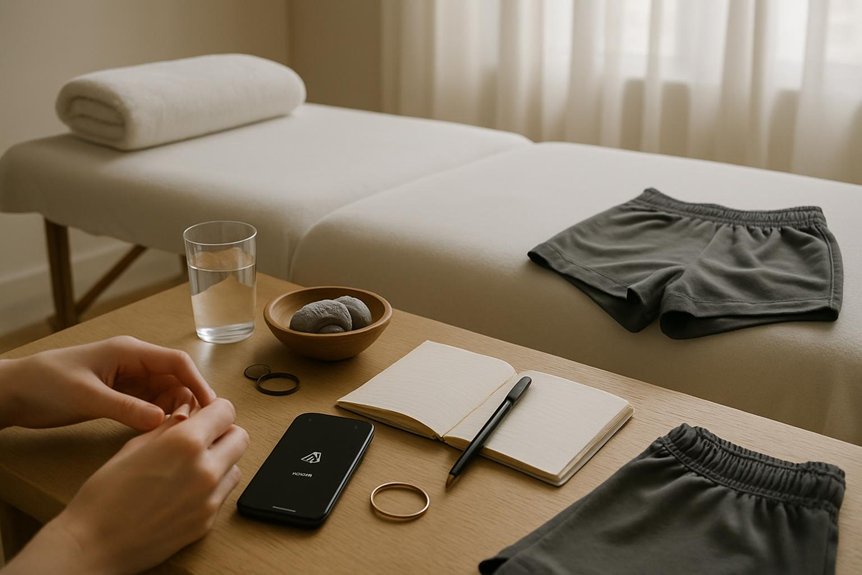
Spa & Massage therapists advise hydration, gentle walking, and heat-free recovery for 12–24 hours to support microcirculation and reduce guarding. Light stretching is appropriate only within comfortable range; sharp pain, radiating symptoms, bruising, or neurological changes warrant clinical review. For intimacy and comfort, clients may prefer a warm shower, quiet rest, and avoiding high-load training while tissues recalibrate.
Frequency depends on tissue irritability and goals: acute tightness may benefit from weekly sessions for 2–4 weeks, then tapering to fortnightly or monthly maintenance. Athletes often schedule around training cycles; pregnancy clients follow therapist-led pacing.
Conclusion
As the adage goes, “no pain, no gain” should never override tissue safety. It applies slow, specific pressure to deeper muscle layers and fascia to reduce adhesions, modulate pain, and restore range of motion. Appropriate candidates include those with persistent postural or overuse-related tension, guided by clinical screening and clear contraindications. Sensation may be intense but remains tolerable and communication-led. Consistent aftercare and correctly timed sessions support durable mobility and symptom control.