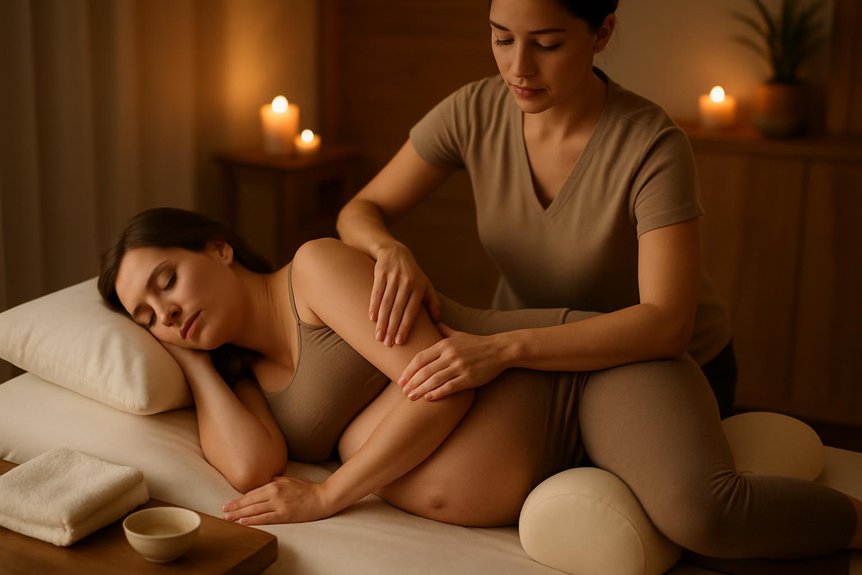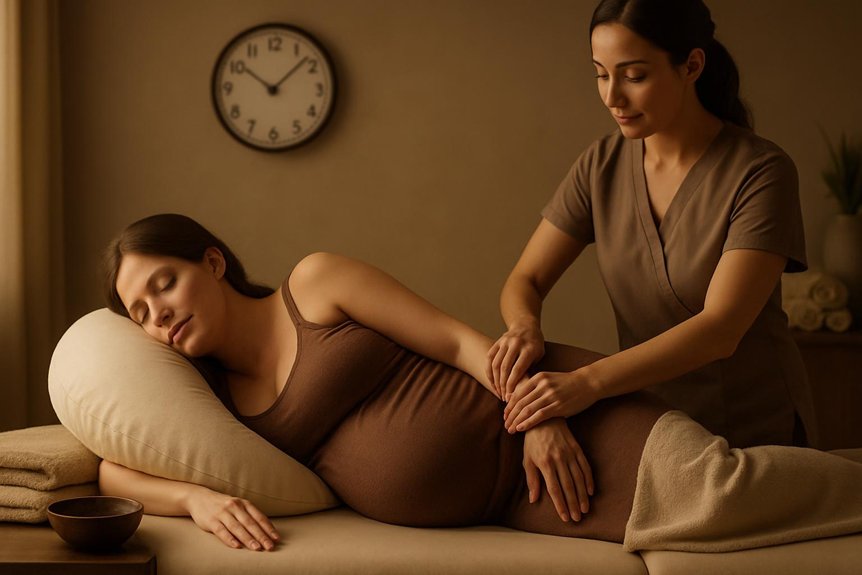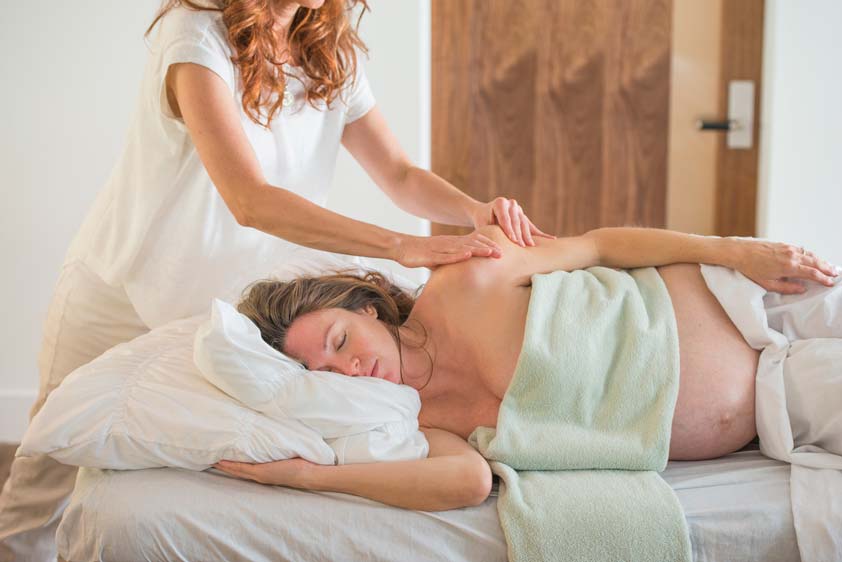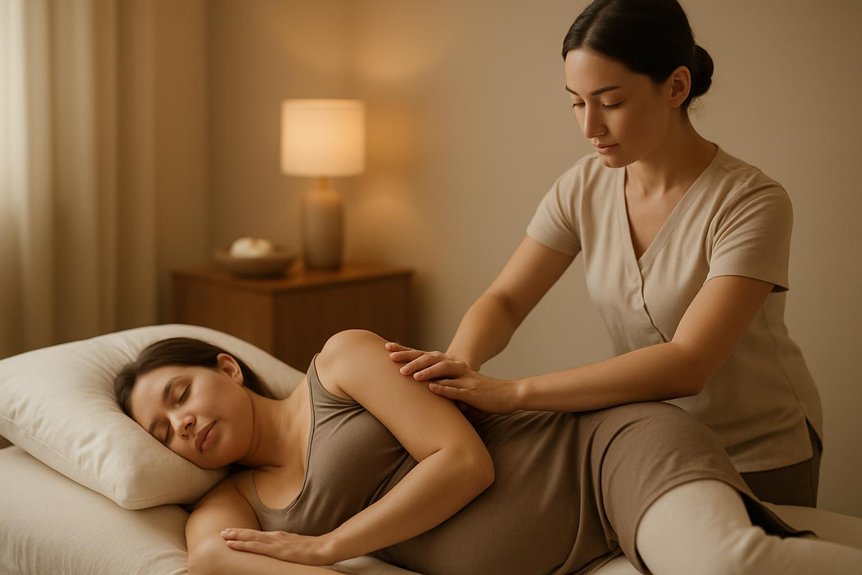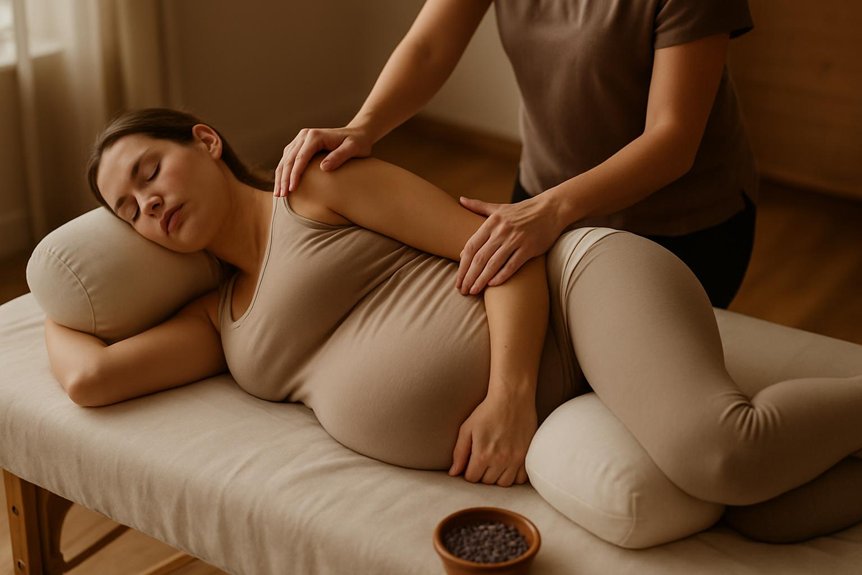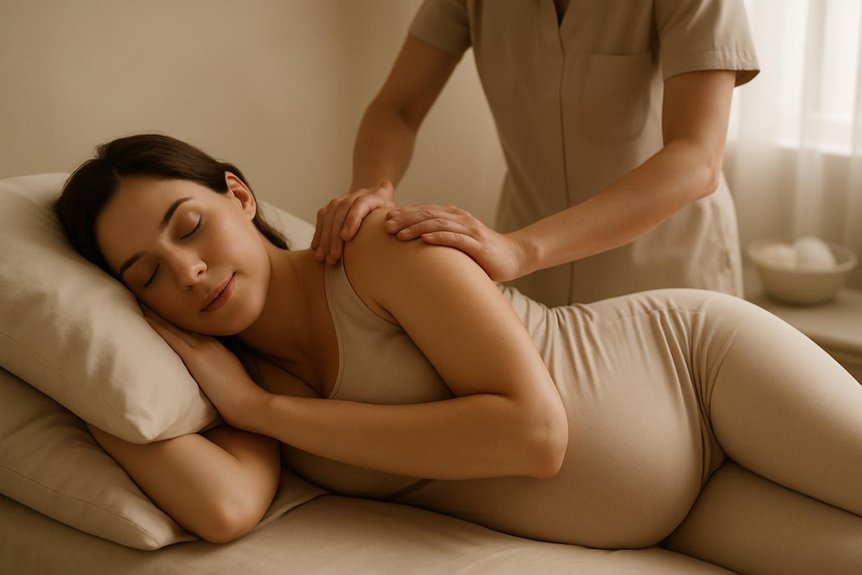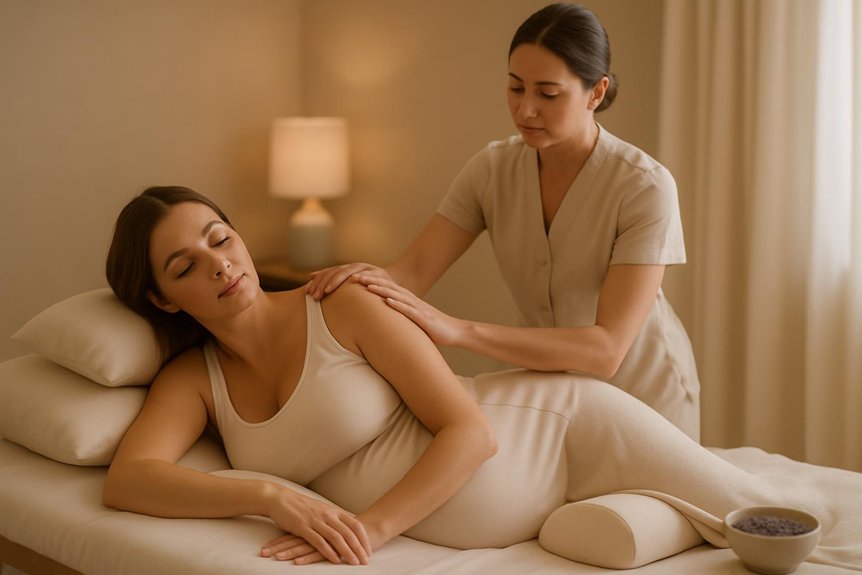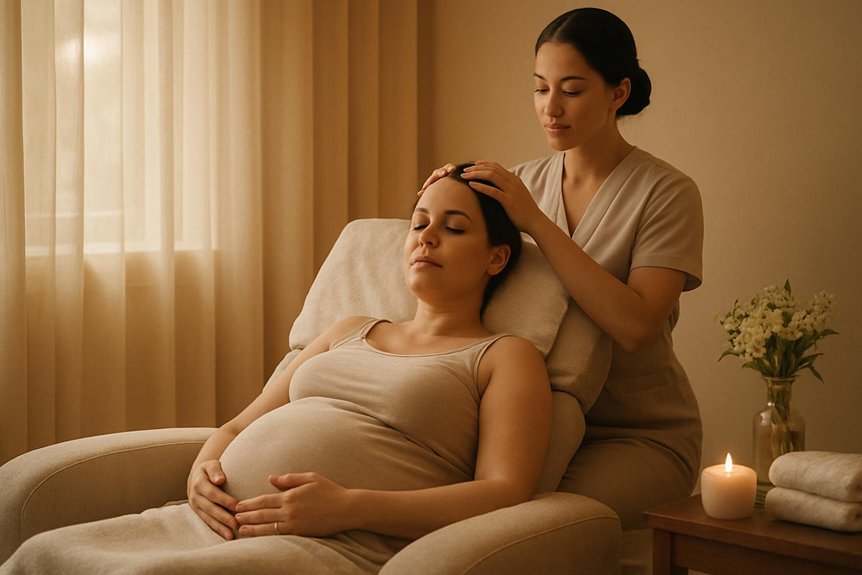
Prenatal massage is most often performed in a side‑lying position, typically on the left side, supported with bolsters to keep the spine neutral and avoid pressure on the abdomen. This setup helps protect circulation, reduces strain on the low back, hips, and pelvic joints, and supports steady breathing. Semi‑reclined positioning may be used later in pregnancy, while back‑lying is limited and closely monitored for symptoms. Additional positioning options and safety checks are outlined below.
What’s the Safest Prenatal Massage Position?
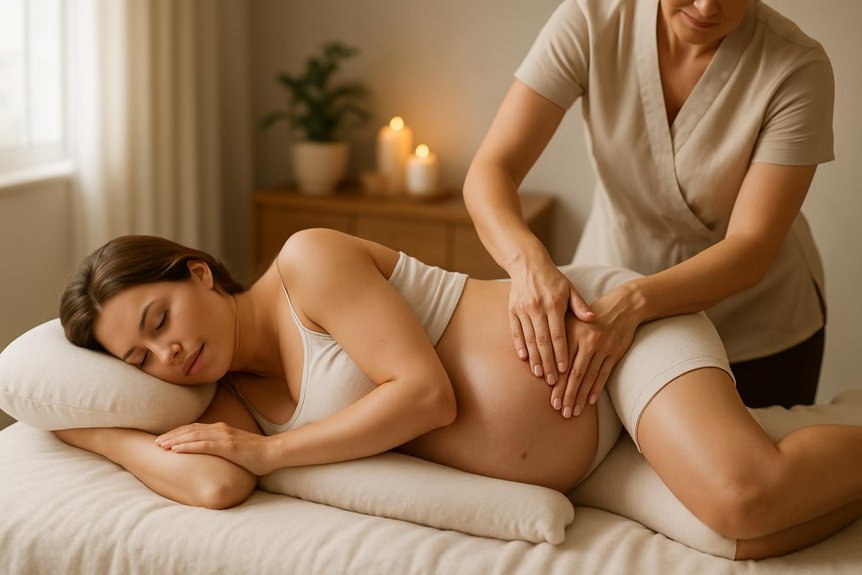
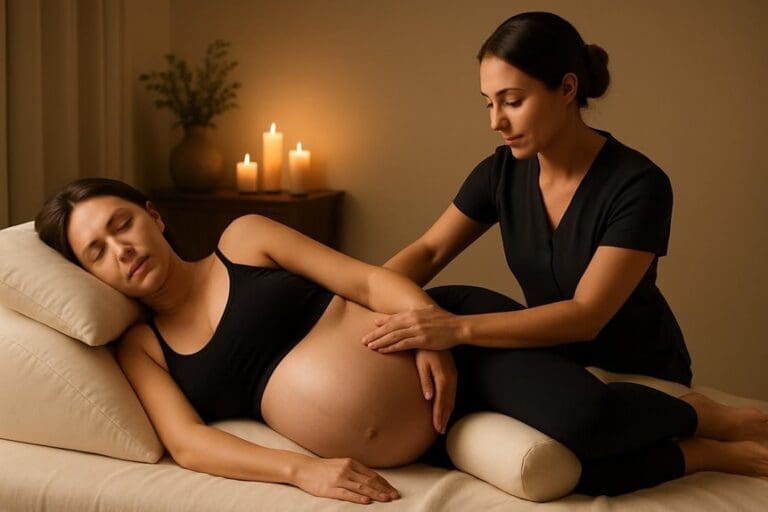
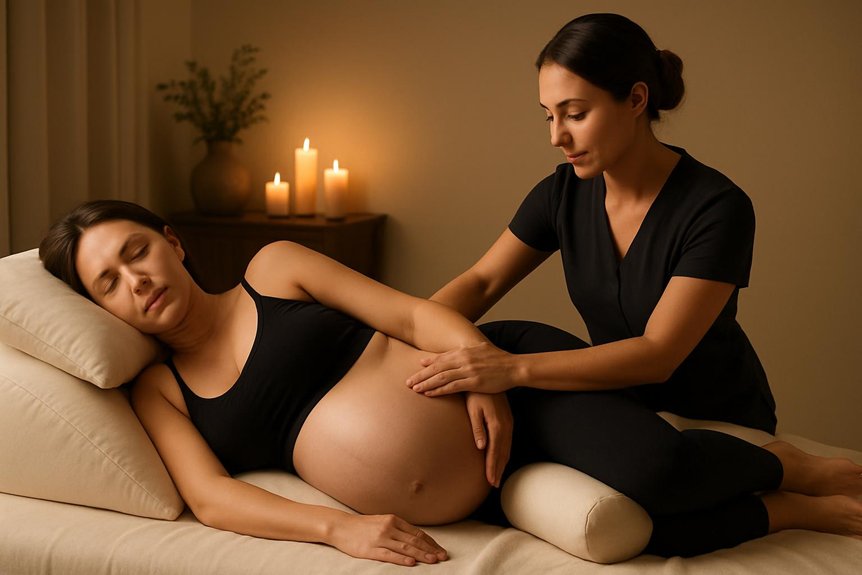
In most cases, the safest prenatal massage position is a side‑lying (left lateral) setup with supportive bolsters to keep the spine neutral and avoid pressure on the abdomen. This approach supports maternal circulation and comfort, while reducing strain on the low back, hips, and pelvic joints as pregnancy progresses. It also allows calm, unhurried breathing and close, reassuring therapist contact without compressing the vena cava. Pregnancy massage can provide benefits for expecting mothers by easing physical tension and supporting overall comfort during pregnancy.
At Spa & Massage clinics across London, therapists assess trimester, symptoms, and medical guidance, then choose positioning that maintains stable blood pressure, minimizes dizziness, and protects sensitive tissues. If any nausea, shortness of breath, or light‑headedness occurs, positioning is adjusted immediately. Clients are encouraged to communicate preferences so treatment remains soothing, private, and secure throughout the session.
Side-Lying Prenatal Massage: The Default Choice
Side‑lying positioning is widely used as the default for prenatal massage because it maintains maternal comfort while reducing abdominal pressure and supporting stable circulation, particularly after the first trimester. A firm bolster supports the belly and back, with a pillow between the knees to keep hips neutral and the lower back relaxed. This arrangement allows close, unhurried contact while keeping breathing easy and the pelvis open.
At Spa & Massage clinics across London, therapists adjust cushions so the chest and shoulders soften, then work slowly through the neck, upper back, glutes, and legs without strain. Pressure remains moderate, guided by client feedback, and strokes are paced to promote warmth, grounding, and a sense of being safely held. Clients are repositioned gently if any dizziness or breathlessness appears.
Semi-Reclined Prenatal Massage for Later Pregnancy
For many clients in the third trimester, a semi‑reclined position (upper body elevated 30–45°) offers a safe, well‑tolerated alternative when full side‑lying feels restrictive or when reflux, breathlessness, or pelvic pressure increases.
In this setup, cushions support the head, shoulders, lower back, and knees to keep the abdomen free and the pelvis comfortably neutral.
At Spa & Massage clinics across London, therapists use slow, grounding strokes to the neck, shoulders, arms, and upper back, with gentle work to the hips and legs as tolerated.
Pressure is adjusted continuously, and bolsters are refined to maintain warmth, ease, and close contact without compression.
Many clients report steadier breathing, calmer sensations, and improved comfort during longer sessions.
Can You Lie on Your Back During Prenatal Massage?
Back-lying during prenatal massage can be appropriate for short periods, particularly in early pregnancy or later on when the torso is well supported and symptoms such as lightheadedness are absent, as prolonged supine positioning may reduce venous return in some individuals.
In Spa & Massage clinics, therapists commonly adapt with side-lying options and targeted bolstering to maintain comfort while protecting circulation.
Practical measures such as a slight left tilt, head-and-knee support, and prompt repositioning if nausea, dizziness, or breathlessness occurs help keep treatment both safe and effective.
When Back-Lying Is Safe
In most uncomplicated pregnancies, lying on the back during prenatal massage can be safe for short, well‑supported periods, particularly in early pregnancy and when comfort is maintained.
Evidence suggests brief supine positioning is usually tolerated when the pelvis and upper back are cushioned, allowing breathing to stay easy and circulation to remain steady.
At Spa & Massage clinics across London, therapists monitor colour, warmth, and responsiveness, and keep the client’s head and knees elevated to reduce strain and encourage relaxation.
Back‑lying is generally appropriate for focused work on the shoulders, chest, scalp, arms, and feet, when it feels nurturing and unpressured.
It should stop immediately if nausea, dizziness, breathlessness, clamminess, or sudden discomfort appears. Clients are encouraged to speak up early.
Side-Lying Position Options
Side‑lying is the default prenatal massage position once supine time needs to be limited, offering stable comfort while reducing pressure on major blood vessels and supporting steady circulation.
In this setup, the client rests on either side with the abdomen and breasts comfortably accommodated, allowing close, nurturing contact without compressive strain.
Therapists may alternate left and right side‑lying to access the back, hips, and gluteal muscles, then the shoulders, neck, and arms, adapting to trimester changes and pelvic sensitivity.
For those who miss back‑lying, a semi‑reclined side‑tilt variation can provide a similar “open chest” feel while maintaining safety.
At Spa & Massage clinics across London, therapists select the option that best preserves relaxation and privacy while enabling thorough, evidence‑informed treatment.
Comfort And Circulation Tips
When, if ever, is it safe to lie on the back during a prenatal massage? In early pregnancy, brief supine positioning is typically well tolerated.
From mid‑pregnancy onward, prolonged lying flat can compress the vena cava, reducing venous return and causing dizziness, nausea, or breathlessness. Evidence-informed practice consequently favours limiting time on the back and monitoring symptoms closely.
At Spa & Massage clinics across London, therapists use gentle bolstering to create a slight left tilt or semi‑reclined angle, supporting circulation while maintaining a close, nurturing sense of contact.
For comfort, the neck, knees, and lower back are cushioned; room temperature is kept calm and warm; hydration is encouraged. If any light‑headedness occurs, the client is turned side‑lying promptly, restoring comfort and flow.
Can You Lie Face Down During Prenatal Massage?
Generally, lying face down during a prenatal massage is not recommended once the pregnancy begins to show, because prolonged pressure on the abdomen and altered breathing mechanics can compromise comfort and, in some cases, circulation.
Early in pregnancy, brief prone positioning may be tolerated for some people, but it should be guided by symptoms such as breathlessness, pelvic pressure, nausea, or back strain.
Research-informed practice prioritises maternal comfort and stable blood flow; as uterine size increases, most clients report that prone lying feels restrictive rather than relaxing.
At Spa & Massage clinics, therapists screen for gestational age, medical history, and individual sensation, and will advise against any position that triggers discomfort or dizziness.
Intimate, nurturing care should feel effortless, unforced, and supported throughout.
How We Position You Safely at Spa & Massage
At Spa & Massage clinics across London, prenatal clients are typically positioned in a side-lying setup supported by specialised cushions to maintain neutral spinal alignment and reduce pressure on the abdomen.
Targeted cushioning is used to accommodate the bump and optimise comfort while supporting circulation and breathing. Therapists adjust bolsters and angles for each trimester and the client’s symptoms, following safe, evidence-informed positioning principles.
Side-Lying Support Setup
For ideal maternal circulation and comfort, prenatal massage at Spa & Massage is most often performed in a carefully supported side‑lying position, which reduces pressure on the abdomen and helps avoid prolonged time flat on the back. The client is guided to lie on the left or right side, with the spine kept neutral and the shoulders and hips aligned.
A therapist checks breathing ease, pelvic comfort, and any dizziness, then adjusts the setup before treatment begins. Gentle draping maintains warmth and privacy while allowing secure access to the back, neck, hips, legs, and arms. Throughout the session, pressure is kept therapeutic yet tender, and positioning is reviewed whenever the client shifts. This approach supports circulation, minimises strain, and helps the body relax into a calm, intimate sense of safety.
Cushioning For Bump Comfort
With the abdomen changing shape and sensitivity throughout pregnancy, Spa & Massage therapists use targeted cushioning to offload pressure from the bump while keeping the pelvis and lower back neutrally supported.
A contoured bolster is placed under the top leg and between the knees to reduce hip strain, while a small pillow supports the waist to prevent side-bending.
For bump comfort, a soft wedge is positioned just under the abdomen’s front edge, creating a gentle “hammock” effect without compressing the uterus.
Shoulder and neck alignment is maintained with a low, adjustable head cradle so breathing stays easy. These supports stabilise the body, minimise shear on ligaments, and help clients relax into close, safe contact during touch, sustaining calm, steady pressure throughout the session.
Adjustments For Every Trimester
Across pregnancy, positioning requirements change as maternal anatomy, ligament laxity, and venous return evolve, so Spa & Massage therapists adjust support and posture by trimester to maintain comfort and safety.
In the first trimester, many clients tolerate prone or supine briefly; neutral spinal alignment and gentle bolstering reduce nausea and breast sensitivity.
In the second trimester, prolonged supine positioning is avoided to reduce vena cava compression; side-lying with a pillow between knees and under the abdomen supports hips and lowers pelvic strain.
In the third trimester, left side-lying is prioritised, with extra cushions under the ribcage and ankles to ease breathlessness, reflux, and oedema.
Therapists pace pressure and reposition frequently, maintaining warmth, privacy, and calm, with continuous check-ins on comfort.
Conclusion
Prenatal massage positioning should function like careful scaffolding—supporting changing structure without strain. Evidence-informed practice favours side-lying as the safest, most adaptable option, with cushions to protect the abdomen and ease hip and back load. Semi-reclined set-ups often suit later pregnancy by improving comfort and circulation. Supine or face-down positions may be used briefly or with specialised equipment when clinically appropriate. A trained therapist continually adjusts angles and support, guided by symptoms, trimester, and client feedback.