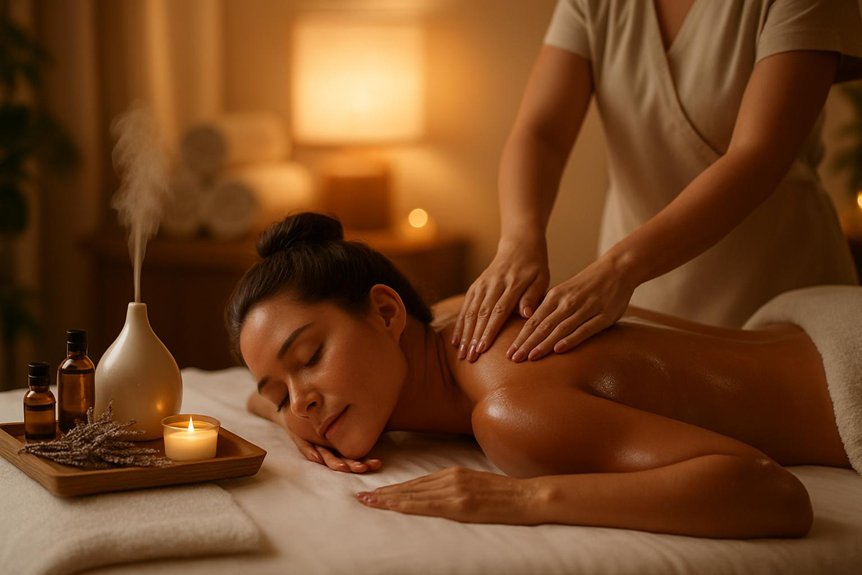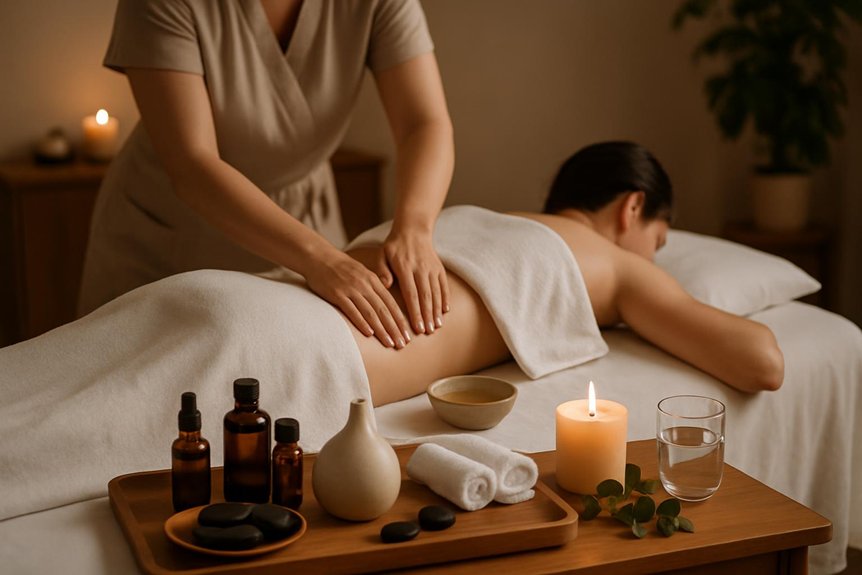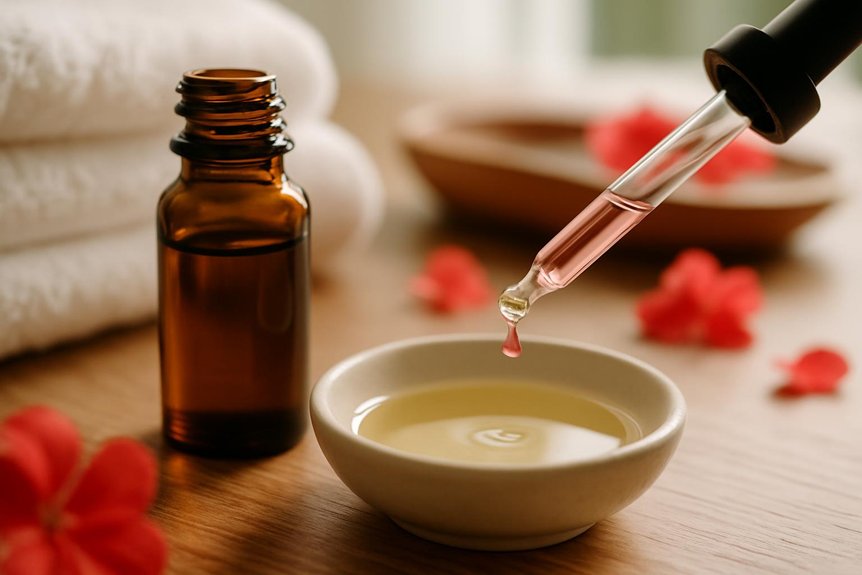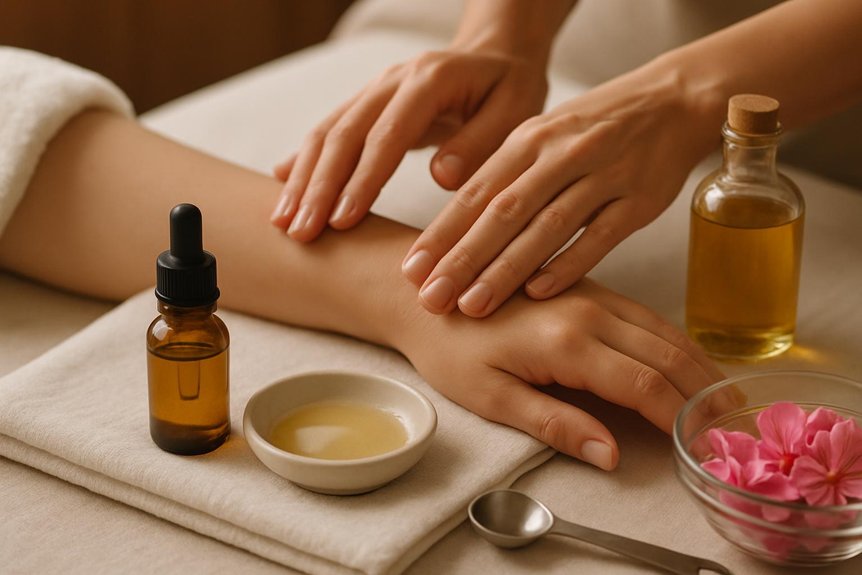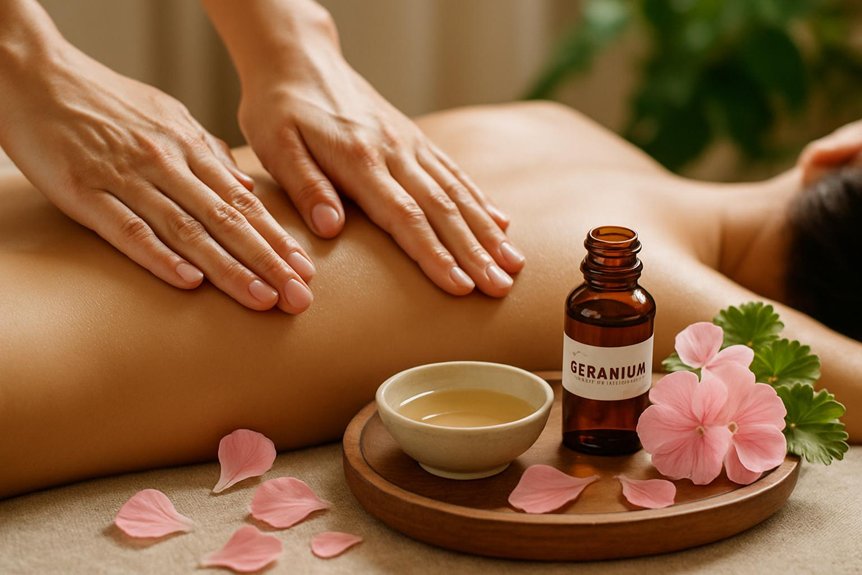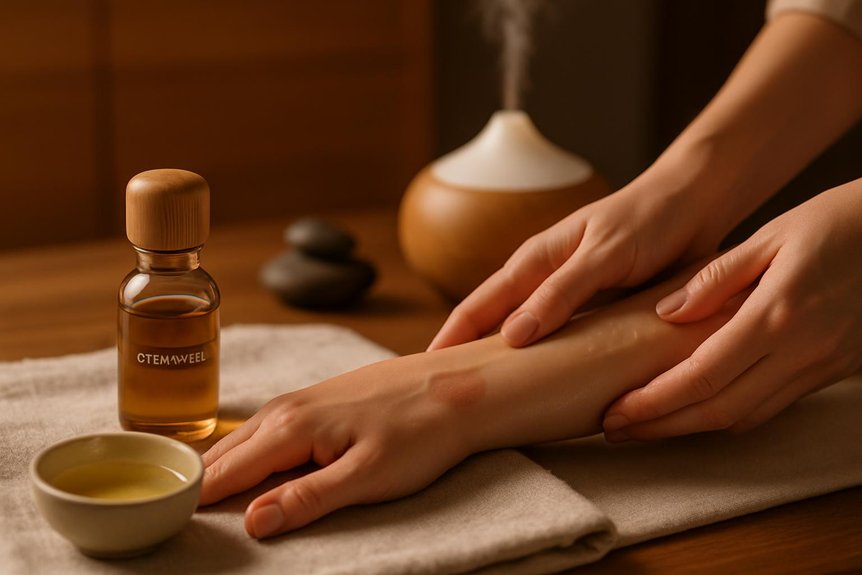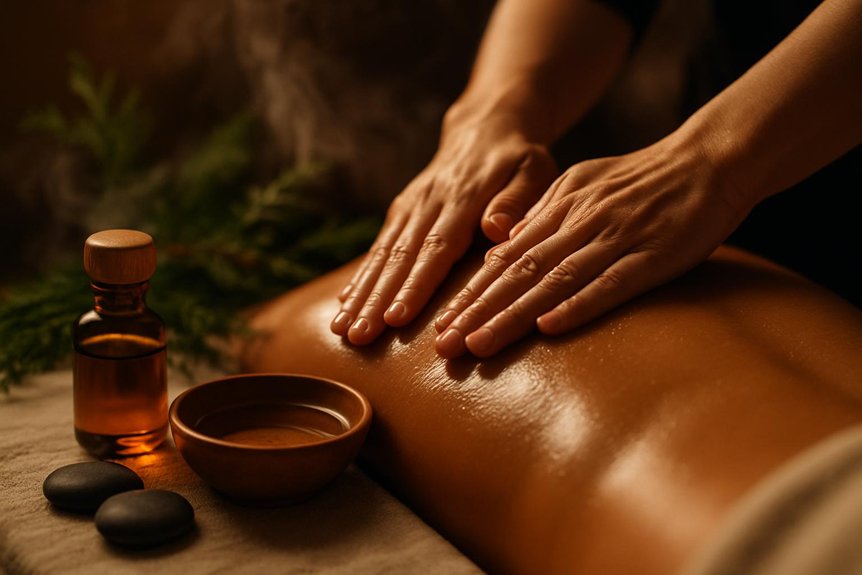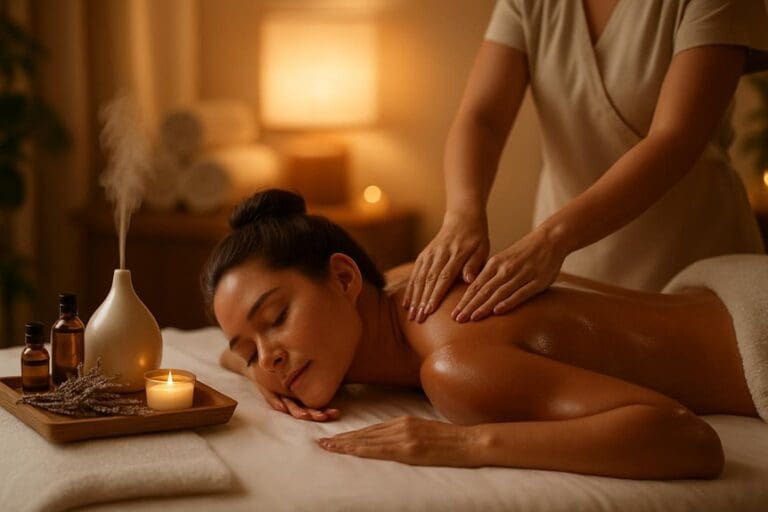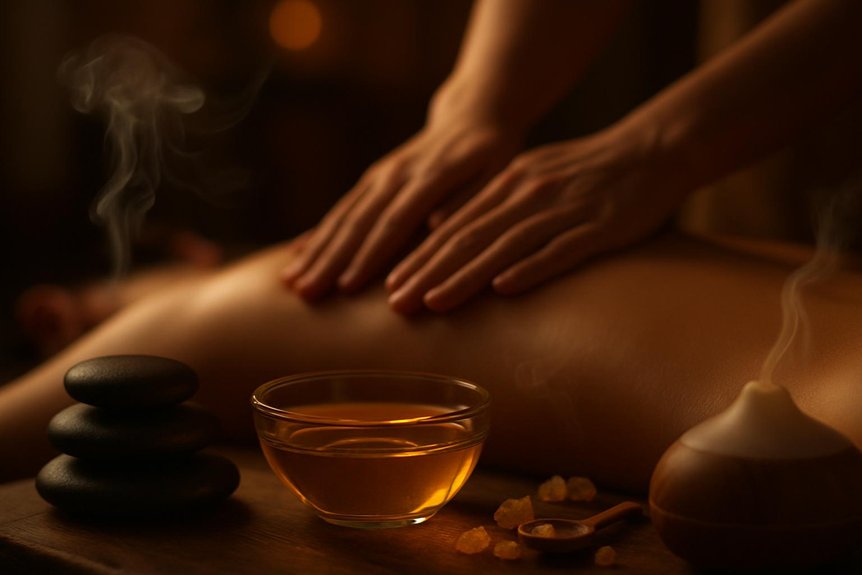
In aromatic massage, frankincense essential oil is used in low dilutions (about 1–2%) to add a warm, resinous scent that supports relaxation, steadier breathing, and overall comfort alongside slow, grounding massage strokes. It is not used as a medical treatment, and it should never be applied neat or near eyes, mucous membranes, or broken skin. Therapists commonly screen for sensitivities and may patch-test or offer diffusion instead. Further details cover techniques, safety, and aftercare.
What Is Frankincense Oil in Massage?
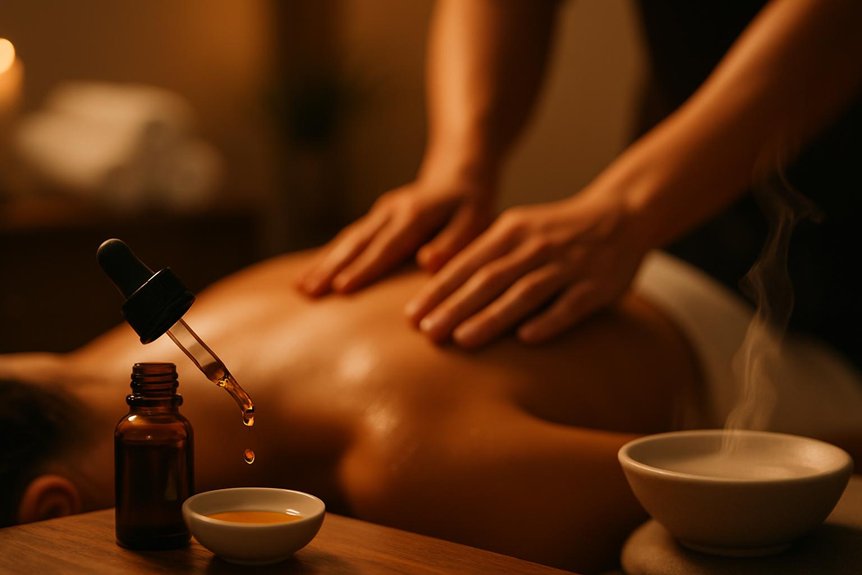
At Spa & Massage clinics across London, therapists may incorporate a carefully diluted frankincense blend during aromatherapy sessions to complement flowing strokes and unhurried touch, helping clients settle into their bodies and feel quietly held.
It is not a medical treatment; it supports comfort, mood, and wellbeing.
Many clients describe the scent as warm, resinous, and intimate, enhancing a private, restorative atmosphere.
For deeper comfort, some therapists also share simple aromatherapy massage tips to help you stay relaxed and supported throughout the session.
Is Frankincense Oil Massage Safe for You?
Frankincense oil massage is generally well tolerated when it is patch-tested for skin sensitivity and applied with appropriately diluted essential oil.
Extra caution is advised for clients who are pregnant, breastfeeding, taking medication, or managing long-term health conditions, and Spa & Massage therapists screen these factors at consultation to guide safe treatment choices.
In Spa & Massage clinics, frankincense is used in measured dilution with clear aftercare—such as monitoring for redness or itching and avoiding heat or additional fragranced products immediately afterwards—to reduce irritation risk.
Skin Sensitivity Checks
Often, the safest way to enjoy a frankincense oil aromatic massage is to begin with a brief skin-sensitivity check, particularly for clients with eczema, dermatitis, rosacea, fragrance sensitivities, or a history of allergic reactions.
At Spa & Massage clinics, therapists typically patch test a properly diluted blend (never neat) on the inner forearm or behind the ear, then wait 10–15 minutes for stinging, redness, swelling, or raised bumps.
If discomfort appears, the oil is removed and an alternative, gentler carrier-only massage can be offered.
A second check during the first strokes matters too: warmth is expected, but burning is not.
Clients are encouraged to mention new products, flare-ups, or recent treatments so pressure, dilution, and oil choice support calm, close-to-the-skin comfort.
Pregnancy And Medical Considerations
Given the physiological changes of pregnancy and the variability of individual health conditions, frankincense oil in aromatic massage should be considered on a case-by-case basis rather than assumed universally suitable.
In pregnancy, evidence on topical aromatic use is limited, so conservative screening is appropriate, particularly in the first trimester or when there is a history of miscarriage, pre‑eclampsia, bleeding, or unexplained pain.
Clients with asthma, migraines, epilepsy, low blood pressure, or perfume sensitivities may also react to aromatic exposure, even when massage pressure is gentle and nurturing.
Medication use (especially anticoagulants), recent surgery, and inflammatory skin conditions warrant clinician input before booking.
At Spa & Massage, therapists take a detailed consultation and will adapt the session or omit essential oils to protect comfort, closeness, and safety.
Safe Dilution And Aftercare
When used in massage, essential oils are considered safest when professionally diluted and followed by straightforward aftercare.
At Spa & Massage clinics across London, frankincense is typically blended into a neutral carrier oil at about 1–2% for full-body work, with lower dilution for sensitive skin and higher only for small areas.
A patch test and clear discussion of allergies, eczema, asthma, and current medication help reduce risk.
During treatment, therapists avoid eyes, mucous membranes, and broken skin, and adjust pressure to keep touch comfortable and close.
Aftercare focuses on calm: drink water, keep the skin warm, avoid hot baths or saunas for 12–24 hours, and pause new skincare products.
Any persistent irritation warrants rinsing and advice.
Frankincense Oil Massage for Stress Relief
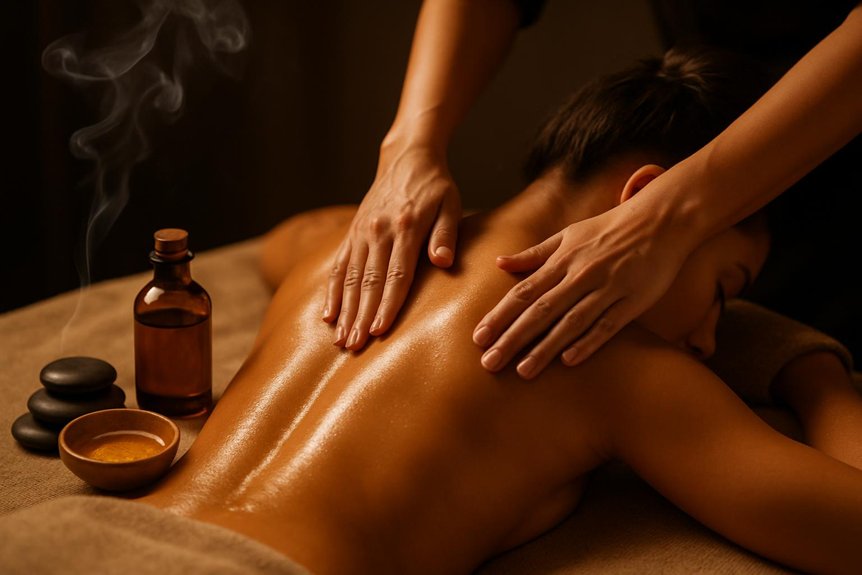
For stress relief, frankincense oil is often used in aromatic massage to support a calmer nervous system, with gentle pressure and a measured pace that many clients report as settling. In Spa & Massage clinics, therapists commonly pair the aroma with grounding breath cues to help attention return to the body and reduce mental noise, while checking comfort and adjusting intensity as needed.
Simple relaxation rituals—such as a brief inhalation at the start, warm draping, and unhurried finishing strokes—are applied with appropriately diluted oil and skin-safety checks to maintain a safe, soothing experience.
Calming The Nervous System
During periods of sustained stress, the nervous system can remain in a heightened “fight-or-flight” state, contributing to muscle tension, shallow breathing, and difficulty switching off.
In aromatic massage, frankincense oil is valued for its warm, resinous scent, which many clients experience as soothing and emotionally steadying. Emerging evidence suggests inhaled aromatics may influence autonomic activity and perceived stress; combined with slow, consistent massage strokes, this can support a shift toward “rest-and-digest” comfort.
At Spa & Massage clinics, therapists dilute frankincense in a carrier oil and apply it with unhurried, reassuring pressure over the back, shoulders, and scalp, where stress often gathers. Patch testing is advised for sensitive skin, and frankincense should be avoided if irritation occurs.
Grounding Breath And Mind
A settled nervous system is often supported further by steady, nasal breathing that slows respiratory rate and anchors attention.
In frankincense aromatic massage, many clients notice the scent encourages quieter mental “noise,” making it easier to stay present with touch and sensation.
At Spa & Massage clinics across London, therapists may invite a simple cue—inhale for four, exhale for six—while keeping pressure predictable and pacing unhurried.
This pairing can help reduce rumination and soften the stress response, consistent with evidence that controlled breathing improves heart‑rate variability and perceived calm.
Frankincense is used only in appropriate dilution and avoided when sensitivity is suspected; clients are encouraged to speak up about asthma, pregnancy, or fragrance intolerance.
Massage Rituals For Relaxation
With the nervous system already steadied by slow, nasal breathing, relaxation-focused massage rituals using frankincense oil can further reduce perceived stress by adding predictable structure—warm oil application, unhurried pacing, and repetitive, soothing strokes that encourage the body to downshift.
At Spa & Massage, therapists often begin with a quiet hand-rest on shoulders or sacrum, then use long effleurage along the back and limbs to support parasympathetic activity and a sense of safe closeness.
Frankincense is diluted in a carrier oil and patch-tested when needed; it is avoided on broken skin and adjusted for pregnancy or sensitivities.
Pressure remains comfortable, with check-ins to keep consent clear and the experience nurturing.
A slow closing compress and water intake can prolong calm afterwards.
Frankincense Oil Massage for Muscle Tension
Target stubborn muscle tension by pairing skilled massage techniques with frankincense essential oil, a resin-derived aromatic known for its calming scent and commonly used in aromatherapy for relaxation.
In Spa & Massage clinics across London, therapists typically blend it into a carrier oil and apply it with slow, grounded strokes, then deeper pressure where appropriate to soften tight shoulders, lower back, and hips.
Early research suggests frankincense may support comfort by modulating inflammatory pathways, while inhalation-based relaxation can reduce stress-related guarding.
For intimacy, the approach stays attentive and consensual: pressure is adjusted to breath, tenderness, and boundaries.
Safety matters—dilute properly, avoid broken skin, and patch test; pregnancy, asthma, and medication use should be discussed first.
Frankincense Oil Massage for Healthier-Looking Skin
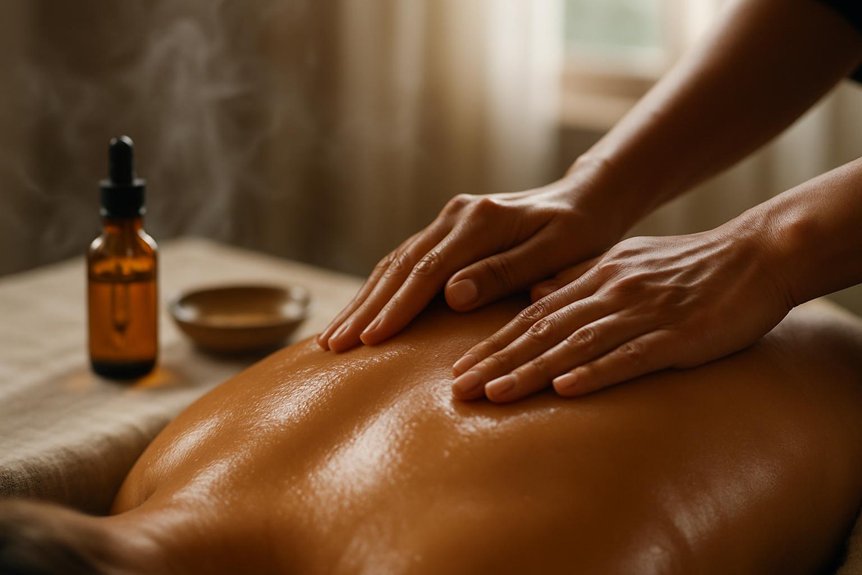
Beyond easing guarded muscles, frankincense oil is also commonly used in aromatic massage to support a calmer-looking, more comfortable complexion. In Spa & Massage clinics across London, therapists may include it for clients who want skin that looks more settled after stress, travel, or seasonal changes. Evidence suggests frankincense contains bioactive compounds with antioxidant and soothing properties, which may help the skin feel less reactive and appear more even.
For intimate, close-contact massage, it is always diluted in a carrier oil and applied with slow, skin-warming strokes that encourage comfort without friction. Patch testing is advised for sensitive skin, and it should be avoided on broken skin. Pregnancy, eczema flares, and allergies warrant therapist guidance.
Frankincense Oil Massage for Easier Breathing
During periods of seasonal congestion or stress-related chest tightness, frankincense oil is sometimes chosen in aromatic massage to help clients feel they can breathe more comfortably. Its resinous aroma may encourage slower, deeper breathing and a calmer nervous system, which can soften the sensation of “holding” in the chest. Evidence is still emerging, so benefits are described as supportive rather than curative; it is not a substitute for medical care.
At Spa & Massage, therapists may recommend gentle, paced breathing during treatment so the scent is experienced without irritation. Frankincense is typically diluted in a carrier oil to protect sensitive skin, and it may be avoided for clients with asthma flares, fragrance sensitivity, or during early pregnancy. Any wheeze, fever, or worsening breathlessness should be assessed promptly.
How We Use Frankincense Oil at Spa & Massage
In Spa & Massage clinics across London, frankincense essential oil is used selectively within aromatic massage to support relaxation and steady breathing rather than to treat medical conditions. Therapists begin with a short consultation, checking scent preference, skin sensitivity, asthma triggers, pregnancy status, and current medications.
When appropriate, frankincense is diluted in a neutral carrier oil at low concentrations and applied with slow, grounding strokes across the upper back, shoulders, and chest-adjacent areas, avoiding the face and broken skin. Many clients find its resinous aroma encourages quieter inhalations and a softened jaw. Diffusion may be offered for those who prefer minimal skin contact.
Any tingling, headache, or nausea prompts immediate adjustment, removal, or a switch to unscented massage.
Aftercare: Make Frankincense Benefits Last
After an aromatic massage featuring frankincense oil, the benefits tend to last longer when aftercare supports hydration, skin comfort, and a calm nervous system.
Spa & Massage therapists advise drinking water and keeping the body warmly covered for a few hours, as heat supports circulation and a settled, close-to-the-skin ease.
A lukewarm shower, rather than a hot bath, helps preserve the oil’s softening feel and reduces irritation risk.
Clients with sensitive skin should avoid new exfoliants, retinoids, or fragranced products that day.
To extend the grounding effect, slow breathing, a quiet walk, or early sleep are recommended.
If redness, itching, headache, or breathing discomfort occurs, the oil should be washed off and advice sought promptly.
Conclusion
Frankincense oil in aromatic massage is often chosen when clients want calm, comfort, and a steadier breath—sometimes on the very day stress peaks. Coincidentally, the slow, resinous aroma tends to invite slower breathing, and slower breathing can support relaxation, which may ease perceived tension and enhance the massage experience. When properly diluted and screened for sensitivities, it can also support skin comfort. With clear goals and aftercare, small choices can add up.