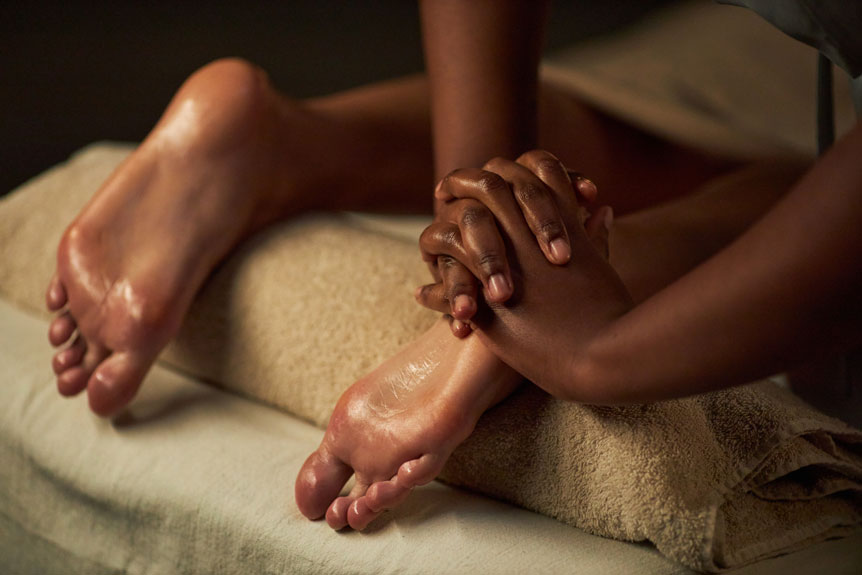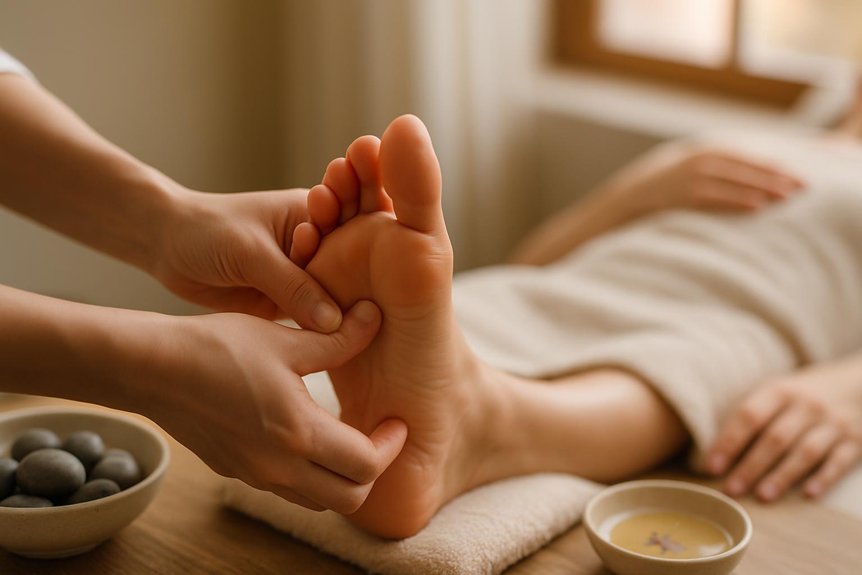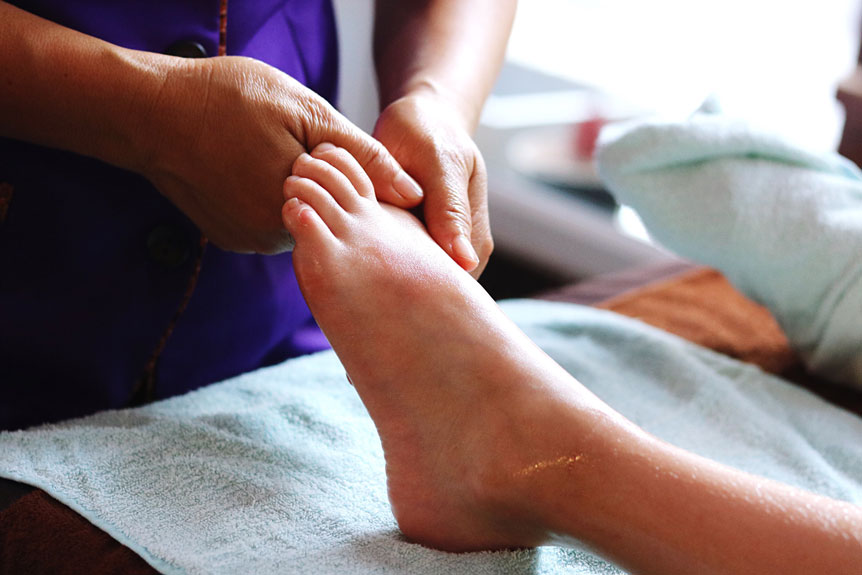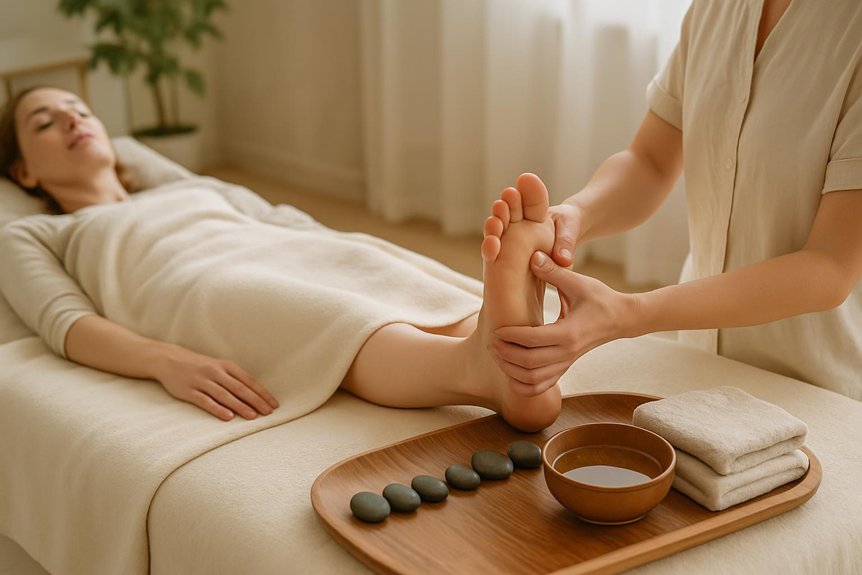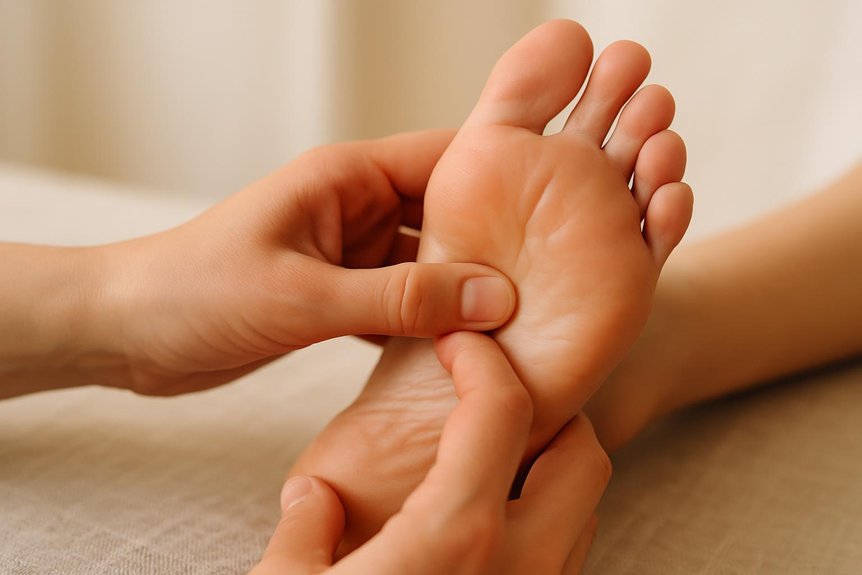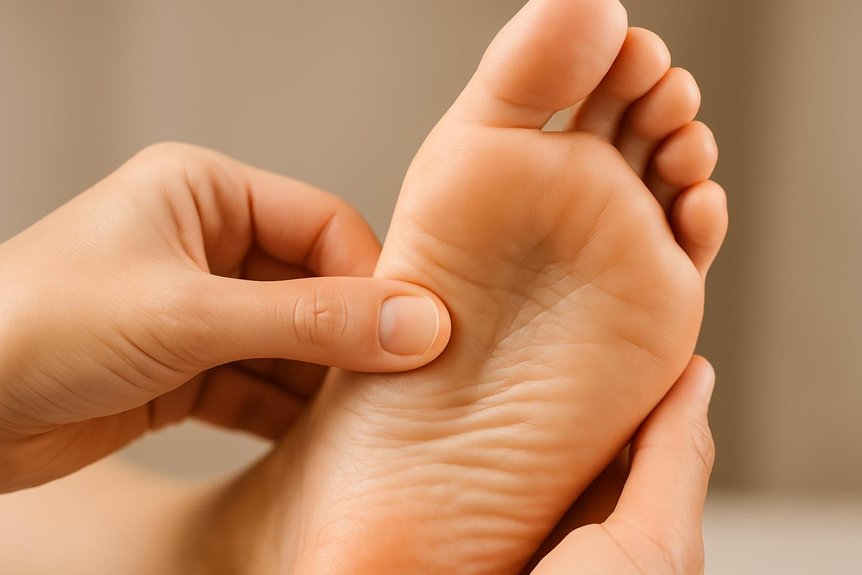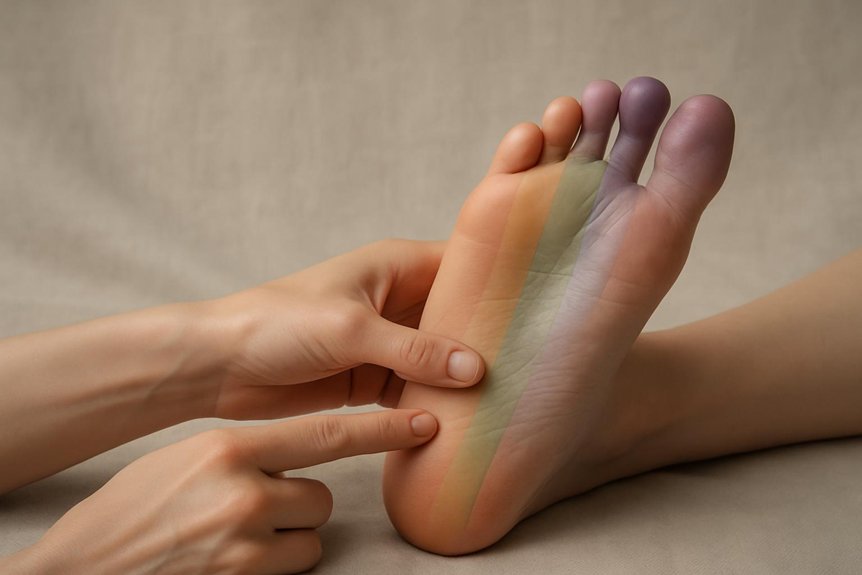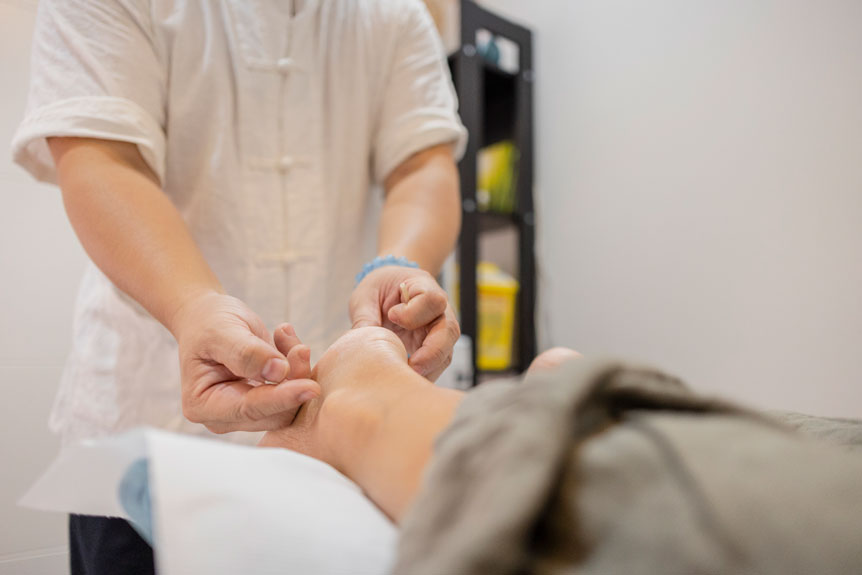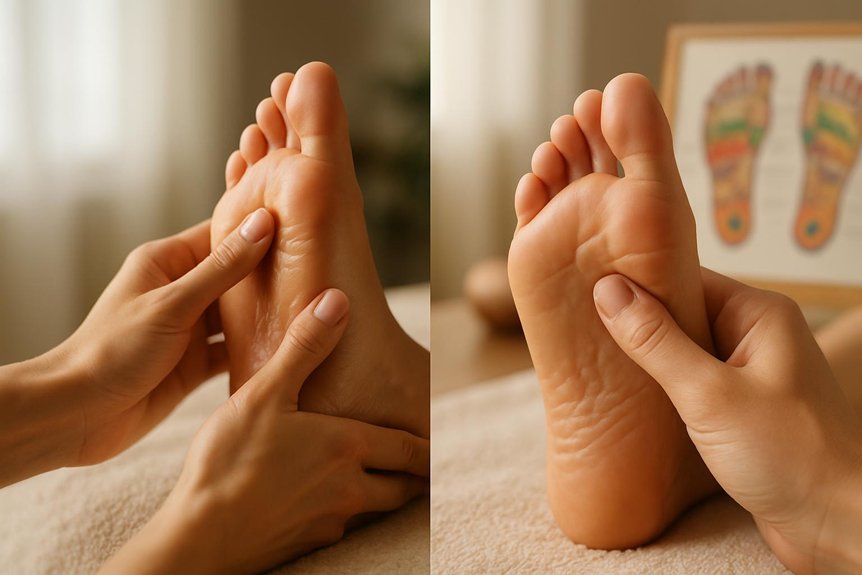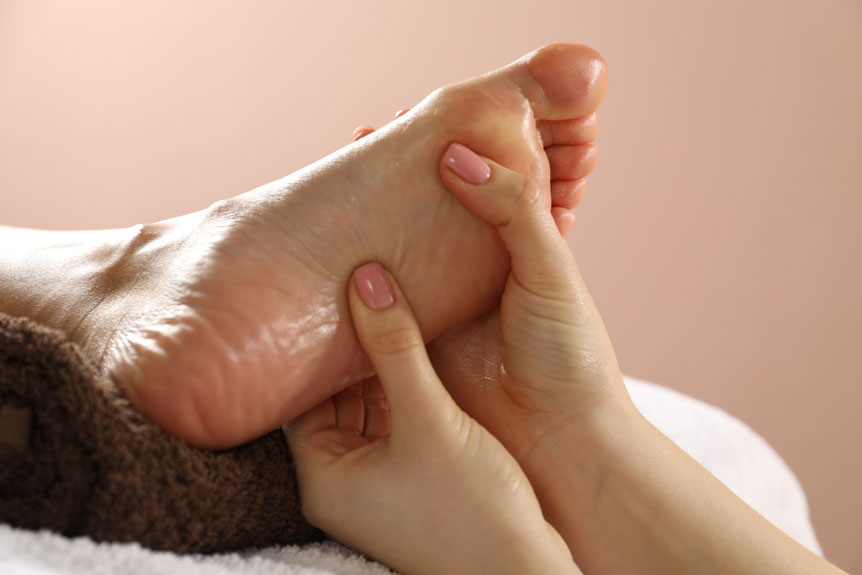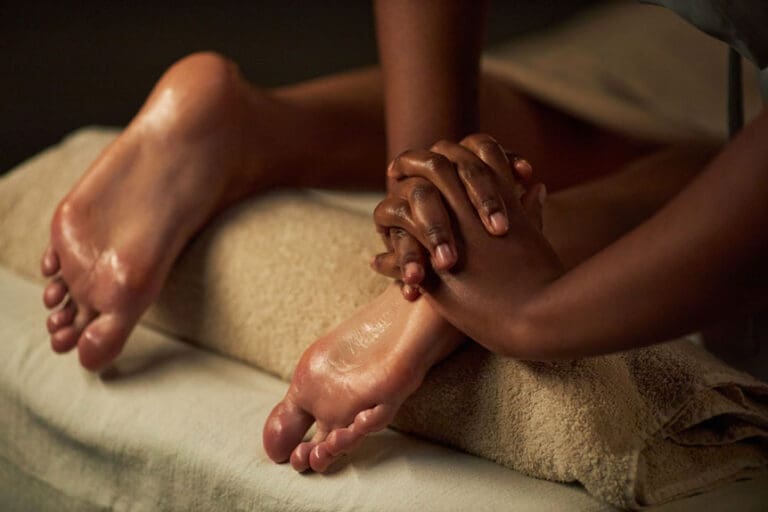
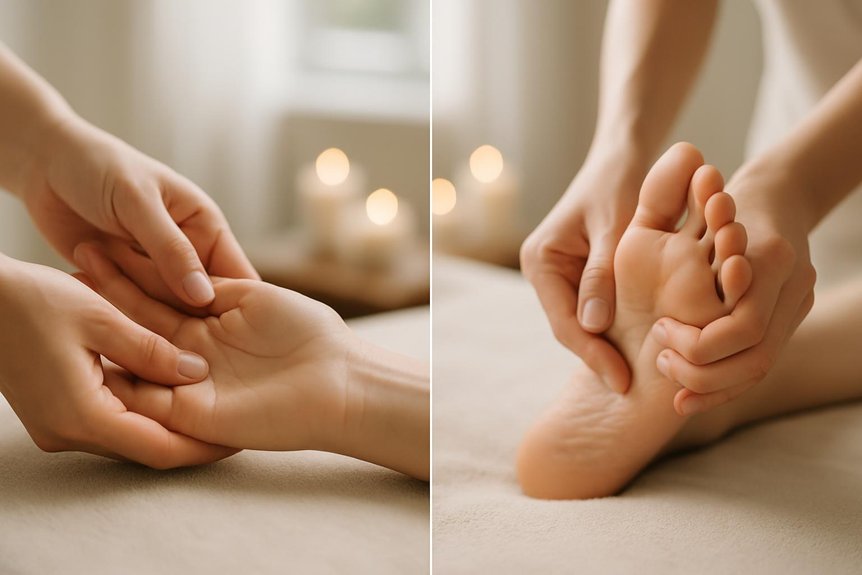
Hand reflex therapy can be effective for relaxation and targeted tension relief, especially when feet are ticklish, swollen, injured, or need to stay clothed. Anatomically, the hands have smaller structures and less surface area, so pressure must be lighter and sessions may fatigue sooner. Foot reflex therapy usually allows slower, deeper, more sustained work through thicker plantar tissues, which many clients find more grounding and sleep-supportive. Evidence is mixed, but comfort and safety guide selection. More comparisons follow.
Hand vs Foot Reflex Therapy: Which Is Best for You?
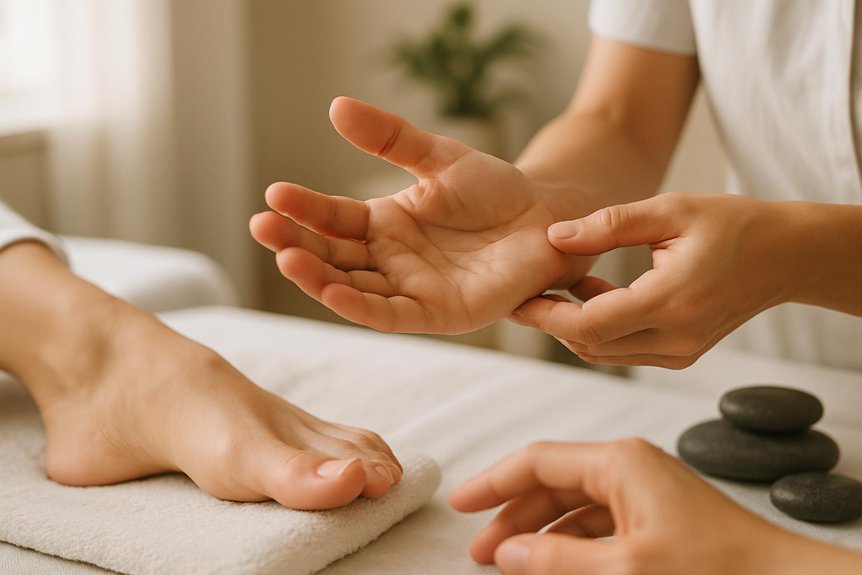
Which reflex therapy approach suits a person best often depends on anatomy, comfort, and practical constraints: foot reflex therapy typically offers broader access to dense sensory and connective tissues that map to whole-body reflex zones, while hand reflex therapy can deliver targeted stimulation through smaller structures with less need to undress or lie prone. Reflexology is often explored for its potential to support wellbeing by tapping into the body’s own healing power.
For clients seeking deeper, sustained pressure through thicker plantar fascia and robust ligamentous structures, the feet may tolerate slower, firmer work.
For those with ticklish soles, mobility limits, pregnancy positioning needs, or a desire to stay more clothed, the hands can feel safer and more intimate while still engaging rich mechanoreceptors.
At Spa & Massage clinics across London, therapists assess tenderness, circulation, skin sensitivity, and comfort, then tailor pressure, pacing, and session setup to match goals.
What’s the Difference Between Hand and Foot Reflex Therapy Maps?
Choosing between hand and foot reflex therapy often comes down to comfort and access, but the underlying “maps” also differ in how clearly landmarks can be identified and worked.
Both map the body onto distal structures, yet the foot offers broader surface area and firmer bony reference points (heel, arch, metatarsal heads), which can make zones easier to orient anatomically.
Hand maps are more compact, with key cues at the thenar/hypothenar eminences and along the metacarpals, but smaller margins can demand lighter, more precise pressure.
In Spa & Massage clinics, therapists use palpation to match map points to individual tissue texture, temperature, and tenderness, adapting thumb-walking and hook-and-back-up to respect joints, tendons, and sensitive web spaces.
Foot work often accommodates deeper, sustained contact.
What Is Hand Reflex Therapy Best For (Stress, Pain, Travel)?
Hand reflex therapy is often chosen for stress relief on-the-go because the hand’s accessible pressure points can be worked through targeted, comfortable compression of palmar and dorsal tissues, supporting relaxation during commutes, desk work, or travel.
In Spa & Massage clinics, therapists commonly use it as a practical option for pain and tension support—particularly for overuse patterns in the forearm, wrist, and shoulder—by modulating local muscle tone and promoting calmer breathing.
While it is not a substitute for medical care, current evidence on touch-based therapies supports its role in short-term stress reduction and perceived discomfort relief when tailored to the client’s symptoms and sensitivity.
Stress Relief On-The-Go
Finding calm without a treatment room is where hand reflex therapy tends to excel, because the hands are accessible, richly innervated, and responsive to brief, targeted pressure. For commuters, travellers, and desk-based Londoners, this allows regulation of arousal in minutes: steady thumb pressure and small circles along the palmar fascia, then gentle holds at the base of the thumb and across the wrist crease, can cue slower breathing and a softer jaw.
Evidence for reflex therapy is mixed, yet many clients report reduced perceived stress and improved sleep readiness after short sessions. At Spa & Massage clinics, therapists teach simple, skin-friendly self-pressures to use on trains or between meetings, recommending light-to-moderate force, relaxed shoulders, and a quiet exhale to settle the nervous system.
Pain And Tension Support
Although research on reflex therapy remains mixed, hand reflex therapy is often used to support pain and tension patterns that are closely linked to stress, travel fatigue, and repetitive hand use—such as tight forearms from desk work, jaw and upper‑neck guarding, and headache-prone tension.
At Spa & Massage clinics across London, therapists focus on soothing pressure through the palmar fascia, thenar and hypothenar muscles, and finger joints, aiming to downshift protective muscle tone via calming touch and paced breathing.
Many clients report reduced perceived pain and easier movement after sessions, especially when combined with forearm, shoulder, and neck release in massage.
For self-care, gentle thumb-walking along the centre of the palm and slow traction of each finger can ease gripping patterns without overstimulation.
When Is Foot Reflex Therapy More Effective (Tension, Sleep, Circulation)?
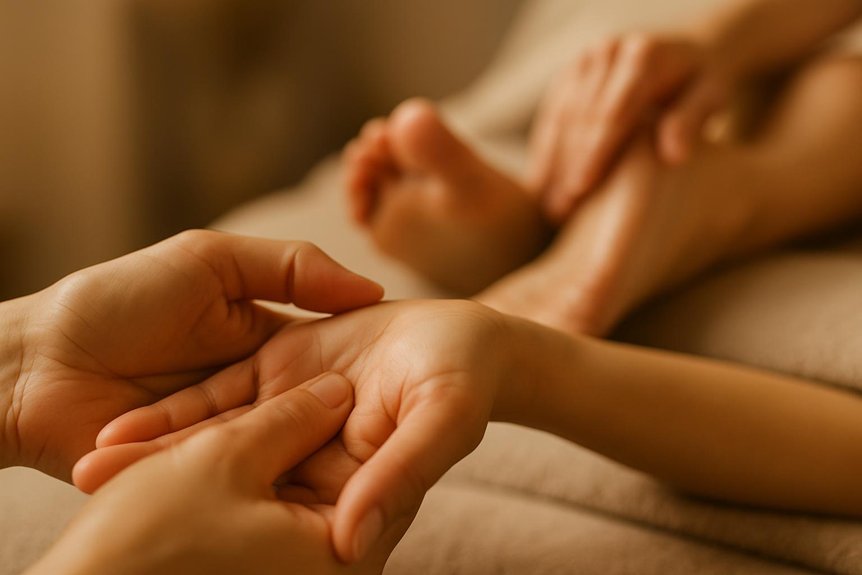
When does foot reflex therapy tend to deliver the clearest results for tension, sleep, and circulation? It often proves most effective when the body is carrying whole‑system stress: long standing, desk-bound days, or travel. The feet contain dense mechanoreceptors and rich connective tissue; steady pressure and slow releases can downshift sympathetic tone and soften guarding through calves, hips, and low back via shared fascial lines.
For sleep, benefits are strongest when sessions are scheduled late afternoon or evening. Many clients report calmer breathing and fewer “busy mind” symptoms after work on the diaphragm, solar plexus, and heel points, supporting parasympathetic settling.
For circulation, rhythmic thumb-walking and ankle mobilisation may encourage venous and lymph return. At Spa & Massage, pressure is matched to comfort, enhancing warmth and ease.
Who Should Avoid Foot Reflex Therapy (and Safer Alternatives)?
Foot reflex therapy can be a highly settling option for tension, sleep, and circulation support, but it is not appropriate for every health profile.
It is typically avoided with acute foot/ankle injury, recent fractures or surgery, open wounds, active skin infections (e.g., fungal), gout flares, severe peripheral neuropathy, or unstable vascular disease (DVT risk, advanced diabetes with ulcers).
Caution is also advised in the first trimester of pregnancy or with pre-eclampsia, where pressure changes and positioning matter.
At Spa & Massage, therapists screen for sensation, capillary refill, swelling, and contraindications, then suggest safer options: light-touch foot work without deep pressure, calf and lower-leg lymphatic-style strokes, seated relaxation massage, aromatherapy to support downshifting, or hand and forearm work when feet should be protected.
Can Hand Reflex Therapy Replace Foot Reflex Therapy Sessions?
Hand reflex therapy can be an effective option when a client cannot comfortably receive foot work (for example, due to soreness, mobility limits, or during certain stages of pregnancy), while still targeting comparable anatomical reflex maps in the hands.
However, compared with foot sessions, the smaller surface area and different tissue density of the hand can limit sustained pressure and coverage, which may matter for clients seeking deeper, longer work.
At Spa & Massage, therapists select the most appropriate approach by matching the client’s symptoms, comfort, and treatment goals with the practical advantages and constraints of each method.
When Hand Reflex Therapy Works
Often chosen for its accessibility, hand reflex therapy can provide meaningful support for stress reduction, sleep quality, and localized tension management—particularly for clients who cannot comfortably receive foot work due to acute foot pain, post-injury sensitivity, mobility limitations, or cultural/personal preference—yet it does not consistently replicate the depth and sustained parasympathetic shift typically achieved through foot reflex therapy.
It works best when touch must stay gentle, while still engaging rich mechanoreceptors in the palms and fingers and settling guarded forearm fascia.
In Spa & Massage clinics, therapists use slow compressions, thumb-walking, and precise holds along thenar/hypothenar and wrist lines to cue relaxation and ease hand-use fatigue.
Many clients respond well after desk-heavy weeks, during travel, or alongside pregnancy massage, where comfort and consent guide every contact.
Limits Versus Foot Sessions
In clinical practice, a hand-focused reflex therapy session can be an effective alternative when foot work is contraindicated, but it does not fully replace the physiological reach of a foot reflex therapy treatment for most clients. The feet offer larger surface area, thicker plantar fascia, and more robust load-bearing tissues, allowing deeper, sustained pressure across reflex zones and broader somatosensory input.
Hand maps are smaller and may fatigue sooner, limiting intensity and duration for clients who need strong decompressive work. Some clients also report that foot work more readily shifts whole-body tension and sleep quality, likely through greater parasympathetic settling.
At Spa & Massage clinics, therapists may use hand reflex therapy to maintain continuity, yet still note that foot sessions often deliver more thorough grounding and pelvic-to-spine relaxation overall.
Choosing The Right Option
When can a hand-focused reflex therapy session genuinely stand in for a foot treatment? It can be a strong alternative when feet are unavailable or sensitive—during pregnancy swelling, post-injury tenderness, neuropathy, skin irritation, or when a client prefers privacy and minimal undressing.
Anatomically, the hands offer dense mechanoreceptors and clear dermatomal access; skilled pressure can calm sympathetic tone and soften forearm and shoulder holding patterns.
However, foot work often allows broader loading through larger reflex zones and longer, grounding strokes that many clients find deeply settling.
At Spa & Massage clinics, therapists assess contraindications, comfort, and goals, then choose hand-only, foot-only, or combined work. Many clients start with hand reflex therapy and progress to feet when comfort returns.
Does Reflex Therapy Work? What Research Says About Results
How well does reflex therapy work in practice, and what can clients realistically expect? Research suggests reflex therapy can reduce stress, ease perceived pain, and improve sleep quality for some people, especially alongside ongoing care.
Clinical trials are mixed and often small, so claims about “treating” specific diseases are not supported; benefits are most consistent for relaxation and symptom comfort.
Anatomically, sustained pressure and slow rhythmic strokes may calm the autonomic nervous system, soften protective muscle tone, and influence pain signalling through touch-based pathways.
At Spa & Massage clinics, therapists frame outcomes as measurable shifts: slower breathing, warmer hands/feet, reduced tension, and a settled mood. Clients seeking closeness often value the attentive, respectful contact and the feeling of being safely held.
How We Choose Hand vs Foot Reflex Therapy in Our Clinics
Clinical research most consistently supports reflex therapy for relaxation, sleep support, and symptom comfort rather than disease treatment, so the practical question becomes which approach is most suitable for a given body and context.
At Spa & Massage, therapists choose hand versus foot work after a brief intake, considering tissue sensitivity, circulation, mobility, and personal boundaries.
Foot reflex therapy is often preferred when clients want deeper pressure through thicker plantar fascia and more sustained parasympathetic settling; it can feel grounding for busy minds.
Hand reflex therapy suits clients who are pregnant, foot‑ticklish, recovering from ankle/plantar pain, or simply seeking a more intimate, face‑to‑face session.
Hands also allow easy access for desk workers with forearm tension.
In all clinics, pressure is titrated breath‑by‑breath, and draping preserves warmth and dignity.
Conclusion
Hand reflex therapy can be highly effective for relaxation and symptom support, especially when mobility, comfort, or travel makes foot work impractical. Foot reflex therapy often allows deeper, broader pressure across densely innervated tissues, which some clients find more settling for sleep, circulation, and whole-body tension. Neither should be framed as a cure; outcomes vary and are best tracked over several sessions. With informed screening and preferences considered, a tailored plan can feel like a small miracle in daily wellbeing.