For aromatic massage, ginger essential oil is typically diluted to 0.5–1% in a carrier oil to limit irritation while providing a gentle warming effect. Using ~20 drops/mL, this equals 1 drop per 10 mL (0.5%) or 2 drops per 10 mL (1%); for 30 mL, use 3 or 6 drops. Blend in a clean bottle, roll to mix, and patch test for 24 hours. Further guidance covers sensitive skin, carriers, and storage.
Ginger Oil Dilution Ratios for Massage (Drop Chart)
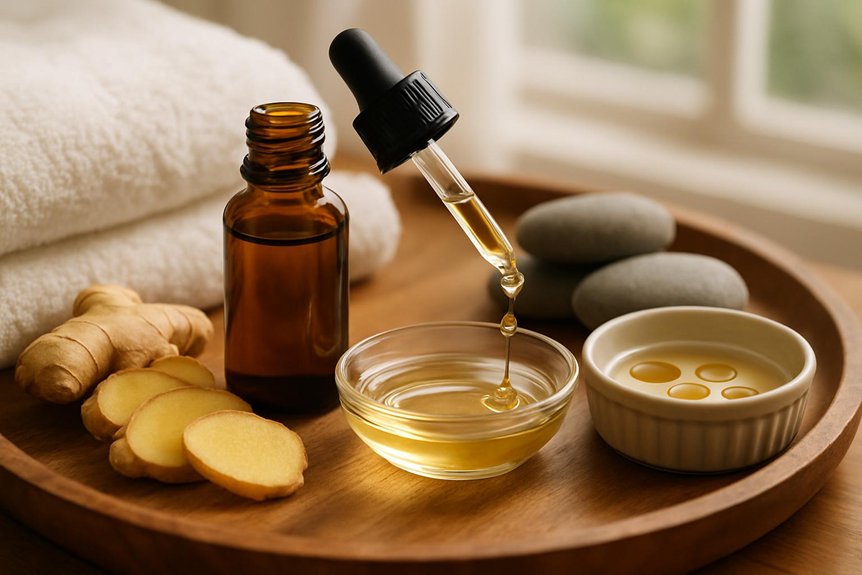
For safe aromatic massage use, ginger essential oil is typically diluted to 0.5–1% for most adults, as its warming constituents can irritate skin if used too strongly.
Spa & Massage therapists generally follow a simple drop chart using ~20 drops per mL: 0.5% = 1 drop per 10 mL; 1% = 2 drops per 10 mL; 2% (short, localised use only) = 4 drops per 10 mL.
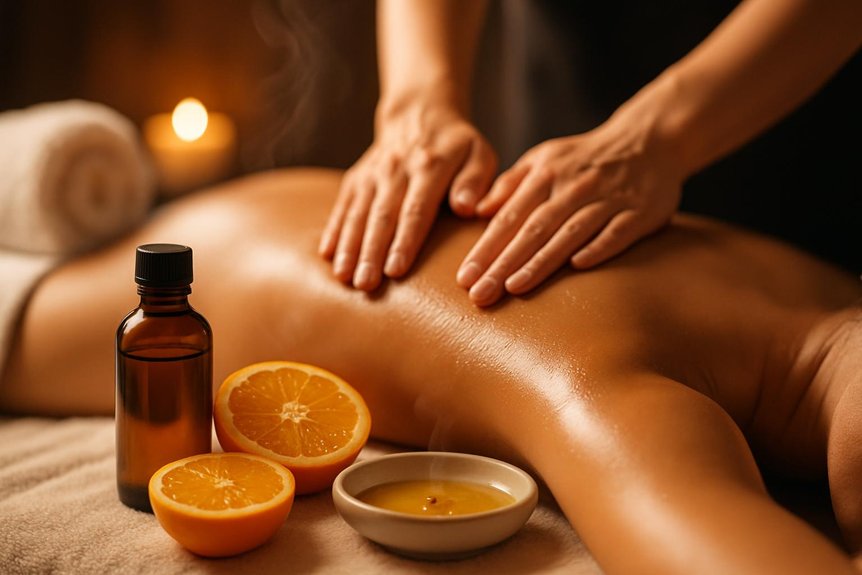
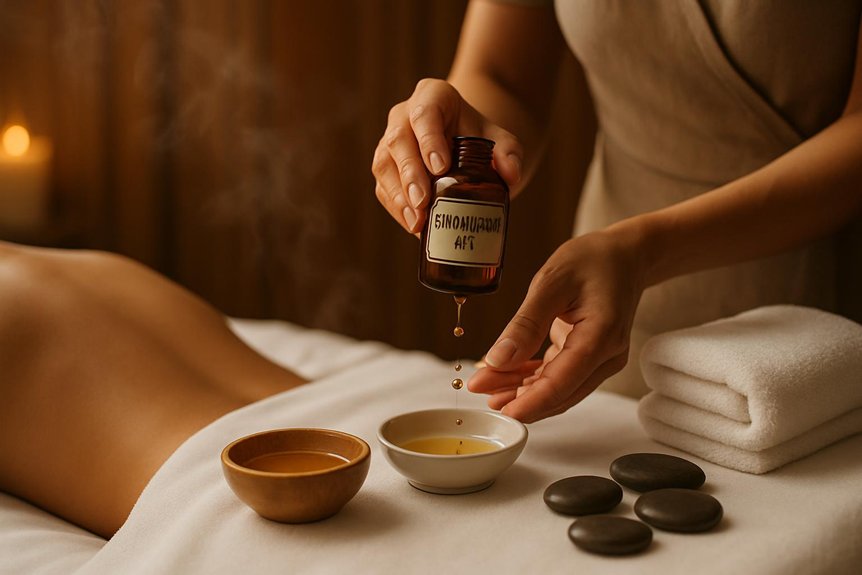
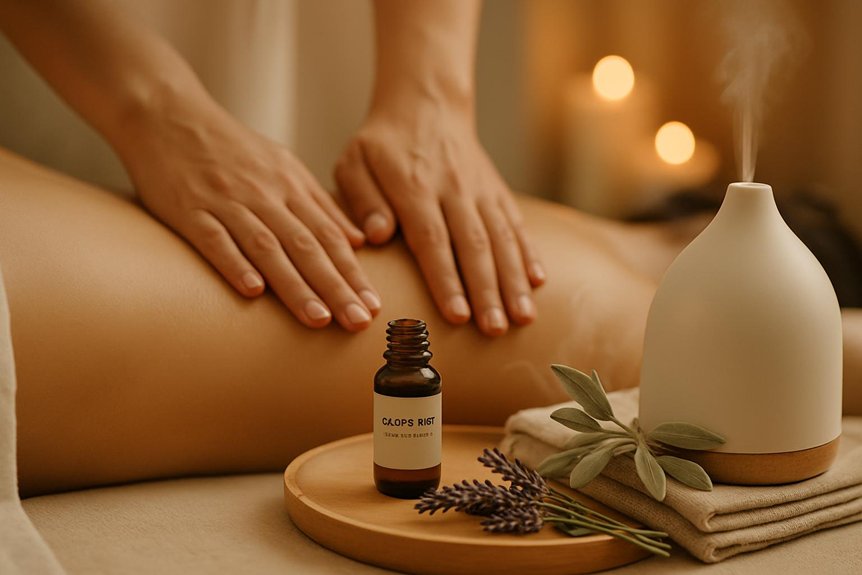
For 30 mL, use 3, 6, or 12 drops respectively. Blends are mixed thoroughly, then applied with slow, close-contact strokes; heat and friction can increase intensity. To relax and heal with massage, follow aromatherapy massage best practices and keep dilution gentle to support comfort.
Patch testing is advised, and use is avoided on broken skin or if burning occurs. If sensitive, reduce to 0.25% (1 drop per 20 mL).
Pick the Best Carrier Oil for Ginger Blends
In practice, the best carrier oil for a ginger essential oil blend is chosen to control “heat,” provide adequate slip, and minimise sensitisation risk at low dilutions (typically 0.5–1%).
Lighter options such as fractionated coconut or grapeseed suit full-body work where glide matters and absorption is quicker; richer oils like sweet almond or jojoba support slower, close-contact massage and reduce tug on delicate skin.
For very sensitive or reactive skin, our Spa & Massage therapists often favour jojoba or sunflower for their typically gentle feel and low odour, helping ginger remain the focus.
On areas prone to flushing, a more cushioning carrier can buffer warmth.
Nut allergies, acne-prone skin, and stain risk (e.g., unrefined oils) should guide selection.
How to Dilute Ginger Oil for Massage (Step-by-Step)
Carrier choice sets the skin feel and helps moderate ginger’s natural warming effect, but safe results depend on accurate dilution and consistent measuring. For full-body aromatic massage, Spa & Massage therapists typically keep ginger essential oil at 1% for most adults; for a more intimate, close-contact back/neck focus, 0.5% is often preferred.
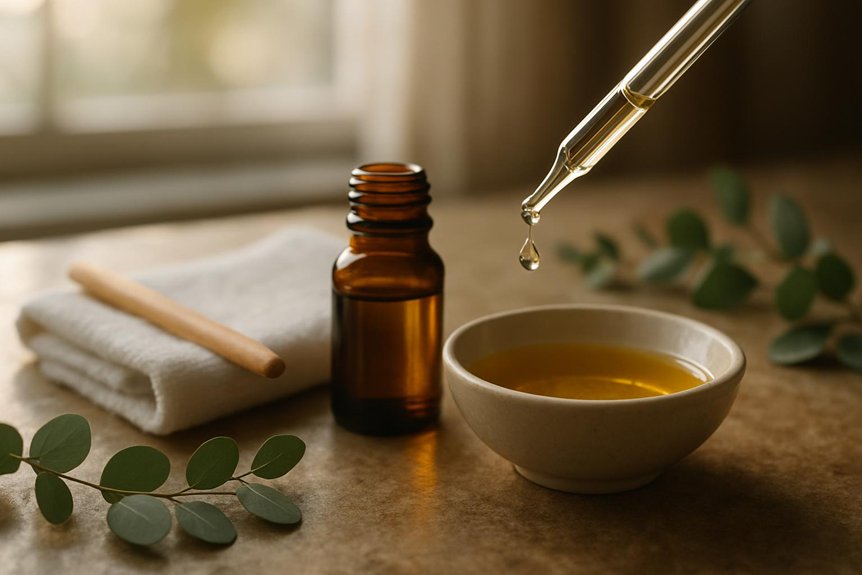
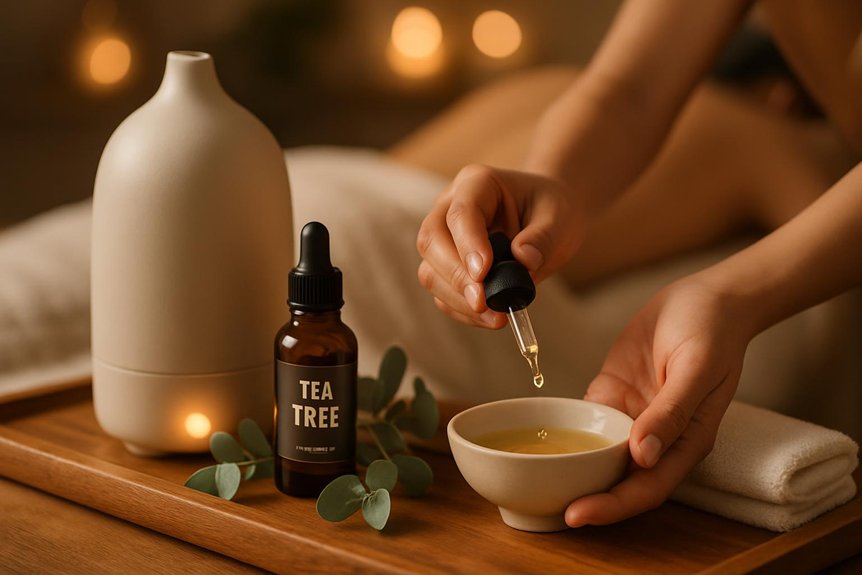
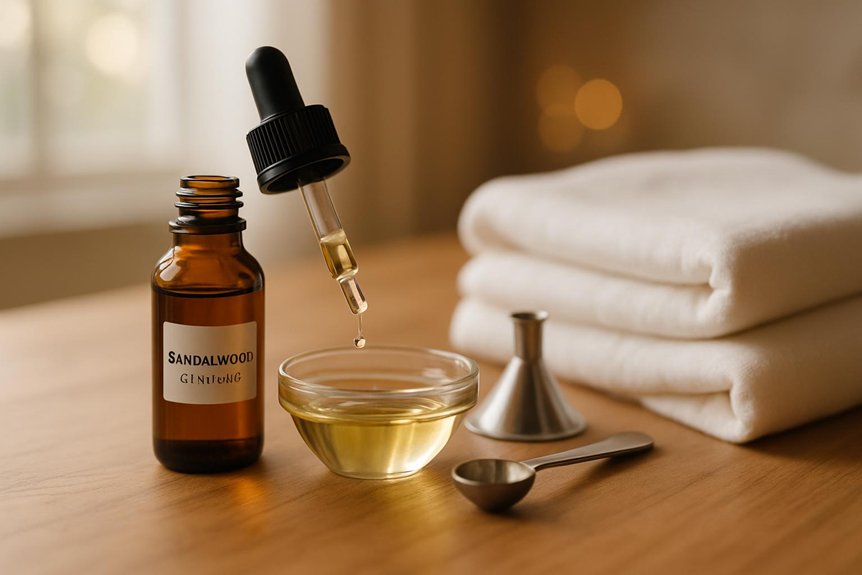
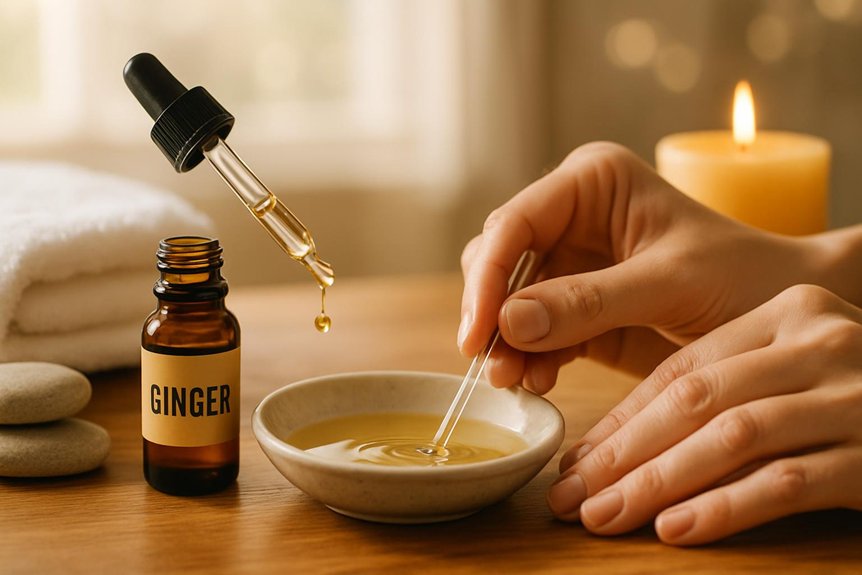
Step-by-step: (1) Select a clean 10 ml bottle. (2) Add carrier oil first. (3) For 0.5%, add 1 drop ginger; for 1%, add 2 drops; for 2% (short, targeted areas only), add 4 drops. (4) Cap and roll gently to blend; avoid shaking to reduce aeration. (5) Label with date, dilution, and intended area.
Patch Test Ginger Oil to Avoid Irritation
Even at a conservative 0.5–1% dilution, how can ginger essential oil be checked for individual skin sensitivity before it is used in an aromatic massage? A patch test is the safest step.
Mix ginger oil at the intended massage strength (for example, 1 drop per 10 mL carrier oil for 0.5%, or 2 drops per 10 mL for 1%). Apply a pea-sized amount to the inner forearm or behind the ear, then cover with a small plaster.
Leave for 24 hours, avoiding washing, heat, friction, or active skincare on the area. If redness, itching, burning, swelling, or a rash appears, discontinue and wash with mild soap and plenty of water. At Spa & Massage, therapists screen reactions before sensual, close-contact aromatherapy.
Ginger Oil Dilution for Sensitive Skin (and Pregnancy)
Patch testing identifies individual reactivity, but sensitive skin and pregnancy warrant a lower starting dilution of ginger essential oil for massage. For sensitive skin, Spa & Massage therapists typically begin at 0.25–0.5% (about 1–3 drops per 30 ml carrier), then increase only if warmth stays comfortable and no redness appears within 24 hours.
For pregnancy, especially the first trimester, ginger oil is generally avoided; later pregnancy should use 0.25% maximum and only with midwife/GP approval and a therapist trained in pregnancy massage. Application should be limited to small areas (e.g., back, shoulders), avoiding abdomen and inner thighs.
Any burning, itching, or persistent heat indicates immediate dilution and wash-off. This preserves closeness without compromising safety.
Store Diluted Ginger Oil Safely (Shelf Life & Hygiene)
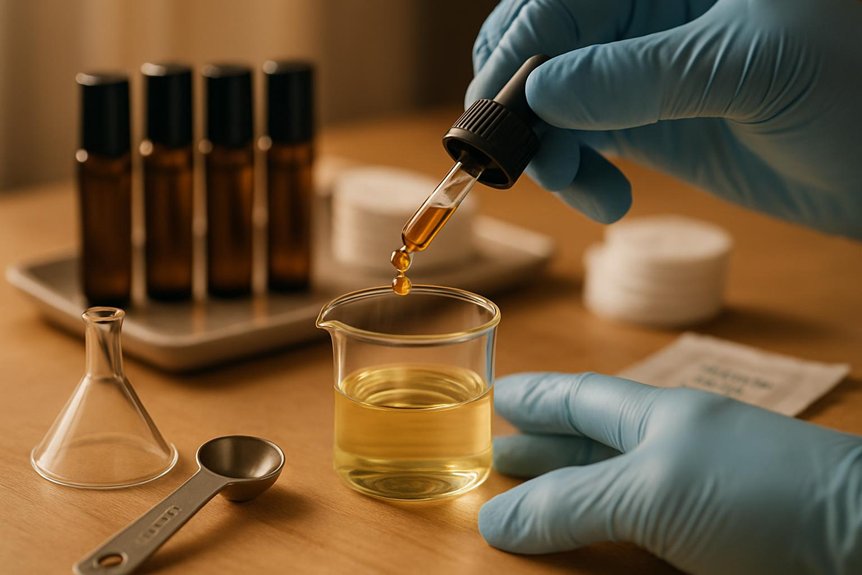
At Spa & Massage, diluted ginger oil is stored in clean, amber glass bottles and labelled with the dilution strength (e.g., 1% = 1 drop per 5 mL carrier), date mixed, and intended use to reduce dosing errors.
Because carrier oils oxidise over time and oxidation increases the risk of skin irritation, mixtures are kept tightly capped, away from heat and light, and discarded if they develop a rancid odour, cloudiness, or change in colour.
Hygienic handling is prioritised by using washed hands, sanitised funnels or droppers, and avoiding direct contact between the bottle opening and skin to minimise contamination.
Proper Bottling And Labeling
Before a diluted ginger oil blend is used for aromatic massage, it should be transferred into a clean, dry, amber glass bottle with a tight cap, labelled with the dilution percentage, carrier oil, date mixed, and any contraindications, then stored away from heat and sunlight.
A dropper insert helps accurate dosing and reduces fingertip contamination; in Spa & Massage clinics, pumps or droppers are preferred over open-mouth jars for hygiene.
The label should also note intended use (external only), patch-test advice, and areas to avoid (eyes, mucosa, broken skin).
Where intimacy is the goal, clear labelling supports confident, unhurried touch and avoids over-application on sensitive zones.
Any change in colour, clarity, or scent should prompt disposal, not “topping up” with fresh oil.
Shelf Life And Oxidation
Over time, a diluted ginger oil massage blend can oxidise, reducing aromatic quality and increasing the likelihood of skin irritation, so storage conditions and a defined use-by window should be treated as part of safe dosing.
To slow oxidation, it should be kept in a tightly sealed amber glass bottle, away from heat, sunlight, and steamy bathrooms; refrigeration is optional but can help.
At Spa & Massage, therapists typically prepare small batches at 1–2% dilution so they are used promptly. A practical use-by window is 3 months for blends in polyunsaturated carrier oils (e.g., grapeseed) and up to 6 months in more stable oils (e.g., jojoba or fractionated coconut).
Any rancid, sharp, or “crayon-like” odour indicates disposal.
Clean Handling Practices
Oxidation control reduces rancidity risk, but hygienic handling is equally important because contaminated massage blends can trigger skin reactions and shorten shelf life. Spa & Massage advises preparing only small batches at a defined dilution (typically 1–2% ginger essential oil in a carrier for body massage; lower for sensitive skin), then decanting into sterilised, dry, amber glass.
Hands should be washed; droppers must not touch skin, towels, or bottle rims. Water introduces microbes, so bottles and funnels must be fully dry. Labels should include dilution %, date mixed, and “patch test” reminder. Storage should be cool, dark, tightly capped, and away from radiators or bathrooms.
Discard immediately if odour turns sharp, colour shifts, or cloudiness appears.
Conclusion
Diluting ginger essential oil correctly determines whether a massage feels comfortingly warm or uncomfortably sharp. With precise drop‑per‑tablespoon ratios, a suitable carrier oil, and clean, measured mixing, the blend stays consistent across full‑body and targeted work. Yet the most important step comes just before use: a patch test, then adjustments for sensitive skin, pregnancy, or post‑exercise flushing. Store the dilution tightly sealed, dated, and hygienic—because the final outcome hinges on these small controls.