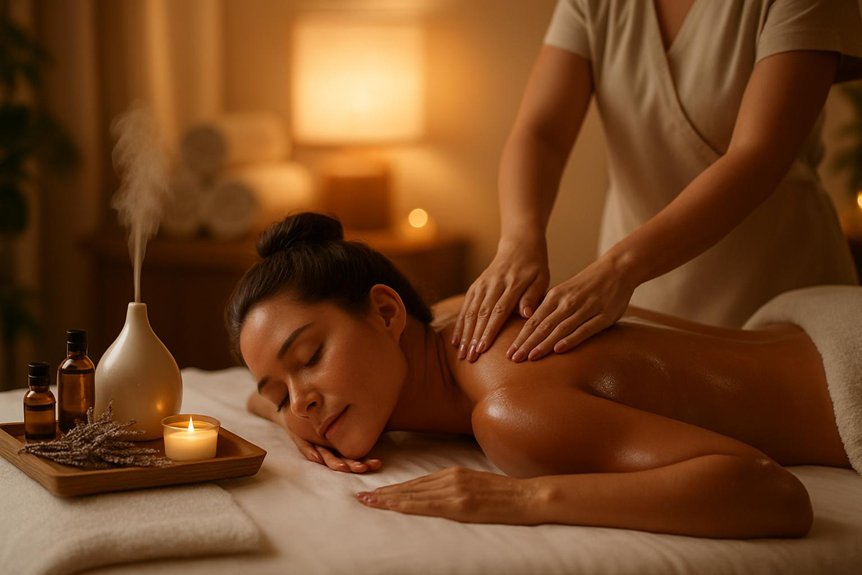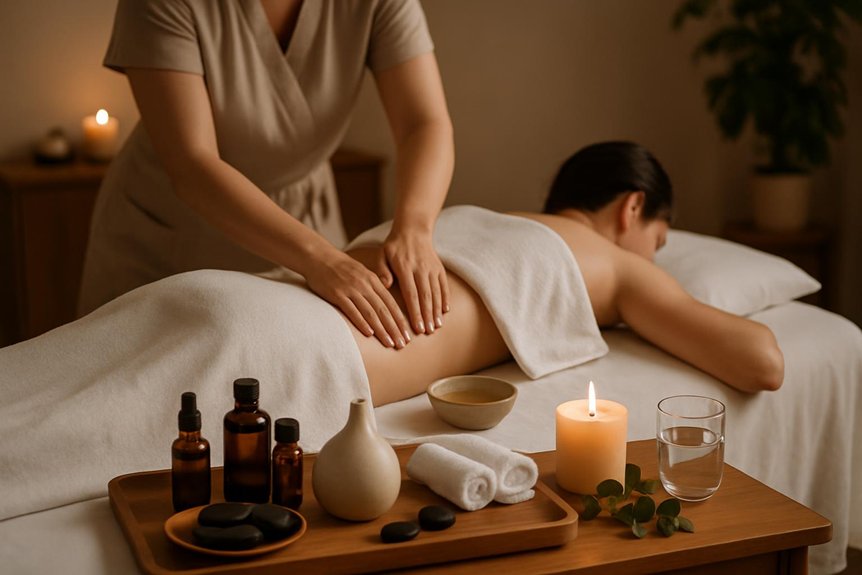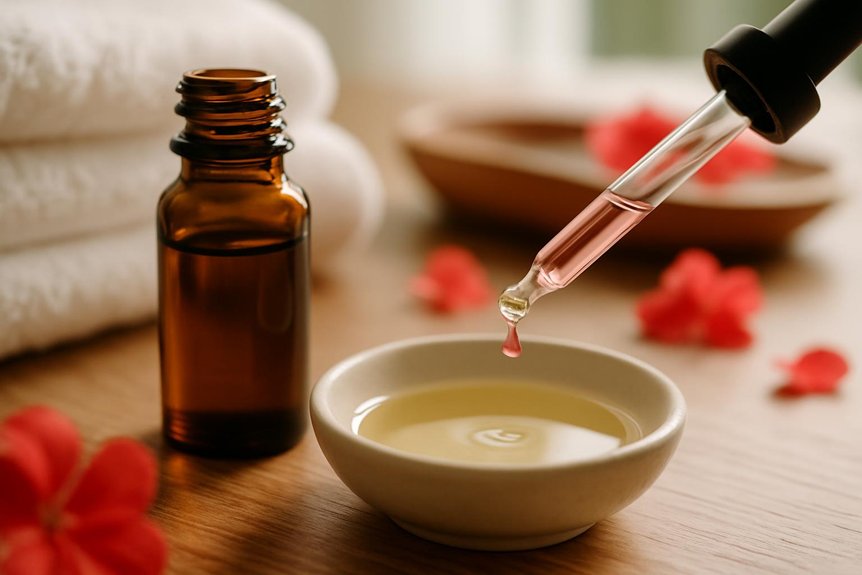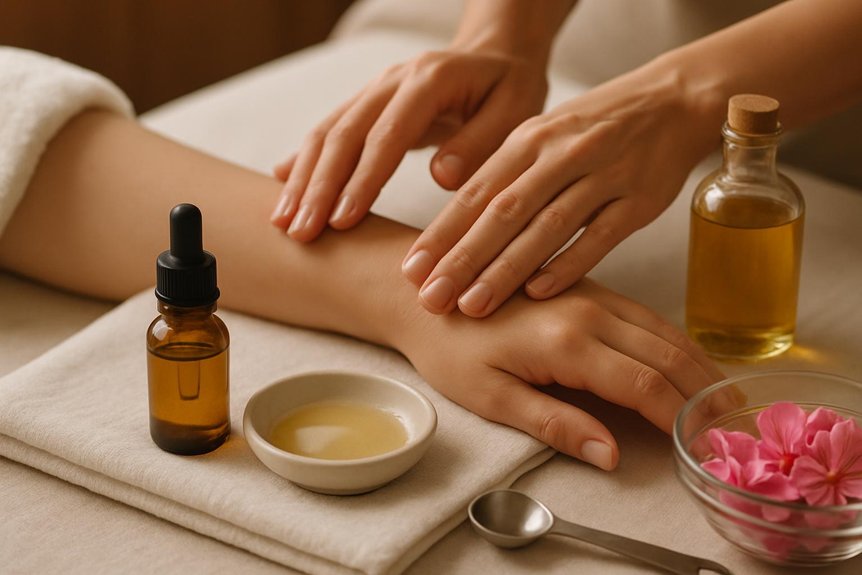
In aromatic massage, ginger typically smells warm, spicy, and fresh, with a bright, zesty top note over an earthy, peppery base and a faint, gentle sweetness. It is often described as clean and enlivening yet grounded, and may be softened with citrus or light florals in blended oils. Because ginger essential oil is potent, therapists use measured dilution and may recommend a patch test for sensitive skin. Further details cover how it feels and who should avoid it.
What Does Ginger Smell Like in Aromatic Massage?
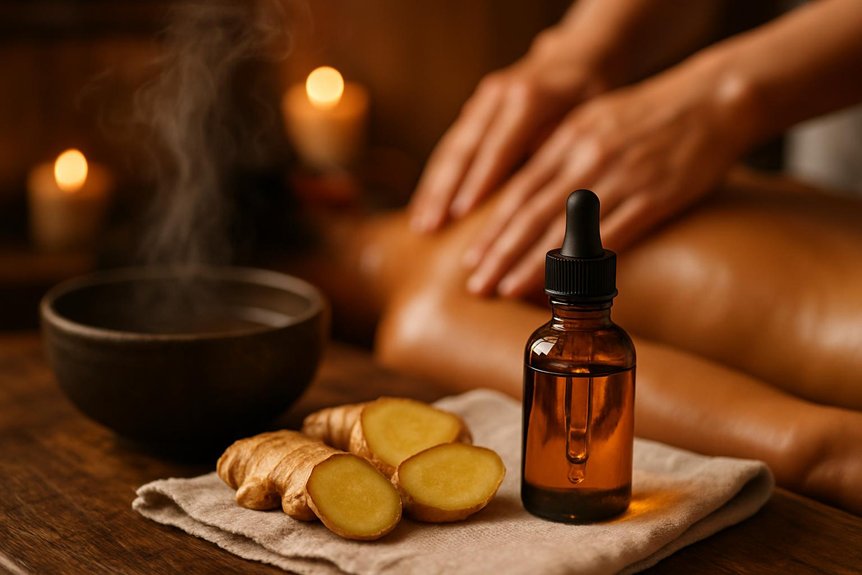
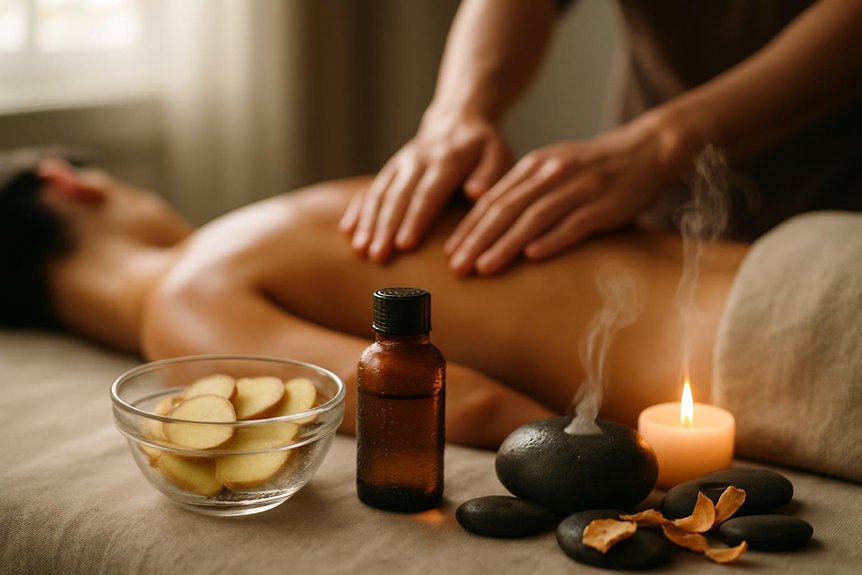
Often described as “warming,” ginger in an aromatic massage typically smells spicy, fresh, and slightly sweet, with a bright, zesty top note and an earthy, peppery base that can feel gently invigorating rather than sharp.
In Spa & Massage clinics across London, it is often blended to soften its edge—commonly with citrus or gentle florals—so the aroma stays close to the skin and feels inviting in a calm room.
Clients who prefer intimacy without heaviness may notice ginger reads “clean” and enlivening, while still grounded and sensual.
Because essential oils are potent, therapists use measured dilutions and screen for sensitivities, asthma triggers, and pregnancy considerations.
A patch-test approach is suggested for reactive skin or new clients.
To relax more deeply, many therapists pair ginger with aromatherapy massage tips that support a calmer, more restorative session.
What Does Ginger Aromatherapy Feel Like on the Body?
Beyond its warm, spicy scent, ginger in an aromatic massage is typically experienced as a gradual sense of heat and circulation on the skin and in the underlying muscles.
Many clients notice a gentle flush, a soft tingling, and a “waking up” sensation where strokes are slow, close, and grounded.
At Spa & Massage, therapists dilute ginger appropriately in a carrier oil, so the feeling stays comforting rather than sharp.
Sensations may build over several minutes, especially with sustained pressure in areas of tension, then settle into a steady warmth.
Some bodies feel more reactive, so therapists patch-check, adjust dilution, or switch oils if stinging, itching, or redness persists.
Ginger is avoided on broken skin and used cautiously for sensitive skin and pregnancy.
What Are the Benefits of Ginger Aromatic Massage?
In clinical aromatherapy practice, ginger essential oil is used in massage primarily for its warming, circulation-supporting profile and its potential to ease the sensation of muscular stiffness.
At Spa & Massage clinics, therapists may select ginger within a tailored blend to support recovery after sports or long desk days, especially when clients want a deeply comforting, close-to-the-skin experience.
Evidence suggests ginger’s aromatic constituents can promote a subjective sense of warmth, help soften guarding, and encourage easier movement when paired with slow, pressure-appropriate strokes.
Many clients also report a grounded, gently energising mood shift, which can enhance relaxation and connection during treatment.
Used at conservative dilution in a carrier oil, ginger can complement deep tissue and aromatic massage by making targeted work feel smoother and more nurturing overall.
Who Should Avoid Ginger Aromatic Massage Oils?
Ginger aromatic massage can feel pleasantly warming and supportive for stiff, tired muscles, but that same heat-and-circulation profile is not appropriate for everyone. At Spa & Massage, ginger essential oil is typically avoided for clients who are pregnant, trying to conceive, or breastfeeding, unless a clinician has approved aromatherapy use.
It may also be unsuitable for people with very sensitive or reactive skin, eczema flare-ups, rosacea, or a history of contact allergy, as warming oils can increase redness. Clients using anticoagulants, with bleeding disorders, uncontrolled hypertension, or recent surgery should avoid stimulating oils that may increase superficial circulation. Those with fever, acute inflammation, or fresh injury may prefer cooling options. Anyone unsure is advised to disclose medications and conditions during consultation and request a patch test.
What Happens in a Ginger Aromatic Massage at Spa & Massage?
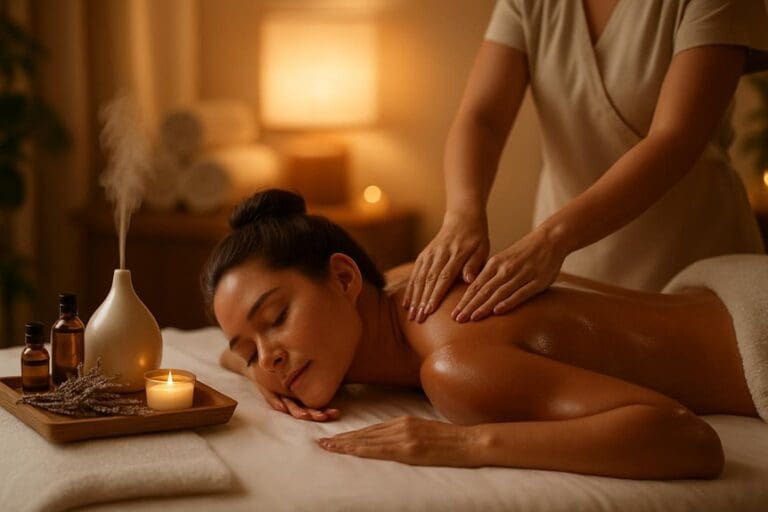
From the moment the client arrives, a ginger aromatic massage at Spa & Massage follows a structured, safety-led process: the therapist completes a brief consultation to confirm goals (such as relieving muscle stiffness), screens for contraindications discussed earlier (including pregnancy, reactive skin, anticoagulant use, or acute inflammation), and agrees the desired pressure and areas to avoid before preparing a correctly diluted ginger essential oil blend for the treatment.
The room is warmed and privacy maintained.
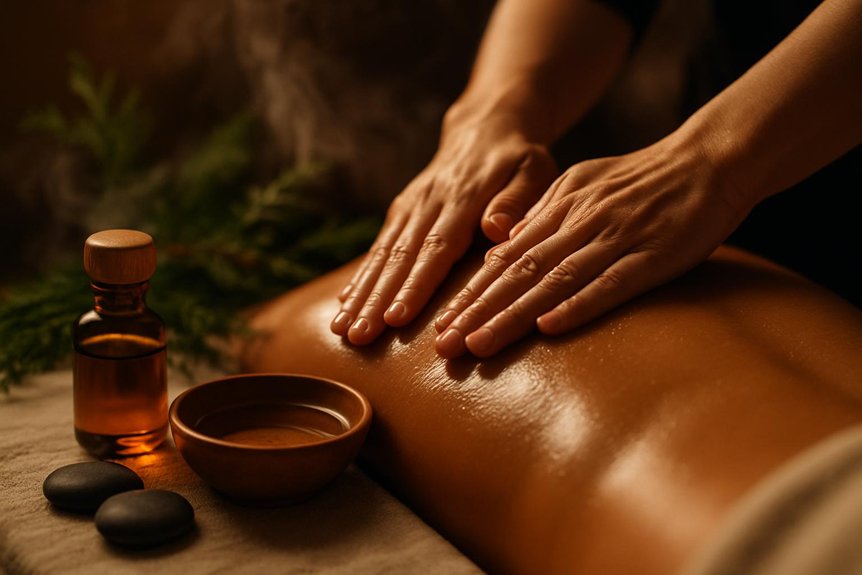
The therapist begins with grounding strokes, then uses slow, pressure-matched effleurage and kneading to encourage circulation while monitoring skin response and comfort. Ginger’s warming aroma is kept subtle, never overpowering.
Sensitive regions are draped carefully; communication remains continuous and discreet.
The session ends with gentle compressions, hydration advice, and aftercare: rest, warmth, and noting delayed soreness.
Conclusion
Ginger in aromatic massage rarely behaves like the blunt kitchen spice people expect; it can smell warm, sweet, and quietly zesty, then settle into an earthy calm. Used in low, well-diluted doses, it often supports comfort and a sense of circulation without feeling overpowering—ironically, the “hot” oil is usually chosen for soothing. Yet it is not for everyone: sensitive skin, pregnancy, anticoagulant use, or migraine triggers warrant caution and professional guidance.