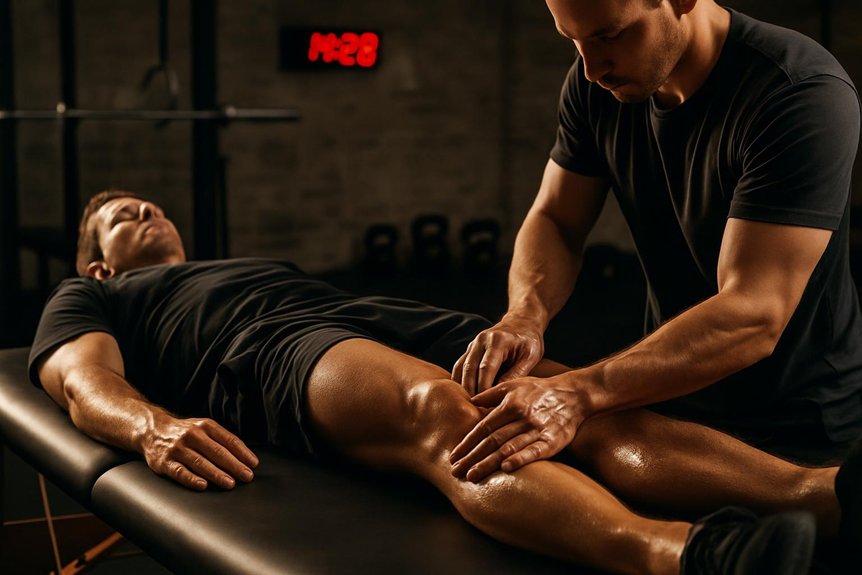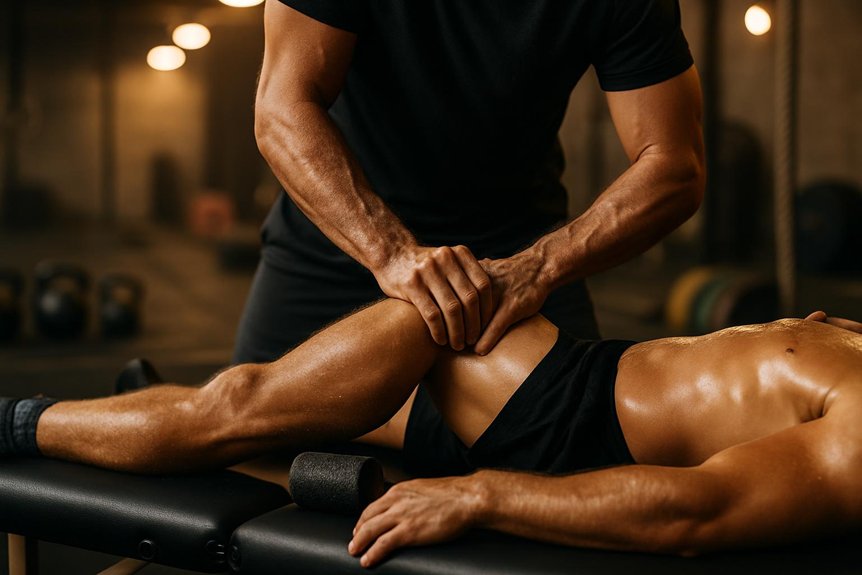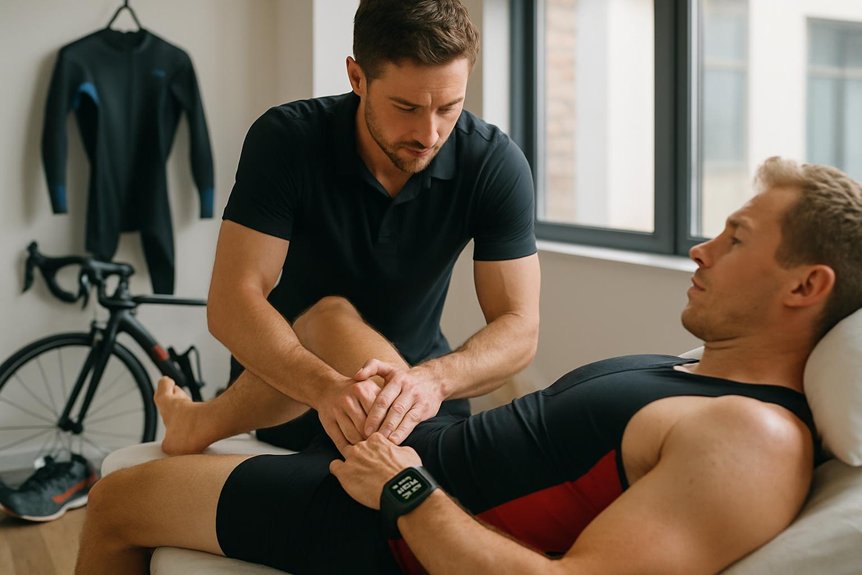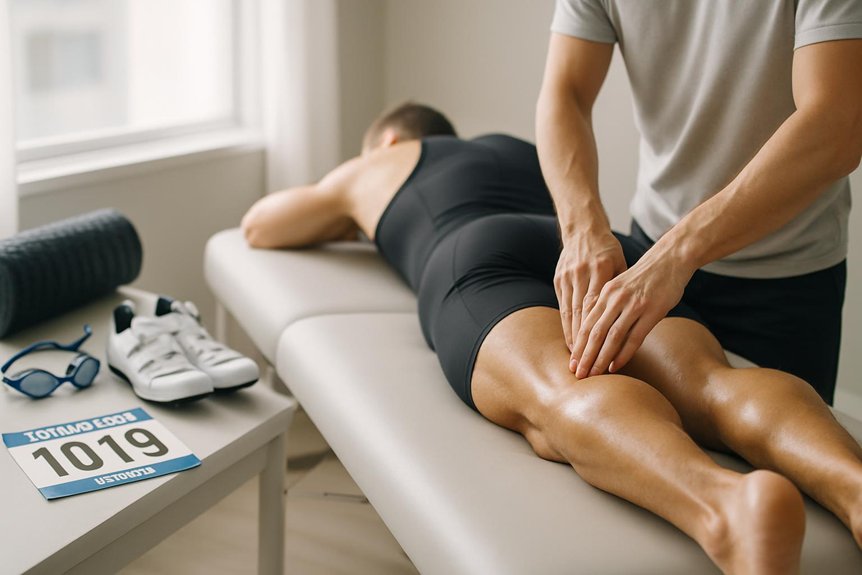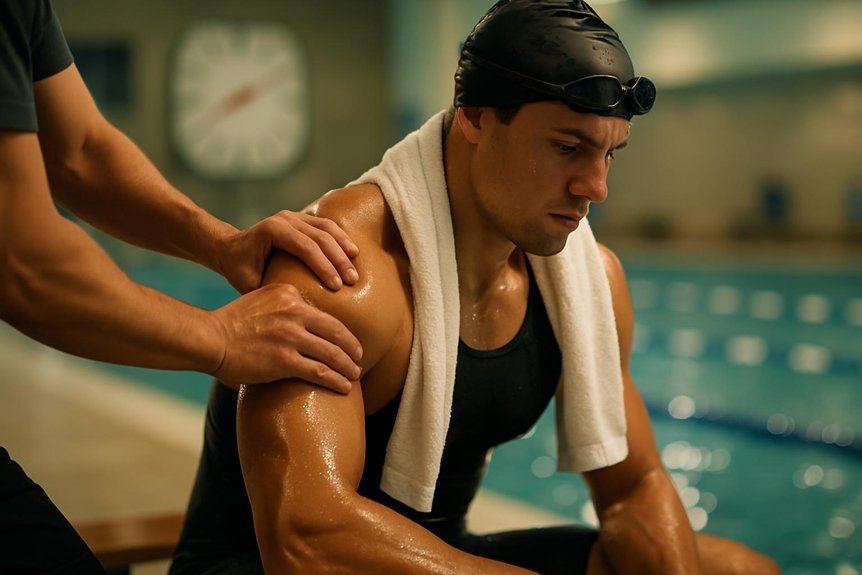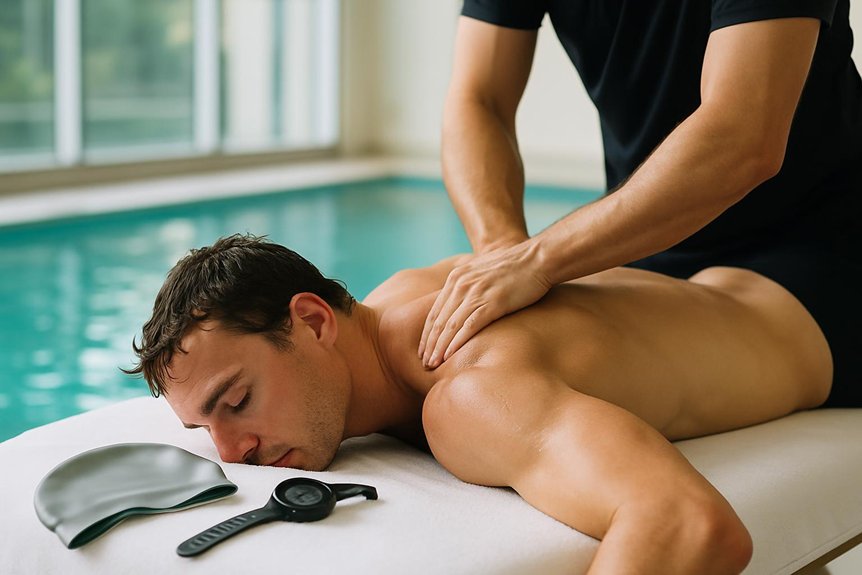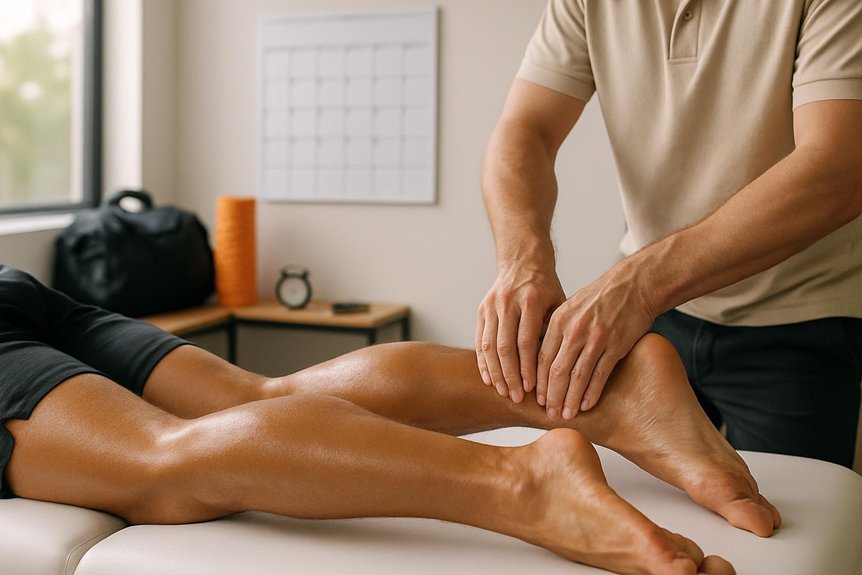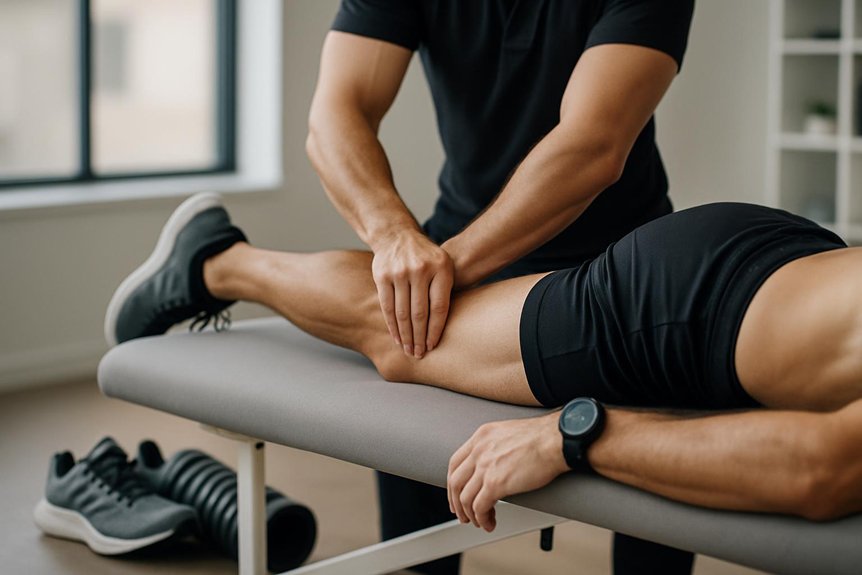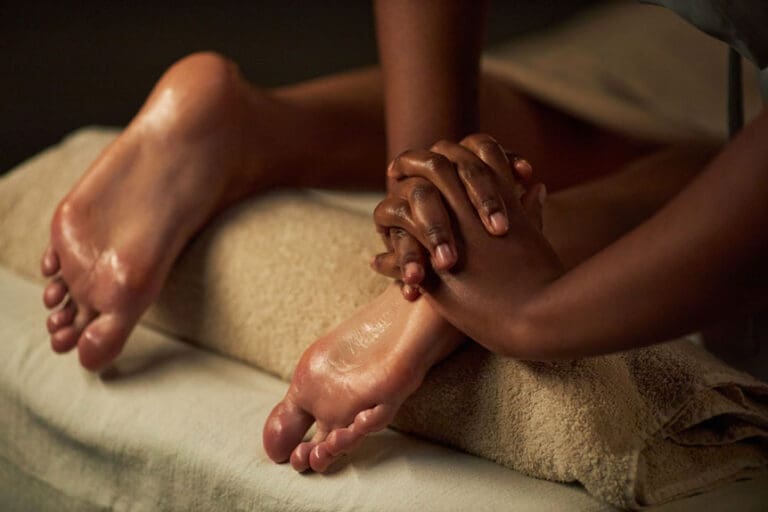
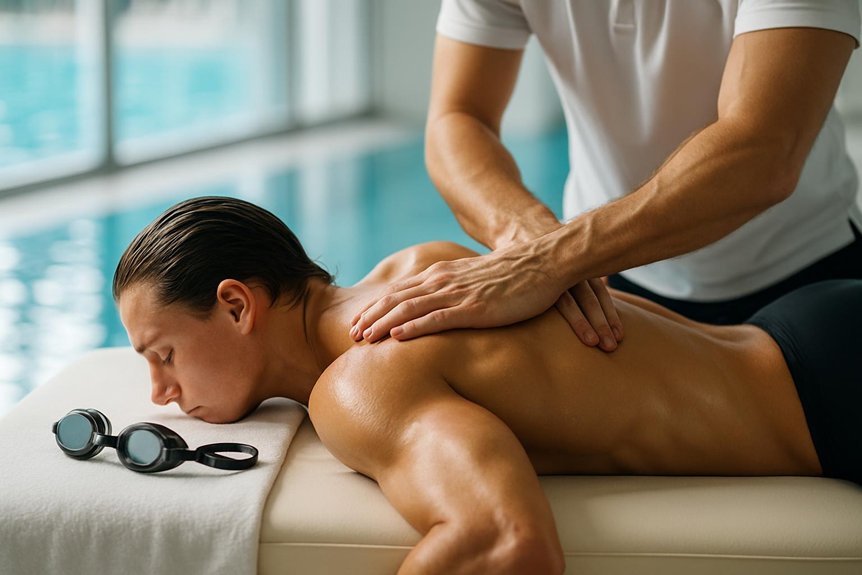
It is useful for swimmers because it targets overworked tissues (lats, pec minor, rotator cuff, forearms, hip flexors, calves) to reduce excessive tone and tenderness while preserving range for the next session. It can improve shoulder, thoracic, hip, and ankle mobility that supports streamline, a cleaner catch, and kick mechanics. It also helps manage fatigue by downshifting the nervous system and easing perceived soreness when pressure is kept within tolerance. The sections below explain timing, frequency, and technique choices.
Is It Good for Swimmers?
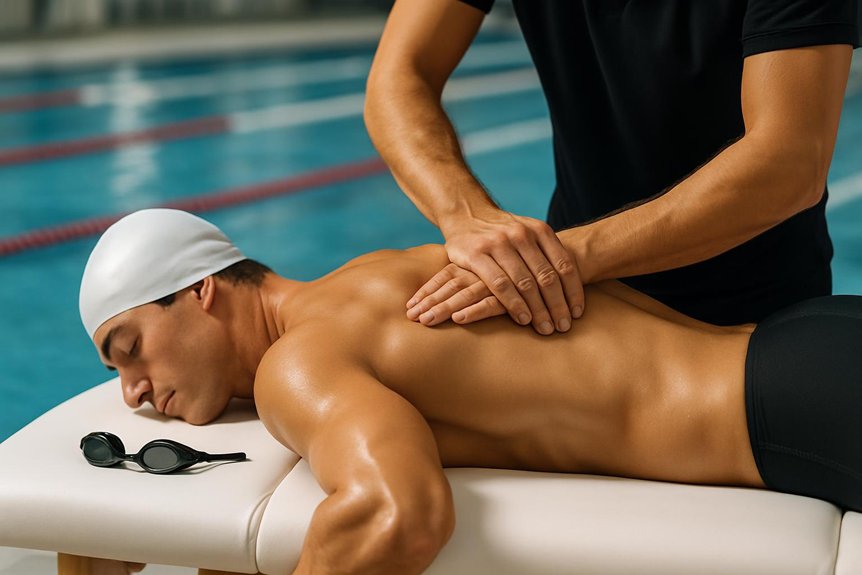
Why do so many swimmers include athletic massage in a structured training plan? In Spa & Massage clinics, it is used as a targeted soft-tissue intervention to support heavy pool and gym workloads. Evidence-informed practice focuses on reducing excessive tone and tenderness in overworked areas—typically lats, rotator cuff, pecs, hip flexors, calves—while preserving tissue readiness for the next session. Therapists combine slow deep-tissue strokes, myofascial techniques, and precise trigger-point work, then reassess range and symptom response. It is also valued for athletic recovery by helping athletes manage training stress and maintain consistent performance.
For swimmers, it is “good” when timed and dosed correctly: lighter work pre-race week, deeper sessions after high-volume blocks, and always adapted to pain levels. Clients are guided toward hydration, gentle mobility, and sleep.
Sports Massage Benefits for Swimming Performance
It can support swimming performance by improving shoulder, thoracic spine, and hip mobility, which helps streamline position and stroke mechanics for greater efficiency in the water.
At Spa & Massage clinics across London, therapists use targeted deep-tissue and myofascial techniques to reduce post-session muscle tone and soreness, aiding recovery and limiting fatigue between training blocks.
Regular treatment also contributes to injury prevention by addressing common overload areas—particularly the rotator cuff, lats, pecs, and forearms—before minor tightness becomes pain or compensation.
Stroke Efficiency And Mobility
In the water, stroke efficiency depends heavily on shoulder and thoracic mobility, scapular control, and low-drag body alignment—factors that can be limited by tight lats, pectorals, hip flexors, and overworked rotator-cuff tissues. Targeted athletic massage can improve tissue glide and comfortable range, supporting a cleaner catch, higher elbow position, and smoother rotation without compensatory shrugging.
At Spa & Massage, therapists often combine slow deep-tissue strokes to the lats and pec minor with focused work around the scapular borders, then recheck overhead reach and ribcage expansion. Evidence-informed practice suggests that short-term flexibility gains are greatest when manual work is paired with movement; clients are guided to finish with controlled thoracic rotations and scapular setting drills.
The result is a more connected pull and quieter, intimate rhythm through each length.
Recovery, Fatigue, And Injury Prevention
Improved mobility and stroke mechanics are only useful when the body can tolerate repeated sessions, manage accumulated fatigue, and stay resilient through heavy training blocks. It supports this by improving local circulation, reducing perceived soreness, and downshifting the nervous system, which can improve sleep and next-day readiness.
At Spa & Massage clinics across London, therapists use targeted deep tissue and sports techniques on lats, pec minor, rotator cuff, hip flexors, and calves, adjusting pressure so tissue quality improves without provoking protective spasm. Regular sessions help identify early warning signs—tender trigger points, capsular tightness, asymmetry—before they become shoulder impingement, biceps tendinopathy, or knee pain.
Aftercare emphasises hydration, gentle mobility, and load-aware return to training, maintaining momentum.
Common Swimming Injuries Athletic Massage Can Help
Common swimming overuse issues that athletic massage can help address include swimmer’s shoulder and lower back strain, both linked to high-repetition loading and technique faults.
At Spa & Massage clinics across London, therapists apply targeted soft-tissue techniques—such as myofascial release and deep tissue work to the rotator cuff, lats, pecs, and lumbar stabilisers—to reduce tone, improve range of motion, and support efficient stroke mechanics.
This section outlines practical massage approaches and treatment goals that complement training and rehabilitation to keep swimmers performing consistently.
Swimmer’s Shoulder Relief
Address swimmer’s shoulder early to protect stroke mechanics and training volume. This overuse pattern often involves rotator cuff irritation and anterior shoulder tightness from repetitive overhead loading.
At Spa & Massage, therapists assess pain triggers, scapular control, and tissue tone, then apply athletic massage to the pec minor, posterior cuff, and upper trapezius to reduce guarding and improve humeral head centring.
Trigger point work, cross-fibre friction around the supraspinatus tendon, and myofascial release through the lats can restore comfortable reach and cleaner catch.
Many clients prefer slow, pressure-matched strokes that feel close and reassuring while still therapeutic. Aftercare focuses on graded load, banded external rotations, and gentle thoracic mobility between sessions.
Lower Back Strain Support
In many swim programmes, lower back strain develops when repeated lumbar extension and rotation (especially in butterfly and breaststroke) outpace hip mobility and trunk control, increasing compressive and shear load through the lumbar fascia and paraspinals. It can downshift guarding, restore glide, and support cleaner hip-driven rotation.
At Spa & Massage clinics across London, therapists often combine slow myofascial work over thoracolumbar fascia with deep tissue to quadratus lumborum, glute medius, and hip flexors, then add compressions and gentle longitudinal stripping to paraspinals to reduce tone without provoking spasm. Brief trigger-point holds may quiet referral into the sacroiliac region.
Aftercare typically pairs heat, hydration, and hip-flexor and glute mobility, plus core bracing cues, helping swimmers feel supported and more fluid through kick and recovery.
Athletic Massage for Swimmer’s Shoulder and Rotator Cuff
Built on thousands of repetitive overhead strokes, swimming places sustained load on the rotator cuff and scapular stabilisers, making “swimmer’s shoulder” a frequent performance-limiting issue when tissue capacity lags behind training volume.
At Spa & Massage, athletic massage is used to downshift protective tone in the pec minor, posterior cuff, lats, and upper trapezius, and to restore glide through the scapulothoracic tissues so the shoulder can centre smoothly during pull and recovery. Therapists blend slow deep-tissue strokes, cross-fibre friction around supraspinatus and infraspinatus tendons, and trigger-point work to referred pain patterns, while avoiding aggressive pressure over irritable bursae. Many clients are advised 24–48 hours post-session to pair treatment with controlled rotator-cuff and serratus activation for durable change.
Athletic Massage for Hips, Ankles, and Kick Power
Generating kick power depends on hip extension and rotation range, pelvic control, and efficient ankle plantarflexion, yet swimmers commonly accumulate stiffness through the hip flexors/adductors and calf–Achilles complex that blunts propulsion and increases drag.
At Spa & Massage clinics in London, therapists apply athletic massage to restore glide: targeted compressions and slow stripping along iliopsoas, TFL, adductors, and glute medius, followed by hip capsule work to support a longer, cleaner kick.
For ankles, therapist-led calf and peroneal release plus gentle Achilles mobilisations can improve plantarflexion “point,” reducing turbulence and cramp risk. Sessions are paired with brief active range checks—straight-leg raise, hip internal rotation, and ankle point—to track changes.
Aftercare emphasises hydration and light flutter-kick drills to integrate new range safely.
Athletic Massage vs Deep Tissue for Swimmers: Which to Choose?
Restoring hip and ankle range is only part of keeping swimmers moving well; the next decision is selecting the right manual approach to match training load, tissue irritability, and performance goals. It is typically chosen when the aim is performance readiness: targeted work, dynamic stretching, and neuromuscular techniques to downshift tone without leaving heavy soreness, supporting feel for the water and clean timing.
Deep tissue suits stubborn, thickened areas—lats, pecs, hip flexors—where slower, sustained pressure and myofascial release reduce perceived tightness and improve tolerable length. Evidence suggests both primarily modulate pain and stiffness via the nervous system; outcomes improve when pressure stays within a “good pain” window.
At Spa & Massage, therapists blend both, using warm oil, measured pressure, and consent-led communication.
When Should Swimmers Book an Athletic Massage?
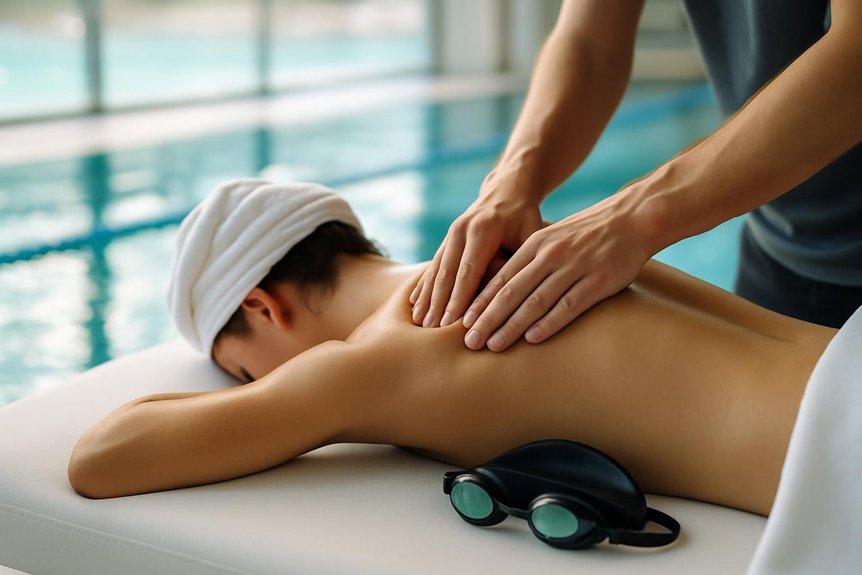
In practice, the best time for a swimmer to book an athletic massage is when it can influence training quality rather than simply “fix” symptoms—typically during high-volume blocks, as early warning signs of overload appear (persistent shoulder/neck tightness, reduced catch feel, or rising post-session soreness), or in the taper and pre-race window when the goal is to downshift muscle tone without provoking heavy DOMS.
At Spa & Massage, therapists align pressure and pace with the training day: slower deep strokes for posterior shoulder, lats, and pec minor to reduce protective tone; lighter, faster flushing to support circulation close to key sessions.
Booking 24–72 hours after the hardest swim or strength set can help consolidate recovery while preserving feel for the water.
If pain is sharp, radiating, or alters stroke mechanics, assessment should precede massage.
How Often Should Swimmers Get Athletic Massage?
Once timing is matched to key sessions (for example, 24–72 hours after the hardest swim or strength work), the next variable is frequency—how often athletic massage should be scheduled to manage shoulder load, maintain stroke mechanics, and keep training quality high.
For most swimmers, a maintenance cadence of every 2–4 weeks supports tissue quality, especially through the pec minor, lats, rotator cuff, and thoracic spine.
During heavy mileage, doubles, or shoulder niggles, weekly or fortnightly sessions can reduce perceived soreness and preserve range needed for a long, relaxed catch.
In taper or race blocks, one lighter session every 7–10 days can keep tone without provoking fatigue.
At Spa & Massage, frequency is adjusted to stroke count, strength load, and palpated tenderness.
What to Expect and Aftercare for Best Results
For swimmers looking to convert hands-on work into faster, cleaner strokes, an athletic massage session typically begins with a brief intake on recent training load, shoulder symptoms, and upcoming key sets, followed by targeted assessment of thoracic rotation, scapular control, and glenohumeral range.
At Spa & Massage clinics, therapists then apply paced deep-tissue and myofascial techniques to lats, pec minor, posterior cuff, and forearms, easing tone without over-sedating power.
Aftercare supports adaptation: hydrate, keep warmth on treated tissue, and plan a low-intensity swim or mobility reset within 24 hours to “teach” new range.
Mild soreness is expected; sharp pain is not. Clients are advised to avoid heavy pulling sets the same day, prioritise sleep, and use slow diaphragmatic breathing to downshift guarding.
Conclusion
For swimmers, athletic massage can be a strategic recovery tool—more “maintenance in the pit lane” than indulgence. By targeting overworked rotator cuff, lats, pecs, thoracic tissues, hip flexors, and calf–ankle complexes, it may help preserve range of motion, reduce post-session stiffness, and support efficient stroke mechanics. Used at appropriate timing and frequency, alongside strength work, load management, and rest, it can complement performance goals—an Odyssean return to smoother, more economical movement.