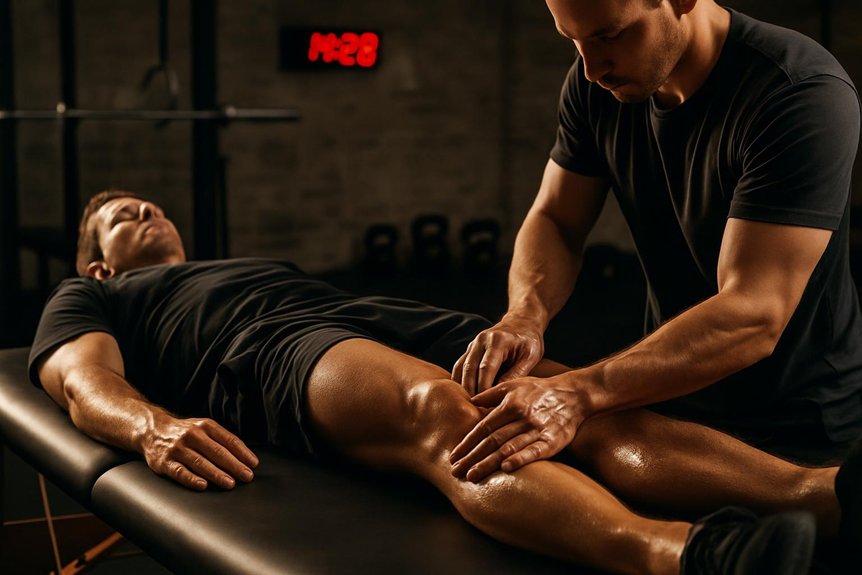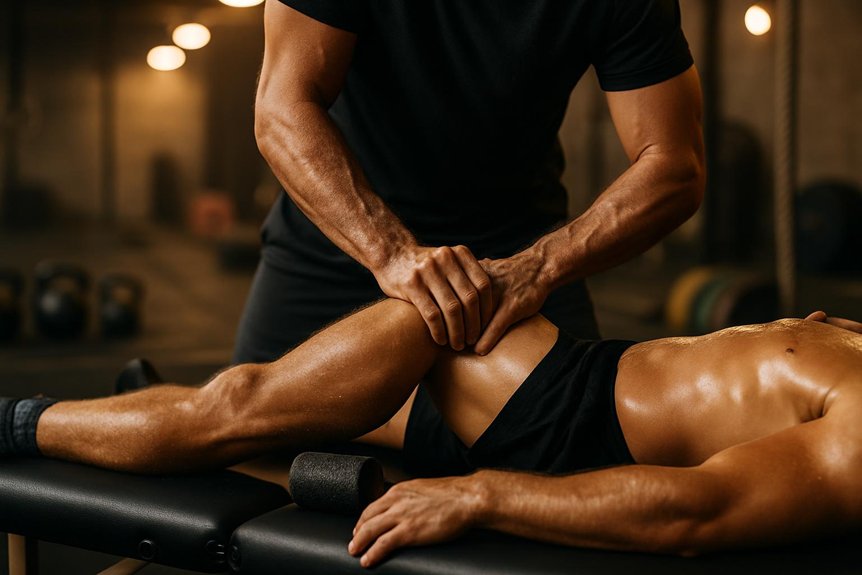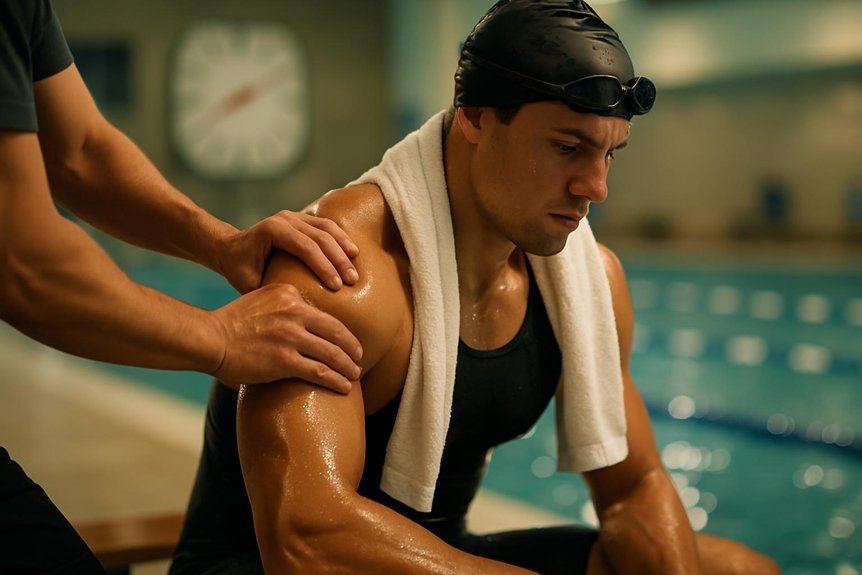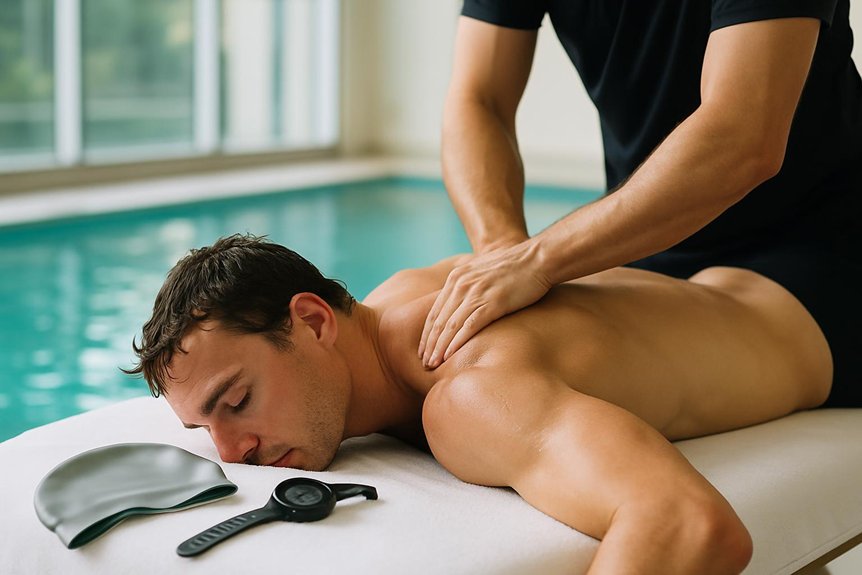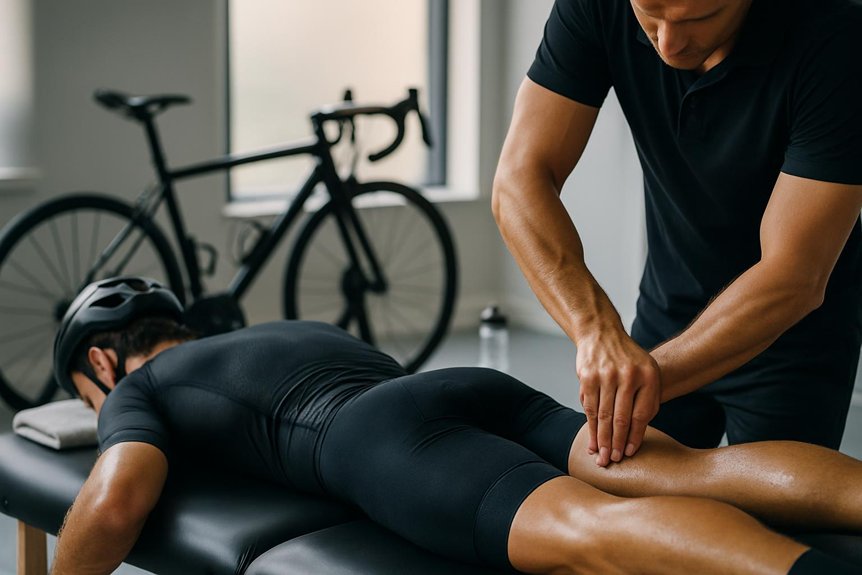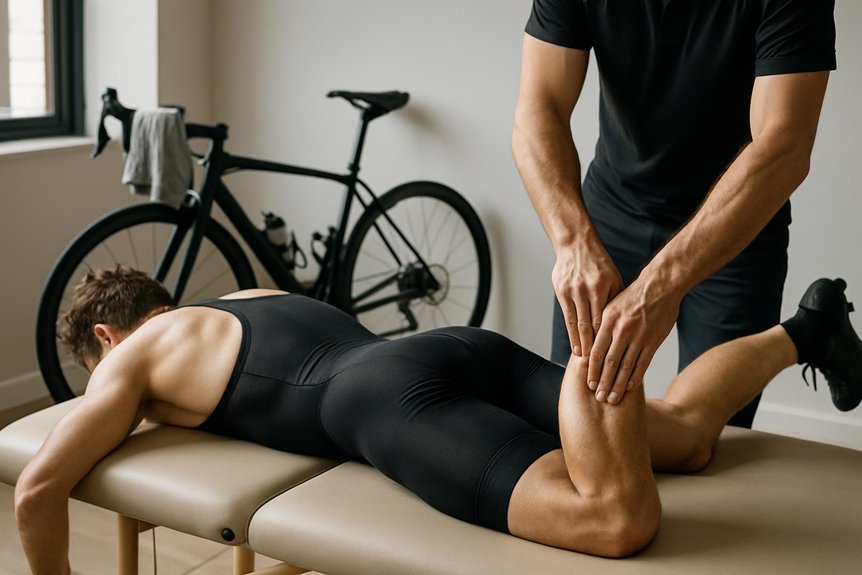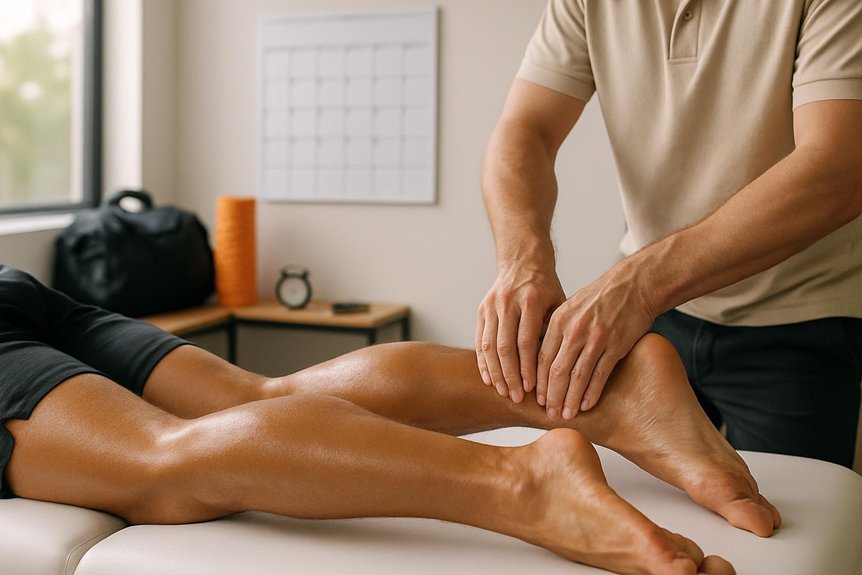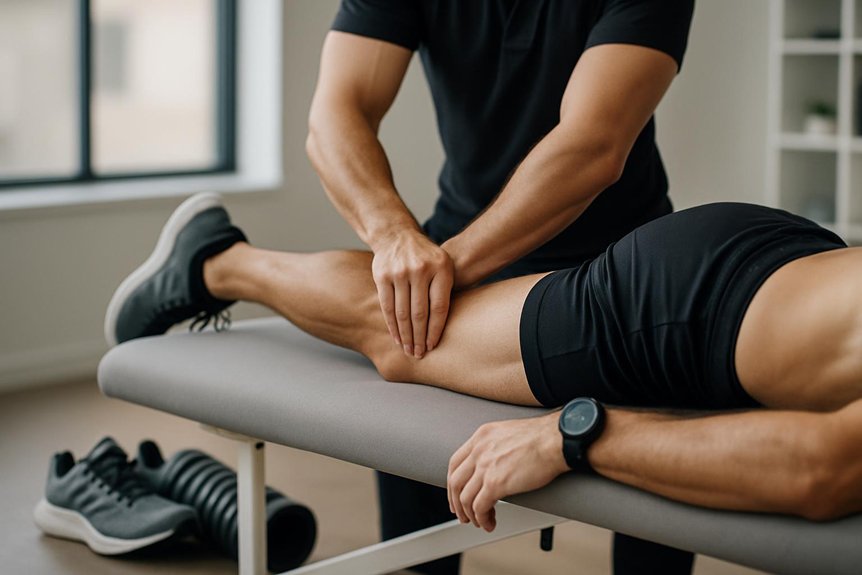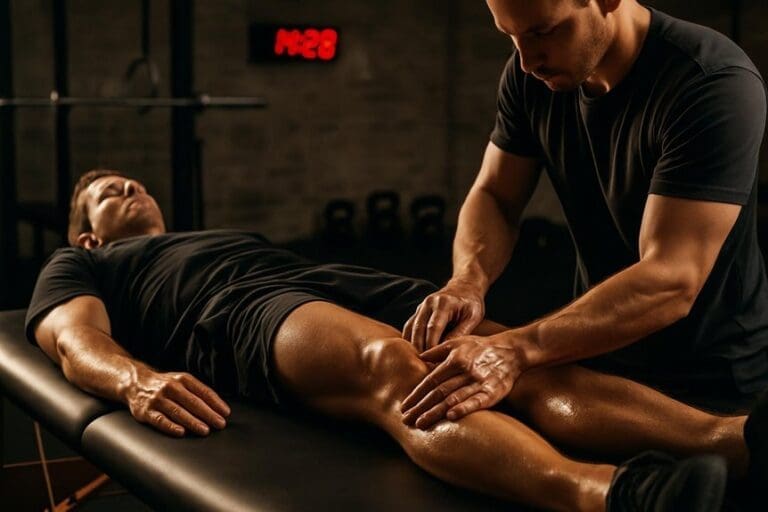
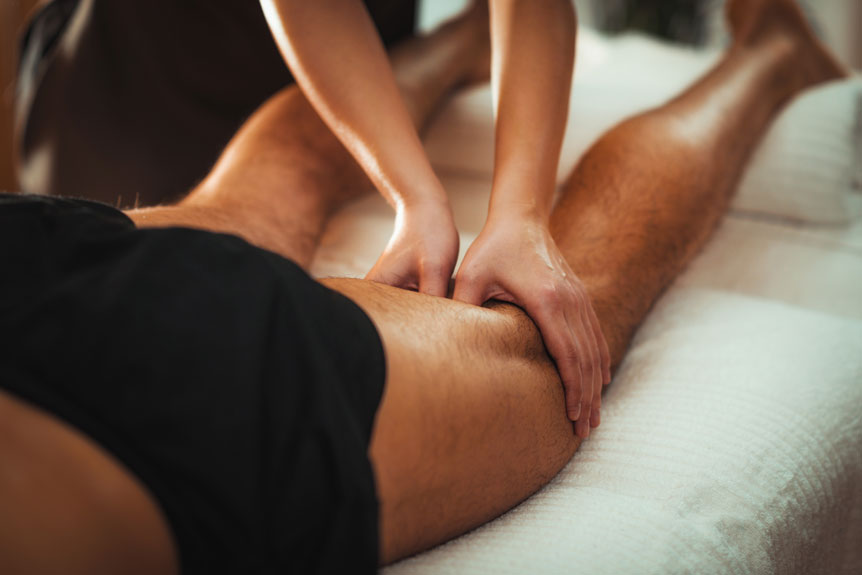
It can be useful for weightlifters because it improves comfort, reduces perceived soreness, and helps restore range of motion when restrictions limit squat, press, or pull mechanics. Sessions typically use slow compressions, myofascial techniques, and trigger-point release to reduce protective tension and improve tissue glide, often paired with joint-focused mobilisations. It works best when pressure is matched to the training week, with lighter work near heavy days and deeper work 24–48 hours post-lift. More timing and session details follow.
Is Athletic Massage Good for Weightlifters?
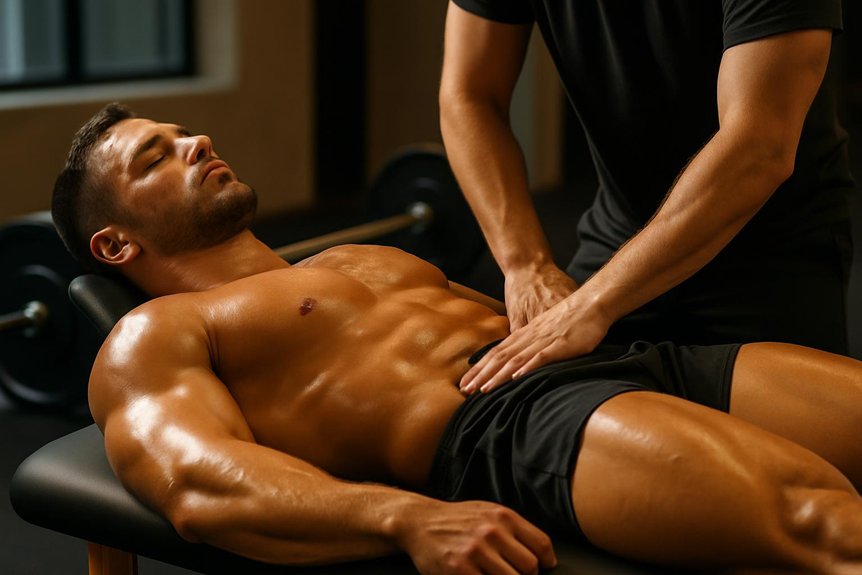
Why do so many weightlifters book athletic massage between training blocks? It can support recovery by improving comfort, reducing perceived soreness, and restoring confident range of motion, especially after high-volume squats, pulls, and presses. Evidence suggests massage may lessen delayed-onset muscle soreness and increase relaxation, helping lifters return to quality movement sooner. These benefits of sports massage can be especially valuable for athletes managing heavy training loads and seeking consistent performance.
At Spa & Massage clinics across London, therapists assess training load, hotspots, and joint positions, then apply targeted work: slow compressions, myofascial techniques, and trigger point release to glutes, hip flexors, lats, pecs, and forearms—always within tolerable intensity. Clients are guided to breathe, soften, and communicate, so pressure stays “deep, safe, and wanted.” Aftercare typically includes hydration, light mobility, and a calm walk.
Athletic Massage vs Deep Tissue for Lifting: Which One?
Between sets, sessions, and training blocks, the choice between athletic massage and deep tissue is best guided by the lifter’s goal and current tissue tolerance rather than by intensity alone.
It is typically more specific and movement-led: targeted compressions, friction, and assisted stretching around prime movers and tendons to reduce tone and improve comfort without leaving the body feeling “flattened.”
Deep tissue is slower and more sustained: deliberate pressure along fascial lines and trigger points when a lifter needs longer-lasting easing of stubborn tightness or protective guarding.
At Spa & Massage clinics across London, therapists assess soreness, range, and post-session sensitivity, then adjust depth and pacing.
Many lifters prefer athletic massage nearer heavy days, deep tissue on deload weeks, both paired with warm oil and calm breathing.
How Athletic Massage May Improve Lifting Performance
Athletic massage may support lifting performance by using targeted techniques (such as myofascial release and specific mobilisation) to improve joint range of motion where restrictions limit squat, press, or pull mechanics.
When timed appropriately around training, it may also reduce perceived muscle soreness and help weightlifters recover faster between sessions, which can improve training consistency.
In Spa & Massage clinics, therapists often pair precise pressure with cue-led relaxation to help clients regain better muscle activation control, supporting more efficient bracing, stability, and movement patterning under load.
Enhanced Range Of Motion
Greater range of motion is one of the most practical performance levers for weightlifters, because restricted soft tissue and joint stiffness can alter bar path, reduce depth, and increase compensations under load.
Athletic massage may acutely improve flexibility by reducing resting muscle tone and improving stretch tolerance, especially around hips, calves, lats, pecs, and forearms—areas that often limit squats, overhead work, and front-rack positions. At Spa & Massage clinics across London, therapists use slow, specific pressure, myofascial techniques, and targeted mobilisation to address the exact tissues that feel “stuck,” then pair treatment with brief, coached active range drills so the client can “own” the new position. When motion improves, lifts can feel smoother, closer, and more confident.
Faster Recovery Between Sessions
Improved range of motion often makes lifts feel smoother, but training quality still depends on how quickly the body settles between sessions. Athletic massage may support this by reducing perceived soreness and improving comfort, which can help lifters return to planned volume with steadier technique.
At Spa & Massage clinics across London, therapists typically focus on slow, compressive strokes and targeted friction around high-load areas (hips, glutes, quads, lats, forearms), adjusting pressure to remain within a “good pain” range. Evidence suggests massage can lower soreness ratings and improve relaxation, which may aid sleep and next-day readiness.
Many clients schedule treatment 24–48 hours after heavy sessions to ease stiffness without blunting training intent. Therapists also recommend hydration and gentle mobility afterward for calmer tissue tone.
Better Muscle Activation Control
Dialling in muscle activation—getting the right muscles to fire at the right time—can influence bar path, bracing consistency, and positional control under load, and athletic massage may support this by reducing protective tension and improving proprioceptive input around key joints.
In practice, this can help a lifter “feel” glutes, lats, or mid-back sooner in the setup, rather than compensating through the low back or shoulders.
At Spa & Massage clinics, therapists often combine slow, pressure-led strokes with targeted trigger-point work around hips, T-spine, and scapular stabilisers, then reassess movement with simple drills (e.g., bodyweight hinges or wall slides).
Evidence suggests massage may improve short-term range and reduce soreness, which can make cueing more reliable.
Clients are advised to lift within a smooth warm-up window post-treatment.
Athletic Massage for DOMS and Post-Workout Soreness
Often, delayed onset muscle soreness (DOMS) peaks 24–72 hours after heavy lifting and can limit range of motion, load tolerance, and training quality; a well-timed athletic massage can help manage symptoms without masking the underlying recovery needs.
Evidence suggests massage may reduce perceived soreness and support parasympathetic downshifting, aiding sleep and readiness.
At Spa & Massage clinics in London, therapists typically use slow, compressive strokes, sustained pressure, and gentle flushing toward the heart to calm sensitised tissue and encourage circulation without “digging in” aggressively.
Intensity is negotiated moment to moment—clients are guided to breathe, soften, and give clear feedback so pressure feels therapeutic, not punishing.
Post-session, many are advised to hydrate, keep light movement, and space hard sessions to respect healing.
Athletic Massage for Tight Hips, Lats and Shoulders
In the weight room, tight hips, lats, and shoulders can quietly compromise squat depth, front-rack comfort, and overhead mechanics by restricting joint range and altering load distribution. Athletic massage may help by reducing tone in overactive tissues and improving short-term mobility when paired with targeted movement.
At Spa & Massage clinics across London, therapists assess posture, breathing, and training demands, then use slow deep-tissue strokes, myofascial release, and trigger-point work to the hip flexors, glutes, thoracolumbar fascia, lats, pecs, and rotator cuff. Pressure is negotiated moment to moment, so the work stays intense yet safe and personal.
Clients are guided to leave with two simple drills—diaphragmatic breathing plus controlled end-range lifts—to reinforce new range between sessions.
Athletic Massage for Squat, Bench or Deadlift Pain
Under heavy barbell loads, squat, bench, or deadlift pain commonly reflects a mismatch between tissue capacity, technique, and recovery rather than a single “weak link.” A well-delivered athletic massage can support rehab and ongoing training by reducing excessive muscle guarding, improving local circulation, and making it easier to access pain-free range—especially when paired with sensible load management and coaching cues.
At Spa & Massage, therapists assess where the lift feels “stuck” and treat likely contributors: adductors and glutes for squat hip pinch, pecs and anterior shoulder for bench irritation, or erectors, QL, and hamstrings for deadlift stiffness. Treatment blends slow, deep pressure, myofascial release, and gentle trigger-point work, staying within a client’s comfort to avoid post-session flare-ups. Clients are encouraged to note pain patterns, track response, and prioritise clean reps over grindy singles.
When to Book an Athletic Massage Around Training
For weightlifters, the most effective athletic massage schedule depends on session intensity and the goal (warm-up readiness versus tissue recovery), so timing should be planned around training rather than fitted in randomly.
At Spa & Massage clinics across London, therapists typically recommend lighter, mobility-focused work 24–48 hours pre-lift, more targeted recovery work within the 24–72 hour post-workout window, and strategically placed sessions during deloads or competition weeks to reduce soreness without adding fatigue.
The following guidance outlines practical booking windows for pre-lift massage timing, post-workout recovery, and deload/meet-week planning based on training load and individual response.
Pre-Lift Massage Timing
Before a heavy training block, massage timing should be planned around the goal of the session—warm-up and readiness versus recovery and tissue change—because pressure, duration, and technique can measurably influence muscle tone, range of motion, and perceived soreness.
For a lift day, Spa & Massage typically advises booking 2–6 hours before training for a light sports session: brisk effleurage, rhythmic petrissage, and short friction to target hips, lats, pecs, and forearms without leaving tissues “melted.” If the session is closer (30–90 minutes), therapists keep pressure moderate, avoid long holds, and finish with energising tapotement and gentle joint mobilisations to support crisp bar speed.
Clients who feel tender should choose shorter work and clear communication, so touch stays precise and confidence stays high.
Post-Workout Recovery Window
After the final set, the most effective time to book an athletic massage depends on whether the goal is immediate downregulation (calming the nervous system and easing tone) or deeper recovery work that targets post-lift stiffness and next-day soreness.
Within 0–6 hours, lighter work—slow effleurage, gentle compressions, and diaphragm-led breathing—can reduce perceived tightness without overloading sensitised tissues. At Spa & Massage, therapists often prioritise parasympathetic cues and avoid aggressive stripping right after heavy eccentrics.
For deeper recovery, 24–48 hours post-session suits more specific techniques: graded deep tissue, myofascial release, and trigger point work around quads, glutes, lats, and forearms, guided by pain-free range checks.
Clients are advised to hydrate, keep moving, and note delayed soreness to tailor pressure next visit.
Deload And Competition Weeks
During deload and competition weeks, the timing and intensity of athletic massage should match the reduced training load and the need to preserve bar speed, joint “snap,” and tissue tolerance rather than chase soreness. Evidence supports lighter, targeted work to calm threat sensitivity and improve comfort without post-treatment heaviness.
At Spa & Massage, therapists typically use brief myofascial release, gentle flushing, and precise trigger-point pressure around hips, lats, pecs, and forearms, then finish with slow downregulation.
For a deload, booking 48–72 hours before the next key session suits most lifters; for competition, 2–4 days out is often ideal. The day before, only soothing work is recommended.
Aftercare: hydration, easy walks, and early sleep.
What to Expect in a Weightlifting Athletic Massage
Tailored to the demands of heavy lifting, a weightlifting athletic massage at Spa & Massage typically starts with a brief assessment of training load, current symptoms, and movement restrictions, so the treatment targets the tissues most involved in squats, deadlifts, presses, and Olympic lifts.
Therapists then apply slow, specific deep-tissue strokes and compression along the quads, glutes, adductors, calves, lats, pecs, and forearms, adapting pressure to the client’s breath and comfort. Trigger point release and myofascial techniques may be used to reduce local tenderness and improve glide, followed by joint-focused mobilisations to support range for front rack, overhead, and hip hinge positions.
Many sessions finish with gentle flushing strokes to calm the nervous system and leave the body feeling grounded, open, and safely worked.
How Often to Book: and When to Avoid It
Once a weightlifting athletic massage has addressed the key tissues and movement demands of squats, pulls, and presses, the next consideration is timing—how often to book sessions to support training adaptation, and when to pause to avoid aggravating a problem.
Evidence and clinic experience suggest 1 session every 2–4 weeks suits most lifters; during peak volume blocks, weekly sessions can help manage tone and soreness without blunting strength gains when pressure is moderated.
At Spa & Massage, therapists scale depth and pace to the training week, using slower compressions, targeted friction, and joint-focused mobilisations when tissues feel guarded.
Massage should be avoided with suspected fracture, acute infection, fever, unexplained swelling, DVT risk, or rapidly worsening nerve symptoms.
Post-session, hydration, gentle walking, and sleep protect the nervous system.
Conclusion
For weightlifters, athletic massage is most useful when it targets the exact tissues and patterns stressed by squats, benches, and deadlifts—then fits neatly around the training plan. It can support recovery, restore workable range of motion, and reduce the build-up of compensations that often precede pain. One useful benchmark: delayed-onset muscle soreness typically peaks 24–72 hours after training, making timing as important as pressure. Done well, it complements—not replaces—smart programming.