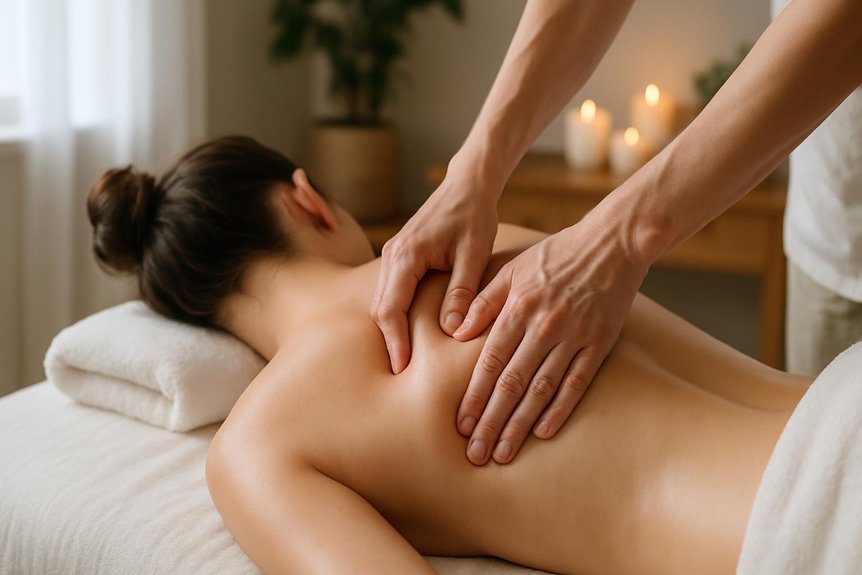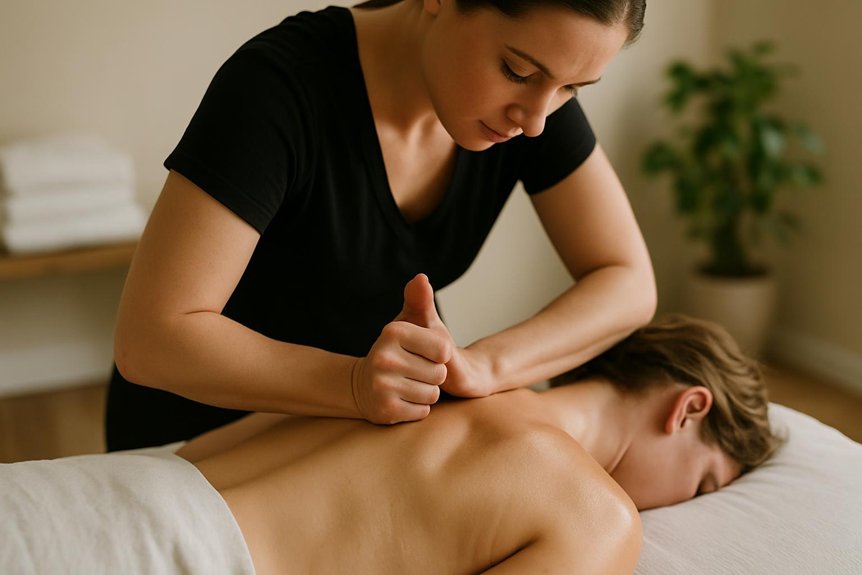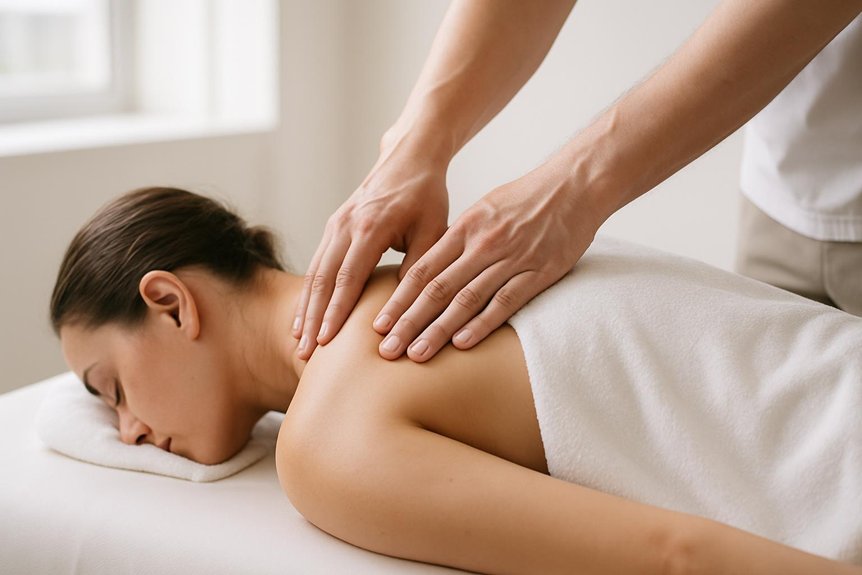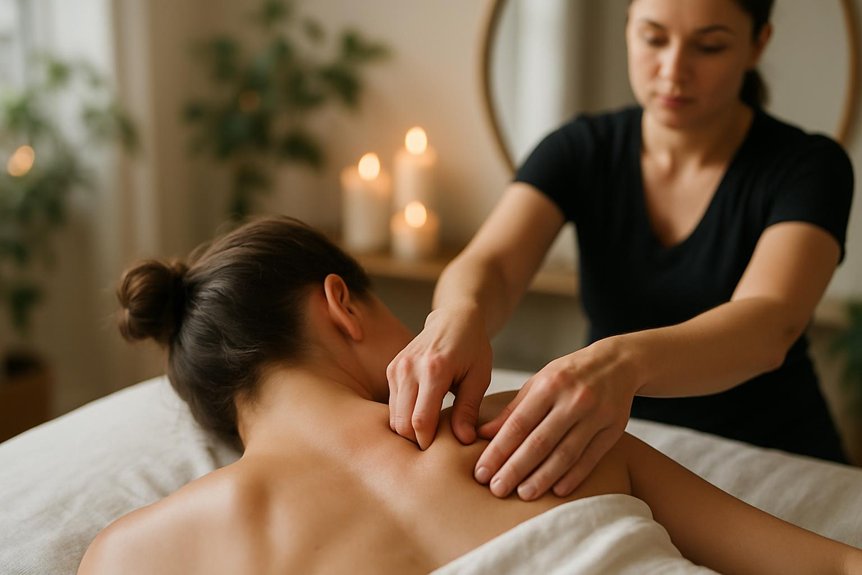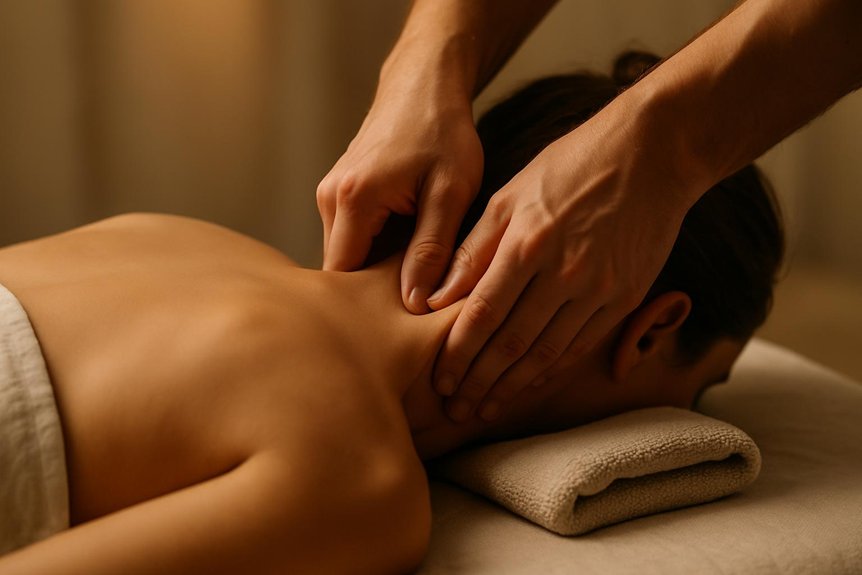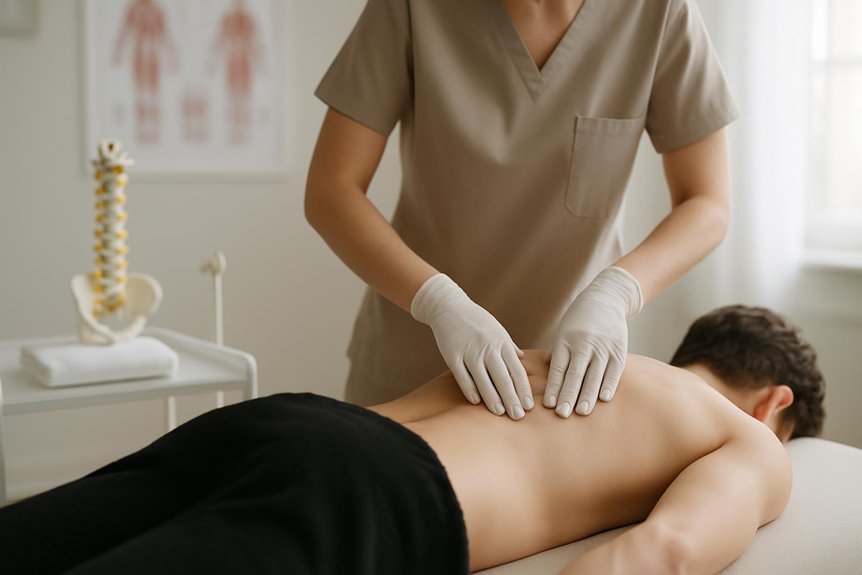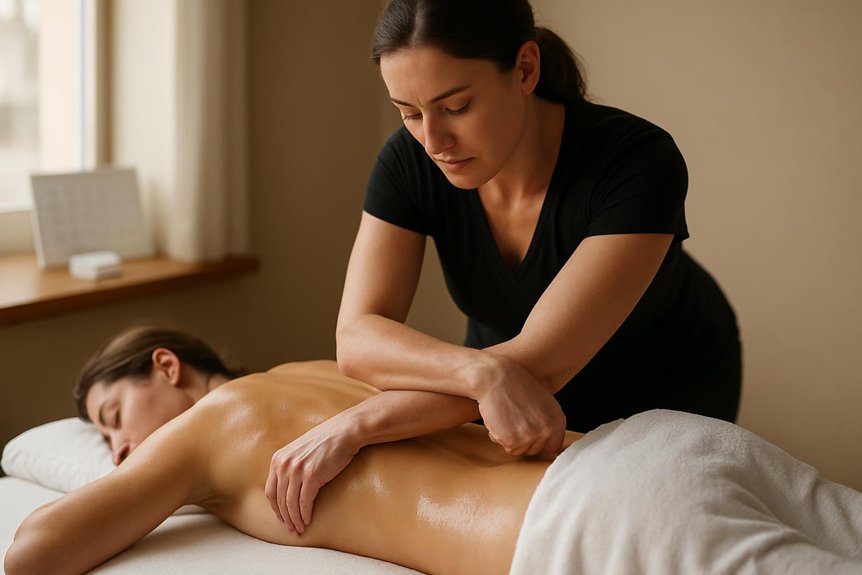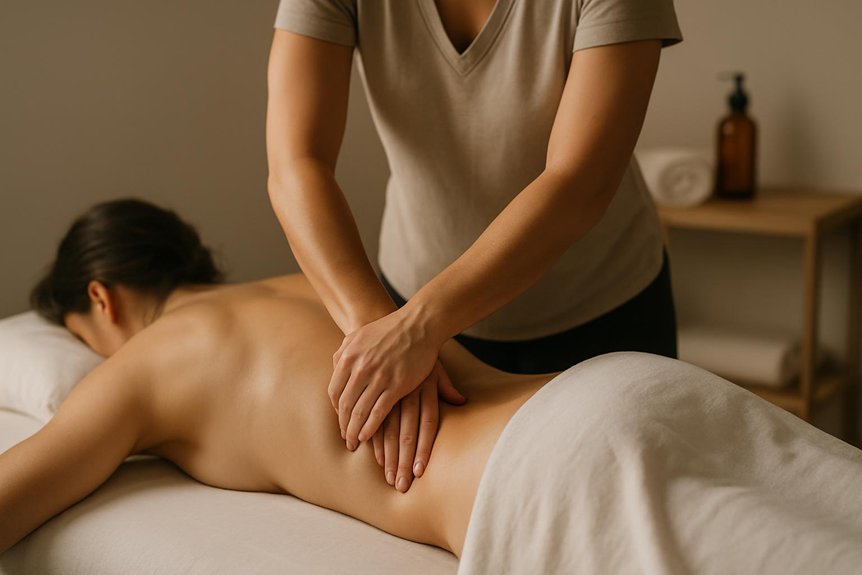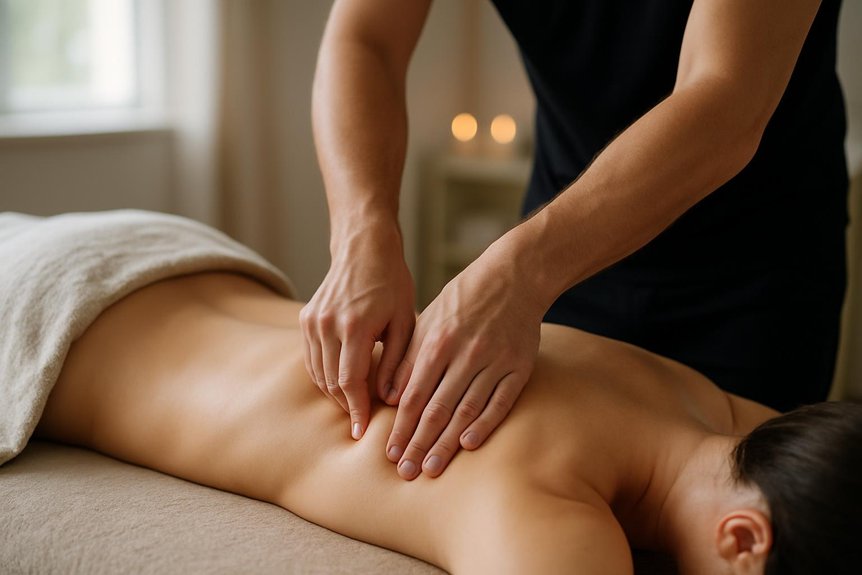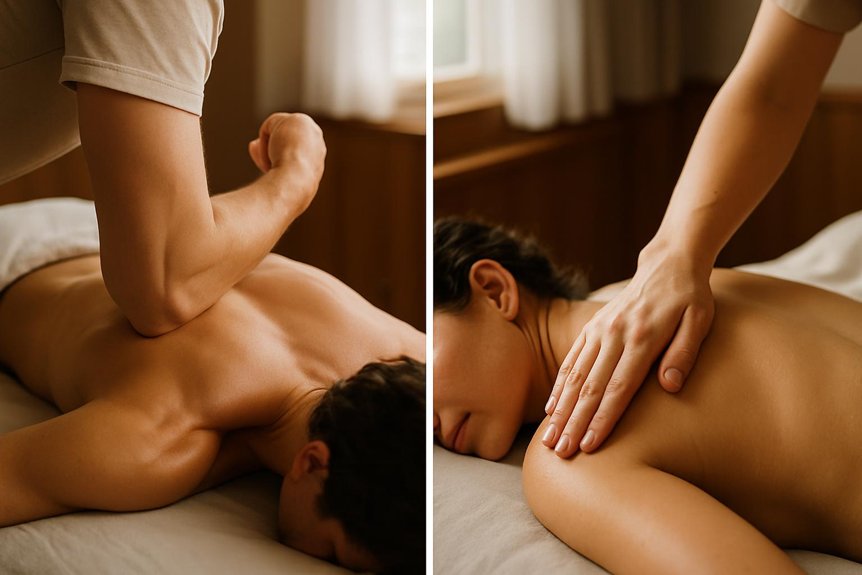
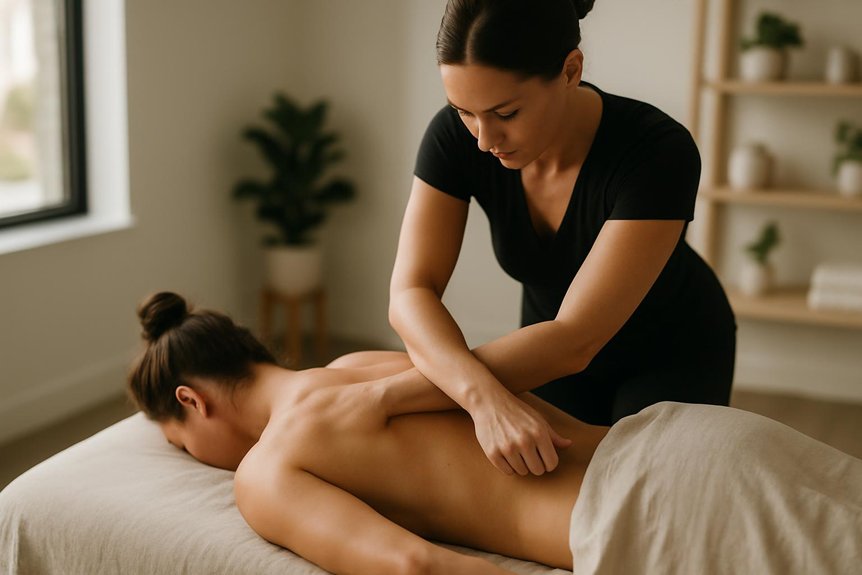
Most shoulder pain responds best to an initial course of weekly intensive tissue massage for 2–4 sessions, then reassessment after the first two visits to adjust pressure and spacing. Weekly care suits irritable, range‑limiting symptoms, while fortnightly sessions fit steadier pain where relief holds between treatments. As tenderness and movement improve, many shift to maintenance every 2–4 weeks. If soreness lasts beyond 48 hours or pain spikes, reduce intensity or frequency; further guidance follows.
How Often Should You Get Intensive Tissue Massage for Shoulder Pain?
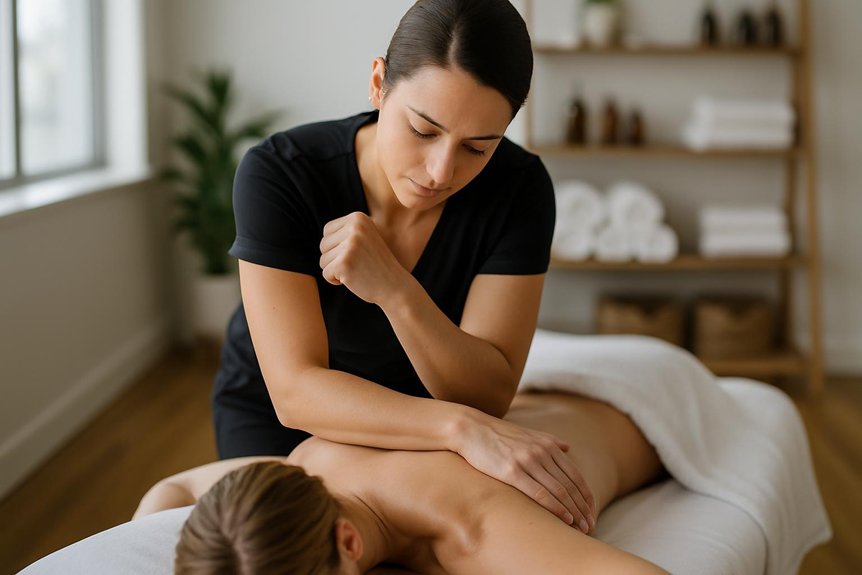
Often, an effective deep tissue massage schedule for shoulder pain depends on symptom severity, tissue sensitivity, and the underlying driver (such as rotator cuff overload, postural strain, or stress-related muscle guarding).
In Spa & Massage clinics, therapists typically begin with a short series of sessions, then taper as symptoms settle, aiming to reduce pain, restore comfortable range, and support self-care adherence.
Many clients benefit from 1 session weekly for 2–4 weeks, followed by maintenance every 2–4 weeks when irritation is lower.
If pain is acute or tissues feel reactive, shorter, gentler sessions may be used, with extra recovery time.
It uses slow, firm pressure to target deeper muscle and connective layers, supporting chronic tension relief and improved mobility when scheduled appropriately.
When symptoms are stable, periodic deep tissue work combined with guided mobility and breathing can maintain ease, intimacy, and confidence in daily movement and touch.
How to Choose Frequency Based on Your Shoulder Pain
Choosing the right intensive tissue massage frequency for shoulder pain should be guided by symptom behaviour between sessions rather than a fixed timetable. If pain rapidly rebounds within 24–48 hours, or sleep and daily movement remain restricted, closer spacing may be appropriate until irritability settles.
If soreness is mild, function improves, and relief holds for several days, sessions can be spaced further apart. A useful rule is to reassess after two treatments: reduced tenderness, easier overhead reach, and calmer night pain suggest the current interval is adequate; flare-ups, guarding, or spreading pain suggest it is too intense or too frequent.
At Spa & Massage, therapists match pressure and pacing to the client’s comfort, using breath-led communication and aftercare to support safe recovery.
Weekly vs Fortnightly Intensive Tissue Massage: Which Is Best?
Weekly intensive tissue massage is typically most appropriate when shoulder pain is acute, highly irritable, or markedly limiting sleep and overhead movement, whereas a fortnightly schedule tends to suit more stable symptoms where improvements hold between sessions.
Weekly care can help downshift guarding, reduce pain sensitivity, and restore comfortable range-of-motion through progressive, tolerable pressure and targeted work to rotator cuff, upper back, and chest tissues. Fortnightly sessions often support consolidation, giving time to test changes with desk work, training, and daily lifting while still maintaining momentum.
At Spa & Massage clinics across London, therapists reassess each visit and adjust depth, pacing, and home advice (heat, gentle mobility, hydration) to match response. Many clients start weekly for 2–4 sessions, then move to fortnightly as intimacy and ease return.
When Intensive Tissue Massage Can Worsen Shoulder Pain
It can occasionally worsen shoulder pain when applied too aggressively, too early in an inflammatory flare, or without addressing the true pain driver. Excess pressure can irritate sensitised tendons, bursae, or joint capsules, increasing soreness for 24–72 hours and reducing comfortable range of motion.
Pain may also escalate when the source is cervical referral, nerve irritation, or an unstable shoulder, where “working deeper” amplifies protective guarding rather than resolving it. In Spa & Massage clinics across London, therapists screen for red flags (night pain, sudden weakness, pins and needles, heat/swelling) and adjust depth, pace, and positioning to keep touch safe and intimate.
If pain sharpens during treatment, they prioritise gentler work, heat, or referral for medical assessment.
How Many Deep Tissue Sessions Before You Feel Relief?
Relief from shoulder pain after intensive tissue massage often begins within 1–3 sessions for mild to moderate muscular tension, while persistent or long-standing symptoms may require a short course over several weeks.
The ideal number and spacing of sessions depend on factors such as symptom duration, tissue irritability, activity load, sleep and stress, and how the shoulder responds to post-treatment soreness.
At Spa & Massage clinics across London, therapists reassess each visit and adjust pressure, techniques, and frequency to support steady, measurable improvement while prioritising client comfort and function.
Typical Relief Timeline
Often, noticeable improvement in shoulder pain and range of motion is reported within 1–3 intensive tissue massage sessions, although the timeline varies with factors such as symptom duration, tissue irritability, work or training load, and adherence to basic self-care.
At Spa & Massage clinics across London, many clients describe a “lighter” shoulder and easier overhead reach after the first visit, with steadier relief typically emerging by sessions 3–6 as guarded muscles downshift and trigger points settle.
Persistent or long-standing shoulder pain may require more sessions before changes feel reliable, particularly when stiffness involves the neck, upper back, and rotator cuff.
Mild post-treatment soreness for 24–48 hours can occur and is usually followed by improved comfort. Progress is tracked by pain, sleep, and functional tasks.
Session Frequency Factors
While many people notice early changes within the first few sessions, the number of intensive tissue massages needed to feel consistent shoulder pain relief depends on several session-frequency factors: symptom stage (acute flare vs long-standing tightness), baseline sensitivity and post-treatment soreness, contributing patterns in the neck and upper back, and ongoing load from desk work, lifting, or sport.
In Spa & Massage clinics across London, therapists typically begin with 1–2 sessions weekly for 2–4 weeks when pain is reactive or movement is limited, then taper to every 2–4 weeks as comfort and range improve.
For persistent, postural shoulder tension, many clients respond to 3–6 sessions with home mobility and pacing.
If soreness lasts beyond 48 hours or symptoms spike, intensity and spacing are adjusted. Relief is most durable when care feels safe, and progress is reviewed each visit.
Signs You Need More: or Less: Intensive Tissue Massage
In clinical practice, the need to adjust intensive tissue massage frequency for shoulder pain is typically signalled by how symptoms and tissue response change between sessions. More frequent care may be indicated when pain returns within 24–48 hours, range of motion remains restricted, trigger points rapidly reactivate, or postural tension builds despite home pacing.
At Spa & Massage clinics across London, therapists also watch for guarded breathing, persistent sleep disruption, and tenderness that eases during treatment yet rebounds quickly afterward. Less frequent sessions are often appropriate when soreness lasts beyond 48 hours, bruising or sharp nerve-like symptoms appear, or fatigue and irritability follow treatment.
Stable improvements—longer pain-free intervals, calmer tissue tone, and easier shoulder movement—support spacing sessions while preserving comfort and trust.
How to Combine Intensive Tissue Massage With Shoulder Rehab
At Spa & Massage, deep tissue work is most effective when it is coordinated with a client’s physiotherapy-led programme, supporting prescribed mobility drills and progressive strengthening rather than replacing them.
Sessions are typically timed around key rehab days to optimise tissue tolerance, manage training load, and reduce post-exercise soreness without masking pain that should guide activity.
The combined plan prioritises recovery—sleep, hydration, and appropriate spacing between treatments and higher-intensity exercises—to help maintain gains and minimise symptom flare-ups.
Align Massage With Physio
For shoulder rehabilitation to progress efficiently, intensive tissue massage should be coordinated with physiotherapy rather than used as a stand‑alone fix.
The most effective sequencing is typically massage first to down‑regulate protective muscle guarding and sensitised soft tissue, followed by guided physio to retrain pain‑free movement patterns.
At Spa & Massage clinics across London, therapists encourage clients to share the physiotherapist’s diagnosis, activity limits, and key goals, so treatment targets relevant tissues without provoking the joint.
Sessions are best timed around rehab days: lighter work within 24 hours of exercises, deeper work on rest days, and avoiding aggressive pressure during acute flare‑ups.
Clear consent, slow pacing, and check‑ins help the client feel safe, supported, and connected throughout care.
Mobility And Strength Plan
Pair intensive tissue massage with a structured mobility‑and‑strength programme to reduce pain while restoring shoulder capacity. At Spa & Massage clinics across London, therapists use deep work to down‑regulate protective tone and improve tissue glide, then encourage targeted movement to reinforce comfort and control.
A practical plan pairs gentle thoracic rotation, scapular clocks, and pain‑free shoulder flexion/abduction drills with rotator‑cuff and lower‑trapezius strength (e.g., external rotation, serratus punches, rows). Emphasis stays on quality: slow tempo, quiet neck, ribs stacked, and smooth breath. Clients are guided to keep exercises within a tolerable range and to stop if symptoms sharpen or spread.
This blend supports circulation, proprioception, and confidence, helping the shoulder feel safe, close, and capable again.
Timing, Load, And Recovery
In practice, the best results come when intensive tissue massage is scheduled around training load rather than layered on top of already irritated tissue. At Spa & Massage clinics, therapists often suggest booking 24–48 hours after heavier rehab sessions, when soreness peaks, or the day before a lighter mobility day to support comfortable movement. Immediately after high-load strengthening, deeper work may amplify tenderness and reduce willingness to train.
Load should progress while symptoms remain stable within 24 hours; if pain lingers, intensity is reduced and massage pressure is kept moderate. Recovery targets include sleep, hydration, and gentle heat; clients are guided to notice warmth, ease, and calmer breathing after treatment. Many clients choose shorter, focused shoulder and neck sessions weekly during flare-ups, then taper to fortnightly as strength returns.
A Maintenance Schedule for Ongoing Shoulder Pain Relief
Often, the most durable reduction in shoulder pain comes from a structured maintenance schedule that matches symptom pattern, workload, and tissue sensitivity rather than relying on ad hoc treatment.
After an initial phase (typically weekly for 2–4 sessions), many clients maintain gains with treatments every 2–4 weeks, adjusting sooner during high training, desk-intense weeks, or flare-ups.
Evidence-informed planning prioritises symptom response: soreness should settle within 24–48 hours, and range of motion should steadily improve; if not, frequency or pressure is modified.
At Spa & Massage clinics across London, therapists pair deep tissue or sports massage with calm, consent-led pacing, then prescribe simple home care: heat, gentle mobility, and breath-led downregulation.
Regular reviews keep goals personal, intimate, and functional.
Conclusion
Intensive tissue massage frequency for shoulder pain should be titrated like a rehabilitation dose, not a fixed ritual. Acute or highly irritable symptoms may tolerate lighter, spaced sessions; persistent myofascial restriction often responds to weekly work before tapering to fortnightly maintenance. As in Hippocrates’ reminder to “do no harm,” excessive intensity can amplify inflammation or nerve sensitisation. Outcomes improve when massage is paired with targeted rotator cuff and scapular training, posture changes, and self-care between visits.