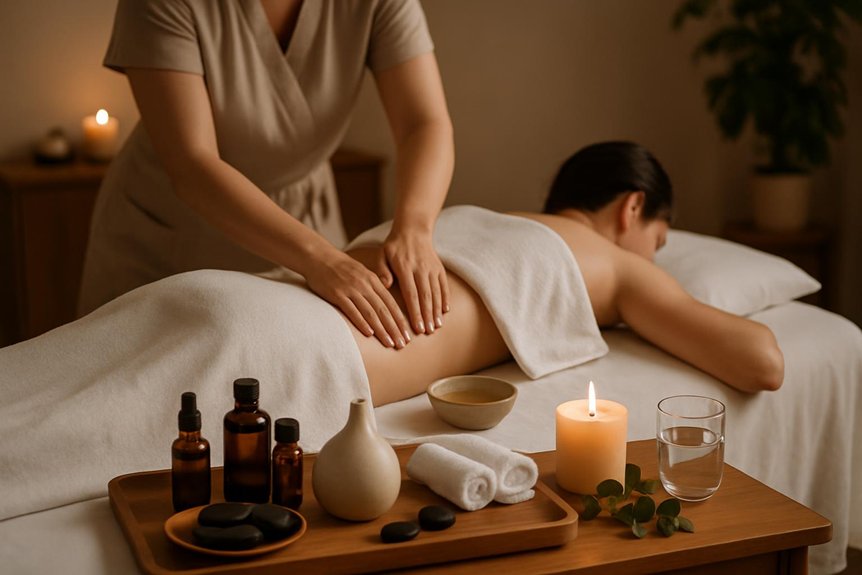
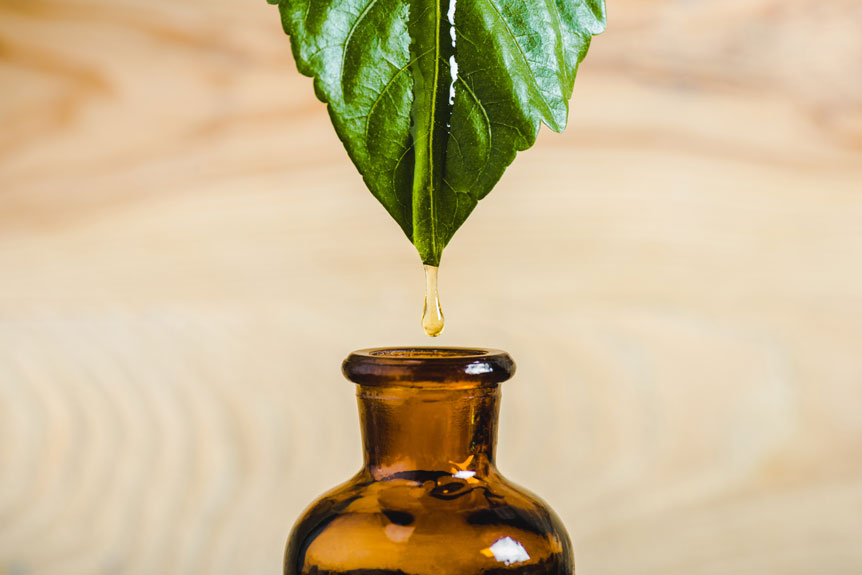
Tea tree oil in aromatic massage is typically used in very low dilution to add a fresh, “clean” aroma that can feel quietly energising and mentally clarifying. Many clients also notice a crisp, herbal scent that supports a sense of easier breathing and a light cooling skin feel during massage. It may help create a fresher-feeling scalp or skin environment and can be used cautiously for congested or blemish-prone areas. Proper dilution, patch testing, and avoiding eyes reduce irritation risk; more practical guidance follows.
What Does Tea Tree Oil Do in Massage?
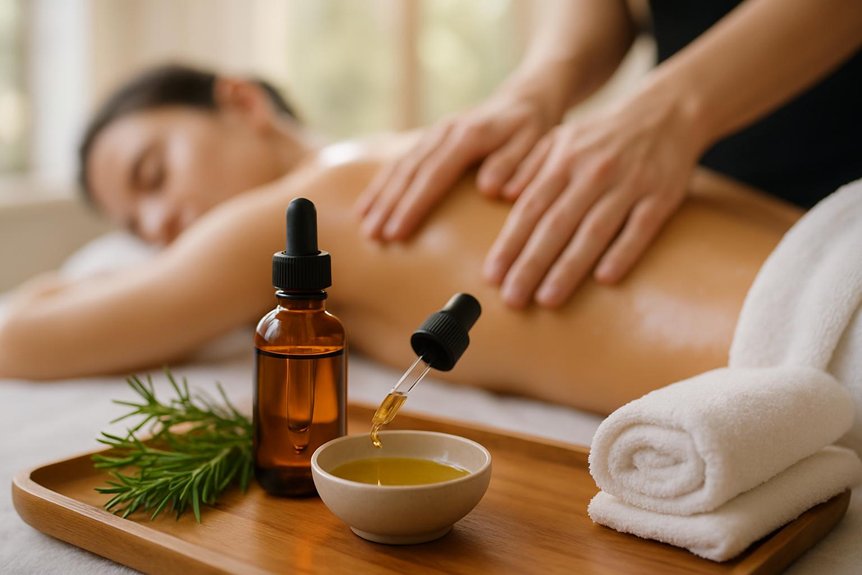
In aromatic massage, tea tree essential oil is primarily used for its cleansing and revitalizing properties when appropriately diluted in a carrier oil. Its naturally fresh, medicinal aroma can help a client feel mentally clear while inviting a sense of closeness and comfort through slow, attentive touch. For more ease and restoration, many people pair it with aromatherapy massage tips that help the session feel even more calming and supportive.
Evidence suggests tea tree’s antimicrobial constituents may support skin hygiene, which can be helpful after exercise or during periods of congestion-prone skin, without claiming to treat disease. In Spa & Massage clinics, therapists use careful dilution and apply with smooth, grounded strokes to ease muscular tension while keeping the skin barrier respected.
Many clients choose tea tree when they want a “clean” scent, lighter oil feel, and a quietly energising finish. Aftercare includes hydration and avoiding sun exposure immediately after.
Is Tea Tree Oil Safe for Everyone?
For most healthy adults, tea tree essential oil can be used safely in aromatic massage when it is properly diluted and patch-tested, yet it is not suitable for everyone. At Spa & Massage clinics across London, therapists screen for contraindications and discuss goals and comfort before selecting any blend for close, nurturing touch.
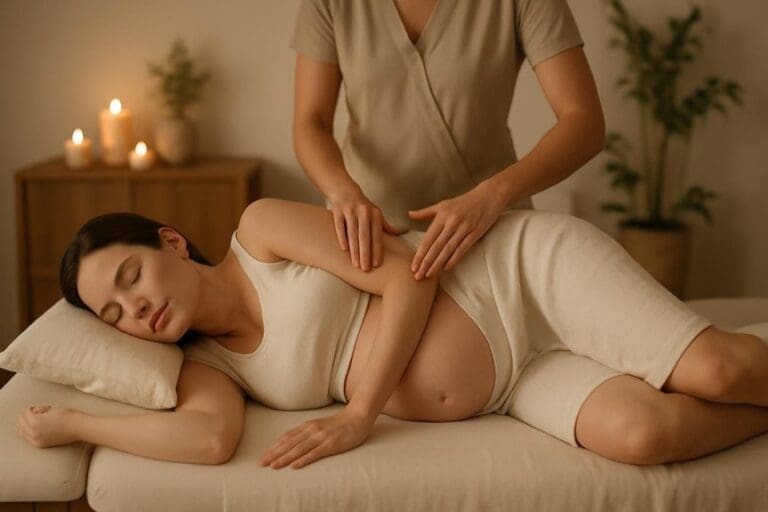
Extra caution is advised for pregnancy and breastfeeding, for children, and for anyone with asthma, eczema, or a history of fragrance or essential-oil sensitivity. People taking immunosuppressants, undergoing chemotherapy, or managing complex skin or autoimmune conditions should seek medical guidance first. Tea tree oil should never be swallowed, and it must be kept away from eyes and intimate mucous membranes. If dizziness, headache, or breathing tightness occurs, the massage should stop and the oil should be removed promptly.
When Tea Tree Oil Can Irritate Your Skin
Used incorrectly, tea tree oil can irritate the skin, most often as contact dermatitis or a transient stinging, burning, redness, or itchiness at the application site.
Reactions are more likely when the oil is applied neat, used on freshly shaved or broken skin, or combined with heat, occlusion, or vigorous friction during massage.
Sensitisation risk rises with oxidised (old or poorly stored) oil, as oxidation by-products are more irritating.
People with eczema, rosacea, very reactive skin, or a history of fragrance allergy may notice symptoms sooner.
In Spa & Massage clinics, therapists look for warning signs such as tingling that intensifies, patchy redness, hives, or swelling, and they pause treatment if discomfort appears.
Any reaction warrants rinsing and avoidance of re-exposure.
How We Dilute Tea Tree Oil for Massage
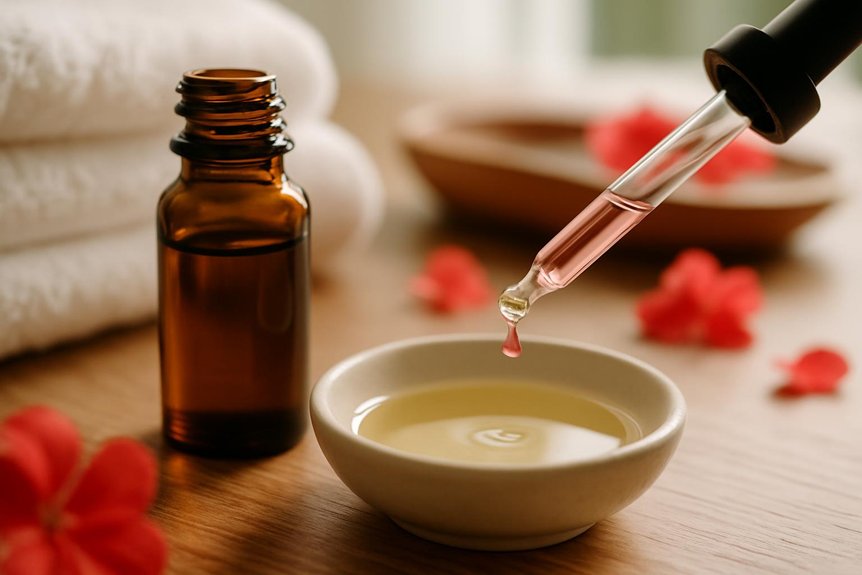
Most clients benefit from tea tree oil only when it is carefully diluted to a skin-safe percentage before massage, because concentration is the main controllable factor in irritation and sensitisation risk.
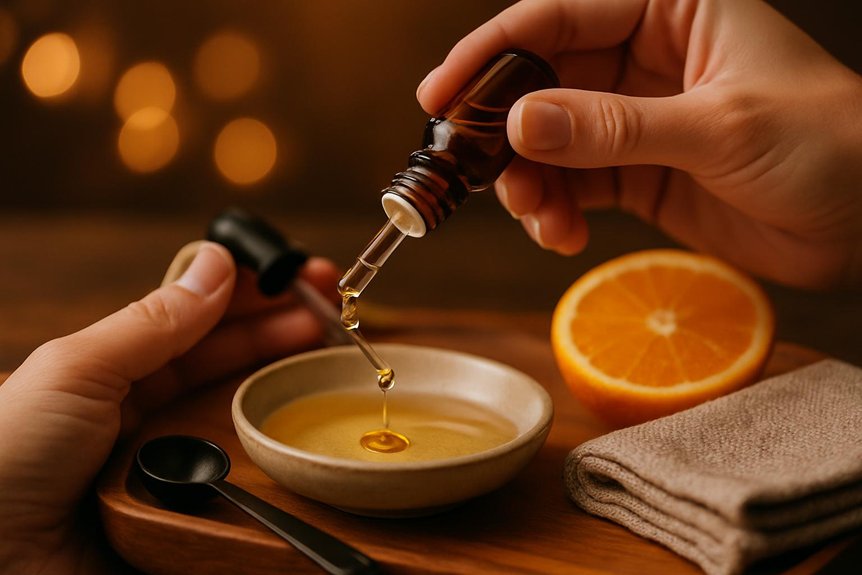
At Spa & Massage clinics, therapists typically blend tea tree into a neutral carrier oil at 0.5–1% for full-body work, increasing only when the area is small and skin is resilient.
That equals roughly 3–6 drops per 30 ml carrier, measured consistently to avoid guesswork.
Dilution is adjusted for pregnancy, sensitive or reactive skin, recent shaving, eczema-prone areas, and first-time use.
A patch test is advised when history suggests allergies, and treatment is avoided if the skin is broken.
Fresh, well-stored oil is used to reduce oxidation-related reactions.
How Tea Tree Oil Feels on Muscles and Breathing
Once tea tree oil has been diluted to a skin-safe level, its effects during aromatic massage are typically felt in two ways: a light, fresh sensation in the worked tissues and a clear, herbal aroma that can influence breathing comfort.
On the skin, many clients notice a gentle cooling or “clearing” feel as strokes warm the muscles; this should remain comfortable, never sharp or burning. In Spa & Massage clinics, therapists check in regularly, adjusting pressure and oil blend if tingling becomes too noticeable.
Inhalation tends to feel crisp and clean, which some clients experience as easier, fuller breaths during slow, close-contact work around the neck, chest, and upper back. Anyone with asthma, fragrance sensitivity, or pregnancy is guided toward a patch test and lower diffusion.
Tea Tree Oil in Massage: Key Benefits
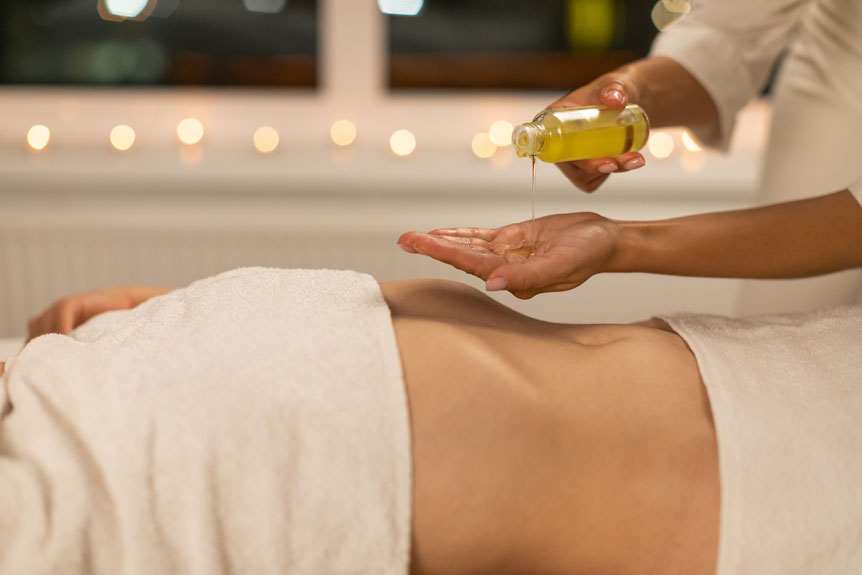
In Spa & Massage clinics, tea tree oil is sometimes selected in aromatic massage for its evidence-informed clarifying and purifying support, particularly when a client’s goals include feeling fresher and more comfortable through the skin.
Therapists may also consider it for targeted scalp and back care, always using appropriate dilution, patch-testing when indicated, and screening for sensitivity to minimise irritation.
For active clients, it can complement post-workout massage by supporting a clean, invigorating treatment experience alongside proven techniques for muscle relief.
Clarifying, Purifying Support
For clients seeking a cleaner, fresher feel to the skin and scalp, tea tree oil is widely valued in aromatic massage for its clarifying, purifying support. Evidence suggests tea tree’s terpene components can help reduce odour-causing microbes and support a clearer skin environment, which many clients experience as a “reset” after commuting, workouts, or humid weather.
In Spa & Massage clinics, therapists dilute tea tree carefully in a nourishing carrier oil and keep it away from eyes and mucous membranes. It is generally used sparingly, with a patch test advised for sensitive or reactive skin. Clients who are pregnant, managing eczema, or using prescription topicals are encouraged to disclose this at consultation so the blend can be adjusted.
Aftercare includes avoiding harsh exfoliants for 24 hours.
Scalp And Back Care
With daily London commuting, workouts, and screen-heavy routines, the scalp and upper back commonly accumulate sweat, oil, and muscle tension; tea tree oil—properly diluted—can be a useful adjunct in aromatic massage to support a cleaner scalp environment and fresher-feeling skin while the massage addresses tightness through the neck, shoulders, and thoracic back.
At Spa & Massage, therapists may incorporate a low dilution into a carrier oil for targeted work, prioritising comfort, consent, and a soothing pace.
Tea tree’s antimicrobial activity is supported in laboratory research, and clients often describe a “clearer” sensation after treatment.
Safety matters: it should never be used neat, should be kept away from eyes, and a patch test is advised for sensitive scalps. Clients with eczema, pregnancy, or allergies should consult first.
Post-Workout Muscle Relief
Tea tree oil’s freshening, skin-supportive profile can be carried from scalp and upper-back care into post-workout massage, where sweat, friction, and heightened muscle tone often coincide.
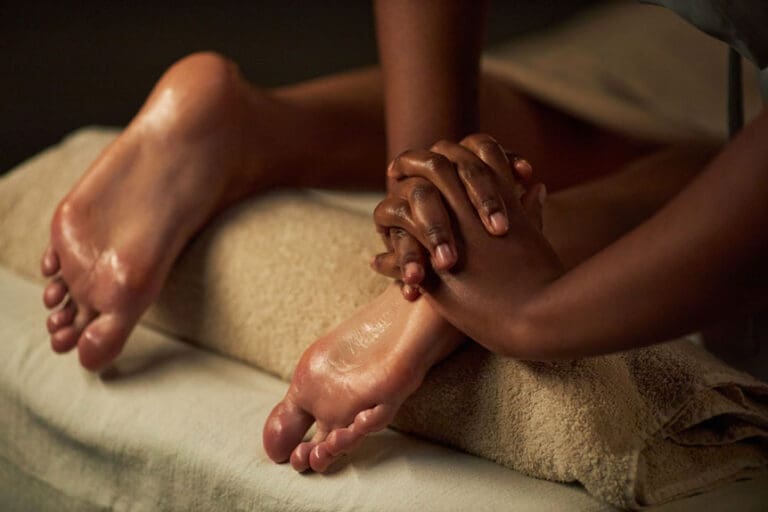
In Spa & Massage clinics, therapists may include a low dilution within a blended carrier to help keep skin feeling clean and comfortable while hands warm tight calves, quads, shoulders, or lower back with slow, grounded strokes.
Evidence supports massage for reducing delayed-onset soreness and improving perceived recovery; tea tree oil is used as a complementary sensory cue, not a cure for injury.
Safety remains central: patch testing is advised, and it should be avoided on broken skin, near eyes, or with known sensitivities.
Clients are encouraged to breathe slowly, hydrate, and rest.
Tea Tree Oil for Congested or Blemish-Prone Skin
Why does tea tree oil appear so often in recommendations for congested or blemish-prone skin?
Evidence suggests its antimicrobial and anti-inflammatory properties may help reduce the bacteria and redness associated with breakouts, while supporting a clearer-looking complexion.
In aromatic massage, Spa & Massage therapists use tea tree only when appropriate, typically in very low dilutions within a skin-friendly carrier oil, so the experience feels close and comforting rather than harsh.
Clients with oilier areas may appreciate its “clean” aroma and the sense of reset it brings during slow, grounding touch.
Safety matters: it is avoided on broken skin, near the eyes, and in clients with known sensitivities.
A patch test and tailored blend keep care personal.
Aftercare to Extend Tea Tree Oil Benefits
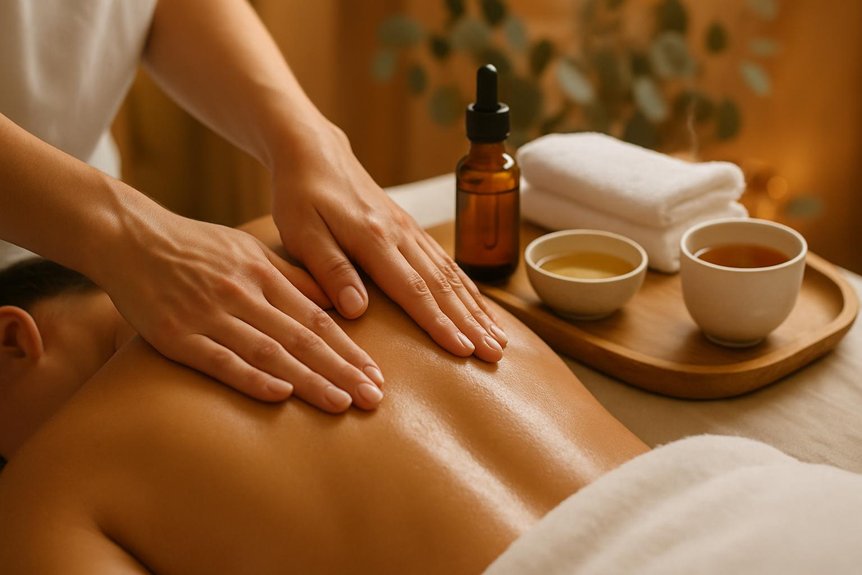
Clearer-looking, calmer skin during an aromatic massage is more likely to last when aftercare supports the same antimicrobial, anti-inflammatory aims without irritating the barrier.
Spa & Massage therapists advise keeping the skin clean, dry, and gently hydrated for 24 hours, avoiding harsh exfoliants, strong acids, and fragranced products that can sting sensitised areas.
A lukewarm shower and a simple, non-comedogenic moisturiser help seal in comfort after tea tree use.
Clients are encouraged to change pillowcases, wipe phone screens, and avoid touching blemishes to reduce bacterial transfer.
If redness, itching, or tightness appears, they should stop any active products and apply a bland emollient.
Those who are pregnant, asthmatic, or allergy-prone should follow personalised guidance in clinic.
Conclusion
In aromatic massage, tea tree oil is used like a crisp breeze through a clean room—lifting the senses while supporting comfort and hygiene. When professionally diluted, it can feel cooling on tired muscles and help clients perceive easier breathing, especially during seasonal stuffiness. Safety remains central: patch testing, conservative dilution, and avoidance on broken or highly reactive skin reduce irritation risk. With mindful aftercare, the fresh, clarifying aroma can linger softly after the session ends.